
FASS Research Training Programme RTP Induction Basil Germond
FASS Research Training Programme (RTP) - Induction Basil Germond – Faculty Director (Research Training)
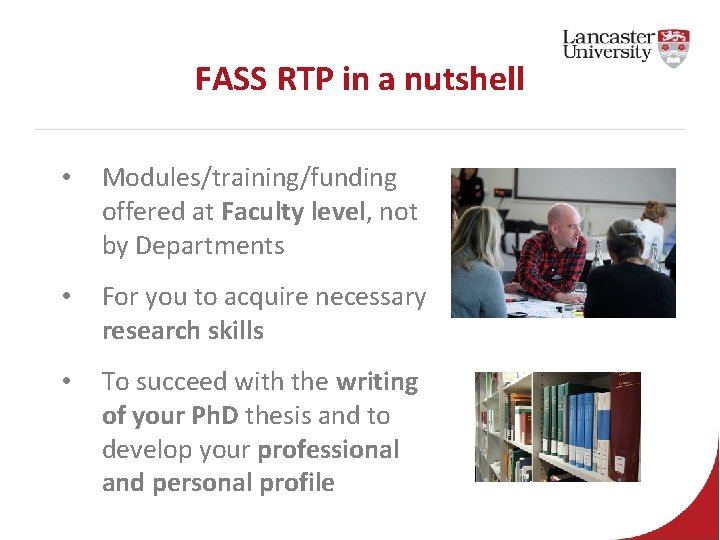
FASS RTP in a nutshell • Modules/training/funding offered at Faculty level, not by Departments • For you to acquire necessary research skills • To succeed with the writing of your Ph. D thesis and to develop your professional and personal profile
FASS RTP • Who’s who • Why the RTP exists • What the RTP does • Where the RTP fits • RTP Components • Next Steps for you • Questions
Who’s Who • Basil Germond – • Peter Stevens – • Faculty Director (Research Training) RTP Administrator Chris Partridge – Faculty Director (Postgraduate Research) + Browse the Faculty and Departmental people’s pages!
Contacts To contact you: – We will always use your Lancaster address (***@lancaster. ac. uk) to contact you by email, so please ensure that you check your account regularly To contact us: – Please email Peter Stevens at fassrtp@lancaster. ac. uk – For Basil Germond, arrange meeting via email (b. germond@lancaster. ac. uk) or using this link
Why the RTP Exists (1) • University commitment to PG Experience – Quality assurance, career development, etc. • Professional and Personal Profile development – Research skills (e. g. quantitative methods, ethics in research) – Presentation skills (Ph. D writing, conferences, viva) + • Help developing transdisciplinarity within and beyond the Faculty
Why the RTP Exists (2) The RTP is designed to help you (and us) meet the requirements of researcher training as set out by the likes of: • ESRC’s postgraduate training guidelines • AHRC’s Research Training Framework Guide • Vitae Researcher Development Framework
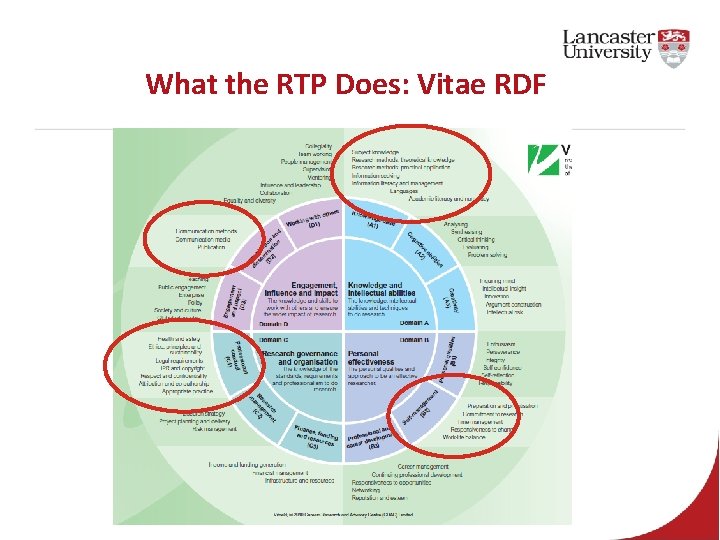
What the RTP Does: Vitae RDF
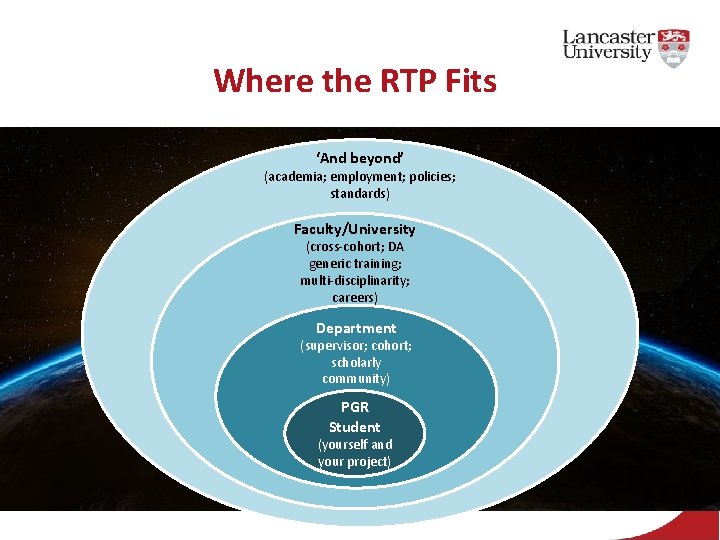
Where the RTP Fits ‘And beyond’ (academia; employment; policies; standards) Faculty/University (cross-cohort; DA generic training; multi-disciplinarity; careers) Department (supervisor; cohort; scholarly community) PGR Student (yourself and your project)
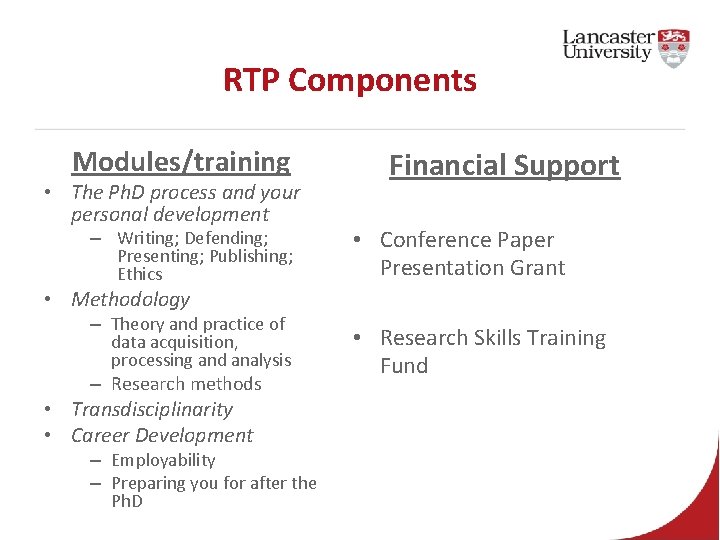
RTP Components Modules/training • The Ph. D process and your personal development Financial Support – Writing; Defending; Presenting; Publishing; Ethics • Conference Paper Presentation Grant – Theory and practice of data acquisition, processing and analysis – Research methods • Research Skills Training Fund • Methodology • Transdisciplinarity • Career Development – Employability – Preparing you for after the Ph. D
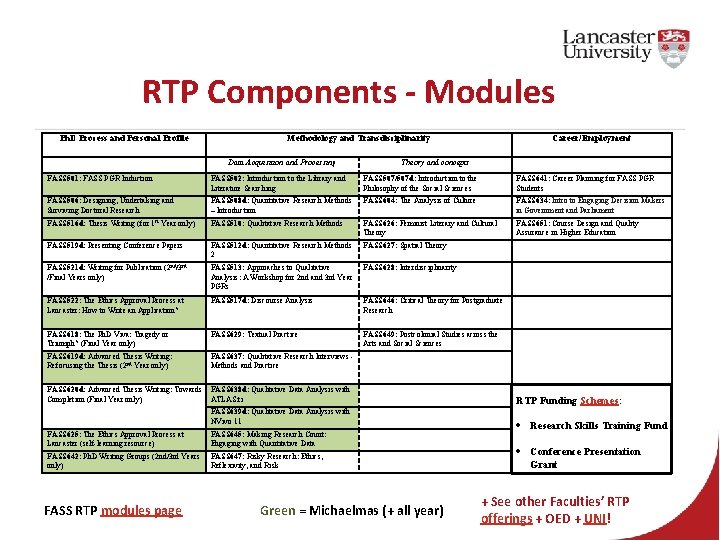
RTP Components - Modules Ph. D Process and Personal Profile Methodology and Transdisciplinarity Data Acquisition and Processing Career/Employment Theory and concepts FASS 501: FASS PGR Induction FASS 502: Introduction to the Library and Literature Searching FASS 507/507 d: Introduction to the Philosophy of the Social Sciences FASS 641: Career Planning for FASS PGR Students FASS 506: Designing, Undertaking and Surviving Doctoral Research FASS 508 d: Quantitative Research Methods – Introduction FASS 604: The Analysis of Culture FASS 634: Intro to Engaging Decision Makers in Government and Parliament FASS 516 d: Thesis Writing (for 1 st Year only) FASS 510: Qualitative Research Methods FASS 626: Feminist Literary and Cultural Theory FASS 651: Course Design and Quality Assurance in Higher Education FASS 519 d: Presenting Conference Papers FASS 512 d: Quantitative Research Methods 2 FASS 627: Spatial Theory FASS 521 d: Writing for Publication (2 nd/3 rd /Final Years only) FASS 513: Approaches to Qualitative Analysis: A Workshop for 2 nd and 3 rd Year PGRs FASS 628: Interdisciplinarity FASS 522: The Ethics Approval Process at Lancaster: How to Write an Application? FASS 517 d: Discourse Analysis FASS 646: Critical Theory for Postgraduate Research FASS 618: The Ph. D Viva: Tragedy or Triumph? (Final Year only) FASS 629: Textual Practice FASS 649: Postcolonial Studies across the Arts and Social Sciences FASS 619 d: Advanced Thesis Writing: Refocusing the Thesis (2 nd Year only) FASS 637: Qualitative Research Interviews Methods and Practice FASS 620 d: Advanced Thesis Writing: Towards Completion (Final Year only) FASS 638 d: Qualitative Data Analysis with ATLAS. ti FASS 639 d: Qualitative Data Analysis with NVivo 11 FASS 625: The Ethics Approval Process at Lancaster (self-learning resource) FASS 645: Making Research Count: Engaging with Quantitative Data FASS 642: Ph. D Writing Groups (2 nd/3 rd Years only) FASS 647: Risky Research: Ethics, Reflexivity, and Risk FASS RTP modules page Green = Michaelmas (+ all year) RTP Funding Schemes: Research Skills Training Fund Conference Presentation Grant + See other Faculties’ RTP offerings + OED + UNI!
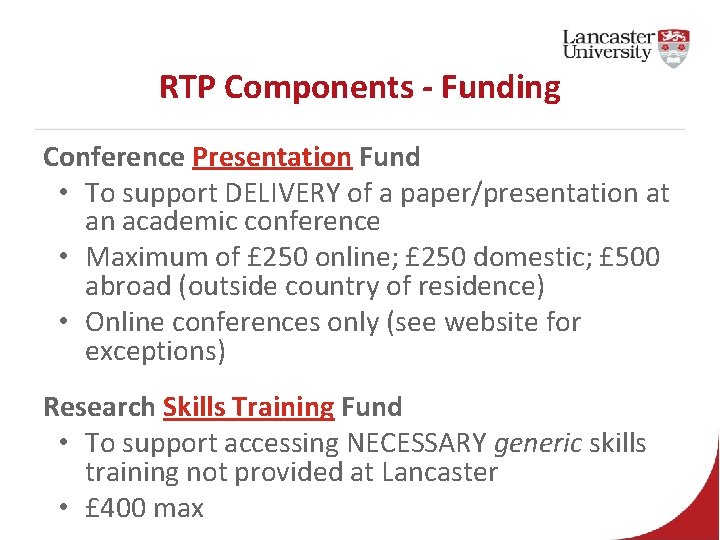
RTP Components - Funding Conference Presentation Fund • To support DELIVERY of a paper/presentation at an academic conference • Maximum of £ 250 online; £ 250 domestic; £ 500 abroad (outside country of residence) • Online conferences only (see website for exceptions) Research Skills Training Fund • To support accessing NECESSARY generic skills training not provided at Lancaster • £ 400 max
Next Steps 1) Familiarise yourself with • RTP webpage: • Vitae RDF website: 2) Reflect & Discuss • Supervisor(s) – Development Needs Analysis (DNA) – How to access the DNA 3) Register • See the procedure here
Module Registration • If you do not register: – You will not be notified of timetable changes – You cannot access the module website/learning resources/etc • If you attend the first session not being registered and decide that you want to take the module: – Notify Peter Stevens asap • If you wish to withdraw from a module you MUST officially deregister by notifying Peter Stevens
Attendance monitoring • Registered students are expected to engage with their module(s). For modules taught online, this means completing online tasks and activities set up by tutors. • If you are registered and do not complete 50% or more of the online tasks/activities marked as ‘compulsory’ by the end of the term you will normally be deregistered. • You will still be allowed to request to keep access to the resources on Moodle for training purposes (please note that this option is not available for some modules). • Please check the Moodle page of your module(s) and if in doubt ask the module convenor. It is your responsibility to complete the requested number of activities if you want to register as having completed your module(s).
Module Attendance • If you are unable to attend one or more individual sessions of a module on which you are registered: – Inform Peter Stevens & your module tutor • Specific rules apply to those taking modules for credits (c. f. handbook)

Questions
- Slides: 17