
Fashion Promotion Visual Merchandising Objectives w Explain the
Fashion Promotion Visual Merchandising
Objectives: w Explain the importance of visual merchandising w Describe the two main areas of store layout w Summarize the aspects of merchandise presentation w Describe the components of in-store displays w List the advantages, disadvantages, and types of window displays
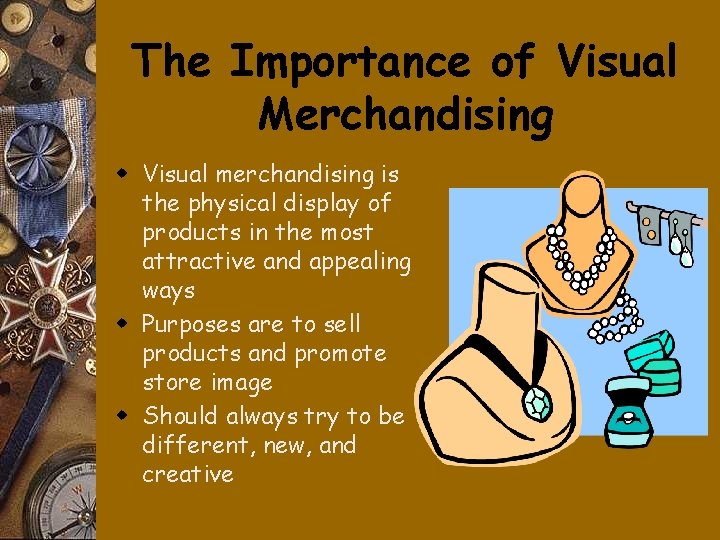
The Importance of Visual Merchandising w Visual merchandising is the physical display of products in the most attractive and appealing ways w Purposes are to sell products and promote store image w Should always try to be different, new, and creative
Store Layout w Selling areas w Maze layout – Where merchandise is – Free-flowing, unbalanced displayed and placement of customers interact fixtures; allows with salespeople shoppers to weave w Sales support areas through displayed – Customer services and merchandise all other operations w Grid layout (75%-80%) – One or more main aisles with secondary aisles intersecting
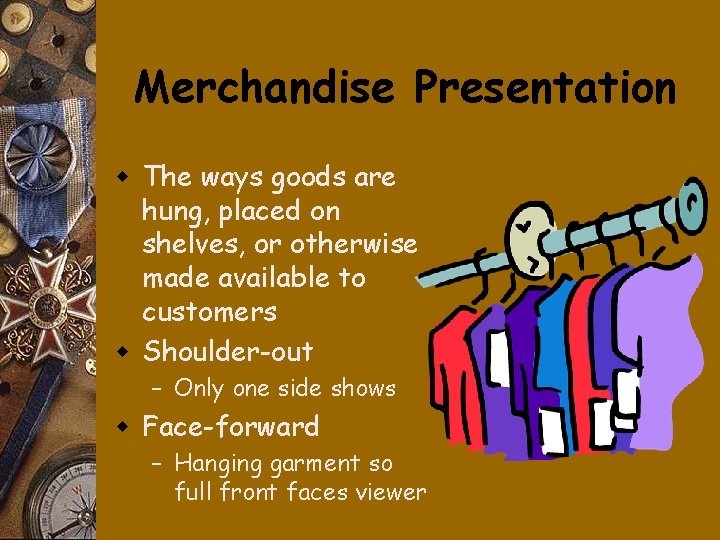
Merchandise Presentation w The ways goods are hung, placed on shelves, or otherwise made available to customers w Shoulder-out – Only one side shows w Face-forward – Hanging garment so full front faces viewer
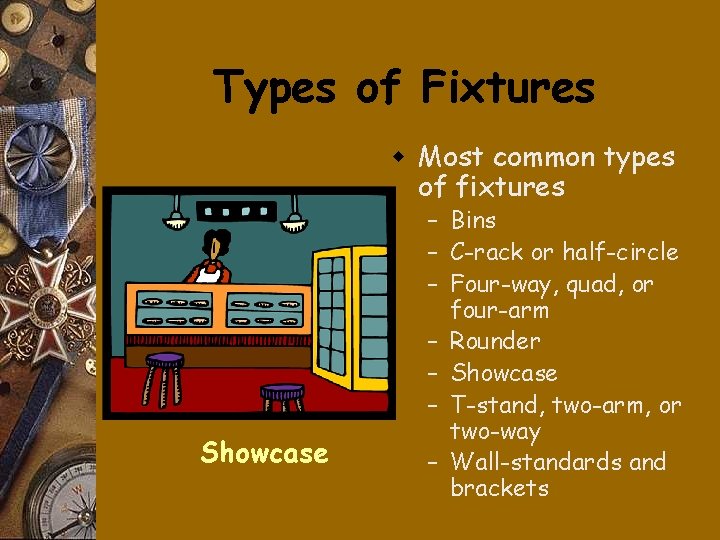
Types of Fixtures w Most common types of fixtures Showcase – Bins – C-rack or half-circle – Four-way, quad, or four-arm – Rounder – Showcase – T-stand, two-arm, or two-way – Wall-standards and brackets
Wall Arrangements w Should draw customers farther into the store or department w Reinforce store image w Divide large areas into smaller sections – Color groupings – Same garment groupings
Interior Displays w Displays should: – Stimulate product interest – Provide information – Suggest merchandise coordination – Generate traffic flow – Remind customers of planned purchases – Create impulse sales – Enhance the store’s visual image
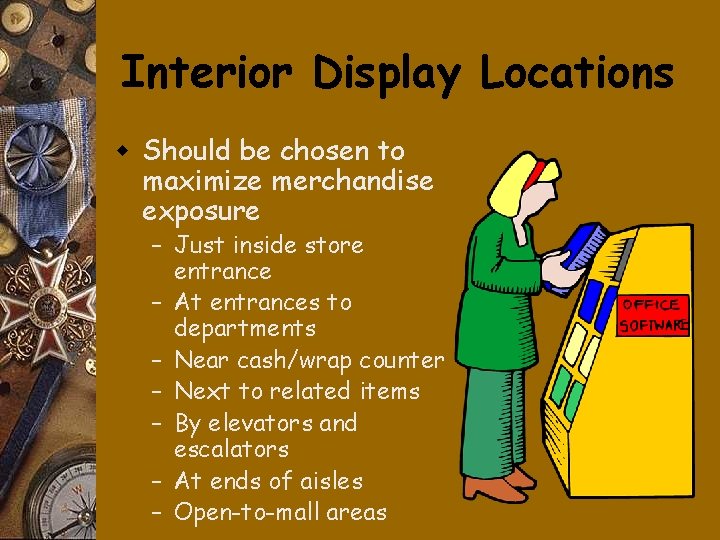
Interior Display Locations w Should be chosen to maximize merchandise exposure – Just inside store entrance – At entrances to departments – Near cash/wrap counter – Next to related items – By elevators and escalators – At ends of aisles – Open-to-mall areas
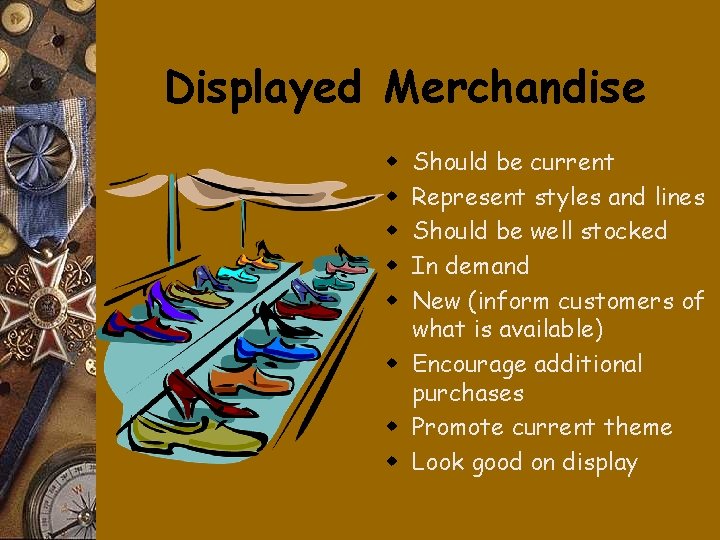
Displayed Merchandise Should be current Represent styles and lines Should be well stocked In demand New (inform customers of what is available) w Encourage additional purchases w Promote current theme w Look good on display w w w
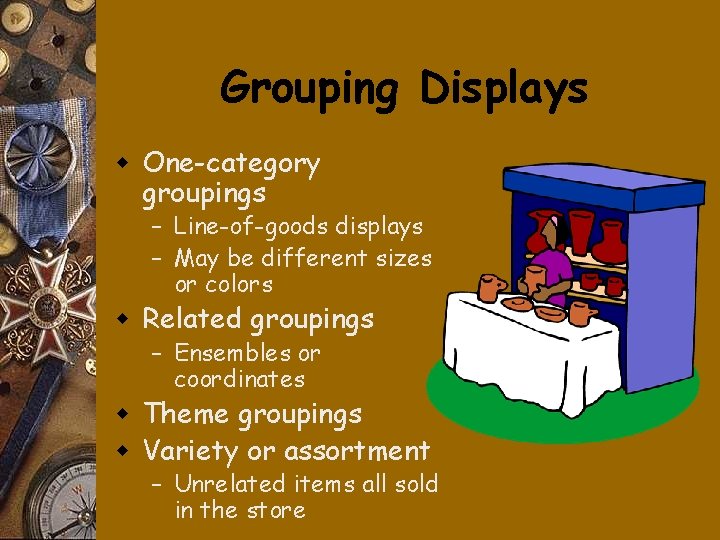
Grouping Displays w One-category groupings – Line-of-goods displays – May be different sizes or colors w Related groupings – Ensembles or coordinates w Theme groupings w Variety or assortment – Unrelated items all sold in the store

Props w Functional props physically support or hold merchandise – Mannequins, stands, pedestals, screens, panels, or forms w Decorative props – Used for mood or attractive setting Decorative and functional prop w Structural props support and change displays – Boxes, cylinders (usually hidden)
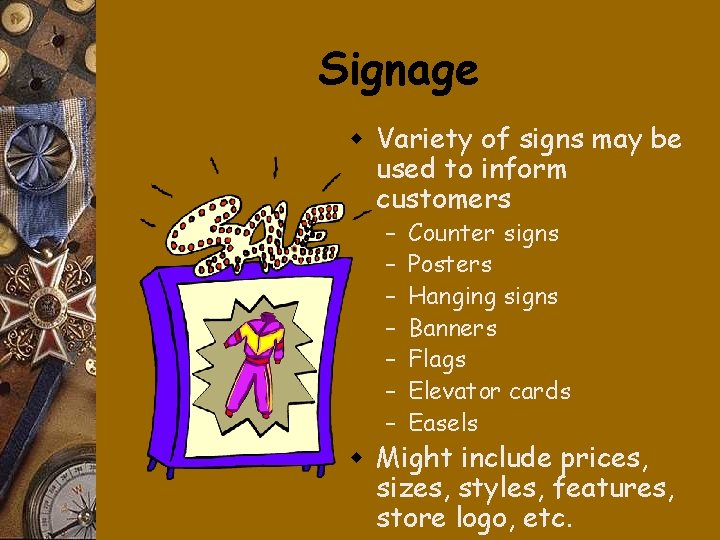
Signage w Variety of signs may be used to inform customers – – – – Counter signs Posters Hanging signs Banners Flags Elevator cards Easels w Might include prices, sizes, styles, features, store logo, etc.
Display Evaluation w Effective sales appeal? w Coordinated with store ads? w Help to locate goods? w Signage legible and easy to understand? w Signage gives best selling points? w Draw customer through store? w Clean and neat? w Changed frequently?
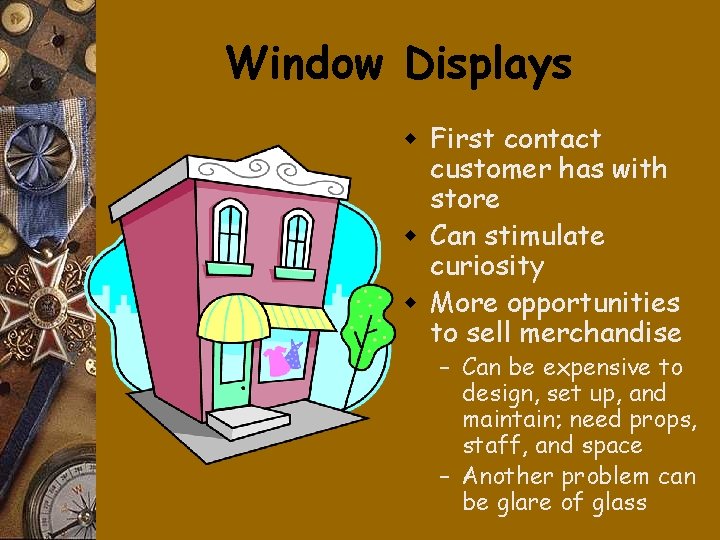
Window Displays w First contact customer has with store w Can stimulate curiosity w More opportunities to sell merchandise – Can be expensive to design, set up, and maintain; need props, staff, and space – Another problem can be glare of glass
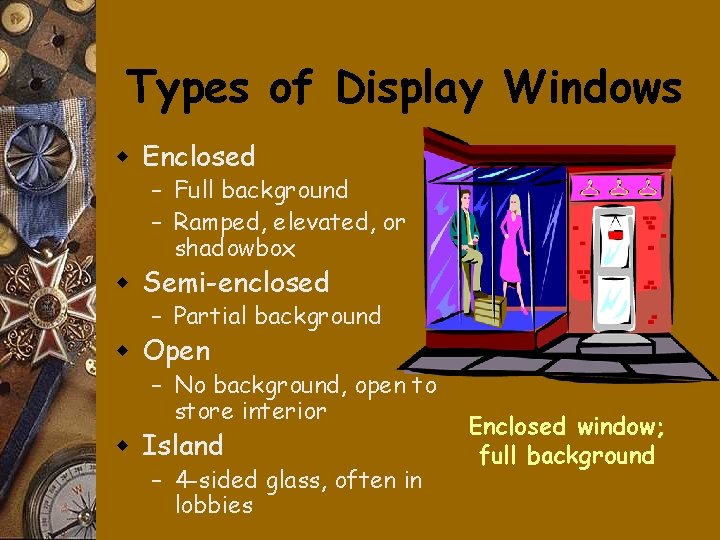
Types of Display Windows w Enclosed – Full background – Ramped, elevated, or shadowbox w Semi-enclosed – Partial background w Open – No background, open to store interior w Island – 4 -sided glass, often in lobbies Enclosed window; full background
Do You Know. . . PICK ME!!! w How might displays in a discount store differ from the displays in a more expensive apparel store? w What criteria would you use to select merchandise for display in an island window?
- Slides: 17