
Fashion and Globalisation Today We are learning to
Fashion and Globalisation Today We are learning to: Develop an understanding of solutions to the conditions factory workers face We will do this by: Investigating ethical production.
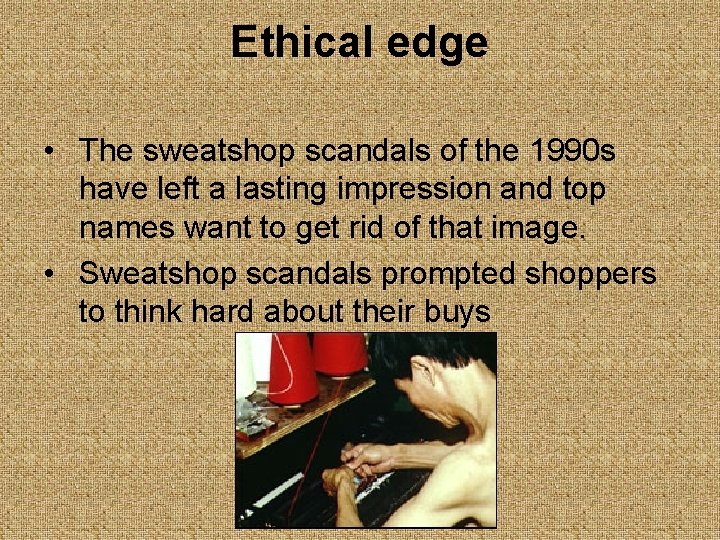
Ethical edge • The sweatshop scandals of the 1990 s have left a lasting impression and top names want to get rid of that image. • Sweatshop scandals prompted shoppers to think hard about their buys
Ethical edge • Many High Street stores - including Primark and Peacocks - now belong to the Ethical Trading Initiative (ETI), which makes sure they stick to a code of conduct covering working conditions, wages and the right to belong to a union. • It also carries out unannounced visits to factories and nowadays very few fail the test, says its chief executive.
People Tree
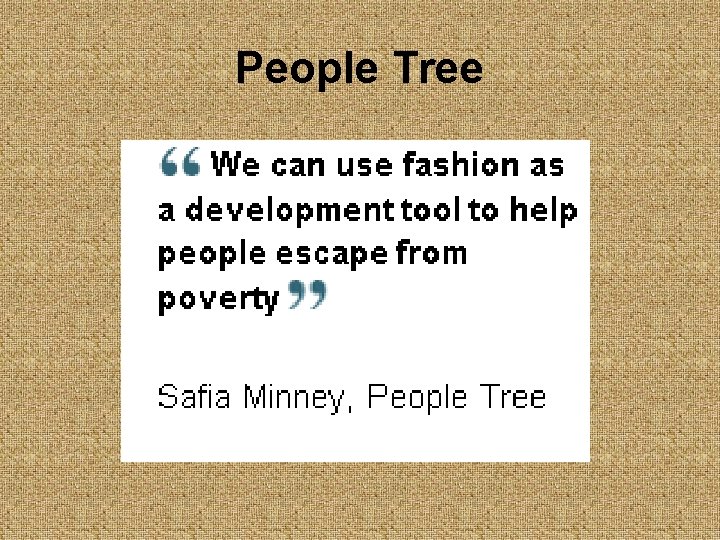
People Tree There are firms that market their clothes as being totally ethical. Firms like People Tree which used to rely on internet sales are now moving into London stores. The company's founder, Safia Minney, wants to do more than pay a decent wage. "Generally we're paying between two and three times more for a product than a High Street name would be paying to a factory in Bangladesh. "
Origins tagged • But unless clothes are advertised as ethical there is no way of knowing how they were made. • There are growing calls for a label which would show fashion lovers they can hand over their £ 2 with a clear conscience. • The Fraser Consultancy, which asks shoppers how ethical they think stores are, says a lack of a logo is a problem.
Origins tagged • But the bottom line remains price. • With shops now offering six or eight collections a year rather than the staple winter and summer lines, shoppers want price tags in single figures. • The question for the High Street is whether it can convince us we're salving our consciences as well as saving the pennies.
Design a logo to send to: Ethical Trading Initiative (ETI)
- Slides: 8