
FASCIOLA HEPATICA FASCIOLA hepatica Disease Fascioliasis liver rot


- Slides: 17
FASCIOLA HEPATICA
FASCIOLA hepatica Disease: Fascioliasis & liver rot in animals. Distribution: - Common in cattle & sheep raising countries.
FASCIOLA hepatica �Definitive host : man �Reservoir host: Cattle, sheep , goats, buffaloes �Habitat: Bile ducts. �Intermediate host: Lymnaea snails. �Infective stage : Encysted metacercaria.
Mode of infection �Ingestion of raw vegitation or water containing encysted metacercaria.
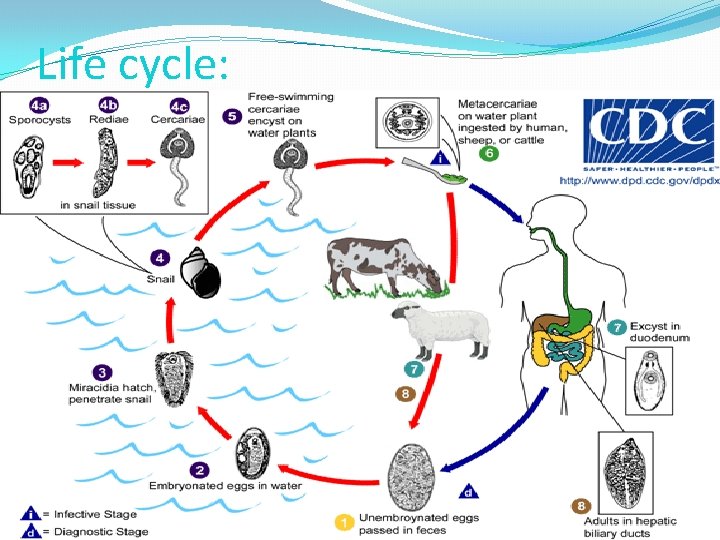
Life cycle:
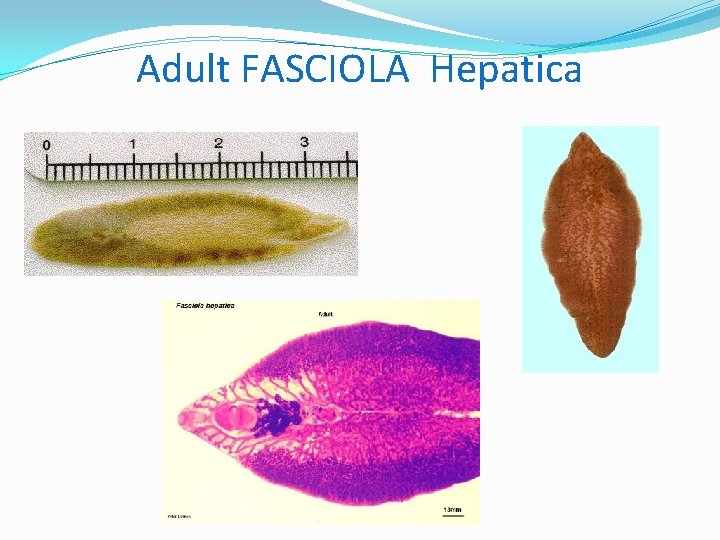
Adult FASCIOLA Hepatica
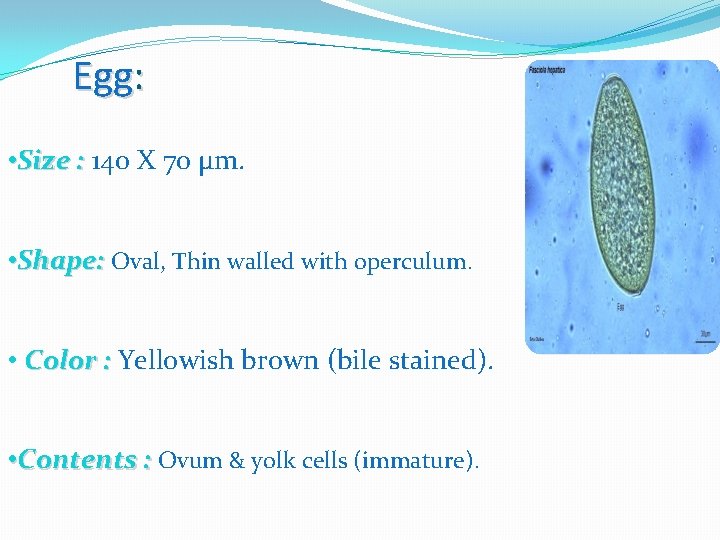
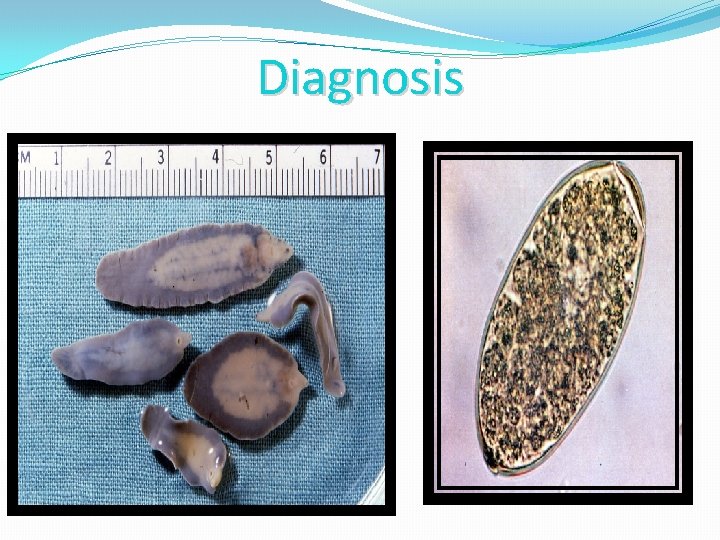
Egg: • Size : 140 X 70 µm. • Shape: Oval, Thin walled with operculum. • Color : Yellowish brown (bile stained). • Contents : Ovum & yolk cells (immature).
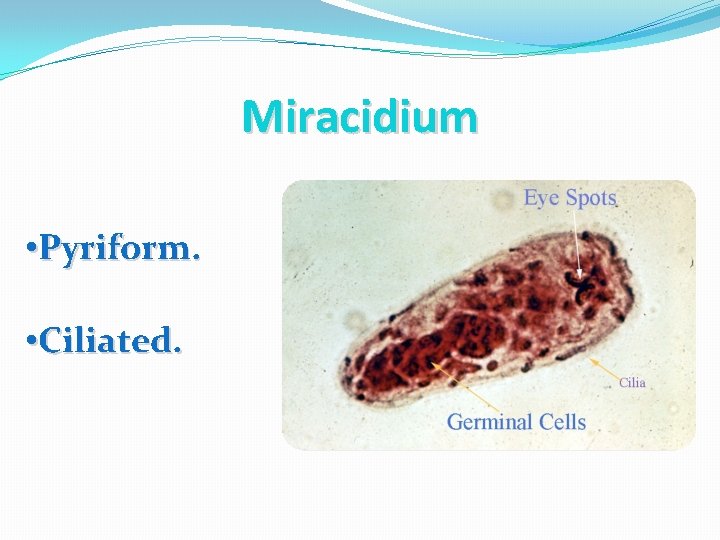
Miracidium • Pyriform. • Ciliated.
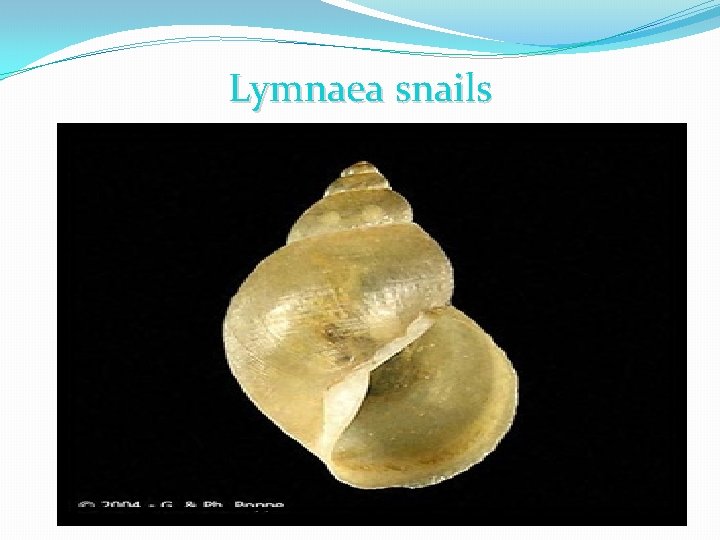
Lymnaea snails
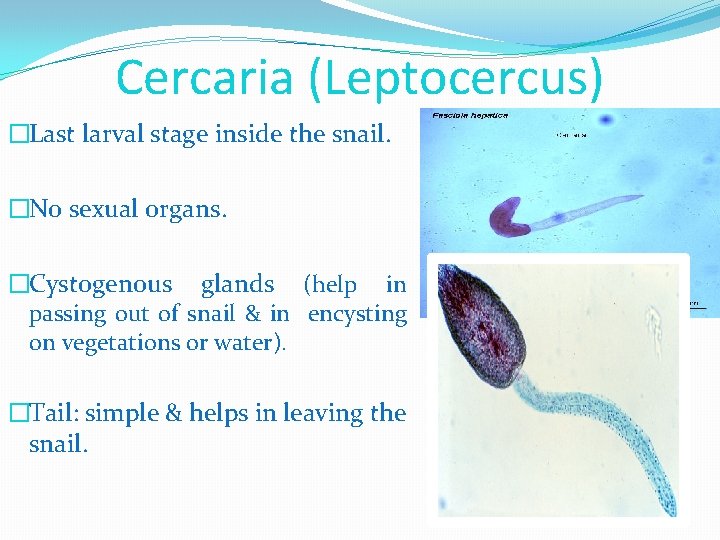
Cercaria (Leptocercus) �Last larval stage inside the snail. �No sexual organs. �Cystogenous glands (help in passing out of snail & in encysting on vegetations or water). �Tail: simple & helps in leaving the snail.
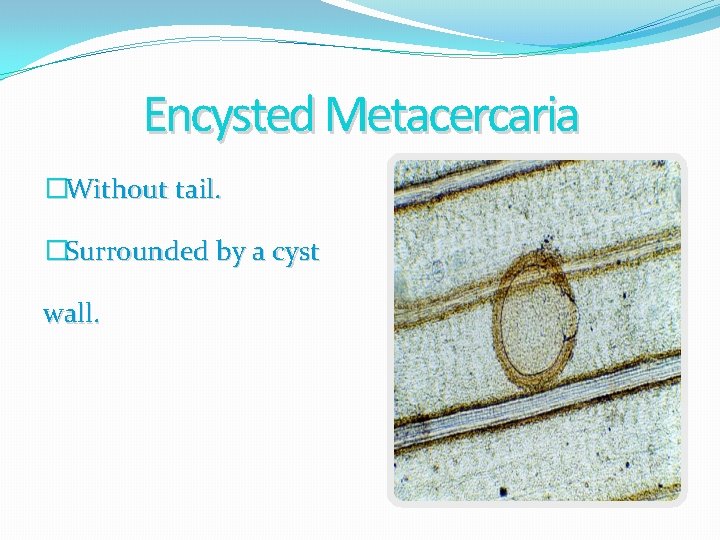
Encysted Metacercaria �Without tail. �Surrounded by a cyst wall.
Clinical Picture : �Fever. � Pain & tenderness in right hypochondrium. �Biliary colics. �Hepatomegaly, �Jaundice. �Vomiting & diarrhoea. � Toxaemia. �Anaemia & eosinophilia.
Diagnosis I. Clinically : A highly suggestive tetrad of: Ø Fever. Ø Hepatomegaly. Ø Ø Pain & tenderness in the right hypochondrium. Eosinophilia.
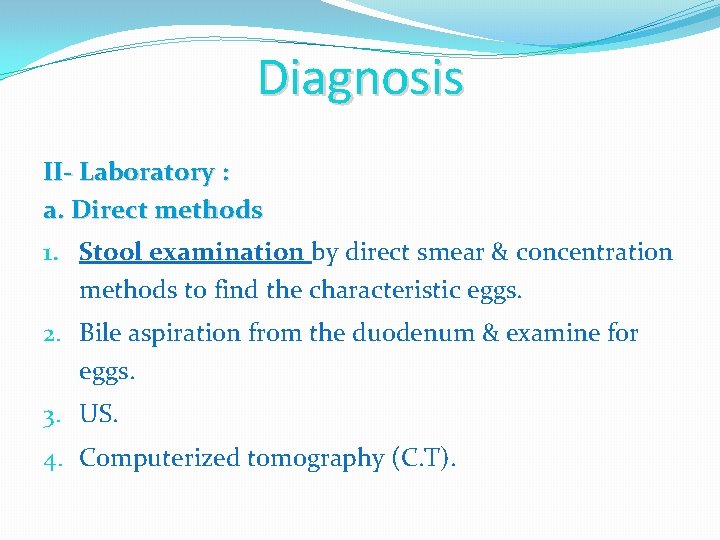
Diagnosis II- Laboratory : a. Direct methods 1. Stool examination by direct smear & concentration methods to find the characteristic eggs. 2. Bile aspiration from the duodenum & examine for eggs. 3. US. 4. Computerized tomography (C. T).
Diagnosis
Diagnosis b. Indirect Methods �ELISA, IHA , CIEP �Eosinophilia.
Thank You