
Fascial Compartments of the Thigh Fascia lata is
- Slides: 25
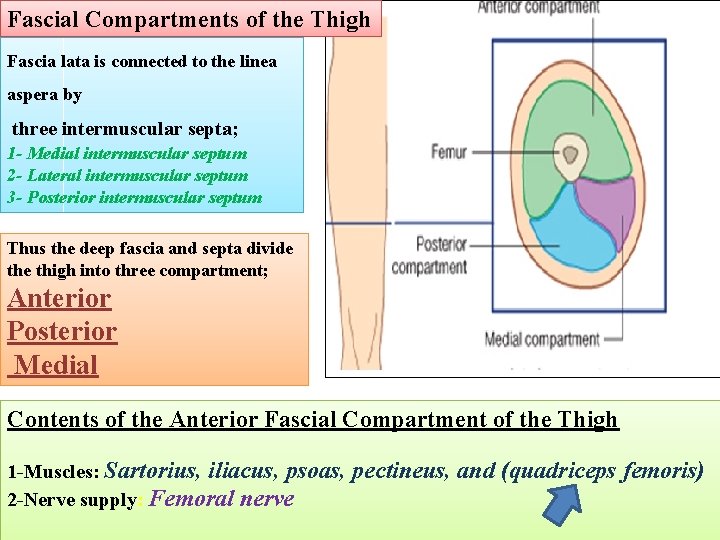
Fascial Compartments of the Thigh Fascia lata is connected to the linea aspera by three intermuscular septa; 1 - Medial intermuscular septum 2 - Lateral intermuscular septum 3 - Posterior intermuscular septum Thus the deep fascia and septa divide thigh into three compartment; Anterior Posterior Medial Contents of the Anterior Fascial Compartment of the Thigh 1 -Muscles: Sartorius, iliacus, psoas, 2 -Nerve supply: Femoral nerve pectineus, and (quadriceps femoris)
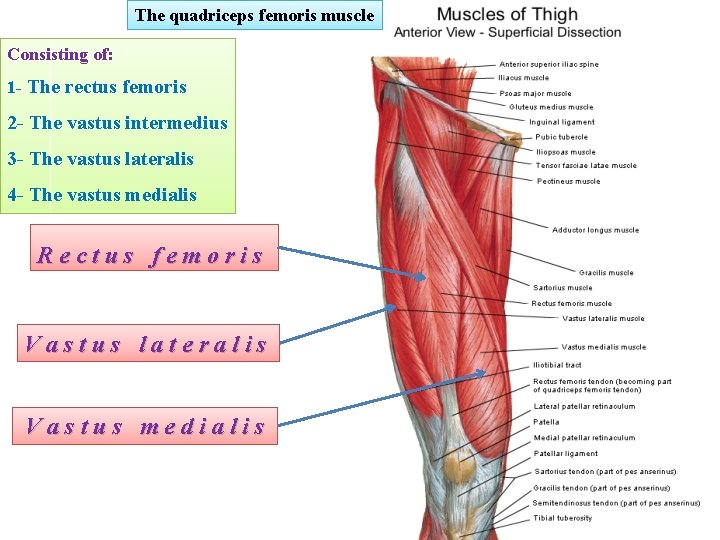
The quadriceps femoris muscle Consisting of: 1 - The rectus femoris 2 - The vastus intermedius 3 - The vastus lateralis 4 - The vastus medialis Rectus femoris Vastus lateralis Vastus medialis
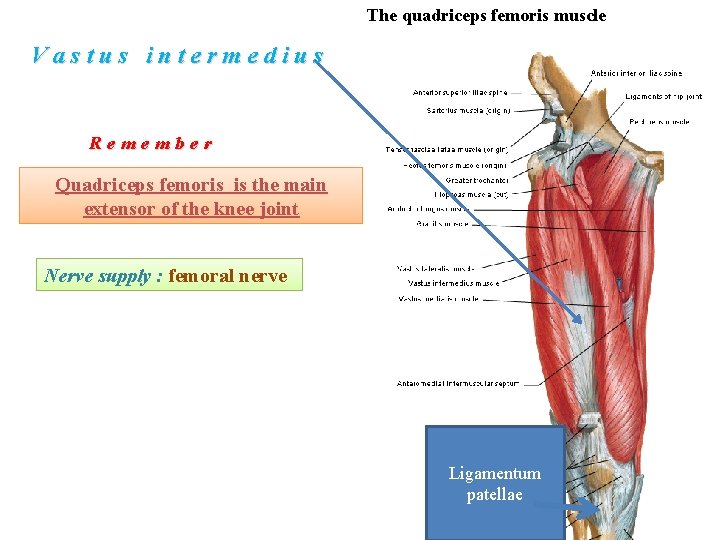
The quadriceps femoris muscle Vastus intermedius Remember Quadriceps femoris is the main extensor of the knee joint Nerve supply : femoral nerve Ligamentum patellae
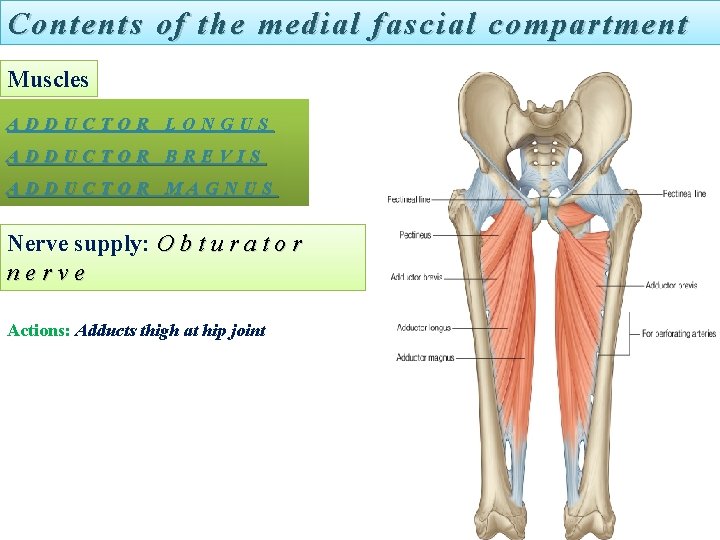
Contents of the medial fascial compartment Muscles ADDUCTOR LONGUS ADDUCTOR BREVIS ADDUCTOR MAGNUS Nerve supply: O b t u r a t o r nerve Actions: Adducts thigh at hip joint
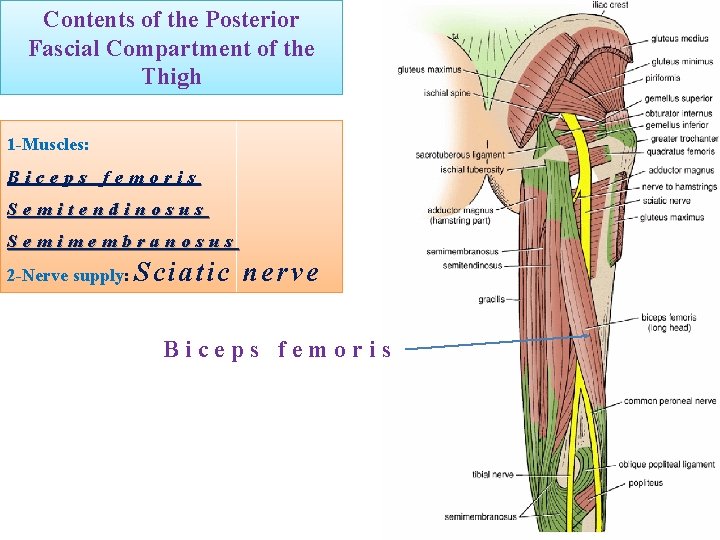
Contents of the Posterior Fascial Compartment of the Thigh 1 -Muscles: Biceps femoris Semitendinosus Semimembranosus 2 -Nerve supply: S c i a t i c nerve Biceps femoris
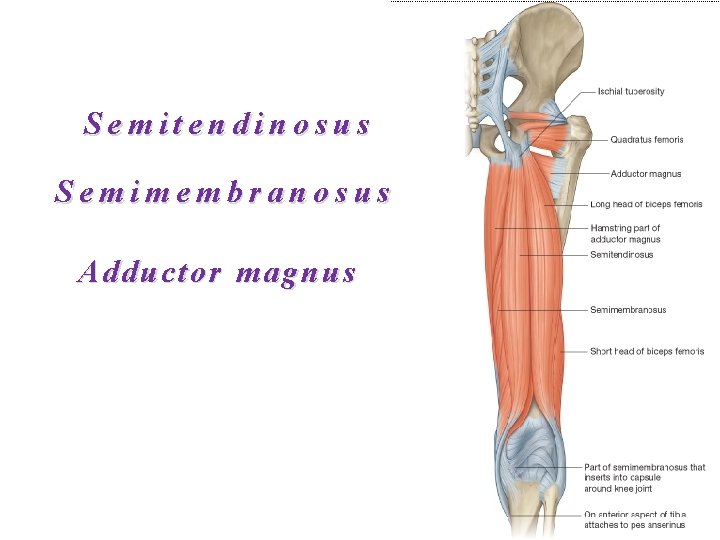
Semitendinosus Semimembranosus Adductor magnus
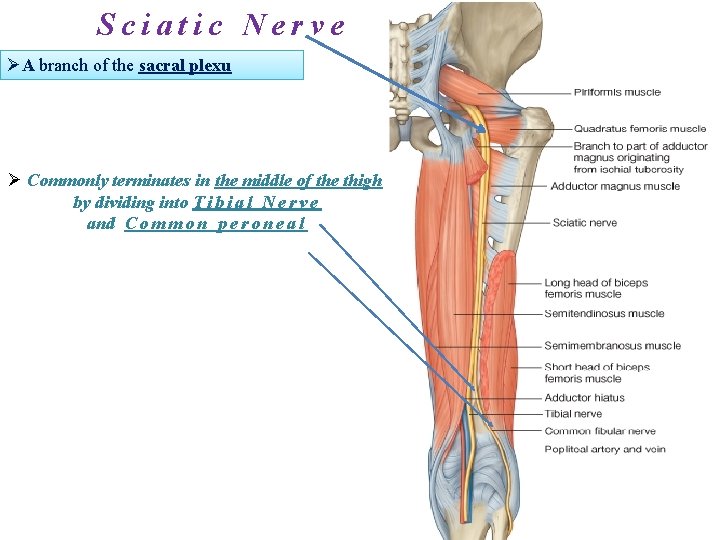
Sciatic Nerve ØA branch of the sacral plexu Ø Commonly terminates in the middle of the thigh by dividing into T i b i a l N e r v e and C o m m o n p e r o n e a l
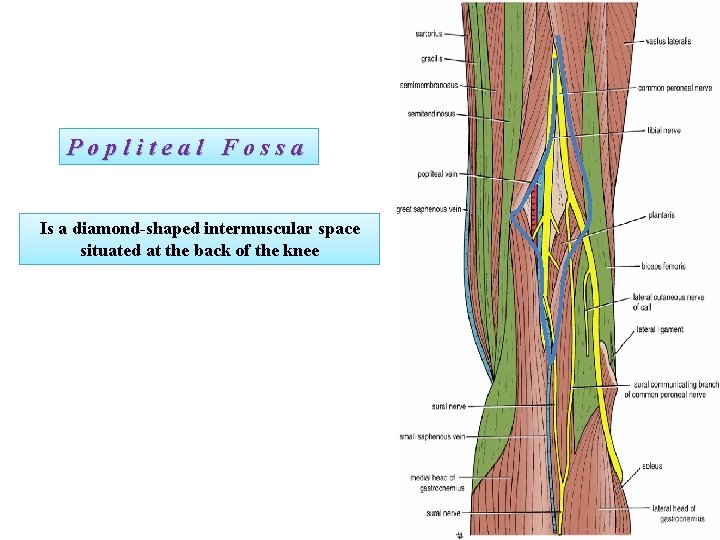
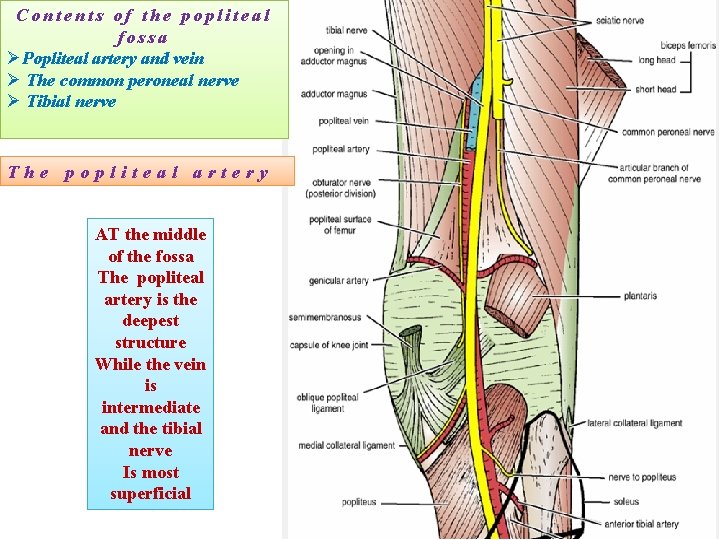
Popliteal Fossa Is a diamond-shaped intermuscular space situated at the back of the knee
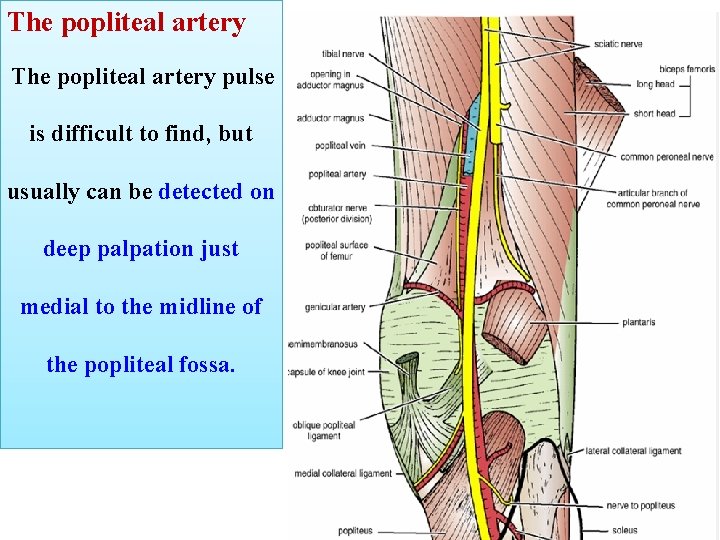
Contents of the popliteal fossa ØPopliteal artery and vein Ø The common peroneal nerve Ø Tibial nerve The popliteal artery AT the middle of the fossa The popliteal artery is the deepest structure While the vein is intermediate and the tibial nerve Is most superficial
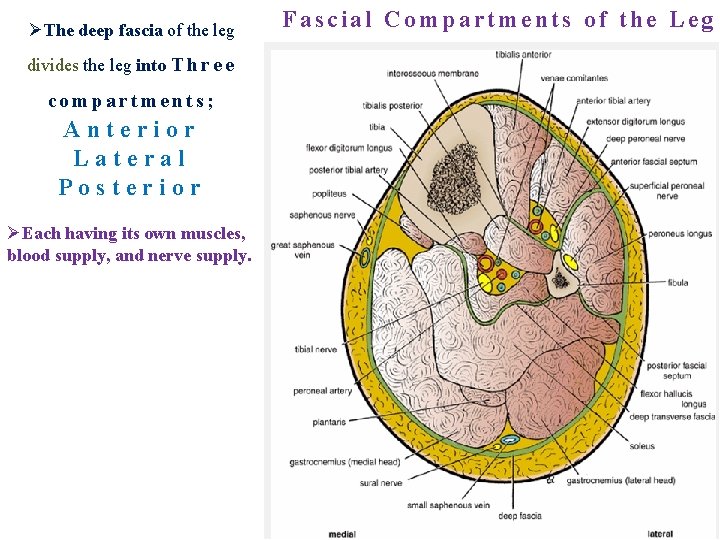
ØThe deep fascia of the leg divides the leg into T h r e e compartments; Anterior Lateral Posterior ØEach having its own muscles, blood supply, and nerve supply. Fascial Compartments of the Leg
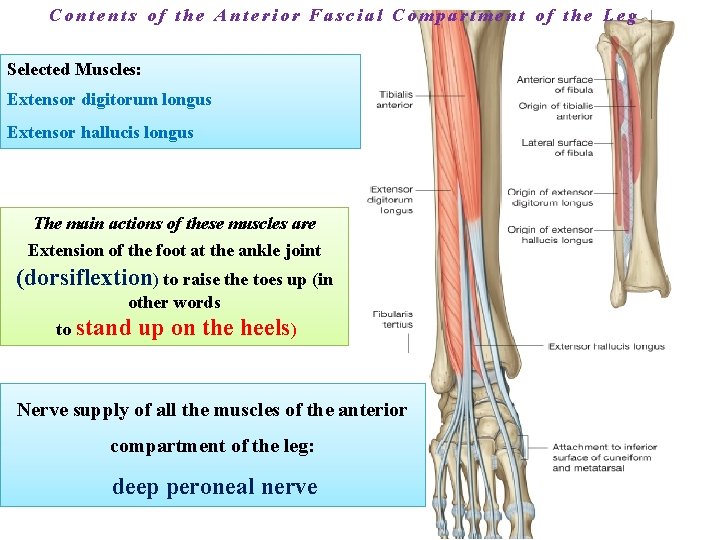
Contents of the Anterior Fascial Compartment of the Leg Selected Muscles: Extensor digitorum longus Extensor hallucis longus The main actions of these muscles are Extension of the foot at the ankle joint (dorsiflextion) to raise the toes up (in other words to stand up on the heels) Nerve supply of all the muscles of the anterior compartment of the leg: deep peroneal nerve
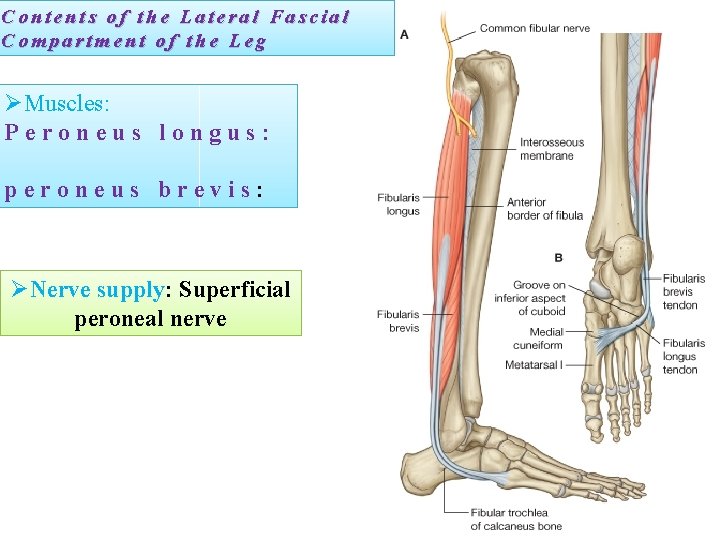
Contents of the Lateral Fascial Compartment of the Leg ØMuscles: Peroneus longus: peroneus brevis: ØNerve supply: Superficial peroneal nerve
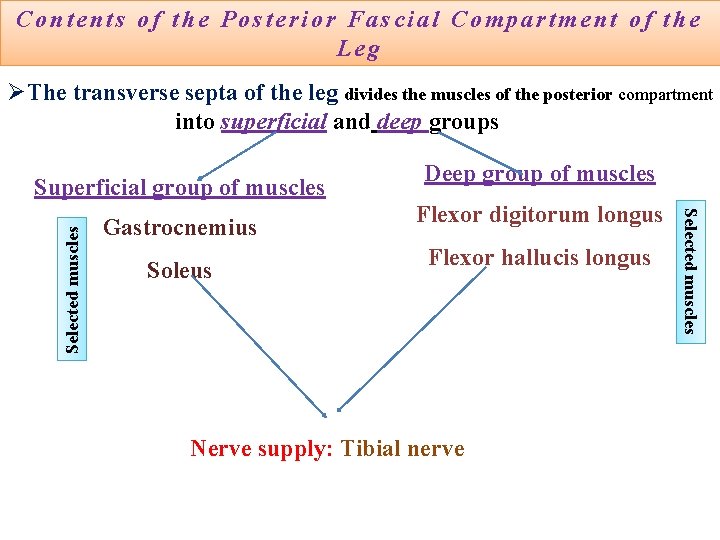
Contents of the Posterior Fascial Compartment of the Leg ØThe transverse septa of the leg divides the muscles of the posterior compartment into superficial and deep groups Gastrocnemius Soleus Deep group of muscles Flexor digitorum longus Flexor hallucis longus Nerve supply: Tibial nerve Selected muscles Superficial group of muscles
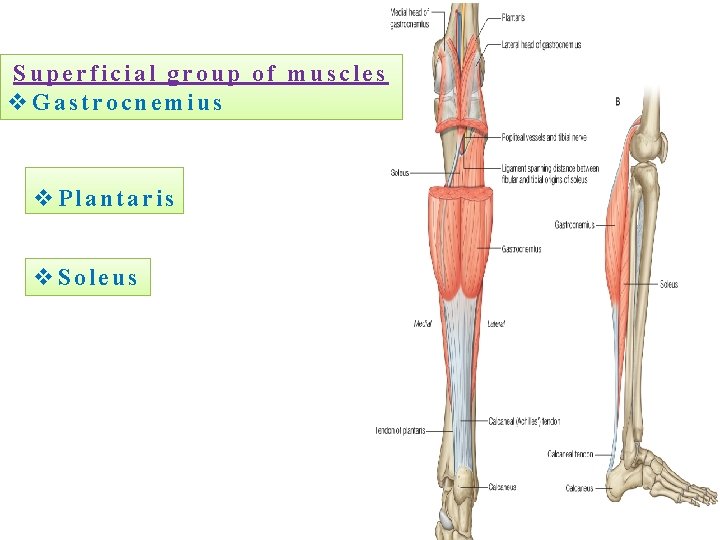
Superficial group of muscles v. Gastrocnemius v. Plantaris v. Soleus
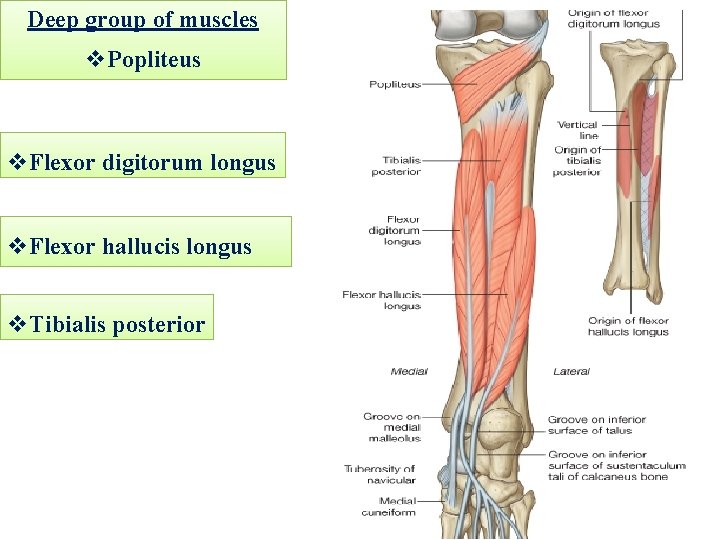
Deep group of muscles v. Popliteus v. Flexor digitorum longus v. Flexor hallucis longus v. Tibialis posterior
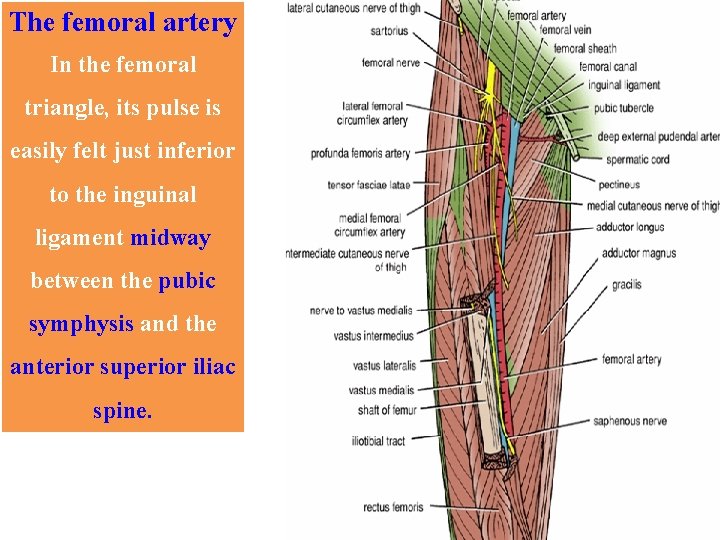
The femoral artery In the femoral triangle, its pulse is easily felt just inferior to the inguinal ligament midway between the pubic symphysis and the anterior superior iliac spine.
The popliteal artery pulse is difficult to find, but usually can be detected on deep palpation just medial to the midline of the popliteal fossa.
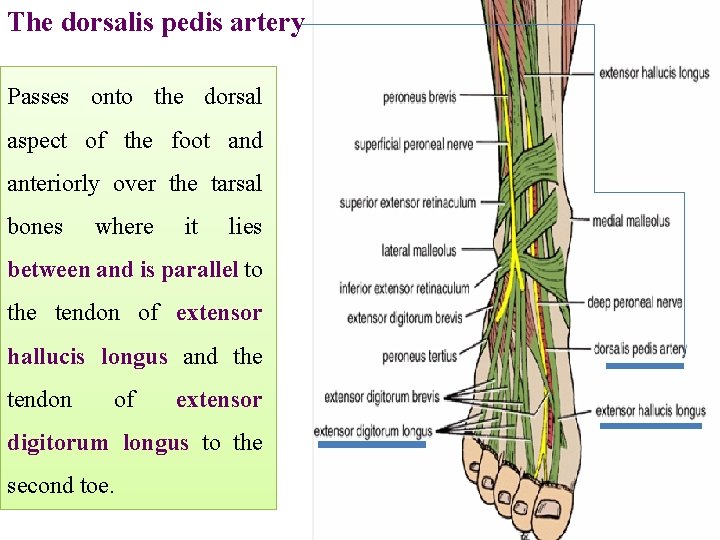
The dorsalis pedis artery Passes onto the dorsal aspect of the foot and anteriorly over the tarsal bones where it lies between and is parallel to the tendon of extensor hallucis longus and the tendon of extensor digitorum longus to the second toe.
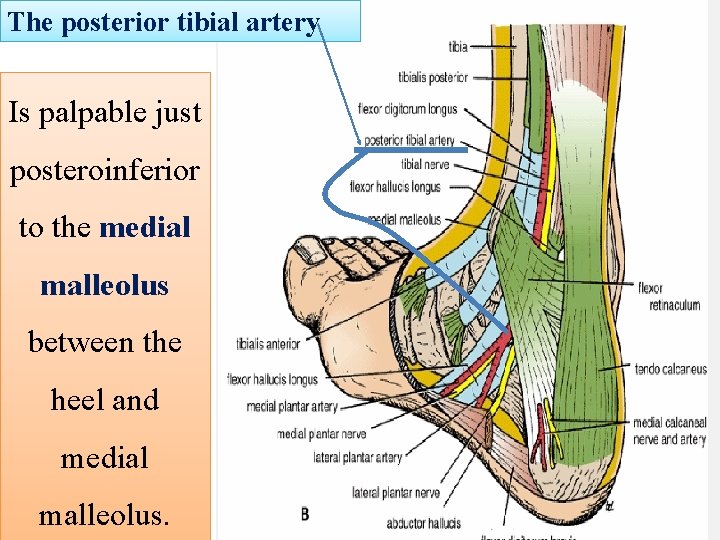
The posterior tibial artery Is palpable just posteroinferior to the medial malleolus between the heel and medial malleolus.
Muscles of the gluteal region
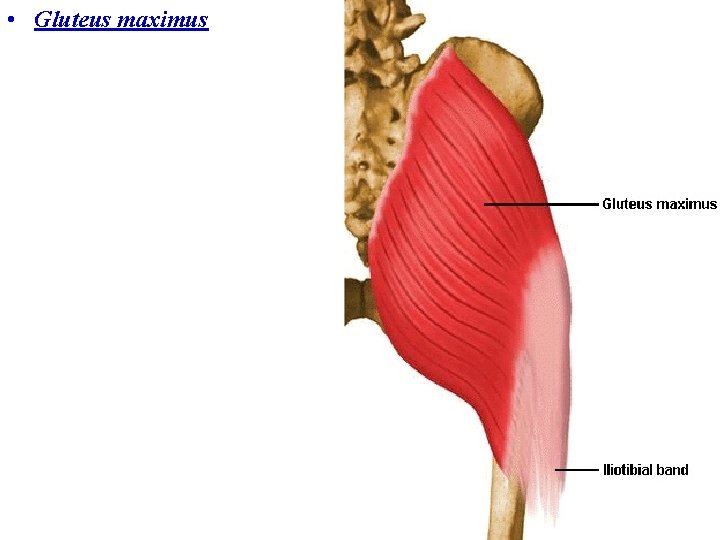
• Gluteus maximus
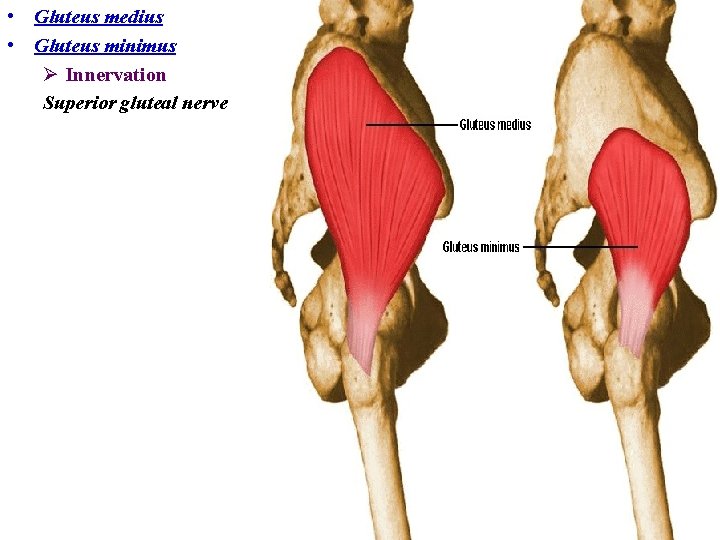
• Gluteus medius • Gluteus minimus Ø Innervation Superior gluteal nerve
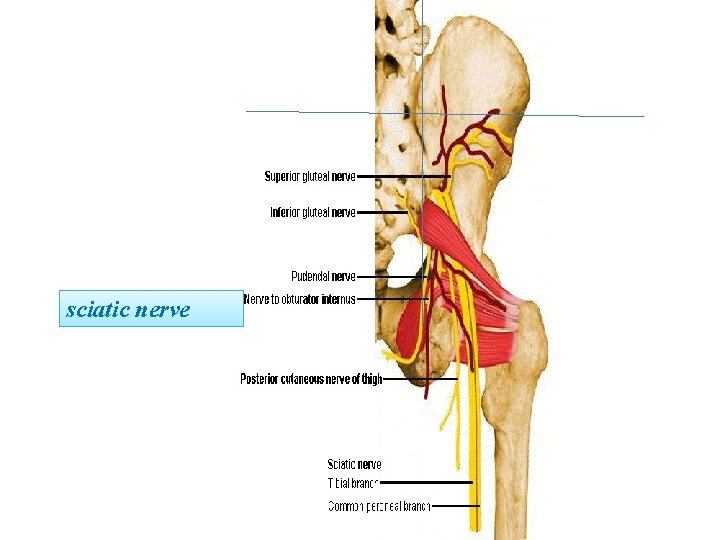
sciatic nerve
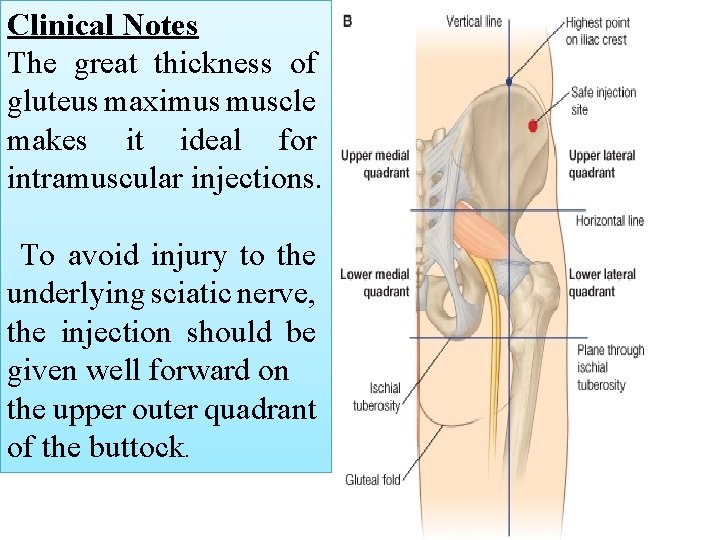
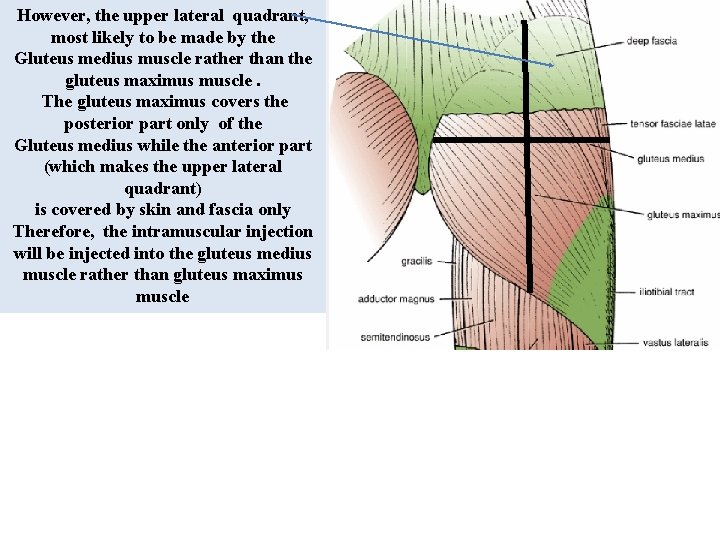
Clinical Notes The great thickness of gluteus maximus muscle makes it ideal for intramuscular injections. To avoid injury to the underlying sciatic nerve, the injection should be given well forward on the upper outer quadrant of the buttock.
However, the upper lateral quadrant, most likely to be made by the Gluteus medius muscle rather than the gluteus maximus muscle. The gluteus maximus covers the posterior part only of the Gluteus medius while the anterior part (which makes the upper lateral quadrant) is covered by skin and fascia only Therefore, the intramuscular injection will be injected into the gluteus medius muscle rather than gluteus maximus muscle