
FAS Training 2019 Cross Compliance Animal Welfare Requirements
- Slides: 53
FAS Training 2019 Cross Compliance Animal Welfare Requirements Integrated Controls Division 1
Overview • Legal Basis • Concept • Welfare Requirements • Common Non-Compliances
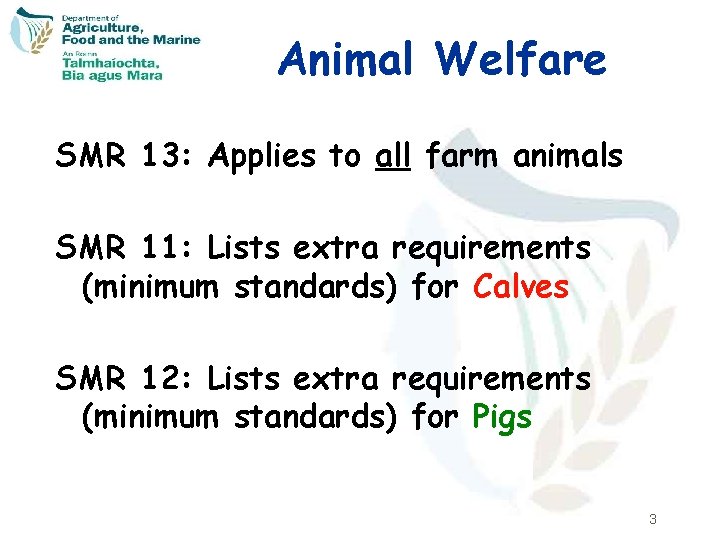
Animal Welfare SMR 13: Applies to all farm animals SMR 11: Lists extra requirements (minimum standards) for Calves SMR 12: Lists extra requirements (minimum standards) for Pigs 3
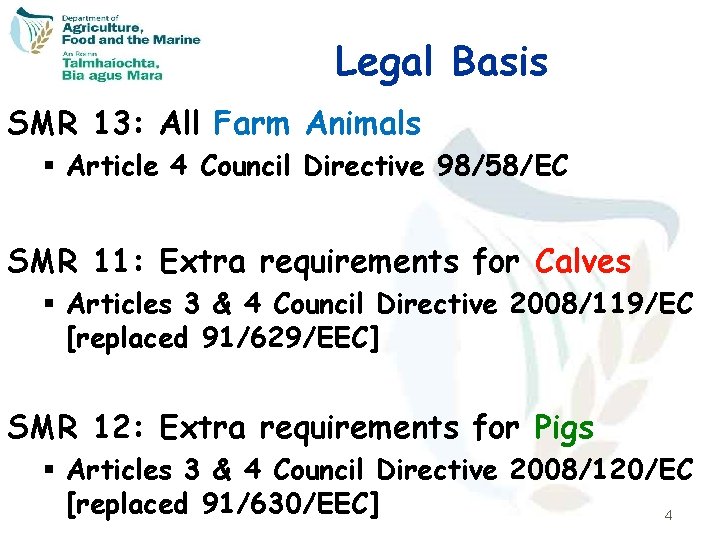
Legal Basis SMR 13: All Farm Animals § Article 4 Council Directive 98/58/EC SMR 11: Extra requirements for Calves § Articles 3 & 4 Council Directive 2008/119/EC [replaced 91/629/EEC] SMR 12: Extra requirements for Pigs § Articles 3 & 4 Council Directive 2008/120/EC [replaced 91/630/EEC] 4
Legal Basis Most Council Directives transposed into national legislation by: European Communities (Welfare of Farmed Animals) Regulations 2010 (S. I. No. 311 of 2010) [replaced S. I No. 14 of 2008]. 5
Legal Basis Mutilations dealt with in Animal Health & Welfare Act 2013 and Various SI’s 6
Concept of Animal Welfare Freedom from: § Thirst, Hunger and Malnutrition Discomfort § Unnecessary Pain, Suffering, Injury and Disease § Stress and Fear. § Freedom to express normal behaviour 7
8
9
SMR 13 – Welfare of Animals Aim is to protect the welfare of farmed animals by meeting minimum standards for their care and husbandry. 10
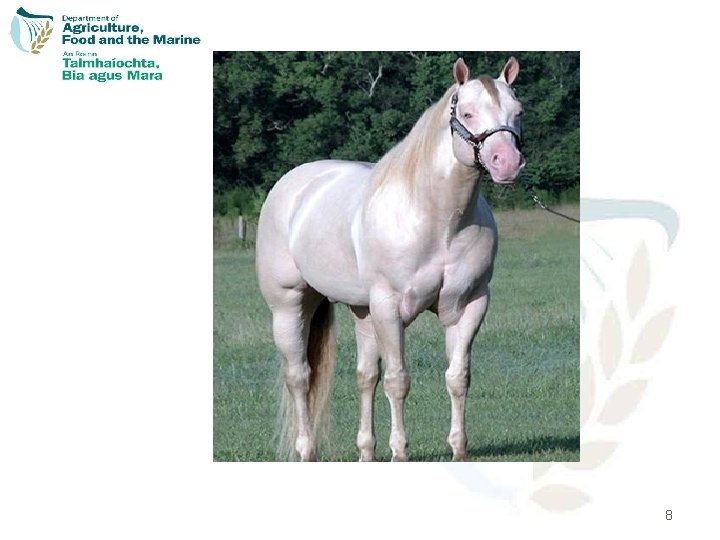
SMR 13 – Welfare of Animals • Bred or kept to produce food, wool, skin, fur, other farming purpose • Not applicable to animals used in competitions, shows, cultural or sporting events/activities or animals living in the wild • Some horses/ponies exempt 11
12
Welfare Requirements § § § § § Staffing Inspections Record Keeping Freedom of Movement Buildings, Accommodation & Lighting Equipment Nutrition Mutilations Breeding Procedures 13
Staffing Animals to be cared for by: § a sufficient number § competent staff 14
Inspections • Animals to be inspected at appropriate intervals – at least once a day • Adequate lighting to enable thorough inspection • Ill or injured animals to be cared for appropriately without delay • Isolate animals as necessary 15
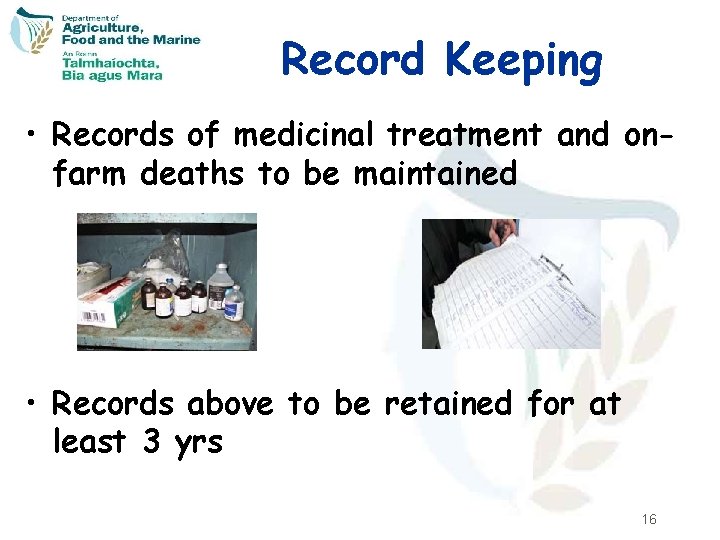
Record Keeping • Records of medicinal treatment and onfarm deaths to be maintained • Records above to be retained for at least 3 yrs 16
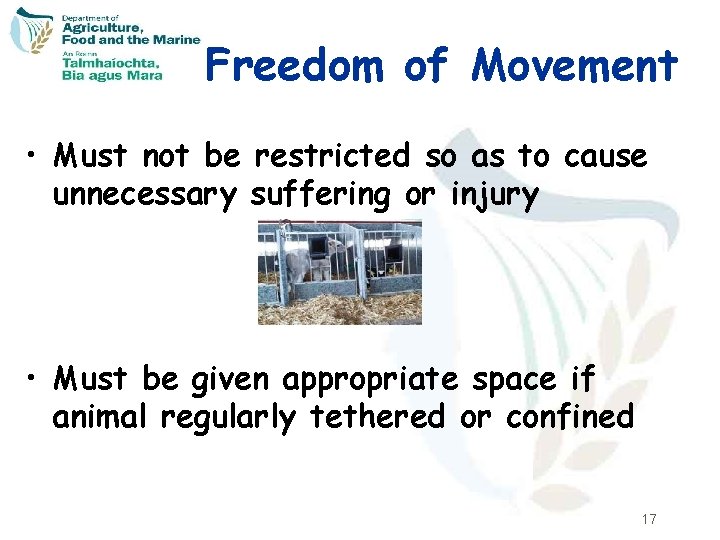
Freedom of Movement • Must not be restricted so as to cause unnecessary suffering or injury • Must be given appropriate space if animal regularly tethered or confined 17
Buildings Accommodation and Lighting • Equipment and materials must not be harmful and be capable of being cleaned and disinfected • Accommodation and fittings for securing animals must not have sharp edges or protrusions likely to cause injury • Adequate air circulation or ventilation • Adequate natural or artificial lighting • Animals Outdoors – given protection from adverse weather, predators, risks to health 18
Equipment • Automated or mechanical equipment to be inspected once/day, if broken safeguard health of animals e. g. backup system • Artificial vent. System – backup and alarm system tested regularly to warn of breakdown 19
Nutrition • Must be fed appropriate diet • Access to feed at appropriate intervals • Access to water or other fluid to satisfy fluid intake • Ensure non contamination of feeding and watering equipment • Harmful effects of competition to be minimised • Administering substances detrimental to Health & Welfare 20
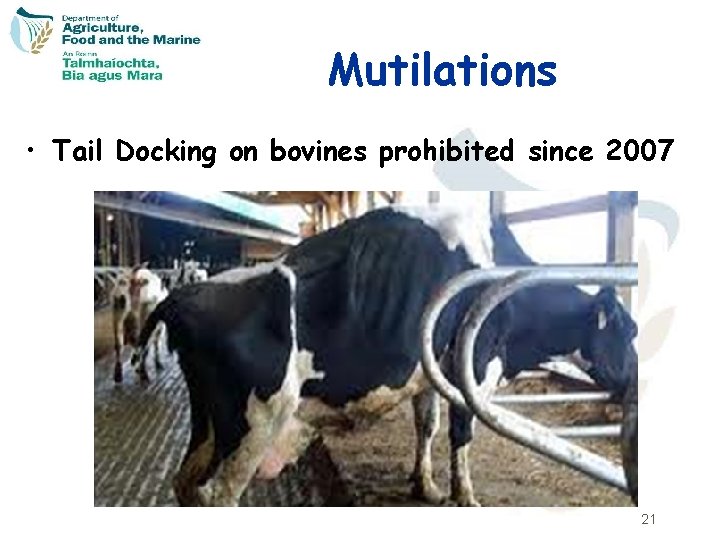
Mutilations • Tail Docking on bovines prohibited since 2007 21
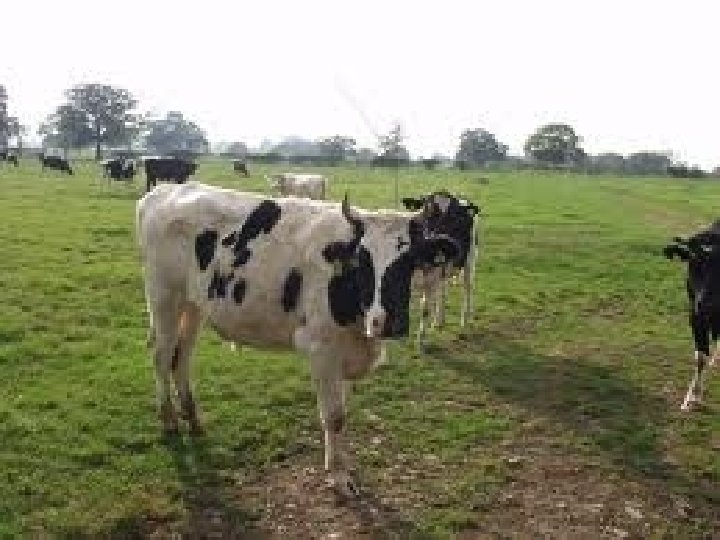
Mutilations • Can’t do the following without a local anaesthetic § § Calves Cattle Lambs Sheep > > 14 days: disbudded 6 months: castrated 7 days: tail docked 3 months: castrated 22
23
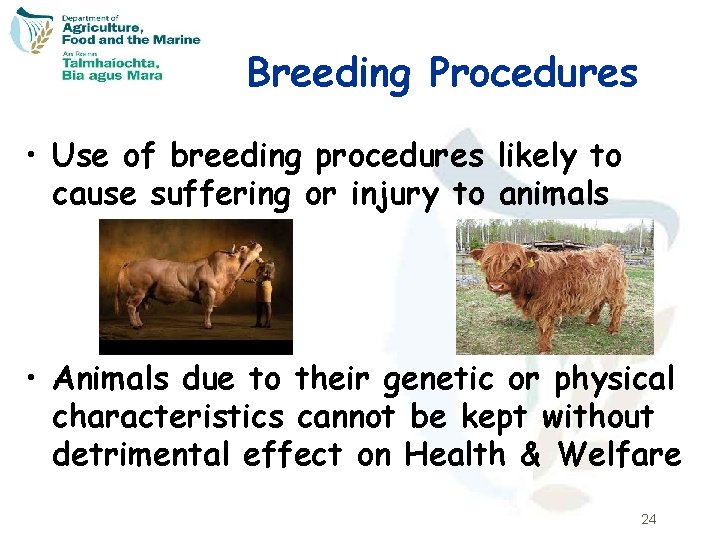
Breeding Procedures • Use of breeding procedures likely to cause suffering or injury to animals • Animals due to their genetic or physical characteristics cannot be kept without detrimental effect on Health & Welfare 24
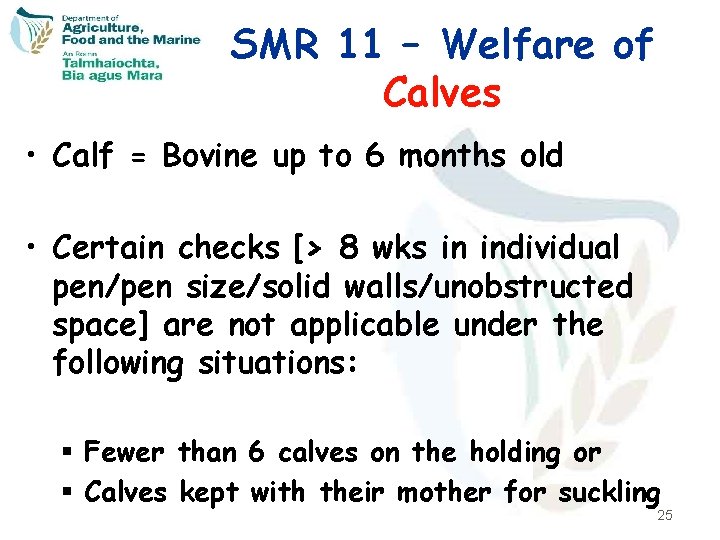
SMR 11 – Welfare of Calves • Calf = Bovine up to 6 months old • Certain checks [> 8 wks in individual pen/pen size/solid walls/unobstructed space] are not applicable under the following situations: § Fewer than 6 calves on the holding or § Calves kept with their mother for suckling 25
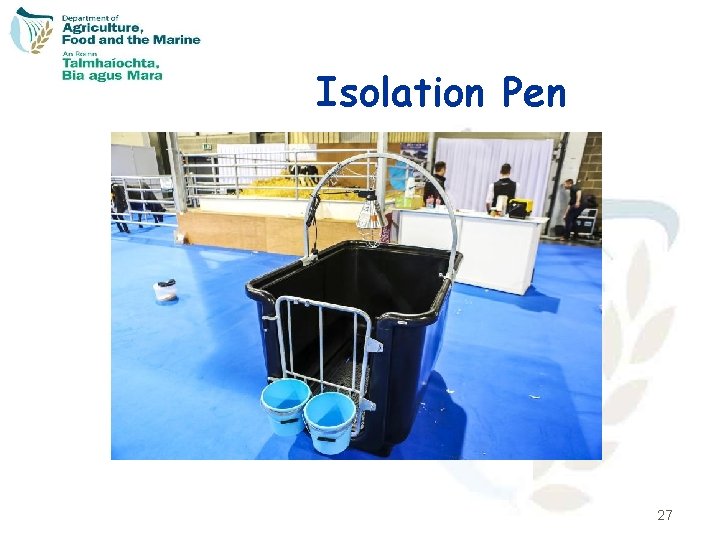
Calf Inspections • Housed calves to be inspected twice/day – outdoor calves once/day • Treat ill calf appropriately (if required, obtain Vet advice ASAP, isolate on dry comfortable bedding) 26
Isolation Pen 27
Freedom of Movement of Calves • Calf Accommodation must allow calf to lie down, rest, stand up, groom itself without difficulty • No tethers (exc. Group-housed -1 hour @ feeding) • Tether use - to allow free movement/no injury • Muzzling not permitted *** Must not be confined to individual pen after 8 weeks without vet cert. 28
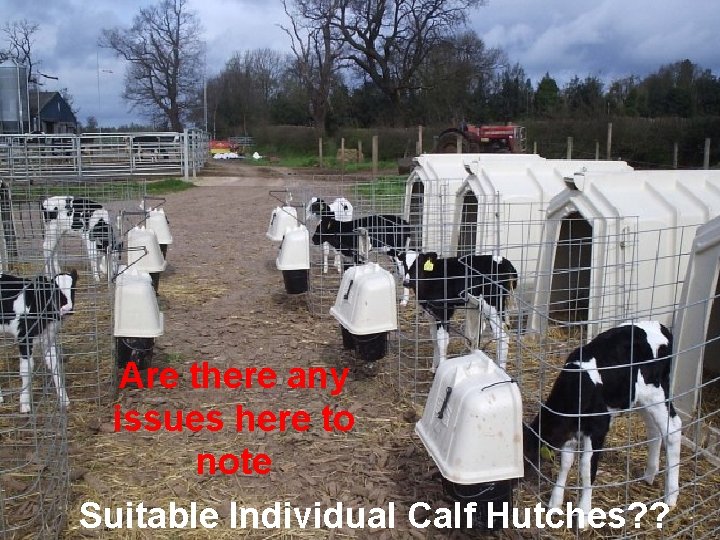
Are there any issues here to note Suitable Individual Calf Hutches? ? 29
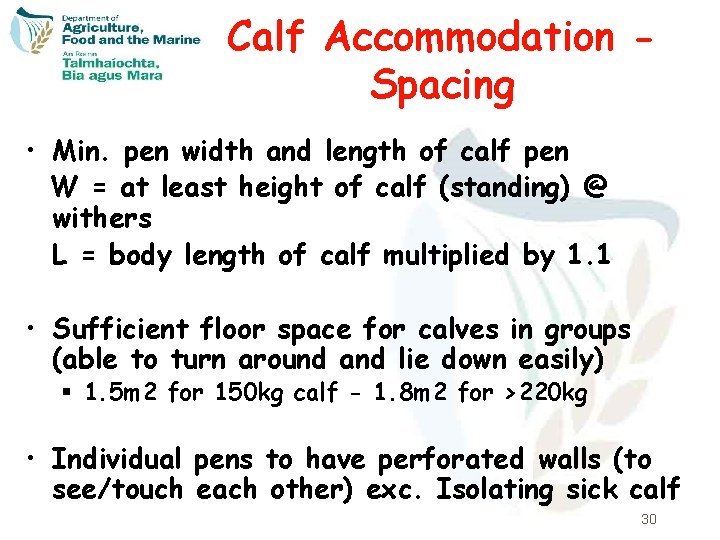
Calf Accommodation Spacing • Min. pen width and length of calf pen W = at least height of calf (standing) @ withers L = body length of calf multiplied by 1. 1 • Sufficient floor space for calves in groups (able to turn around and lie down easily) § 1. 5 m 2 for 150 kg calf - 1. 8 m 2 for >220 kg • Individual pens to have perforated walls (to see/touch each other) exc. Isolating sick calf 30
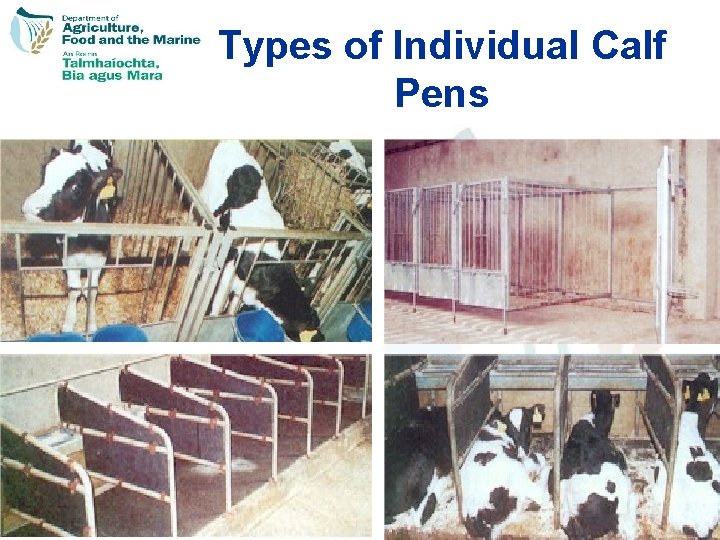
Types of Individual Calf Pens 31
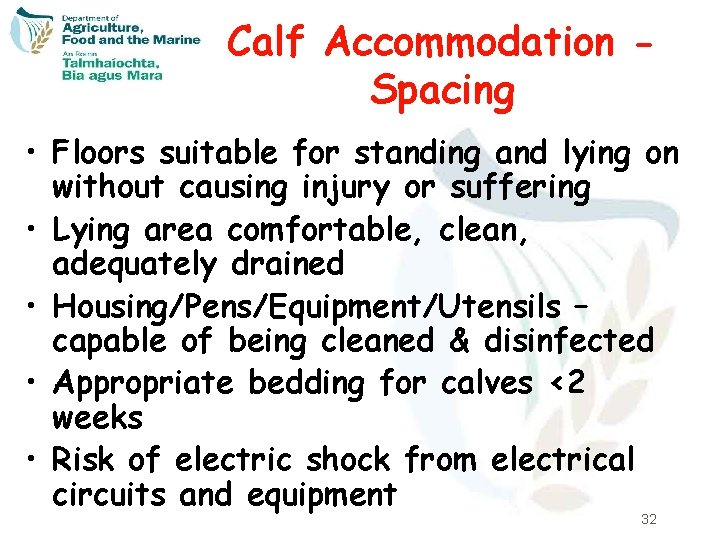
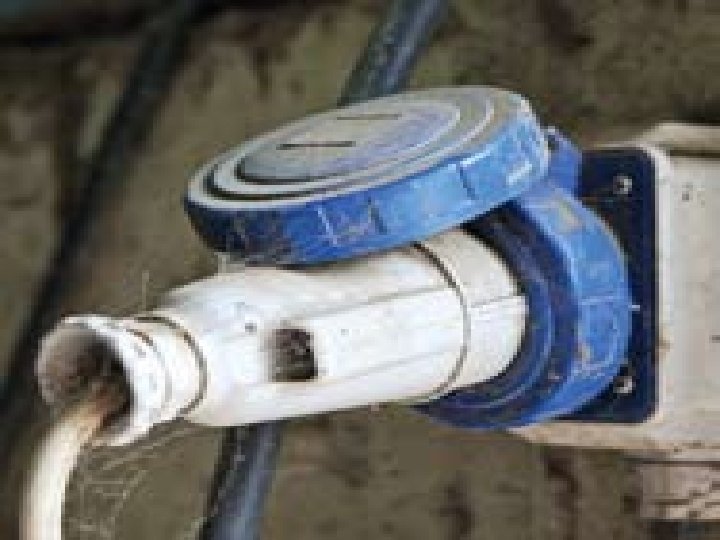
Calf Accommodation Spacing • Floors suitable for standing and lying on without causing injury or suffering • Lying area comfortable, clean, adequately drained • Housing/Pens/Equipment/Utensils – capable of being cleaned & disinfected • Appropriate bedding for calves <2 weeks • Risk of electric shock from electrical circuits and equipment 32
33
Calf Accommodation Lighting • Not to be kept in permanent darkness • Artificially lit buildings need to be lit for 8 hours 34
Calf Nutrition • Provide colostrum within 6 hrs of birth • To be fed at least twice a day • Access to food at same time as others in group • Access to a sufficient quantity of fresh water or other fluids for calves > 2 wks • Min. daily ration fibrous food (e. g. straw) • Sufficient Iron in food • In hot conditions or when ill fresh water to be available at all times 35
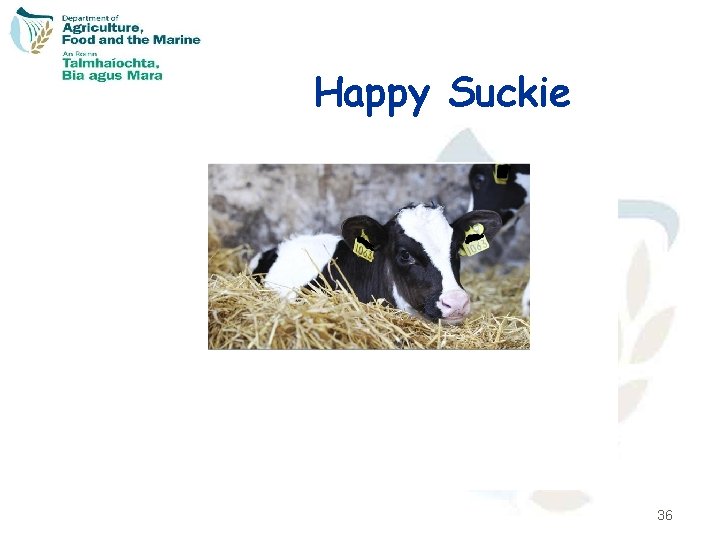
Happy Suckie 36
SMR 12 – Welfare of Pigs Inspection carried out by DAFM Veterinary Inspector 37
Pig Inspections Sows/Gilts & Weaners/Rearing Pigs • Measures must be taken to prevent fighting where in groups e. g. , • providing plentiful straw • separating aggressive pigs • minimising/early mixing 38
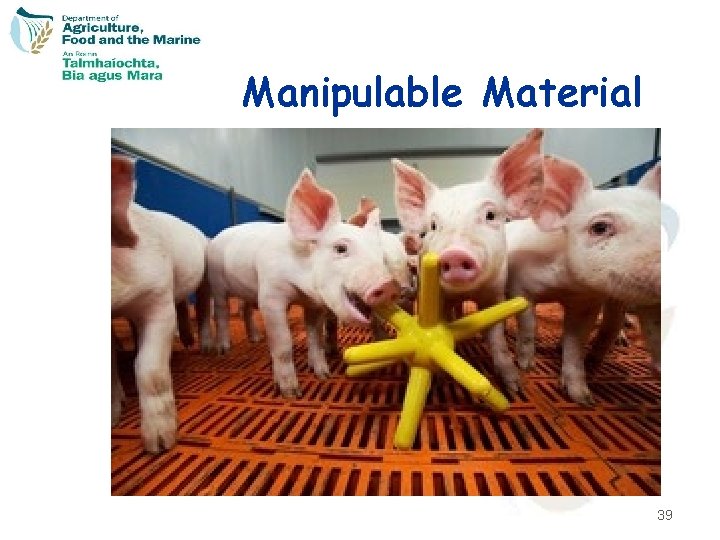
Manipulable Material 39
Pig Inspections • Individual pens for sick/injured/bullied pigs must allow pig to turn around easily • Use of tranquillising medicines to facilitate mixing to be limited and must be with consultation of Vet 40
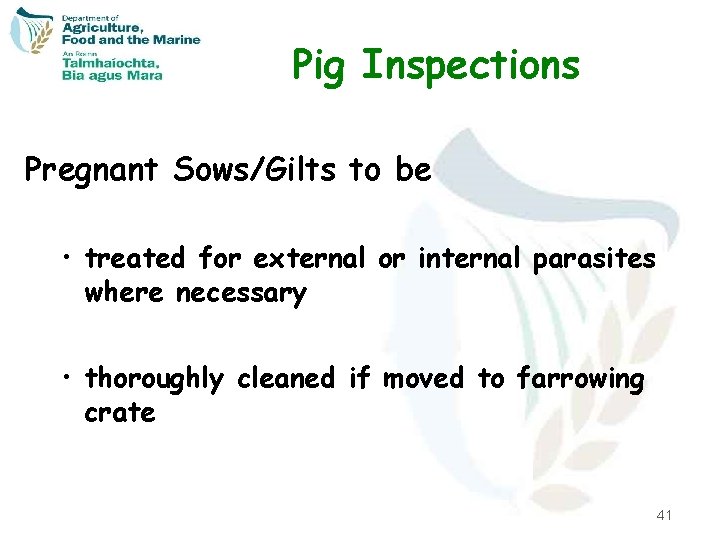
Pig Inspections Pregnant Sows/Gilts to be • treated for external or internal parasites where necessary • thoroughly cleaned if moved to farrowing crate 41
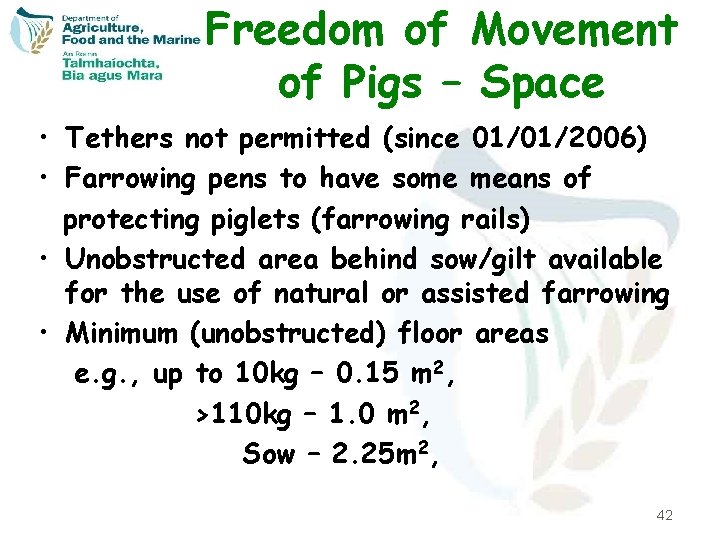
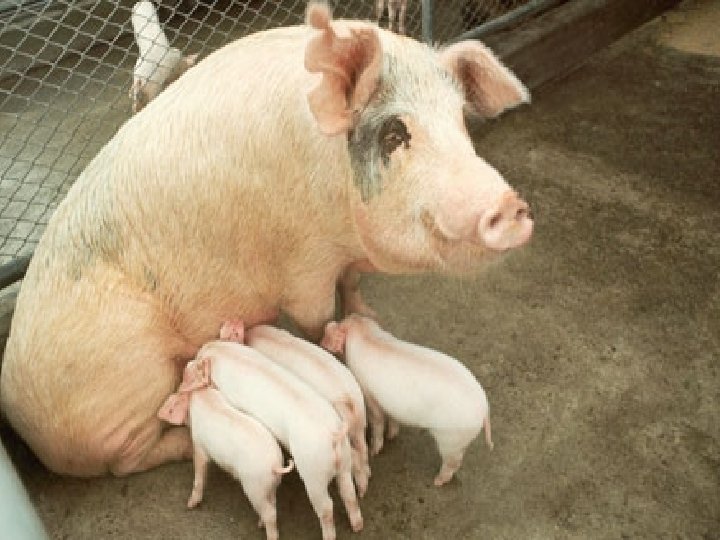
Freedom of Movement of Pigs – Space • Tethers not permitted (since 01/01/2006) • Farrowing pens to have some means of protecting piglets (farrowing rails) • Unobstructed area behind sow/gilt available for the use of natural or assisted farrowing • Minimum (unobstructed) floor areas e. g. , up to 10 kg – 0. 15 m 2, >110 kg – 1. 0 m 2, Sow – 2. 25 m 2, 42
43
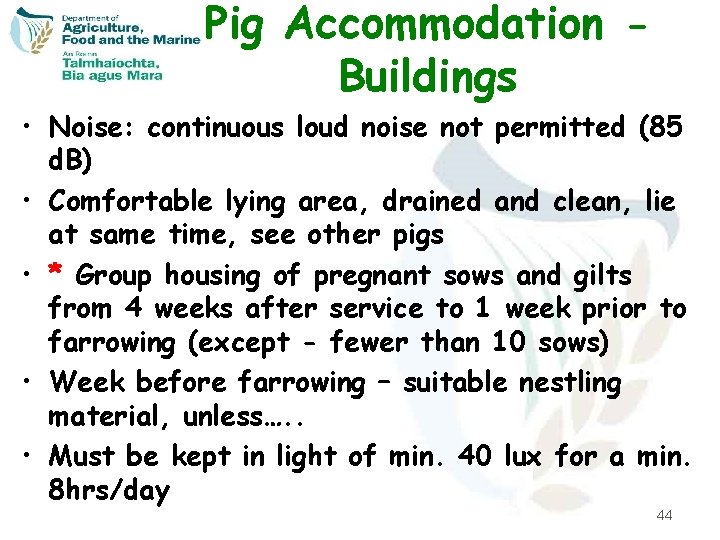
Pig Accommodation Buildings • Noise: continuous loud noise not permitted (85 d. B) • Comfortable lying area, drained and clean, lie at same time, see other pigs • * Group housing of pregnant sows and gilts from 4 weeks after service to 1 week prior to farrowing (except - fewer than 10 sows) • Week before farrowing – suitable nestling material, unless…. . • Must be kept in light of min. 40 lux for a min. 8 hrs/day 44
Pig Accommodation - Floors • Concrete slatted floors for pigs in groups § Max. width of opening - 11 mm, piglet § Min. slat width – 50 mm for piglets • (Weaners - rearing pigs - gilts and sows) • Floors to be designed not to cause injury or pain – smooth not slippery, weight/size • Boar pens: § allow boar to turn around, hear, smell and see other pigs (6 m 2 – adult boar) § Natural service – min. 10 m 2 45
Pig Weaning Procedures • No piglet shall be weaned <28 days unless for Health & Welfare reason of dam or piglet • Can be weaned on day 21 if moved into specialised housing that is thoroughly cleansed and disinfected to minimise transmission of disease • Also for piglets – § rest together at the same time and suckle without difficulty 46
Pig Nutrition • Permanent access to sufficient quantity of manipulable material for growing pigs • All pigs must be fed at least once a day, each pig to have access to food @ same time (in groups) • At >2 weeks, must have permanent access to sufficient freshwater • Dry pregnant Sows + Gilts, sufficient bulky or high fibre food as well as high energy food 47
Pig Mutilations • Tail docking/teeth clipping not to be carried out routinely unless evidence of injuries to other pigs – other measures to be taken first • Castration/tail docking after day 7 only under anaesthetic by Vet 48
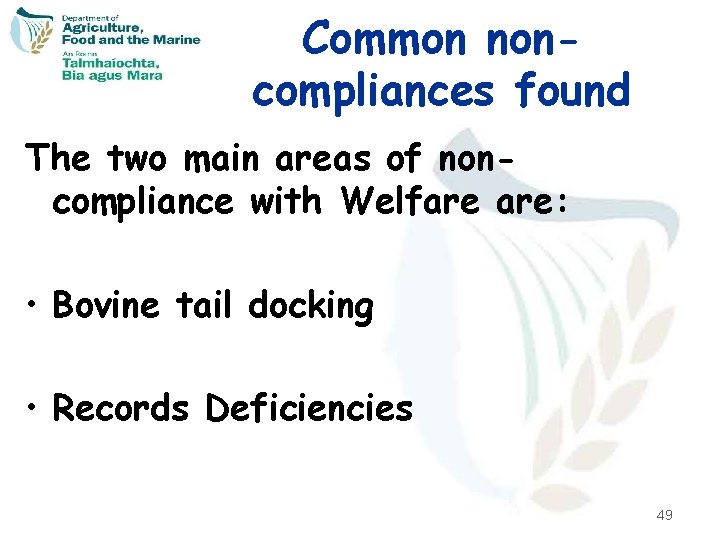
Common noncompliances found The two main areas of noncompliance with Welfare are: • Bovine tail docking • Records Deficiencies 49
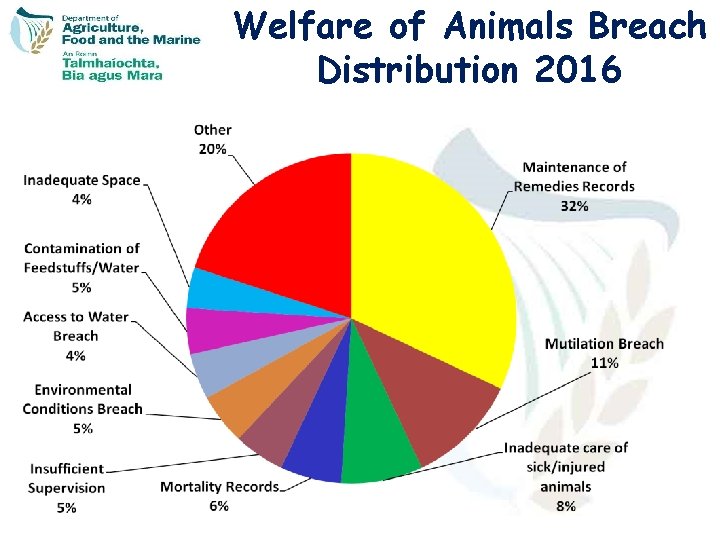
Welfare of Animals Breach Distribution 2016
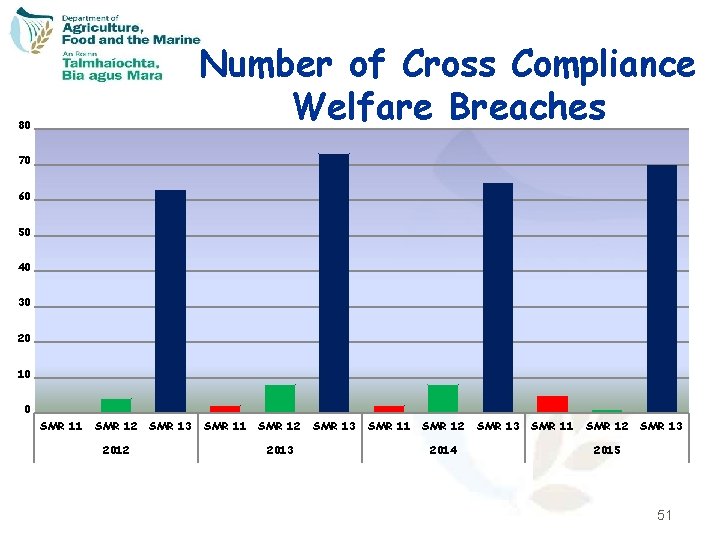
Number of Cross Compliance Welfare Breaches 80 70 60 50 40 30 20 10 0 SMR 11 SMR 12 2012 SMR 13 SMR 11 SMR 12 2013 SMR 11 SMR 12 2014 SMR 13 SMR 11 SMR 12 SMR 13 2015 51
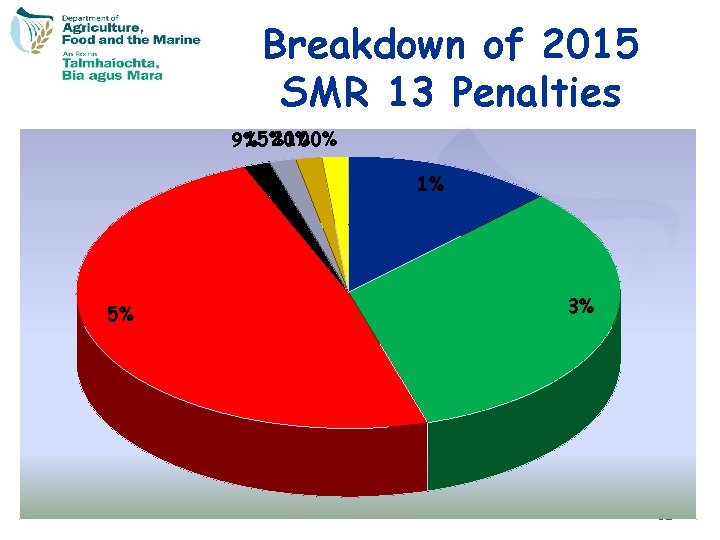
Breakdown of 2015 SMR 13 Penalties 15% 20% 100% 9% 1% 5% 3% 52
Thank you for your attention 53