
Farming with Dynamite Using the Web to Teach
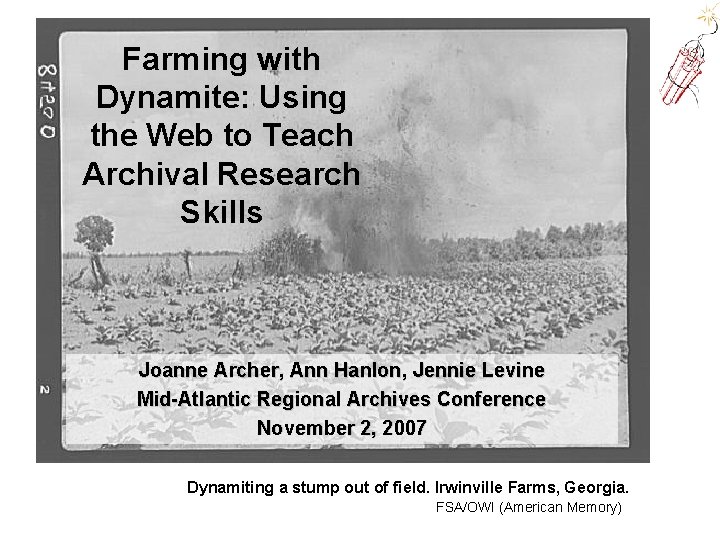
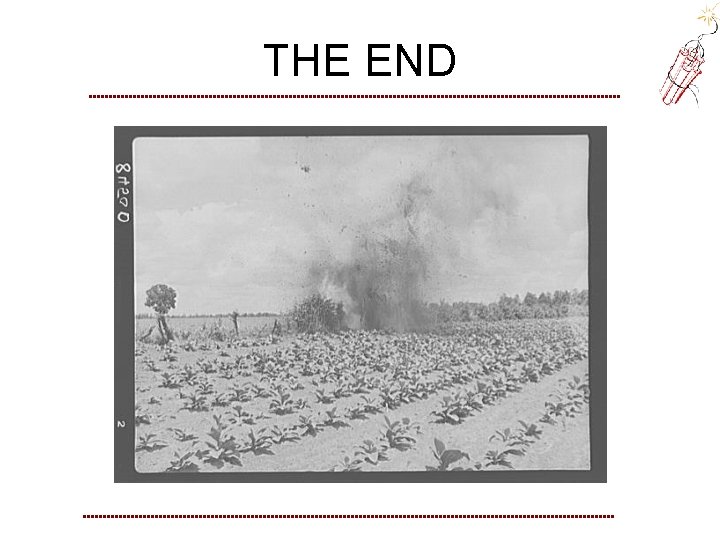
Farming with Dynamite: Using the Web to Teach Archival Research Skills Joanne Archer, Ann Hanlon, Jennie Levine Mid-Atlantic Regional Archives Conference November 2, 2007 Dynamiting a stump out of field. Irwinville Farms, Georgia. FSA/OWI (American Memory)
Farming with Dynamite • Increase yields in previously unproductive soil • Required careful technique – it’s dynamite after all
Farming with Dynamite • Creates advantages that weren’t there before, but still requires skill and knowhow • It’s the techniques, not the tools, that matter most (though the tools certainly increase the effectiveness of the techniques)
TNT • Techniques Not Tools • So again: It’s the techniques, not the tools, that matter most
The Questions • Does the web make searching for primary sources easier? • Do they understand what they have found when they find it? • How can we help them?
Outline • Context and methodology of the study • Analysis of results – Interpreting primary sources – Library vs. Archival Research • Applying our conclusions to practice – Tools – Instruction
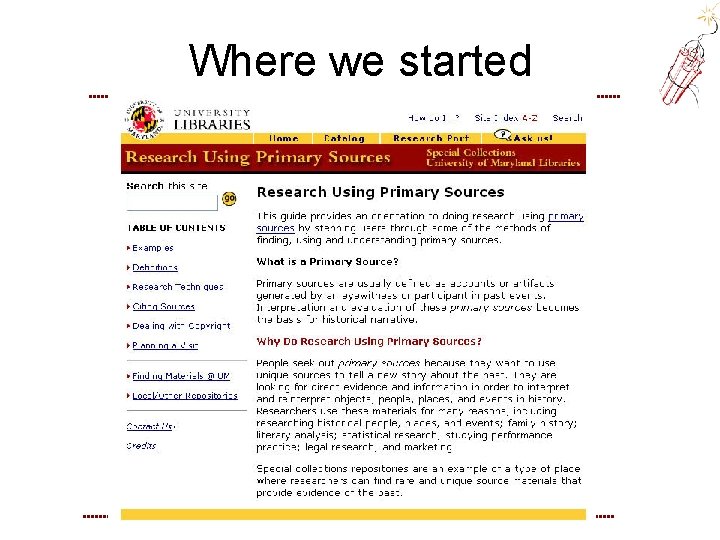
Where we started • Reorganization of Special Collections web pages • Combining accumulated “tips” into an online guide
Where we started
What’s been done • The question of Primary Source Literacy Elizabeth Yakel, “Listening to Users” Archival Issues 26: 2 (2002) Susan Hamburger, “How Researchers Search for Manuscript and Archival Collections. ” Journal of Archival Organization 2: 1/2 (2005) Elizabeth Yakel and Deborah A. Torres, “AI: Archival Intelligence and User Expertise, " American Archivist 66 (Spring/Summer 2003) Elizabeth Yakel, “Information Literacy for primary sources: creating a new paradigm for archival research education. ” OCLC Systems & Services 20: 2 (2004) Shan Sutton and Lorrie Knight, “Beyond the Reading Room: Integrating Primary and Secondary Sources into Library Instruction. ” The Journal of Academic Librarianship 32: 3 (2006)
What’s been done • The impact of the internet on archival research • “…. how many people find a site, search around, and then leave frustrated, perplexed by the archival jargon, lost in the architecture of the site, and stymied by endless links through various surrogates. ” (Yakel)
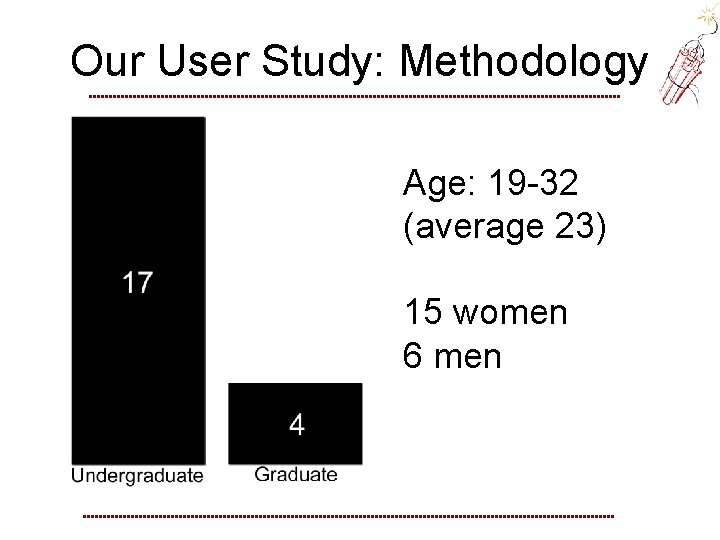
Our User Study: Methodology Age: 19 -32 (average 23) 15 women 6 men
Our User Study: Methodology “Studying college Age: 19 -32 (average 23) students’ Internet habits can yield insight into future online 15 women trends. ” 6 men (Pew Internet and American Life study, 2002)
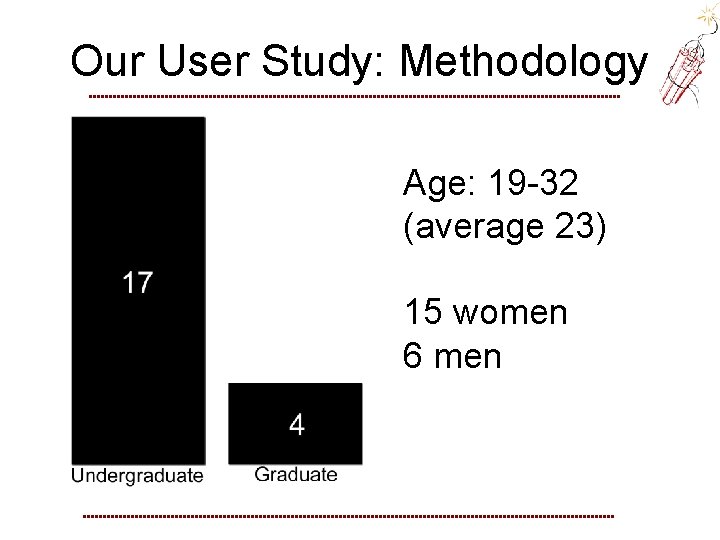
Our User Study: Methodology Age: 19 -32 (average 23) 15 women 6 men
Our User Study: Methodology
Our User Study: Methodology 95% have used primary sources 52% have visited a special collections repository
Our User Study: Methodology • • • Questionnaires and Research-based Tasks Observation of website navigation Digital audio and video recording Coding using Atlas. TI Anonymity of participants
Outline • Context and methodology of the study • Analysis of results – Interpreting primary sources – Library vs. Archival Research • Applying our conclusions to practice – Tools – Instruction
Analysis of Results Students could: • • Define the difference between primary and secondary sources Use the library catalog and selected databases Use subject browsing Pick up on new terminology and tools when shown how to use them
Analysis of Results Students could not: • • • Recognize the continuum between primary and secondary sources Start their search for primary sources Effectively utilize tools they were already familiar with to locate primary sources Locate other tools Understand archival description and access
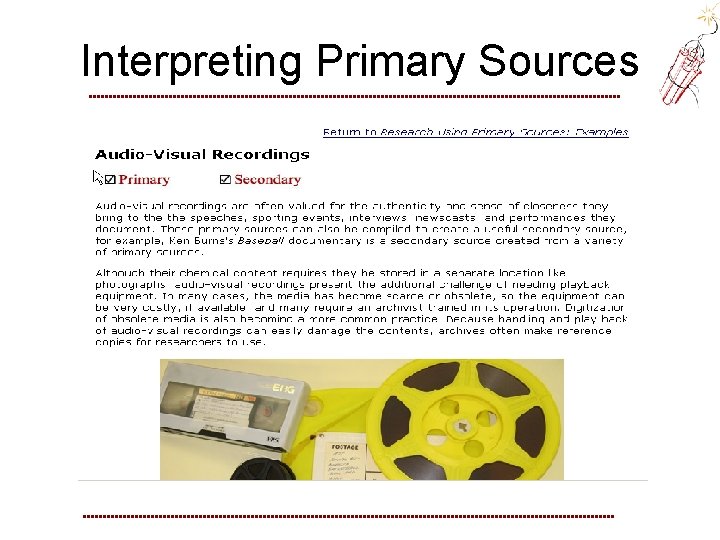
Interpreting Primary Sources • Primary source and Secondary source are not absolute categories Biography of Lincoln by Carl Sandburg Lincoln Scholar Sandburg Scholar Secondary Source Primary Source
Interpreting Primary Sources
Interpreting Primary Sources “…My main goal would be to actually find the materials, as opposed to learn about what a primary source is. Because I already know what a primary source is at this point in my life. . . But then, for me, if I was looking for something I would want to skip to finding materials. ” Grace, Senior, Dept of Govt and Politics
Interpreting Primary Sources “…My main goal would be to actually find the materials, as opposed to learn about what Students believe that primary a primary source is. Because I already sources are a predefined body know what a primary source is at this point in my life. . . But then, for me, if I was of material looking for something I would want to skip to finding materials. ” Grace, Senior, Dept of Govt and Politics
Library vs. Archival Research • Students know how to do library research The Next Step is to: UNDERSTAND THE DIFFERENCE BETWEEN LIBRARY and ARCHIVAL RESEARCH
Library vs. Archival Research Key differences: • Terminology • How to locate material
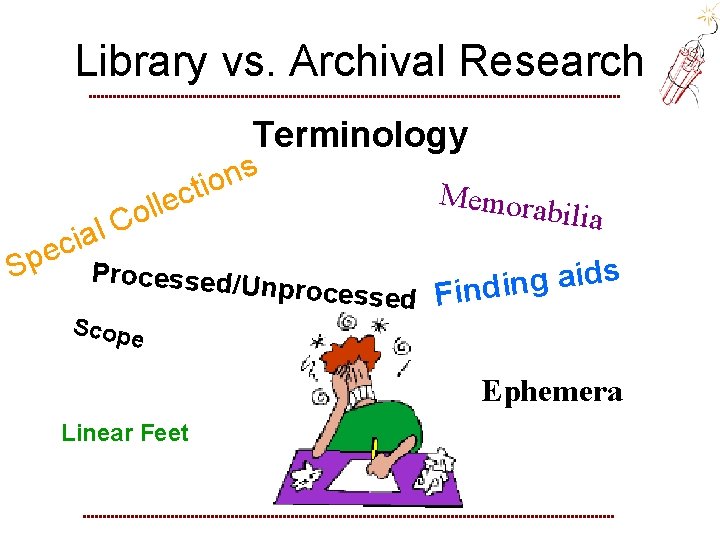
Library vs. Archival Research Terminology s n ctio le l o C S l a i pec Memora bilia Processed/U s d i a g n nprocessed Findi Scop e Ephemera Linear Feet
Library vs. Archival Research • Jacob: Find a finding aid. . . . Ok. I’m a little unclear about what that means. • Interviewer: What a finding aid is? • Jacob: Yeah.
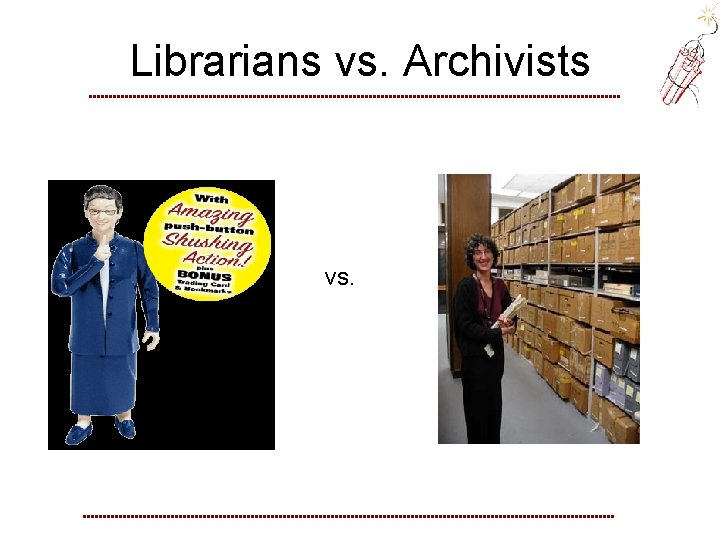
Librarians vs. Archivists vs.
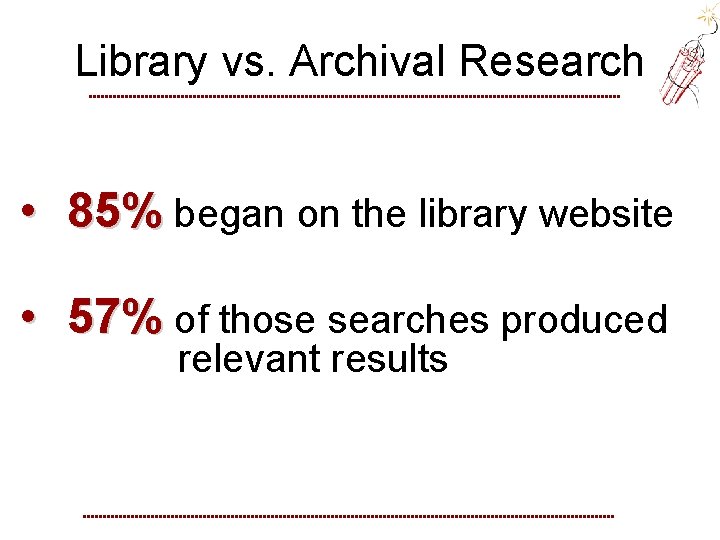
Library vs. Archival Research • 85% began on the library website • 57% of those searches produced relevant results
Library vs. Archival Research Problems Locating Primary Sources • Overcomplication of research • Lack of knowledge about how to use familiar tools to find primary sources • Unawareness of other tools that might be more effective.
Library vs. Archival Research Students ignore • • Footnote tracing Narrowing a research topic Topic exploration Talking to experts
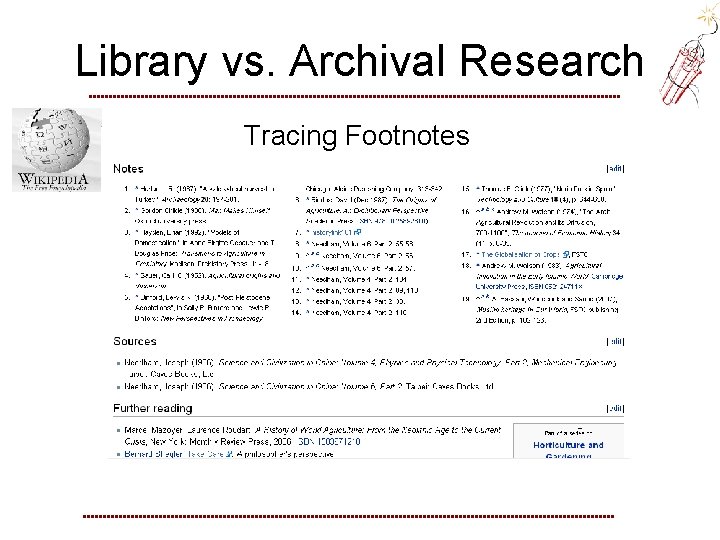
Library vs. Archival Research Tracing Footnotes
Library vs. Archival Research Old Tools: New Techniques • Browsing worked • Problematic search terms
Library vs. Archival Research • • Use formats to limit Limit by location Limit by date Use specialized subject terms such as History--Sources • Using subject heading linking to find more “like” materials
Library vs. Archival Research The Librarian Effect?
Library vs. Archival Research
Library vs. Archival Research “I don’t even know, can you use Research Port to find primary sources, I don’t even know if that’s possible. ” “Madeline, ” Senior, Government and Politics Major
Library vs. Archival Research Primary Source Literacy • • • Develop a better understanding of the definition of primary sources Become familiar with specialized terminology and jargon Understand what tools are available and how to use them to locate primary sources
Outline • Context and methodology of the study • Analysis of results – Interpreting primary sources – Library vs. Archival Research • Applying our conclusions to practice – Tools – Instruction
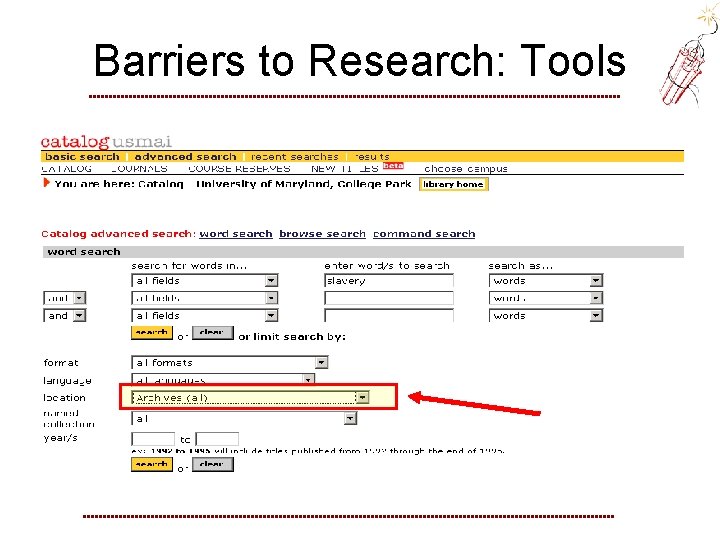
Barriers to Research: Tools
Barriers to Research: Tools
Barriers to Research: Tools
Barriers to Research: Tools “Helping users navigate and utilize finding aids definitely requires more support than online systems currently provide, and the development of virtual reference services directly tied to EAD systems is needed. ” -Elizabeth Yakel
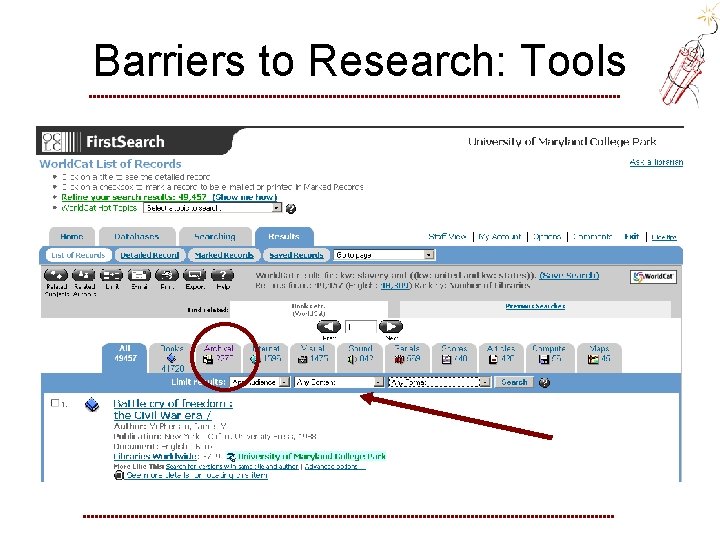
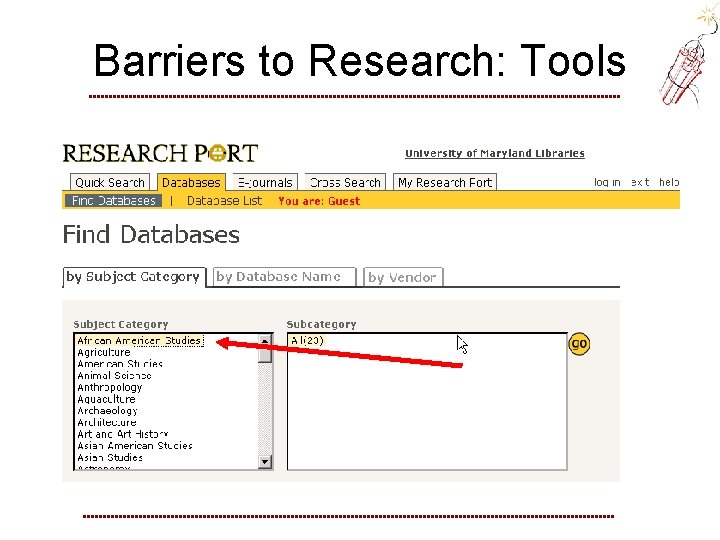
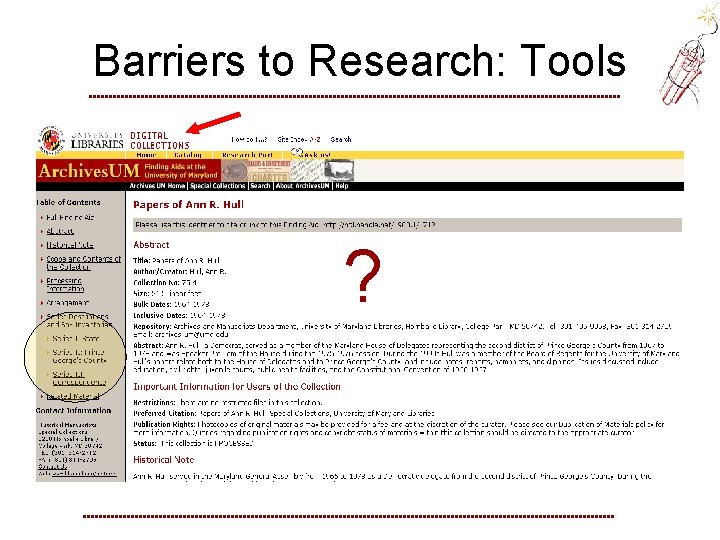
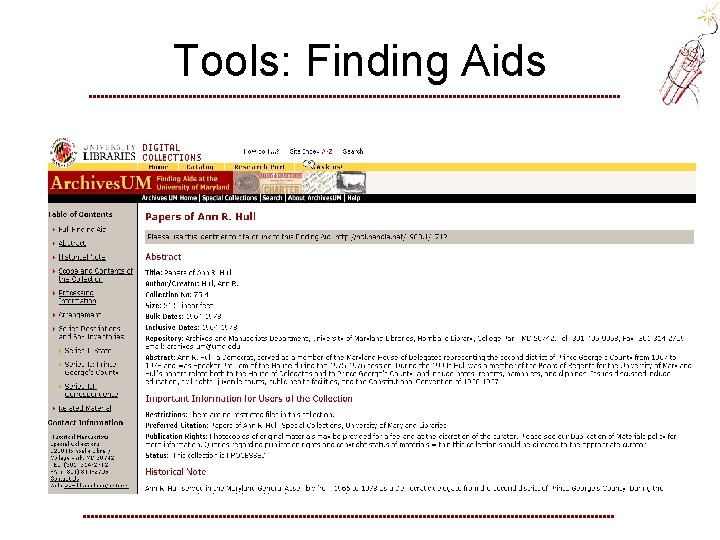
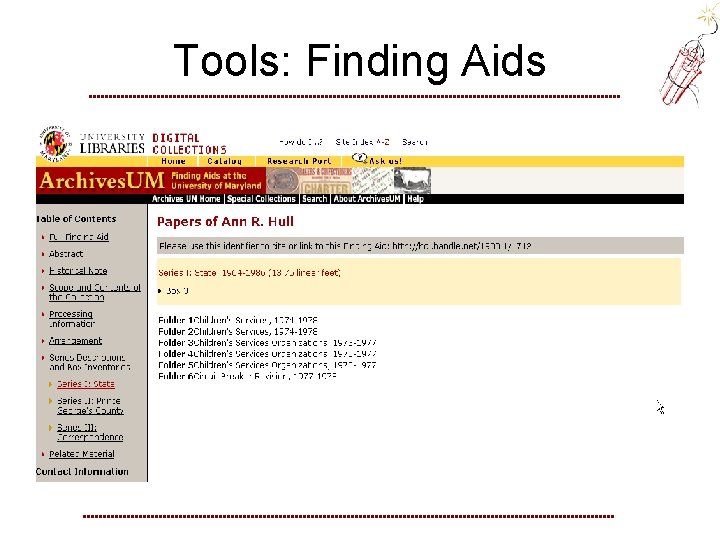
Barriers to Research: Tools Finding Aid Confusion: • Terminology (finding aid, series, scope and content, linear feet) • Difficult to search within finding aids • Expectations of what is available online • Archival provenance and arrangement
Barriers to Research: Tools ?
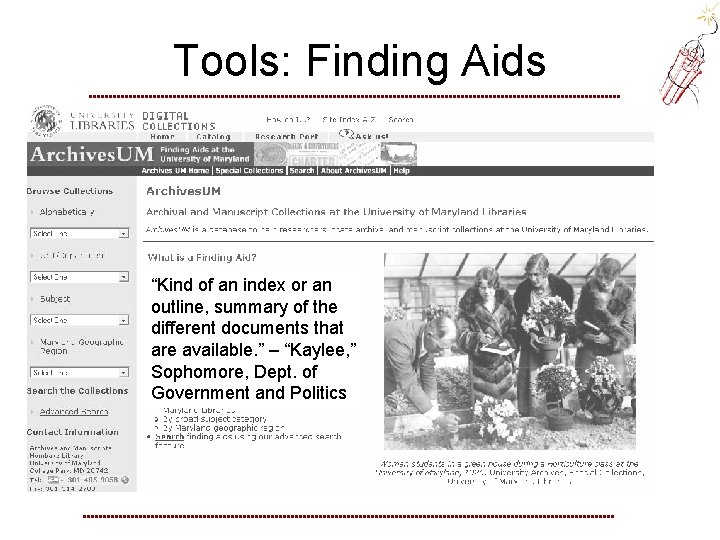
Tools: Finding Aids “Kind of an index or an outline, summary of the different documents that are available. ” – “Kaylee, ” Sophomore, Dept. of Government and Politics
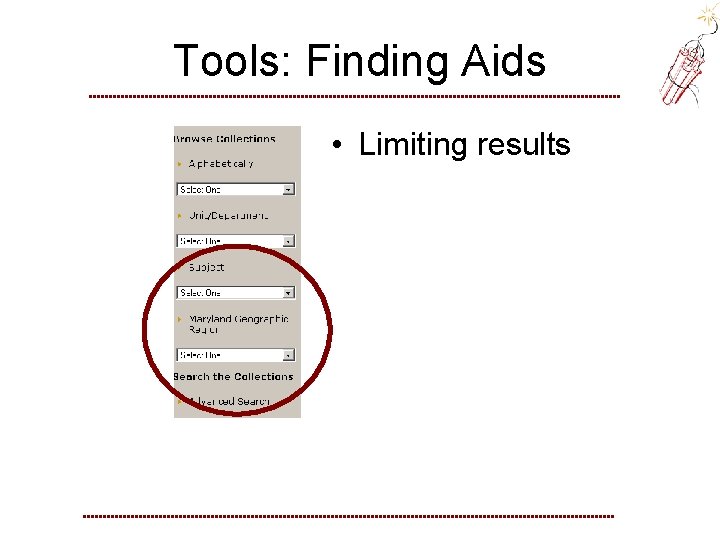
Tools: Finding Aids • Limiting results
Tools: Finding Aids
Tools: Finding Aids
Tools: Finding Aids
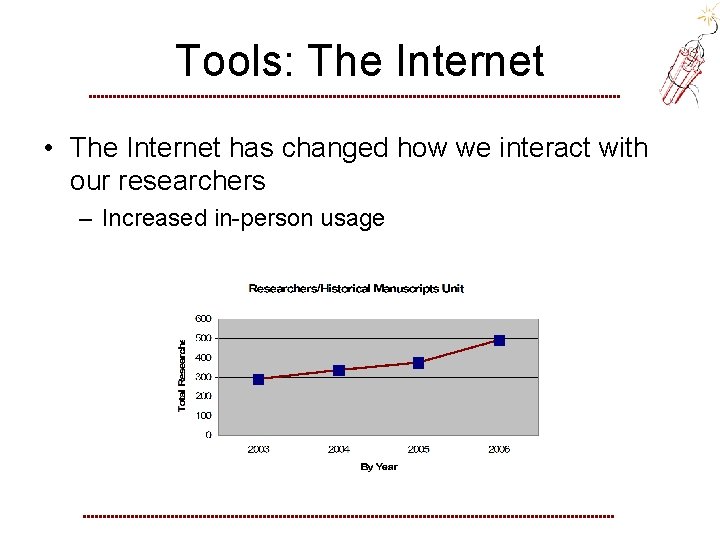
Tools: The Internet • The Internet has changed how we interact with our researchers – Increased in-person usage
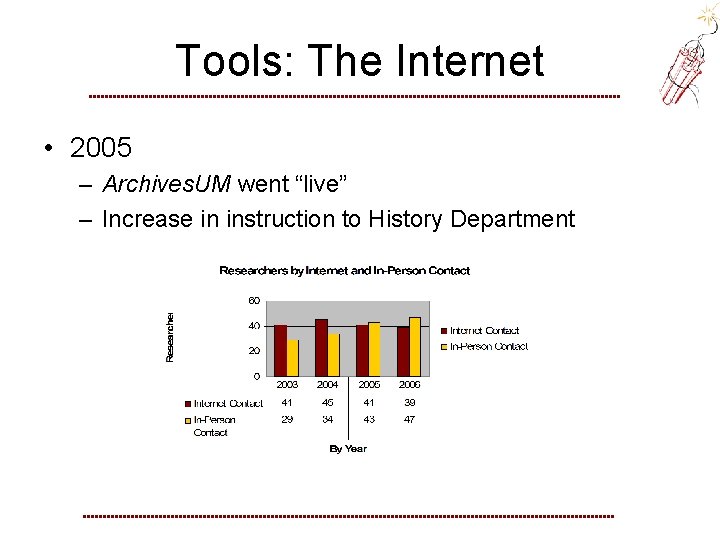
Tools: The Internet • 2005 – Archives. UM went “live” – Increase in instruction to History Department
Tools: The Internet • The rush to digitize the written record is one of a number of critical moments in the long saga of our drive to accumulate, store, and retrieve information efficiently. It will result not in the infotopia that the prophets conjure up but in one in a long series of new information ecologies, all of them challenging, in which readers, writers, and producers of text have learned to survive. - Anthony Grafton, The New Yorker, October 30, 2007
Outline • Context and methodology of the study • Analysis of results – Interpreting primary sources – Library vs. Archival Research • Applying our conclusions to practice – Tools – Instruction
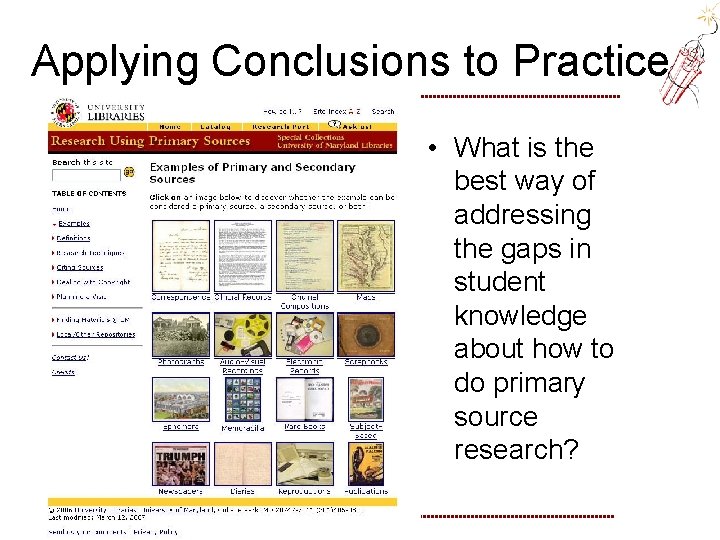
Applying Conclusions to Practice • What is the best way of addressing the gaps in student knowledge about how to do primary source research?
Applying Conclusions to Practice • The web guide should: More clearly address the key components of primary source literacy – How to formulate a research question – Defining and interpreting primary sources – How searching for archival resources differs from searching for library resources
Applying Conclusions to Practice • Anticipated changes to web tutorial – Reduce text and increase visual cues – Create a more guided, interactive tutorial – Create classroom-ready PDF handouts
Applying Conclusions to Practice • Instruction Works! – Close to 100% of incoming freshman at the University of Maryland receive Library instruction – Face-to-face interaction sticks with students “. . . because a librarian talked to my class and showed us how to use this. ”
Applying Conclusions to Practice • What does instruction look like? – Melting pot of techniques • Demonstrates the research continuum • Approachability • Excitement – Give reasons to return to the web guide after we leave the classroom
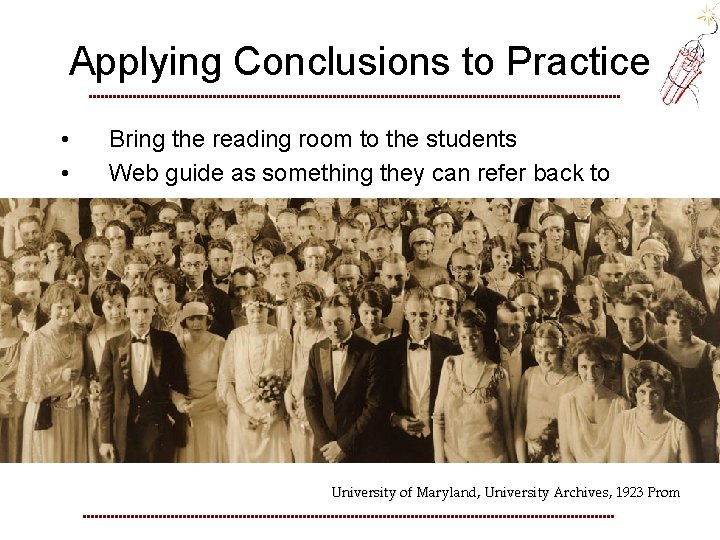
Applying Conclusions to Practice • • Bring the reading room to the students Web guide as something they can refer back to University of Maryland, University Archives, 1923 Prom
Conclusions Our next steps: • More outreach • Redesigning website • Modify tools (online finding aids, catalog) when possible
Conclusions Our next steps: How to reach users we will never be able to reach through library instruction…
THE END
- Slides: 63