
Farming Practices Soil Erosion Water Quality Wildlife Learning

- Slides: 20
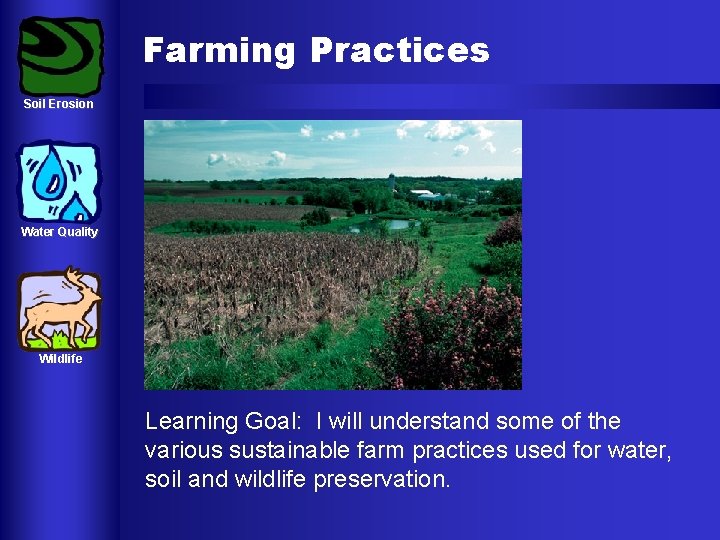
Farming Practices Soil Erosion Water Quality Wildlife Learning Goal: I will understand some of the various sustainable farm practices used for water, soil and wildlife preservation.
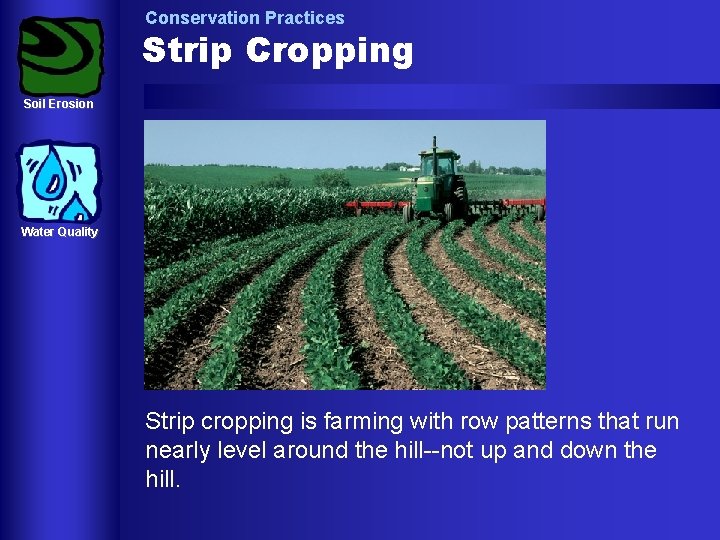
Conservation Practices Strip Cropping Soil Erosion Water Quality Strip cropping is farming with row patterns that run nearly level around the hill--not up and down the hill.
Strip Cropping Soil Erosion How it helps. . . • Strip cropping can reduce soil erosion by as much as 50% from up and down hill farming Water Quality • By reducing sediment and runoff, and increasing water filtration, strip cropping promotes better water quality
Cross-Slope Farming (Contour Farming) Soil Erosion Water Quality Profits Wildlife Contour farming creates a series of dams because crops are planted on the slope of the land.
Contour Farming Soil Erosion How it helps. . . Water Quality Profits Wildlife • Contour farming reduces soil erosion and protects water quality
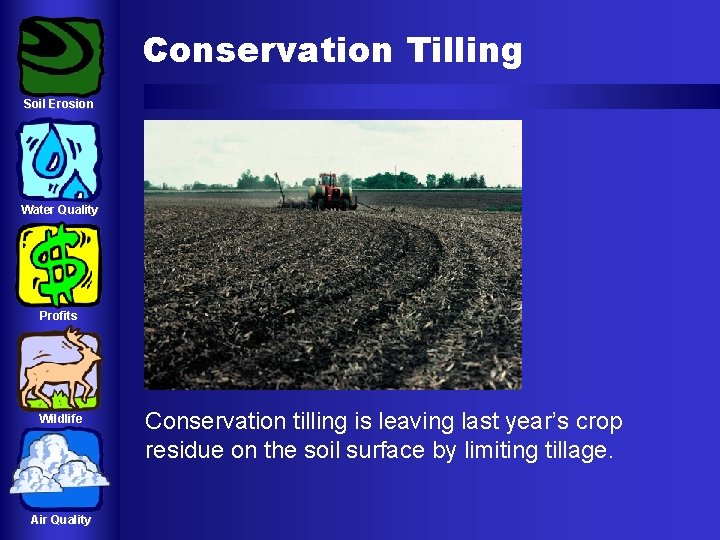
Conservation Tilling Soil Erosion Water Quality Profits Wildlife Air Quality Conservation tilling is leaving last year’s crop residue on the soil surface by limiting tillage.
Conservation Tilling Soil Erosion How it helps. . . Water Quality • Ground cover prevents soil erosion and protects water quality • Residue improves soil tilth and adds organic matter to the soil as it decomposes Profits • Fewer trips and less tillage reduces soil compaction Wildlife Air Quality • Time, energy and labor savings are possible with fewer tillage trips
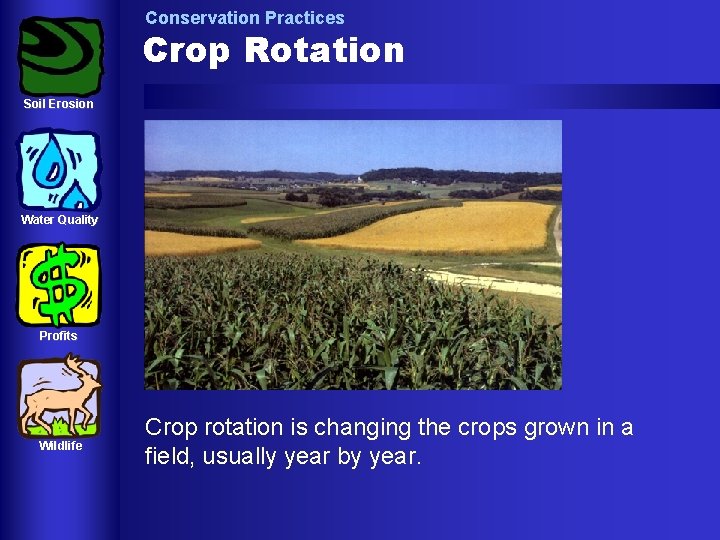
Conservation Practices Crop Rotation Soil Erosion Water Quality Profits Wildlife Crop rotation is changing the crops grown in a field, usually year by year.
Conservation Practices Crop Rotation Soil Erosion How it helps. . . Water Quality Profits • Pesticide costs may be reduced by naturally breaking the cycles of weeds, insects, and diseases • Grass and legumes in a rotation protect water quality by preventing excess nutrients or chemicals from entering water supplies • Crop rotations add diversity to an operation Wildlife
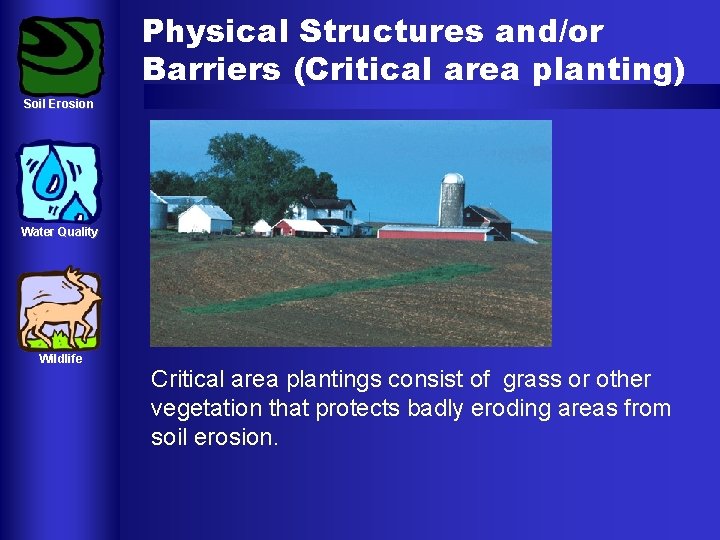
Physical Structures and/or Barriers (Critical area planting) Soil Erosion Water Quality Wildlife Critical area plantings consist of grass or other vegetation that protects badly eroding areas from soil erosion.
Conservation Practices Critical Area Planting Soil Erosion How it helps. . . • It reduces soil erosion Water Quality Wildlife • A vegetated area improves water quality by reducing the amount of sediment, nutrients, and chemicals running off farmland • Vegetation can be planted to provide small areas of nesting cover for birds and small animals
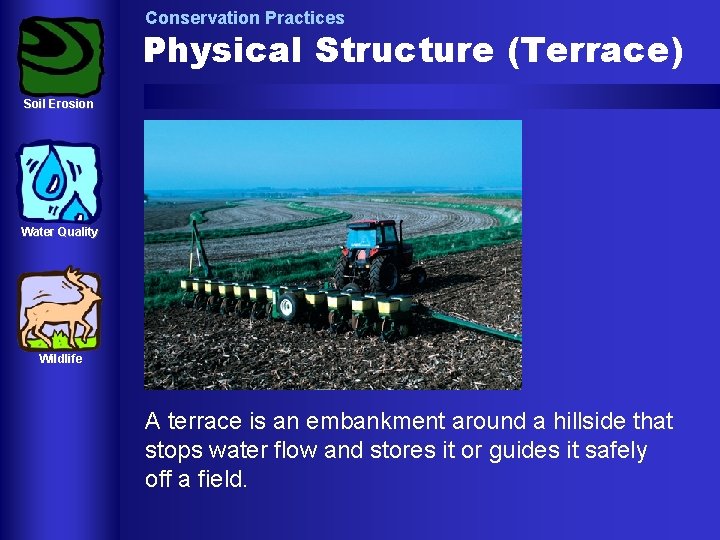
Conservation Practices Physical Structure (Terrace) Soil Erosion Water Quality Wildlife A terrace is an embankment around a hillside that stops water flow and stores it or guides it safely off a field.
Conservation Practices Terrace Soil Erosion How it helps. . . • Both water and soil quality are improved Water Quality Wildlife • Terraces with grass on front or backslopes can provide valuable nesting habitat
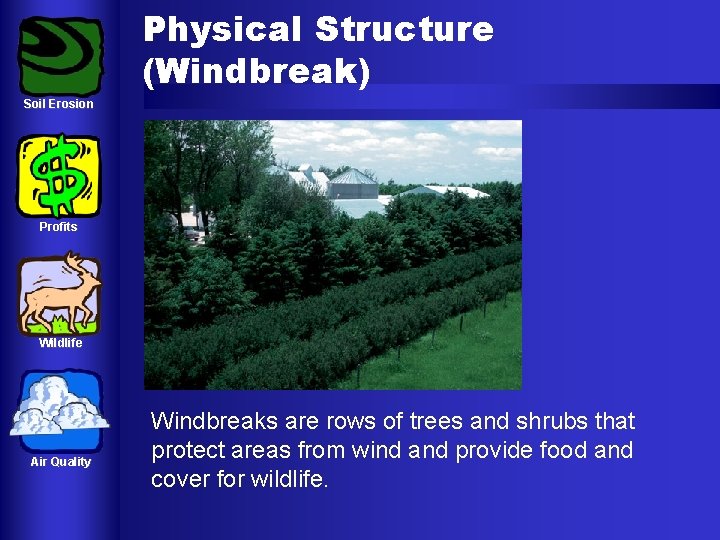
Physical Structure (Windbreak) Soil Erosion Profits Wildlife Air Quality Windbreaks are rows of trees and shrubs that protect areas from wind and provide food and cover for wildlife.
Conservation Practices Windbreak Soil Erosion How it helps. . . Profits • A windbreak reduces wind erosion, conserves energy, reduces heating bills and beautifies a farmstead • Trees serve as a sound barrier, muffling road noise Wildlife • Trees and shrubs provide wildlife food and cover • Improved livestock weight gains can be expected when livestock are protected from winter winds and snow Air Quality
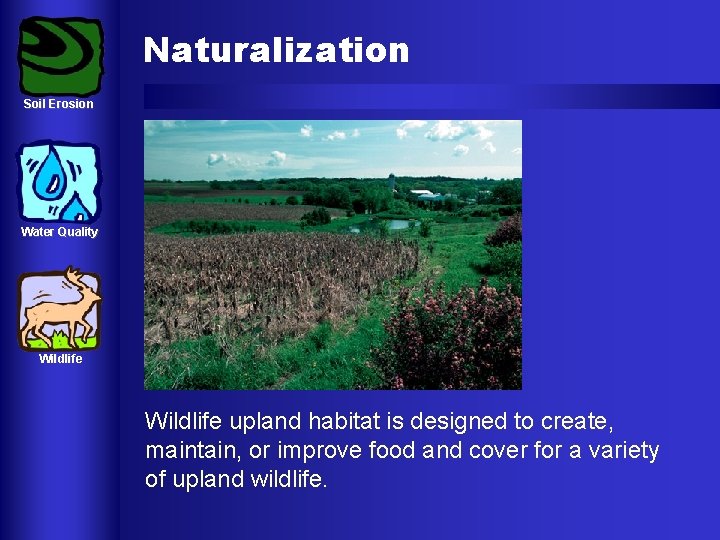
Naturalization Soil Erosion Water Quality Wildlife upland habitat is designed to create, maintain, or improve food and cover for a variety of upland wildlife.
Naturalization Soil Erosion How it helps. . . Water Quality • Ground cover reduces soil erosion, adds organic matter to the soil, filters runoff, and increases infiltration • It can add value to your farmstead Wildlife • Planned wildlife habitat provides food and cover for wildlife.
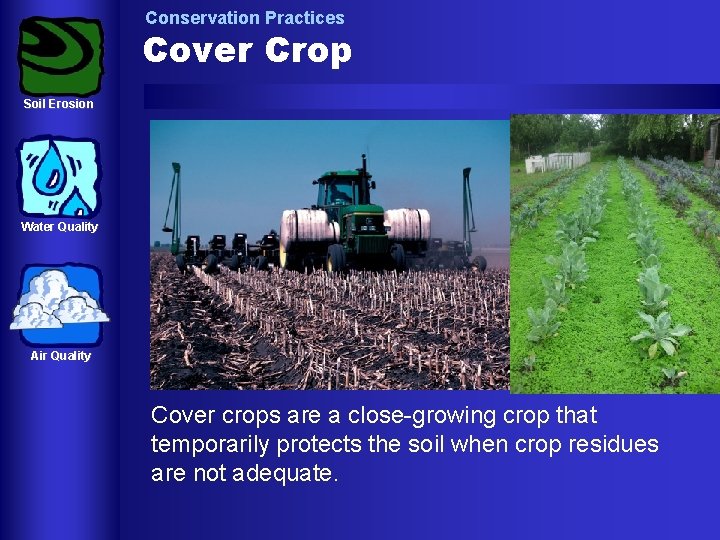
Conservation Practices Cover Crop Soil Erosion Water Quality Air Quality Cover crops are a close-growing crop that temporarily protects the soil when crop residues are not adequate.
Conservation Practices Cover Crop Soil Erosion How it helps. . . Water Quality Air Quality • Cover crops keep ground covered, add organic matter to the soil, trap nutrients, improve soil quality, and reduce weed competition
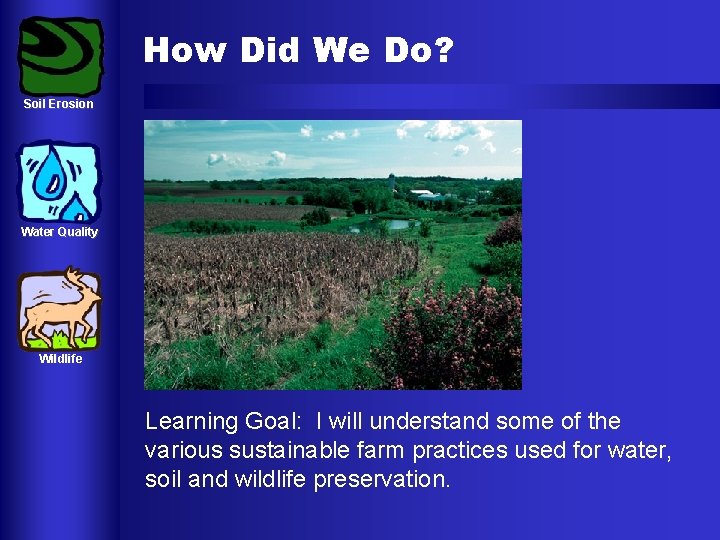
How Did We Do? Soil Erosion Water Quality Wildlife Learning Goal: I will understand some of the various sustainable farm practices used for water, soil and wildlife preservation.