
Farming in Ancient Egypt What crops did the


- Slides: 39
Farming in Ancient Egypt
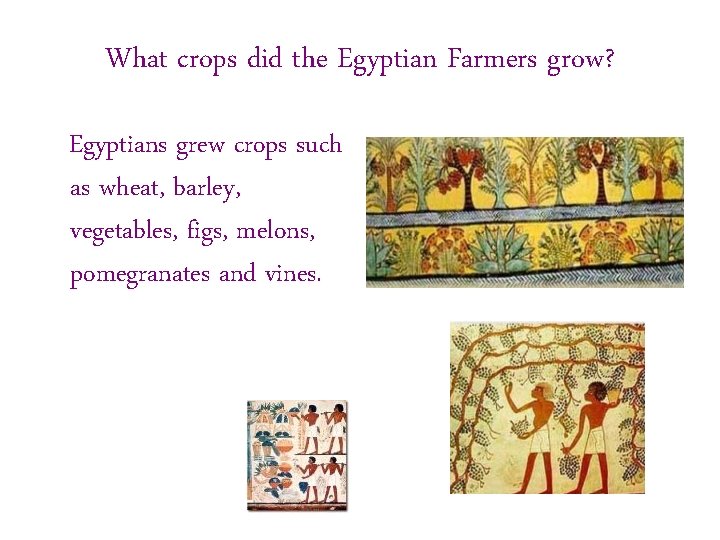
What crops did the Egyptian Farmers grow? Egyptians grew crops such as wheat, barley, vegetables, figs, melons, pomegranates and vines.
What else did they grow? They also grew flax which was made into linen.
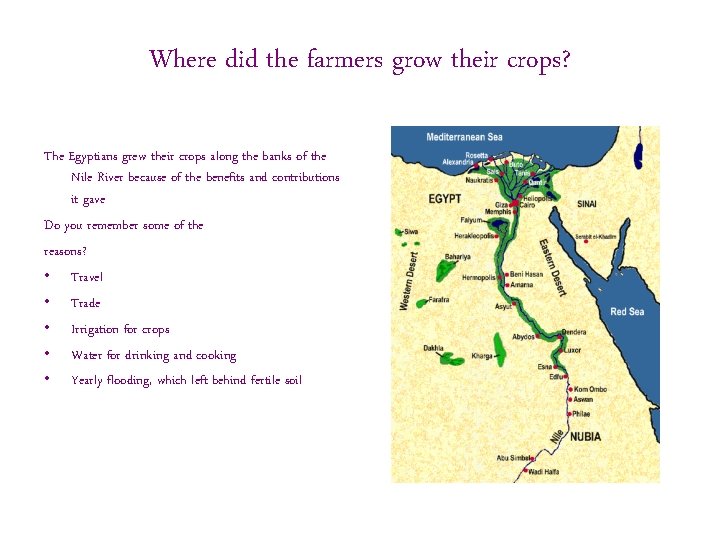
Where did the farmers grow their crops? The Egyptians grew their crops along the banks of the Nile River because of the benefits and contributions it gave Do you remember some of the reasons? • Travel • Trade • Irrigation for crops • Water for drinking and cooking • Yearly flooding, which left behind fertile soil
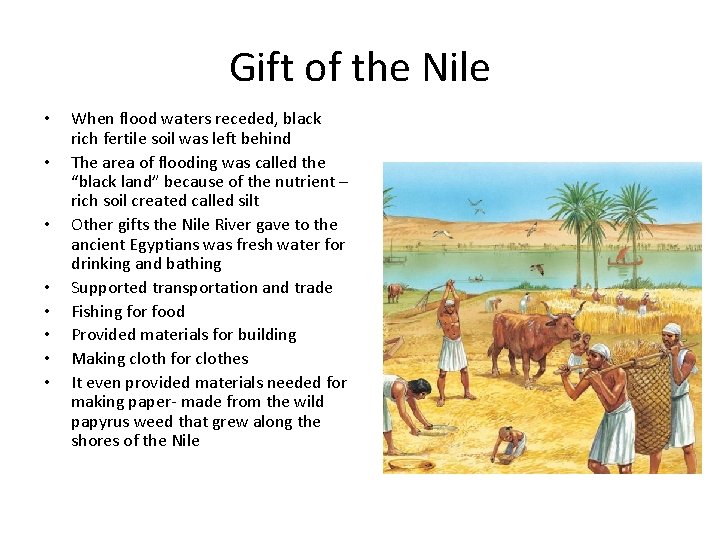
Gift of the Nile • • When flood waters receded, black rich fertile soil was left behind The area of flooding was called the “black land” because of the nutrient – rich soil created called silt Other gifts the Nile River gave to the ancient Egyptians was fresh water for drinking and bathing Supported transportation and trade Fishing for food Provided materials for building Making cloth for clothes It even provided materials needed for making paper- made from the wild papyrus weed that grew along the shores of the Nile
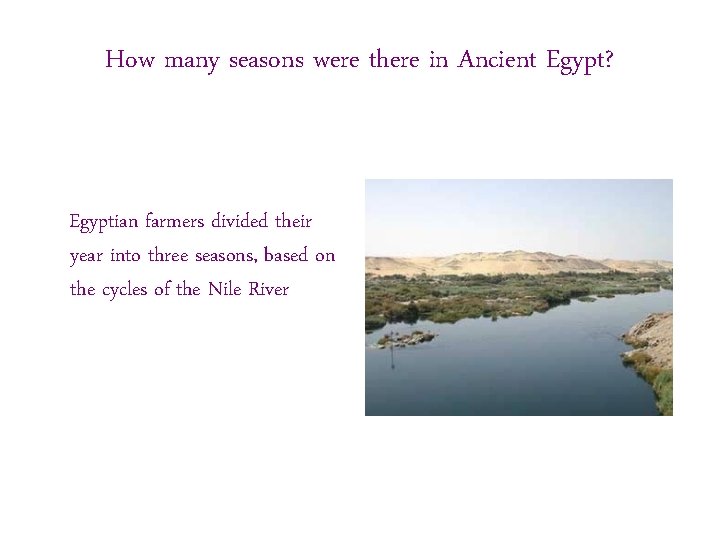
How many seasons were there in Ancient Egypt? Egyptian farmers divided their year into three seasons, based on the cycles of the Nile River
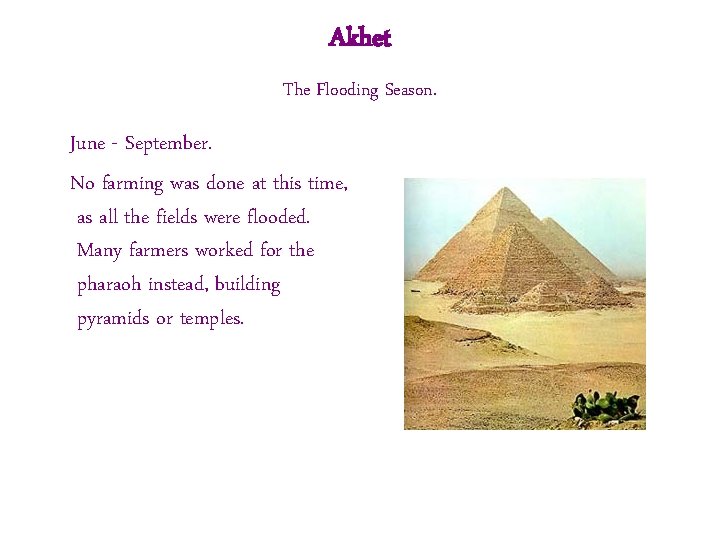
Akhet The Flooding Season. June - September. No farming was done at this time, as all the fields were flooded. Many farmers worked for the pharaoh instead, building pyramids or temples.
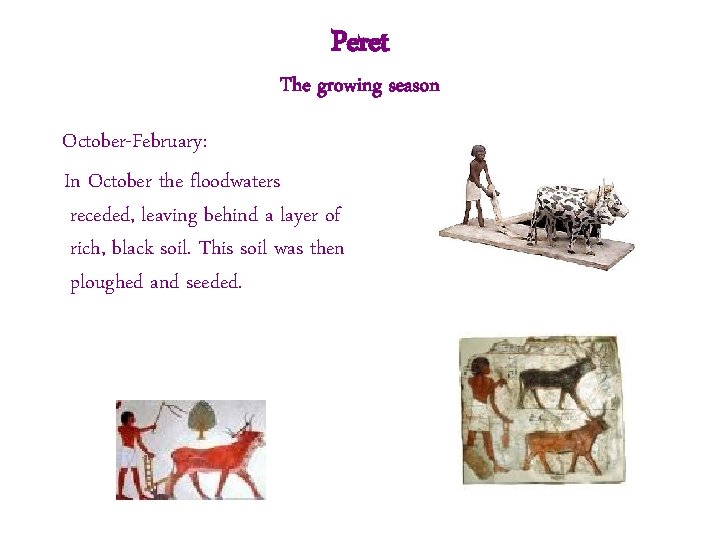
Peret The growing season October-February: In October the floodwaters receded, leaving behind a layer of rich, black soil. This soil was then ploughed and seeded.
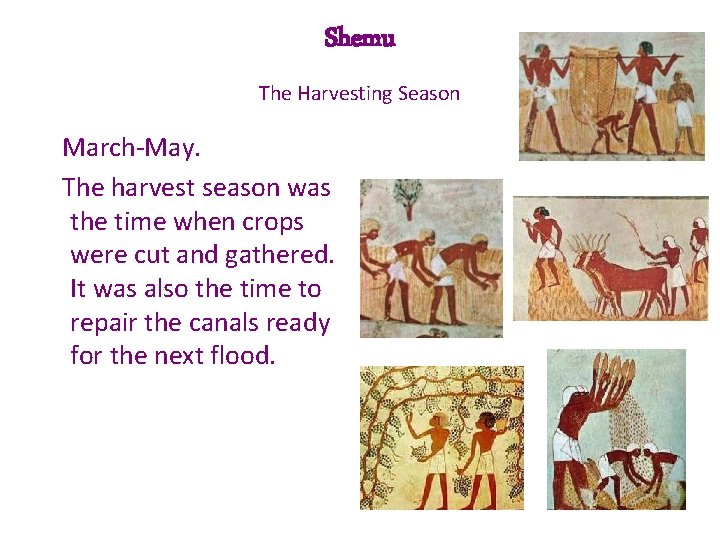
Shemu The Harvesting Season March-May. The harvest season was the time when crops were cut and gathered. It was also the time to repair the canals ready for the next flood.
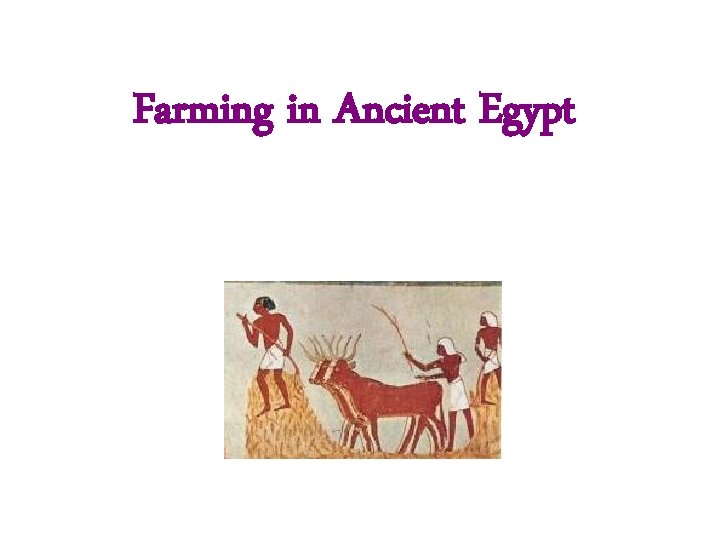
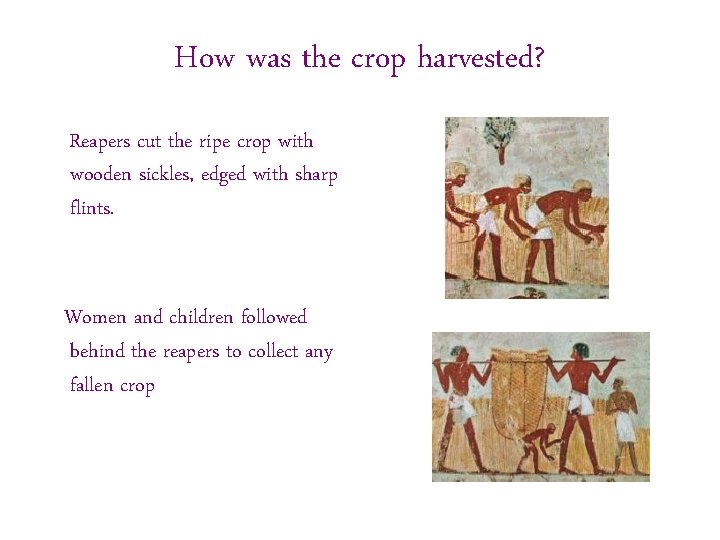
How was the crop harvested? Reapers cut the ripe crop with wooden sickles, edged with sharp flints. Women and children followed behind the reapers to collect any fallen crop
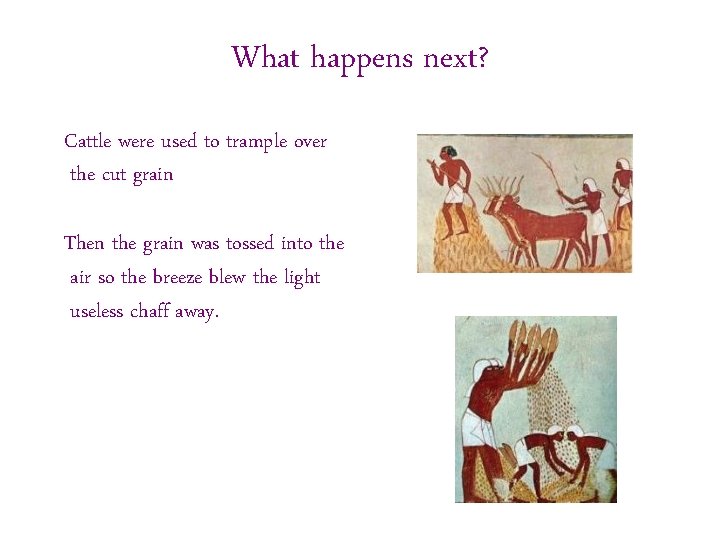
What happens next? Cattle were used to trample over the cut grain Then the grain was tossed into the air so the breeze blew the light useless chaff away.
How has Ancient Egyptian technology impacted modern technology?
Tech-Groups Written Language and Crafts Science and Math Cosmetics Construction The Calendar • Name of students • Name of students
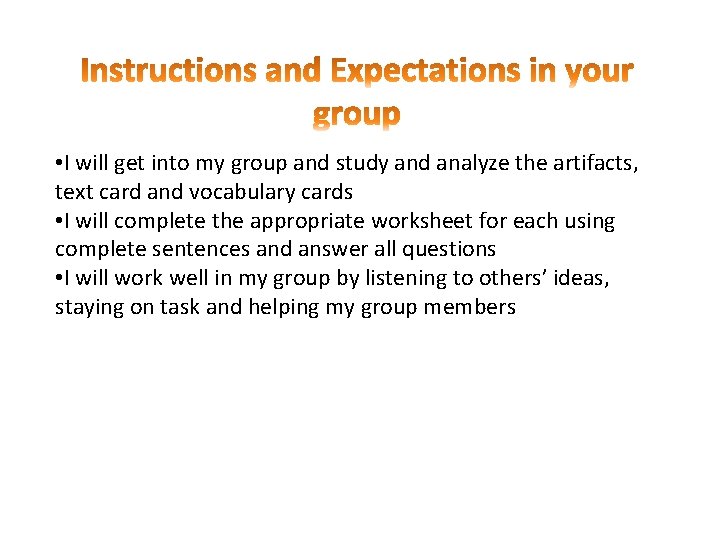
• I will get into my group and study and analyze the artifacts, text card and vocabulary cards • I will complete the appropriate worksheet for each using complete sentences and answer all questions • I will work well in my group by listening to others’ ideas, staying on task and helping my group members
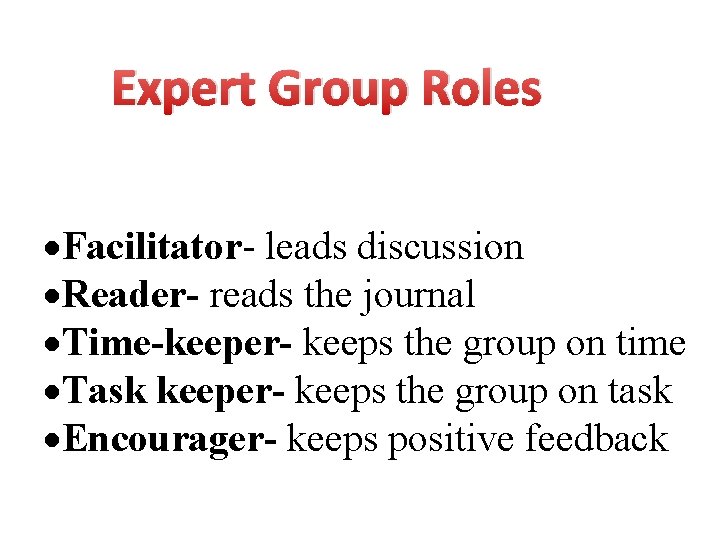
Expert Group Roles Facilitator- leads discussion Reader- reads the journal Time-keeper- keeps the group on time Task keeper- keeps the group on task Encourager- keeps positive feedback
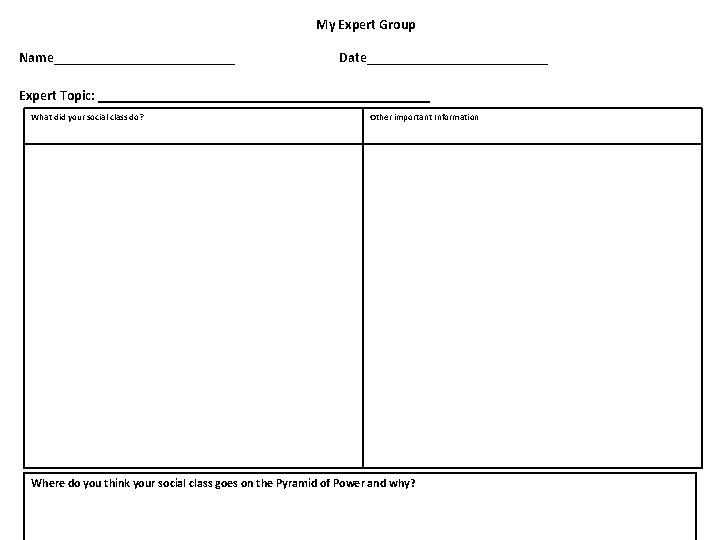
My Expert Group Name_____________ Date_____________ Expert Topic: ___________________ What did your social class do? Other important Information Where do you think your social class goes on the Pyramid of Power and why?
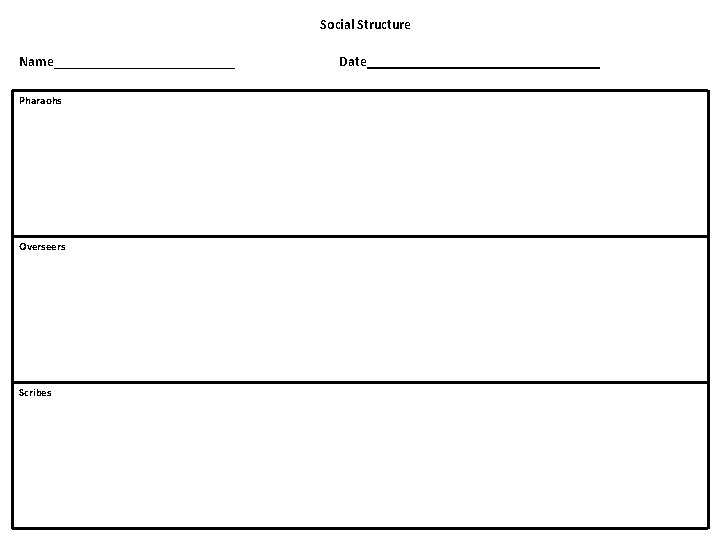
Social Structure Name_____________ Pharaohs Overseers Scribes Date_____________
Nobleman Nomarchs Craftsmen and Farmers
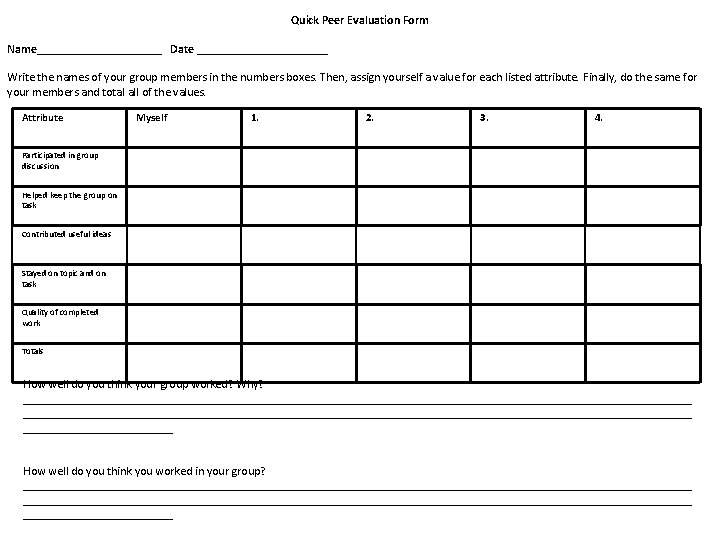
Quick Peer Evaluation Form Name___________ Date ___________ Write the names of your group members in the numbers boxes. Then, assign yourself a value for each listed attribute. Finally, do the same for your members and total all of the values. Attribute Myself 1. 2. 3. 4. Participated in group discussion Helped keep the group on task Contributed useful ideas Stayed on topic and on task Quality of completed work Totals How well do you think your group worked? Why? ________________________________________________________________________________________________________________ How well do you think you worked in your group? ________________________________________________________________________________________________________________
Hieroglyphics History • Hieroglyphics was a form of communication, record keeping and a way to preserve and pass down history • It was first adopted more than 5000 years ago • One of the earliest recorded written languages
Hieroglyphics History cont’ • It was used from about 3200 BC until the late 4 th Century AD • Hieroglyphics used pictures to communicate a message • As the language became more complex, more pictures had to be added and eventually the language consisted of more than 750 individual signs • Used in temples as symbols of the Pharaoh’s authority
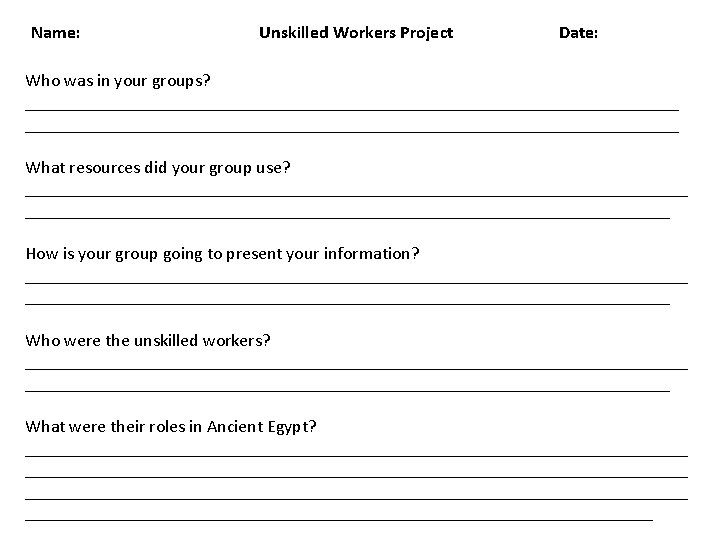
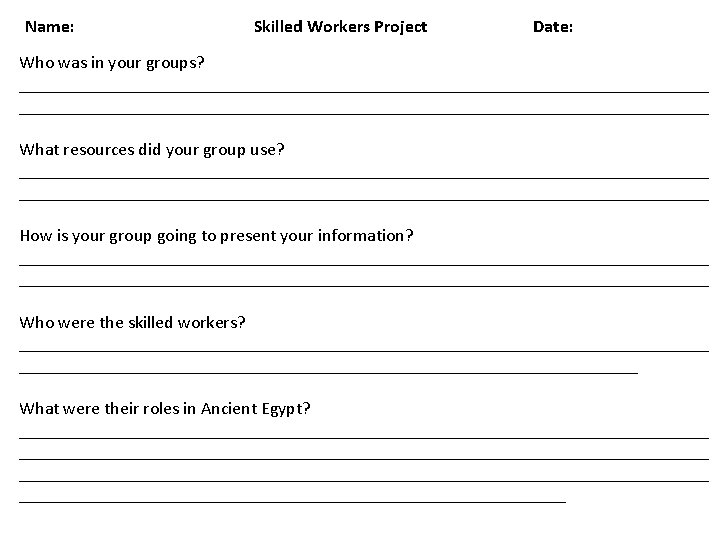
Name: Unskilled Workers Project Date: Who was in your groups? _________________________________________________________________________ What resources did your group use? _____________________________________ How is your group going to present your information? _____________________________________ Who were the unskilled workers? _____________________________________ What were their roles in Ancient Egypt? __________________________________________________________________________ ___________________________________
Facts about unskilled workers Interesting information about unskilled workers
Facts about skilled workers Interesting information about skilled workers
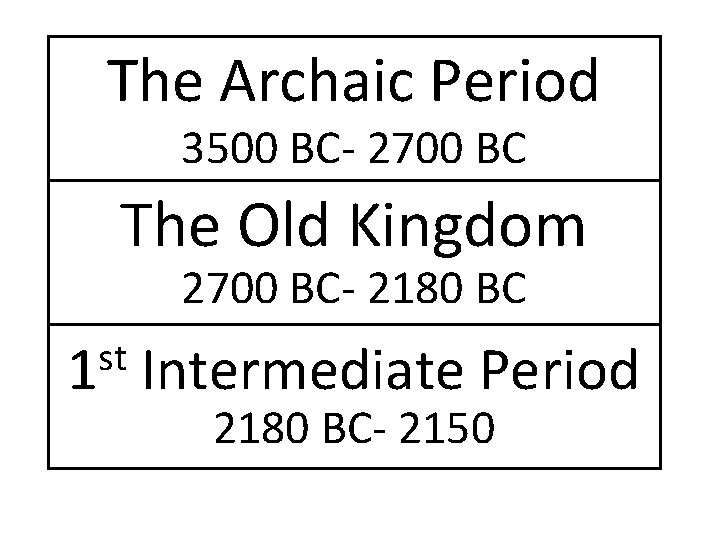
The Archaic Period 3500 BC- 2700 BC The Old Kingdom 2700 BC- 2180 BC st 1 Intermediate Period 2180 BC- 2150
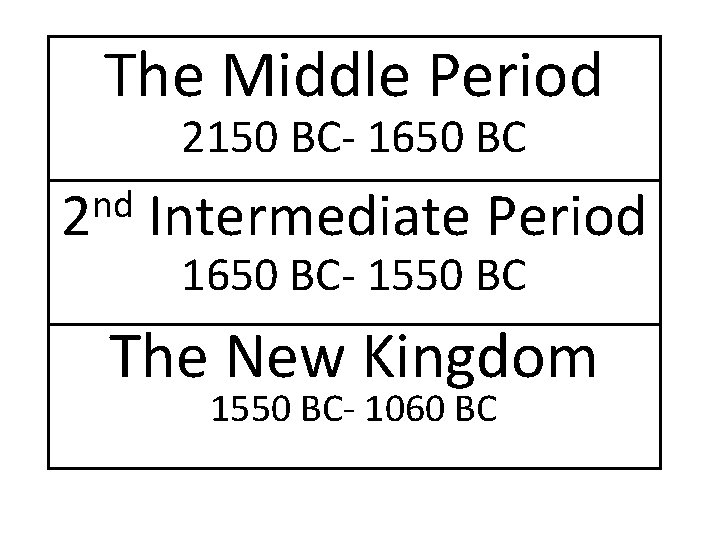
The Middle Period 2150 BC- 1650 BC nd 2 Intermediate Period 1650 BC- 1550 BC The New Kingdom 1550 BC- 1060 BC
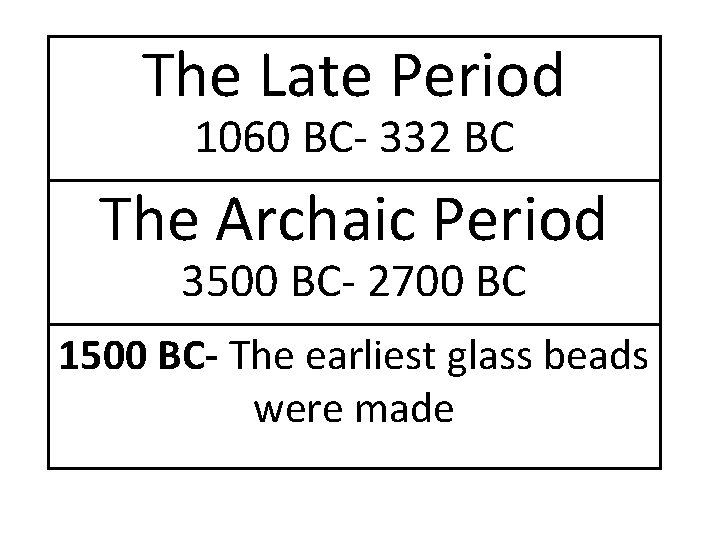
The Late Period 1060 BC- 332 BC The Archaic Period 3500 BC- 2700 BC 1500 BC- The earliest glass beads were made
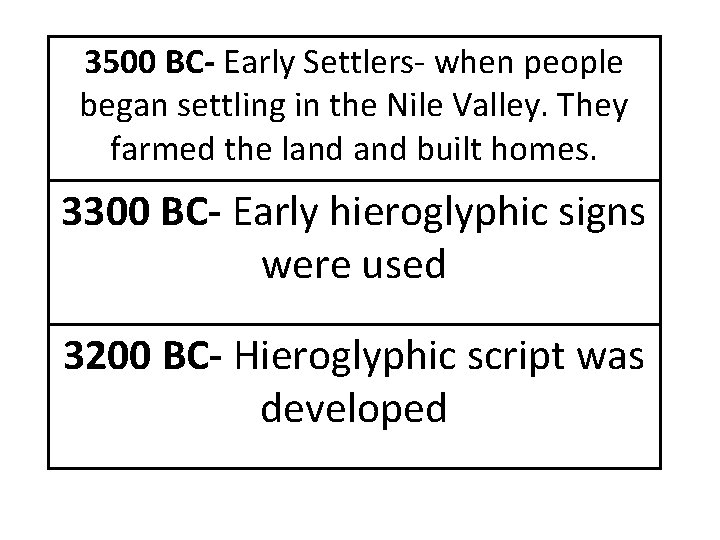
3500 BC- Early Settlers- when people began settling in the Nile Valley. They farmed the land built homes. 3300 BC- Early hieroglyphic signs were used 3200 BC- Hieroglyphic script was developed
3100 BC- Drainage and irrigation systems are made on a larger scale by farmers 3000 BC- Surgical procedures are documented 2700 BC- First Stone pyramid was built: The Step Pyramid
2700 BC- Earliest mummies were made 2560 BC- Pyramids of Giza were built 2400 BC- Pyramid writings were first used to help the dead king travel safe though the underworld
2400 BC- Agricultural advances: Technology was used to expand farmland 2100 BC- Coffin Text were used to help the deceased safely travel through the underworld. 1473 BC- First female Pharaoh Queen Hapshepsut
1332 BC- Tutankhamun become pharaoh 1279 BC- Ramesses II became pharaoh 595 BC- Book of the dead are written on papyrus paper rolls
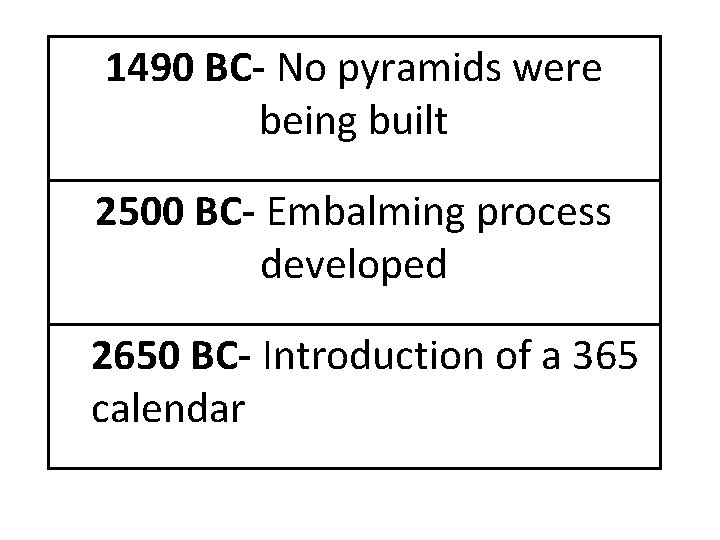
1490 BC- No pyramids were being built 2500 BC- Embalming process developed 2650 BC- Introduction of a 365 calendar
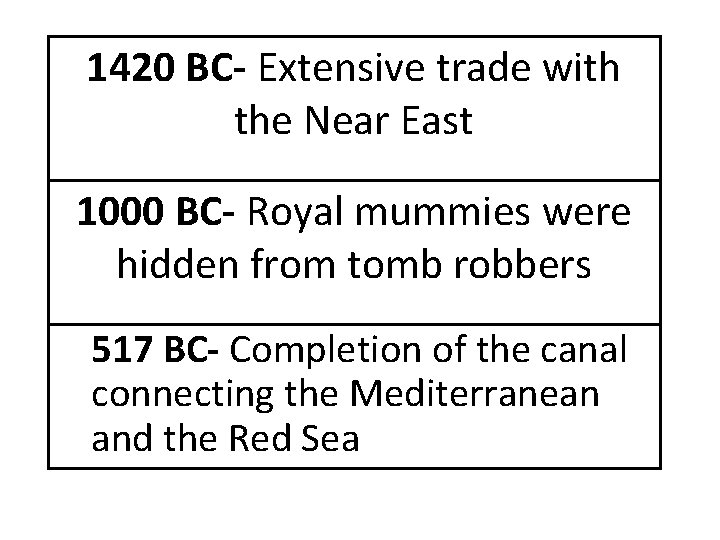
1420 BC- Extensive trade with the Near East 1000 BC- Royal mummies were hidden from tomb robbers 517 BC- Completion of the canal connecting the Mediterranean and the Red Sea
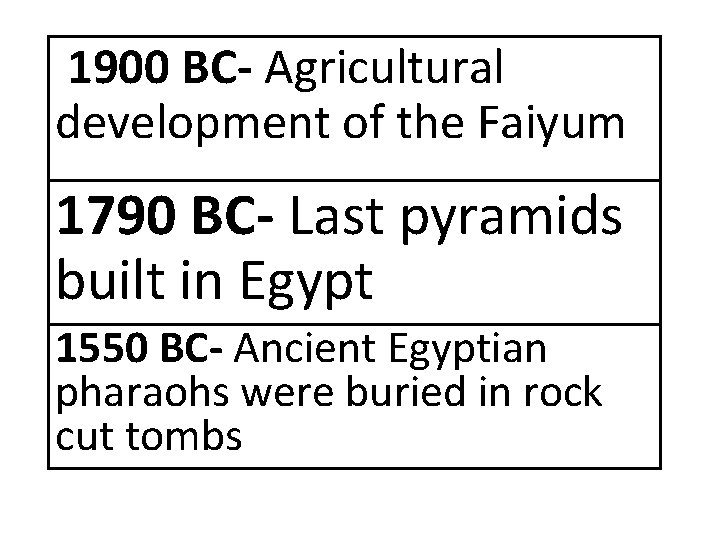
1900 BC- Agricultural development of the Faiyum 1790 BC- Last pyramids built in Egypt 1550 BC- Ancient Egyptian pharaohs were buried in rock cut tombs
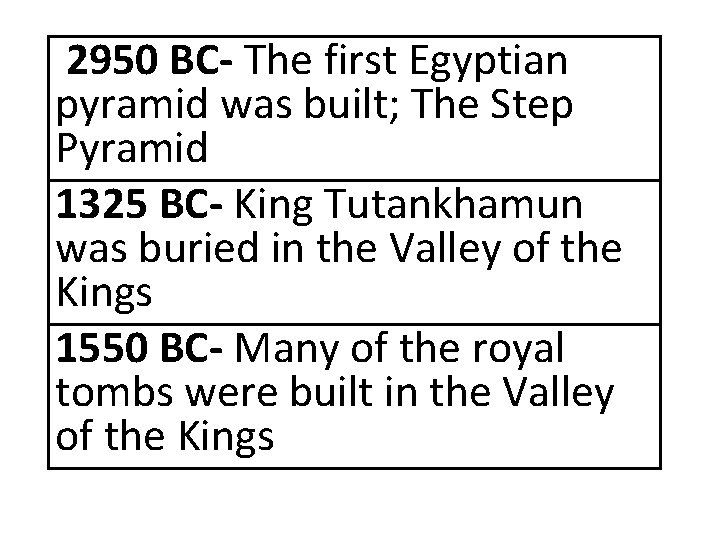
2950 BC- The first Egyptian pyramid was built; The Step Pyramid 1325 BC- King Tutankhamun was buried in the Valley of the Kings 1550 BC- Many of the royal tombs were built in the Valley of the Kings
1200 BC- Book of the dead are written on papyrus paper rolls