
Farmers Struggle and Industry Expands Late 1800s and

- Slides: 51
Farmers Struggle and Industry Expands Late 1800’s and early 1900’s.
Cultures Clash on Western Prairies • Why go West? Gold, Land, and Opportunity. • Move to Great Plains-western grassland. • Indian trouble- Gov’t had Indians sign treaties to live on reservations. Sitting Bull ignores treaty. • Custer- “gold in Black Hills”
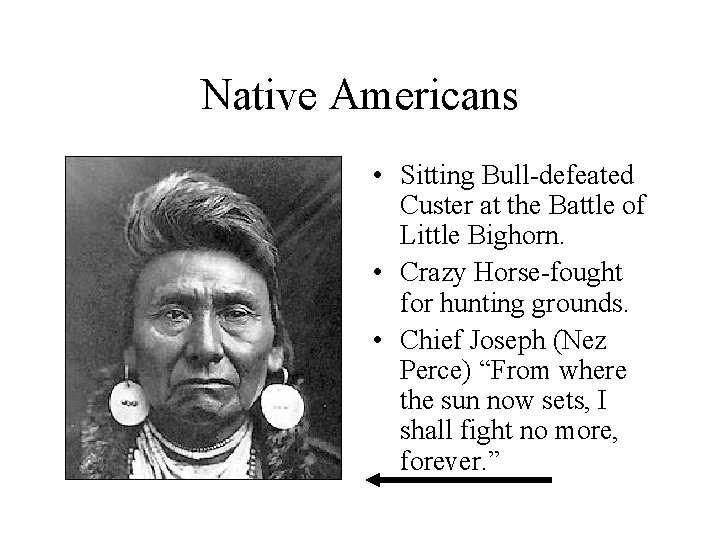
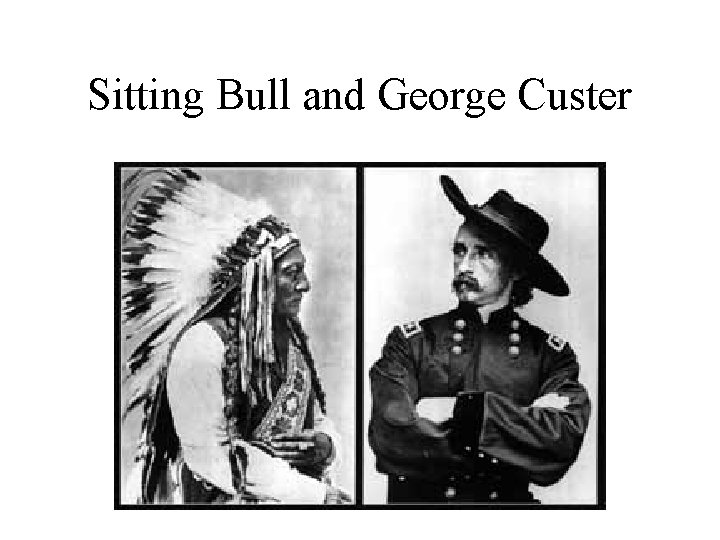
Native Americans • Sitting Bull-defeated Custer at the Battle of Little Bighorn. • Crazy Horse-fought for hunting grounds. • Chief Joseph (Nez Perce) “From where the sun now sets, I shall fight no more, forever. ”
Sitting Bull and George Custer
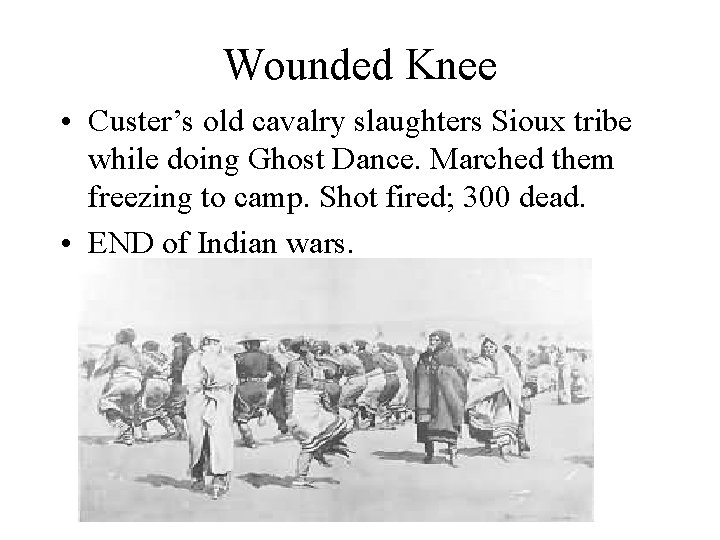
Wounded Knee • Custer’s old cavalry slaughters Sioux tribe while doing Ghost Dance. Marched them freezing to camp. Shot fired; 300 dead. • END of Indian wars.
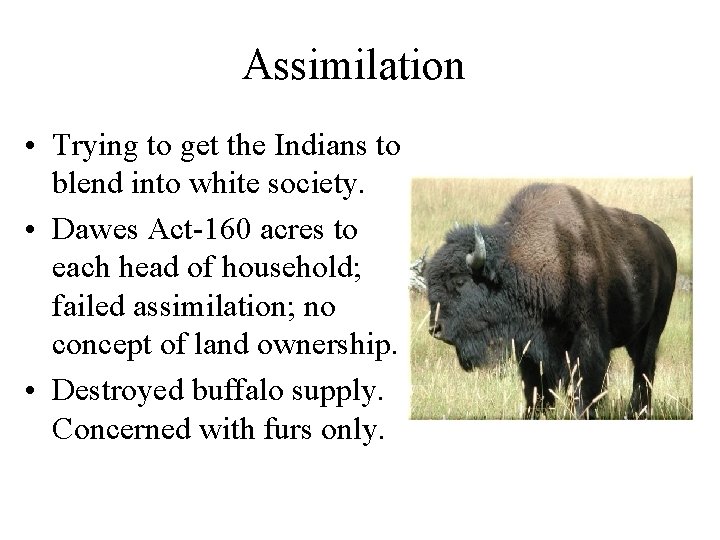
Assimilation • Trying to get the Indians to blend into white society. • Dawes Act-160 acres to each head of household; failed assimilation; no concept of land ownership. • Destroyed buffalo supply. Concerned with furs only.
Cowboys • Herded Texas longhorns up to Great Plains. Loaded on a train to be shipped to Chicago. • Growing demand for beef in the East because cities expanding. • Route closed by barbed wire and drought.
Going Out West
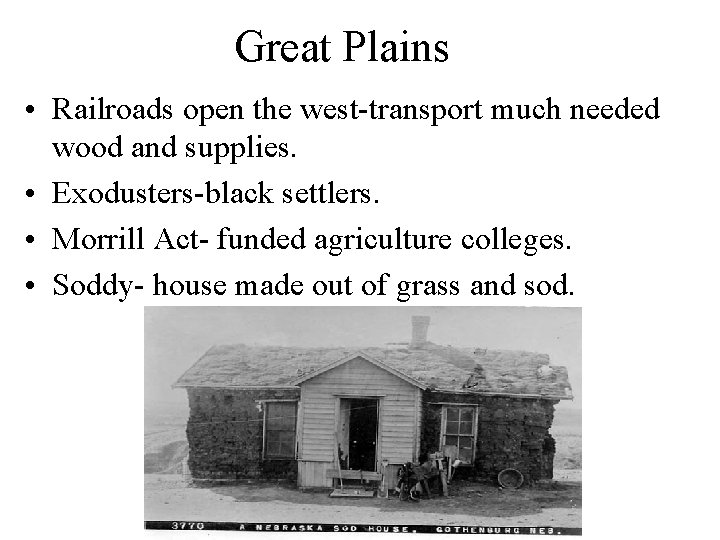
Great Plains • Railroads open the west-transport much needed wood and supplies. • Exodusters-black settlers. • Morrill Act- funded agriculture colleges. • Soddy- house made out of grass and sod.
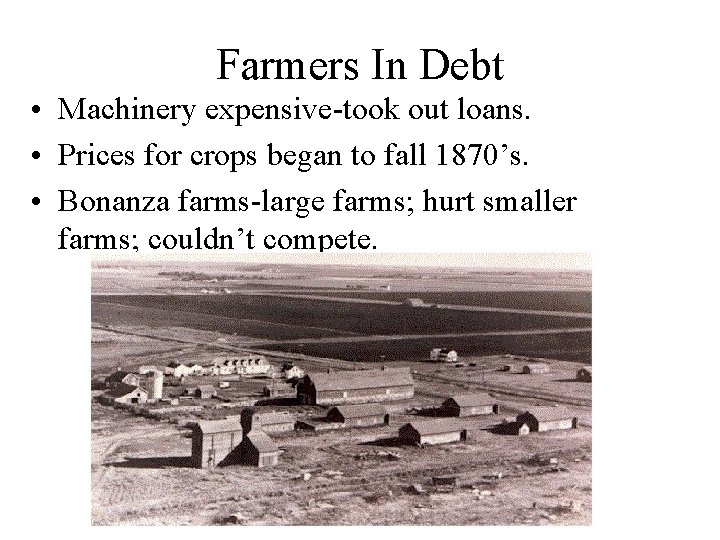
Farmers In Debt • Machinery expensive-took out loans. • Prices for crops began to fall 1870’s. • Bonanza farms-large farms; hurt smaller farms; couldn’t compete.
Farmers Organize • Problems they face: – Low grain prices, inflation, expensive machinery, and railroads gouging prices. • Railroads had a monopoly. – rails set prices high – Unfair long haul short haul rates • Form the Farmer’s Alliance– educate farmers and lobby the gov’t.
Farmers organize • Grange-patrons of husbandry – Social group – Called for regulations of railroads
Farmers Create the Populist Party • Populist Platform – Increase $ supply – Graduated income tax – Direct election of senators – 8 hour workday – Immigration restrictions • Populist support – Farmers and laborers – Mid-westerners • Reform based
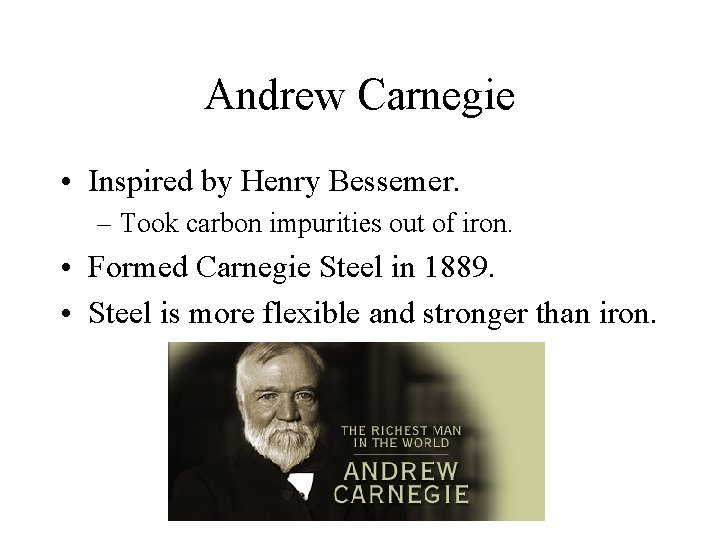
Andrew Carnegie • Inspired by Henry Bessemer. – Took carbon impurities out of iron. • Formed Carnegie Steel in 1889. • Steel is more flexible and stronger than iron.
Vertical Consolidation • Process used by Carnegie to become wealthy and establish a monopoly. • Bought out suppliers for steel industry. – Coal fields, iron ore mines, and railroads • Maintain control over every aspect of production. • Bought out competitors who went bankruptmerger. Small company joins bigger one.
Social Darwinism • Based on Darwin’s Theory of Evolution – Survival of the fittest. • Used this to justify his beliefs in laissezfaire government. – He did not want gov’t to regulate his business. – His employees did want regulation and help from long hours and little benefits.
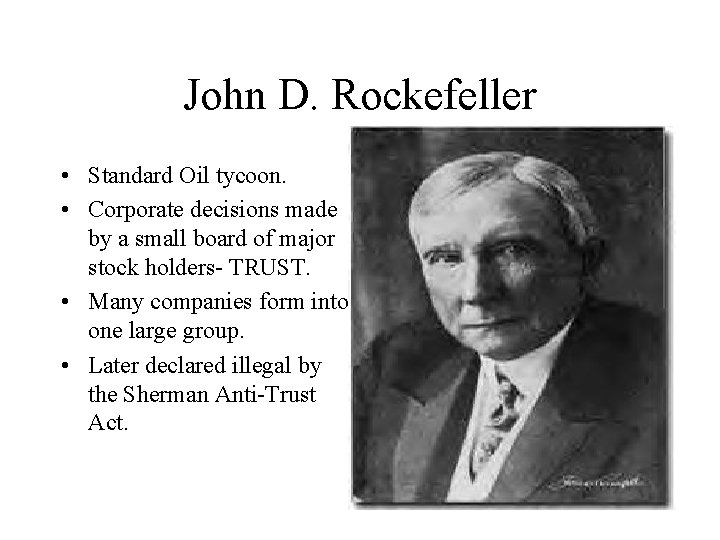
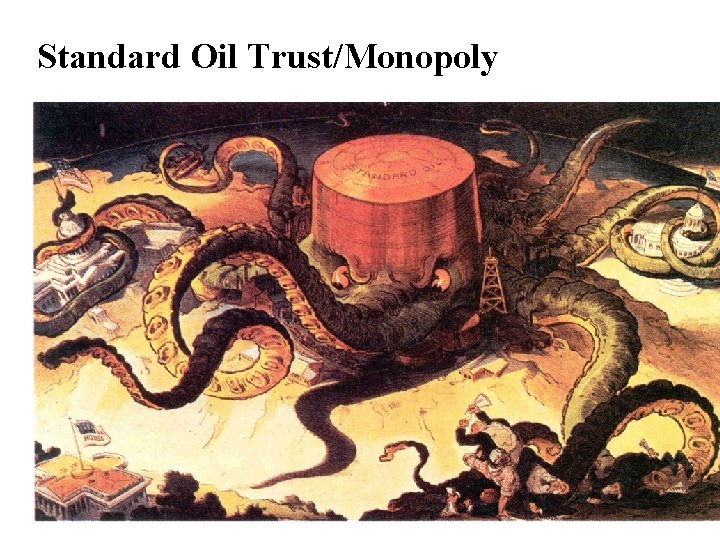
John D. Rockefeller • Standard Oil tycoon. • Corporate decisions made by a small board of major stock holders- TRUST. • Many companies form into one large group. • Later declared illegal by the Sherman Anti-Trust Act.
Horizontal Consolidation • Companies producing the same good merge together. • Lowered his prices until others went bankrupt. Bought their stock and formed trusts.
Robber Baron or Captain of Industry • Employees of Carnegie and Rockefeller called them robber barons. – Owners reap large profits from paying workers low wages. • Carnegie and Rockefeller considered themselves to be captains of industry. – Those who help the poor by providing them with a job. • Both men donated millions of dollars to libraries and educational institutions-philanthropists.
Union Frenzy • AFL-skilled workers only • Knights of Labor-unskilled; fought for 8 hour day and equal pay for equal work. • ARU-led by Eugene V. Debs. Organizes railroad shutdowns. • Wobblies-IWW; inspired by Karl Marx; believe government should distribute wealth equally.
Strike of 1877 • B & O Railroad Strike; protest 2 nd wage cut. – Train traffic was stopped for a week. – Pres. Hayes asked to stop strike. • Called in federal troops to end strike.
Haymarket Square Riot • Labor leaders organize into union and strike at the Mc. Cormick Reaper factory. • Suspicious bomb thrown at police. • Several were arrested • **PUBLIC TURNS AGAINST LABOR MOVEMENT- TOO MUCH VIOLENCE.
Homestead Strike • Homestead PA. Carnegie’s managers cut wages so workers went on strike. • Pinkerton detectives called in to break up strike. • Nine dead workers, union lost.
Pullman Strike • Wages cut by 25 -50% & rent increased. • ARU and Debs organize shutdown of RR’s using Pullman cars. – Pullman asked President Hayes to force workers to return. – Debs jailed. • Hayes granted request because mail delivery ceased- Federal offense.
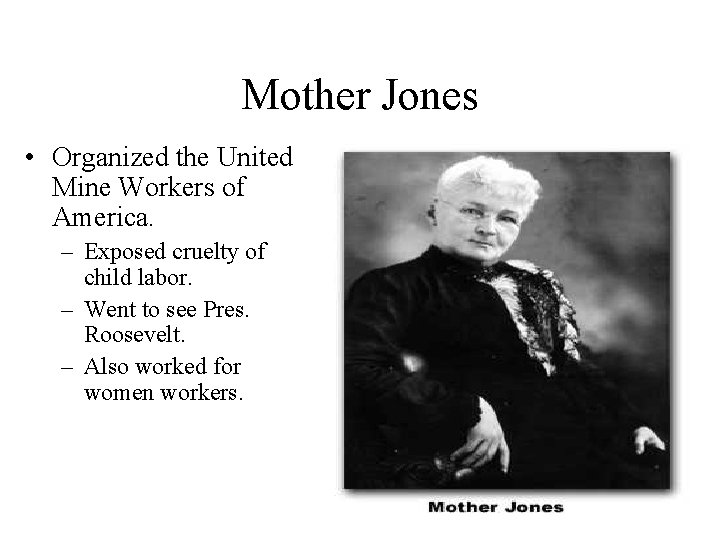
Mother Jones • Organized the United Mine Workers of America. – Exposed cruelty of child labor. – Went to see Pres. Roosevelt. – Also worked for women workers.
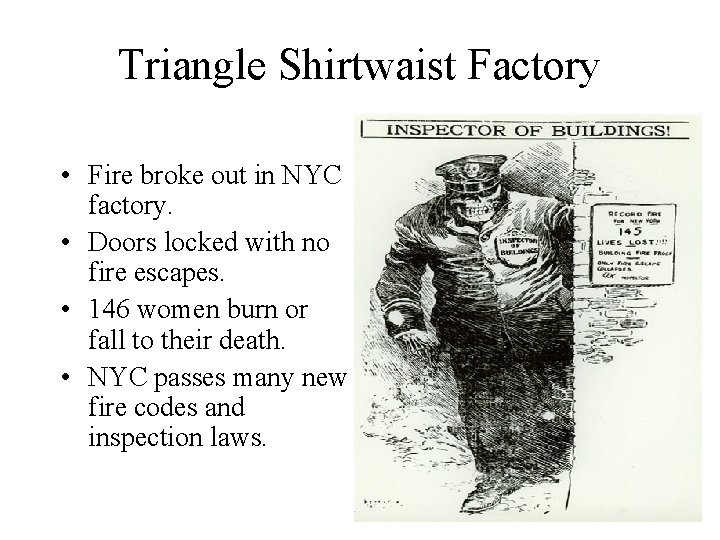
Triangle Shirtwaist Factory • Fire broke out in NYC factory. • Doors locked with no fire escapes. • 146 women burn or fall to their death. • NYC passes many new fire codes and inspection laws.
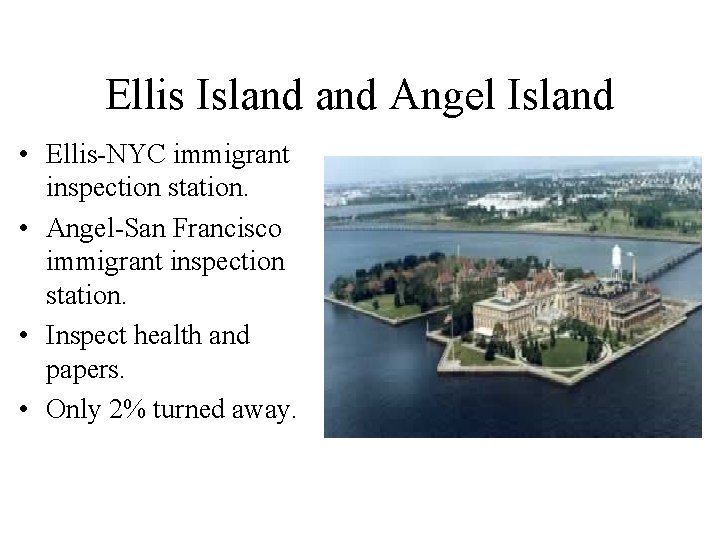
Ellis Island Angel Island • Ellis-NYC immigrant inspection station. • Angel-San Francisco immigrant inspection station. • Inspect health and papers. • Only 2% turned away.
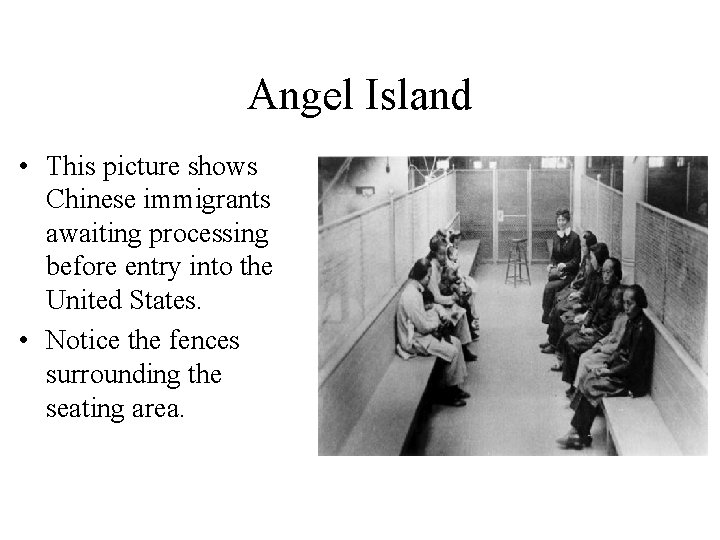
Angel Island • This picture shows Chinese immigrants awaiting processing before entry into the United States. • Notice the fences surrounding the seating area.
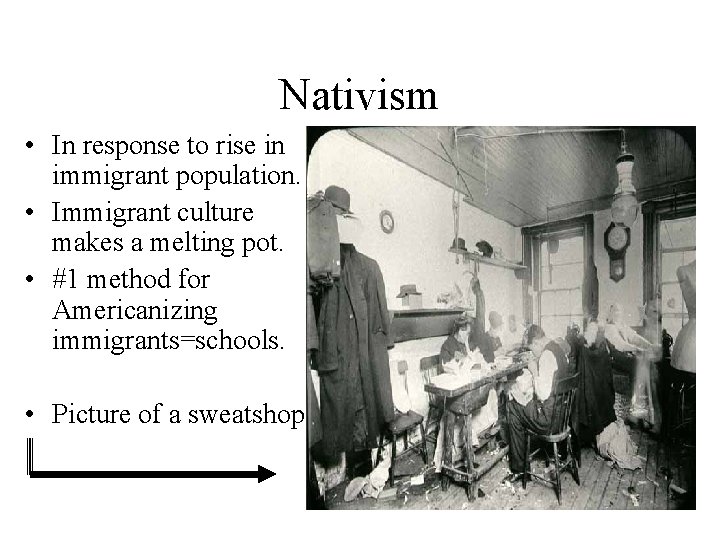
Nativism • In response to rise in immigrant population. • Immigrant culture makes a melting pot. • #1 method for Americanizing immigrants=schools. • Picture of a sweatshop
Emma Lazarus ‘The New Colossus’ (1883) • This sonnet is located on a plaque on the Statue of Liberty. • Give me your tired, your poor, Your huddled masses yearning to breathe free, The wretched refuse of your teeming shore. Send these, the homeless, tempest-tossed to me, I lift my lamp beside the golden door!
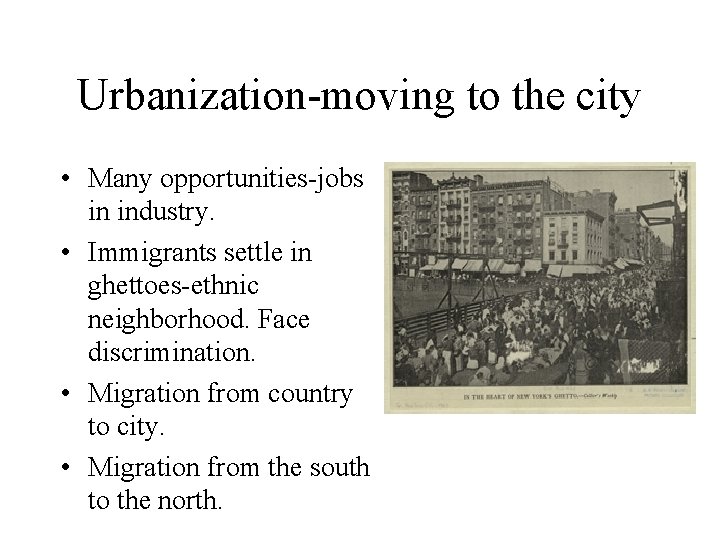
Urbanization-moving to the city • Many opportunities-jobs in industry. • Immigrants settle in ghettoes-ethnic neighborhood. Face discrimination. • Migration from country to city. • Migration from the south to the north.
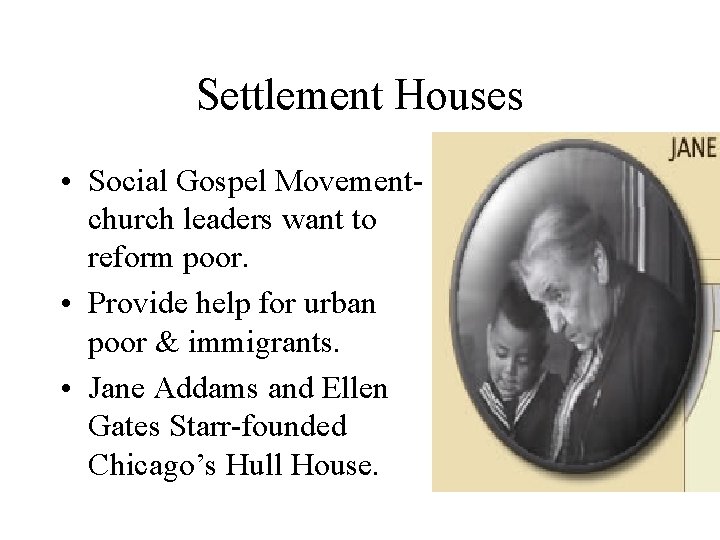
Settlement Houses • Social Gospel Movementchurch leaders want to reform poor. • Provide help for urban poor & immigrants. • Jane Addams and Ellen Gates Starr-founded Chicago’s Hull House.
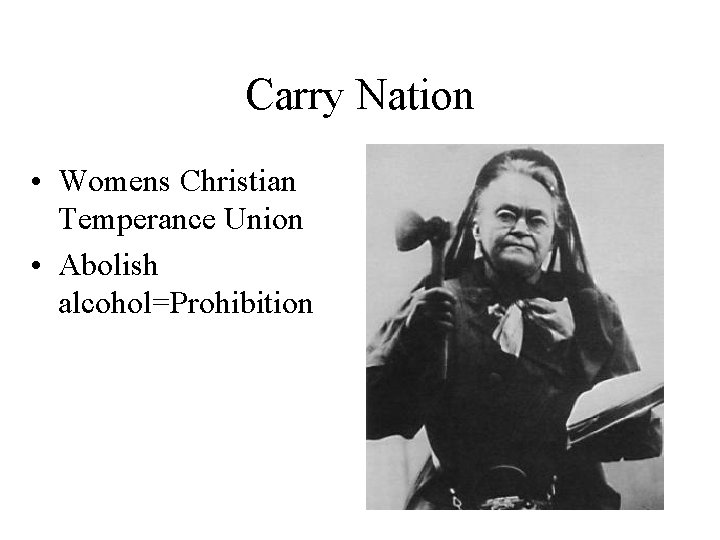
Carry Nation • Womens Christian Temperance Union • Abolish alcohol=Prohibition
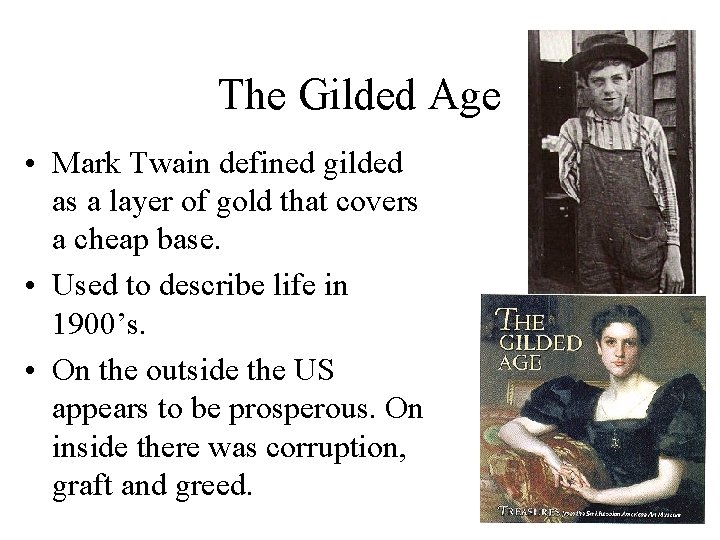
The Gilded Age • Mark Twain defined gilded as a layer of gold that covers a cheap base. • Used to describe life in 1900’s. • On the outside the US appears to be prosperous. On inside there was corruption, graft and greed.
Standard Oil Trust/Monopoly
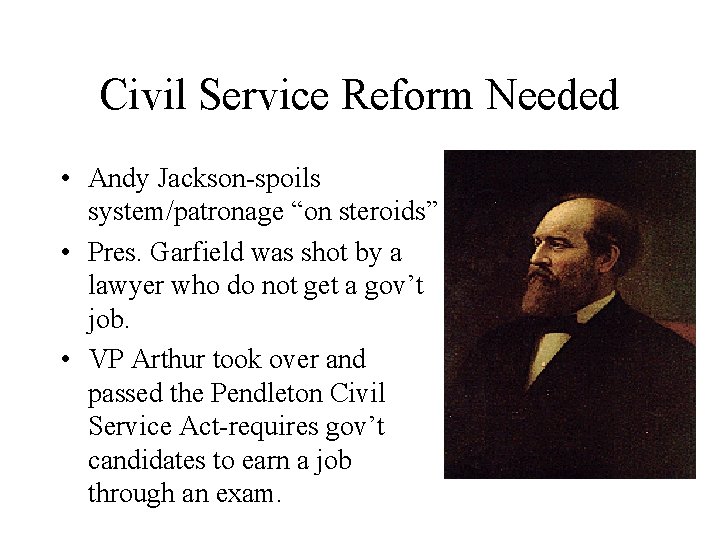
Civil Service Reform Needed • Andy Jackson-spoils system/patronage “on steroids” • Pres. Garfield was shot by a lawyer who do not get a gov’t job. • VP Arthur took over and passed the Pendleton Civil Service Act-requires gov’t candidates to earn a job through an exam.
Tariff controversy • Pres. Cleveland tried to lower tariffs but Congress refused to support him. – High tariff favors Big Business • Harrison beats Cleveland 1888. – Campaign financed by big business. – Want high tariffs.
Hearst and Pulitzer • Competed to sell the most newspapers. • Stories with sin, sex, and scandal. • Yellow Journalism or sensationalism
Life in the “NEW” South
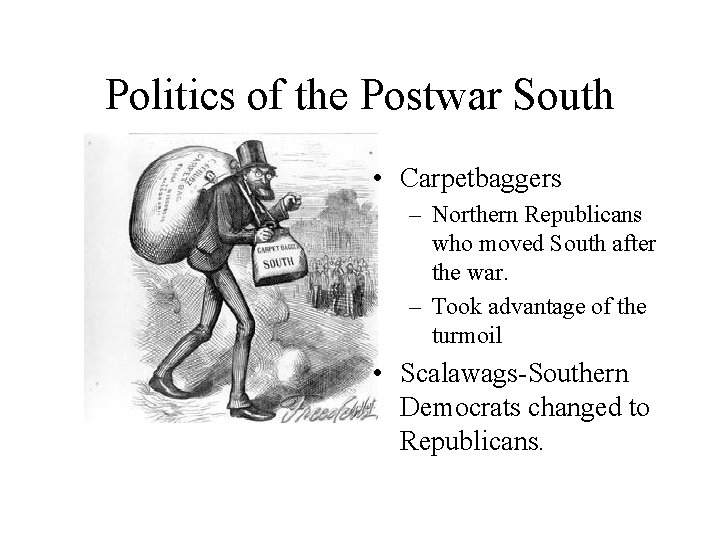
Politics of the Postwar South • Carpetbaggers – Northern Republicans who moved South after the war. – Took advantage of the turmoil • Scalawags-Southern Democrats changed to Republicans.
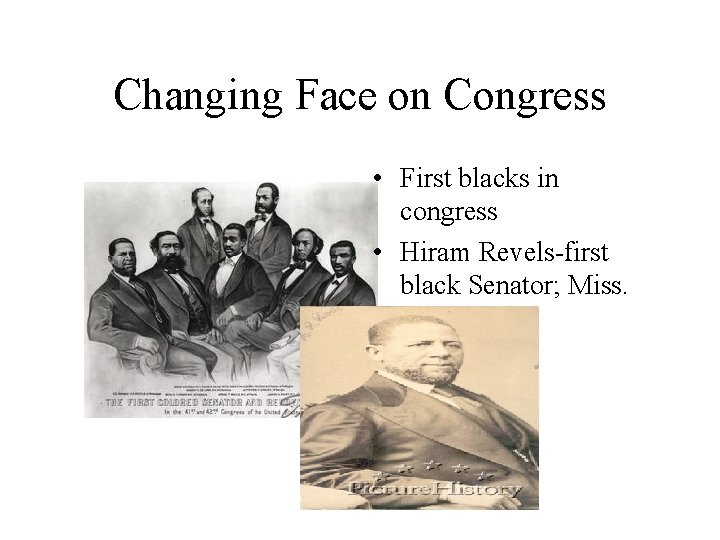
Changing Face on Congress • First blacks in congress • Hiram Revels-first black Senator; Miss.
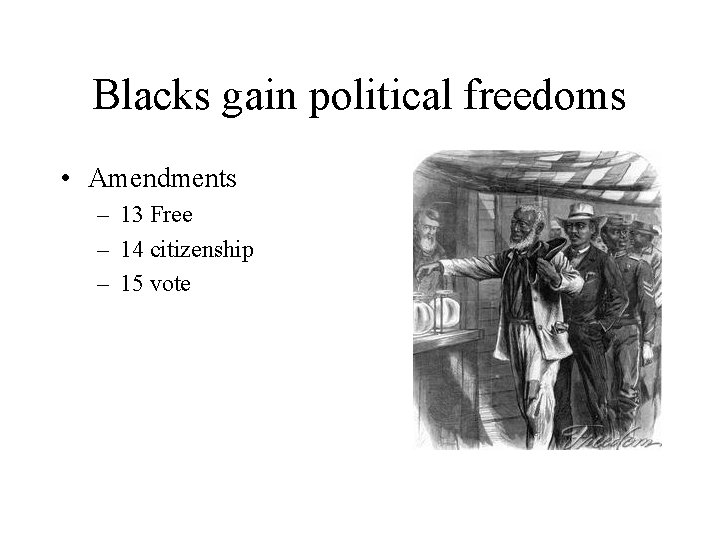
Blacks gain political freedoms • Amendments – 13 Free – 14 citizenship – 15 vote
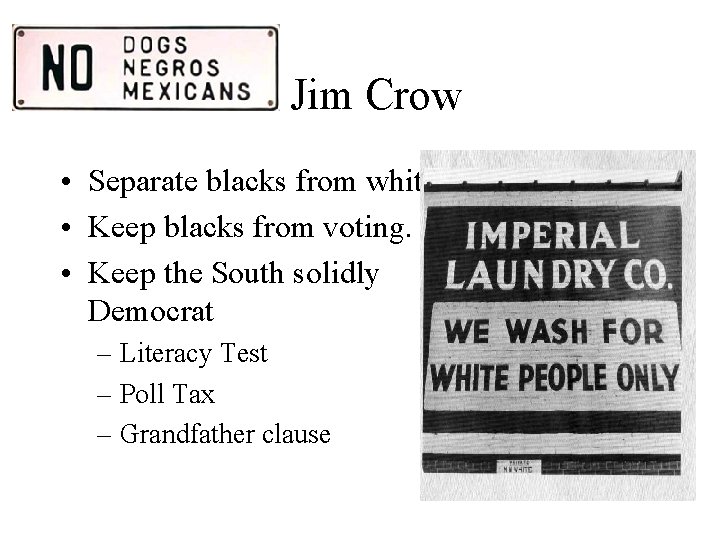
Jim Crow • Separate blacks from whites. • Keep blacks from voting. • Keep the South solidly Democrat – Literacy Test – Poll Tax – Grandfather clause
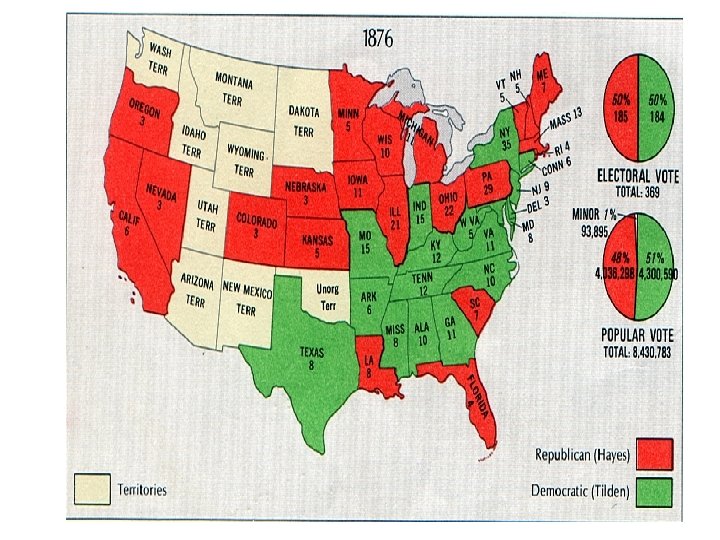
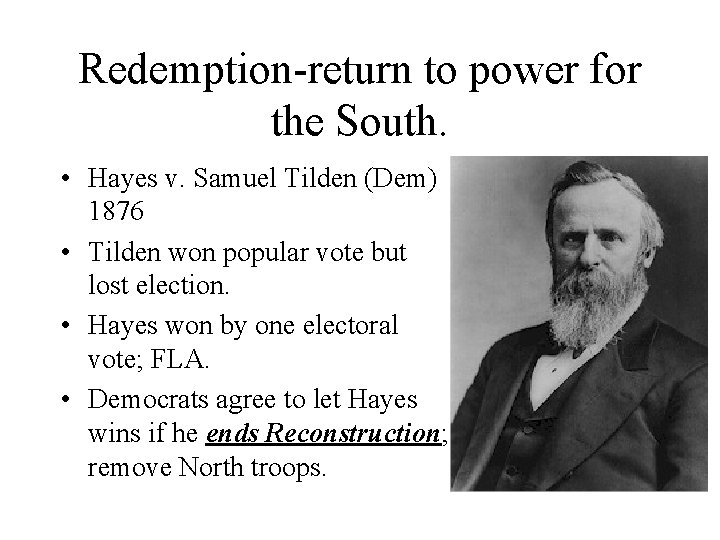
Redemption-return to power for the South. • Hayes v. Samuel Tilden (Dem) 1876 • Tilden won popular vote but lost election. • Hayes won by one electoral vote; FLA. • Democrats agree to let Hayes wins if he ends Reconstruction; remove North troops.