
Farmers lung disease FLD is a form of
- Slides: 19
Farmer's lung disease (FLD) is a form of hypersensitivity pneumonitis (HP) caused by inhaling microorganisms from hay or grain stored in conditions of high humidity in the agricultural workplace. It is probably underdiagnosed, especially in northern Spain, where climatic conditions favor the development of this disease.
According to previous studies, the most common antigens are usually thermophilic actinomycetes and fungi. The epidemiology of the disease is not well known, and is based on studies conducted by Central European and Asian groups.
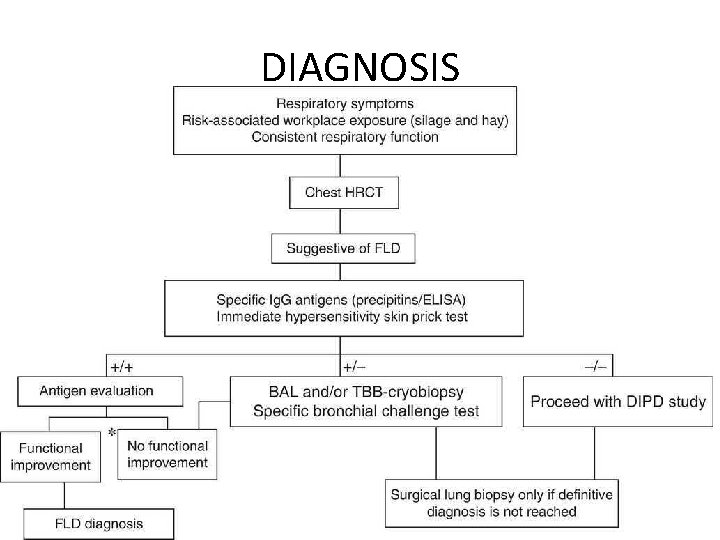
The clinical presentation may vary, differentiating the chronic (exposure to lower concentrations of the antigen over a longer period time) and the acute forms (after exposure to high concentrations of the antigen). In patients with respiratory symptoms and agricultural occupational exposure, radiological, lung function and/or anatomical pathology findings must be compatible with FLD, bronchoalveolar lavage must show lymphocytosis, and tests must find sensitivity to the antigen.
The main treatment is avoidance of the antigen, so it is essential to educate patients on preventive measures. To date, no controlled studies have assessed the role of immunosuppressive therapy in this disease. Corticosteroid treatment has only been shown to accelerate resolution of the acute forms, but there is no evidence that it is effective in preventing disease progression in the long-term or reducing mortality.
INTRODUCTION • Farmer's lung disease (FLD), first described by Campbell in 1932, is one of the most prevalent forms of hypersensitivity pneumonitis (HP). • It is caused by the inhalation of microorganisms from hay and the dust from grain or straw stored in very damp conditions. • It is a significant cause of morbidity among farm workers in some countries
EPIDEMIOLOGY • The exact prevalence of FLD is difficult to determine, since the disease is influenced by many factors, including climate, geographical region, local customs, and differences in the nature and intensity of exposure to antigens. • Approximately 0. 5%– 3% of farmers may develop FLD, and the disease is associated with higher mortality rates.
ETIOLOGI • The causative antigens in most cases of HP, including FLD, are bacteria, the most commonly described being thermophilic actinomycetes. • This species includes Saccharopolyspora rectivirgula(previously known as Micropolyspora faeni, described as the main FLD antigen), Thermoactinomyces vulgaris, Thermoactinomyces viridis, and Thermoactinomyces sacchari, among others. • These organisms reproduce in areas with high levels of humidity and at temperatures of between 40 and 60°C. They are often isolated in contaminated farms (from moldy hay and other types of fodder), milking sheds and compost plants. • These bacteria are among most common etiological agents in studies reported in Europe and North America, but farmers are also exposed to other fungi and fungal fragments that can also cause FLD, such as Alternaria, Aspergillus fumigatus and Botrytis. FLD, then, is common in farming areas, particularly in the cold, wet seasons, when climatic conditions lead to increased levels of microorganisms in stored hay
PATOGENESIS • All HP diseases, including FLD, are caused by repeated exposure to antigenic particles in a susceptible, previously sensitized patient. The characteristics of antigens that determine their ability to induce an immunological response include their size, solubility, nature, resistance to enzymatic degradation, and inflammatory capacity. These antigens are implicated in the formation of antigen-antibody immune complexes, particularly of the Ig. G type, which intervene in complement activation. Antibody response alone is insufficient to cause disease: a cytotoxic CD 8+ lymphocyte response is also required. • Lymphocyte mediation is another mechanism involved in the process, particularly Th 1 mediation, which is responsible for lymphocyte alveolitis and the formation of granulomas. Some studies have shown that lymphocytes are also involved in the pathogenesis of FLD, and evidence of lymphocyte stimulation is considered as diagnostic proof of the disease. Immediate hypersensitivity reactions, probably caused by Ig. G 4 rather than Ig. E, may also play a role in the genesis of the immunological response.
CLINICAL FORMS • FLD is conventionally classified into 3 groups (acute, subacute, and chronic), depending mainly on clinical and radiological findings at the ti. me of diagnosis
ACUTE • Acute disease occurs after exposure to high concentrations of antigen over a short period. Symptoms appear 4– 8 h after exposure, and tend to resolve quickly. It is characterized by non-specific symptoms, such as general malaise, low-grade fever or fever, and dry cough. The most severe cases present rapidly progressing dyspnea. Physical examination reveals fine crackles on pulmonary auscultation.
SUB ACUTE • Subacute disease occurs after continuous, but not massive, inhalation of antigens. Symptoms develop more insidiously. It is characterized by general malaise, low-grade fever, asthenia and anorexia, progressive development of dyspnea and non-productive cough.
CHRONIC • Chronic disease occurs after exposure to lower antigen levels, but over longer periods. It is also described as a progression of untreated acute or subacute disease. It usually occurs with symptoms of progressive dyspnea on exertion and dry cough. Physical examination reveals digital clubbing and dry crackles on auscultation. Chronic obstructive pulmonary disease with centrilobular emphysema, rather than fibrosis, has been described in patients with recurrent acute episodes
DIAGNOSIS
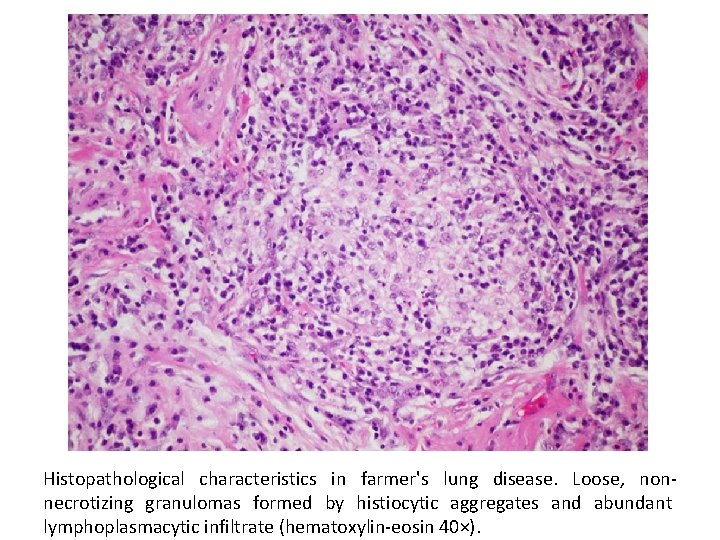
Histopathological characteristics in farmer's lung disease. Loose, nonnecrotizing granulomas formed by histiocytic aggregates and abundant lymphoplasmacytic infiltrate (hematoxylin-eosin 40×).
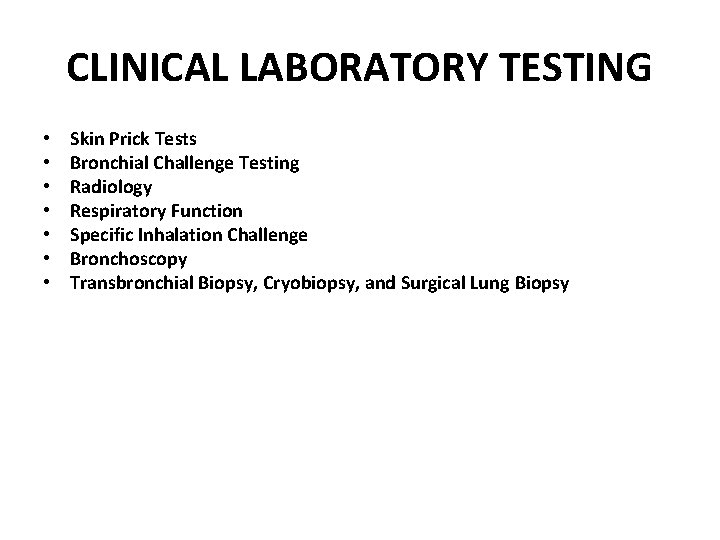
CLINICAL LABORATORY TESTING • • Skin Prick Tests Bronchial Challenge Testing Radiology Respiratory Function Specific Inhalation Challenge Bronchoscopy Transbronchial Biopsy, Cryobiopsy, and Surgical Lung Biopsy
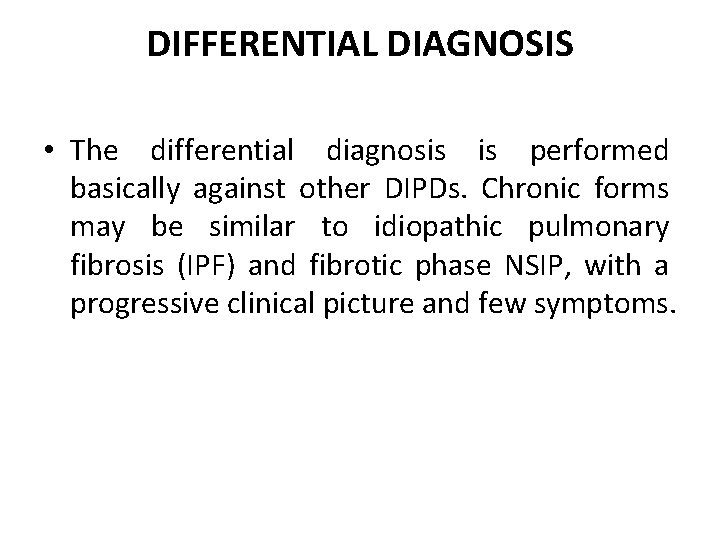
DIFFERENTIAL DIAGNOSIS • The differential diagnosis is performed basically against other DIPDs. Chronic forms may be similar to idiopathic pulmonary fibrosis (IPF) and fibrotic phase NSIP, with a progressive clinical picture and few symptoms.
TREATMENT • The treatment of FLD is based mainly on avoiding exposure to the antigen: we will address this approach in more detail in the section on prevention. This is the only measure that has been shown to delay disease progression. • Treatment with glucocorticosteroids accelerates recovery in the acute forms.
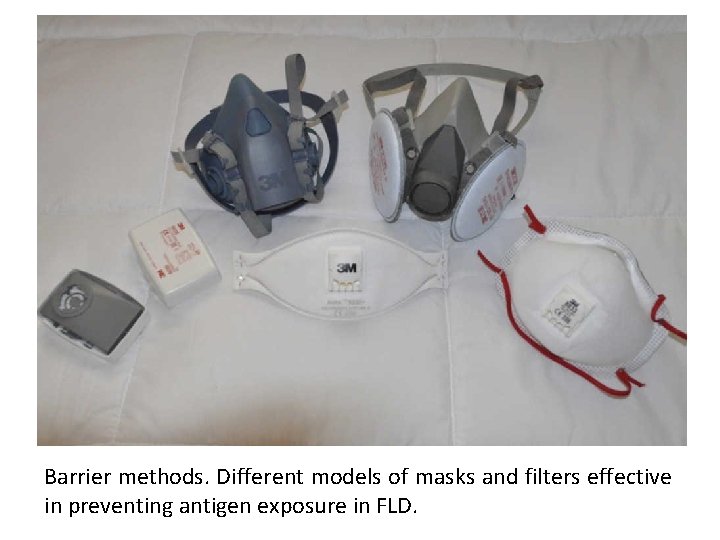
PREVENTION • There are 3 ways of reducing repeated inhalation of organic particles by FLD patients, in order to prevent the disease progressing to a fibrosing, and hence irreversible, process: (a) definitive withdrawal of the patient from the farming environment, which in most cases is unfeasible for financial reasons; (b) development of new techniques for drying the hay, and ventilation and mechanization of stock feeding; and (c) use of respiratory protective equipment to prevent the antigens entering the respiratory tree.
Barrier methods. Different models of masks and filters effective in preventing antigen exposure in FLD.