
Farm Finances Part 1 National Farm Viability Conference
Farm Finances: Part 1 National Farm Viability Conference Albany, NY May 22 nd -24 th Mark Cannella Mark. Cannella@uvm. edu Web: www. blog. uvm. edu/farmvia
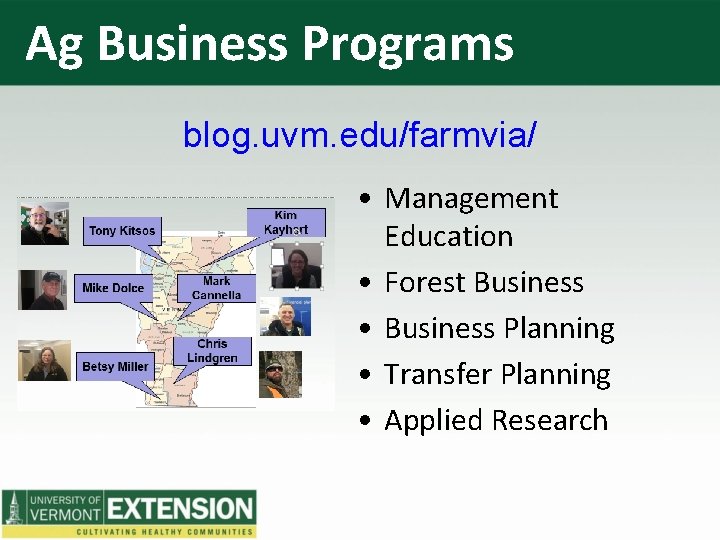
Ag Business Programs blog. uvm. edu/farmvia/ • Management Education • Forest Business • Business Planning • Transfer Planning • Applied Research
Financial Goals: Business • Cash flow and owner draws • Increased Equity and Net Worth • Profitability: Covering all costs and generating a positive return on capital investments.
Financials: The Adviser • Translation of real life to numbers #’s • Accurate and Complete • Building a case for information based decisions.
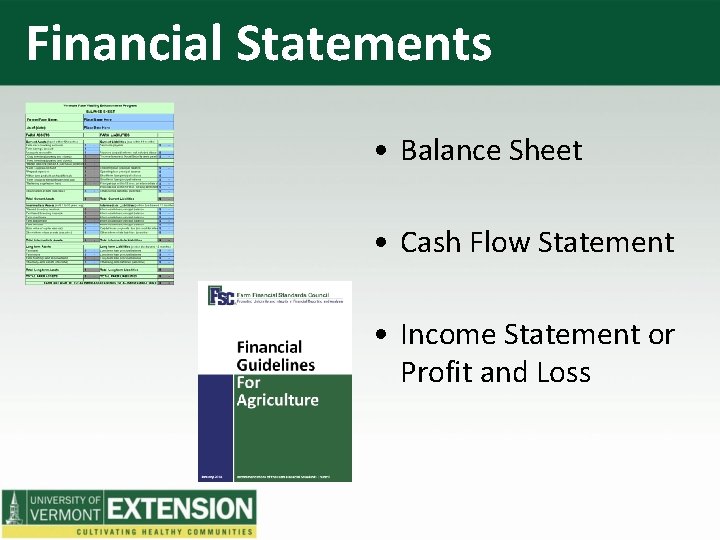
Financial Statements • Balance Sheet • Cash Flow Statement • Income Statement or Profit and Loss
Balance Sheet A snapshot of the farm worth at a single point in time. • • Inventories and their value Assets: Items with a useful life over 1 year Liabilities: Obligations owed by the business Net Worth or Equity

Equity Looks Like
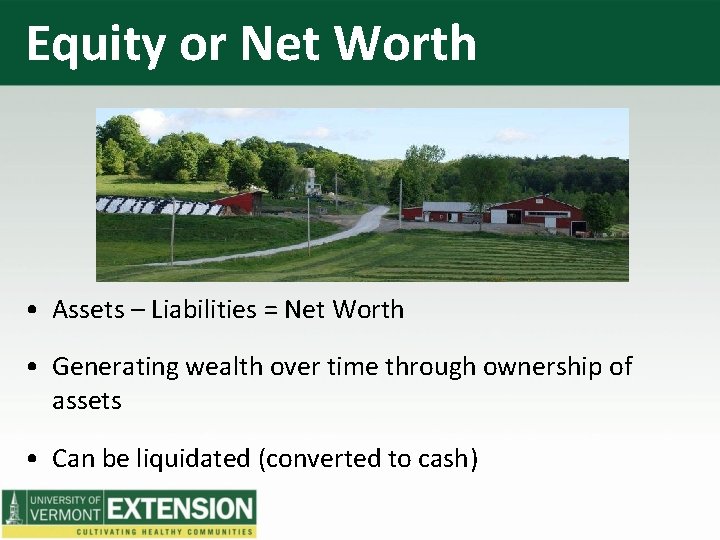
Equity or Net Worth • Assets – Liabilities = Net Worth • Generating wealth over time through ownership of assets • Can be liquidated (converted to cash)
Valuation Technique Historical Cost: the initial cost of asset, plus improvement, less accumulated depreciation Market Value (FMV) Estimated value using current prices (less selling costs? )
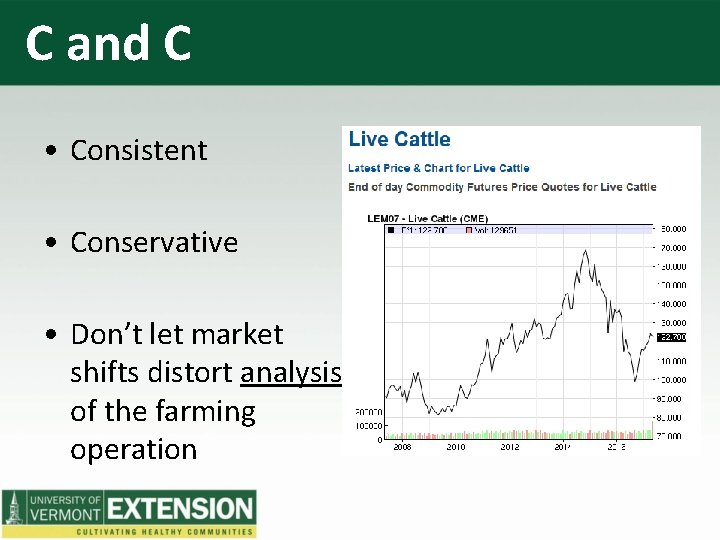
C and C • Consistent • Conservative • Don’t let market shifts distort analysis of the farming operation
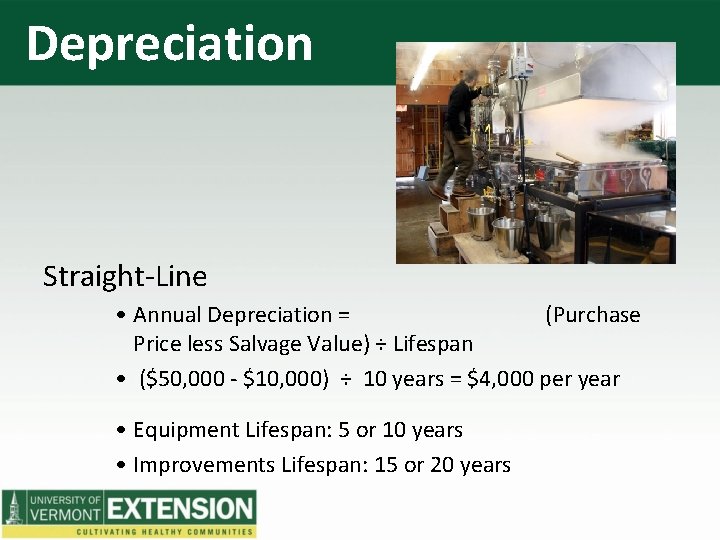
Depreciation Straight-Line • Annual Depreciation = (Purchase Price less Salvage Value) ÷ Lifespan • ($50, 000 - $10, 000) ÷ 10 years = $4, 000 per year • Equipment Lifespan: 5 or 10 years • Improvements Lifespan: 15 or 20 years
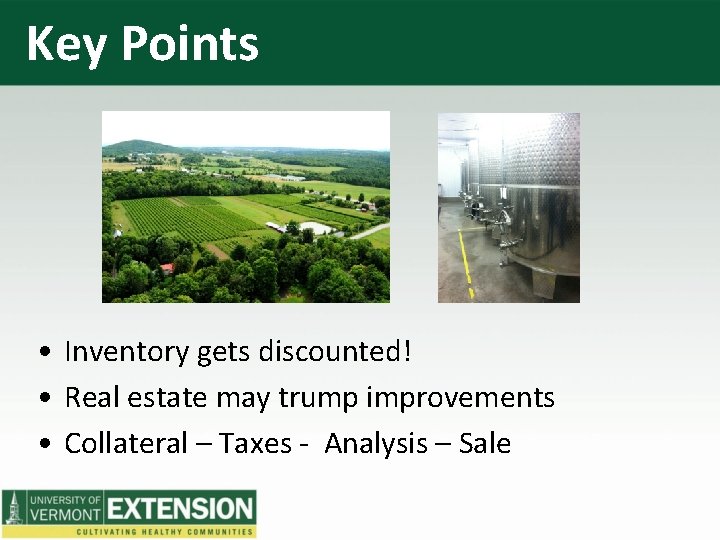
Key Points • Inventory gets discounted! • Real estate may trump improvements • Collateral – Taxes - Analysis – Sale
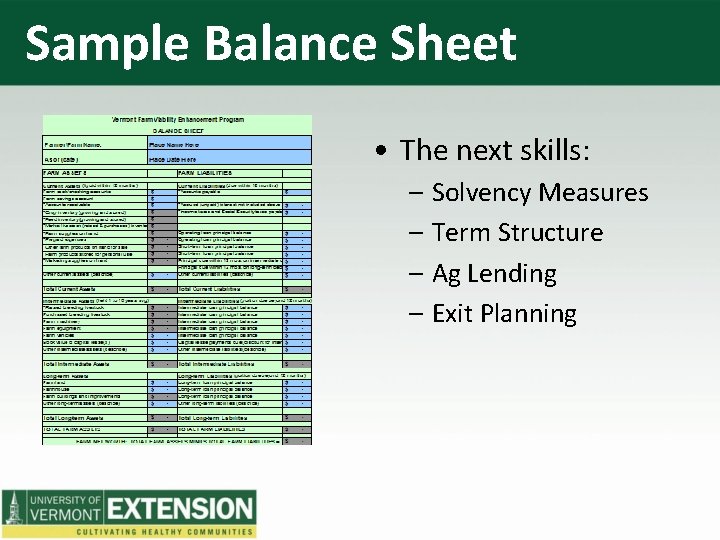
Sample Balance Sheet • The next skills: – Solvency Measures – Term Structure – Ag Lending – Exit Planning
Cash Flow Having sufficient cash on hand to pay bills as they come due. – Will you need to borrow, when? – How much can you draw for salary? – Unplanned opportunities or problems
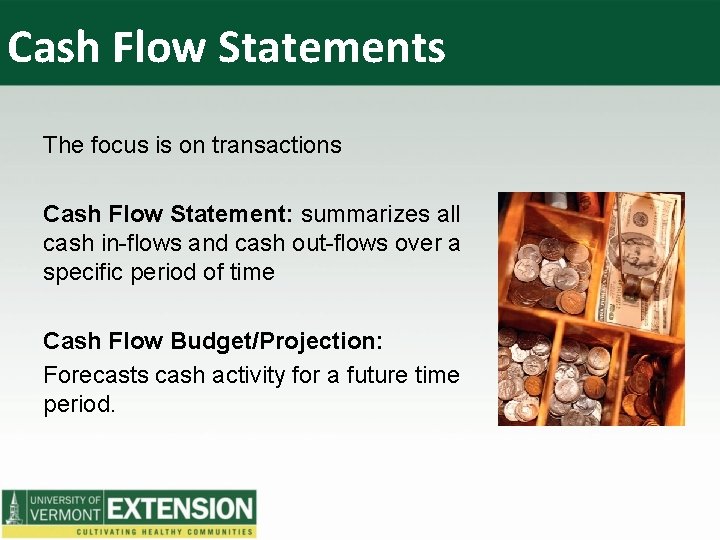
Cash Flow Statements The focus is on transactions Cash Flow Statement: summarizes all cash in-flows and cash out-flows over a specific period of time Cash Flow Budget/Projection: Forecasts cash activity for a future time period.
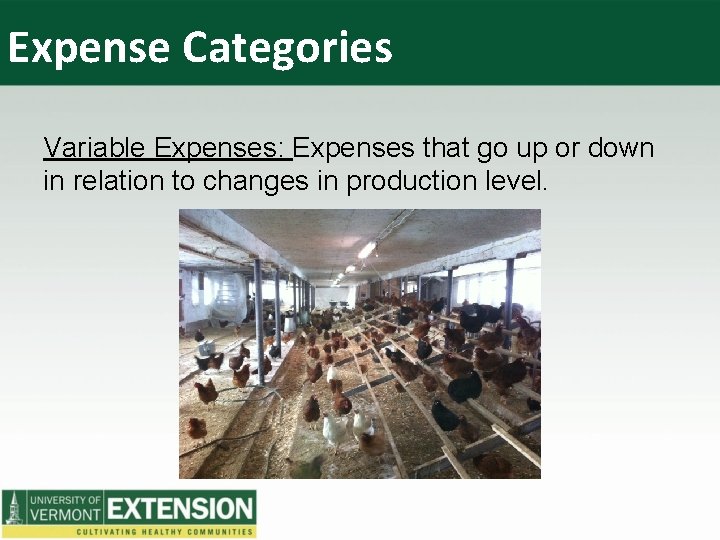
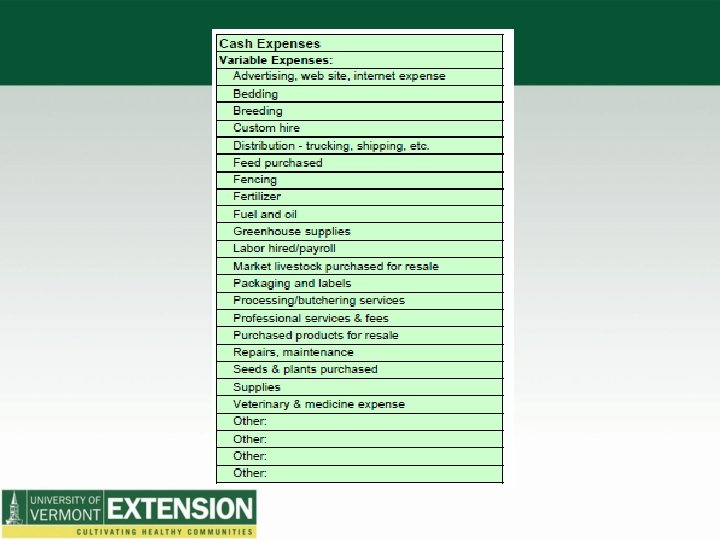
Expense Categories Variable Expenses: Expenses that go up or down in relation to changes in production level.
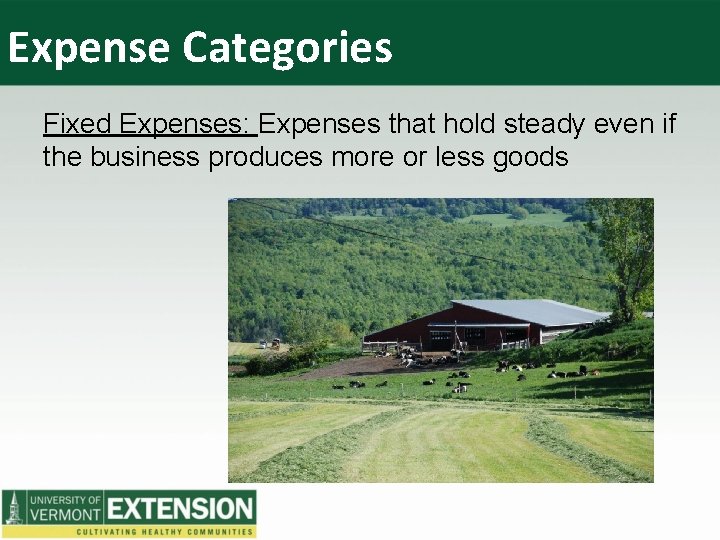
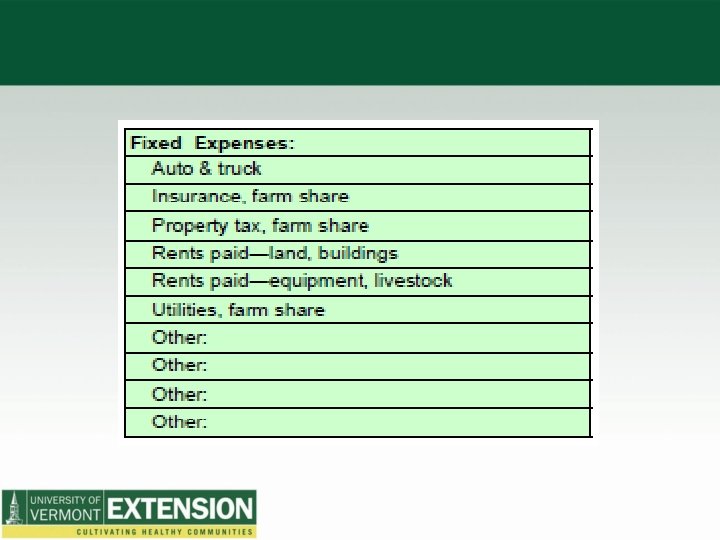
Expense Categories Fixed Expenses: Expenses that hold steady even if the business produces more or less goods
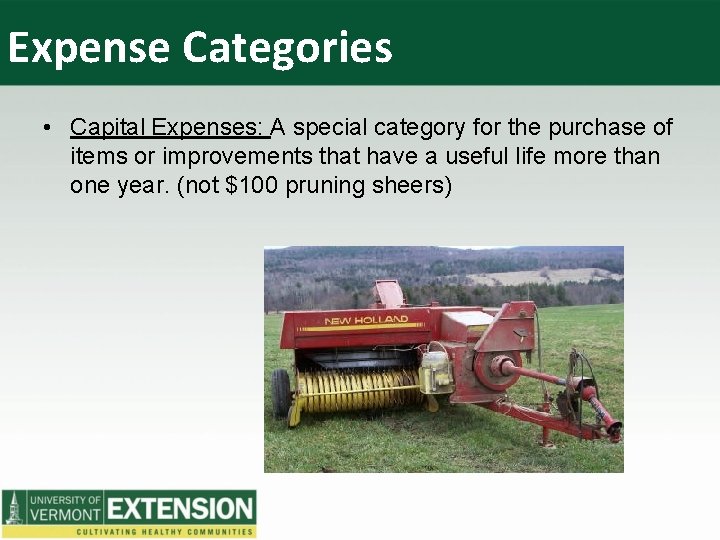
Expense Categories • Capital Expenses: A special category for the purchase of items or improvements that have a useful life more than one year. (not $100 pruning sheers)
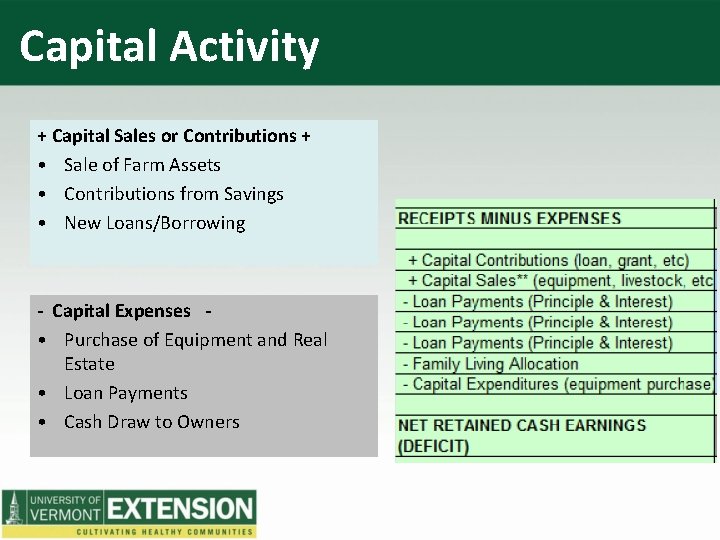
Capital Activity + Capital Sales or Contributions + • Sale of Farm Assets • Contributions from Savings • New Loans/Borrowing - Capital Expenses • Purchase of Equipment and Real Estate • Loan Payments • Cash Draw to Owners
Clues to Improved Management - Find the major expenses - Identify where the incomes from - Measure how much the business supports the livelihood of owners - What else can you find?
Profitability • Next time…. .
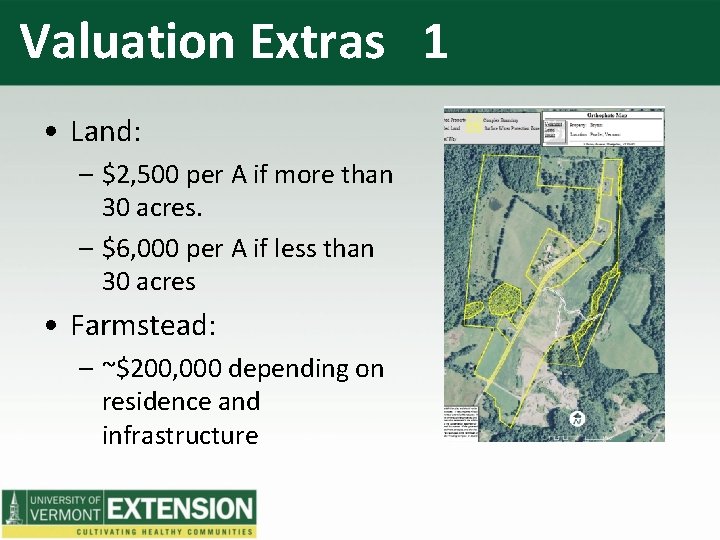
Valuation Extras 1 • Land: – $2, 500 per A if more than 30 acres. – $6, 000 per A if less than 30 acres • Farmstead: – ~$200, 000 depending on residence and infrastructure
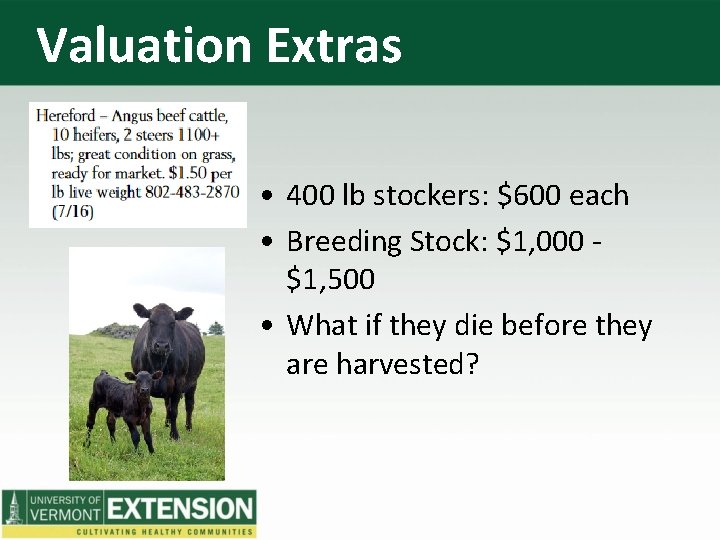
Valuation Extras • 400 lb stockers: $600 each • Breeding Stock: $1, 000 $1, 500 • What if they die before they are harvested?
- Slides: 25