
Far Infrared Spectroscopy on Biological Material Investigation of
Far Infrared Spectroscopy on Biological Material Investigation of the potentially dangerous effects that THz radiation might induce in living organisms Adriana Matei 1. Physikalisches Institut, Universität Stuttgart, Deutschland Universität Stuttgart Martin Dressel Boris Gorshunov Support EU-Project: THz-Bridge
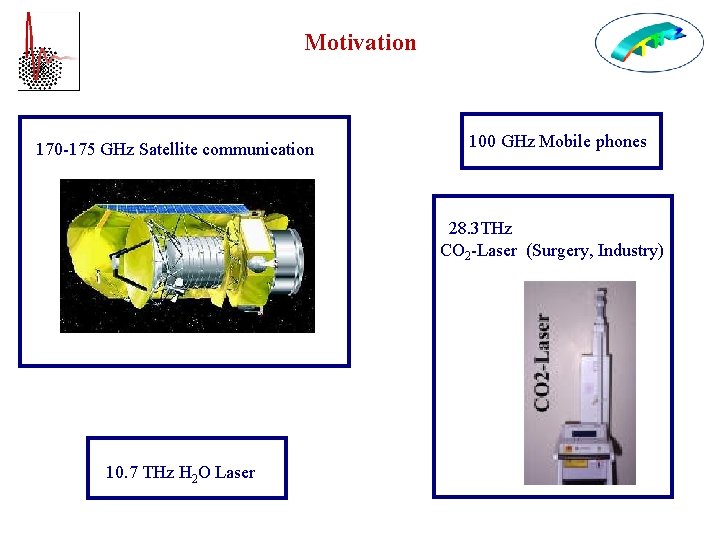
Motivation 170 -175 GHz Satellite communication 100 GHz Mobile phones 28. 3 THz CO 2 -Laser (Surgery, Industry) 10. 7 THz H 2 O Laser
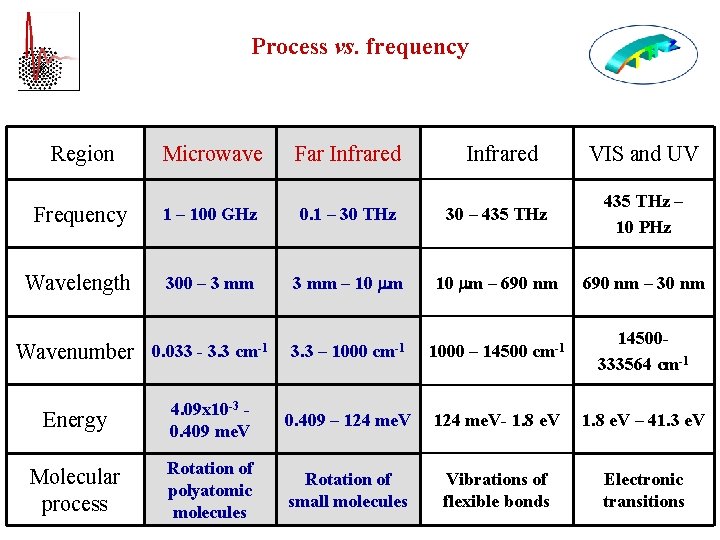
Process vs. frequency Region Microwave Far Infrared VIS and UV Frequency 1 – 100 GHz 0. 1 – 30 THz 30 – 435 THz – 10 PHz Wavelength 300 – 3 mm – 10 m – 690 nm – 30 nm 3. 3 – 1000 cm-1 1000 – 14500 cm-1 14500333564 cm-1 Energy 4. 09 x 10 -3 0. 409 me. V 0. 409 – 124 me. V- 1. 8 e. V – 41. 3 e. V Molecular process Rotation of polyatomic molecules Rotation of small molecules Vibrations of flexible bonds Electronic transitions Wavenumber 0. 033 - 3. 3 cm-1
THz radiation induced effects • Heating due to high frequency radiation (ex: microwave oven) • If the resonant frequency is met distinct lines what is happening if samples are exposed for longer time at resonant frequency
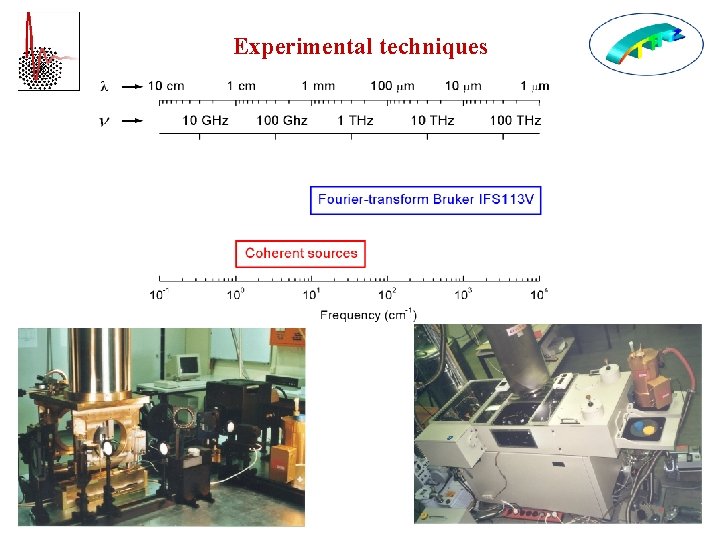
Experimental techniques
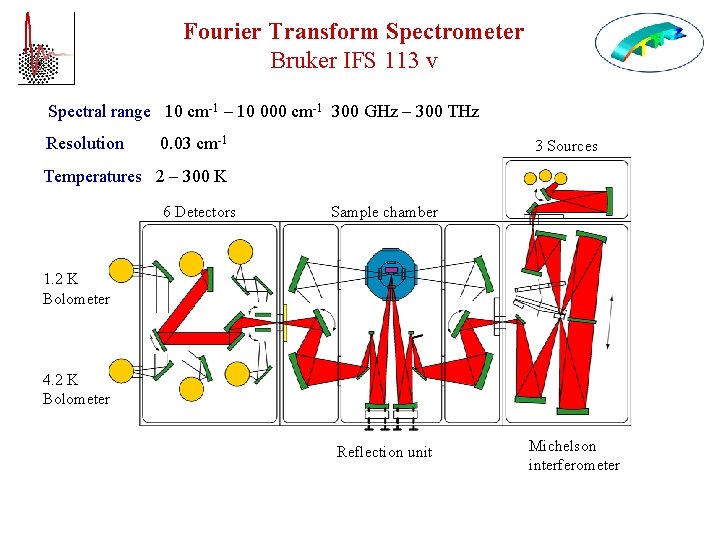
Fourier Transform Spectrometer Bruker IFS 113 v Spectral range 10 cm-1 – 10 000 cm-1 300 GHz – 300 THz Resolution 0. 03 cm-1 3 Sources Temperatures 2 – 300 K 6 Detectors Sample chamber 1. 2 K Bolometer 4. 2 K Bolometer Reflection unit Michelson interferometer
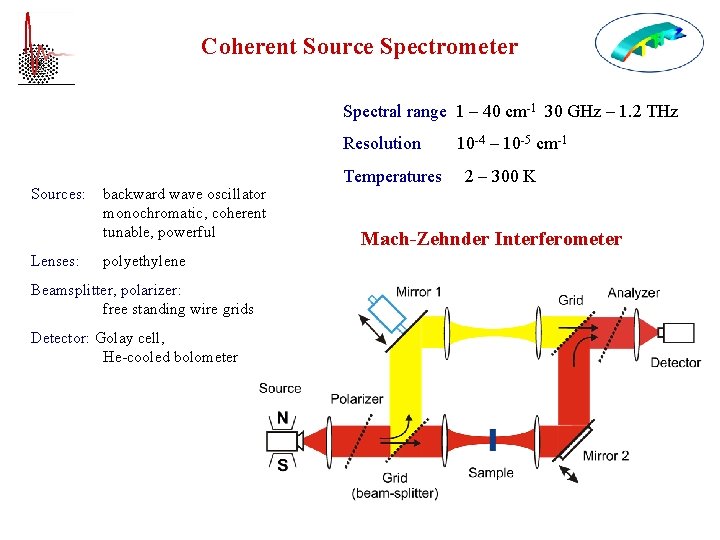
Coherent Source Spectrometer Spectral range 1 – 40 cm-1 30 GHz – 1. 2 THz Resolution Sources: Lenses: backward wave oscillator monochromatic, coherent tunable, powerful polyethylene Beamsplitter, polarizer: free standing wire grids Detector: Golay cell, He-cooled bolometer Temperatures 10 -4 – 10 -5 cm-1 2 – 300 K Mach-Zehnder Interferometer
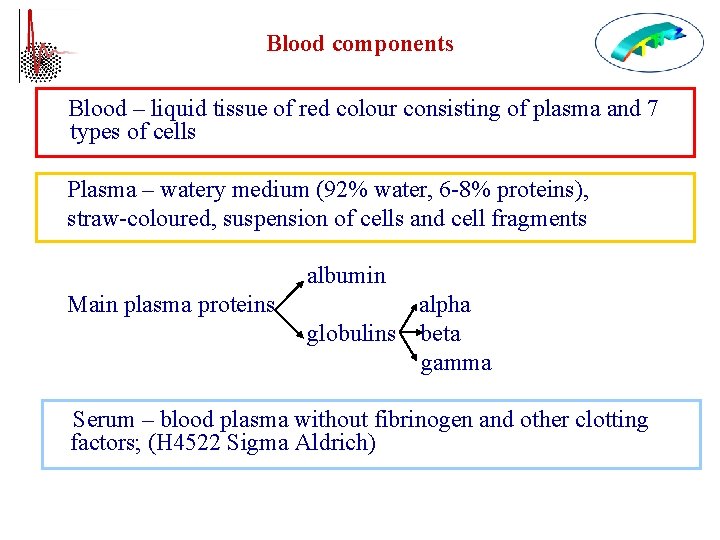
Blood components Blood – liquid tissue of red colour consisting of plasma and 7 types of cells Plasma – watery medium (92% water, 6 -8% proteins), straw-coloured, suspension of cells and cell fragments albumin Main plasma proteins alpha globulins beta gamma Serum – blood plasma without fibrinogen and other clotting factors; (H 4522 Sigma Aldrich)
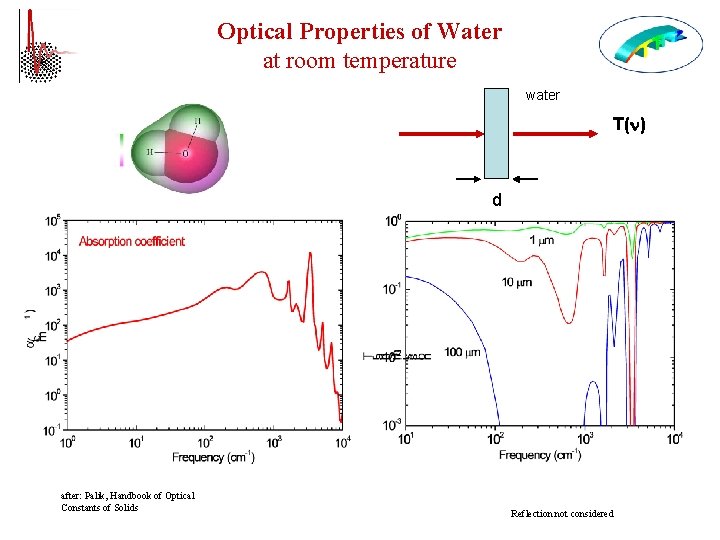
Optical Properties of Water at room temperature water T( ) d after: Palik, Handbook of Optical Constants of Solids Reflection not considered
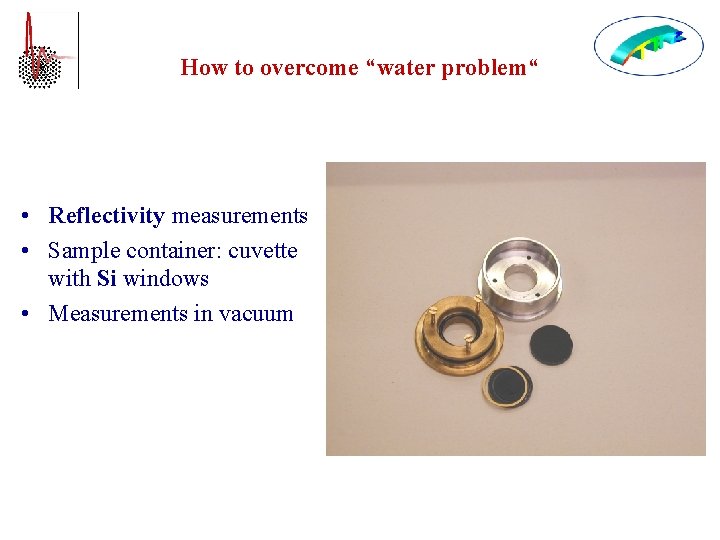
How to overcome “water problem“ • Reflectivity measurements • Sample container: cuvette with Si windows • Measurements in vacuum
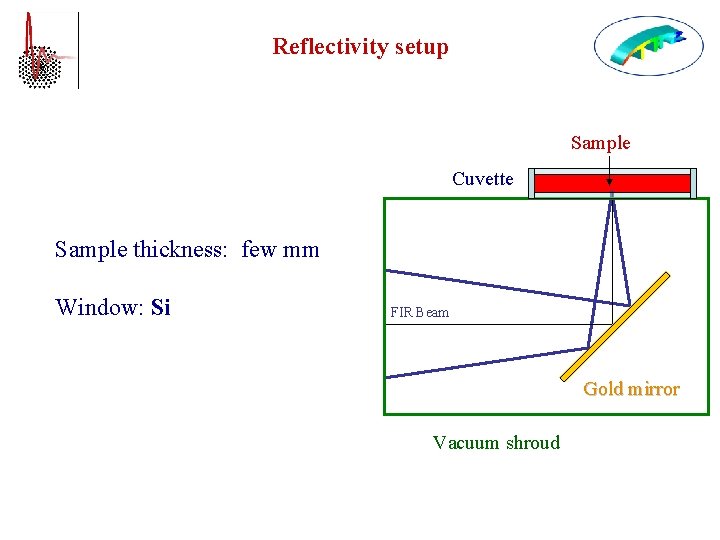
Reflectivity setup Sample Cuvette Sample thickness: few mm Window: Si FIR Beam Gold mirror Vacuum shroud
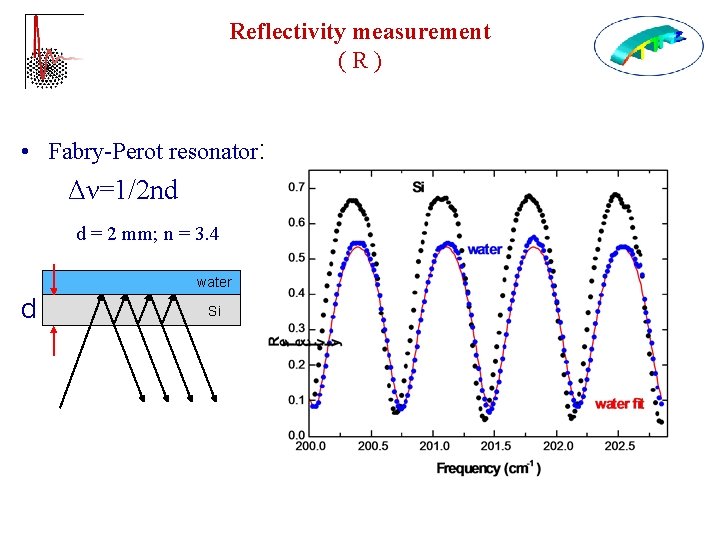
Reflectivity measurement (R) • Fabry-Perot resonator: Δν=1/2 nd d = 2 mm; n = 3. 4 water d Si
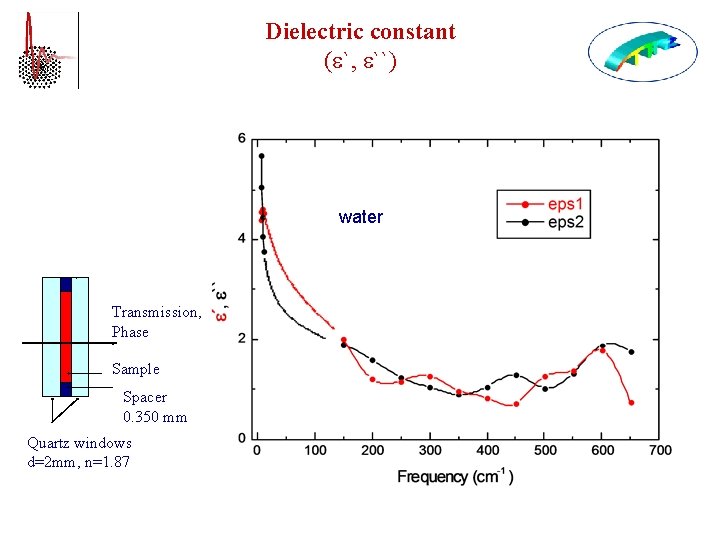
Dielectric constant ( `, ``) water Transmission, Phase Sample Spacer 0. 350 mm Quartz windows d=2 mm, n=1. 87
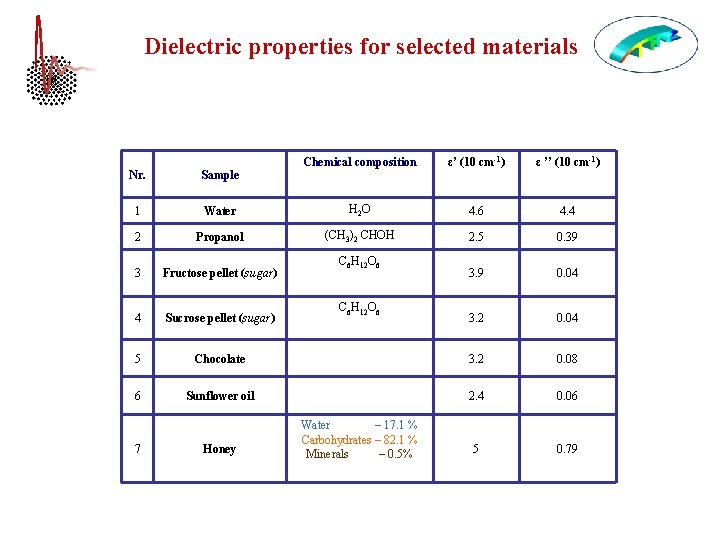
Dielectric properties for selected materials Chemical composition ε’ (10 cm-1) ε ’’ (10 cm-1) Nr. Sample 1 Water H 2 O 4. 6 4. 4 2 Propanol (CH 3)2 CHOH 2. 5 0. 39 3 Fructose pellet (sugar) 3. 9 0. 04 4 Sucrose pellet (sugar) 3. 2 0. 04 5 Chocolate 3. 2 0. 08 6 Sunflower oil 2. 4 0. 06 5 0. 79 7 Honey C 6 H 12 O 6 Water – 17. 1 % Carbohydrates – 82. 1 % Minerals – 0. 5%
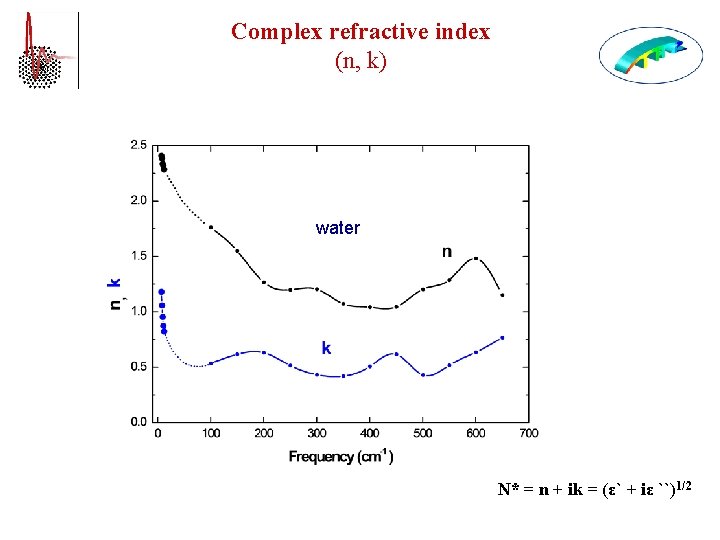
Complex refractive index (n, k) water N* = n + ik = (ε` + iε ``)1/2
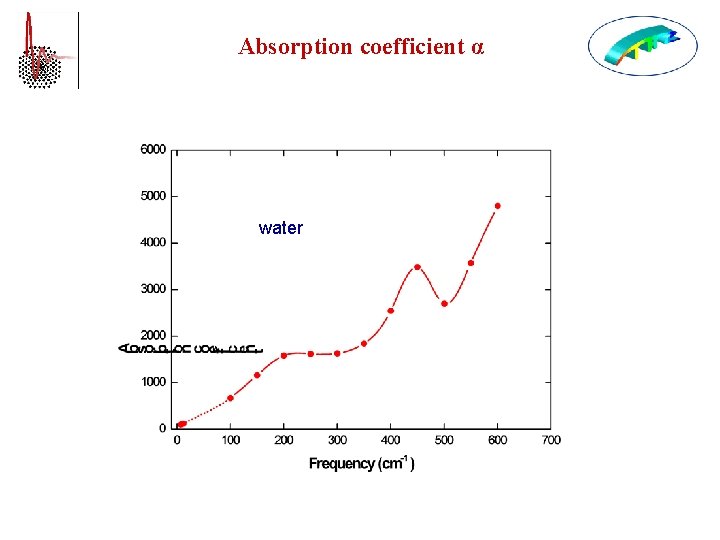
Absorption coefficient α water
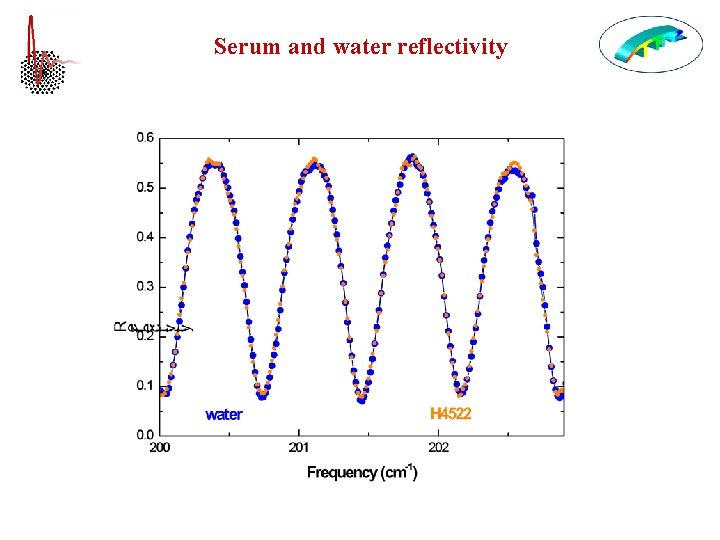
Serum and water reflectivity
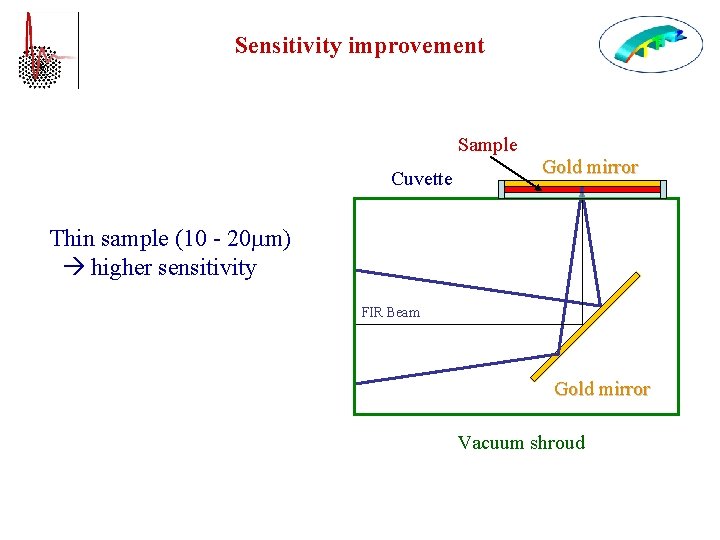
Sensitivity improvement Sample Cuvette Gold mirror Thin sample (10 - 20 m) higher sensitivity FIR Beam Gold mirror Vacuum shroud
Conclusions Development/testing of a new technique for FIR measurements of liquids Measured optical properties of water in FIR/Sub. MM No differences observed between serum and water sensitivity of the technique improvements of the method
- Slides: 19