
FAO DOCUMENT FISH CULTURE HELPS YOU IN Raising


- Slides: 66
FAO DOCUMENT
FISH CULTURE HELPS YOU IN
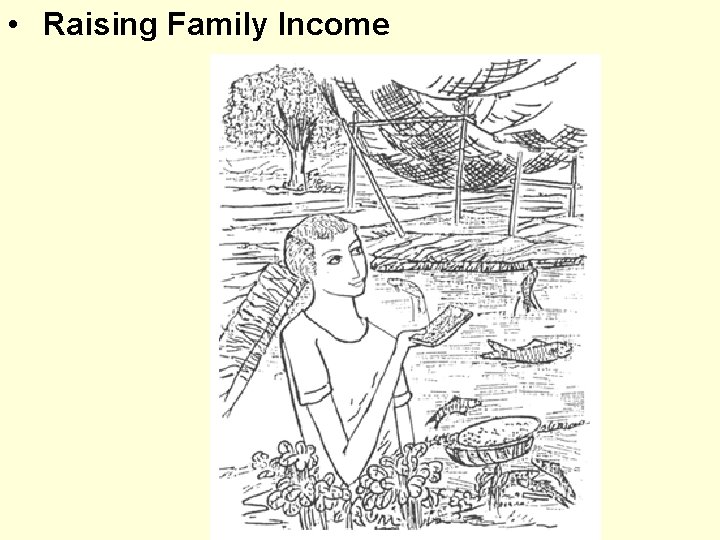
• Raising Family Income
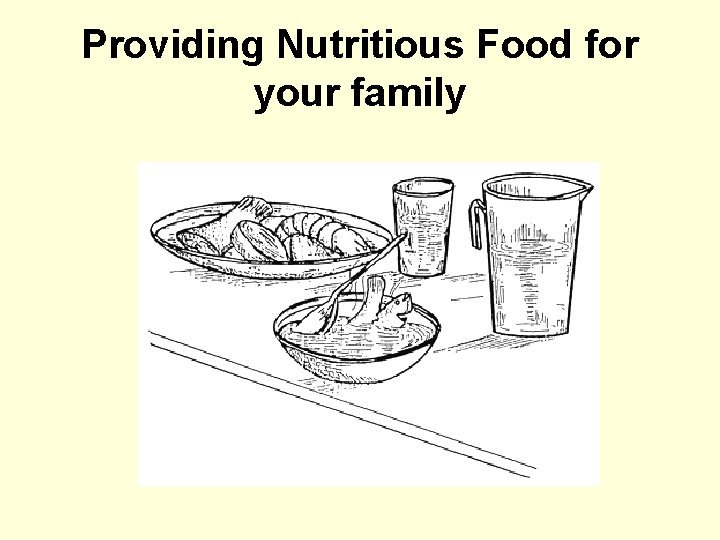
Providing Nutritious Food for your family
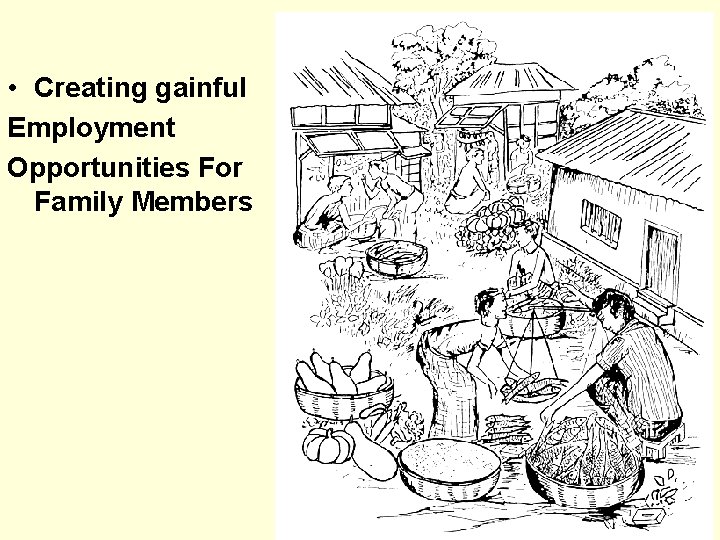
• Creating gainful Employment Opportunities For Family Members
BEFORE YOU START FISH CULTURE YOU MUST KNOW THE FOLLOWING FACTS • FISH CULTURE IS BASICALLY SIMILAR TO AGRICULTURE • FISH CULTURE PRIMARILY IS THE CULTURE OF FISH FOOD ORGANISMS FOR FEEDING THE STOCKED FISH • SHADOW DECREASES THE YIELD OF AGRICULTURAL CROP. LIKEWISE IT ALSO DECREASES THE PRODUCTION OF FISH FEED ORGANISMS, ULTIMATELY DECREASING THE FISH YIELD • LIKE OTHER ANIMALS FISH ALSO NEEDS OXYGEN
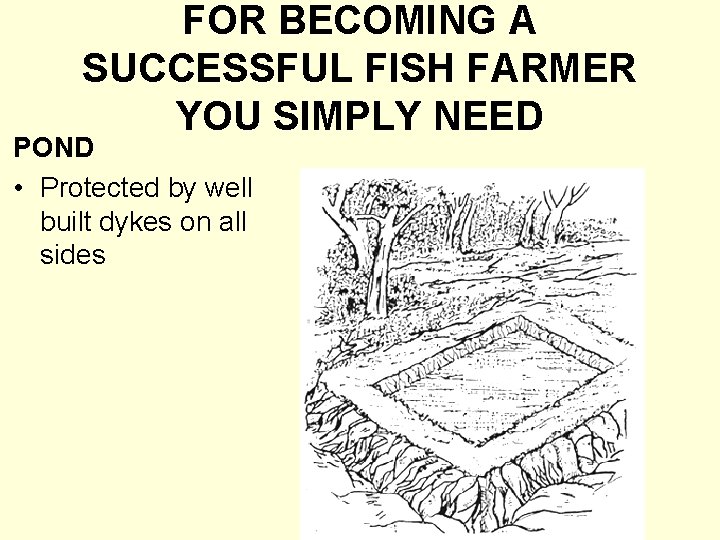
FOR BECOMING A SUCCESSFUL FISH FARMER YOU SIMPLY NEED POND • Protected by well built dykes on all sides
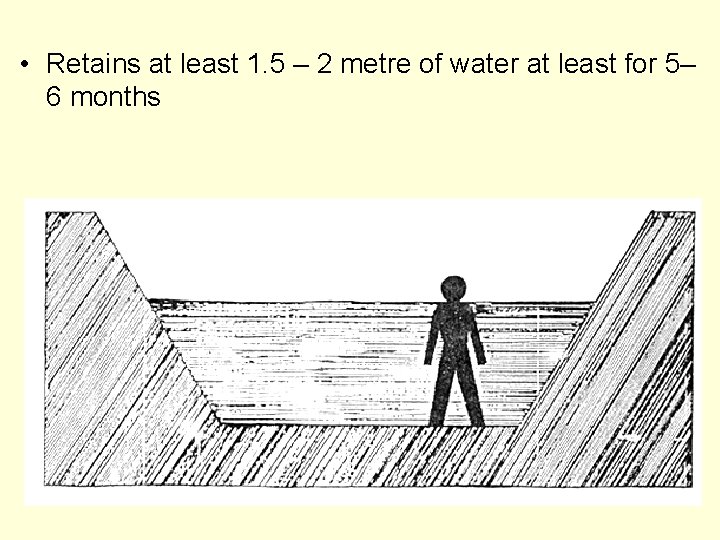
• Retains at least 1. 5 – 2 metre of water at least for 5– 6 months
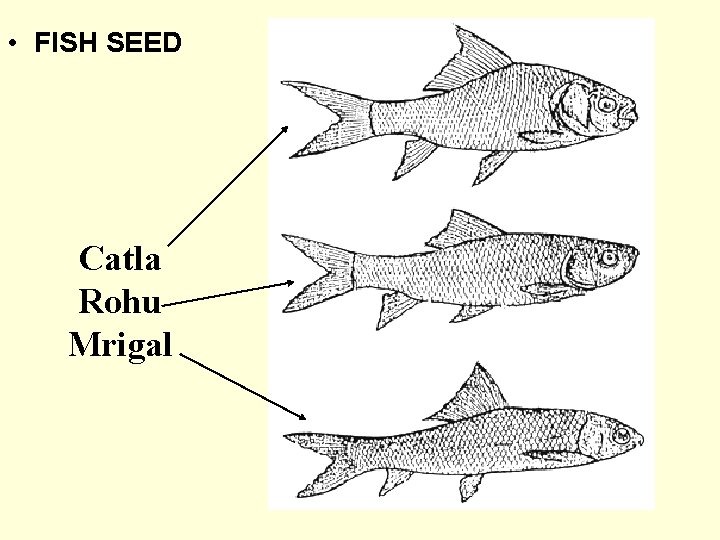
• FISH SEED Catla Rohu Mrigal
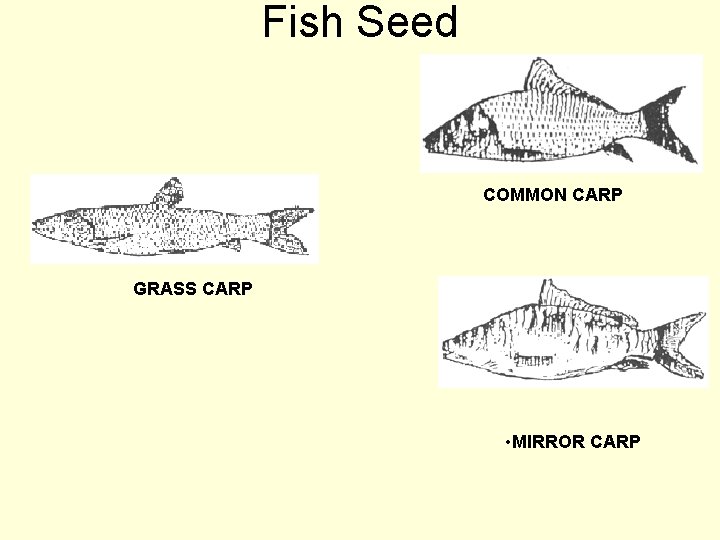
Fish Seed COMMON CARP GRASS CARP • MIRROR CARP
MANURE • ORGANIC MANURES • INORGANIC MANURES
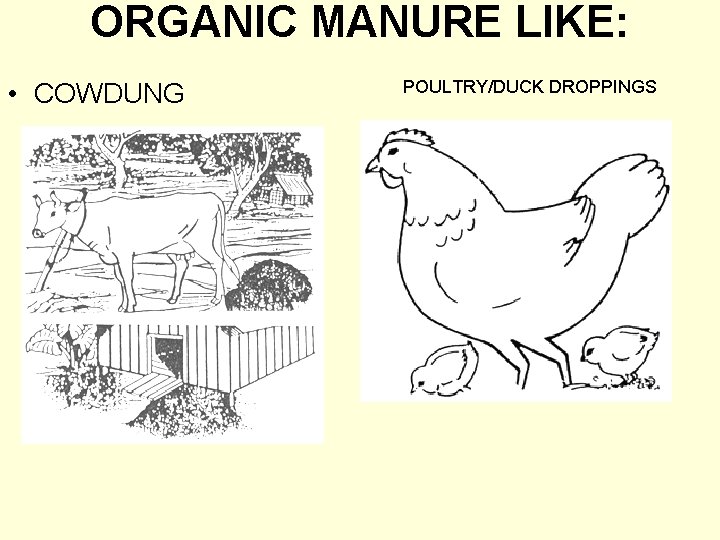
ORGANIC MANURE LIKE: • COWDUNG POULTRY/DUCK DROPPINGS
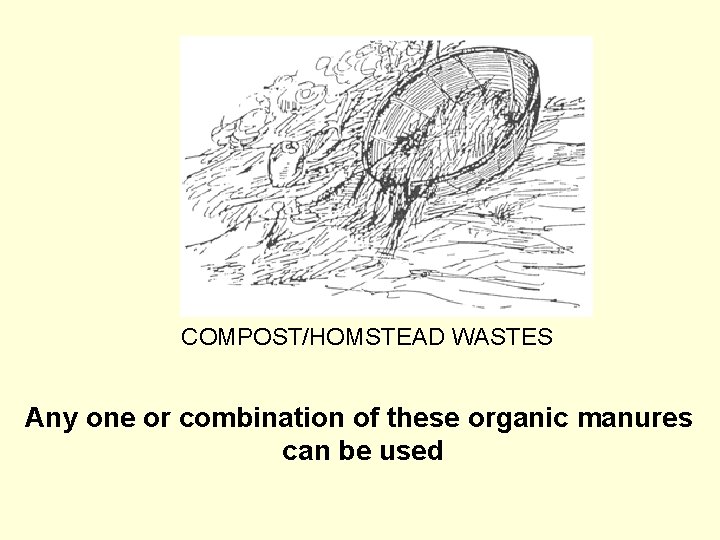
COMPOST/HOMSTEAD WASTES Any one or combination of these organic manures can be used
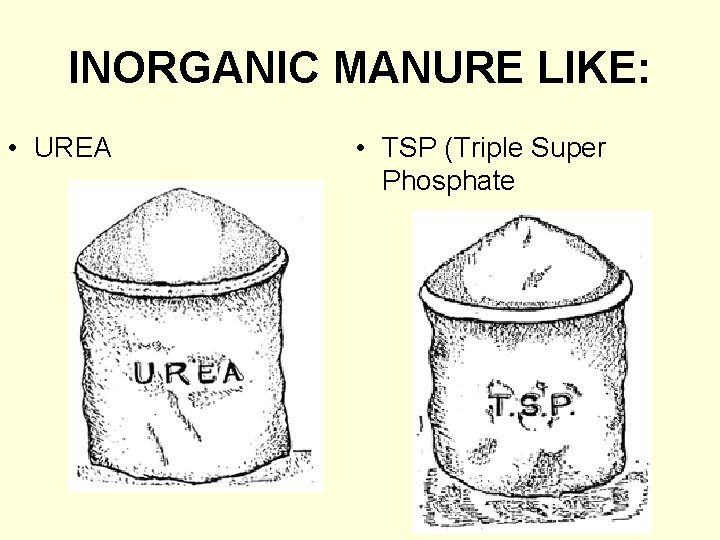
INORGANIC MANURE LIKE: • UREA • TSP (Triple Super Phosphate
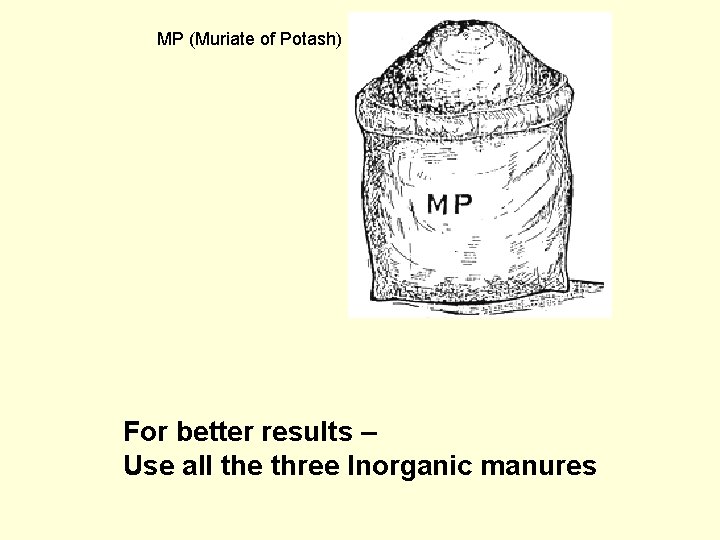
MP (Muriate of Potash) For better results – Use all the three Inorganic manures
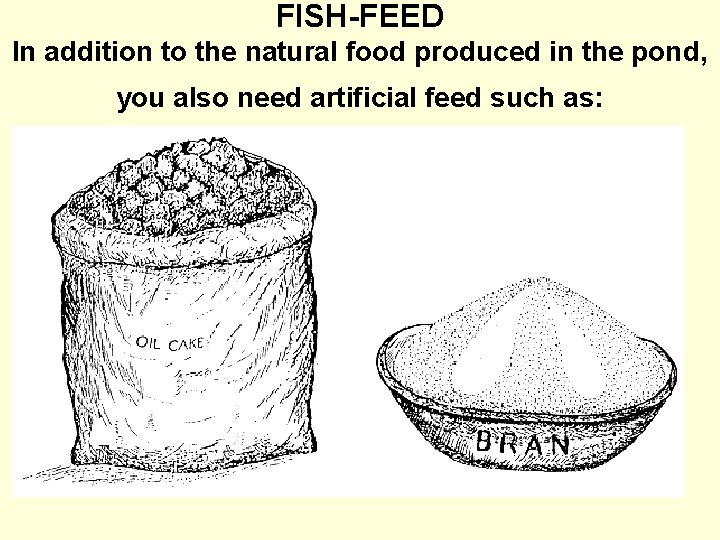
FISH-FEED In addition to the natural food produced in the pond, you also need artificial feed such as:
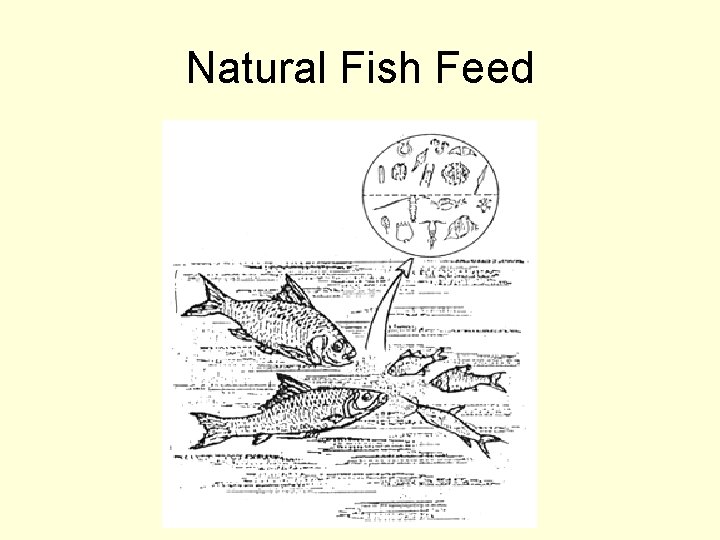
Natural Fish Feed
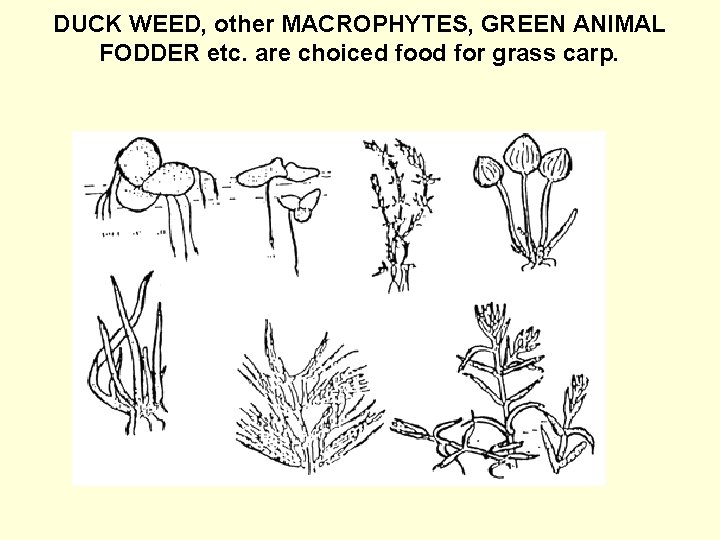
DUCK WEED, other MACROPHYTES, GREEN ANIMAL FODDER etc. are choiced food for grass carp.
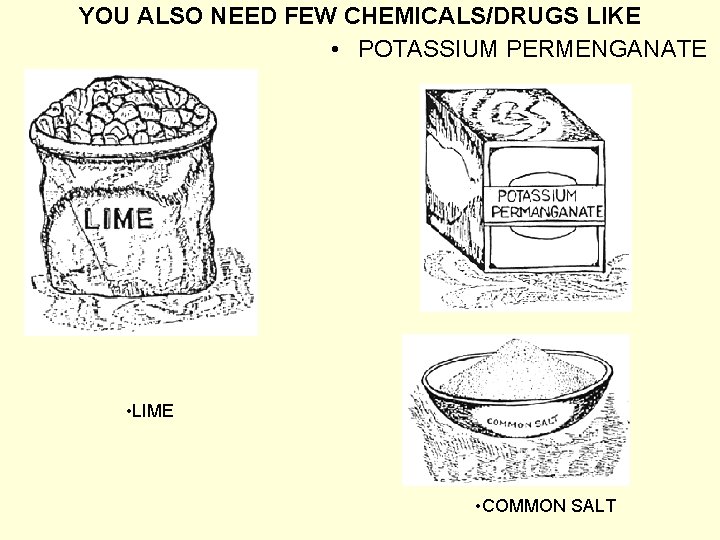
YOU ALSO NEED FEW CHEMICALS/DRUGS LIKE • POTASSIUM PERMENGANATE • LIME • COMMON SALT
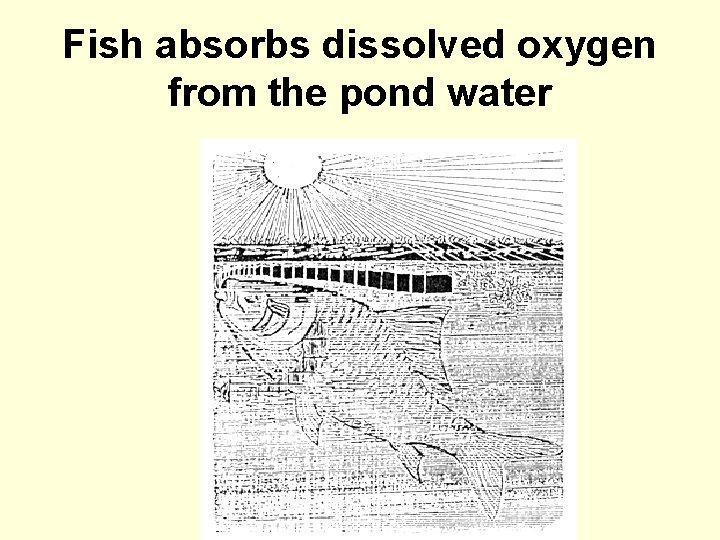
Fish absorbs dissolved oxygen from the pond water
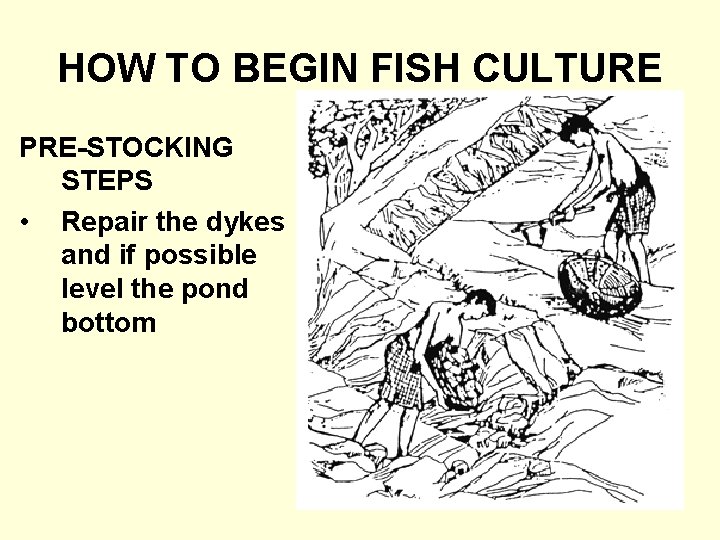
HOW TO BEGIN FISH CULTURE PRE-STOCKING STEPS • Repair the dykes and if possible level the pond bottom
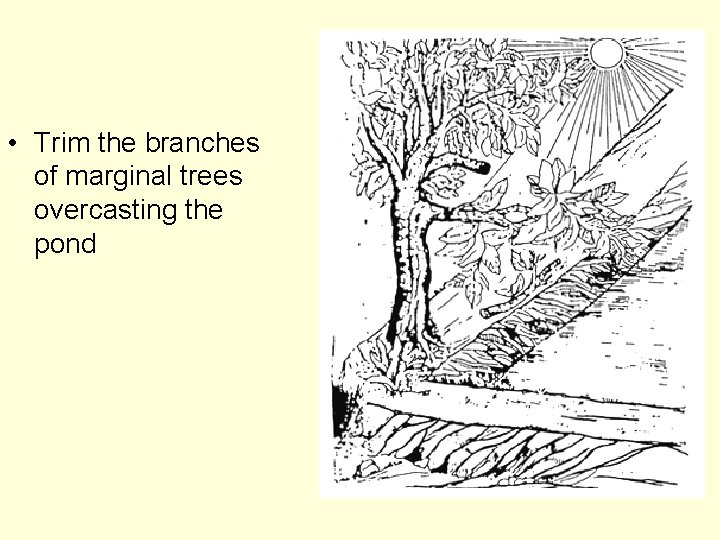
• Trim the branches of marginal trees overcasting the pond
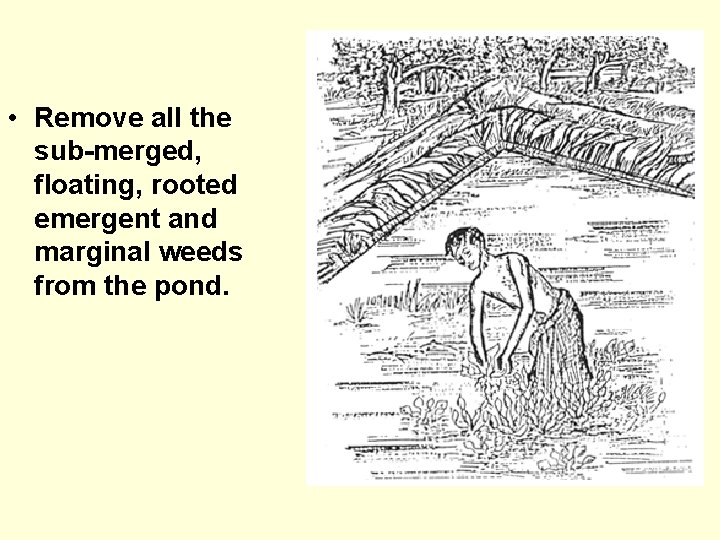
• Remove all the sub-merged, floating, rooted emergent and marginal weeds from the pond.
• Remove all the existing stock of fish including predatory and weed fishes by any of the following methods. • Dewatering the Pond
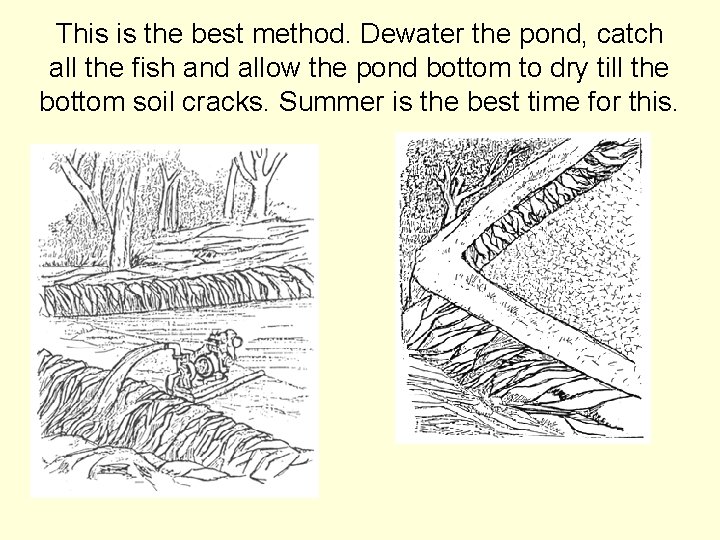
This is the best method. Dewater the pond, catch all the fish and allow the pond bottom to dry till the bottom soil cracks. Summer is the best time for this.
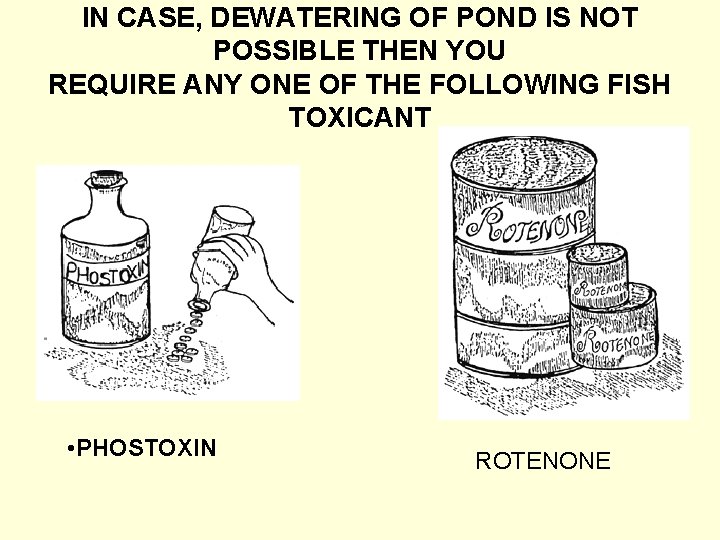
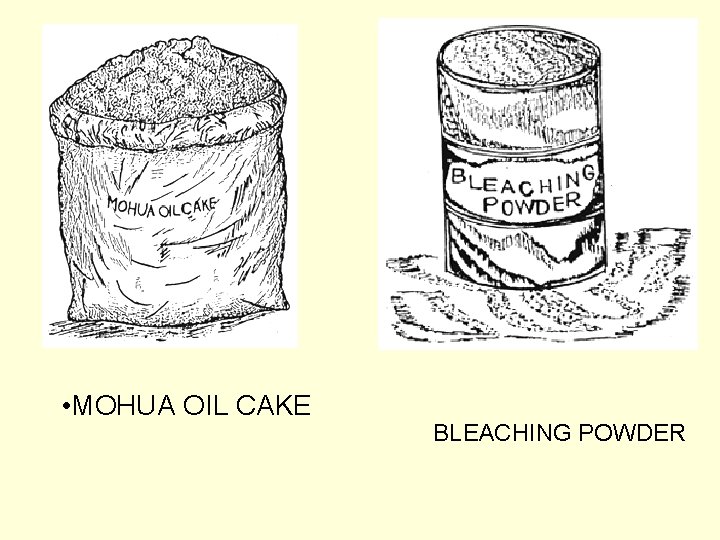
Poisoning the Pond Poison the pond in case dewatering AND DRYING is not possible. Any of the following fish toxicant may be used • Aluminium phosphide (Phostoxin/Quickphos/Selphos etc. ) • Bleaching powder • Rotenone Powder • Mohua oil cake
IN CASE, DEWATERING OF POND IS NOT POSSIBLE THEN YOU REQUIRE ANY ONE OF THE FOLLOWING FISH TOXICANT • PHOSTOXIN ROTENONE
• MOHUA OIL CAKE BLEACHING POWDER
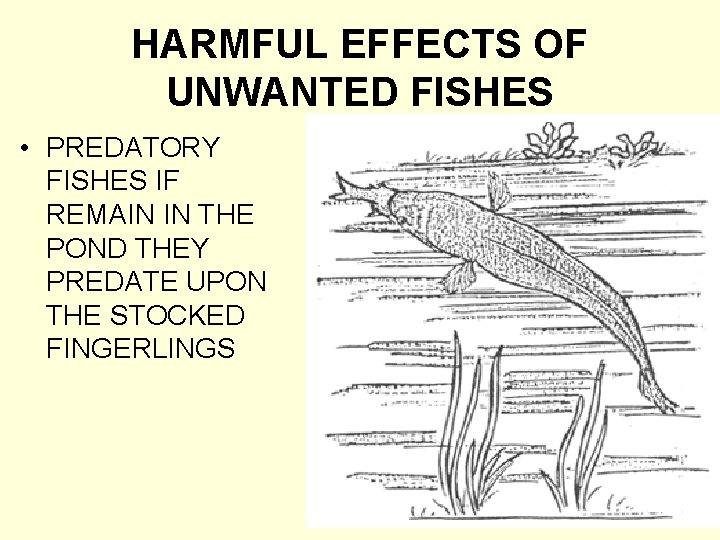
HARMFUL EFFECTS OF UNWANTED FISHES • PREDATORY FISHES IF REMAIN IN THE POND THEY PREDATE UPON THE STOCKED FINGERLINGS
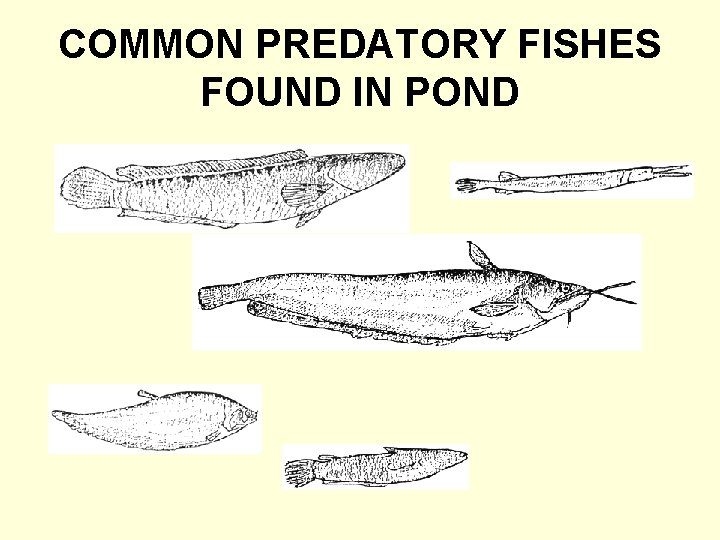
COMMON PREDATORY FISHES FOUND IN POND
• WEED FISHES MULTIPLY IN THE POND IN LARGE NUMBERS AND TAKE MAJOR SHARE OF AVAILABLE FOOD THUS LEAVING ASIDE VERY LITTLE FOOD FOR CULTIVATED FISHES
REPEATED NETTING • Repeated netting is suitable for only those ponds having no other fishes except carps. You can not catch predatory and weed fishes simply by netting. A few remaining of those fishes will breed and have sizable population in the pond.
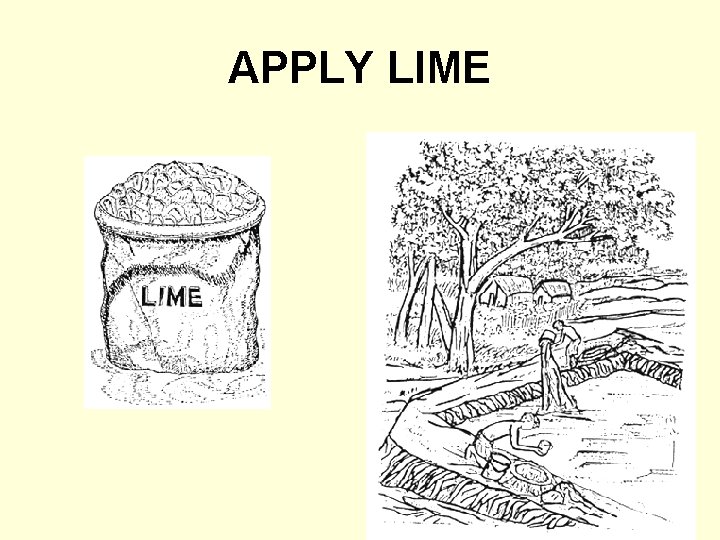
APPLY LIME
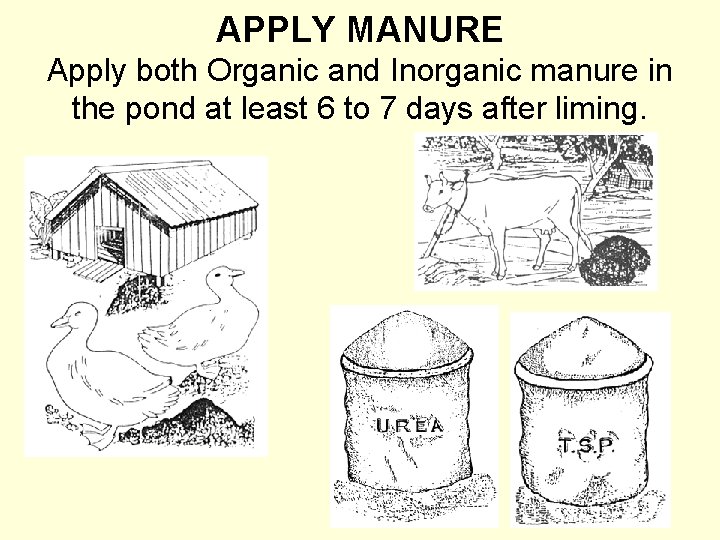
APPLY MANURE Apply both Organic and Inorganic manure in the pond at least 6 to 7 days after liming.
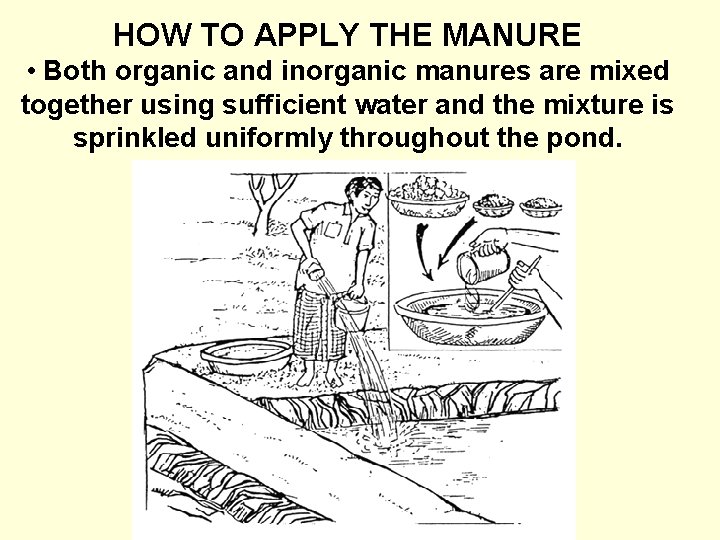
HOW TO APPLY THE MANURE • Both organic and inorganic manures are mixed together using sufficient water and the mixture is sprinkled uniformly throughout the pond.
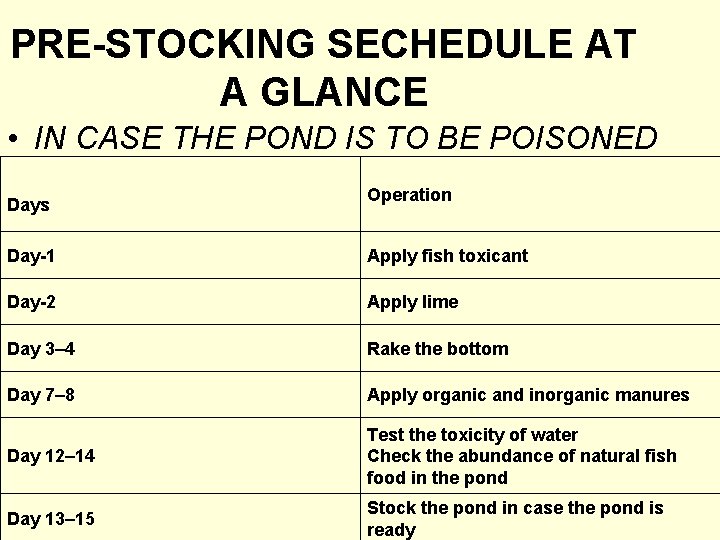
PRE-STOCKING SECHEDULE AT A GLANCE • IN CASE THE POND IS TO BE POISONED Days Operation Day-1 Apply fish toxicant Day-2 Apply lime Day 3– 4 Rake the bottom Day 7– 8 Apply organic and inorganic manures Day 12– 14 Test the toxicity of water Check the abundance of natural fish food in the pond Day 13– 15 Stock the pond in case the pond is ready
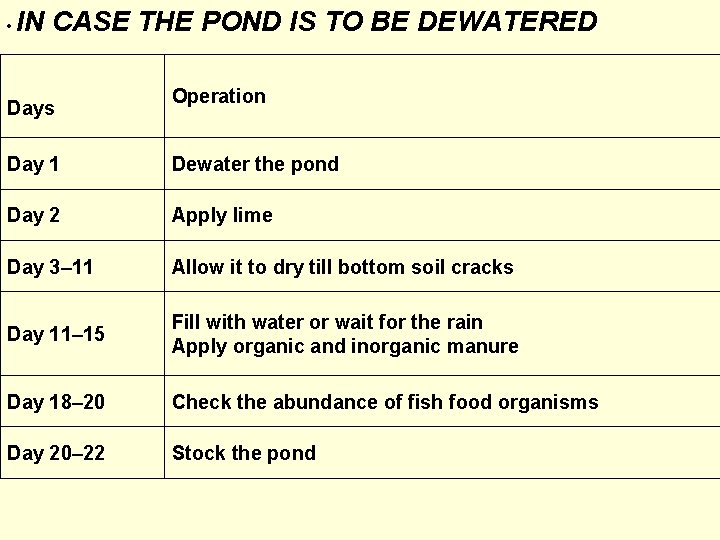
• IN CASE THE POND IS TO BE DEWATERED Days Operation Day 1 Dewater the pond Day 2 Apply lime Day 3– 11 Allow it to dry till bottom soil cracks Day 11– 15 Fill with water or wait for the rain Apply organic and inorganic manure Day 18– 20 Check the abundance of fish food organisms Day 20– 22 Stock the pond
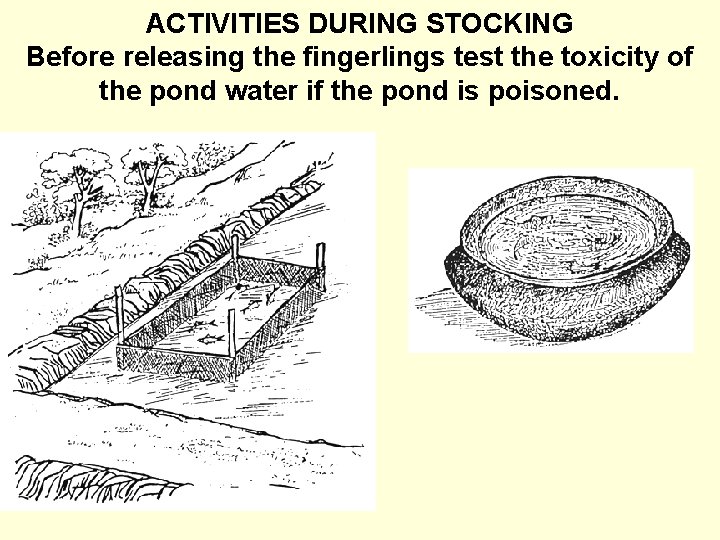
ACTIVITIES DURING STOCKING Before releasing the fingerlings test the toxicity of the pond water if the pond is poisoned.
• Fix a hapa in the pond and release 5– 10 fingerlings. Observe for 24 hours if they survive without exhibiting any apparent change in their behaviour, then the pond is ready for stocking. • Alternatively toxicity can also be tested by taking pond water in bucket/hundi and releasing 3– 4 fingerlings. • If the fingerlings die, then wait for 7– 8 more days and again examine the toxicity of water.
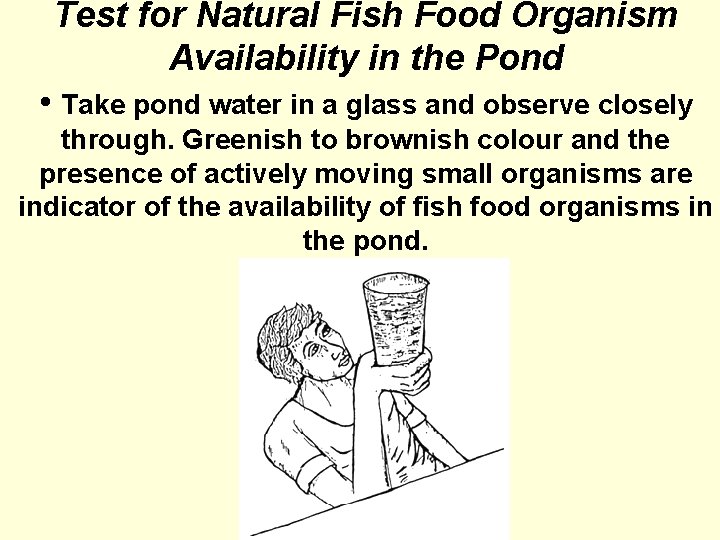
Test for Natural Fish Food Organism Availability in the Pond • Take pond water in a glass and observe closely through. Greenish to brownish colour and the presence of actively moving small organisms are indicator of the availability of fish food organisms in the pond.
CHARACTERISTICS OF THE HEALTHY FINGERLINGS • Before stocking you must check the fingerlings for their • Vigorous activity and normal behaviour • Healthy look • Bright colour • Presence of cysts, spots, haemorrhage, discoloured patches on the body, gills, fins, etc. are signs of diseased fingerlings. Avoid taking fingerlings from such pond/stock.
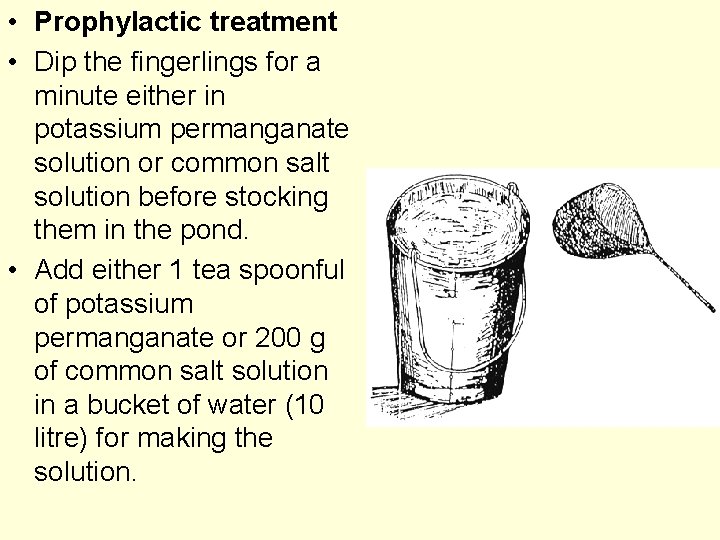
• Prophylactic treatment • Dip the fingerlings for a minute either in potassium permanganate solution or common salt solution before stocking them in the pond. • Add either 1 tea spoonful of potassium permanganate or 200 g of common salt solution in a bucket of water (10 litre) for making the solution.
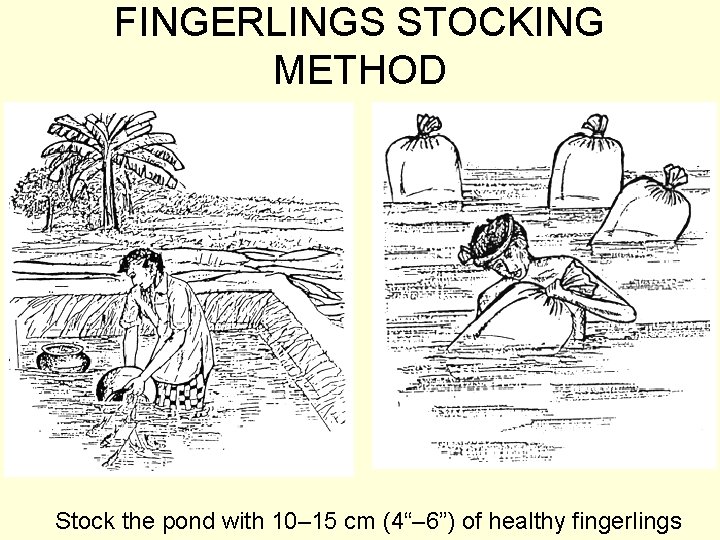
FINGERLINGS STOCKING METHOD Stock the pond with 10– 15 cm (4“– 6”) of healthy fingerlings
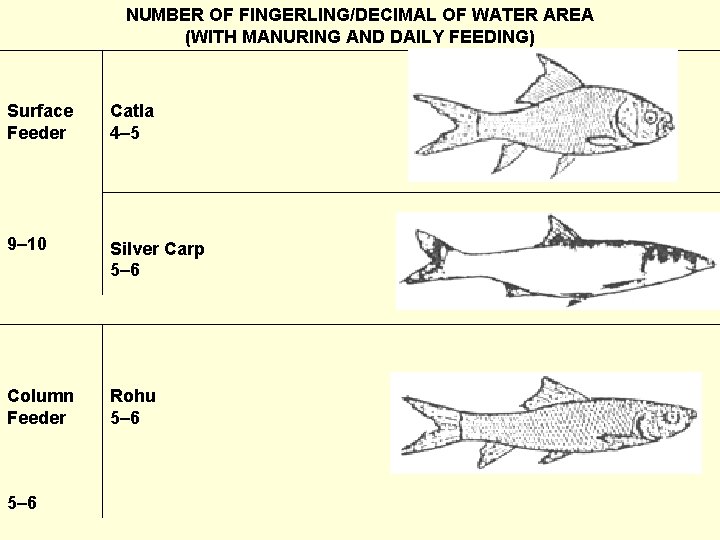
NUMBER OF FINGERLING/DECIMAL OF WATER AREA (WITH MANURING AND DAILY FEEDING) Surface Feeder Catla 4– 5 9– 10 Silver Carp 5– 6 Column Feeder Rohu 5– 6
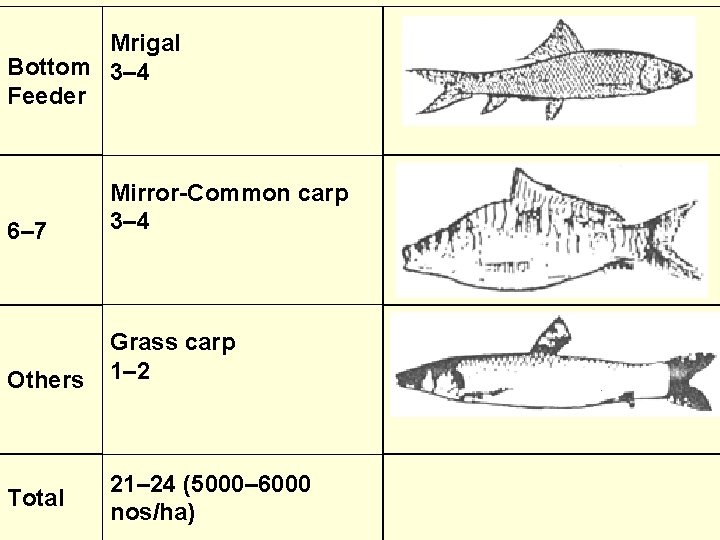
Mrigal Bottom 3– 4 Feeder 6– 7 Mirror-Common carp 3– 4 Others Grass carp 1– 2 Total 21– 24 (5000– 6000 nos/ha)
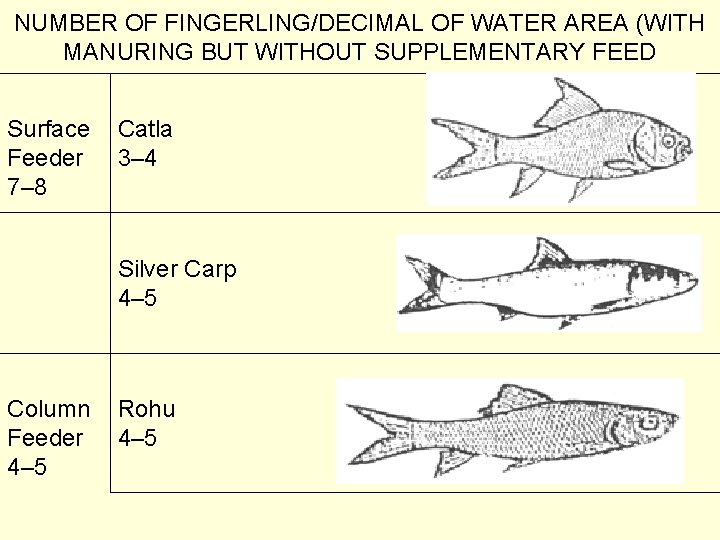
NUMBER OF FINGERLING/DECIMAL OF WATER AREA (WITH MANURING BUT WITHOUT SUPPLEMENTARY FEED Surface Feeder 7– 8 Catla 3– 4 Silver Carp 4– 5 Column Feeder 4– 5 Rohu 4– 5
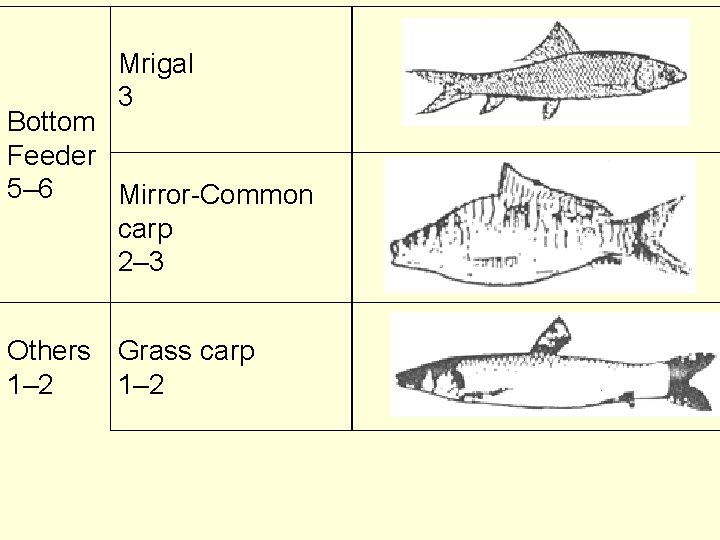
Mrigal 3 Bottom Feeder 5– 6 Mirror-Common carp 2– 3 Others Grass carp 1– 2
POST-STOCKING STEPS After releasing fingerlings you must ensure the: • maintenance of hygienic pond environment continuous availability of natural fish food in the pond • provision of supplementary feed on daily basis • To ensure these you must follow daily manuring/feeding schedule
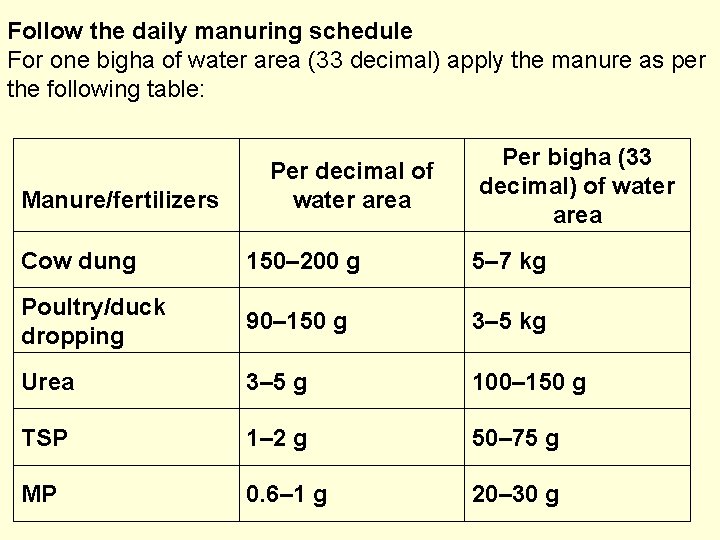
Follow the daily manuring schedule For one bigha of water area (33 decimal) apply the manure as per the following table: Manure/fertilizers Per decimal of water area Per bigha (33 decimal) of water area Cow dung 150– 200 g 5– 7 kg Poultry/duck dropping 90– 150 g 3– 5 kg Urea 3– 5 g 100– 150 g TSP 1– 2 g 50– 75 g MP 0. 6– 1 g 20– 30 g
DAILY FEEDING SCHEDULE • FEED IS GIVEN ON THE BASIS OF THE FISH BIOMASS PRESENT IN THE POND • GENERALLY FEED IS APPLIED AT THE RATE OF 2% OF THE BODY WEIGHT OF FISH • FOR EVERY 100 Kg FISH IN THE POND GIVE 1 kg of mustard oil cake and 1 kg of rice/wheat bran
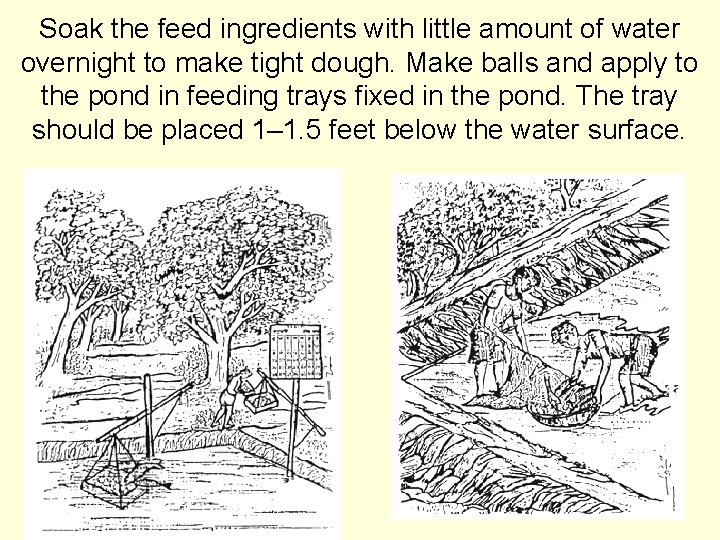
Soak the feed ingredients with little amount of water overnight to make tight dough. Make balls and apply to the pond in feeding trays fixed in the pond. The tray should be placed 1– 1. 5 feet below the water surface.
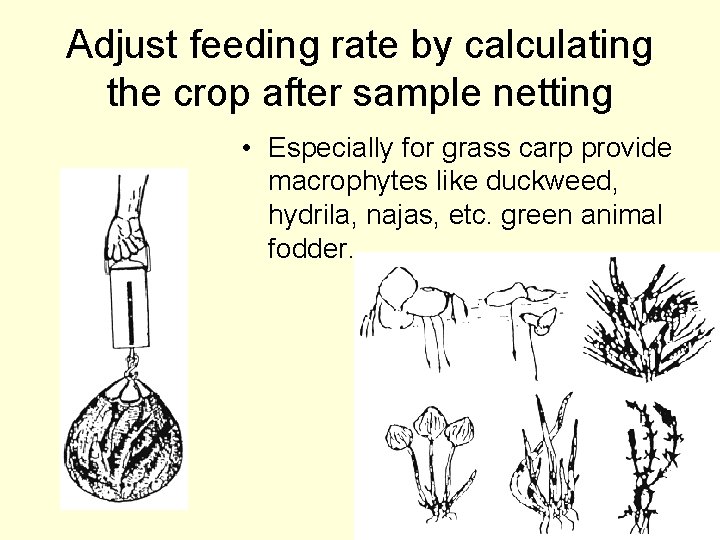
Adjust feeding rate by calculating the crop after sample netting • Especially for grass carp provide macrophytes like duckweed, hydrila, najas, etc. green animal fodder.
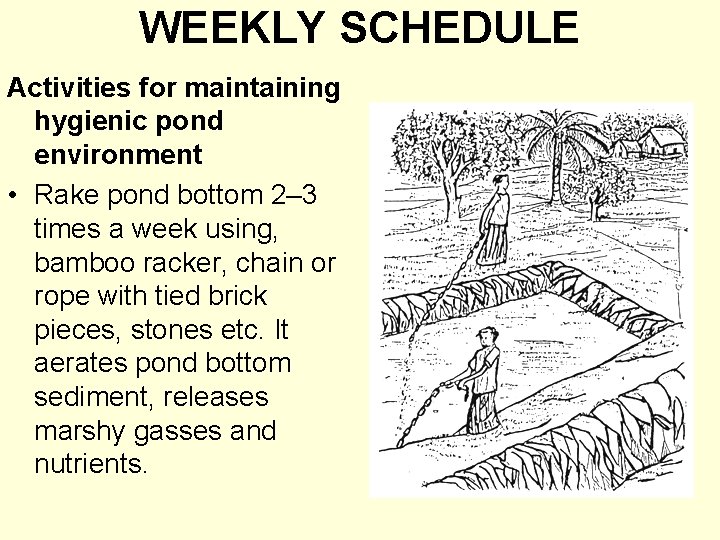
WEEKLY SCHEDULE Activities for maintaining hygienic pond environment • Rake pond bottom 2– 3 times a week using, bamboo racker, chain or rope with tied brick pieces, stones etc. It aerates pond bottom sediment, releases marshy gasses and nutrients.
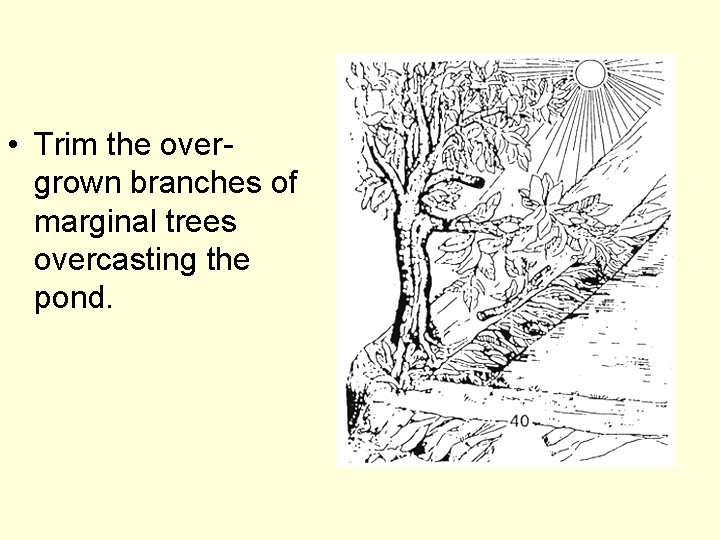
• Trim the overgrown branches of marginal trees overcasting the pond.
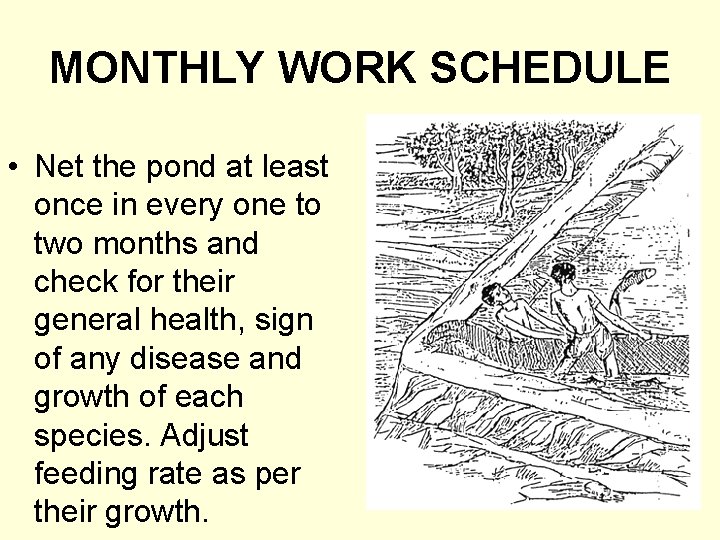
MONTHLY WORK SCHEDULE • Net the pond at least once in every one to two months and check for their general health, sign of any disease and growth of each species. Adjust feeding rate as per their growth.
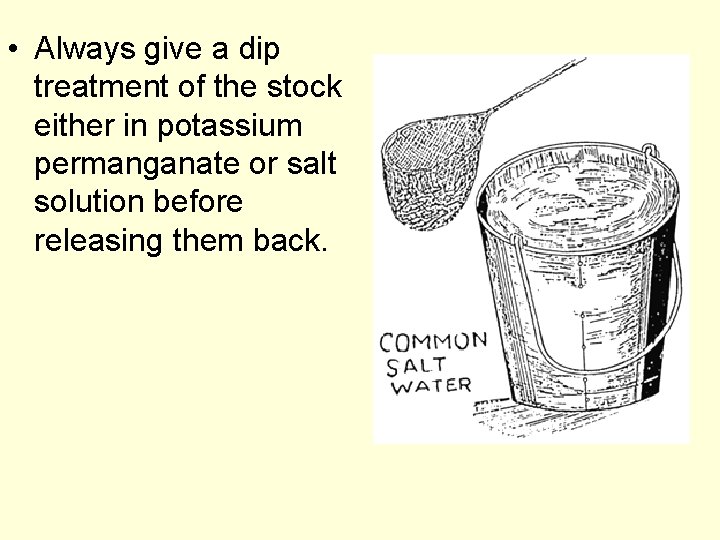
• Always give a dip treatment of the stock either in potassium permanganate or salt solution before releasing them back.
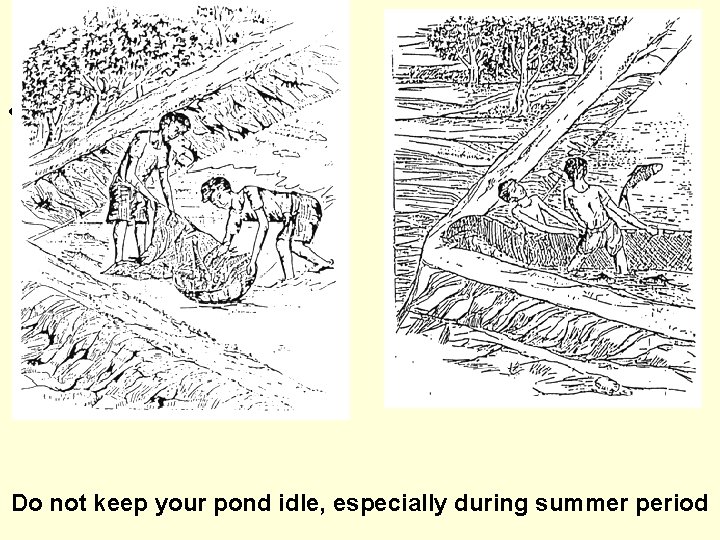
HARVESTING • Harvest the fish according to prevailing market price and demand. • Harvest some of the fish like Catla and Silver carp as they grow to marketable size within 3– 4 months of stocking. • You can follow multiple harvesting and restocking schedule. Replenish the stock after harvesting by restocking with same species and number of fingerlings. • Do final harvesting at least once in a year depending upon market price and availability of fingerlings for immediate stocking of pond without loosing culture time.
• Do not keep your pond idle, especially during summer period
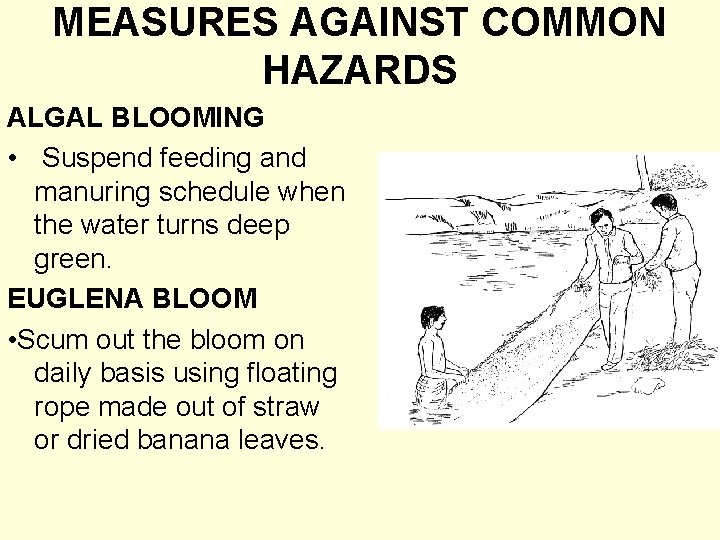
MEASURES AGAINST COMMON HAZARDS ALGAL BLOOMING • Suspend feeding and manuring schedule when the water turns deep green. EUGLENA BLOOM • Scum out the bloom on daily basis using floating rope made out of straw or dried banana leaves.
DAWN DISSOLVED OXYGEN DEPLETION • As soon as dawn surfacing fish is noticed, try to agitate/splash the water by manual or mechanical means. It helps in increasing dissolved oxygen level. Recirculate the same water with the help of pump or add fresh water in case of nearby water source is available. – it is also wise to partially harvest the marketable size fish – suspend manuring for few days till the dawn surfacing stops – trim branches of marginal trees – rake the bottom
DISEASE OUTBREAK • net the pond and remove clinically diseased specimens if few in number • give dip treatment in potassium permanganate solution or salt solution before releasing them back • apply lime @ ½ kg/decimal 2 times a week
PREDATORS • keep few bamboo traps along the pond margin to catch snakes • walk frequently around the pond to scare snakes/birds, etc. • put poison injected eggs along the pond margin to kill otters
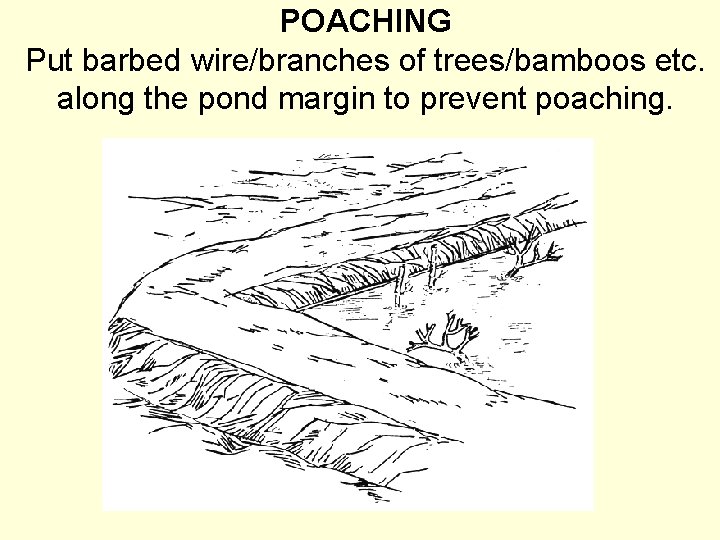
POACHING Put barbed wire/branches of trees/bamboos etc. along the pond margin to prevent poaching.
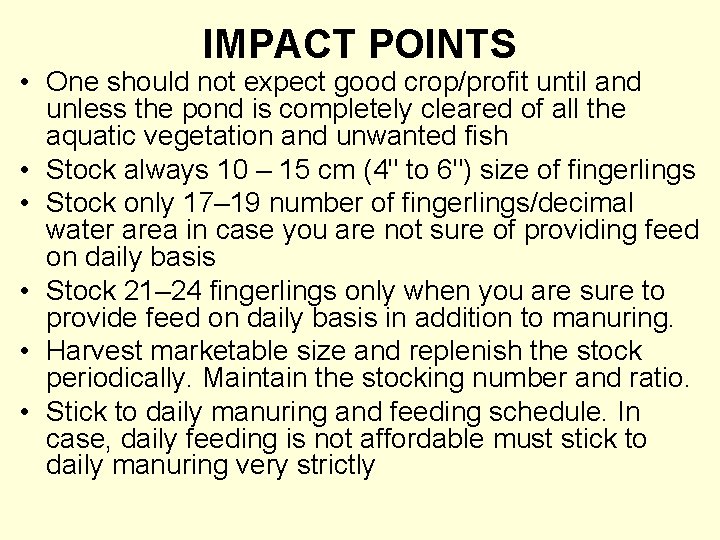
IMPACT POINTS • One should not expect good crop/profit until and unless the pond is completely cleared of all the aquatic vegetation and unwanted fish • Stock always 10 – 15 cm (4" to 6") size of fingerlings • Stock only 17– 19 number of fingerlings/decimal water area in case you are not sure of providing feed on daily basis • Stock 21– 24 fingerlings only when you are sure to provide feed on daily basis in addition to manuring. • Harvest marketable size and replenish the stock periodically. Maintain the stocking number and ratio. • Stick to daily manuring and feeding schedule. In case, daily feeding is not affordable must stick to daily manuring very strictly
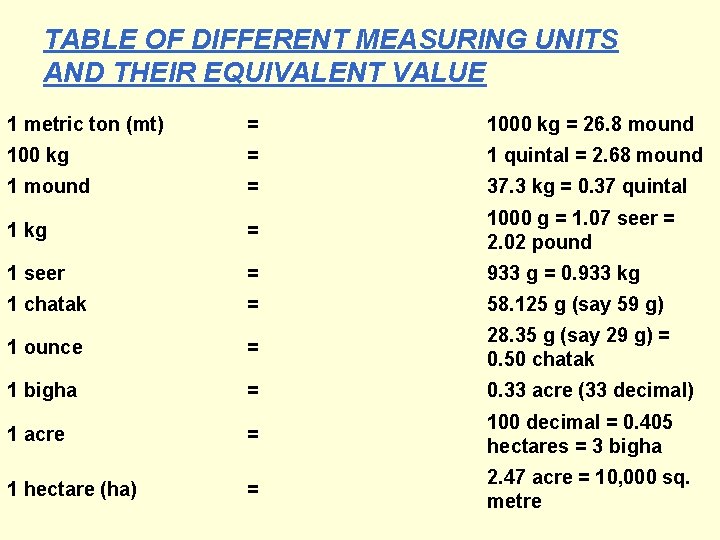
TABLE OF DIFFERENT MEASURING UNITS AND THEIR EQUIVALENT VALUE 1 metric ton (mt) = 1000 kg = 26. 8 mound 100 kg = 1 quintal = 2. 68 mound 1 mound = 37. 3 kg = 0. 37 quintal 1 kg = 1000 g = 1. 07 seer = 2. 02 pound 1 seer = 933 g = 0. 933 kg 1 chatak = 58. 125 g (say 59 g) 1 ounce = 28. 35 g (say 29 g) = 0. 50 chatak 1 bigha = 0. 33 acre (33 decimal) 1 acre = 100 decimal = 0. 405 hectares = 3 bigha 1 hectare (ha) = 2. 47 acre = 10, 000 sq. metre
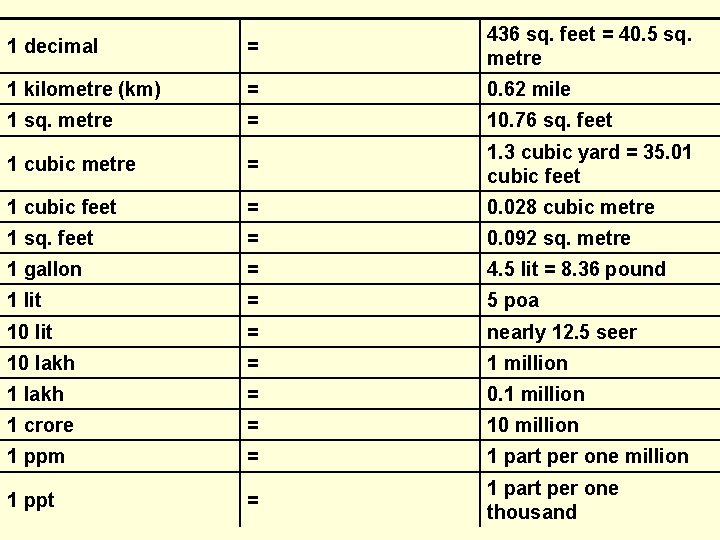
1 decimal = 436 sq. feet = 40. 5 sq. metre 1 kilometre (km) = 0. 62 mile 1 sq. metre = 10. 76 sq. feet 1 cubic metre = 1. 3 cubic yard = 35. 01 cubic feet = 0. 028 cubic metre 1 sq. feet = 0. 092 sq. metre 1 gallon = 4. 5 lit = 8. 36 pound 1 lit = 5 poa 10 lit = nearly 12. 5 seer 10 lakh = 1 million 1 lakh = 0. 1 million 1 crore = 10 million 1 ppm = 1 part per one million 1 ppt = 1 part per one thousand