
Fan Performance 2018 Air Movement Control Association International



- Slides: 37
Fan Performance © 2018 - Air Movement & Control Association International, Inc. All Rights Reserved
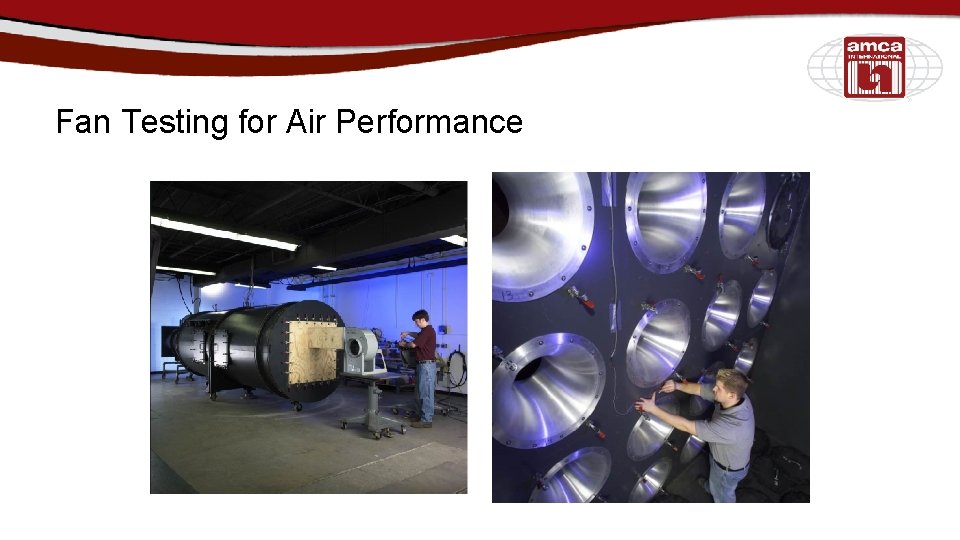
Fan Testing for Air Performance
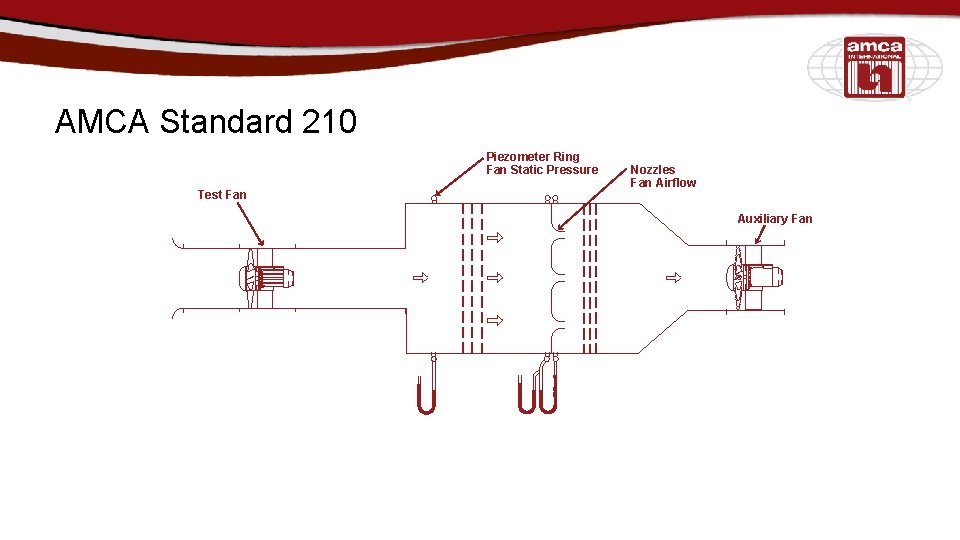
AMCA Standard 210 Piezometer Ring Fan Static Pressure Test Fan Nozzles Fan Airflow Auxiliary Fan
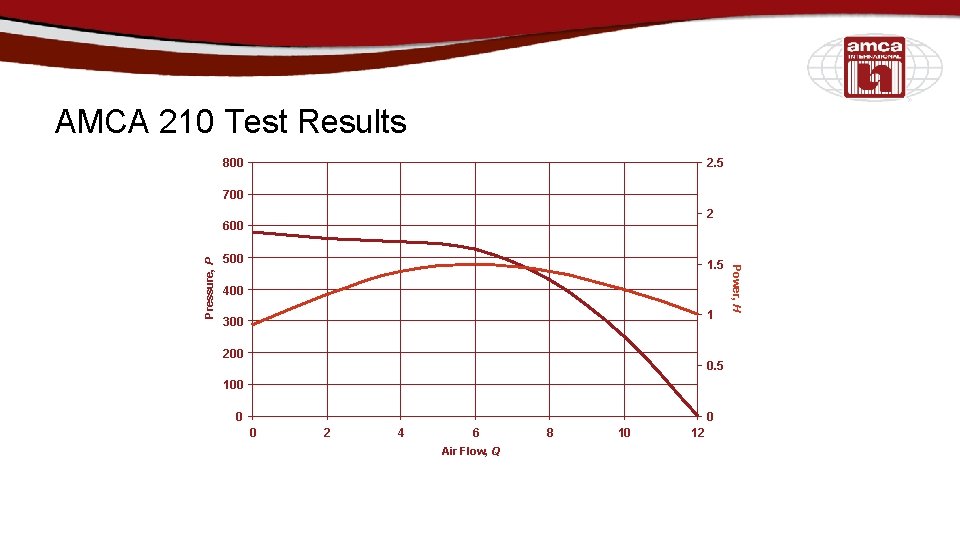
AMCA 210 Test Results 800 2. 5 700 2 500 1. 5 400 1 300 200 0. 5 100 0 2 4 6 Air Flow, Q 8 10 12 Power, H Pressure, P 600
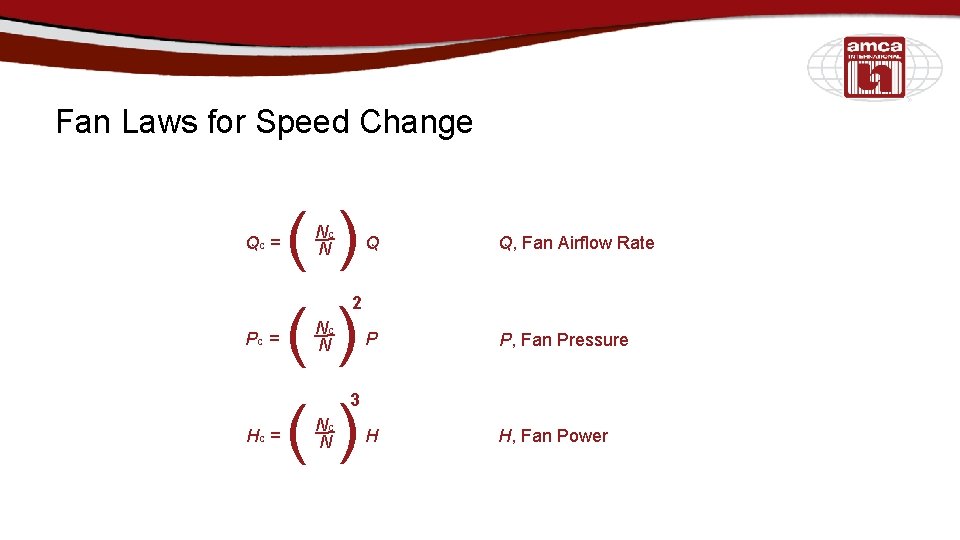
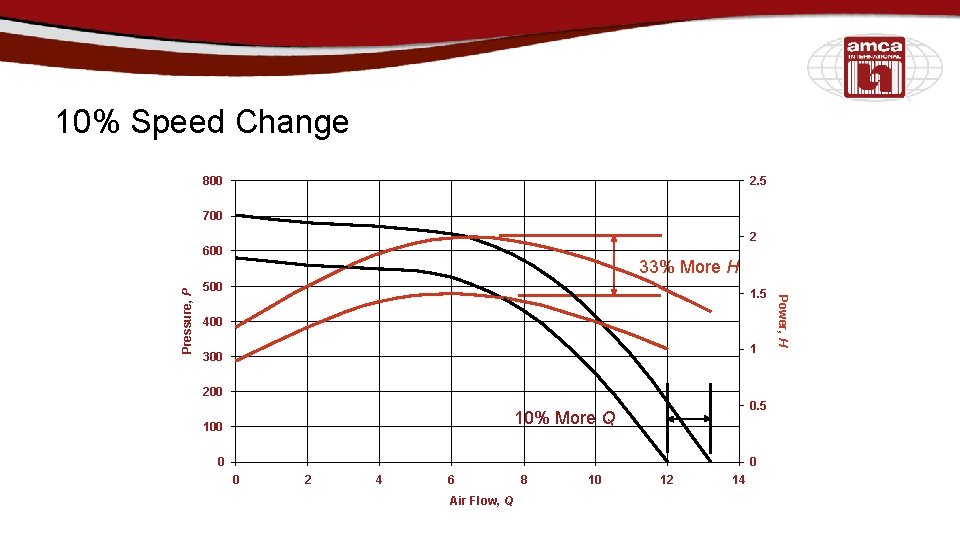
Fan Laws for Speed Change QC = ( ) ( ) NC N Q Q, Fan Airflow Rate P P, Fan Pressure H H, Fan Power 2 PC = NC N 3 HC = NC N
10% Speed Change 800 2. 5 700 2 33% More H 500 1. 5 400 1 300 200 0. 5 10% More Q 100 0 2 4 6 Air Flow, Q 8 10 12 14 Power, H Pressure, P 600
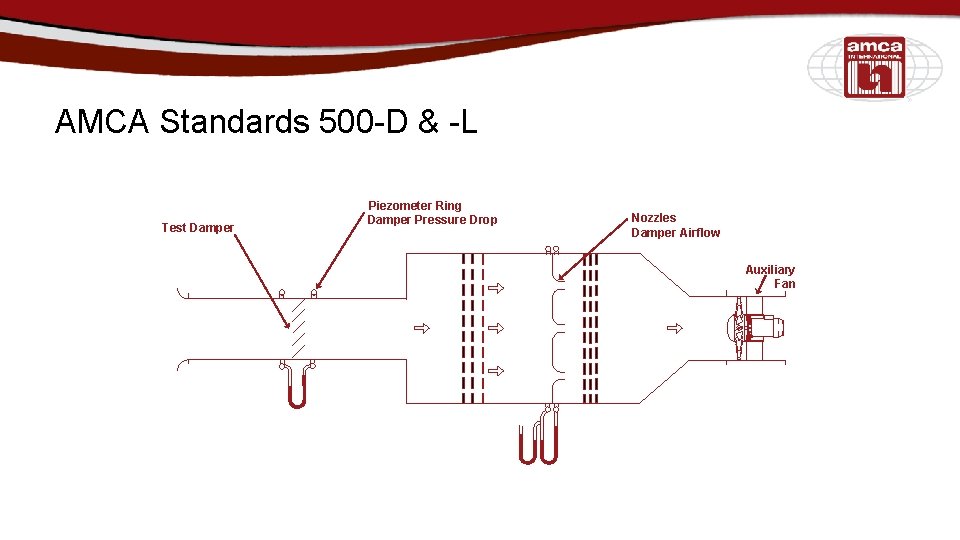
AMCA Standards 500 -D & -L Test Damper Piezometer Ring Damper Pressure Drop Nozzles Damper Airflow Auxiliary Fan
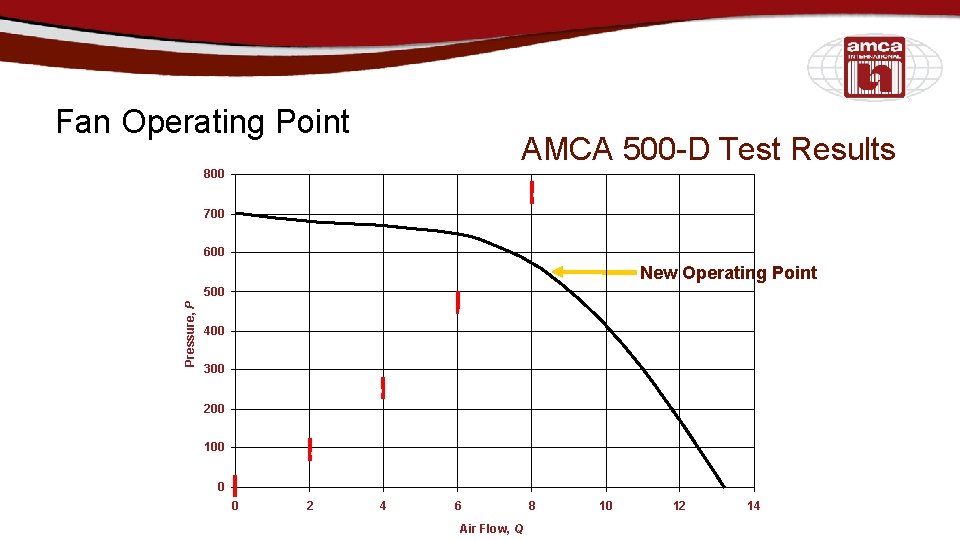
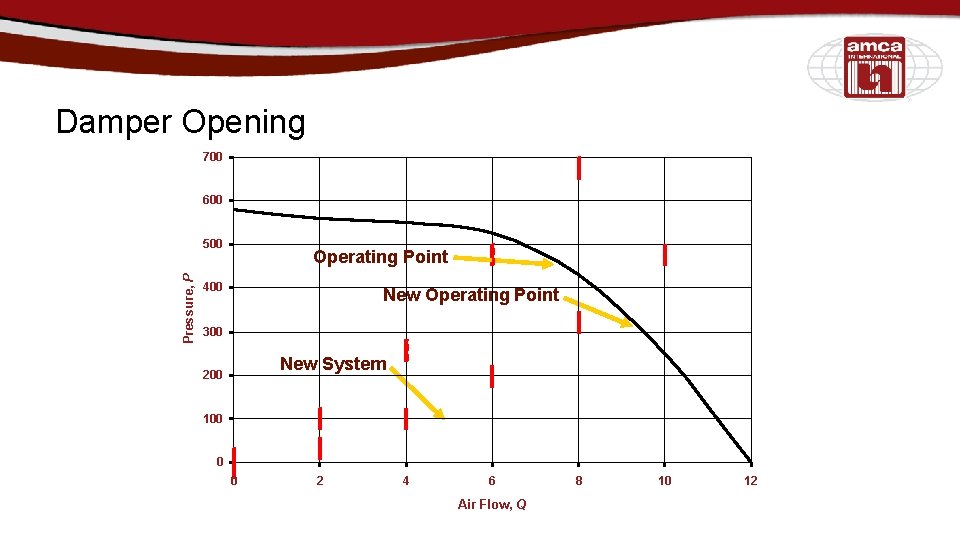
Fan Operating Point AMCA 500 -D Test Results 800 700 600 New Operating Point Pressure, P 500 400 300 200 100 0 0 2 4 6 Air Flow, Q 8 10 12 14
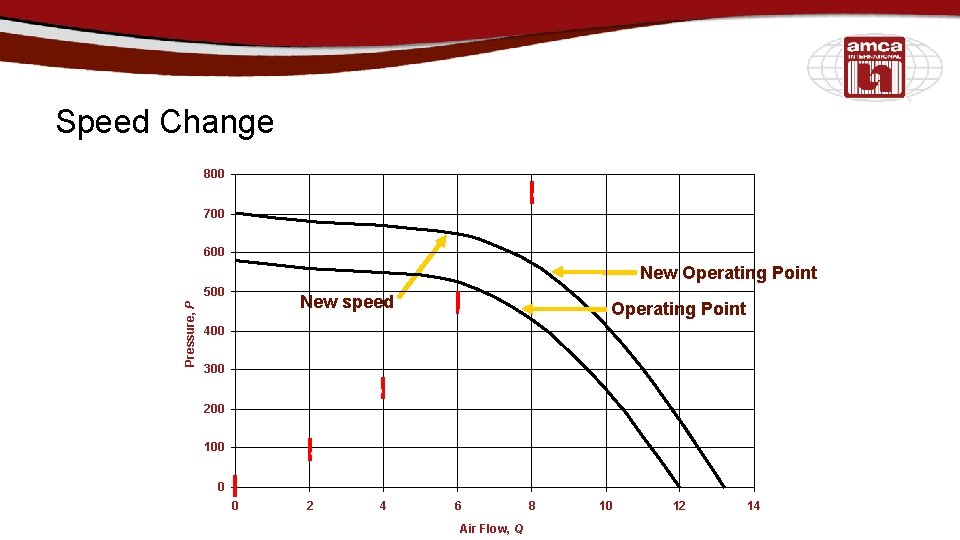
Speed Change 800 700 600 New Operating Point Pressure, P 500 New speed Operating Point 400 300 200 100 0 0 2 4 6 Air Flow, Q 8 10 12 14
Damper Opening 700 600 Pressure, P 500 Operating Point 400 New Operating Point 300 New System 200 100 0 0 2 4 6 Air Flow, Q 8 10 12
System Effect • Installed duct configuration does not match tested duct configuration • Detrimental effect on fan air performance due to adverse flow conditions at the inlet or outlet of a fan
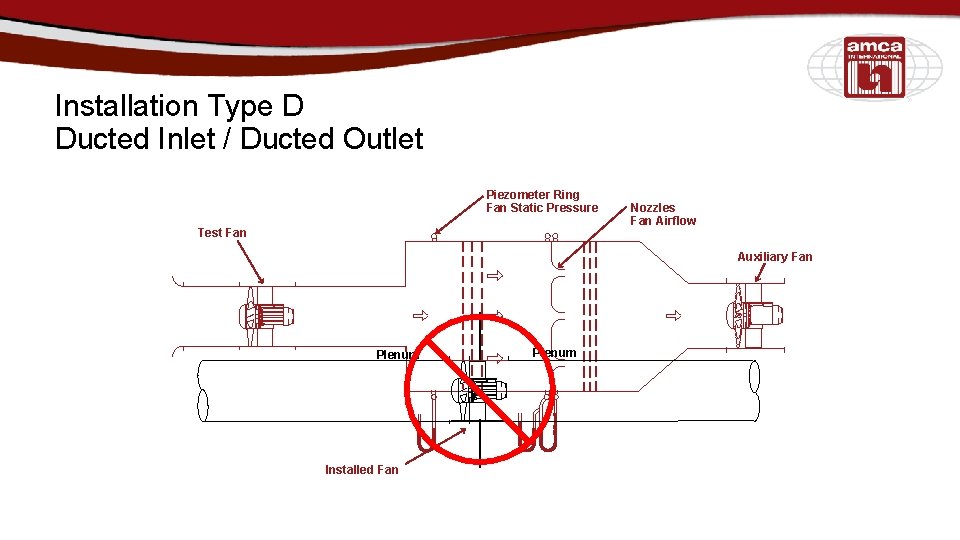
Installation Type D Ducted Inlet / Ducted Outlet Piezometer Ring Fan Static Pressure Test Fan Nozzles Fan Airflow Auxiliary Fan Plenum Installed Fan Plenum
AMCA Catalog Ratings • “Performance certified is for installation type: • • A: Free inlet, Free outlet” B: Free inlet, Ducted outlet” C: Ducted inlet, Free outlet” D: Ducted inlet, Ducted outlet”
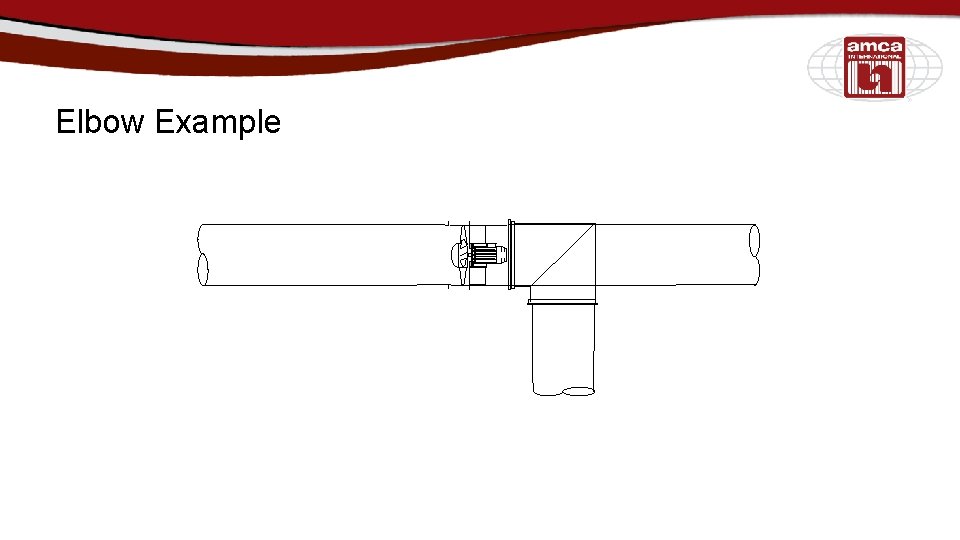
System Effect • Even when the tested duct configuration matches the installed duct configuration, improper duct design can introduce adverse flow conditions
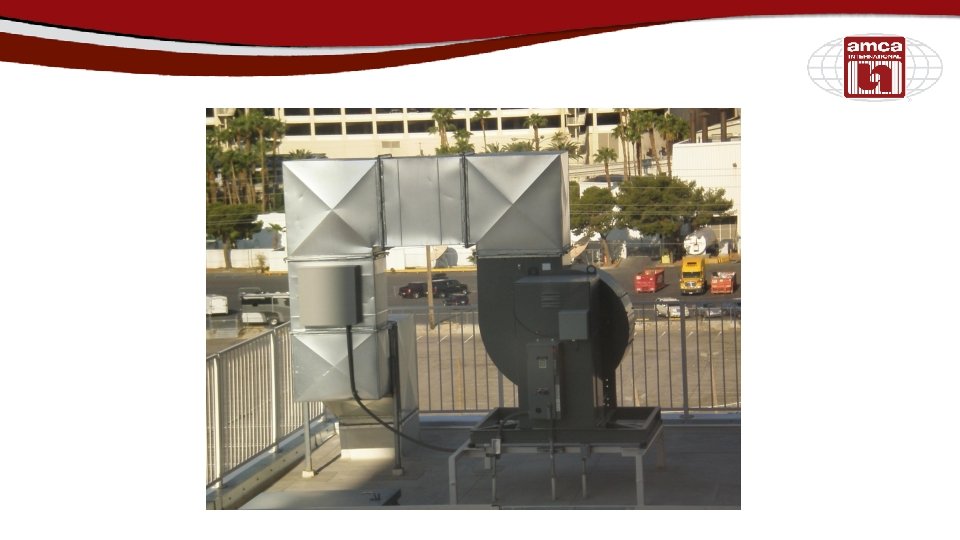
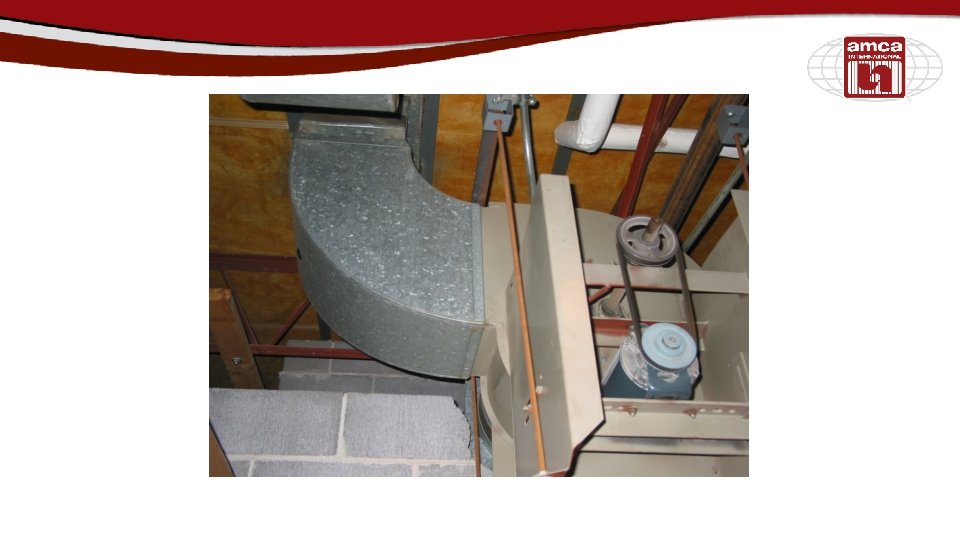
Elbow Example
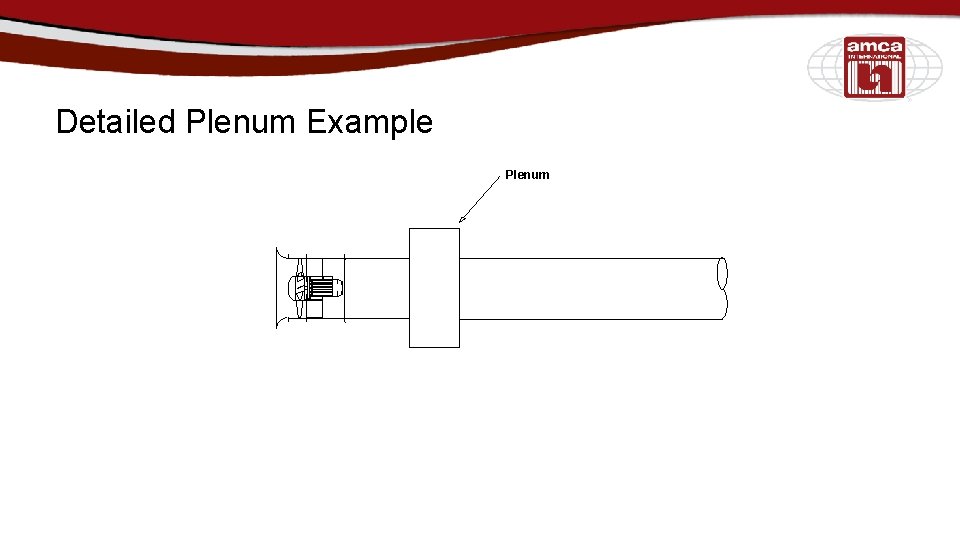
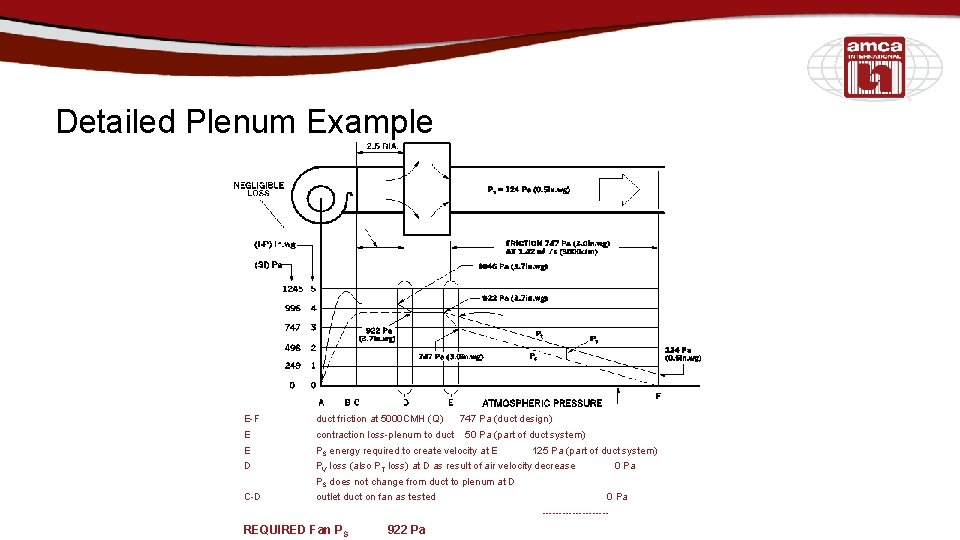
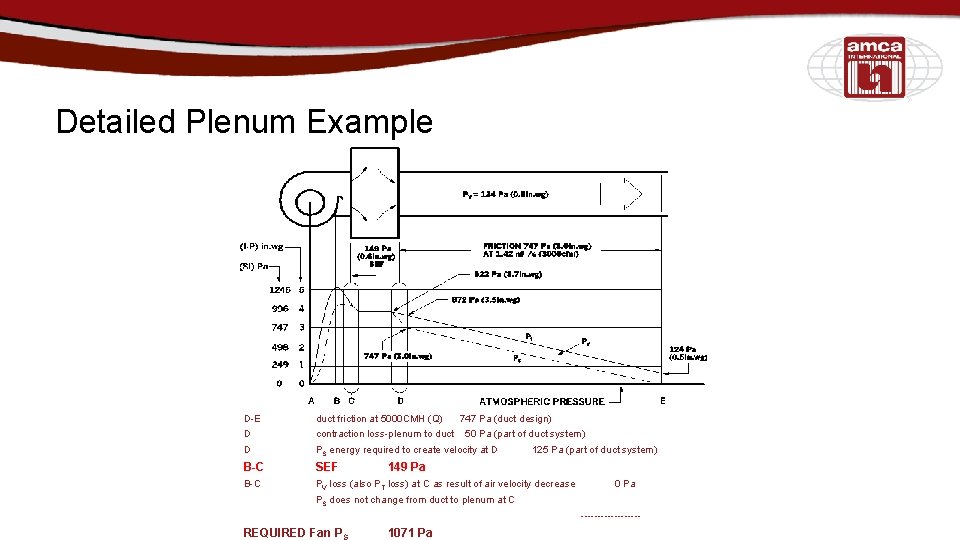
Detailed Plenum Example Plenum
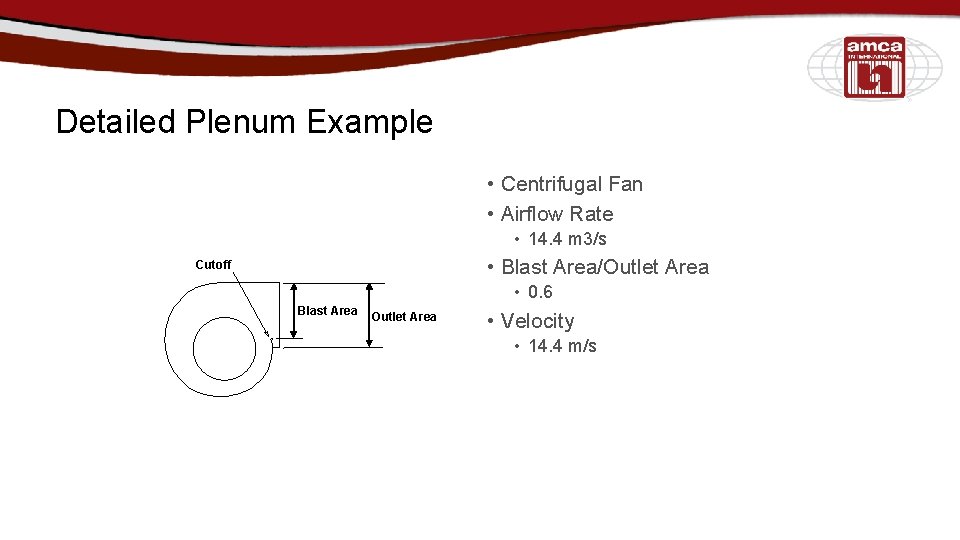
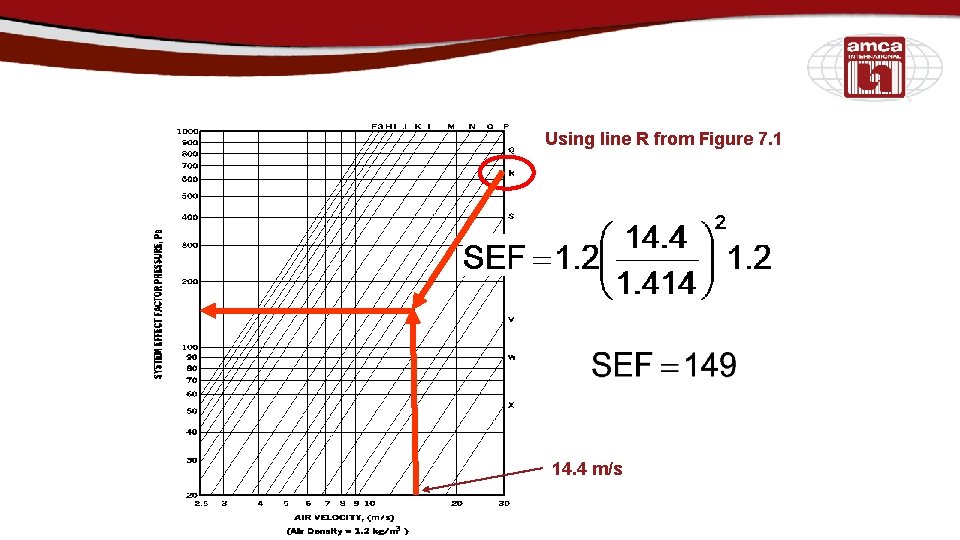
Detailed Plenum Example • Centrifugal Fan • Airflow Rate • 14. 4 m 3/s • Blast Area/Outlet Area Cutoff • 0. 6 Blast Area Outlet Area • Velocity • 14. 4 m/s
Detailed Plenum Example E-F duct friction at 5000 CMH (Q) 747 Pa (duct design) E contraction loss-plenum to duct E PS energy required to create velocity at E D PV loss (also PT loss) at D as result of air velocity decrease 50 Pa (part of duct system) 125 Pa (part of duct system) 0 Pa PS does not change from duct to plenum at D C-D outlet duct on fan as tested 0 Pa ---------- REQUIRED Fan PS 922 Pa
Detailed Plenum Example D-E duct friction at 5000 CMH (Q) 747 Pa (duct design) D contraction loss-plenum to duct D PS energy required to create velocity at D B-C SEF B-C PV loss (also PT loss) at C as result of air velocity decrease 50 Pa (part of duct system) 125 Pa (part of duct system) 149 Pa 0 Pa PS does not change from duct to plenum at C --------- REQUIRED Fan PS 1071 Pa
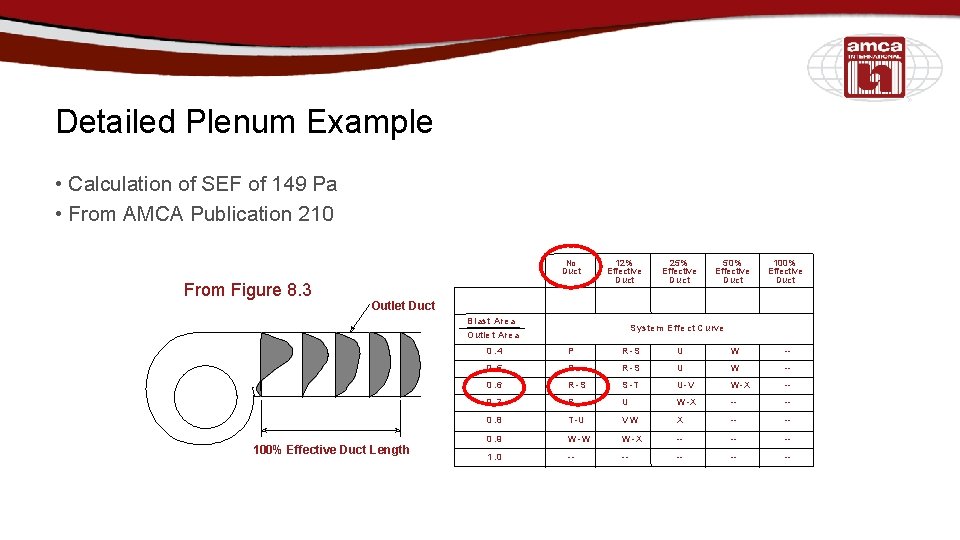
Detailed Plenum Example • Calculation of SEF of 149 Pa • From AMCA Publication 210 No Duct From Figure 8. 3 12% Effective Duct 25% Effective Duct 50% Effective Duc t 100% Effective Duct Outlet Duct Blast Ar ea Sys tem E ffe ct C urve O utle t Area 100% Effective Duct Length 0. 4 P R -S U W -- 0. 5 P R -S U W -- 0. 6 R -S S -T U- V W- X -- 0. 7 S U W -X -- -- 0. 8 T-U VW X -- -- 0. 9 W -W W -X -- -- -- 1. 0 -- -- --
Using line R from Figure 7. 1 14. 4 m/s
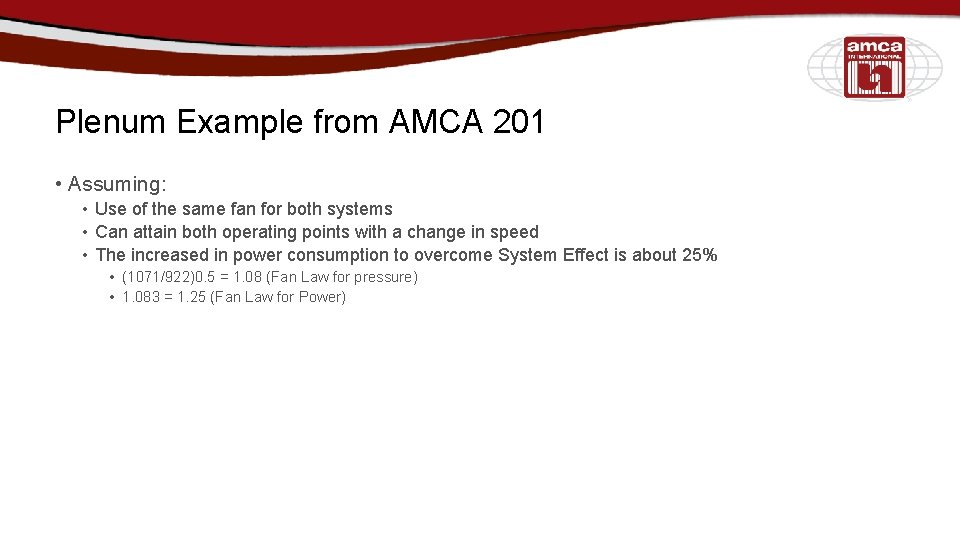
Plenum Example from AMCA 201 • Assuming: • Use of the same fan for both systems • Can attain both operating points with a change in speed • The increased in power consumption to overcome System Effect is about 25% • (1071/922)0. 5 = 1. 08 (Fan Law for pressure) • 1. 083 = 1. 25 (Fan Law for Power)
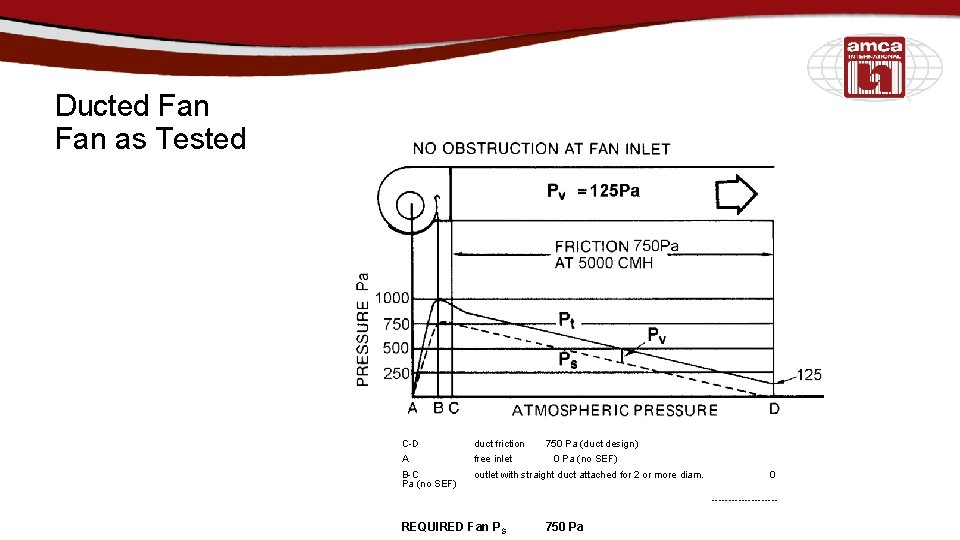
Ducted Fan as Tested C-D duct friction 750 Pa (duct design) A free inlet B-C Pa (no SEF) outlet with straight duct attached for 2 or more diam. 0 Pa (no SEF) 0 ---------- REQUIRED Fan PS 750 Pa
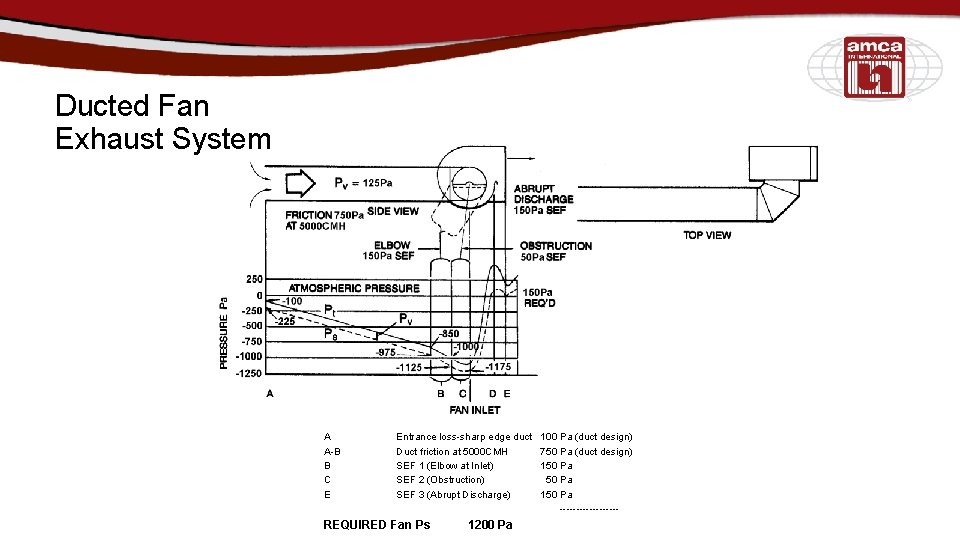
Ducted Fan Exhaust System A A-B B C E Entrance loss-sharp edge duct Duct friction at 5000 CMH SEF 1 (Elbow at Inlet) SEF 2 (Obstruction) SEF 3 (Abrupt Discharge) REQUIRED Fan Ps 1200 Pa 100 Pa (duct design) 750 Pa (duct design) 150 Pa ---------
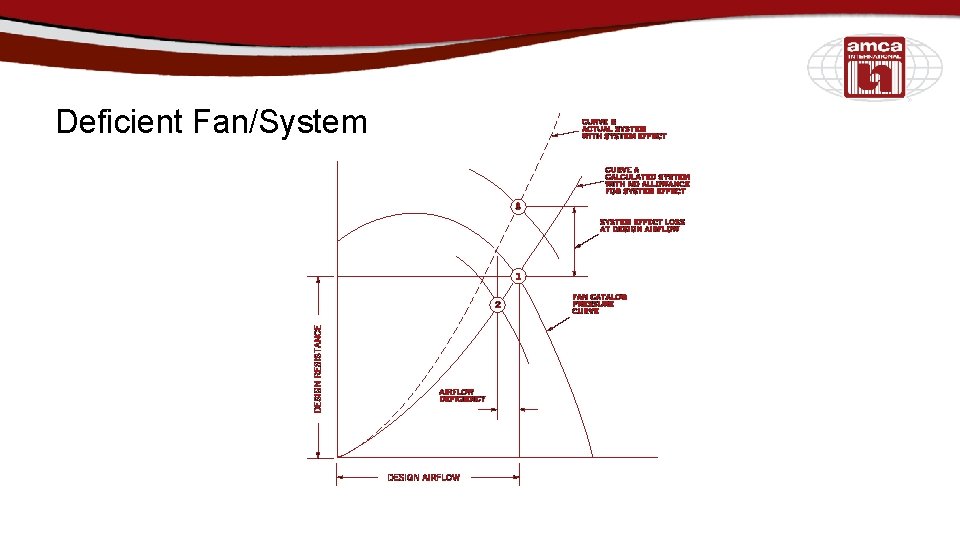
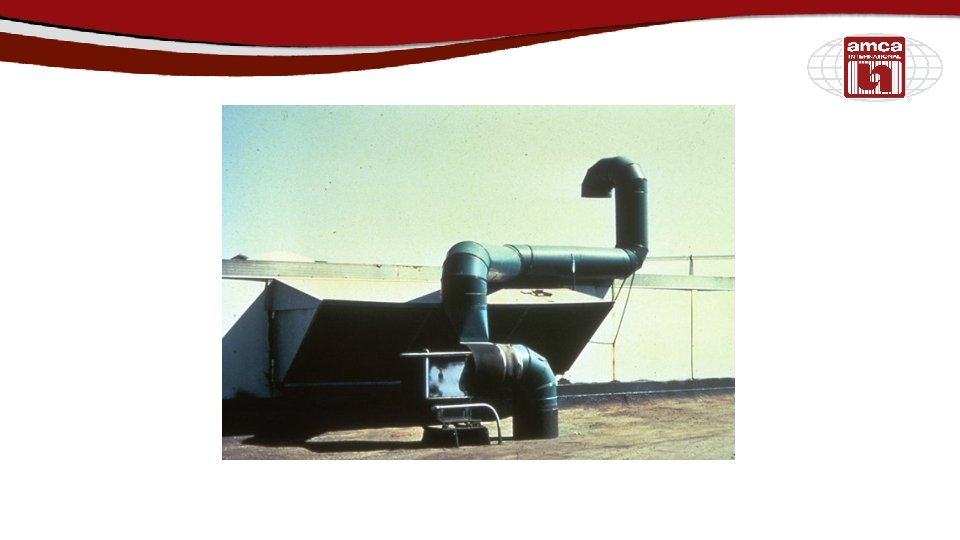
Deficient Fan/System
Speed Changes • Before Increasing Speed • Check with the manufacturer for max safe operating speed • Determine expected power increase • Motor size • Electric Service • Expect more noise
Rules of thumb Minimum 2. 5 duct diameters on Outlet Minimum 3 to 5 duct diameters on Inlet Avoid inlet swirl
Recommendations Allow enough space in the building design to allow for appropriate fan connections to the system Use allowances in the design calculations when space or other factors dictate less than optimum arrangement of the fan outlet and inlet connections Include adequate allowance for the effect of all accessories and appurtenances on the performance of the system and the fan
Questions?
CONTACT US 30 W. University Drive Arlington Heights, Illinois U. S. A. +1 847 394 0150 info@amca. org AMCA O’Hare International Airport Chicago www. amca. org