
FamilyFocused Therapy Handouts For Adults and Adolescents Handout


- Slides: 44
Family-Focused Therapy Handouts For Adults and Adolescents
Handout # 1 Family-Focused Therapy: What to Expect Our plan is to: • Decrease friction between family members • Improve communication skills • Increase acceptance of mood and thought problems • Help the family solve problems better We will meet: • • Weekly for _____sessions Biweekly for _______ sessions Monthly for ____sessions _______ months total How we’re going to do it: • Get to know each family member • Learn about mood problems and the medicines used to treat them • Learn communication skills • Learn how to solve problems Everyone in the family should: • Come to every session ready to try your best • Think about how others are feeling • Come prepared with your homework finished • Help each other like any team would The therapist will: • Help the family come up with ways to handle problems • Make sure everyone’s privacy is respected • Give you a comfortable place to say to what’s on your mind • Give you things to work on at home • Give you a chance to check in between sessions
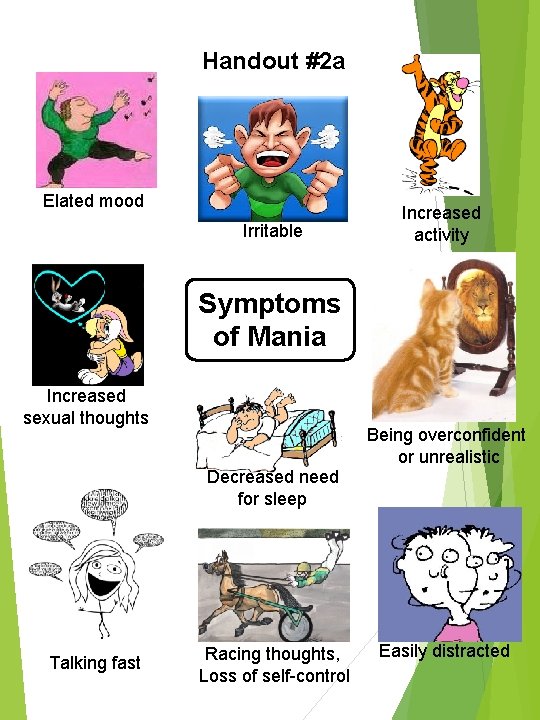
Handout #2 a Elated mood Irritable Increased activity Symptoms of Mania Increased sexual thoughts Being overconfident or unrealistic Decreased need for sleep Talking fast Racing thoughts, Loss of self-control Easily distracted
Handout #2 b Low self-esteem Low mood or sadness Symptoms of Depression Trouble concentrating Changes in Appetite Some people also: • feel really tired or low in energy • wish they weren’t alive • feel worthless or guilty Irritable Sleeping too much or too little Tearfulness Loss of interest in activities or boredom
Handout # 2 c Positive Symptoms • • Confusion about what is real Mind reading Grandiosity Suspiciousness Ideas of reference Disorganized communication Perceptual disturbances Odd beliefs
Handout # 2 d Negative Symptoms • • Lack of motivation Flat affect Disinterest in being social Trouble with functioning (academic, occupational, daily living) • Disinterest in personal hygiene
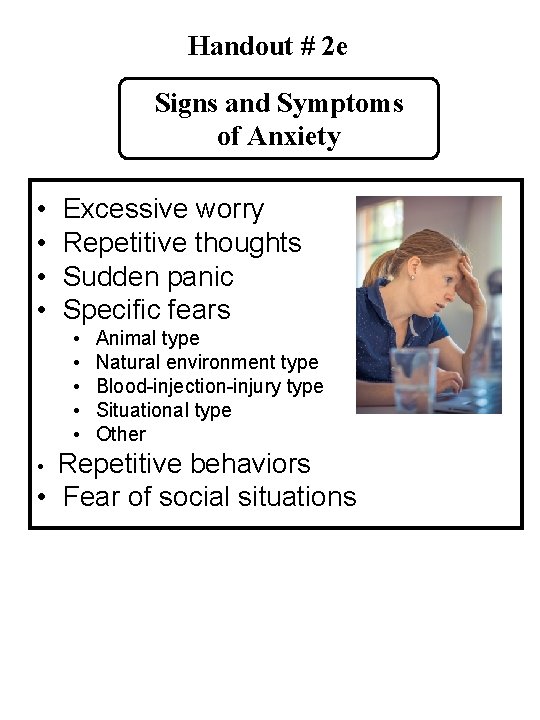
Handout # 2 e Signs and Symptoms of Anxiety • • Excessive worry Repetitive thoughts Sudden panic Specific fears • • • Animal type Natural environment type Blood-injection-injury type Situational type Other Repetitive behaviors • Fear of social situations •
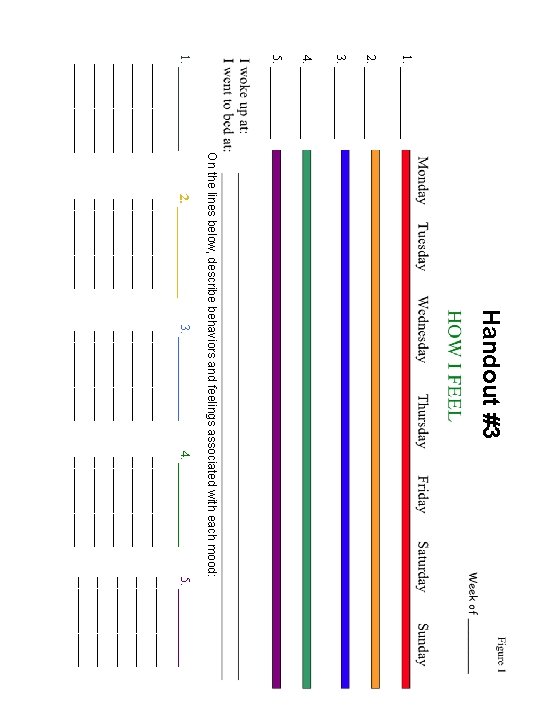
1. ______ 2. ______ 3. ______ 4. ______ 2. ______________ 5. ______ 1. ________ ________ Handout #3 ________ ____ 3. ________ ________ 4. ________ ________ 5. _______ On the lines below, describe behaviors and feelings associated with each mood: ________ ____ IIII
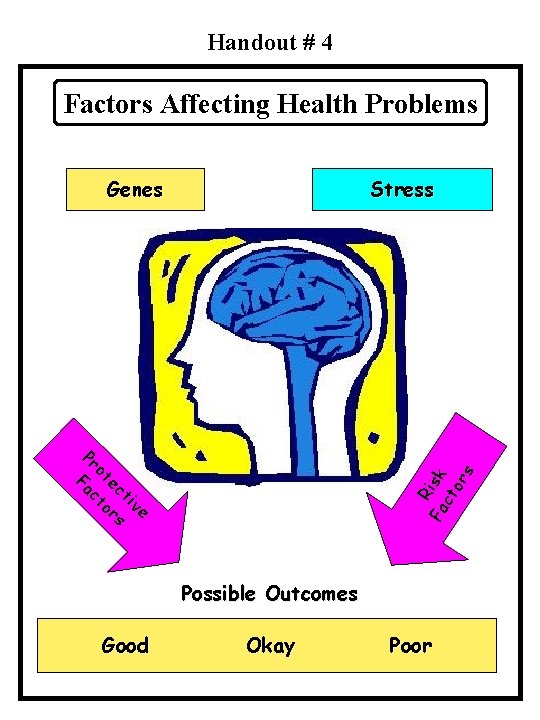
Handout # 4 Factors Affecting Health Problems Genes Stress R Fa isk ct or s Pr o Fa tec ct ti or ve s Possible Outcomes Good Okay Poor
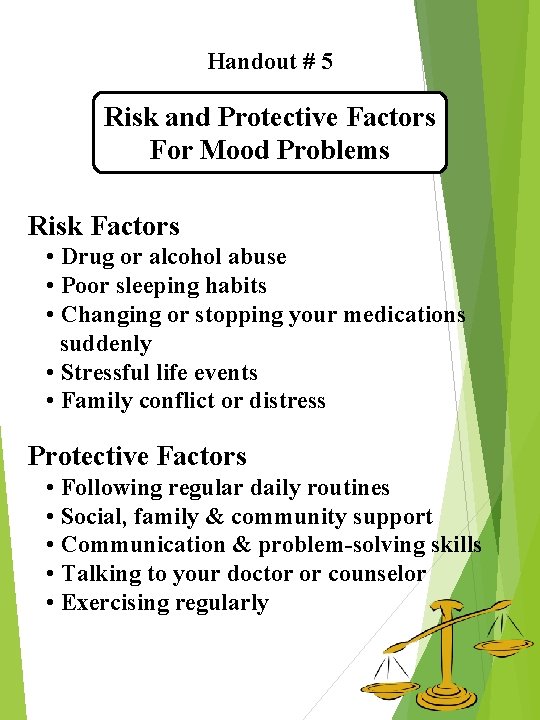
Handout # 5 Risk and Protective Factors For Mood Problems Risk Factors • Drug or alcohol abuse • Poor sleeping habits • Changing or stopping your medications suddenly • Stressful life events • Family conflict or distress Protective Factors • Following regular daily routines • Social, family & community support • Communication & problem-solving skills • Talking to your doctor or counselor • Exercising regularly
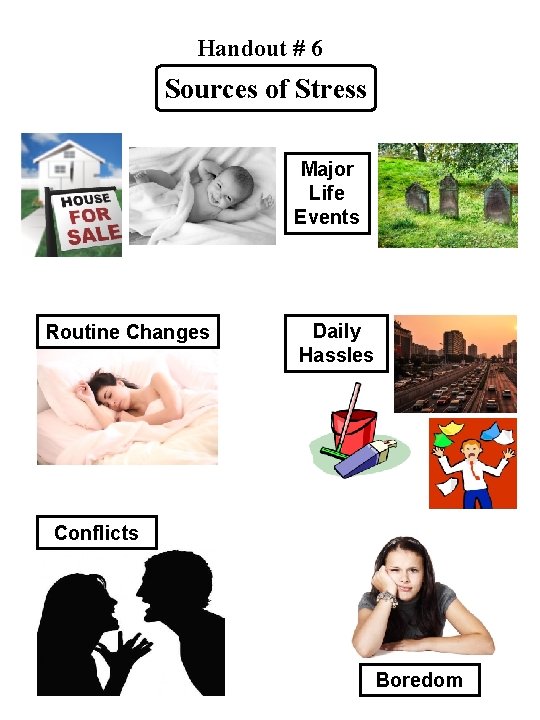
Handout # 6 Sources of Stress Major Life Events Routine Changes Daily Hassles Conflicts Boredom
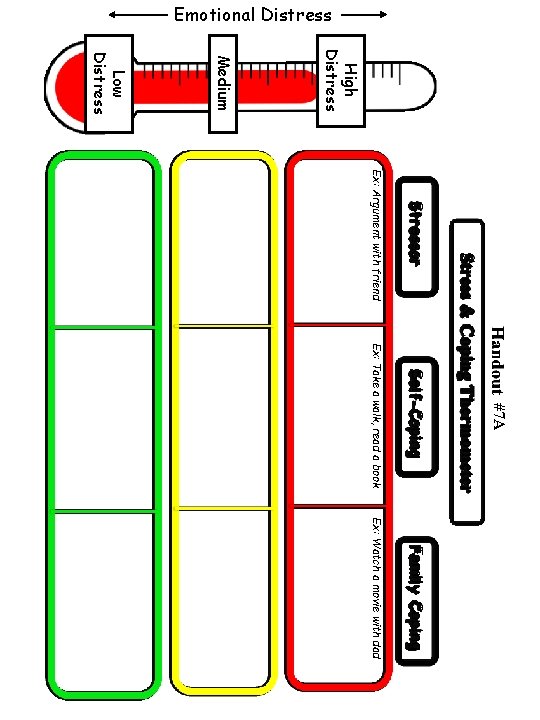
Emotional Distress High Distress Medium Low Distress Ex: Argument with friend #7 A Ex: Take a walk, read a book Ex: Watch a movie with dad
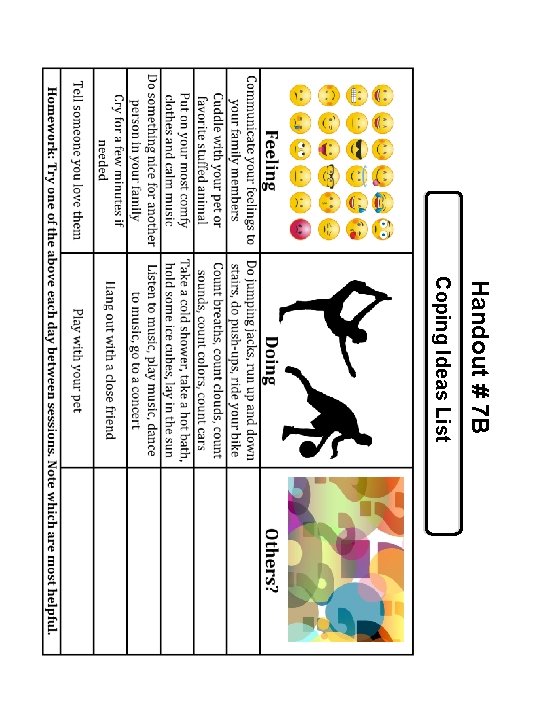
Handout # 7 B Coping Ideas List
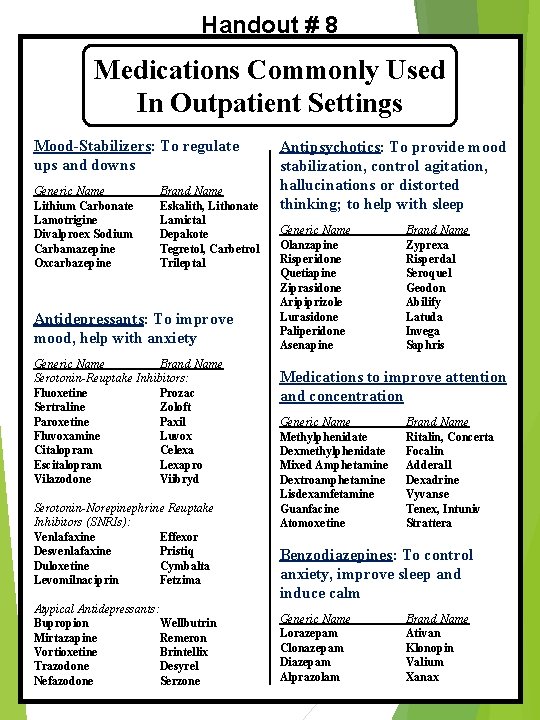
Handout # 8 Medications Commonly Used In Outpatient Settings Mood-Stabilizers: To regulate ups and downs Generic Name Lithium Carbonate Lamotrigine Divalproex Sodium Carbamazepine Oxcarbazepine Brand Name Eskalith, Lithonate Lamictal Depakote Tegretol, Carbetrol Trileptal Antidepressants: To improve mood, help with anxiety Generic Name Brand Name Serotonin-Reuptake Inhibitors: Fluoxetine Prozac Sertraline Zoloft Paroxetine Paxil Fluvoxamine Luvox Citalopram Celexa Escitalopram Lexapro Vilazodone Viibryd Serotonin-Norepinephrine Reuptake Inhibitors (SNRIs): Venlafaxine Effexor Desvenlafaxine Pristiq Duloxetine Cymbalta Levomilnaciprin Fetzima Atypical Antidepressants: Bupropion Wellbutrin Mirtazapine Remeron Vortioxetine Brintellix Trazodone Desyrel Nefazodone Serzone Antipsychotics: To provide mood stabilization, control agitation, hallucinations or distorted thinking; to help with sleep Generic Name Olanzapine Risperidone Quetiapine Ziprasidone Aripiprizole Lurasidone Paliperidone Asenapine Brand Name Zyprexa Risperdal Seroquel Geodon Abilify Latuda Invega Saphris Medications to improve attention and concentration Generic Name Methylphenidate Dexmethylphenidate Mixed Amphetamine Dextroamphetamine Lisdexamfetamine Guanfacine Atomoxetine Brand Name Ritalin, Concerta Focalin Adderall Dexadrine Vyvanse Tenex, Intuniv Strattera Benzodiazepines: To control anxiety, improve sleep and induce calm Generic Name Lorazepam Clonazepam Diazepam Alprazolam Brand Name Ativan Klonopin Valium Xanax
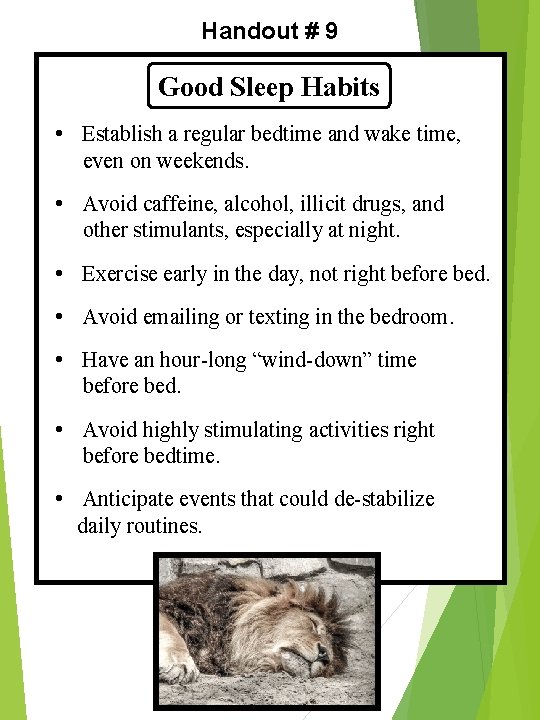
Handout # 9 Good Sleep Habits • Establish a regular bedtime and wake time, even on weekends. • Avoid caffeine, alcohol, illicit drugs, and other stimulants, especially at night. • Exercise early in the day, not right before bed. • Avoid emailing or texting in the bedroom. • Have an hour-long “wind-down” time before bed. • Avoid highly stimulating activities right before bedtime. • Anticipate events that could de-stabilize daily routines.
Handout # 10 How Can The Family Help? • Help get treatment and services • Support the use of medication • Learn about your symptoms so they can respond helpfully • Maintain a tolerant, low-key home atmosphere • Help you have regular daily routines and sleep • Reduce expectations during periods of increased symptoms • Encourage your participation in treatment • Get help for other family members if needed • Do fun things together!
Handout # 12 The Five Basic Communication Skills • Expressing Positive Feelings • Active Listening • Making Positive Requests for Change • Communication Clarity • Expressing Negative Feelings about Specific Behaviors
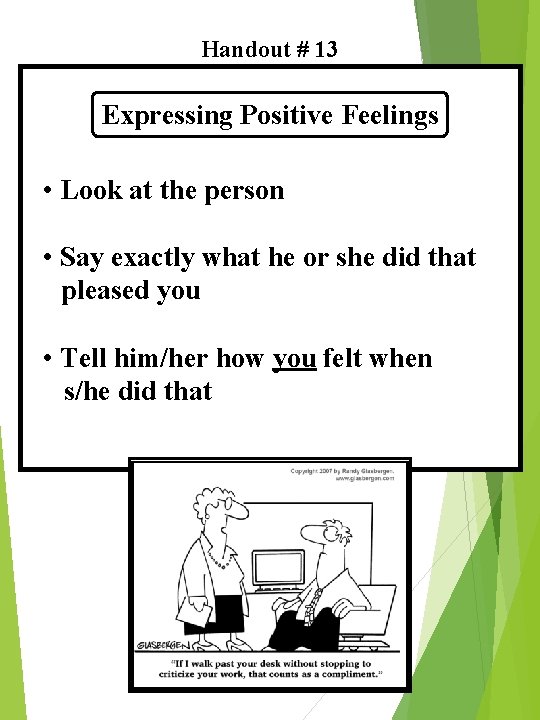
Handout # 13 Expressing Positive Feelings • Look at the person • Say exactly what he or she did that pleased you • Tell him/her how you felt when s/he did that
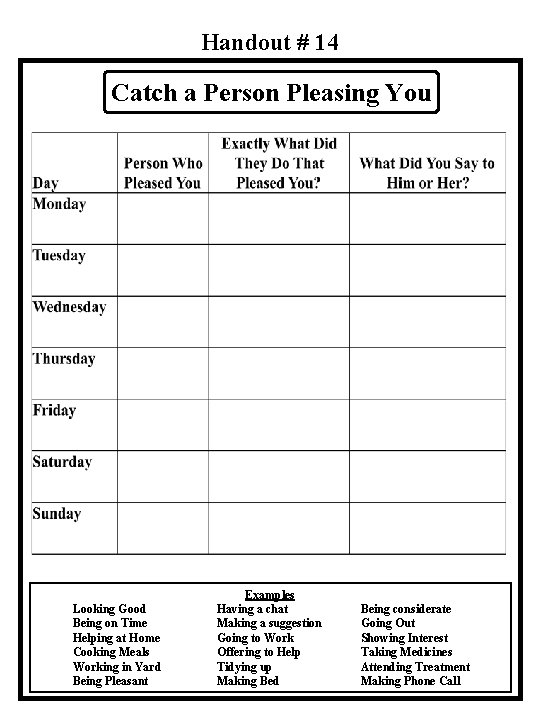
Handout # 14 Catch a Person Pleasing You Looking Good Being on Time Helping at Home Cooking Meals Working in Yard Being Pleasant Examples Having a chat Making a suggestion Going to Work Offering to Help Tidying up Making Bed Being considerate Going Out Showing Interest Taking Medicines Attending Treatment Making Phone Call
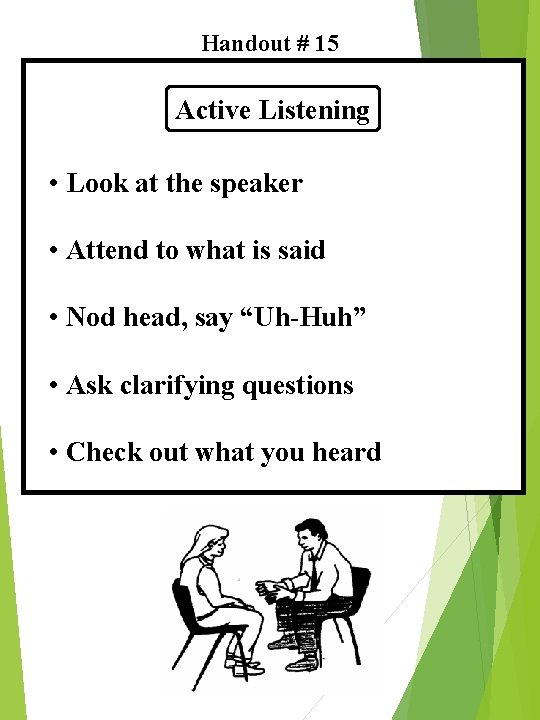
Handout # 15 Active Listening • Look at the speaker • Attend to what is said • Nod head, say “Uh-Huh” • Ask clarifying questions • Check out what you heard
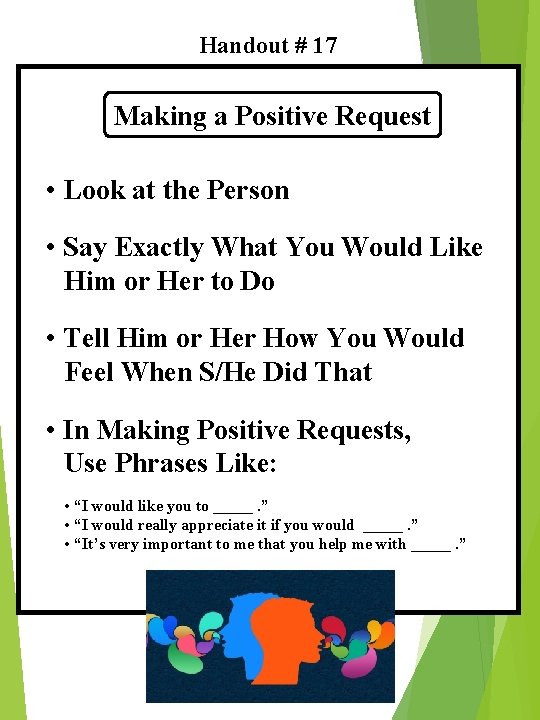
Handout # 17 Making a Positive Request • Look at the Person • Say Exactly What You Would Like Him or Her to Do • Tell Him or Her How You Would Feel When S/He Did That • In Making Positive Requests, Use Phrases Like: • “I would like you to _____. ” • “I would really appreciate it if you would _____. ” • “It’s very important to me that you help me with _____. ”
Handout # 18 Communication Clarity • Think about what you want to say • Consider how your listener might feel • Talk about only one topic at a time • Be specific • Use short sentences • Stop and check in to make sure that your listener understood you
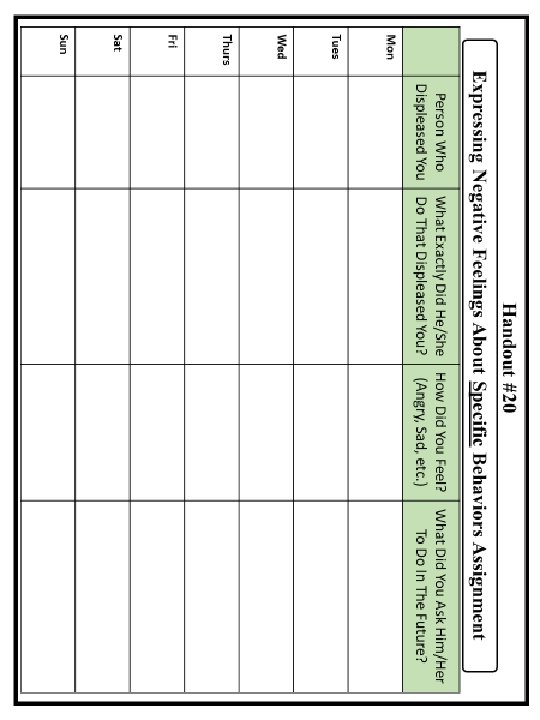
Handout # 19 Expressing Negative Feelings about Specific Behaviors • Look at the person; speak firmly • Say exactly what he or she did that you did not like • Tell him or her how you felt when s/he did that • Suggest how the person might prevent this from happening in the future
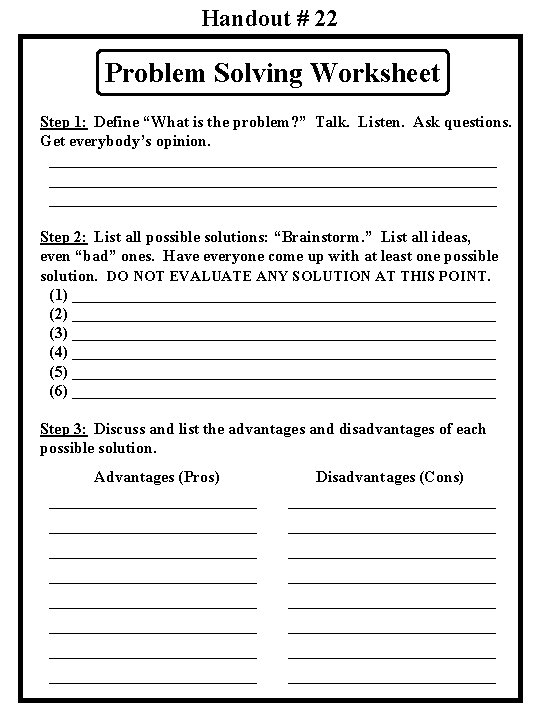
Handout # 22 Problem Solving Worksheet Step 1: Define “What is the problem? ” Talk. Listen. Ask questions. Get everybody’s opinion. ________________________________________________________ Step 2: List all possible solutions: “Brainstorm. ” List all ideas, even “bad” ones. Have everyone come up with at least one possible solution. DO NOT EVALUATE ANY SOLUTION AT THIS POINT. (1) ___________________________ (2) ___________________________ (3) ___________________________ (4) ___________________________ (5) ___________________________ (6) ___________________________ Step 3: Discuss and list the advantages and disadvantages of each possible solution. Advantages (Pros) _____________ Disadvantages (Cons) __________________________ __________________________ __________________________ __________________________
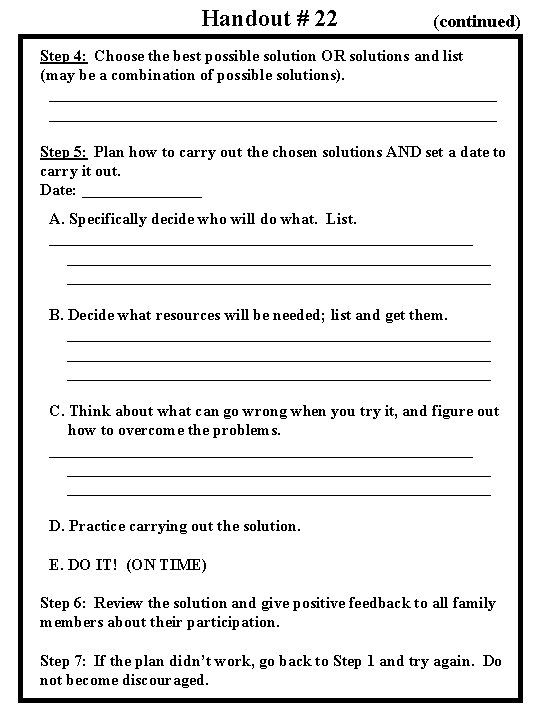
Handout # 22 (continued) Step 4: Choose the best possible solution OR solutions and list (may be a combination of possible solutions). ________________________________________________________ Step 5: Plan how to carry out the chosen solutions AND set a date to carry it out. Date: ________ A. Specifically decide who will do what. List. _____________________________________________________ B. Decide what resources will be needed; list and get them. _____________________________________________________ C. Think about what can go wrong when you try it, and figure out how to overcome the problems. _____________________________________________________ D. Practice carrying out the solution. E. DO IT! (ON TIME) Step 6: Review the solution and give positive feedback to all family members about their participation. Step 7: If the plan didn’t work, go back to Step 1 and try again. Do not become discouraged.
Optional Handouts The following are optional and can be used as needed
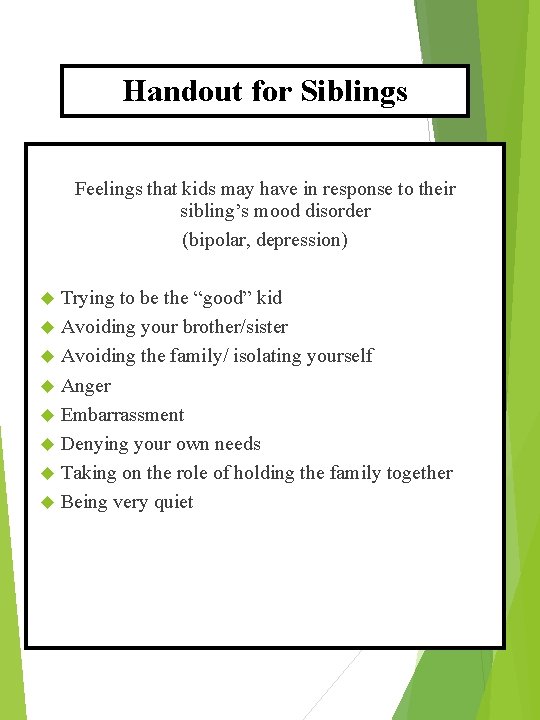
Handout for Siblings Feelings that kids may have in response to their sibling’s mood disorder (bipolar, depression) Trying to be the “good” kid Avoiding your brother/sister Avoiding the family/ isolating yourself Anger Embarrassment Denying your own needs Taking on the role of holding the family together Being very quiet
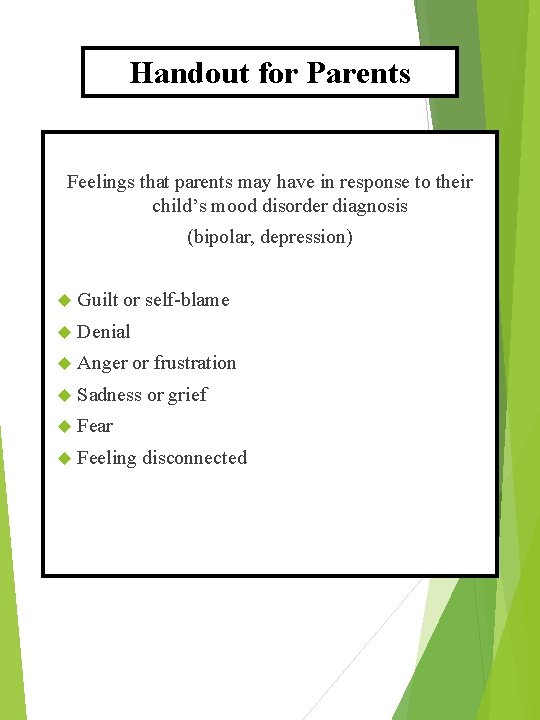
Handout for Parents Feelings that parents may have in response to their child’s mood disorder diagnosis (bipolar, depression) Guilt or self-blame Denial Anger or frustration Sadness or grief Fear Feeling disconnected
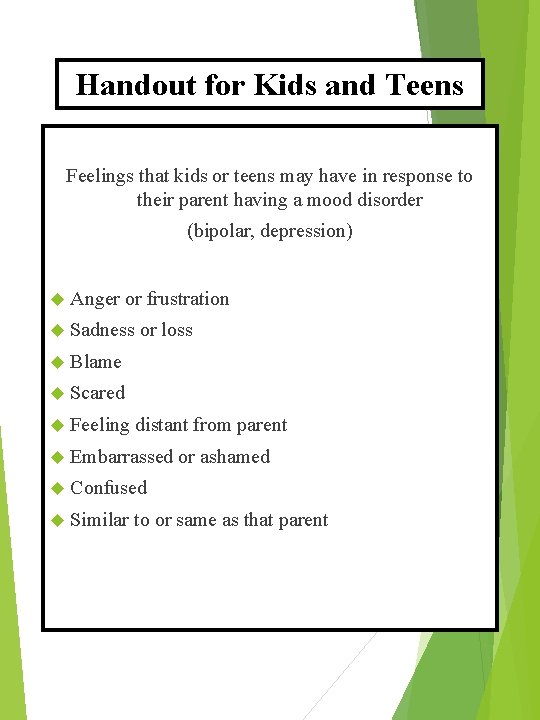
Handout for Kids and Teens Feelings that kids or teens may have in response to their parent having a mood disorder (bipolar, depression) Anger or frustration Sadness or loss Blame Scared Feeling distant from parent Embarrassed or ashamed Confused Similar to or same as that parent
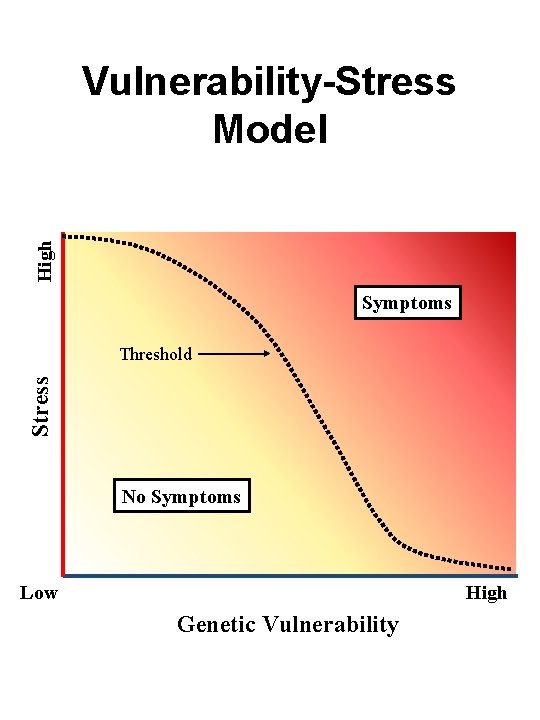
High Vulnerability-Stress Model Symptoms Stress Threshold No Symptoms Low High Genetic Vulnerability
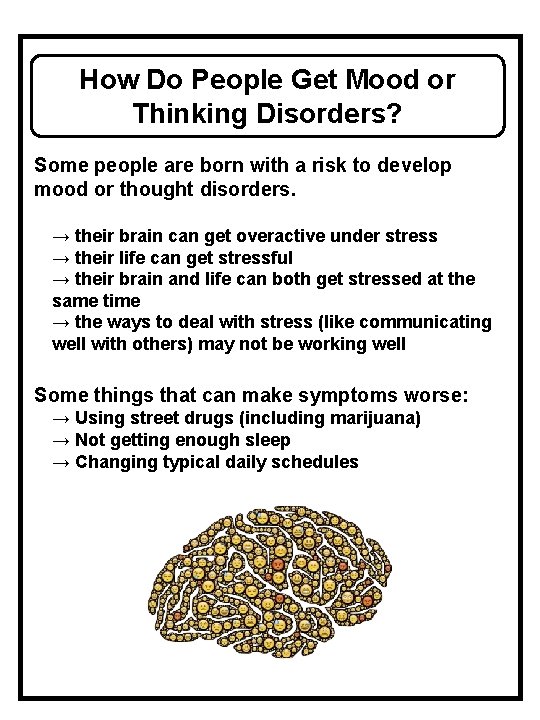
How Do People Get Mood or Thinking Disorders? Some people are born with a risk to develop mood or thought disorders. → their brain can get overactive under stress → their life can get stressful → their brain and life can both get stressed at the same time → the ways to deal with stress (like communicating well with others) may not be working well Some things that can make symptoms worse: → Using street drugs (including marijuana) → Not getting enough sleep → Changing typical daily schedules
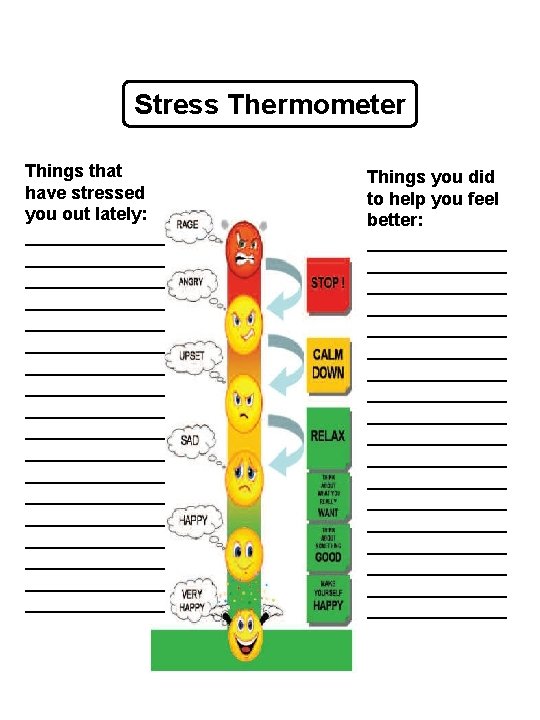
Stress Thermometer Things that have stressed you out lately: ______________ ______________ ______________ ______________ ______________ Things you did to help you feel better: ______________ ______________ ______________ ______________ ______________
Pleasant Events 1. Go to a sporting event 2. Go to a museum 3. Play cards 4. Talk on the phone 5. Learn a new hobby 6. Do an art project 7. Go out to eat 8. Take a bath 9. Read a book or a magazine 10. Cook/Bake something new 11. Do a puzzle 12. Go for a drive 13. Take a fun class 14. Go see a music show 15. Go to a movie 16. Go to the local dog park 17. Shoot some pool 18. Go to a coffee shop 19. Go on a day trip 20. _____________ 21. _____________ 22. _____________ 23. _____________ 24. _____________ 25. _____________
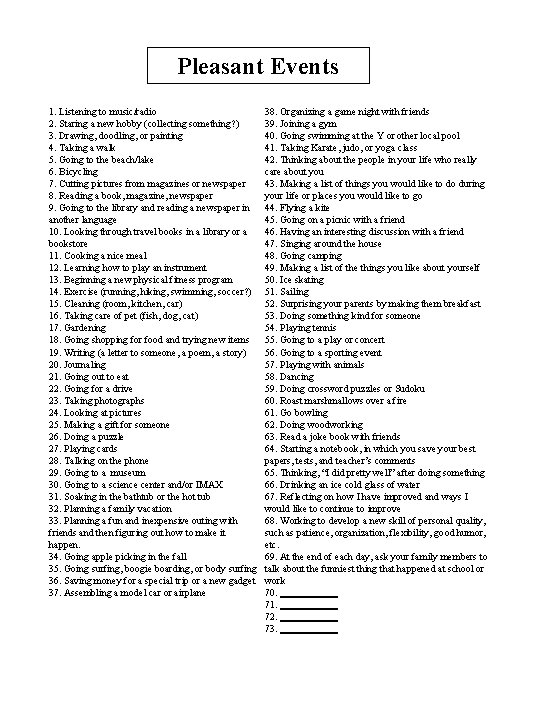
Pleasant Events 1. Listening to music/radio 2. Staring a new hobby (collecting something? ) 3. Drawing, doodling, or painting 4. Taking a walk 5. Going to the beach/lake 6. Bicycling 7. Cutting pictures from magazines or newspaper 8. Reading a book, magazine, newspaper 9. Going to the library and reading a newspaper in another language 10. Looking through travel books in a library or a bookstore 11. Cooking a nice meal 12. Learning how to play an instrument 13. Beginning a new physical fitness program 14. Exercise (running, hiking, swimming, soccer? ) 15. Cleaning (room, kitchen, car) 16. Taking care of pet (fish, dog, cat) 17. Gardening 18. Going shopping for food and trying new items 19. Writing (a letter to someone, a poem, a story) 20. Journaling 21. Going out to eat 22. Going for a drive 23. Taking photographs 24. Looking at pictures 25. Making a gift for someone 26. Doing a puzzle 27. Playing cards 28. Talking on the phone 29. Going to a museum 30. Going to a science center and/or IMAX 31. Soaking in the bathtub or the hot tub 32. Planning a family vacation 33. Planning a fun and inexpensive outing with friends and then figuring out how to make it happen. 34. Going apple picking in the fall 35. Going surfing, boogie boarding, or body surfing 36. Saving money for a special trip or a new gadget 37. Assembling a model car or airplane 38. Organizing a game night with friends 39. Joining a gym 40. Going swimming at the Y or other local pool 41. Taking Karate, judo, or yoga class 42. Thinking about the people in your life who really care about you 43. Making a list of things you would like to do during your life or places you would like to go 44. Flying a kite 45. Going on a picnic with a friend 46. Having an interesting discussion with a friend 47. Singing around the house 48. Going camping 49. Making a list of the things you like about yourself 50. Ice skating 51. Sailing 52. Surprising your parents by making them breakfast 53. Doing something kind for someone 54. Playing tennis 55. Going to a play or concert 56. Going to a sporting event 57. Playing with animals 58. Dancing 59. Doing crossword puzzles or Sudoku 60. Roast marshmallows over a fire 61. Go bowling 62. Doing woodworking 63. Read a joke book with friends 64. Starting a notebook, in which you save your best papers, tests, and teacher’s comments 65. Thinking, “I did pretty well” after doing something 66. Drinking an ice cold glass of water 67. Reflecting on how I have improved and ways I would like to continue to improve 68. Working to develop a new skill of personal quality, such as patience, organization, flexibility, good humor, etc. 69. At the end of each day, ask your family members to talk about the funniest thing that happened at school or work 70. 71. 72. 73.
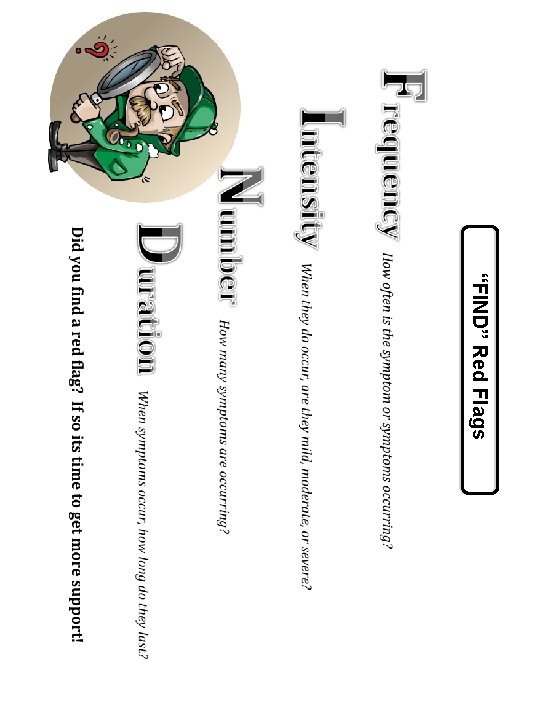
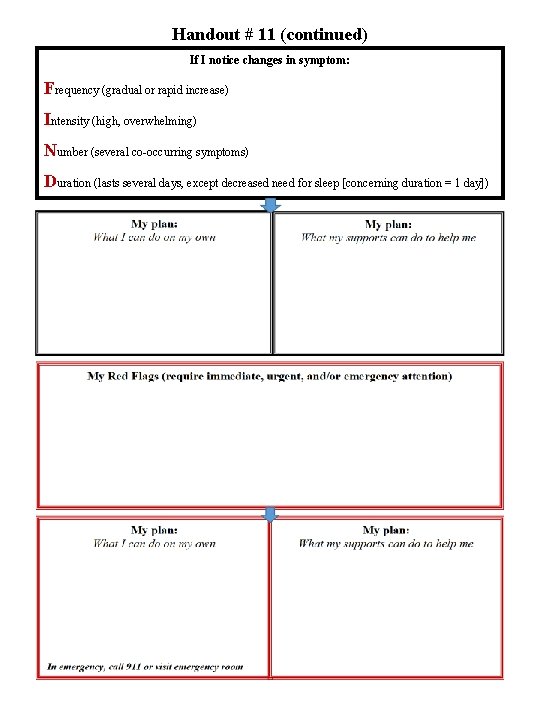
“FIND” Red Flags
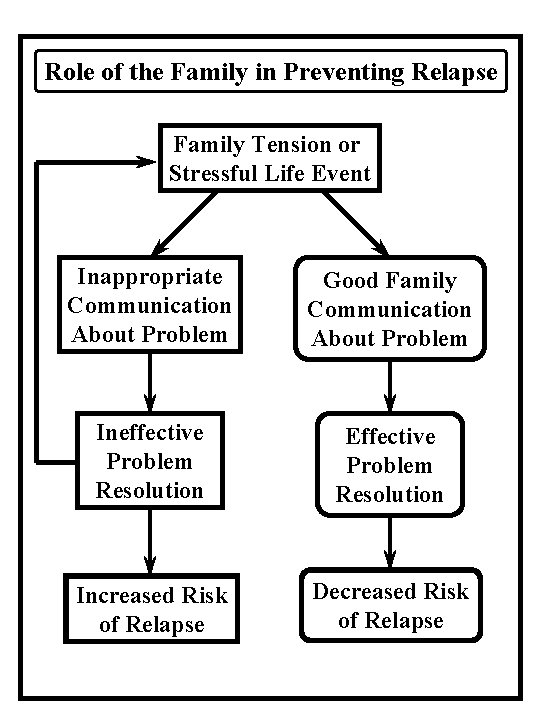
Role of the Family in Preventing Relapse Family Tension or Stressful Life Event Inappropriate Communication About Problem Good Family Communication About Problem Ineffective Problem Resolution Effective Problem Resolution Increased Risk of Relapse Decreased Risk of Relapse
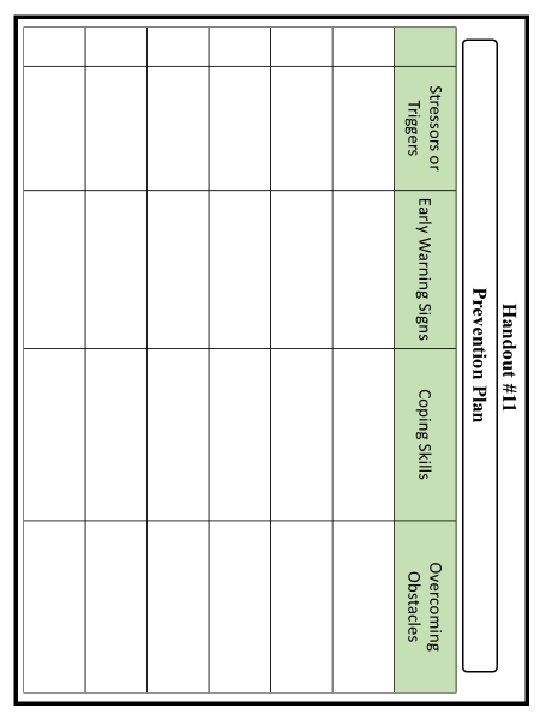
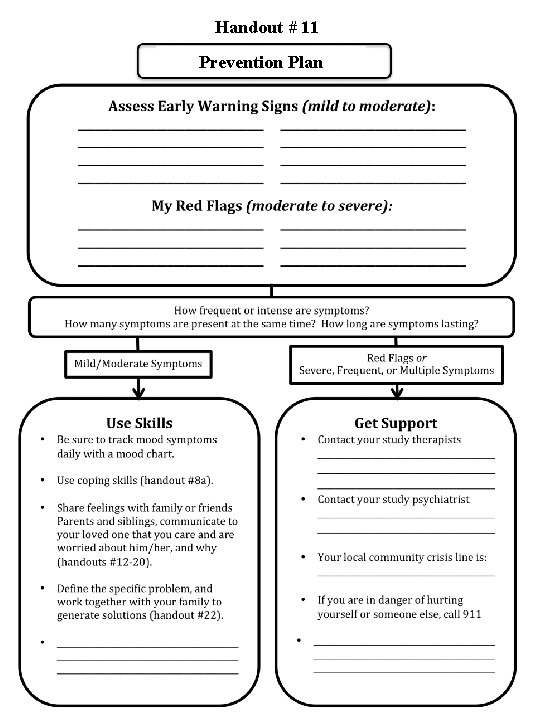
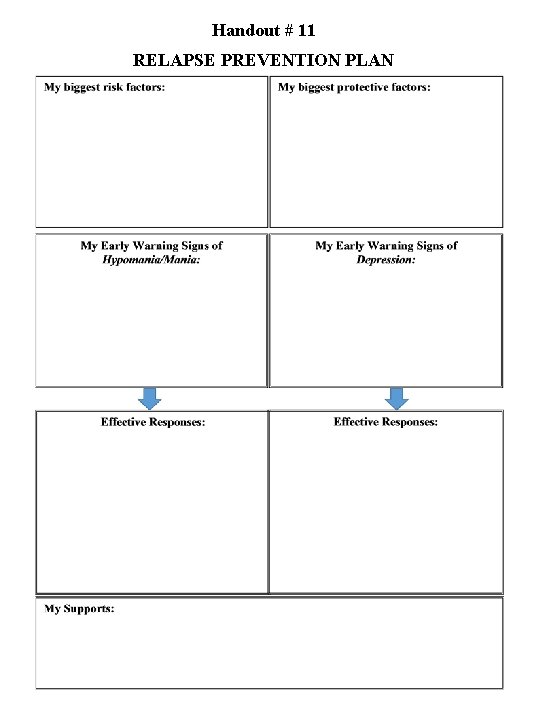
Handout # 11 Prevention Plan
Handout # 11 (continued) If I notice changes in symptom: Frequency (gradual or rapid increase) Intensity (high, overwhelming) Number (several co-occurring symptoms) Duration (lasts several days, except decreased need for sleep [concerning duration = 1 day])
Handout # 11 RELAPSE PREVENTION PLAN