
FAMILY WISE DISTRIBUTION Natasha Shetty 13 M 133
FAMILY WISE DISTRIBUTION -Natasha Shetty 13 M 133
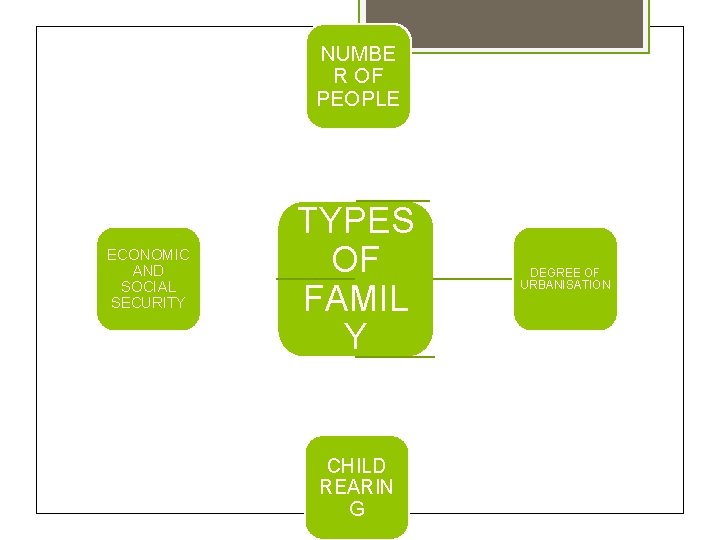
NUMBE R OF PEOPLE ECONOMIC AND SOCIAL SECURITY TYPES OF FAMIL Y CHILD REARIN G DEGREE OF URBANISATION
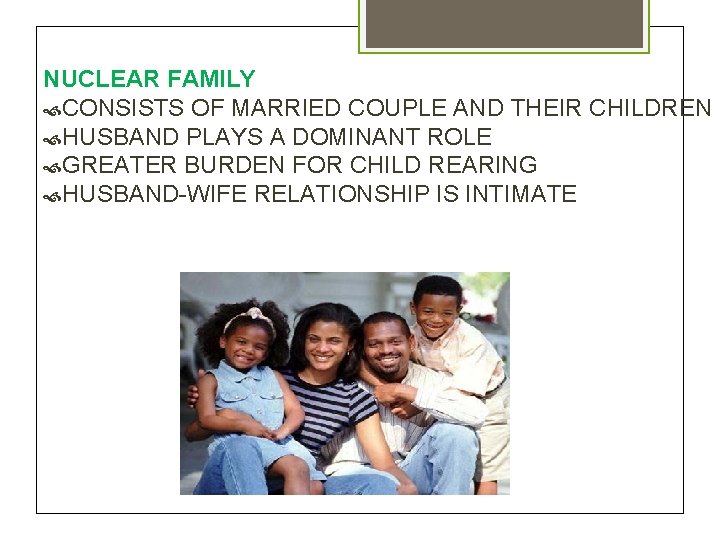
NUCLEAR FAMILY CONSISTS OF MARRIED COUPLE AND THEIR CHILDREN HUSBAND PLAYS A DOMINANT ROLE GREATER BURDEN FOR CHILD REARING HUSBAND-WIFE RELATIONSHIP IS INTIMATE

JOINT FAMILY NUMBER OF MARRIED COUPLES AND THEIR CHILDREN COMMON FAMILY PURSE SENIOR MALE MEMBER IS DOMINANT
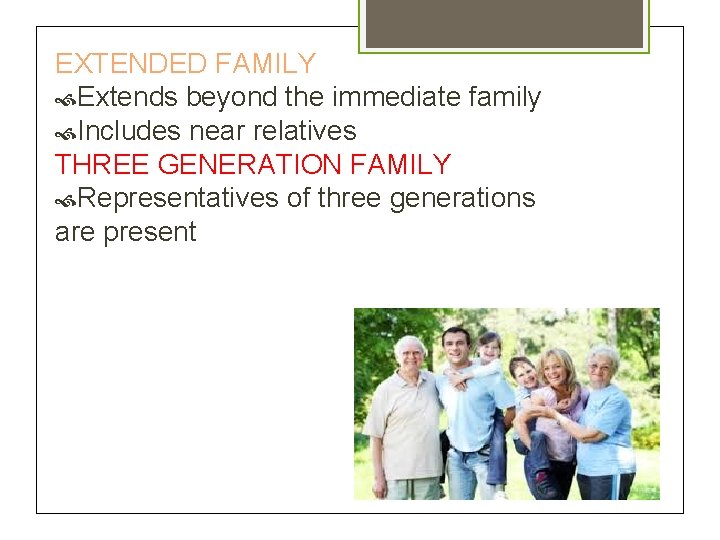
EXTENDED FAMILY Extends beyond the immediate family Includes near relatives THREE GENERATION FAMILY Representatives of three generations are present
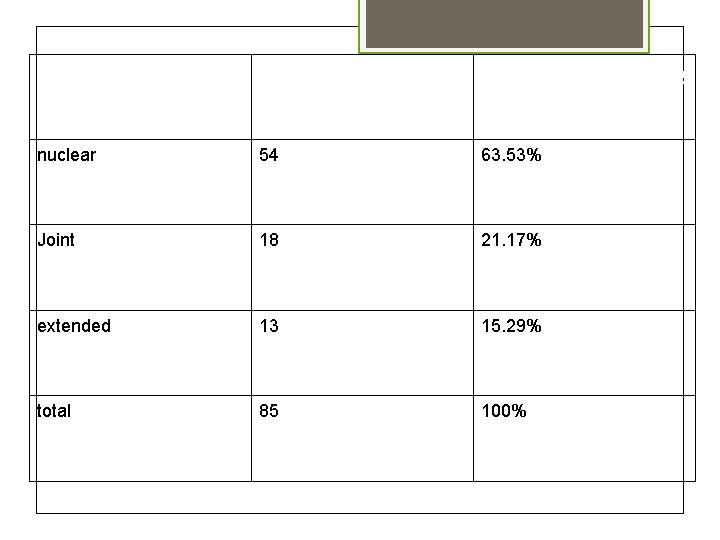
Types of family numbers percentages nuclear 54 63. 53% Joint 18 21. 17% extended 13 15. 29% total 85 100%
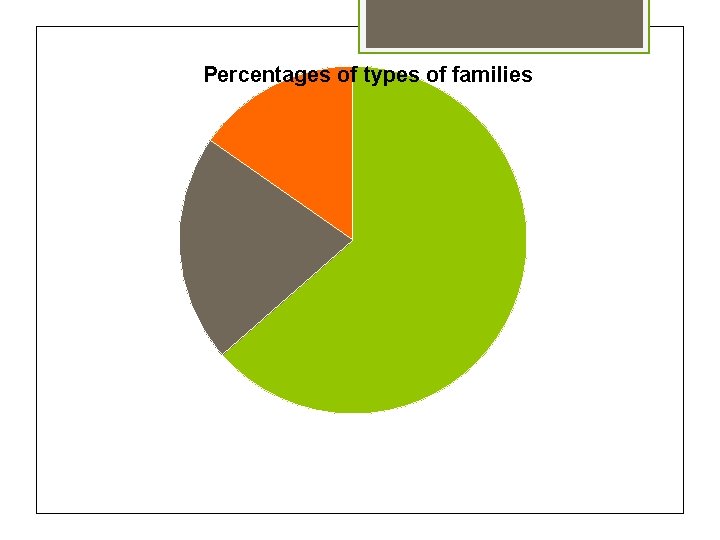
Percentages of types of families
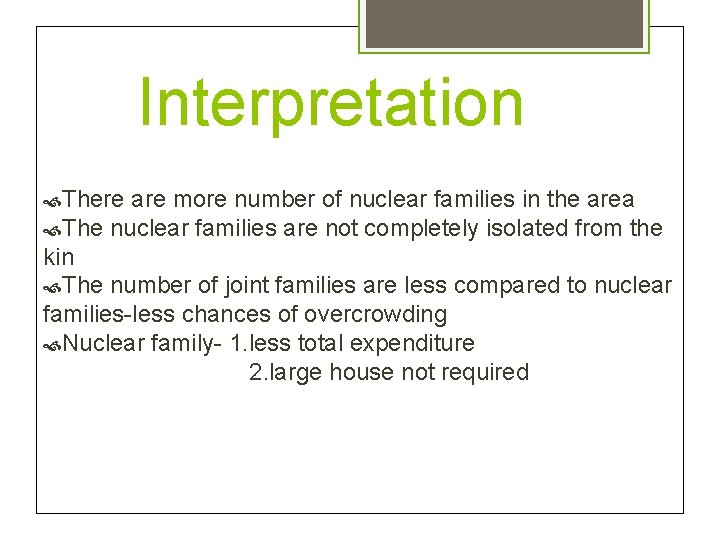
Interpretation There are more number of nuclear families in the area The nuclear families are not completely isolated from the kin The number of joint families are less compared to nuclear families-less chances of overcrowding Nuclear family- 1. less total expenditure 2. large house not required
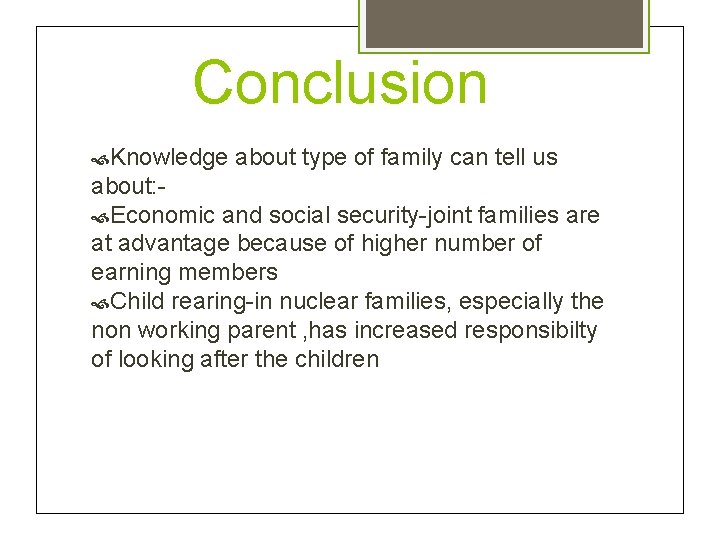
Conclusion Knowledge about type of family can tell us about: Economic and social security-joint families are at advantage because of higher number of earning members Child rearing-in nuclear families, especially the non working parent , has increased responsibilty of looking after the children
IMPLICATION By assessing type of family and the socioeconomic status family planning methods can be suggested accordingly Rehabilitation of a family member from substance abuse is easier in larger families owing to larger support system-easy counselling
- Slides: 10