
Family Violence Rachna Muddagouni CEO University of Melbourne
Family Violence Rachna Muddagouni CEO University of Melbourne Graduate Students Association
Family Violence is: Any threatening, dominating or abusive behaviour that occurs between people in a family, domestic or intimate relationship, or former intimate relationship, that causes the person experiencing the behaviour to feel fear. Not an argument once in a while, it is a continuous pattern of abusive behaviour perpetrated by one person towards another, often using multiple tactics. Not just physical or sexual abuse. Unhealthy and harmful
Family Violence Types of family violence relationships Family violence is most often thought of as occurring between intimate partners or immediate relations living in the same home. Family violence can also be perpetrated by someone that you normally live with who is in a ‘familylike relationship’ (such as a carer), or relationships where there is cultural recognition by the community of a ‘family-like’ relationship (such as in Aboriginal communities).
Intimate partner abuse: violent behaviour used by a current or former spouse or partner against the other spouse or partner. Examples of Family Violence Relationship Dating abuse: violent behaviour used by a casual partner against the other partner. Child abuse: violent behaviour or mistreatment towards a child or young person by a parent or caregiver. Under Victorian law, exposing a child to any form of family violence is also a reportable child abuse offence – so if a person is abusive towards their spouse in front of their child or children, child abuse has occurred. Elder abuse: violent behaviour or mistreatment towards an older person by a partner or family member, often including financial abuse, controlling behaviours and/or negligence. Parental abuse: violent behaviour towards a parent by an adolescent child or dependant.
Use of violence is an intentional individual choice Social ‘enablers’ of family violence Gender inequity Understanding Family Violence Other inequity Racism, classism, ageism, ableism, homophobia, biphobia, transphobia and other forms
Who experiences family violence Anyone can experience family violence. It is a widespread social problem that affects people from all walks of life regardless of gender, sexuality, ethnicity, religion or socioeconomic status. Women with Disabilities Children Young People Culturally and Linguistically Diverse Communities Aboriginal and Torres Strait Islanders LGBTQIA Elder Abuse
Who experiences family violence Other risk factors There are other risk factors that have been linked to increased severity in experiences of family violence. These include: Pregnancy and new birth Separation Childhood abuse People who had experienced sexual abuse as a child were 3 times more likely to experience intimate partner violence (Source: ABS)
Types of Abuse Controlling Abuse Emotional Abuse Psychological Abuse Financial Abuse Sexual Abuse Physical Abuse Visa Abuse Technology-facilitated Abuse
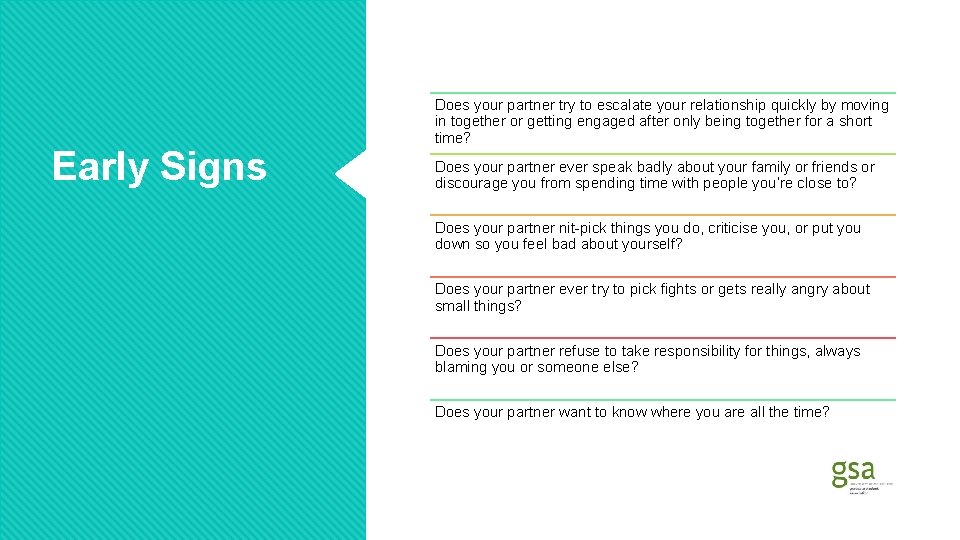
Early Signs Does your partner try to escalate your relationship quickly by moving in together or getting engaged after only being together for a short time? Does your partner ever speak badly about your family or friends or discourage you from spending time with people you’re close to? Does your partner nit-pick things you do, criticise you, or put you down so you feel bad about yourself? Does your partner ever try to pick fights or gets really angry about small things? Does your partner refuse to take responsibility for things, always blaming you or someone else? Does your partner want to know where you are all the time?
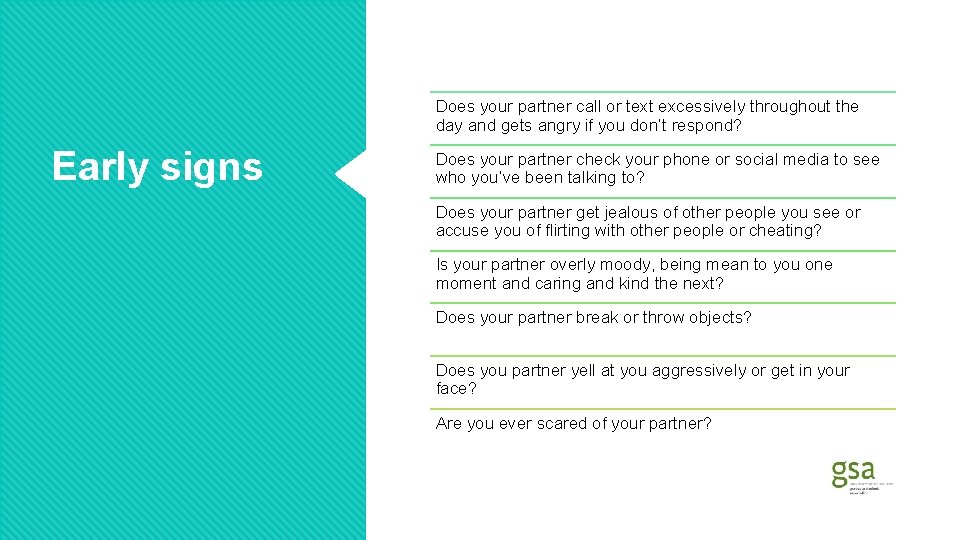
Does your partner call or text excessively throughout the day and gets angry if you don’t respond? Early signs Does your partner check your phone or social media to see who you’ve been talking to? Does your partner get jealous of other people you see or accuse you of flirting with other people or cheating? Is your partner overly moody, being mean to you one moment and caring and kind the next? Does your partner break or throw objects? Does you partner yell at you aggressively or get in your face? Are you ever scared of your partner?
Information for Parents and Support for Children Do you have children and need support because of family violence? Are you worried about someone you know in this situation? Children and young people have their own unique experiences of family violence. Mothers we speak with are often worried about how the violence they experience is impacting their children – even when they are doing everything they can to protect them. Family violence against children and young people includes physical, sexual, psychological or financial abuse, and threatening or coercive behaviour. Causing a child to witness or be exposed to family violence directed at someone else is also family violence.
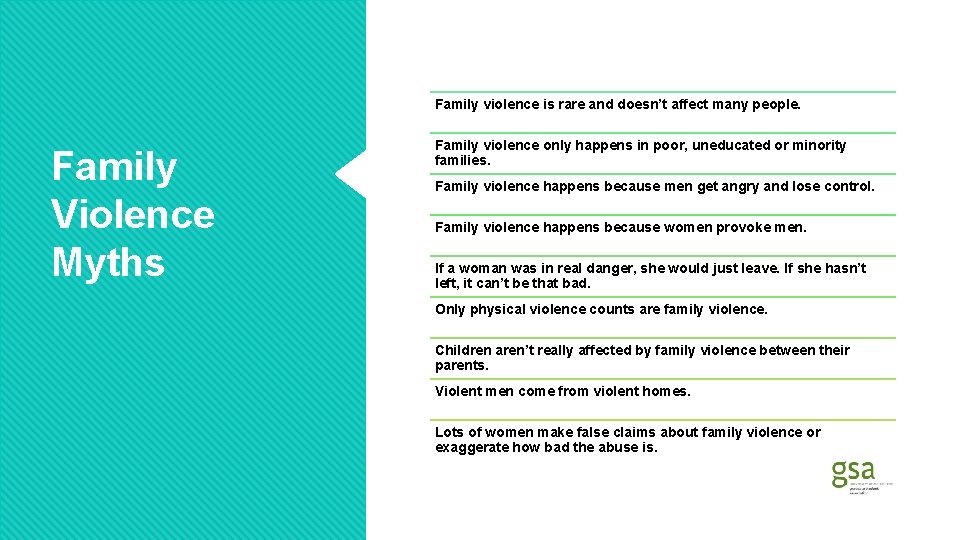
Family violence is rare and doesn’t affect many people. Family Violence Myths Family violence only happens in poor, uneducated or minority families. Family violence happens because men get angry and lose control. Family violence happens because women provoke men. If a woman was in real danger, she would just leave. If she hasn’t left, it can’t be that bad. Only physical violence counts are family violence. Children aren’t really affected by family violence between their parents. Violent men come from violent homes. Lots of women make false claims about family violence or exaggerate how bad the abuse is.
Signs someone you know is experiencing family violence Has the person become withdrawn from close friends and family? Do they seem unusually quiet, lacking in confidence or depressed? Information for Family and Friends Does the person say things that indicate their partner is controlling like ‘he doesn’t like it if I don’t let him know where I am’ or ‘he’s always checking my text messages’? Does the person talk about their partner being jealous or quick to anger? Have they mentioned their partner getting really angry about something small like the house not being clean enough or forgetting to purchase something from the shops?
Does the person seem anxious, afraid or just not themselves around their partner? Does their partner criticize the person in public, calling them stupid in front of friends, family or colleagues? Information for Family and Friends Has the person ever indicated that their partner pressured them into doing sexual things? Has the person ever said their partner pushed them, restrained them, hit them or was in any way physically abusive? Has the person ever had physical injuries, like bruises, broken bones or abrasions? If you have asked them about the injuries, have they become evasive, upset or given unlikely explanations?
Absenteeism or lateness Poor concentration and work-related errors or inconsistent output Information for Employers Injuries such as bruises, black eyes and broken bones, especially if the employee attempts to conceal the injuries or offers unconvincing explanations for how they occurred Requests for extended time off Displays signs of emotional distress, such as unusual quietness and increased isolation from coworkers and unusual or repeated emotional upset during or following contact with the employee’s partner
Suggestions or statements by the employee that a former or current partner is engaging in unwanted contact Information for Employers An unusual number of emails, texts, phone calls, etc. from a current or former partner and reluctance by the employee to converse with the partner or respond to messages Abrupt change of address by the employee or a reluctance to divulge where the employee resides Unwelcome visits by the employee’s partner to the workplace, particularly if the visits elicit a strong negative reaction by the employee
safe steps Family Violence Response Centre (formerly Women's Domestic Violence Crisis Service) 1800 RESPECT: National Sexual Assault, Family and Domestic Violence Counselling Service in. Touch Multicultural Centre Against Family Violence Elizabeth Morgan House Aboriginal Women’s Service Djirra - Aboriginal Family Violence Prevention and Legal Service Victoria Resources Domestic Violence Resource Centre Victoria (DVRCV) The Orange Door Acknowledge and thank safe steps Family Violence (WDVCS) for the materials to develop this presentation Refuges and shelters Family violence outreach workers Other emergency housing Where to get help in local area Victoria Legal Aid Men’s Behavioural Change ( NO to Violence) UMSU Legal Womens Information and Referral Services (WIRE) CALL THE POLICE and SEEK LEGAL HELP
- Slides: 17