
FAMILY TYPES RELATIONSHIP What An interaction between two
FAMILY TYPES
RELATIONSHIP What? � An interaction between two or more people. Who? � Parents, siblings, peers, spouse, grandparents They are constantly changing. An individual is going through various stages of his life cycle while the family is going through its cycle.
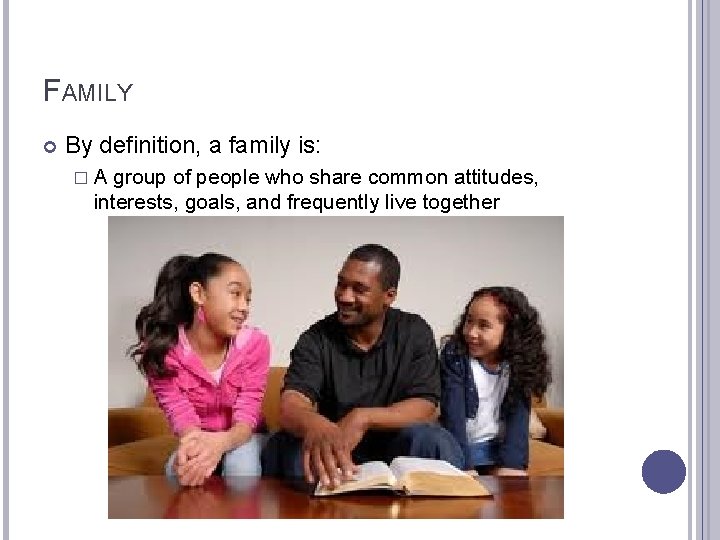
FAMILY By definition, a family is: �A group of people who share common attitudes, interests, goals, and frequently live together
TYPES OF FAMILY Nuclear family Single-parent family Blended family Extended family Adoptive family Traditional family
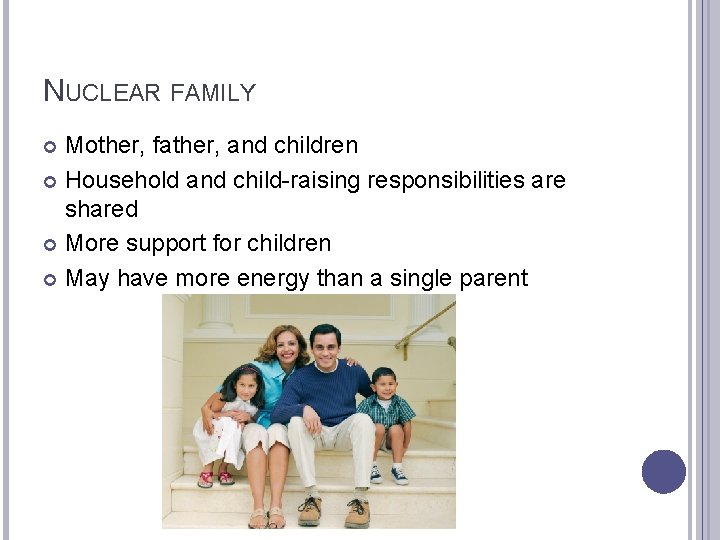
NUCLEAR FAMILY Mother, father, and children Household and child-raising responsibilities are shared More support for children May have more energy than a single parent
SINGLE-PARENT FAMILY One parent and children Challenge because of all the responsibilities Manage finances, raising children, household tasks Help from others
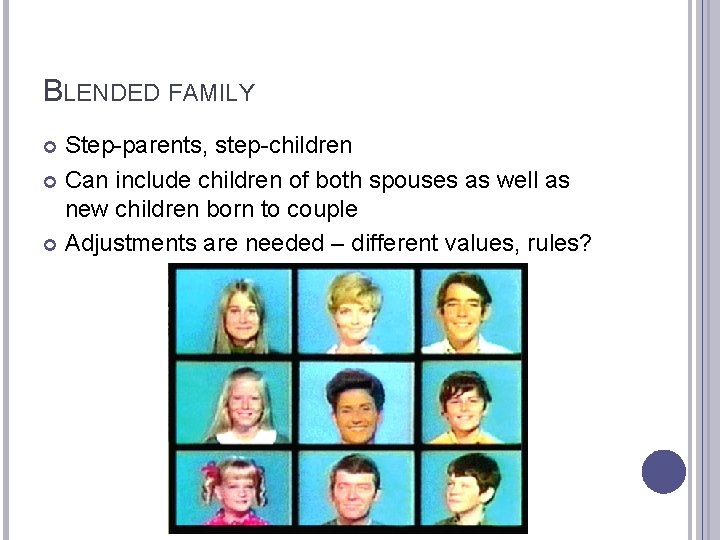
BLENDED FAMILY Step-parents, step-children Can include children of both spouses as well as new children born to couple Adjustments are needed – different values, rules?
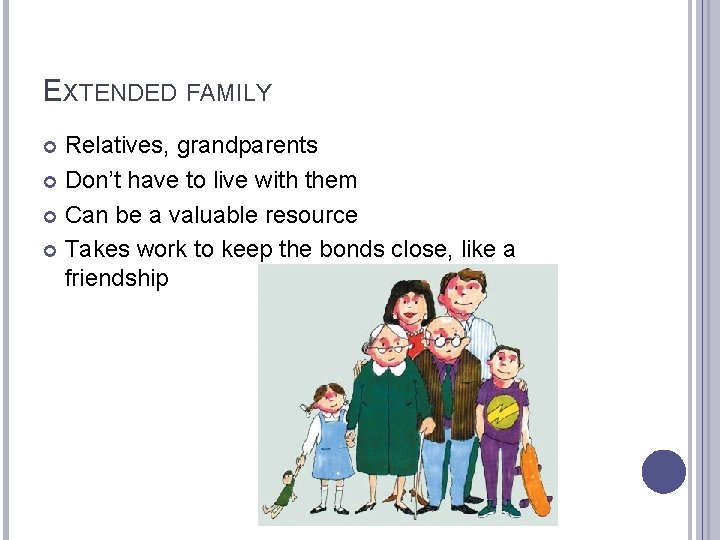
EXTENDED FAMILY Relatives, grandparents Don’t have to live with them Can be a valuable resource Takes work to keep the bonds close, like a friendship
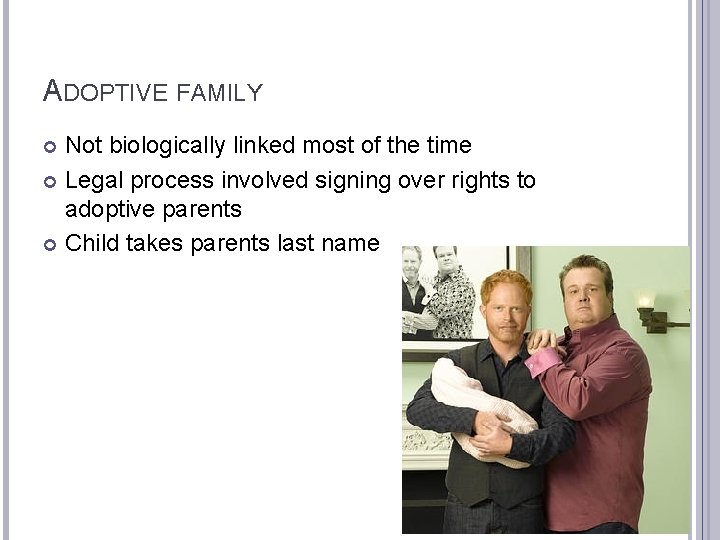
ADOPTIVE FAMILY Not biologically linked most of the time Legal process involved signing over rights to adoptive parents Child takes parents last name
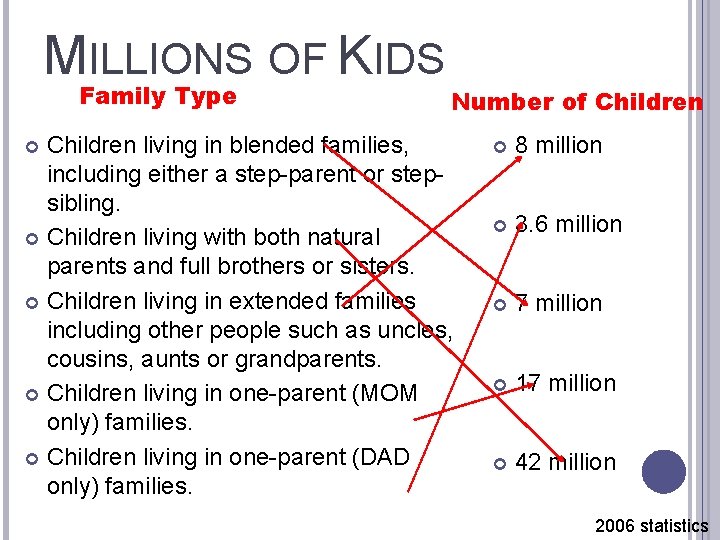
MILLIONS OF KIDS Family Type Number of Children living in blended families, including either a step-parent or stepsibling. Children living with both natural parents and full brothers or sisters. Children living in extended families including other people such as uncles, cousins, aunts or grandparents. Children living in one-parent (MOM only) families. Children living in one-parent (DAD only) families. 8 million 3. 6 million 7 million 17 million 42 million 2006 statistics
TRADITIONAL FAMILY Working dad, stay at home mom, children Family most portrayed in the media
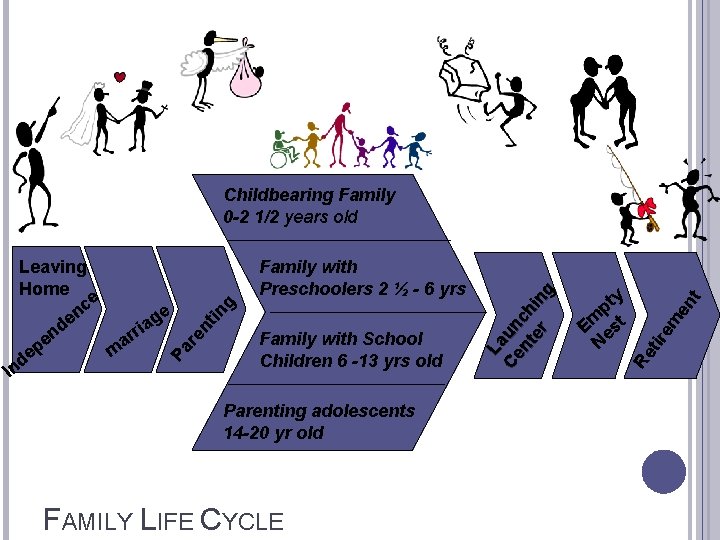
Parenting adolescents 14 -20 yr old FAMILY LIFE CYCLE en t em tir Family with School Children 6 -13 yrs old y pt Em est N Re en tin g Family with Preschoolers 2 ½ - 6 yrs Pa r Leaving Home ce e n g e a ri nd r e a p m e d In La C e un nt ch er in g Childbearing Family 0 -2 1/2 years old
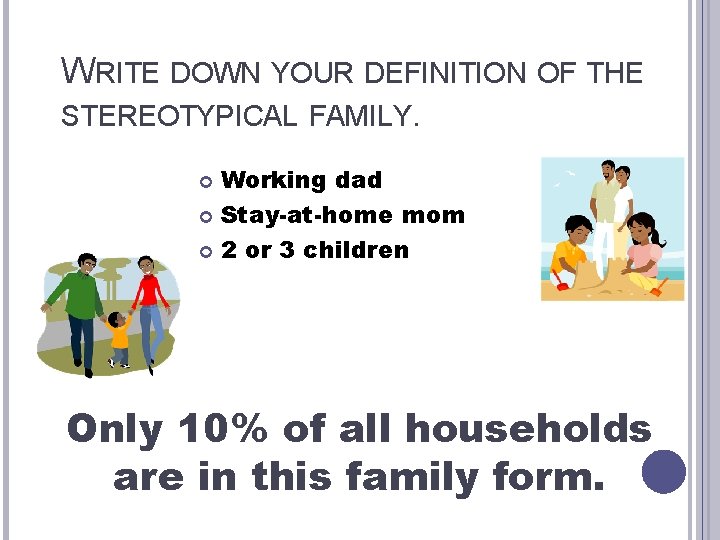
WRITE DOWN YOUR DEFINITION OF THE STEREOTYPICAL FAMILY. Working dad Stay-at-home mom 2 or 3 children Only 10% of all households are in this family form.
AMERICAN FAMILY FORMS Living Alone � 1 of 24 adults remain single throughout their life. � 66% of single people are women. POSSLQs � Persons of the opposite sex sharing living quarters. � Couples who live together before marriage, divorce just as often as those who marry first. Marrying Later in Life � Average to marry: men - 25. 9, women - 23. 6 � More young people are not marrying or are marrying later.
AMERICAN FAMILY FORMS Couples Having Children Later in Life � More couples are waiting to become parents until their careers are established. � Estimated cost to raise child is $200, 000 Couples With Fewer Children � The average number of children has dropped from 3. 6 in 1957 to 1. 8. Couples With No Children � Due to career commitments, fertility problems or just because they enjoy their childless lifestyles, many couples are remaining “Double Income, No Kids” couples.
AMERICAN FAMILY FORMS Divorced Adults � Approximately 60% of all divorces involve couples with children in the home. Single-Parent Families � About 1 in 4 children live with only one parent. � The number of single-parent homes has more than doubled in the past 20 years � Divorced women’s standard of living drops 73%, while divorced men jumps 42%. � About 50% of the children in divorced families report having not seen their father in the last year and only 1 of 6 see him once a week.
FAMILY SUCCESS Out of all the family types, which one do you believe would be the most successful? What makes a family successful?
SCENARIOS Your marriage is headed for divorce. � How would you settle property, child custody, divorce costs? You are a single mother. � How will you cope emotionally and financially? Elderly parents need to move in with you. � What conflicts and adjustments will arise? You just remarried. � How will family discipline be handled? How will household chores be divided? What name do you expect the children to call you? Where should you live? How should you divide physical space?
- Slides: 18