
FAMILY NURSE PARTNERSHIP PROGRAMME IN ENGLAND REPLICATING AN

- Slides: 23
FAMILY NURSE PARTNERSHIP PROGRAMME IN ENGLAND: - REPLICATING AN EVIDENCED BASED PROGRAMME
FNP IN GREAT YARMOUTH AND WAVENEY The Team: Nicole Hobson - supervisor Cheryl Hale – family nurse Jayne England – family nurse Juliet Keating – family nurse Lisa Lorenzen – family nurse Diane Bryant – family nurse Rachel Bradford – family nurse Emma Langdale - administrator
“Changing the world – one baby at a time”
FAMILY NURSE PARTNERSHIP PROGRAMME Ø Ø Ø Developed in US over 30 years of rigorous research and evaluation that shows positive results from pregnancy through to 19 years; Licensed programme with fidelity measures to ensure replication of original research; Preventive, intensive, structured home visiting programme; Offered to first time mothers under 20 years from early pregnancy until child 2 years ; Testing in England since April 07 in the 55 UK sites. Government commitment to double the expansion of FNP to 13, 000 families by April 2015; Large scale RCT started April 09 with 18 sites (RCT results due April 2013).
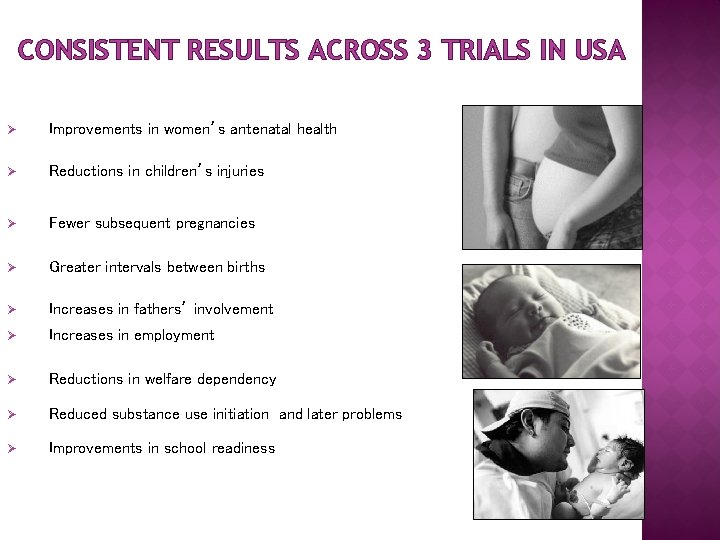
CONSISTENT RESULTS ACROSS 3 TRIALS IN USA Ø Improvements in women’s antenatal health Ø Reductions in children’s injuries Ø Fewer subsequent pregnancies Ø Greater intervals between births Ø Increases in fathers’ involvement Ø Increases in employment Ø Reductions in welfare dependency Ø Reduced substance use initiation and later problems Ø Improvements in school readiness
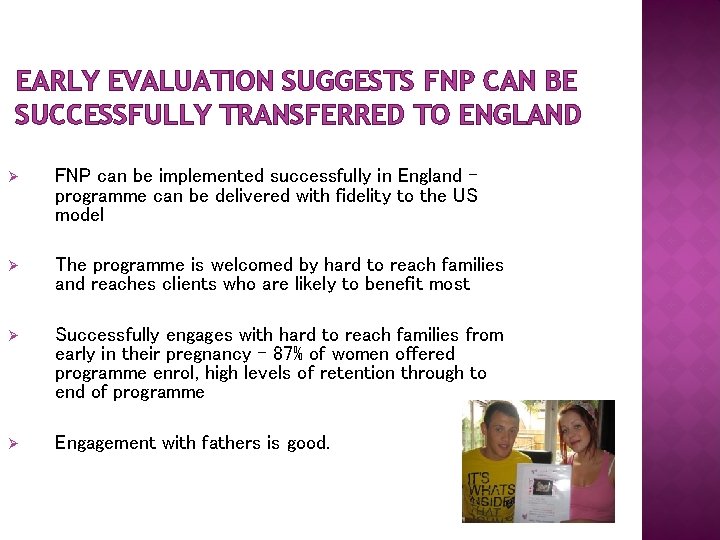
EARLY EVALUATION SUGGESTS FNP CAN BE SUCCESSFULLY TRANSFERRED TO ENGLAND Ø FNP can be implemented successfully in England – programme can be delivered with fidelity to the US model Ø The programme is welcomed by hard to reach families and reaches clients who are likely to benefit most Ø Successfully engages with hard to reach families from early in their pregnancy – 87% of women offered programme enrol, high levels of retention through to end of programme Ø Engagement with fathers is good.
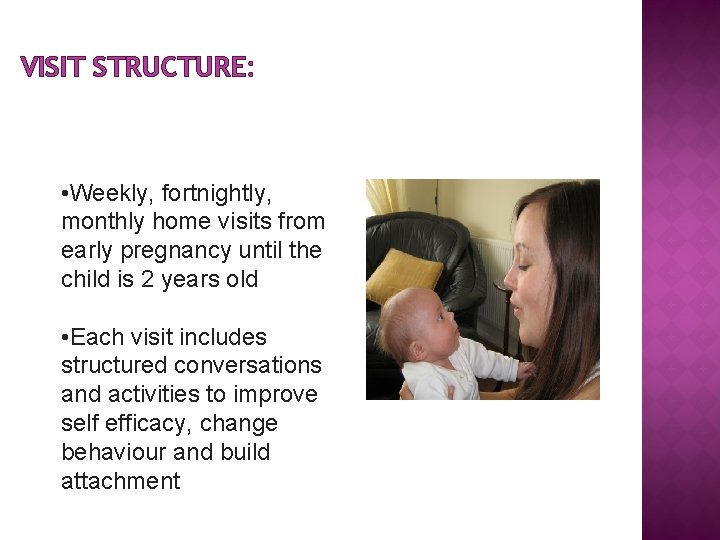
VISIT STRUCTURE: • Weekly, fortnightly, monthly home visits from early pregnancy until the child is 2 years old • Each visit includes structured conversations and activities to improve self efficacy, change behaviour and build attachment
WHAT FAMILIES RECEIVE : APPROACH Ø Ø Ø Ø Therapeutic alliance - being ‘with’ the client, inviting the client/family to work on the difficult issues; Focus on bonding, attachment and emotional availability of caregivers; Utilises client’s primary motivation as expectant mother; Strength based, positive and hopeful – belief in clients strengths, talents, skills and resources, expectation that client will succeed; Using motivational interviewing skills to explore ambivalence and structure conversations about change and personal growth without coercion; Respectful agenda matching to align energy from clients’ aspirations with programme goals; Setting goals with small steps and positive feedback. The relationship between the nurse and the family lies at the heart of the programme
FNP TURNS AROUND LIFE CHANCES AND BREAKS INTERGENERATIONAL DISADVANTAGE Ø Ø Ø By taking a whole family approach and working on all the inter-related factors that lead to and compound disadvantage, poverty and poor outcomes for mother and child Parents envisage a different possibility, a new story of themselves understanding of their lives and futures They become a dependable figure for their baby and better able to meet their emotional social and developmental needs Better health related behaviours Improvements in the mothers life course – subsequent pregnancies, education , training and work
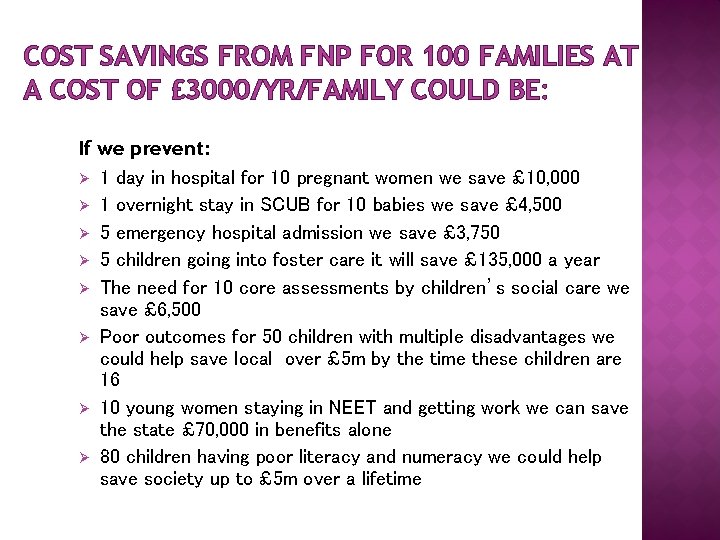
COST SAVINGS FROM FNP FOR 100 FAMILIES AT A COST OF £ 3000/YR/FAMILY COULD BE: If we prevent: Ø 1 day in hospital for 10 pregnant women we save £ 10, 000 Ø 1 overnight stay in SCUB for 10 babies we save £ 4, 500 Ø 5 emergency hospital admission we save £ 3, 750 Ø 5 children going into foster care it will save £ 135, 000 a year Ø The need for 10 core assessments by children’s social care we save £ 6, 500 Ø Poor outcomes for 50 children with multiple disadvantages we could help save local over £ 5 m by the time these children are 16 Ø 10 young women staying in NEET and getting work we can save the state £ 70, 000 in benefits alone Ø 80 children having poor literacy and numeracy we could help save society up to £ 5 m over a lifetime
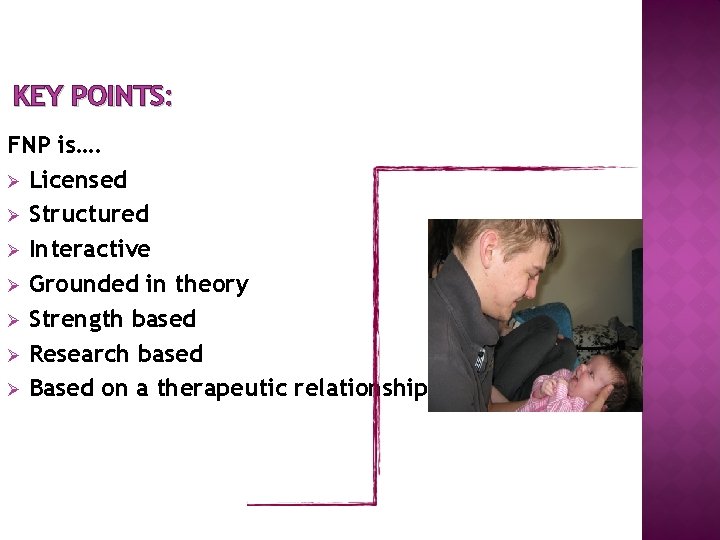
KEY POINTS: FNP is…. Ø Licensed Ø Structured Ø Interactive Ø Grounded in theory Ø Strength based Ø Research based Ø Based on a therapeutic relationship
Teenage parents Adolescent brain / expectations Complex life histories Lack of positive role models Socially isolated Juggling parenthood and schooling Pre-judged – stigmatising society Intergeneration disadvantage and poverty
Irresponsible All get a flat Uneducated Challenging Use pregnancy to get benefits They are kids themselves
• • • Stroppy Difficult Unreliable Challenging Rude Demanding Ego centric Selfish Will not answer telephones…texts only Lose phones / change numbers constantly And many more……. .
WHY?
• • Never being able to trust No role models Domestic violence Physical abuse Sexual abuse Emotional abuse Low expectations Low self esteem
Depression – mental health problems History of social services in own childhood History of drug and alcohol abuse (and in own childhoods) Highly negative and punitive parenting Trauma
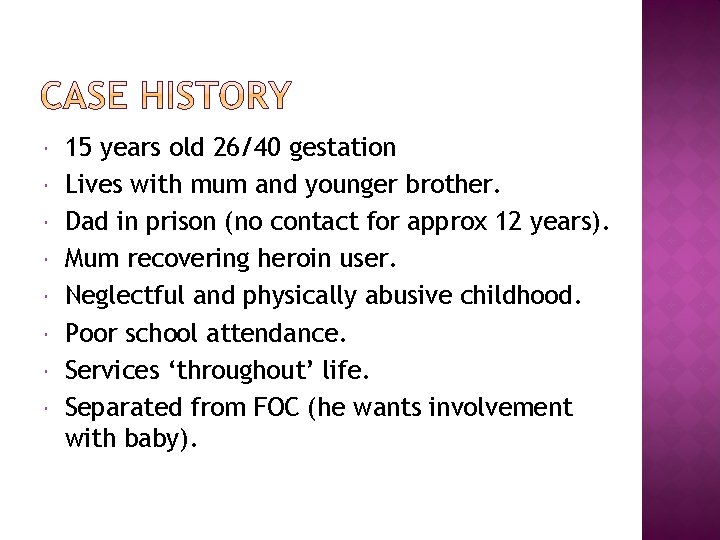
15 years old 26/40 gestation Lives with mum and younger brother. Dad in prison (no contact for approx 12 years). Mum recovering heroin user. Neglectful and physically abusive childhood. Poor school attendance. Services ‘throughout’ life. Separated from FOC (he wants involvement with baby).
• What are the risks? • What are the strengths?
Why is trust important for a mother and child?
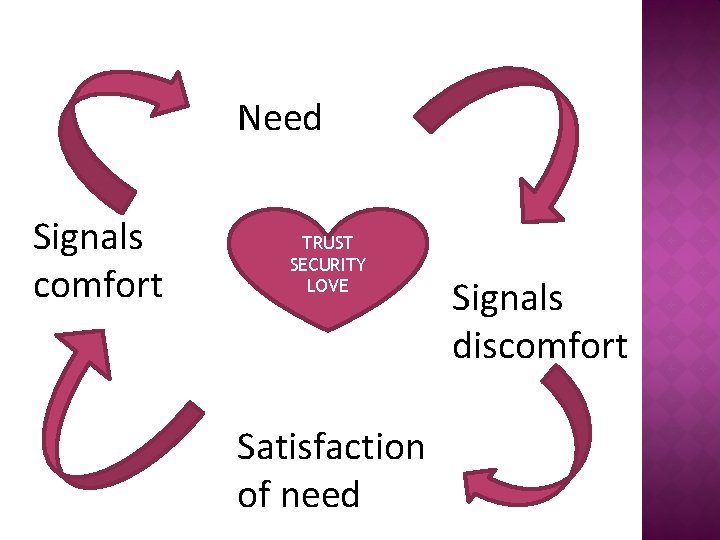
Need Signals comfort TRUST SECURITY LOVE Satisfaction of need Signals discomfort
OLDS (1993) ‘. . . a significant proportion of some of the most difficult and costly problems faced by young children and parents today, are a direct consequence of adverse maternal health related behaviours during pregnancy, dysfunctional infant care-giving, and stressful environmental conditions that interfere with parental and family functioning. ’