
Family Guide to PBIS Positive Behavioral Interventions and
Family Guide to PBIS Positive Behavioral Interventions and Supports
Developed by: In Cooperation With: 2
POLL QUESTION: How much do you know about PBIS already? � 1. I know a lot about PBIS and could explain it to someone else. � 2. I know what PBIS stands for and some of the basic parts of it. � 3. I know what PBIS stands for but that’s about it. � 4. I have no idea what you’re talking about. 3
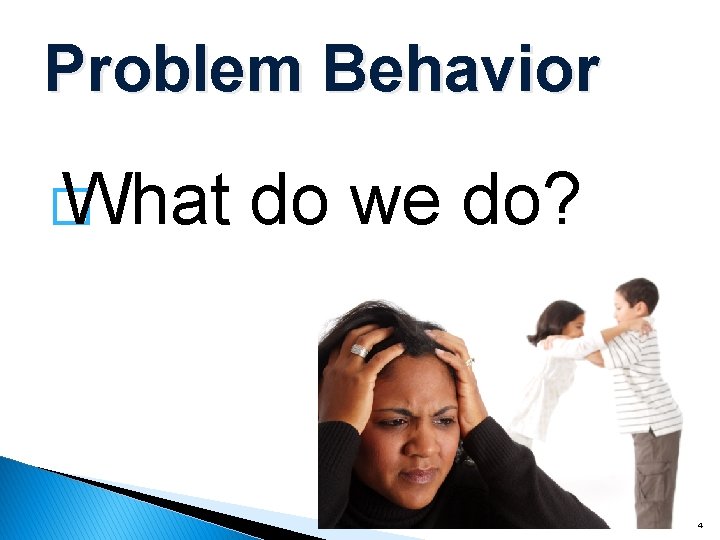
Problem Behavior � What do we do? 4
MOST OFTEN WE: � Get Angry � Punish � Does That Work? 5
What is Positive Behavioral Interventions and Supports? (PBIS) 6
PBIS IS RTI FOR BEHAVIOR 7
PBIS is: A School-Wide System Teaches Positive Behavior Helps Keep Kids and Schools Safe 8
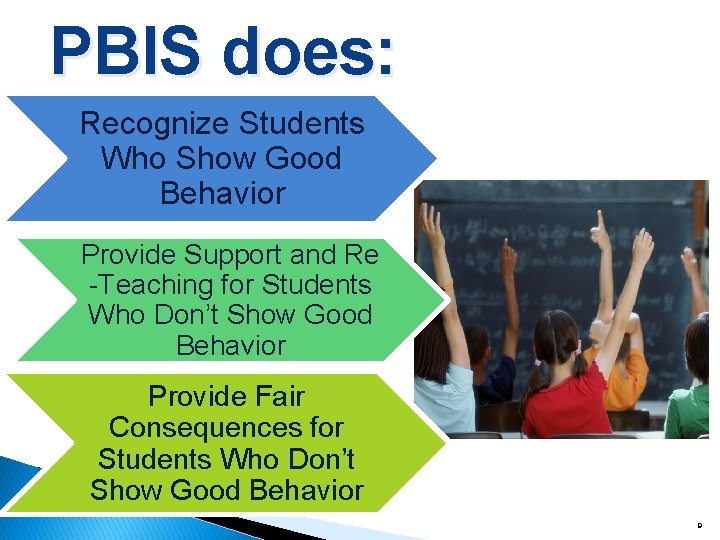
PBIS does: Recognize Students Who Show Good Behavior Provide Support and Re -Teaching for Students Who Don’t Show Good Behavior Provide Fair Consequences for Students Who Don’t Show Good Behavior 9
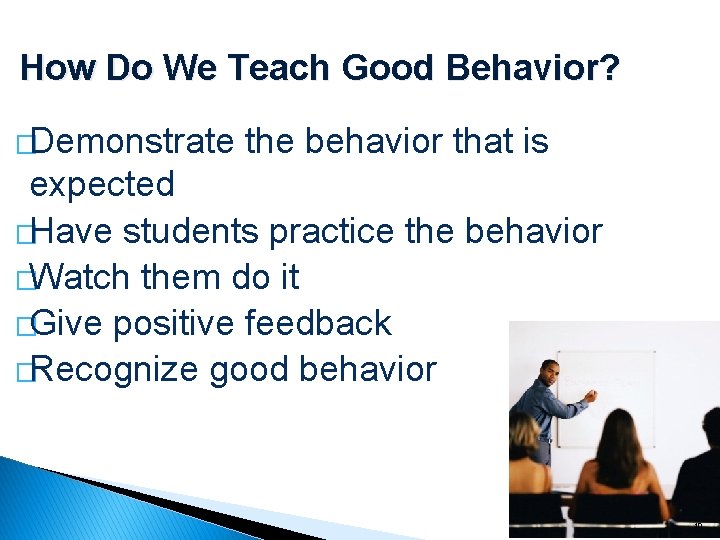
How Do We Teach Good Behavior? �Demonstrate the behavior that is expected �Have students practice the behavior �Watch them do it �Give positive feedback �Recognize good behavior 10
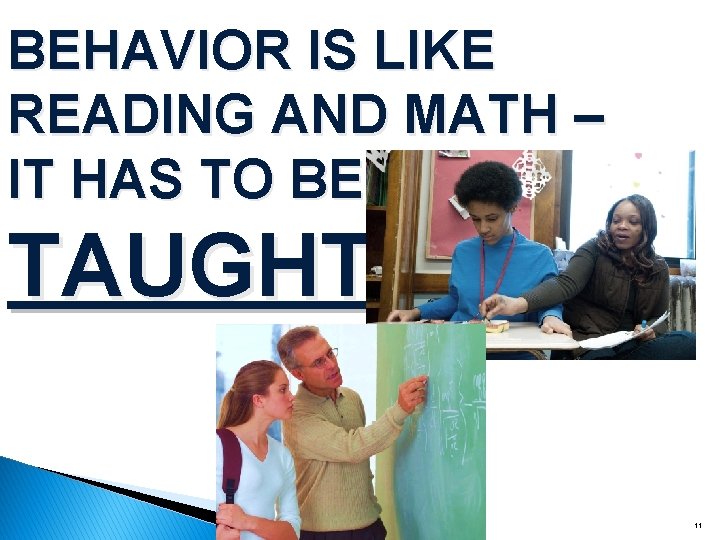
BEHAVIOR IS LIKE READING AND MATH – IT HAS TO BE TAUGHT 11
WHY? Prevention Works Better Than Punishment Teachers Spend More Time Teaching and Less Time Dealing with Behavior Students Learn More 12
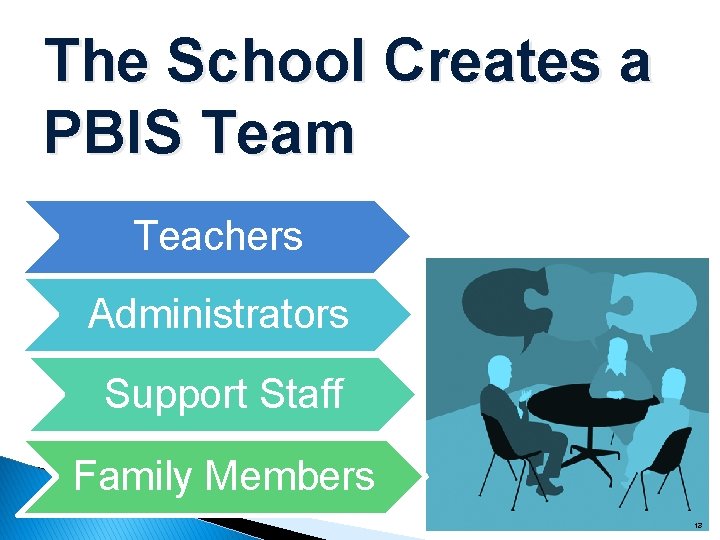
The School Creates a PBIS Team Teachers Administrators Support Staff Family Members 13
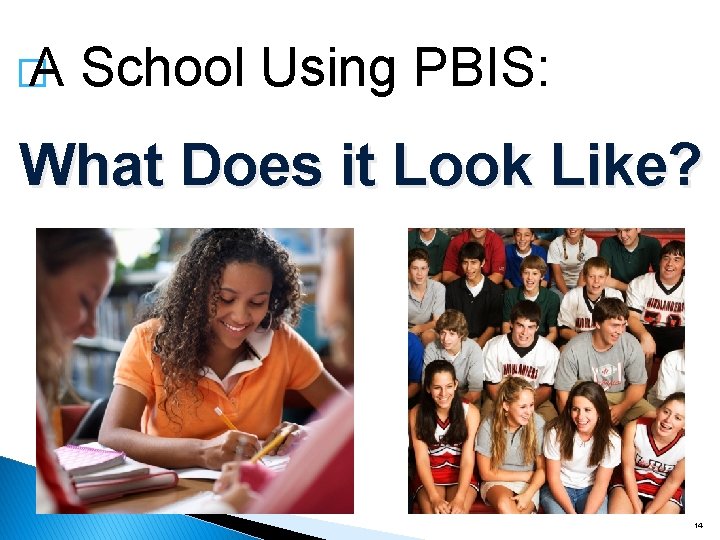
� A School Using PBIS: What Does it Look Like? 14
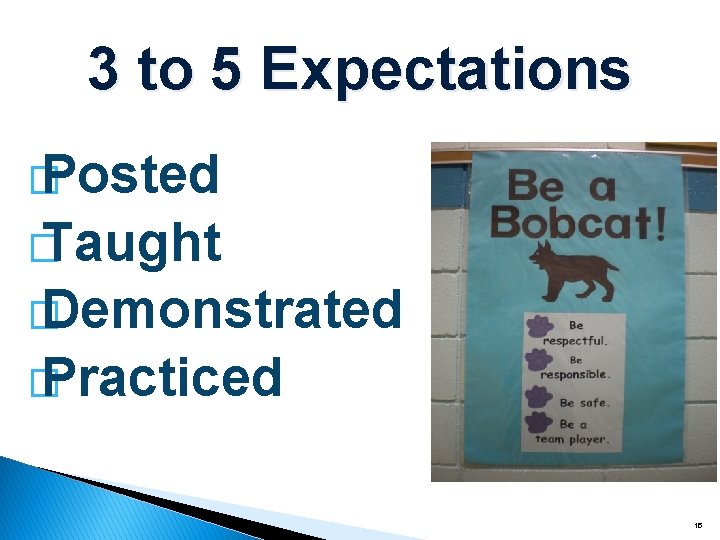
3 to 5 Expectations � Posted � Taught � Demonstrated � Practiced 15
Changing Behavior �You need a plan for: �Recognizing Good Behavior �Consequences for negative behavior ◦Teaching a replacement behavior 16
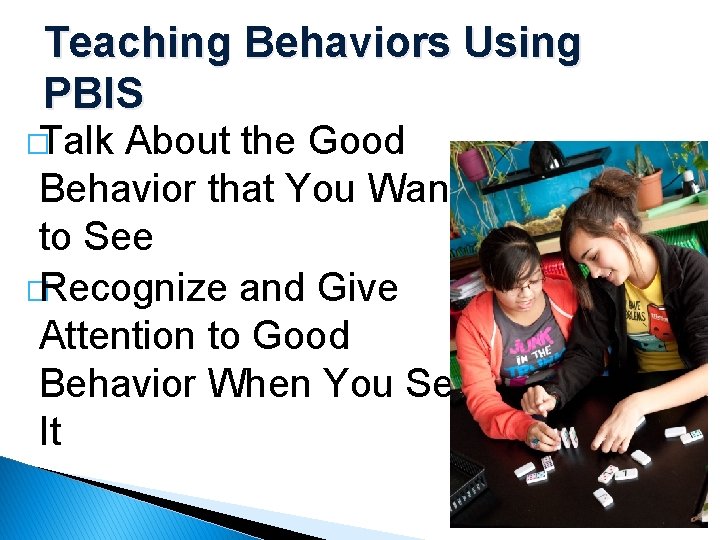
Teaching Behaviors Using PBIS �Talk About the Good Behavior that You Want to See �Recognize and Give Attention to Good Behavior When You See It 17
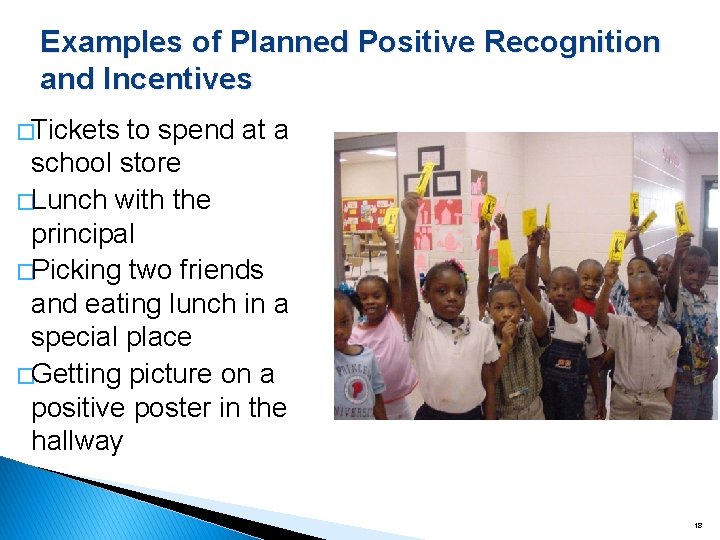
Examples of Planned Positive Recognition and Incentives �Tickets to spend at a school store �Lunch with the principal �Picking two friends and eating lunch in a special place �Getting picture on a positive poster in the hallway 18
Examples of Planned Negative Consequences �Rule reminders �Changing seats �Time‐out in class �Timeout-out of class �Phone call home �Lunch detention �Office referral 19
PBIS at HOME Set ROUTINES and EXPECTATIONS �Regularly TALK about them with your child, DEMONSTRATE and PRACTICE �Be firm with the routines that you’ve set �Recognize good behavior with verbal praise 20
PBIS at HOME �Plan positive incentives for showing good behavior �Have a PLAN for fair consequences �Be a good role model 21
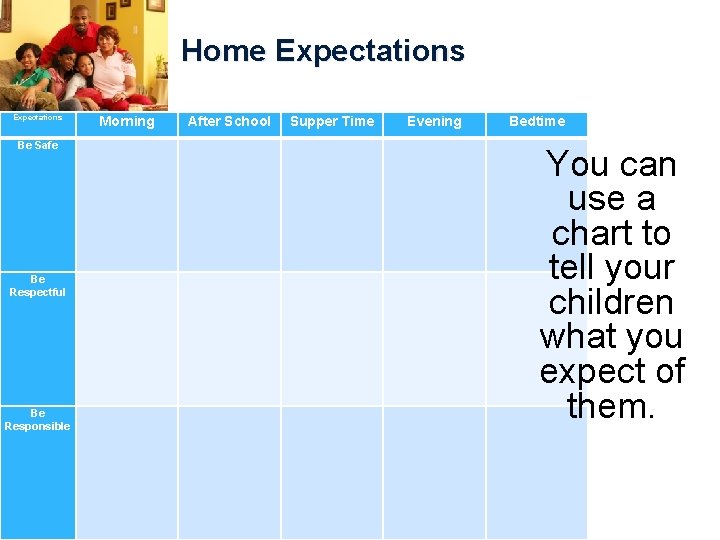
Home Expectations Be Safe Be Respectful Be Responsible Morning After School Supper Time Evening Bedtime You can use a chart to tell your children what you expect of them.
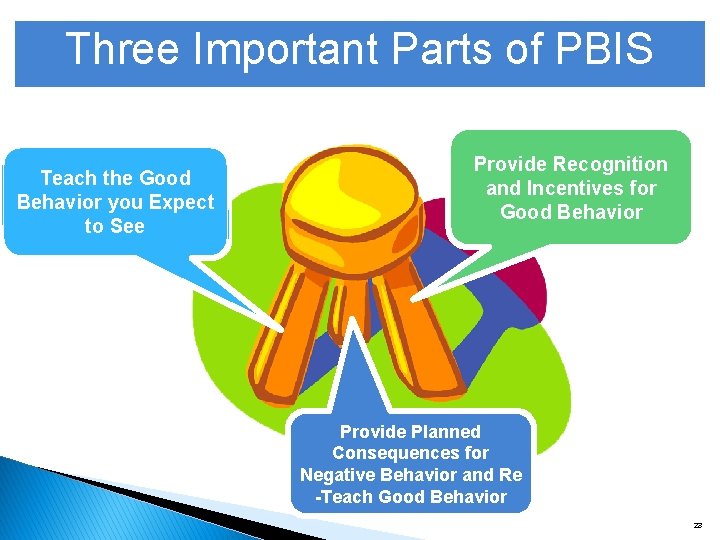
Three Important Parts of PBIS Teach the Good Behavior you Expect to See Provide Recognition and Incentives for Good Behavior Provide Planned Consequences for Negative Behavior and Re -Teach Good Behavior 23
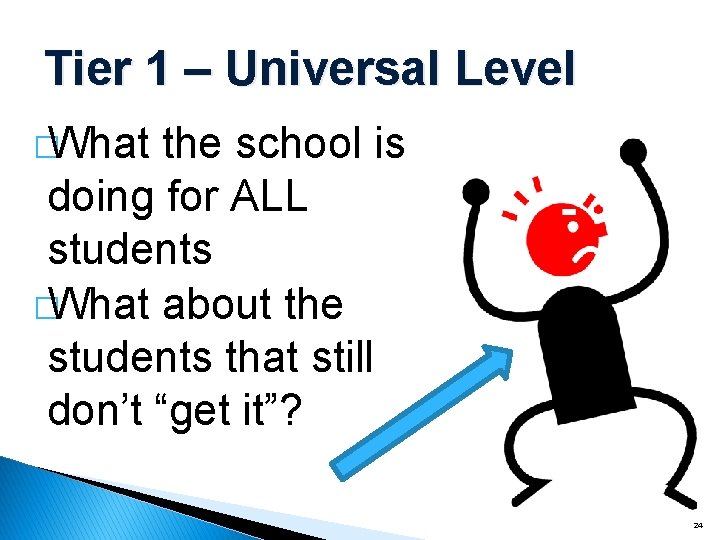
Tier 1 – Universal Level � What the school is doing for ALL students � What about the students that still don’t “get it”? 24
Tier 2 – Targeted Level �Some kids need more �Interventions – the more, the extra �Extra supports for kids who are still struggling to show the good behavior we expect 25
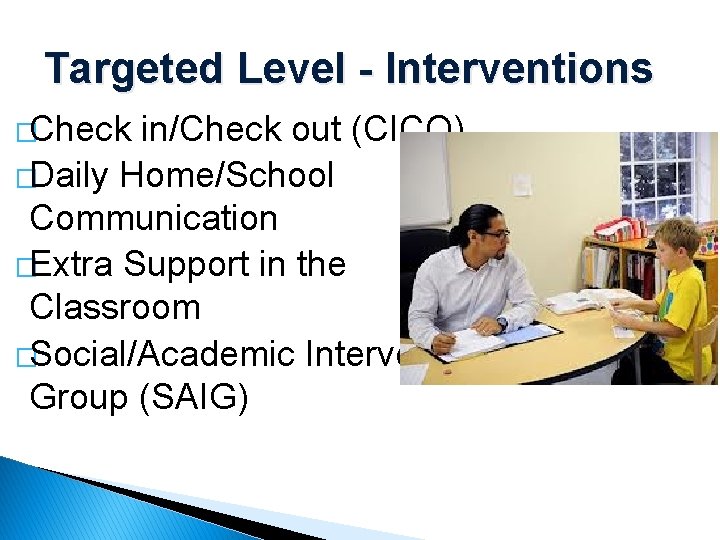
Targeted Level - Interventions �Check in/Check out (CICO) �Daily Home/School Communication �Extra Support in the Classroom �Social/Academic Intervention Group (SAIG)
Who Needs It? � Use Data (Information) ◦Office referrals ◦Minor incidents ◦Attendance ◦Being late 27
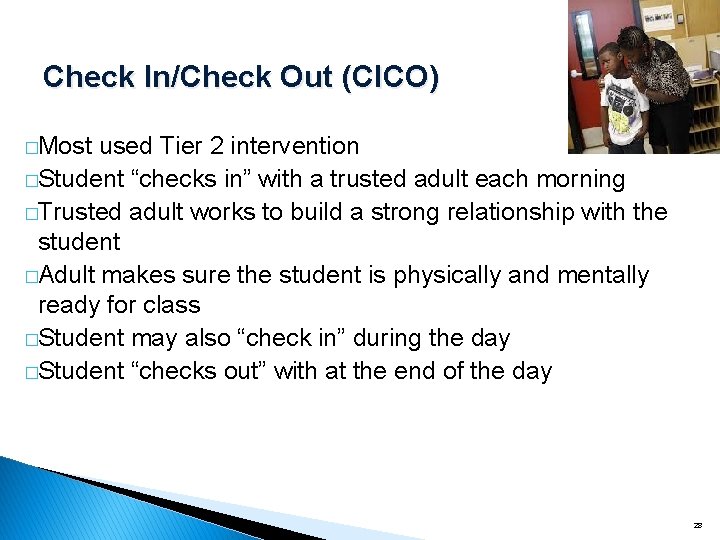
Check In/Check Out (CICO) �Most used Tier 2 intervention �Student “checks in” with a trusted adult each morning �Trusted adult works to build a strong relationship with the student �Adult makes sure the student is physically and mentally ready for class �Student may also “check in” during the day �Student “checks out” with at the end of the day 28
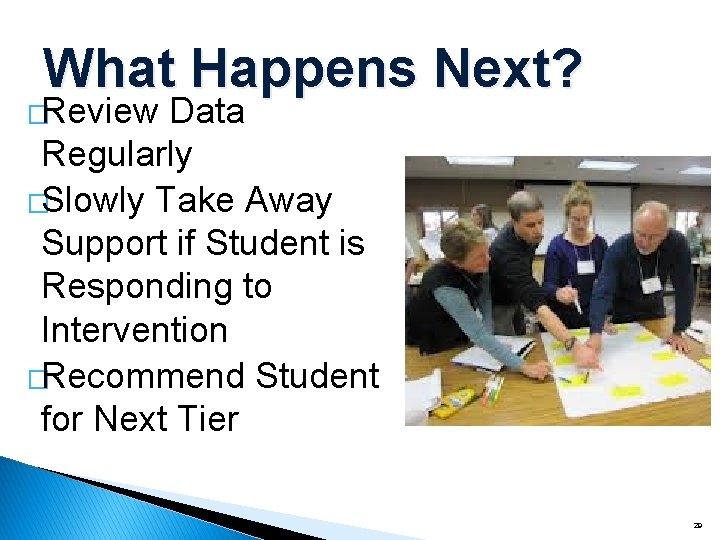
What Happens Next? �Review Data Regularly �Slowly Take Away Support if Student is Responding to Intervention �Recommend Student for Next Tier 29
Tier 3 - Intensive Level �Few students �Students who are still struggling even with extra support �Tier 3 can include students receiving Special Education 30
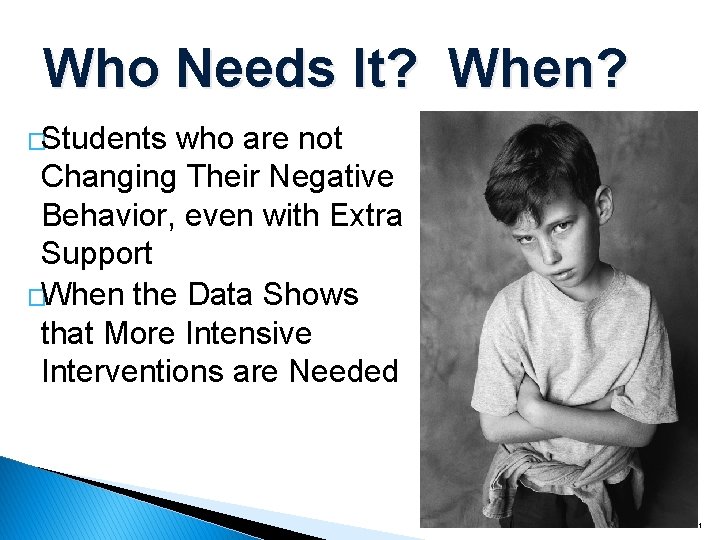
Who Needs It? When? �Students who are not Changing Their Negative Behavior, even with Extra Support �When the Data Shows that More Intensive Interventions are Needed 31
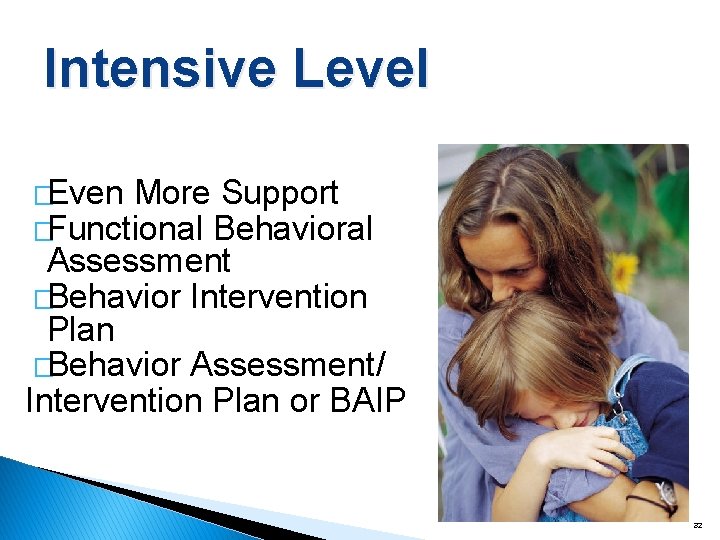
Intensive Level �Even More Support �Functional Behavioral Assessment �Behavior Intervention Plan �Behavior Assessment/ Intervention Plan or BAIP 32
Steps to Functional Behavioral Assessment �Put Together a Team (Include Parent) �Define the Problem Behavior (Stick to One or Two) �Observe and Record Data �Meet Together to Discuss Observations and Data �Make Your Best Guess as to Why the Behavior is Happening �Come up With a Plan to Reduce the Negative Behavior and Teach Replacement Behaviors �Review the Plan 33
Behavior Intervention Plan (BIP) �State the Problem Behavior in a Way Everyone Can Understand �Change the Environment and Put Supports in Place to Keep the Behavior From Happening 34
Behavior Intervention Plan (BIP) �Teach Positive Replacement Behaviors �Give Student Opportunities to Practice the Replacement Behaviors �Review the Plan 35
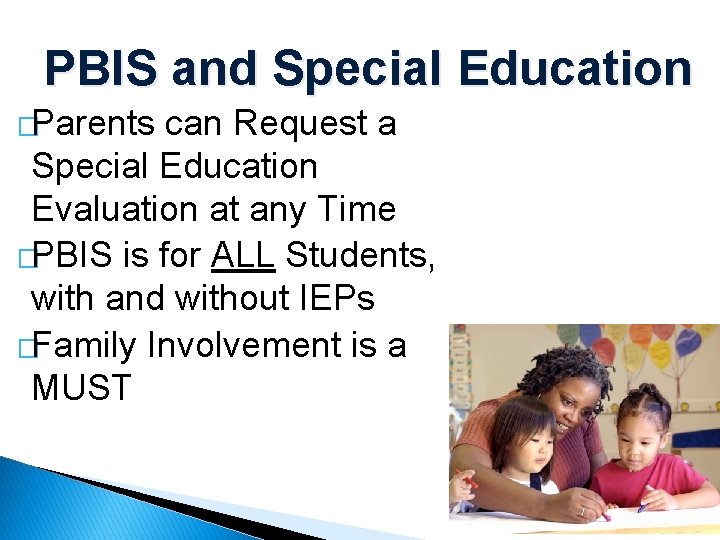
PBIS and Special Education �Parents can Request a Special Education Evaluation at any Time �PBIS is for ALL Students, with and without IEPs �Family Involvement is a MUST 36
Ask Questions �What are the school-wide and classroom behavioral expectations in my child’s school? �How will I be notified and involved if my child needs a behavioral intervention? �What can I do to help my child who is showing at-risk behavior?
Get Involved �Learn About PBIS �Offer to Help �Use PBIS at Home �Ask Questions if Your Child has been Recommended for an Intervention �Insist on Being Involved with any Meeting Regarding Your Child 38
NEED MORE IDEAS? �Contact your child’s teacher �Contact someone from your school’s PBIS Team Learn more on the web at: http: //www 5. milwaukee. k 12. wi. us/dept/rti/res ources/parents http: //www. wisconsinpbisnetwork. org/ http: //www. wifacets. org/ 39
PBIS is Positive Behavioral Interventions and Supports Questions? ? ? 40
NEED MORE IDEAS? �Contact your child’s teacher �Contact someone from your school’s PBIS Team Learn more on the web at: http: //www 5. milwaukee. k 12. wi. us/dept/rti/resources/parents http: //www. wisconsinpbisnetwork. org/ http: //www. wifacets. org/ 41
- Slides: 41