
Family farms in Transylvania Opportunities and Strategies for
- Slides: 54
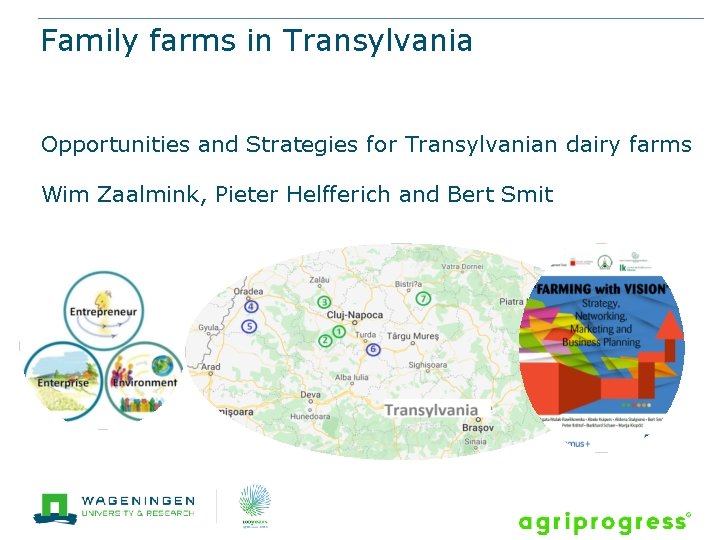
Family farms in Transylvania Opportunities and Strategies for Transylvanian dairy farms Wim Zaalmink, Pieter Helfferich and Bert Smit
Strategic Management: Agricultural landscape is constantly changing § EU common agricultural policy (CAP) ● Institutional, production and marketing changes § Societal wishes ● Food safety ● Animal welfare ● Environmental and climatic issues Requires adaptations of way of production/selling strategic thinking 2
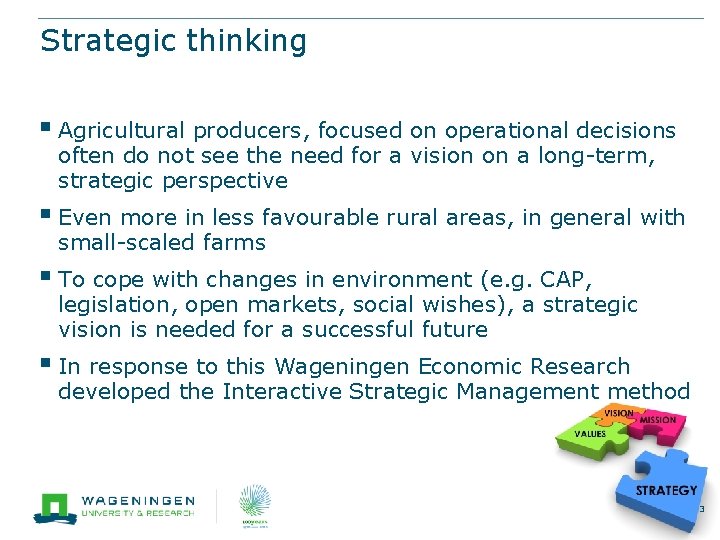
Strategic thinking § Agricultural producers, focused on operational decisions often do not see the need for a vision on a long-term, strategic perspective § Even more in less favourable rural areas, in general with small-scaled farms § To cope with changes in environment (e. g. CAP, legislation, open markets, social wishes), a strategic vision is needed for a successful future § In response to this Wageningen Economic Research developed the Interactive Strategic Management method 3
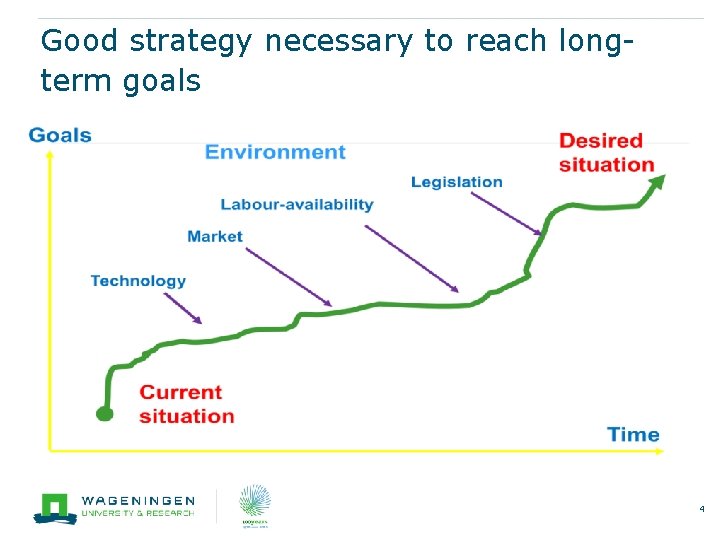
Good strategy necessary to reach longterm goals 4
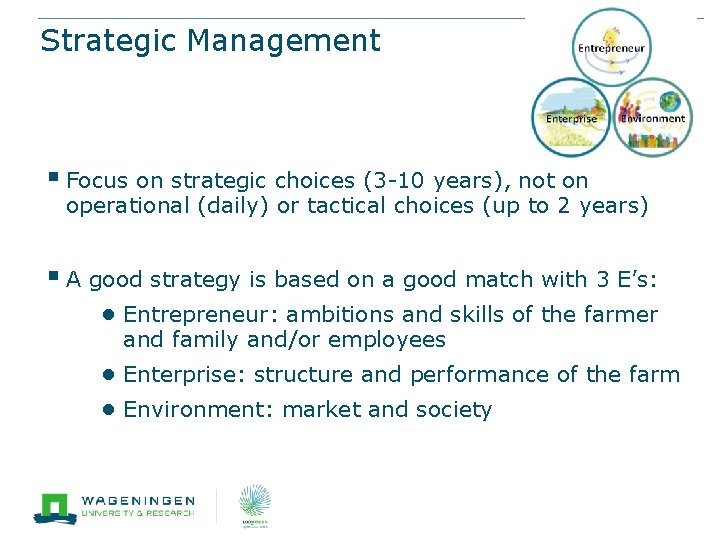
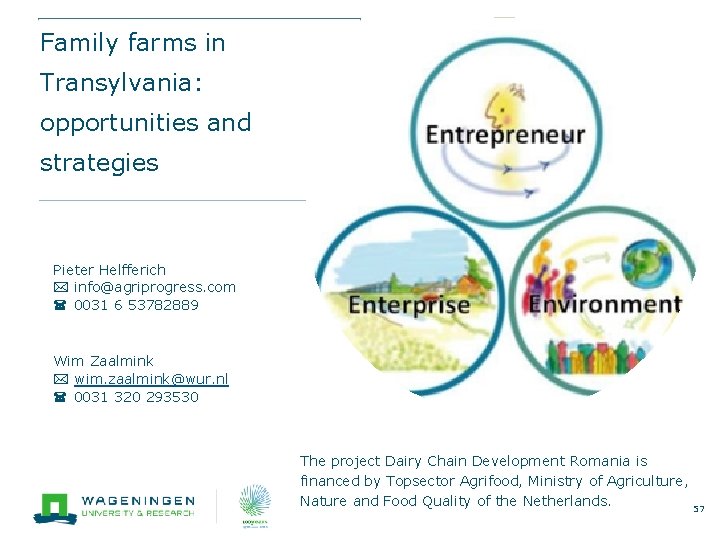
Strategic Management § Focus on strategic choices (3 -10 years), not on operational (daily) or tactical choices (up to 2 years) § A good strategy is based on a good match with 3 E’s: ● Entrepreneur: ambitions and skills of the farmer and family and/or employees ● Enterprise: structure and performance of the farm ● Environment: market and society
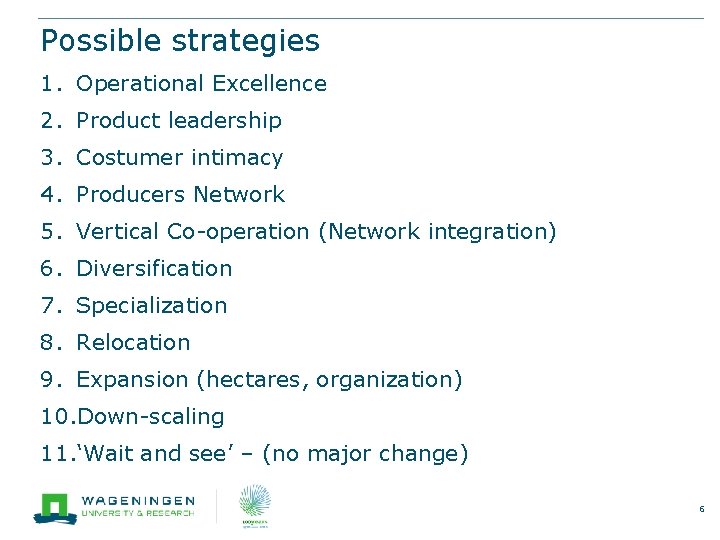
Possible strategies 1. Operational Excellence 2. Product leadership 3. Costumer intimacy 4. Producers Network 5. Vertical Co-operation (Network integration) 6. Diversification 7. Specialization 8. Relocation 9. Expansion (hectares, organization) 10. Down-scaling 11. ‘Wait and see’ – (no major change) 6
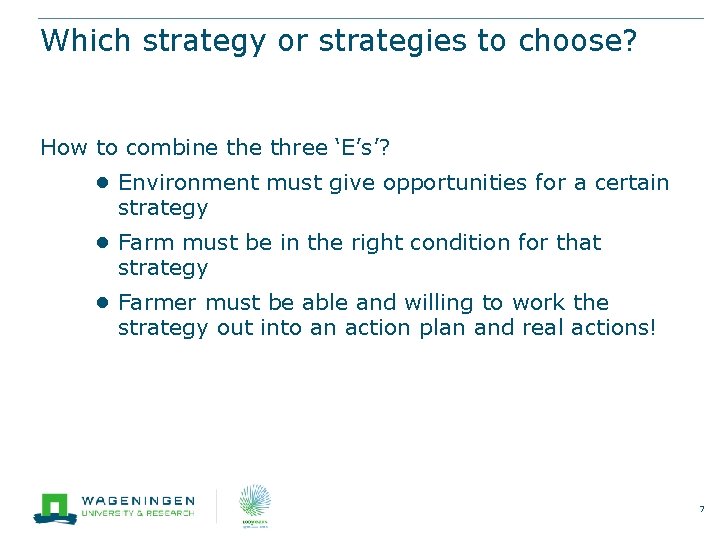
Which strategy or strategies to choose? How to combine three ‘E’s’? ● Environment must give opportunities for a certain strategy ● Farm must be in the right condition for that strategy ● Farmer must be able and willing to work the strategy out into an action plan and real actions! 7
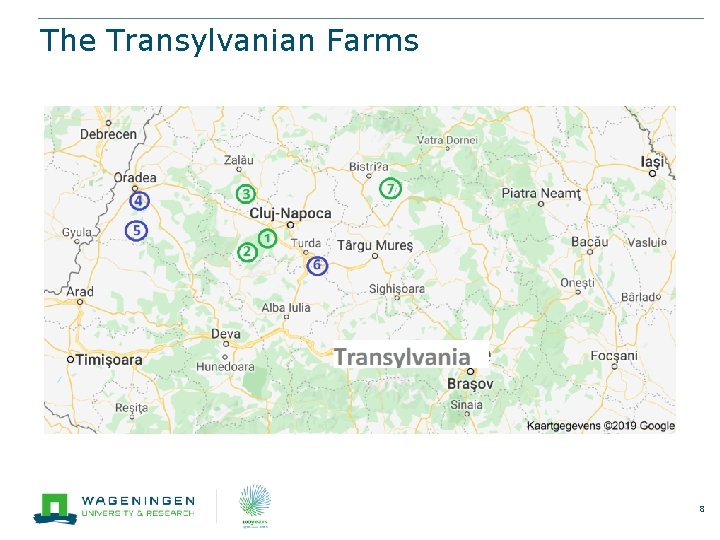
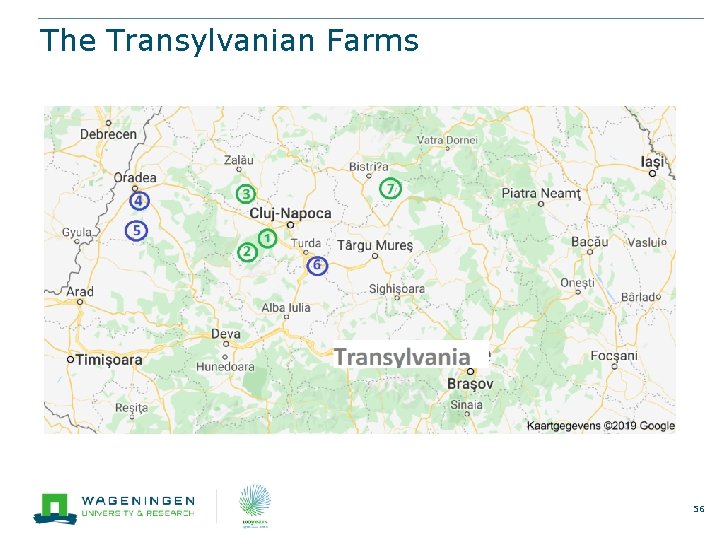
The Transylvanian Farms 8
Overall analysis family farms Transylvania Family farms. . . ● will develop to farms with 100 – 200 dairy cows, 200 – 500 ha land, mechanised with modern machinery and robots (specialisation strategy) ● are more flexible due to the commitment of family members and employees ● will become attractive again to people willing to work at these farms ● will cooperate with other farms (buying, selling, processing and exchange machinery) ● can be competitive ● think in generations 10
Overall analysis: strategies The visited farms showed various potential successful strategies: § § operational excellence (1000 mk with 18 robots) diversification (meat, dairy/arable, cows/sheep/goat, cows and recreation) vertical integration (dispenser, processing) § § § product leadership (organic) customer intimacy (close cooperation with Friesland Campina) producers network (breeding, buying and sales of products) relocation expansion (growing in cows) wait and see (governmental policies) 11
Overall analysis: farm location and type § Farm location is important for profitability: ● Quality of soil ● Local climate (irrigation possibilities) ● Regional characteristics (availability of partners and willingness to cooperate) ● Distance to processor(s) ● Local or national/international production § Farm type: ● Mixed vs specialised farms: be circular ● Balance between arable and dairy part of the farm (manure and soil fertility) ● More attention to beef production as part of the integrated farm 12
Overall analysis: entrepreneur and labour § Entrepreneur: ● International experience is very important ● Father / son combinations with different back grounds is important, awareness and division of competences is crucial § Labour: ● ● ● Quality and availability is problem Farmers attitude to employees can solve problem partly Growing automation and robotising can be sometimes solution Schools don’t deliver experience in practice and skilled people Farmers need to offer internships 13
Overall analysis: environment § Registration and restructuring of land very important for farm development ● Buying or renting ● Non registered land cannot be used as collateral ● Land consolidation § Environment: ● ● Higher prospective milk price (quality, transport efficiency) Higher demand for organic milk Organic meat should be developed Cooperation between farmers can lead to lower costs (fertilizer, feed, additives, processing) 14
Conclusions After 7 farm visits. . . The region Oradea-Cluj-Bistrita is a very nice part of the country full of possibilities not only for dairy but also for tourism. Think for example in combinations of city and rural holiday experiences. The growth of animal production will create more added value and will decrease the need for chemical fertilisers cq improve the fertility of the soil (including reducing drought sensitivity). Family farms will give higher and more commitment to the farm and to the environment. The competitive model can be 200 mc for dairy for Transilvania region. Depending on the environment, entrepreneur and enterprise various strategies can be successful to and in the future. 15
Conclusions (2) After 7 farm visits. . . For smaller farms diversification and short chains seem to be promising. Diversification by meat production and self processing. Beside bringing consumers and farmers together by touristic activities (B&B). In certain regions with low farmers input organic farming is very promising. Both strategies combined with modern technics makes farming more attractive to young people. Availability of internships at high mechanised and robot farms is crucial. 16
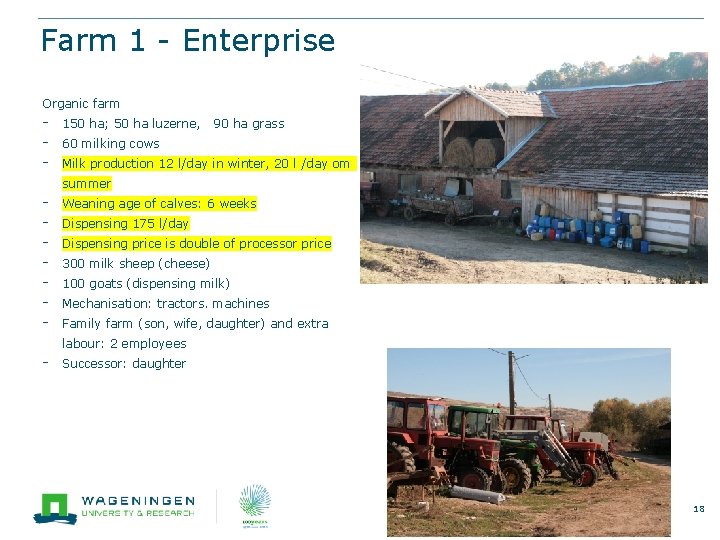
Farm 1 - Enterprise Organic farm - 150 ha; 50 ha luzerne, 90 ha grass 60 milking cows Milk production 12 l/day in winter, 20 l /day om summer - Weaning age of calves: 6 weeks Dispensing 175 l/day Dispensing price is double of processor price 300 milk sheep (cheese) 100 goats (dispensing milk) Mechanisation: tractors. machines Family farm (son, wife, daughter) and extra labour: 2 employees - Successor: daughter 18
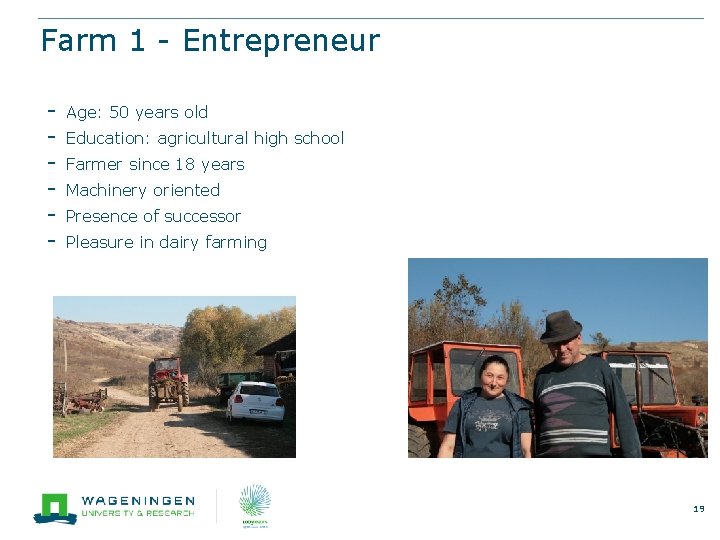
Farm 1 - Entrepreneur - Age: 50 years old Education: agricultural high school Farmer since 18 years Machinery oriented Presence of successor Pleasure in dairy farming 19
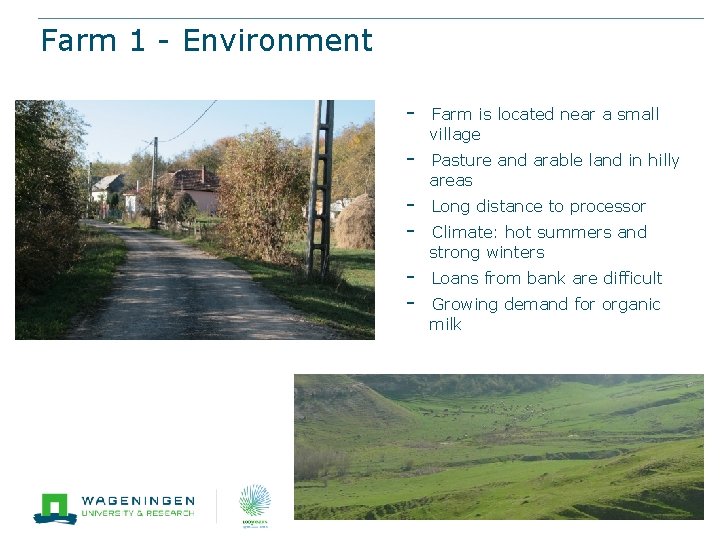
Farm 1 - Environment - Farm is located near a small village Pasture and arable land in hilly areas Long distance to processor Climate: hot summers and strong winters Loans from bank are difficult Growing demand for organic milk 20
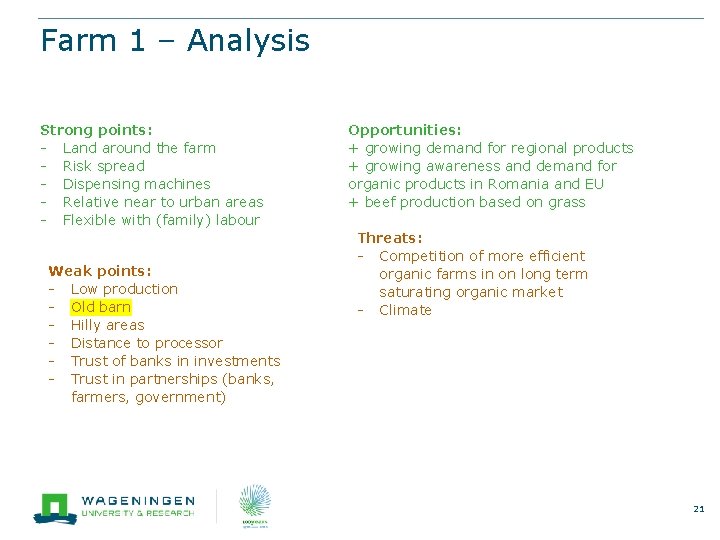
Farm 1 – Analysis Strong points: - Land around the farm - Risk spread - Dispensing machines - Relative near to urban areas - Flexible with (family) labour Weak points: - Low production - Old barn - Hilly areas - Distance to processor - Trust of banks in investments - Trust in partnerships (banks, farmers, government) Opportunities: + growing demand for regional products + growing awareness and demand for organic products in Romania and EU + beef production based on grass Threats: - Competition of more efficient organic farms in on long term saturating organic market - Climate 21
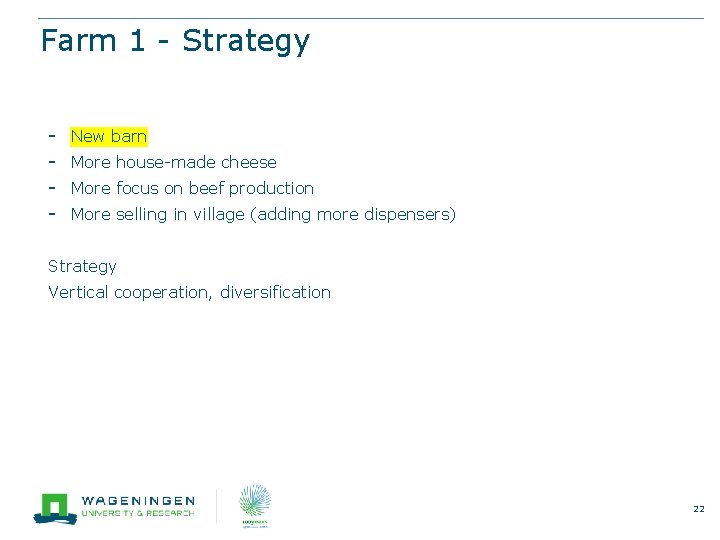
Farm 1 - Strategy - New barn More house-made cheese More focus on beef production More selling in village (adding more dispensers) Strategy Vertical cooperation, diversification 22
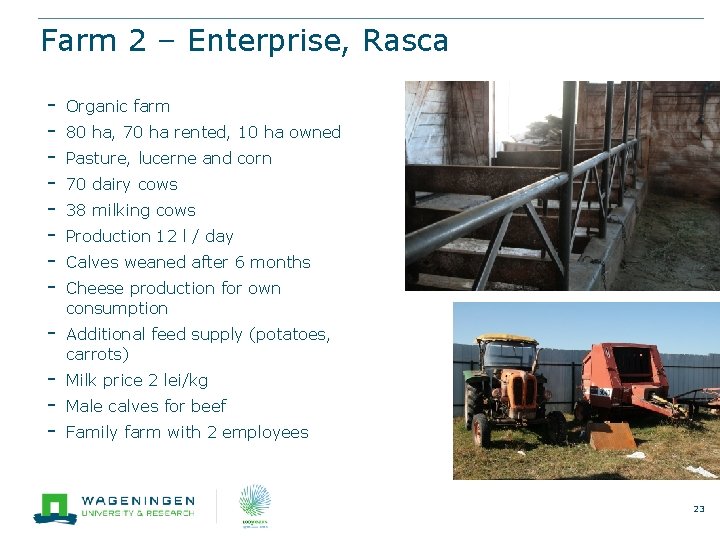
Farm 2 – Enterprise, Rasca - Organic farm - Additional feed supply (potatoes, carrots) - 80 ha, 70 ha rented, 10 ha owned Pasture, lucerne and corn 70 dairy cows 38 milking cows Production 12 l / day Calves weaned after 6 months Cheese production for own consumption Milk price 2 lei/kg Male calves for beef Family farm with 2 employees 23
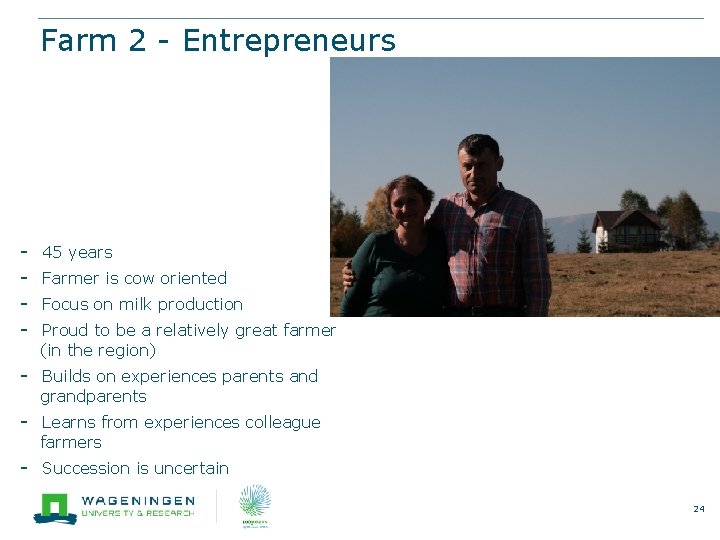
Farm 2 - Entrepreneurs - 45 years Farmer is cow oriented Focus on milk production Proud to be a relatively great farmer (in the region) - Builds on experiences parents and grandparents - Learns from experiences colleague farmers - Succession is uncertain 24
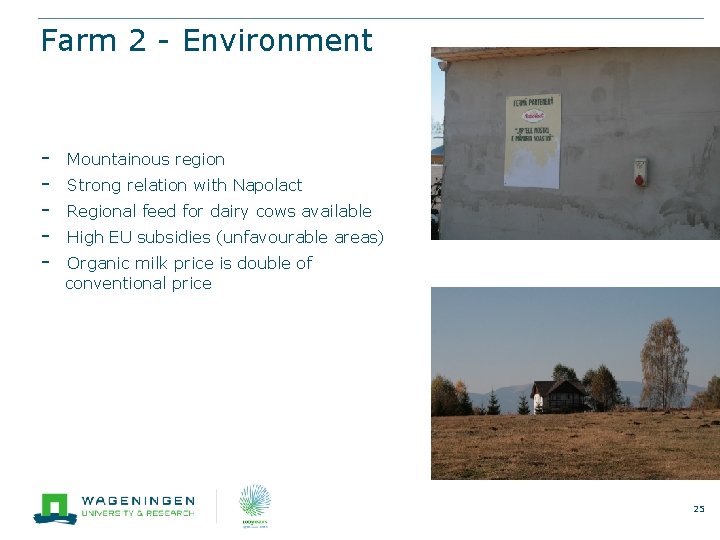
Farm 2 - Environment - Mountainous region Strong relation with Napolact Regional feed for dairy cows available High EU subsidies (unfavourable areas) Organic milk price is double of conventional price 25
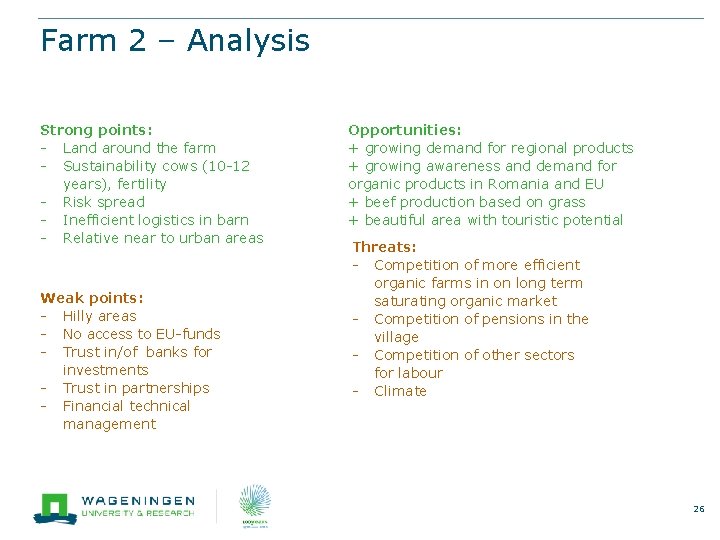
Farm 2 – Analysis Strong points: - Land around the farm - Sustainability cows (10 -12 years), fertility - Risk spread - Inefficient logistics in barn - Relative near to urban areas Weak points: - Hilly areas - No access to EU-funds - Trust in/of banks for investments - Trust in partnerships - Financial technical management Opportunities: + growing demand for regional products + growing awareness and demand for organic products in Romania and EU + beef production based on grass + beautiful area with touristic potential Threats: - Competition of more efficient organic farms in on long term saturating organic market - Competition of pensions in the village - Competition of other sectors for labour - Climate 26
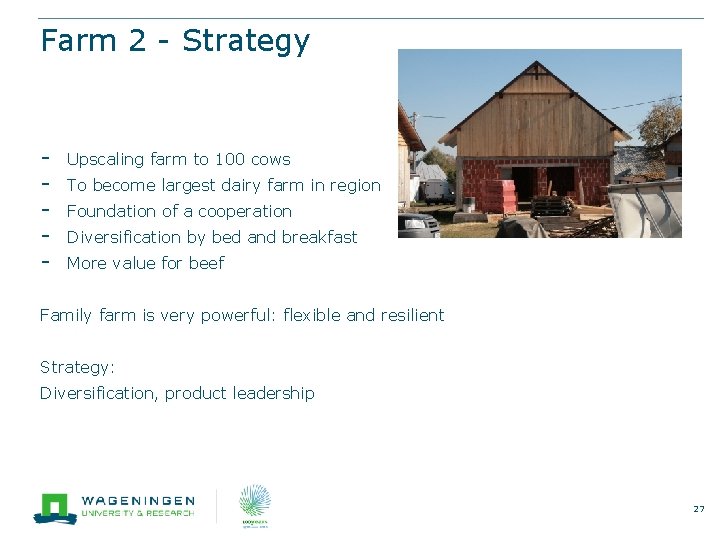
Farm 2 - Strategy - Upscaling farm to 100 cows To become largest dairy farm in region Foundation of a cooperation Diversification by bed and breakfast More value for beef Family farm is very powerful: flexible and resilient Strategy: Diversification, product leadership 27
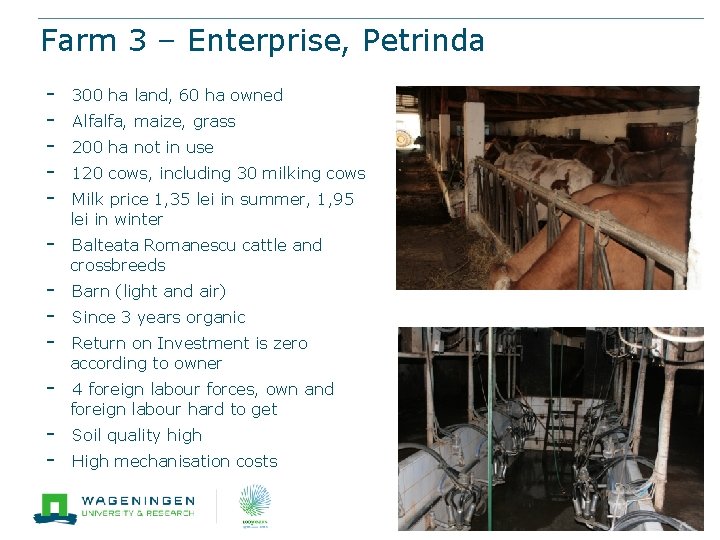
Farm 3 – Enterprise, Petrinda - 300 ha land, 60 ha owned Alfalfa, maize, grass 200 ha not in use 120 cows, including 30 milking cows Milk price 1, 35 lei in summer, 1, 95 lei in winter Balteata Romanescu cattle and crossbreeds Barn (light and air) Since 3 years organic Return on Investment is zero according to owner 4 foreign labour forces, own and foreign labour hard to get Soil quality high High mechanisation costs 28
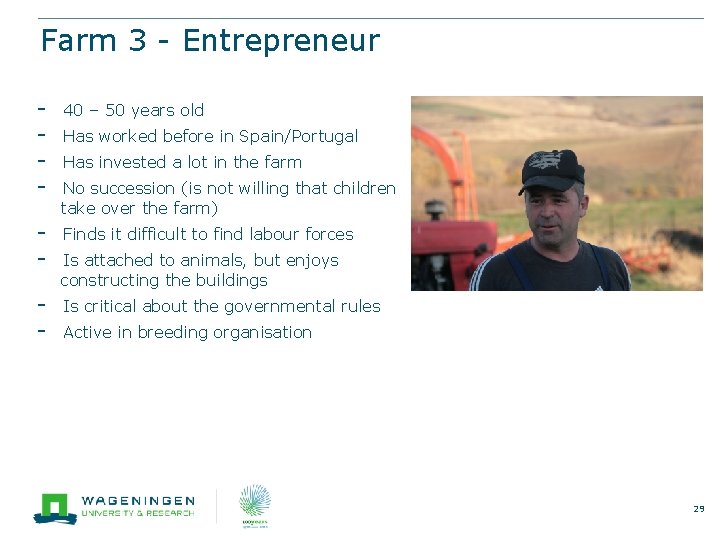
Farm 3 - Entrepreneur - 40 – 50 years old Has worked before in Spain/Portugal Has invested a lot in the farm No succession (is not willing that children take over the farm) Finds it difficult to find labour forces Is attached to animals, but enjoys constructing the buildings Is critical about the governmental rules Active in breeding organisation 29
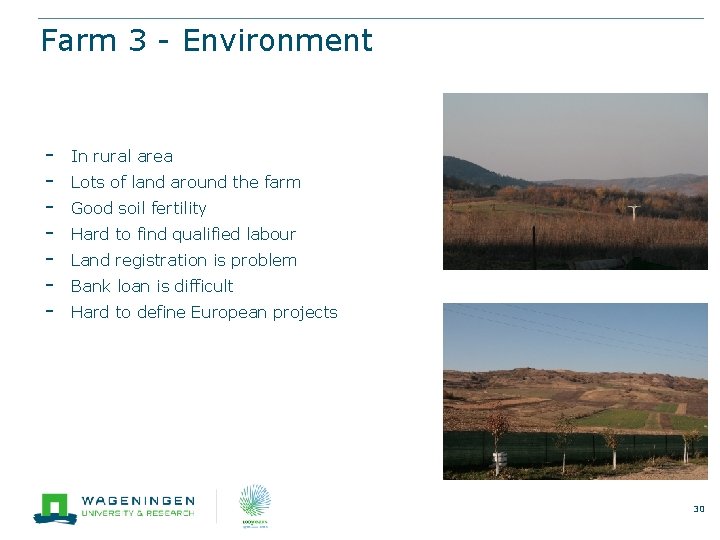
Farm 3 - Environment - In rural area Lots of land around the farm Good soil fertility Hard to find qualified labour Land registration is problem Bank loan is difficult Hard to define European projects 30
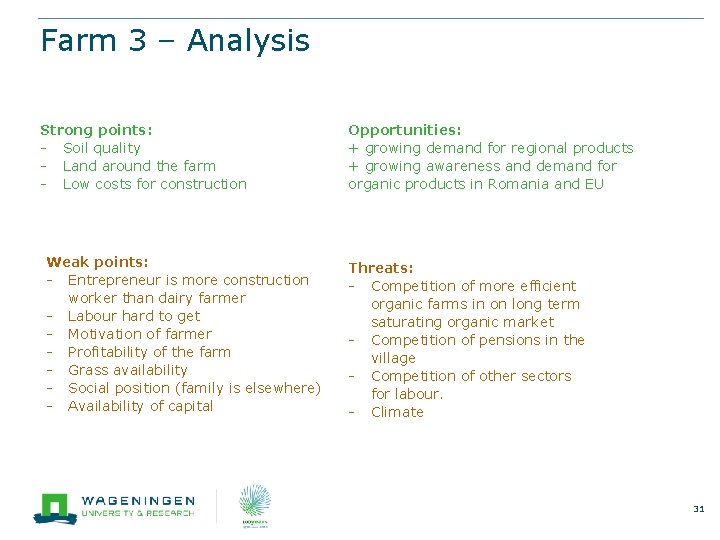
Farm 3 – Analysis Strong points: - Soil quality - Land around the farm - Low costs for construction Weak points: - Entrepreneur is more construction worker than dairy farmer - Labour hard to get - Motivation of farmer - Profitability of the farm - Grass availability - Social position (family is elsewhere) - Availability of capital Opportunities: + growing demand for regional products + growing awareness and demand for organic products in Romania and EU Threats: - Competition of more efficient organic farms in on long term saturating organic market - Competition of pensions in the village - Competition of other sectors for labour. - Climate 31
Farm 3 - Strategy - Labour from Spain or Vietnam Wait and see Sell the farm in case of value increase of land farm Strategy Wait and see Family farm is. . 32
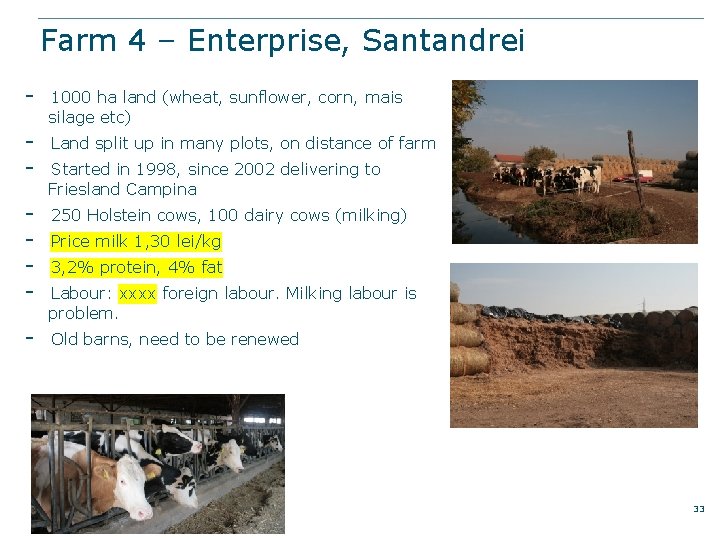
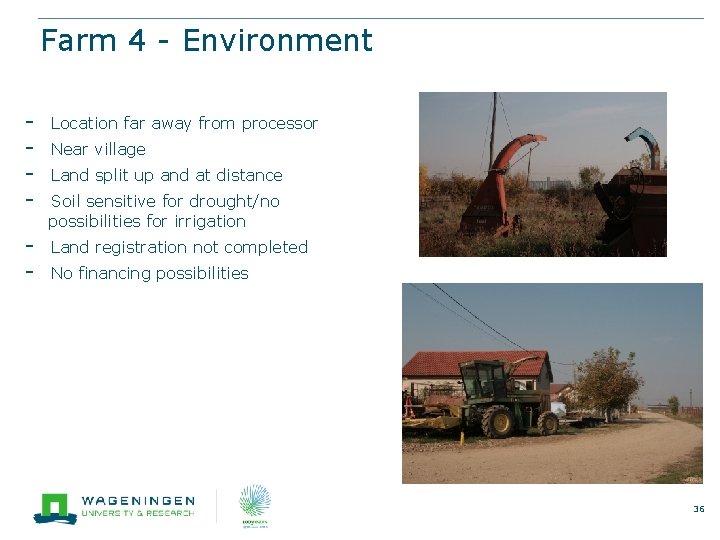
Farm 4 – Enterprise, Santandrei - 1000 ha land (wheat, sunflower, corn, mais silage etc) Land split up in many plots, on distance of farm Started in 1998, since 2002 delivering to Friesland Campina 250 Holstein cows, 100 dairy cows (milking) Price milk 1, 30 lei/kg 3, 2% protein, 4% fat Labour: xxxx foreign labour. Milking labour is problem. Old barns, need to be renewed 33
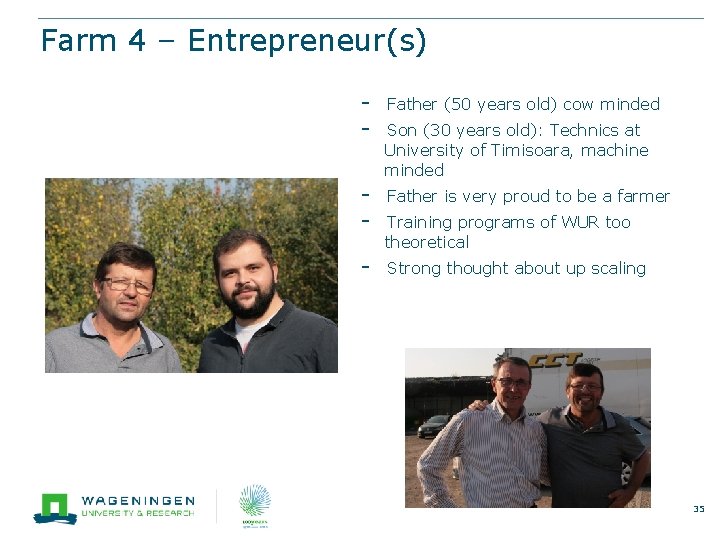
Farm 4 – Entrepreneur(s) - Father (50 years old) cow minded Son (30 years old): Technics at University of Timisoara, machine minded Father is very proud to be a farmer Training programs of WUR too theoretical Strong thought about up scaling 35
Farm 4 - Environment - Location far away from processor Near village Land split up and at distance Soil sensitive for drought/no possibilities for irrigation Land registration not completed No financing possibilities 36
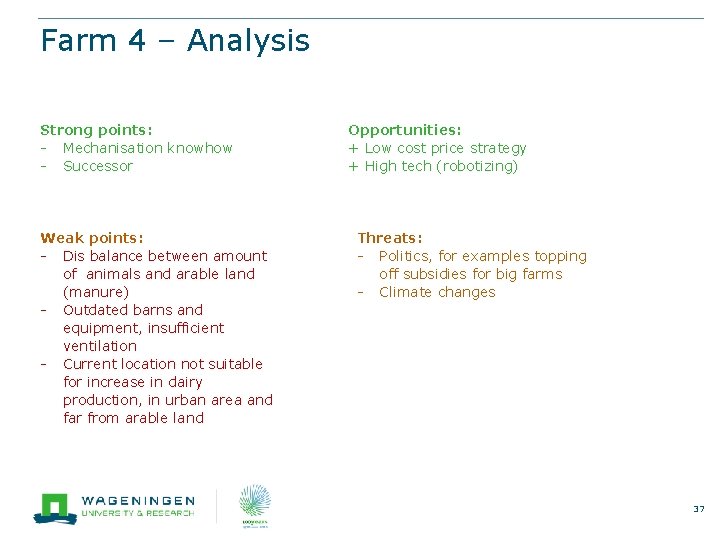
Farm 4 – Analysis Strong points: - Mechanisation knowhow - Successor Weak points: - Dis balance between amount of animals and arable land (manure) - Outdated barns and equipment, insufficient ventilation - Current location not suitable for increase in dairy production, in urban area and far from arable land Opportunities: + Low cost price strategy + High tech (robotizing) Threats: - Politics, for examples topping off subsidies for big farms - Climate changes 37
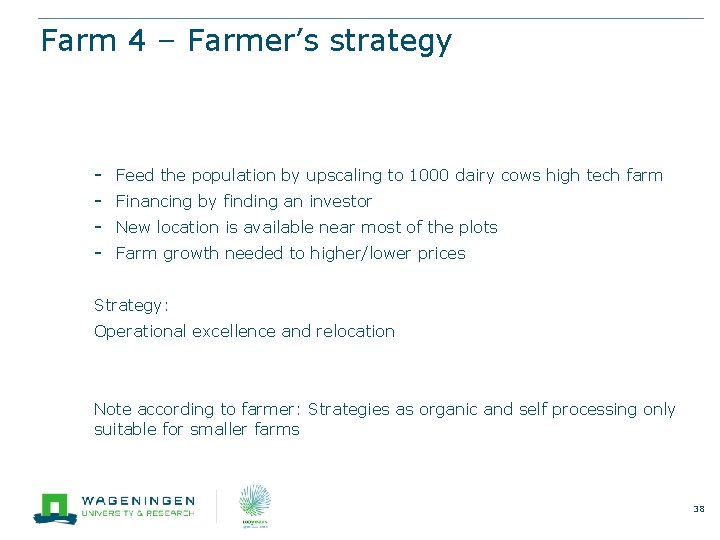
Farm 4 – Farmer’s strategy - Feed the population by upscaling to 1000 dairy cows high tech farm Financing by finding an investor New location is available near most of the plots Farm growth needed to higher/lower prices Strategy: Operational excellence and relocation Note according to farmer: Strategies as organic and self processing only suitable for smaller farms 38
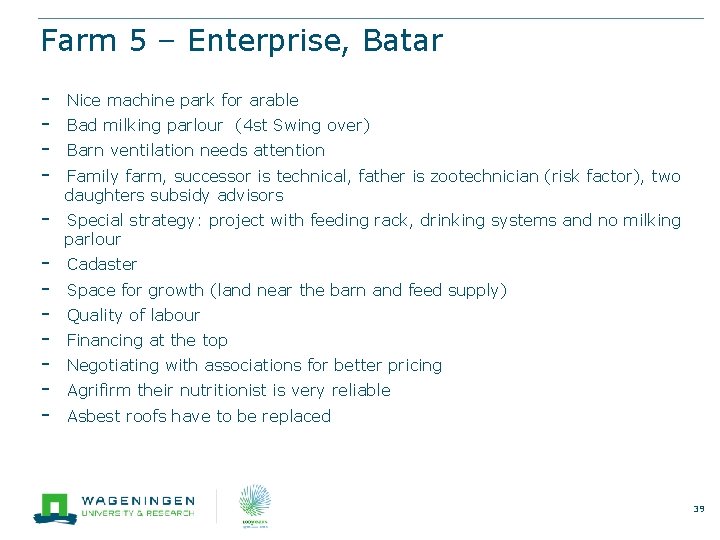
Farm 5 – Enterprise, Batar - Nice machine park for arable Bad milking parlour (4 st Swing over) Barn ventilation needs attention Family farm, successor is technical, father is zootechnician (risk factor), two daughters subsidy advisors Special strategy: project with feeding rack, drinking systems and no milking parlour Cadaster Space for growth (land near the barn and feed supply) Quality of labour Financing at the top Negotiating with associations for better pricing Agrifirm their nutritionist is very reliable Asbest roofs have to be replaced 39
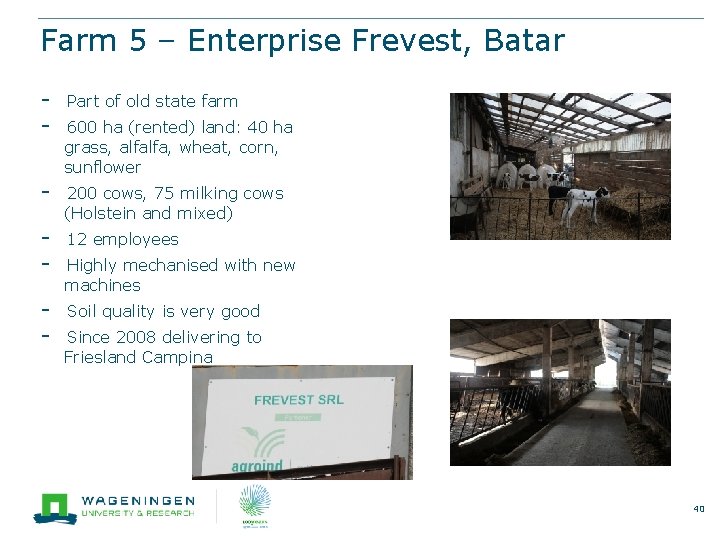
Farm 5 – Enterprise Frevest, Batar - Part of old state farm 600 ha (rented) land: 40 ha grass, alfalfa, wheat, corn, sunflower 200 cows, 75 milking cows (Holstein and mixed) 12 employees Highly mechanised with new machines Soil quality is very good Since 2008 delivering to Friesland Campina 40
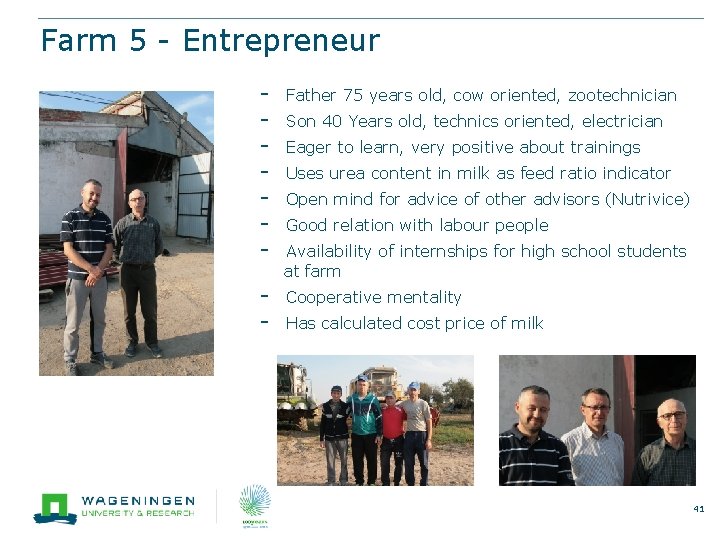
Farm 5 - Entrepreneur - Father 75 years old, cow oriented, zootechnician Son 40 Years old, technics oriented, electrician Eager to learn, very positive about trainings Uses urea content in milk as feed ratio indicator Open mind for advice of other advisors (Nutrivice) Good relation with labour people Availability of internships for high school students at farm Cooperative mentality Has calculated cost price of milk 41
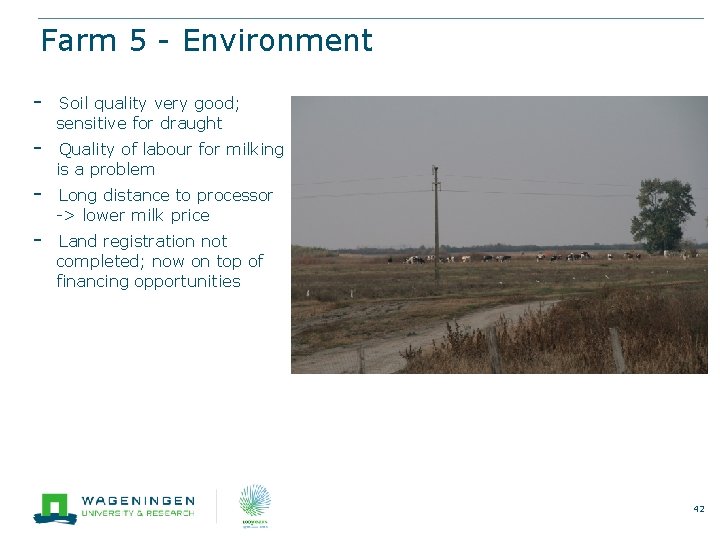
Farm 5 - Environment - Soil quality very good; sensitive for draught Quality of labour for milking is a problem Long distance to processor -> lower milk price Land registration not completed; now on top of financing opportunities 42
Farm 2. 2 - Analysis - More balance between land dairy part is needed Technical orientation of farmer and labour challenges lead to milking robot Cooperation with other farmers can lead to better milk price and lower costs More financing by bank is a problem 43
Farm 5 – Analysis Strong points: - Mechanisation knowhow - Family farm with successor - Good HRM - Eager to learn - Two legs (dairy and arable) Weak points: - Dis balance between amount of animals and arable land (manure) - Outdated too small milking parlour, insufficient ventilation - No additional financing via bank possible Opportunities: + Growth to low cost price strategy + High tech (robotizing) + Partnership with other farmers Threats: - Politics, for examples topping off subsidies for big farms - Climate changes - Labour availability 44
Farm 5 - Strategy - Choosing for beef production is not an option - Upscaling to 120 milking cows and 2 milking robots - Looking for private investor - More cooperation Strategy: diversification dairy and arable, producers network - The power of the family farm: 45
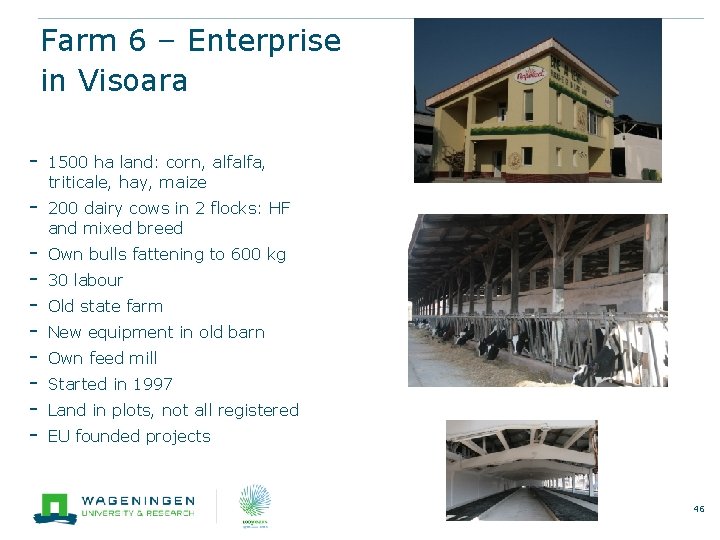
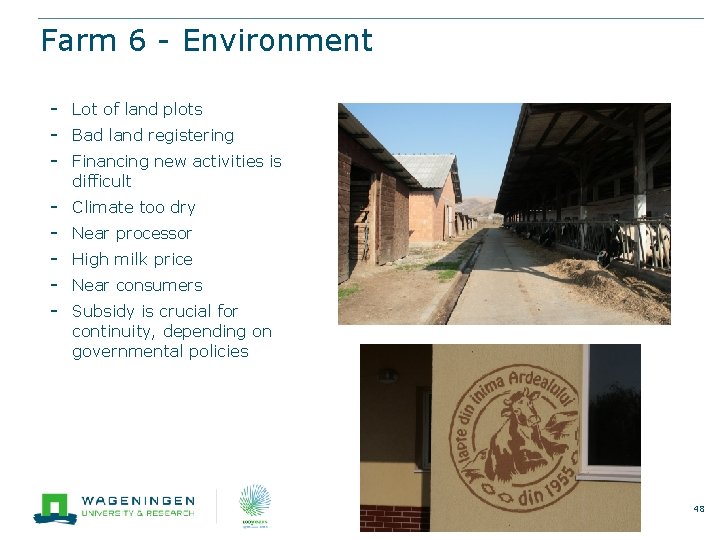
Farm 6 – Enterprise in Visoara - 1500 ha land: corn, alfalfa, triticale, hay, maize 200 dairy cows in 2 flocks: HF and mixed breed Own bulls fattening to 600 kg 30 labour Old state farm New equipment in old barn Own feed mill Started in 1997 Land in plots, not all registered EU founded projects 46
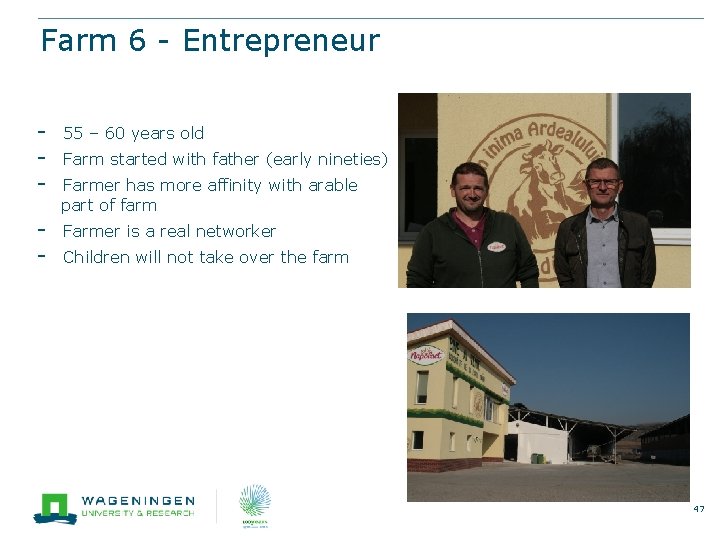
Farm 6 - Entrepreneur - 55 – 60 years old Farm started with father (early nineties) Farmer has more affinity with arable part of farm Farmer is a real networker Children will not take over the farm 47
Farm 6 - Environment - Lot of land plots - Bad land registering - Financing new activities is difficult - Climate too dry Near processor High milk price Near consumers Subsidy is crucial for continuity, depending on governmental policies 48
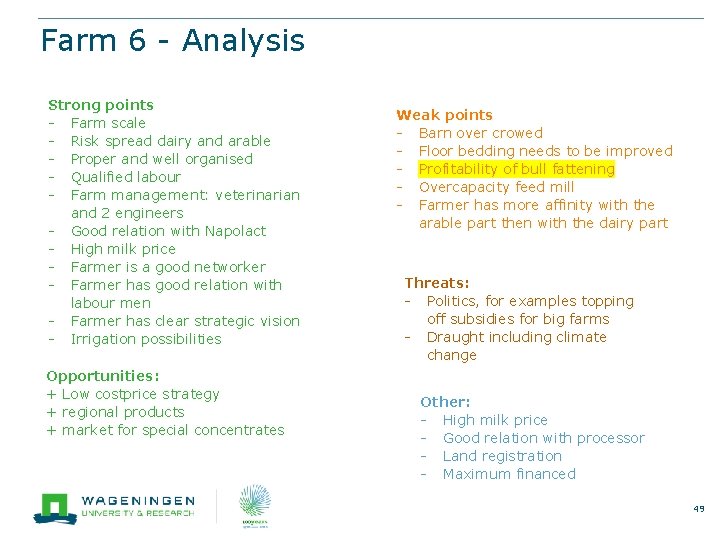
Farm 6 - Analysis Strong points - Farm scale - Risk spread dairy and arable - Proper and well organised - Qualified labour - Farm management: veterinarian and 2 engineers - Good relation with Napolact - High milk price - Farmer is a good networker - Farmer has good relation with labour men - Farmer has clear strategic vision - Irrigation possibilities Opportunities: + Low costprice strategy + regional products + market for special concentrates Weak points - Barn over crowed - Floor bedding needs to be improved - Profitability of bull fattening - Overcapacity feed mill - Farmer has more affinity with the arable part then with the dairy part Threats: - Politics, for examples topping off subsidies for big farms - Draught including climate change Other: - High milk price - Good relation with processor - Land registration - Maximum financed 49
Farm 6 – Farmers strategy - Growth to 200 dairy cows Split farm into 2 parts: dairy and arable More cooperation with Napolact Overall strategy: Customer intimacy Family farms: - span of control is important - important for quality, motivation and involvement 50
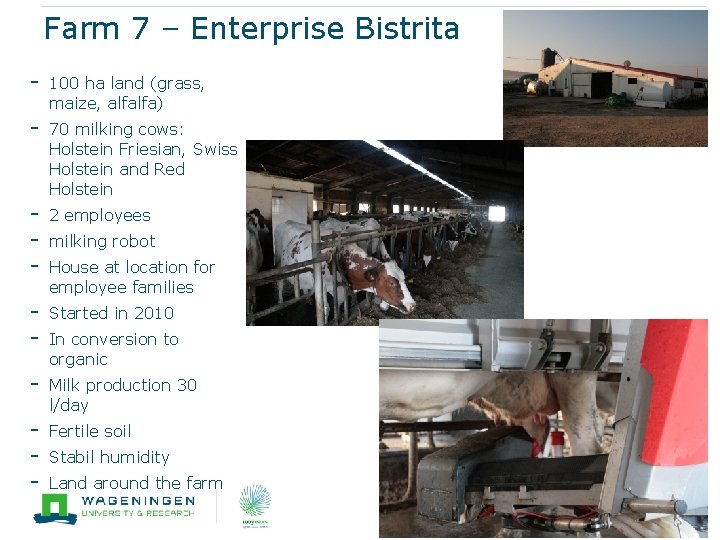
Farm 7 – Enterprise Bistrita - - 100 ha land (grass, maize, alfalfa) 70 milking cows: Holstein Friesian, Swiss Holstein and Red Holstein 2 employees milking robot House at location for employee families Started in 2010 In conversion to organic Milk production 30 l/day Fertile soil Stabil humidity Land around the farm 51
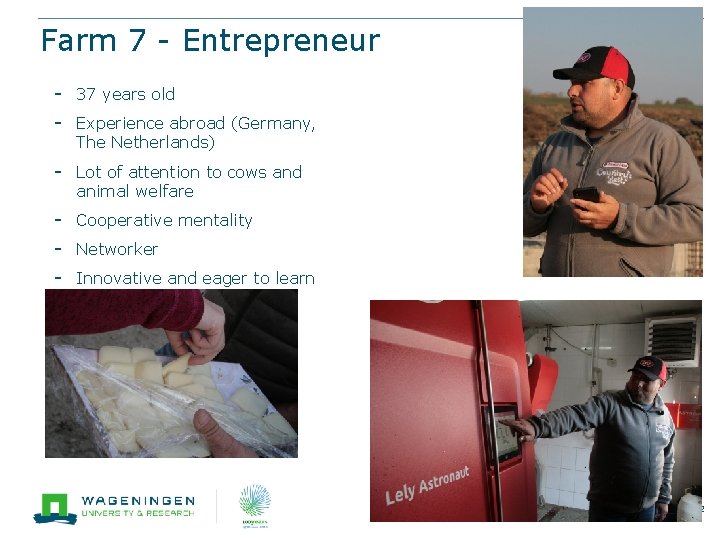
Farm 7 - Entrepreneur - 37 years old - Experience abroad (Germany, The Netherlands) - Lot of attention to cows and animal welfare - Cooperative mentality - Networker - Innovative and eager to learn 52
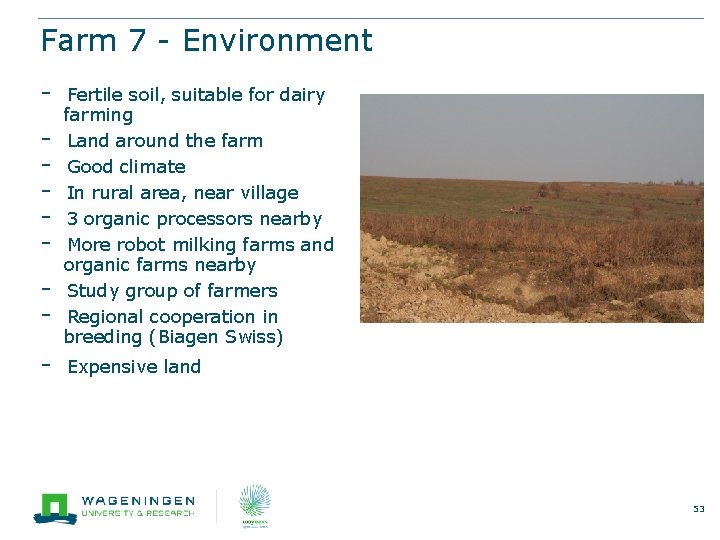
Farm 7 - Environment - Fertile soil, suitable for dairy farming Land around the farm Good climate In rural area, near village 3 organic processors nearby More robot milking farms and organic farms nearby Study group of farmers Regional cooperation in breeding (Biagen Swiss) Expensive land 53
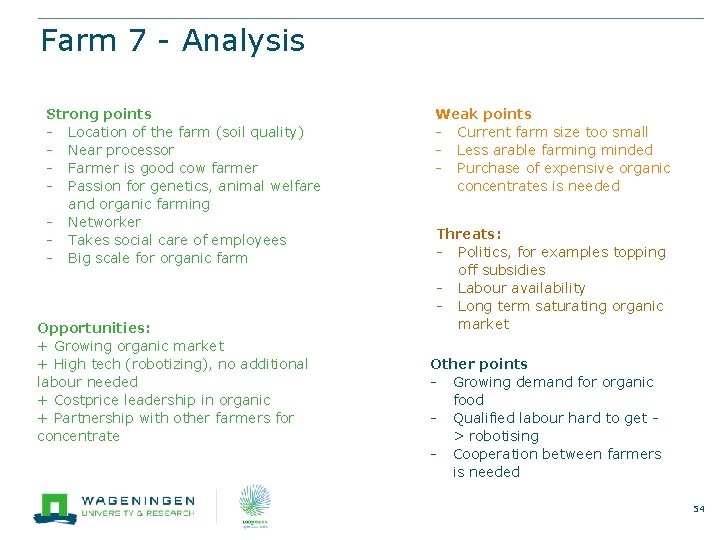
Farm 7 - Analysis Strong points - Location of the farm (soil quality) - Near processor - Farmer is good cow farmer - Passion for genetics, animal welfare and organic farming - Networker - Takes social care of employees - Big scale for organic farm Opportunities: + Growing organic market + High tech (robotizing), no additional labour needed + Costprice leadership in organic + Partnership with other farmers for concentrate Weak points - Current farm size too small - Less arable farming minded - Purchase of expensive organic concentrates is needed Threats: - Politics, for examples topping off subsidies - Labour availability - Long term saturating organic market Other points - Growing demand for organic food - Qualified labour hard to get > robotising - Cooperation between farmers is needed 54
Farm 7 – Farmers strategy - Expanding farm to 200 milking cows, 200 ha land 3 milking robots units Using EU funds Conversion to organic farming Cooperation with other farmers (genetics, concentrates etc. ) Own cheese processing Strategy Mix of producers network, product leadership, expansion and in future vertical integration View on family farming: to be controlled by farmer with 1 – 2 labour people 55
The Transylvanian Farms 56
Family farms in Transylvania: opportunities and strategies Pieter Helfferich info@agriprogress. com 0031 6 53782889 Wim Zaalmink wim. zaalmink@wur. nl 0031 320 293530 The project Dairy Chain Development Romania is financed by Topsector Agrifood, Ministry of Agriculture, Nature and Food Quality of the Netherlands. 57