
Family Crises And how they affect the family
- Slides: 16
Family Crises And how they affect the family
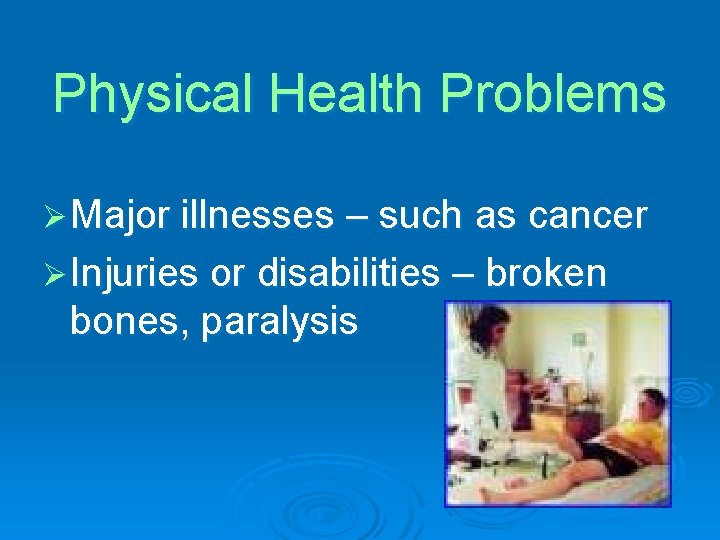
Physical Health Problems Ø Major illnesses – such as cancer Ø Injuries or disabilities – broken bones, paralysis
Mental Health Problems Ø Harder to recognize Ø “Does the person function normally on a daily basis? ” Ø “Do the person’s actions routinely hurt or trouble others? ” Ø Some need professional help- best if the person affected asks for help themselves.
How it Affects the Family Ø Family routines and schedules are changed Ø Household tasks may have to be altered Ø May lead to financial difficulties because of medical costs Ø Family members may begin to resent the family member who is ill.
Alcohol and Drug Addictions Ø Addiction – a dependence on a particular substance or action. It is a mental and sometimes a physical illness. Ø Alcohol takes control slowly. l Person drinks more often, sometimes alone, in the morning or to face a certain situation.
Affects on the Family Ø embarrassment and frustration at the unpredictable behavior Ø worry about the person’s health Ø children feel abandoned Ø fear of being hurt by abuser’s violent actions Ø abuser neglect family and personal responsibilities
Family Violence Ø physical force used to harm someone or something l occurs in 1 out of every 2 homes each year l police consider family violence one of the most dangerous calls to answer l abuser always has a reason why they did it
Ø Violent behavior is learned and passed from one generation to another Partner Abuse – occurs in 1 out of every 4 homes l Some spouses stay because they feel that they can not make it on their own l
Child Abuse Ø Neglect – failure to provide adequate food, clothing, shelter, supervision and medical care Ø Emotional Abuse – a pattern of behavior that attacks the child’s emotional development and sense of worth
Ø Physical Abuse – inflecting burns, cuts or bruises Ø Sexual Abuse – lures a child to be a part of some sexual activity ØIntervention may be the only thing that saves a person from a life time of anguish or death
Death Øis as natural as birth Ømay be something one knows is coming – family member with a terminal illness or unexpected – as an auto accident
Grieving Øemotional and physical feelings that are painful as a result of the death of someone close to us.
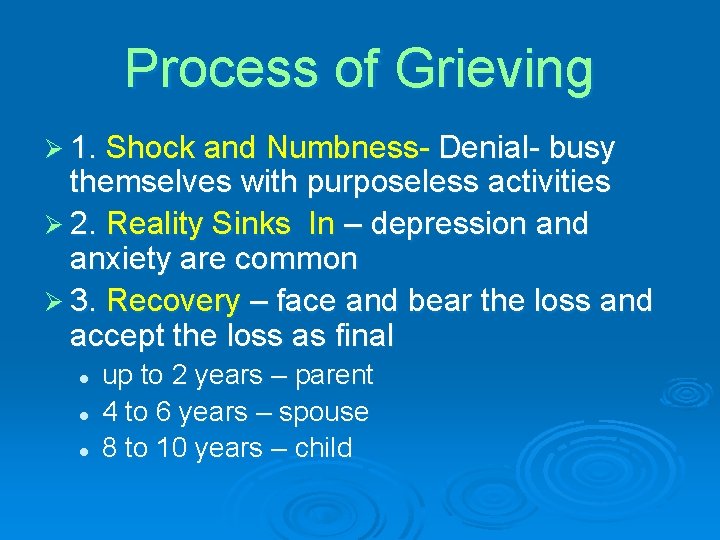
Process of Grieving Ø 1. Shock and Numbness- Denial- busy themselves with purposeless activities Ø 2. Reality Sinks In – depression and anxiety are common Ø 3. Recovery – face and bear the loss and accept the loss as final l up to 2 years – parent 4 to 6 years – spouse 8 to 10 years – child
Helping Family Cope Ø View the body Ø Do not make family members feel ashamed for crying Ø Do not make important decisions if it can be delayed Ø Talk about the person – remember the good times with that person Ø Seek support from family and friends
Helping Children Understand Ø Up to age 4 – not understand what is happening – they need to feel that they are still loved Ø Ages 4 -7 – Children see death as temporary and reversible
Ø Ages 7 – 10 – Understand that death is final, but think body functions remain. Feel it happens to other families, not theirs Ø After age 10 – come to realize death is final and will happen to everyone Ø Children need to talk about it. They need simple answers they can understand at their age level.