
Family AsteraceaeCompositae The Sunflower Family Taxonomic Position Kingdom
- Slides: 19
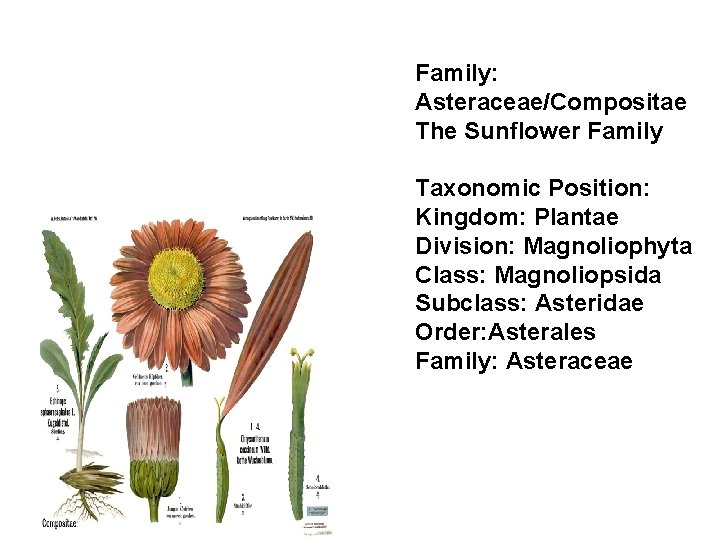
Family: Asteraceae/Compositae The Sunflower Family Taxonomic Position: Kingdom: Plantae Division: Magnoliophyta Class: Magnoliopsida Subclass: Asteridae Order: Asterales Family: Asteraceae
Distribution • Second largest family in the angiosperm • More than 900 genera and 15000 species • More than 10% of flowering plants
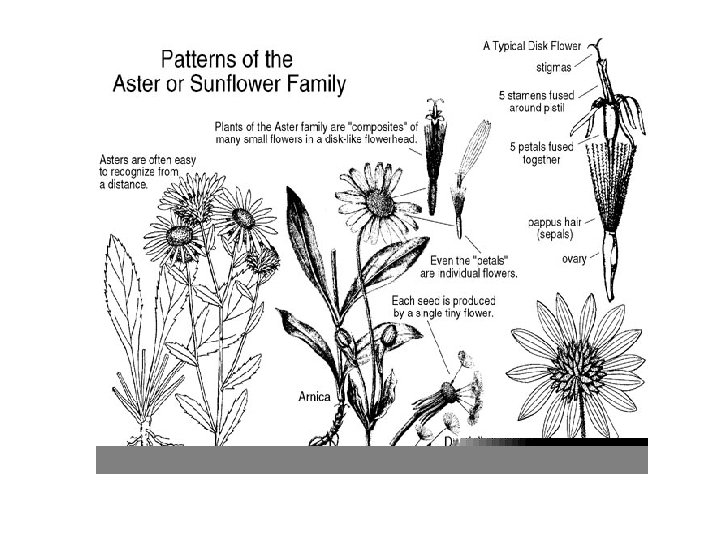
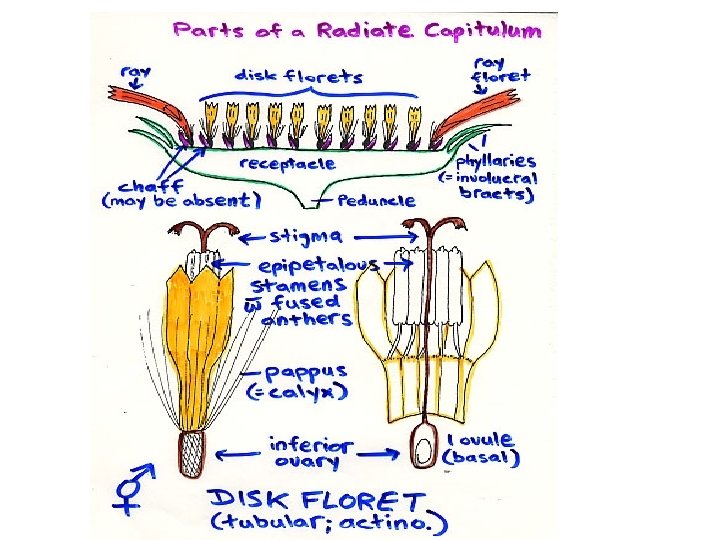
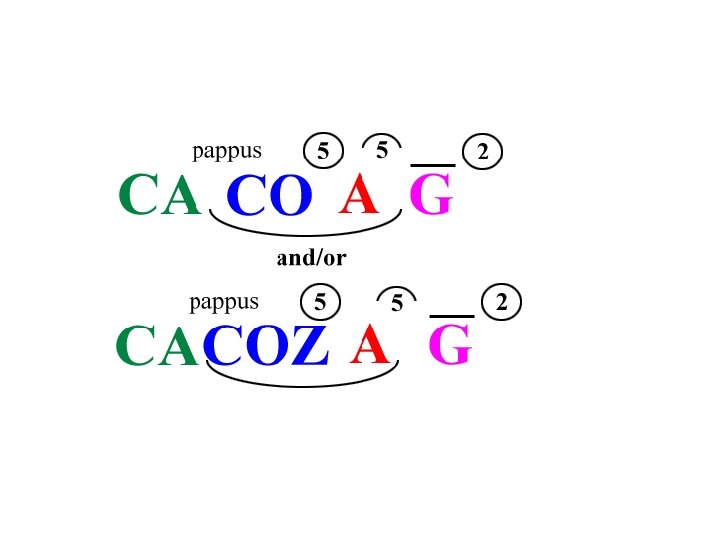
Identifying Characters • • • Plant mostly herb, some are climbers Leaves usually exstipulate Involecre bract present Ray and disc floret present Calyx reduce to papus or scales Stamens epipataloiou with syngenessus anther Ovary inferior, bicarpellary syncarpous, unilocular Basal Placentation Fruit cypsela
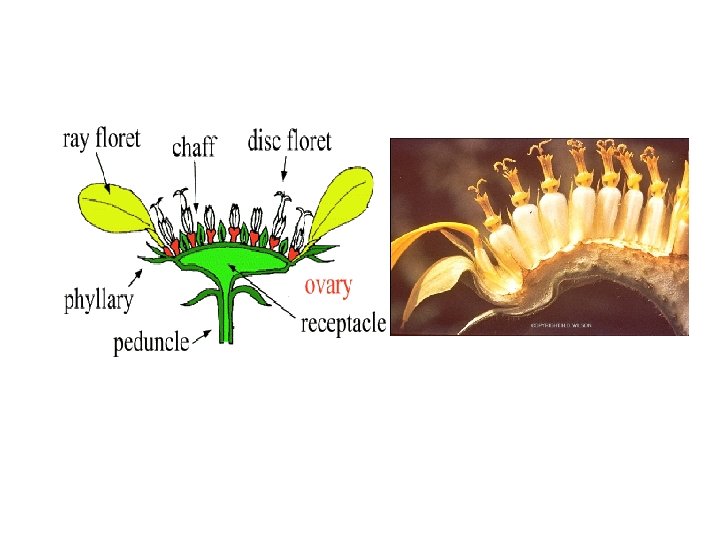
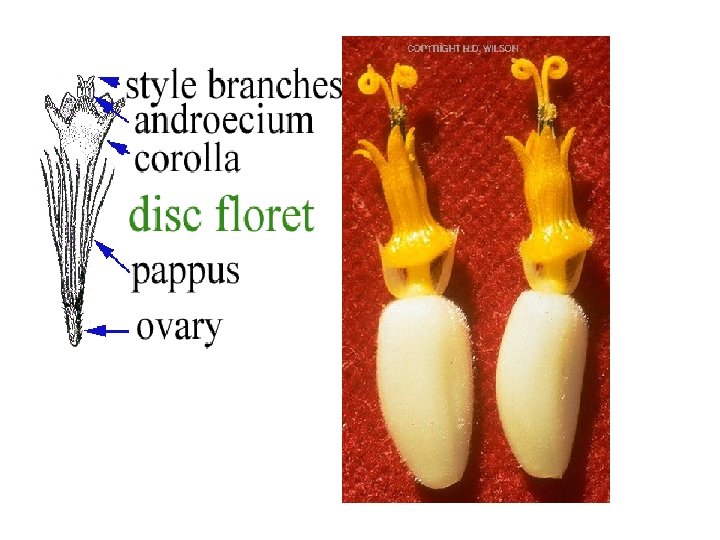
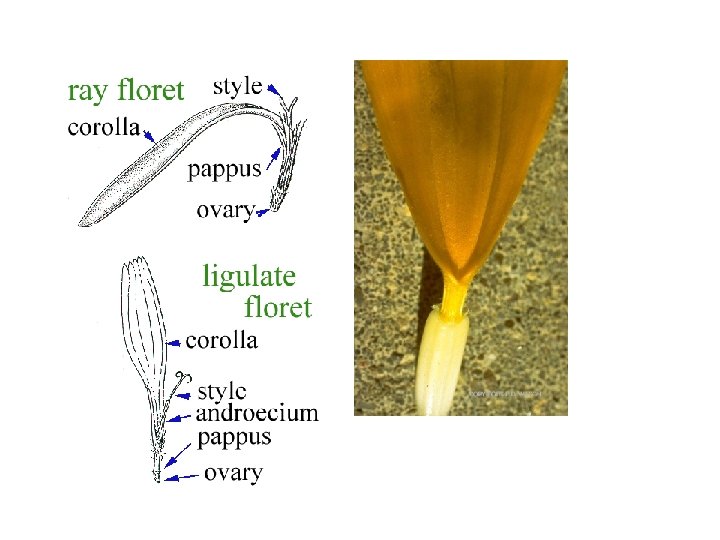
Morphological Features • • • Root: Usually tap roots but root tubers also found Stem: Erect or prostate, rarely climbing, some time woody Leaf: Simple some time compound Flower: Inflorescence head or capitulate Two types- Ray floret and disc floret Ray floret-Present in the perifery, zygomorphic, ligulate, unisexual female flowers • Disc floret: Central position, bisexual, actinomorphic • Calyx: Modified into papus or scale leaf • Corolla: Petal 5 or three tubular in disc florets or ligulate in ray florets, gamopetalous, aestivation valvate.
Morphological features • Androecium: Stamen five, syngenesious, epipetalous • Gynoecium: Bicarpellary syncarpous, ovary inferior with single locule, Sigma two and bifid • Fruit: Indehiscent cypsela
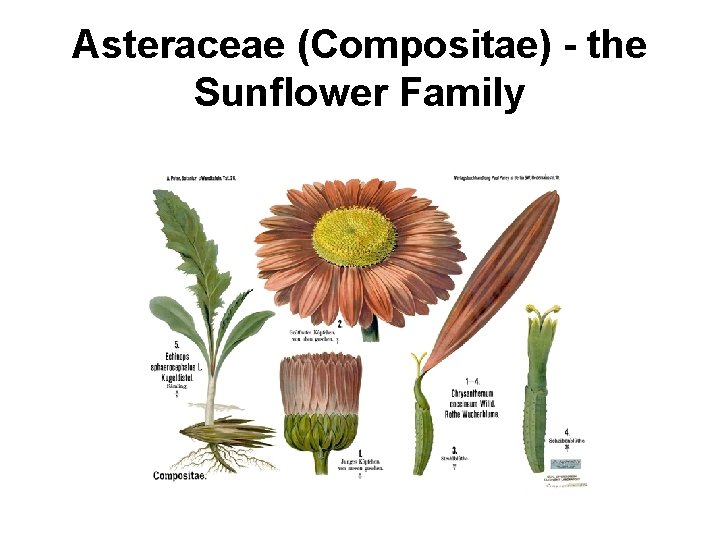
Asteraceae (Compositae) - the Sunflower Family
Economical Importance • Ornamental • Edible and medicinal oils • Medicine and insecticides
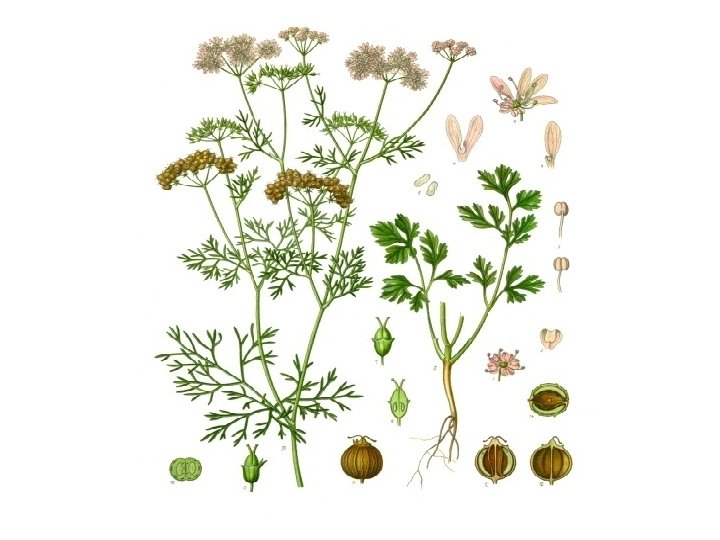
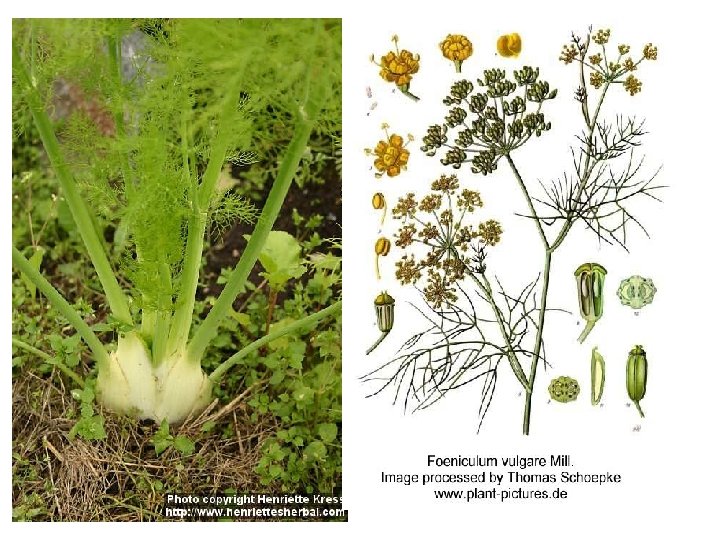
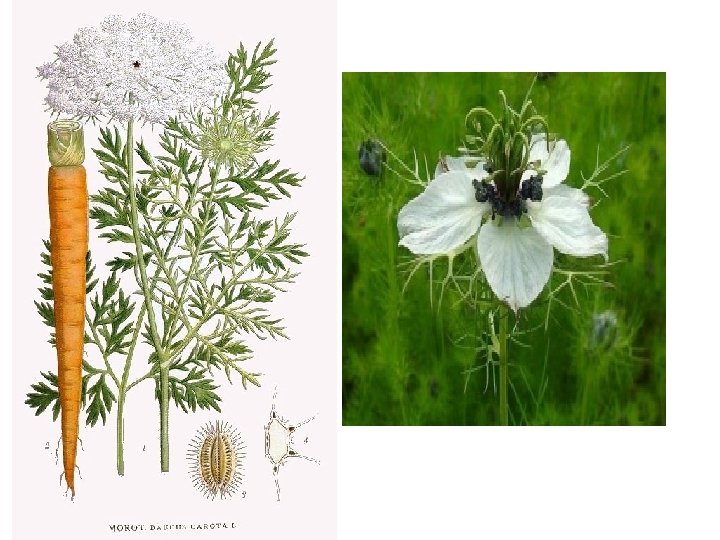
Family: Apiaceae/ Umbelliferae Carrot Family • • Taxonomic Position: Kingdom: Plantae Division: Magnoliophyta Class: Magnoliopsida Subclass: Rosidae Order: Apiales Family: Apiaceae
Identifying Charters • • • Herbaceous habit Presence of decompound leaf Aromatic herbs with hollow stems Leaves with sheathing base Inflorescence simple or compound umbell Fruit schizocarp
Morphological Features • Habit: Plants are mostly annual and perennial herb • Root system: Branched tap root, tuberous roots also found