
Family and the Industrial Revolution Pages 695 697

- Slides: 15
Family and the Industrial Revolution
Pages 695 -697
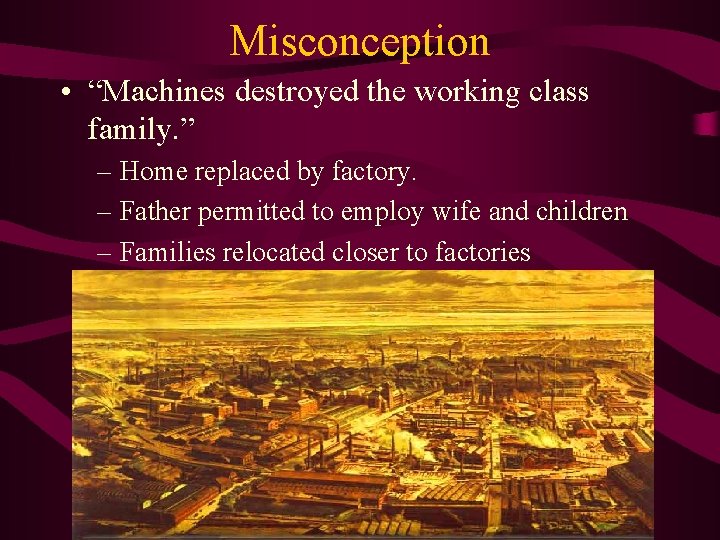
Misconception • “Machines destroyed the working class family. ” – Home replaced by factory. – Father permitted to employ wife and children – Families relocated closer to factories
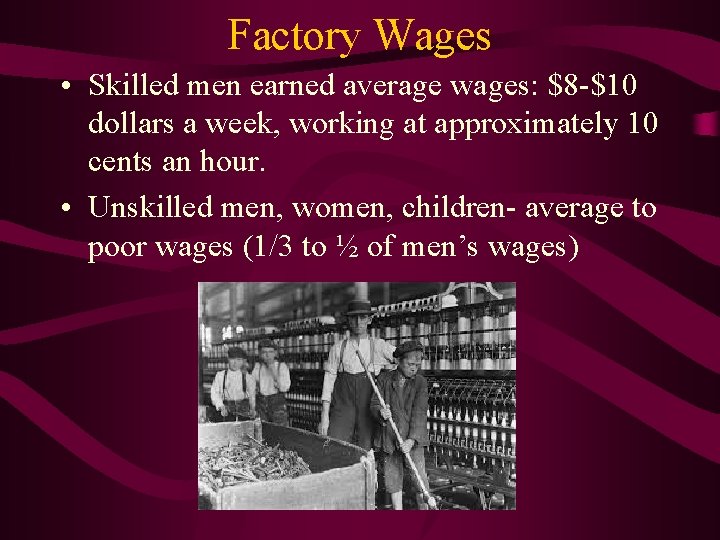
Factory Wages • Skilled men earned average wages: $8 -$10 dollars a week, working at approximately 10 cents an hour. • Unskilled men, women, children- average to poor wages (1/3 to ½ of men’s wages)
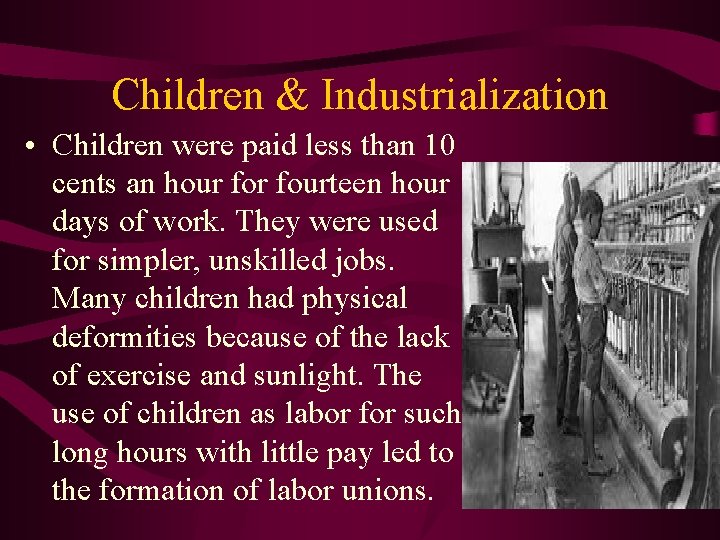
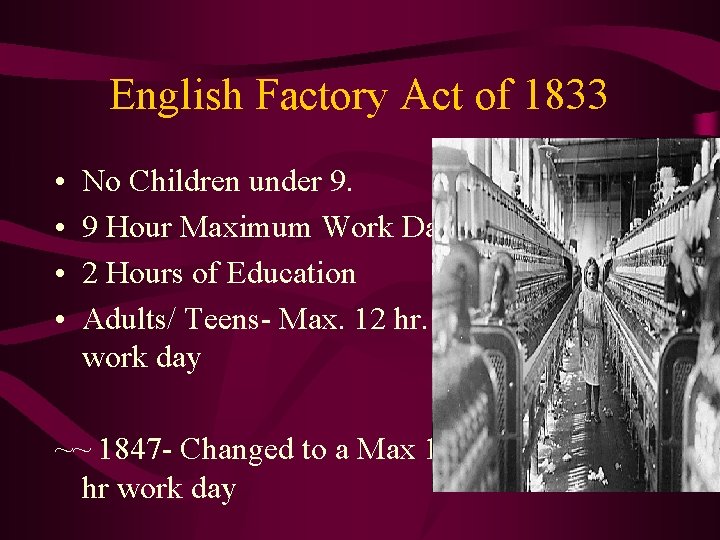
Children & Industrialization • Children were paid less than 10 cents an hour fourteen hour days of work. They were used for simpler, unskilled jobs. Many children had physical deformities because of the lack of exercise and sunlight. The use of children as labor for such long hours with little pay led to the formation of labor unions.
English Factory Act of 1833 • • No Children under 9. 9 Hour Maximum Work Day 2 Hours of Education Adults/ Teens- Max. 12 hr. work day ~~ 1847 - Changed to a Max 10 hr work day
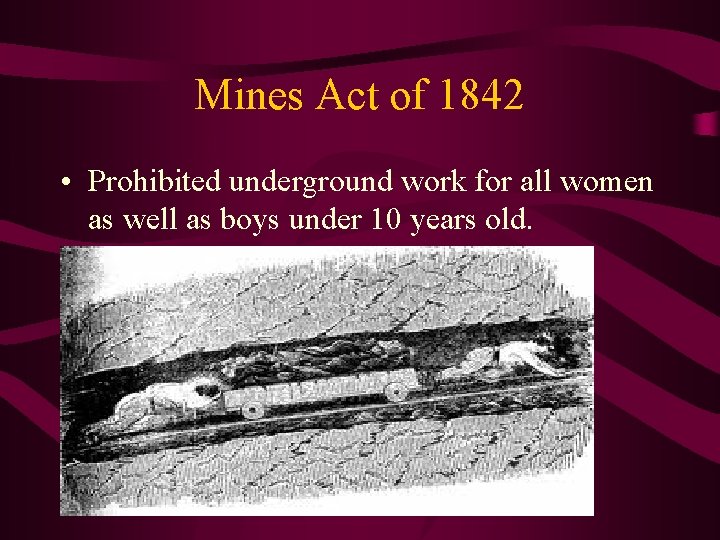
Mines Act of 1842 • Prohibited underground work for all women as well as boys under 10 years old.
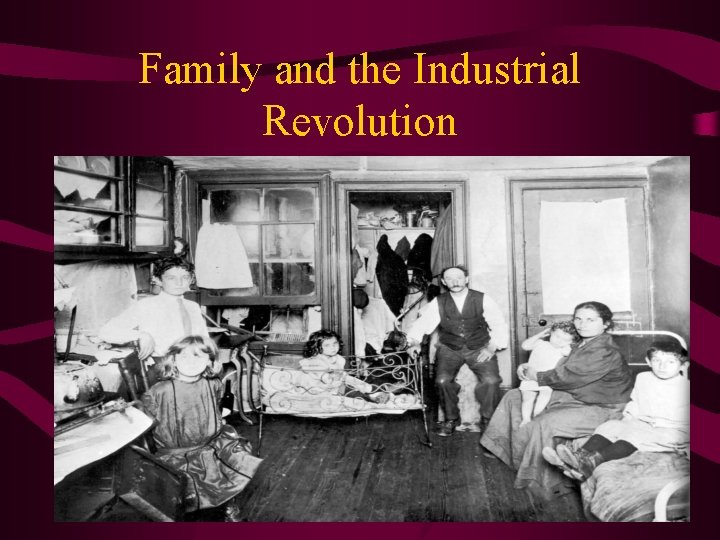
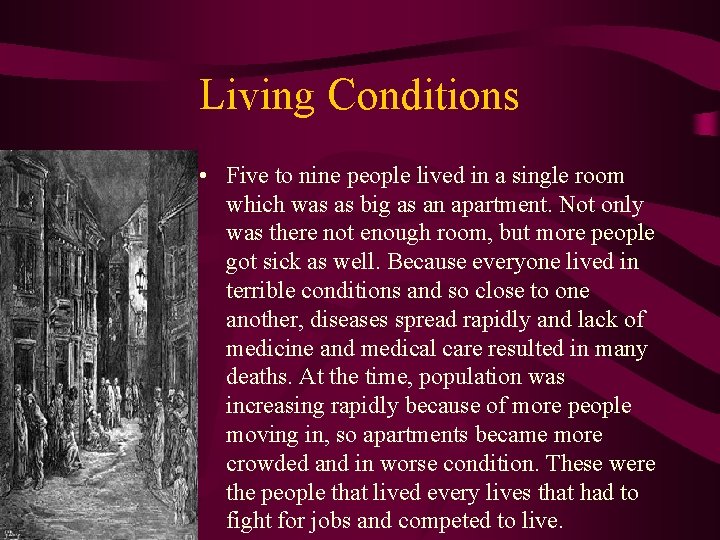
Living Conditions • Five to nine people lived in a single room which was as big as an apartment. Not only was there not enough room, but more people got sick as well. Because everyone lived in terrible conditions and so close to one another, diseases spread rapidly and lack of medicine and medical care resulted in many deaths. At the time, population was increasing rapidly because of more people moving in, so apartments became more crowded and in worse condition. These were the people that lived every lives that had to fight for jobs and competed to live.
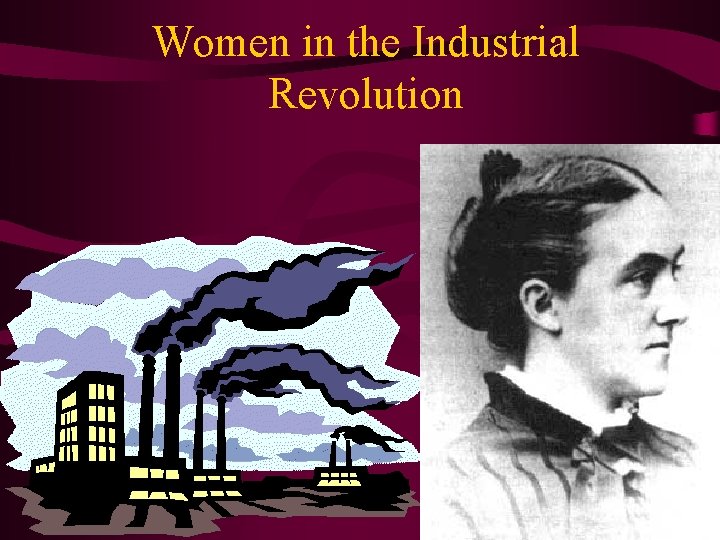
Women in the Industrial Revolution
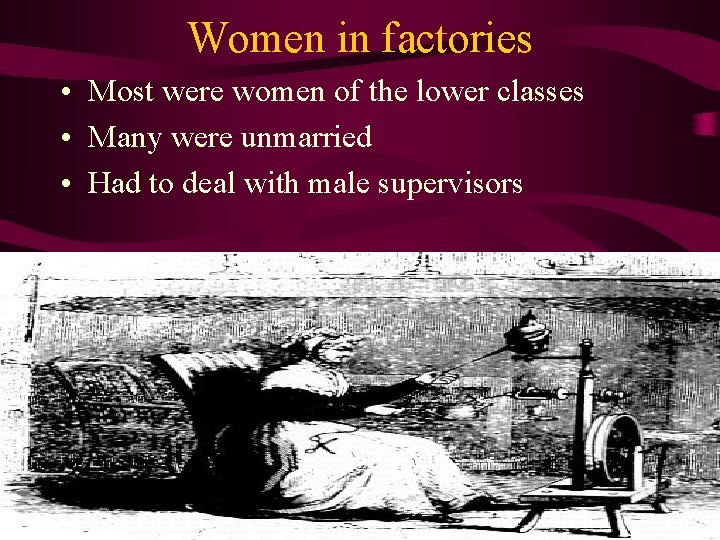
Women in factories • Most were women of the lower classes • Many were unmarried • Had to deal with male supervisors
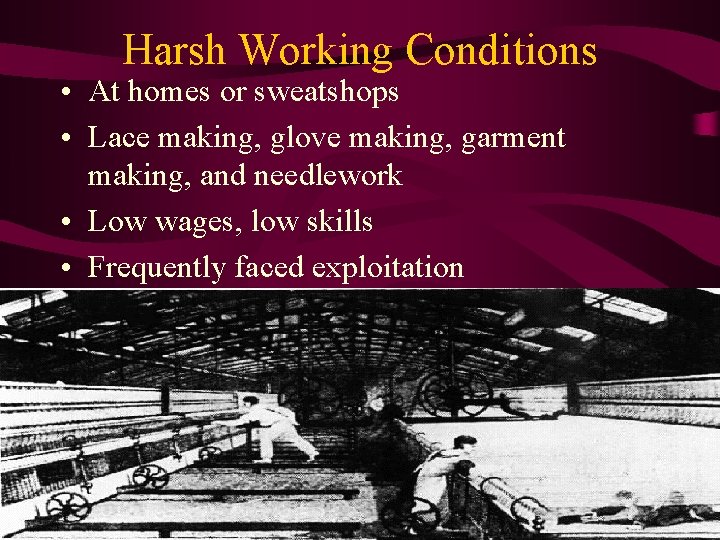
Harsh Working Conditions • At homes or sweatshops • Lace making, glove making, garment making, and needlework • Low wages, low skills • Frequently faced exploitation
Problems arise • Low wages forced many women into prostitution. • The primary reason for this: the transformation of an economy of skilled artisans to that of low skilled factory workers.
Changes in marriage • • • Cohabitation becomes more common. Less arranged marriages. Fewer family, community ties. More available young men. Illegitimate births increased w/ fewer men willing to marry those fleeting love affairs
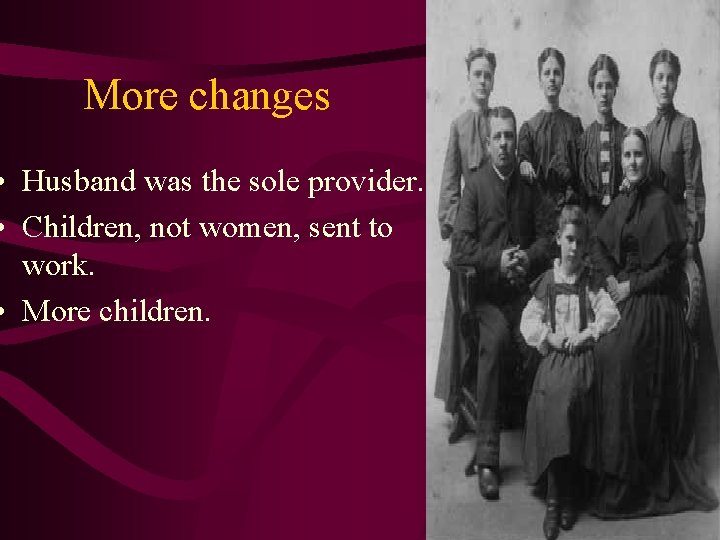
More changes • Husband was the sole provider. • Children, not women, sent to work. • More children.
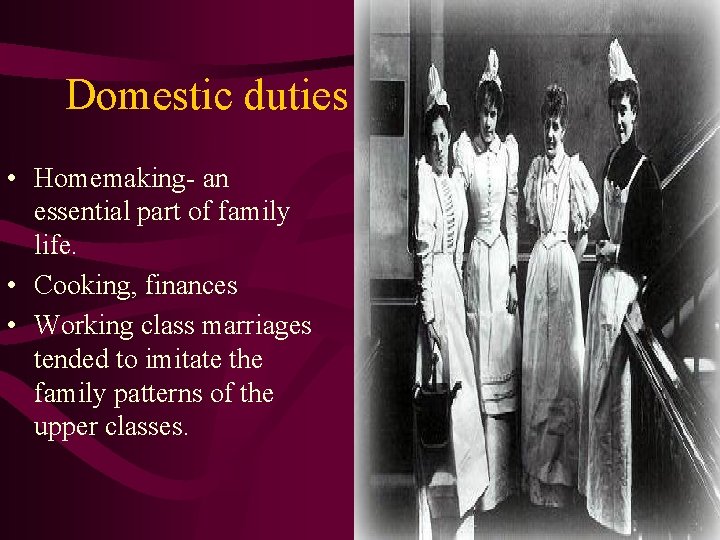
Domestic duties • Homemaking- an essential part of family life. • Cooking, finances • Working class marriages tended to imitate the family patterns of the upper classes.