
Families in the 1950 s February 15 Lecture
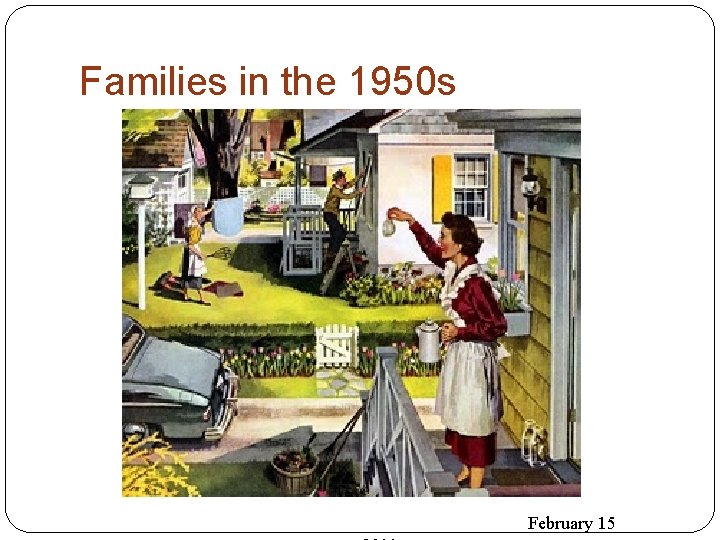
Families in the 1950 s February 15
Lecture Outline 1. Economic context of post-war era 2. Normalizing families 3. The Baby Boom 4. The Suburbs 5. Conclusion: Behind the suburban dream
1. Economic Context Immediate post-war – a time of prosperity Low unemployment rates Booming economy Increased standard of living
2. The “Normal” Family Experts presented certain types of men, women, children and families as “the norm” Characteristics: Wife = homemaker Husband = breadwinner & attentive father Non normal = deviant, deficient Women – key to being normal was marriage & motherhood
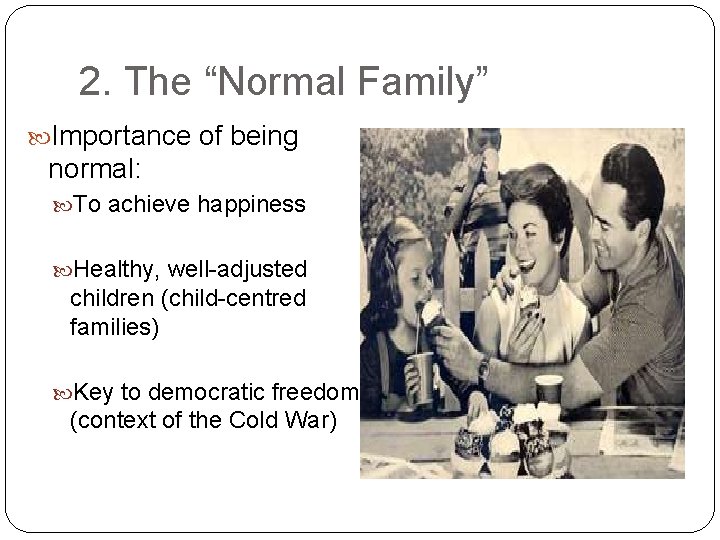
2. The “Normal Family” Importance of being normal: To achieve happiness Healthy, well-adjusted children (child-centred families) Key to democratic freedom (context of the Cold War)
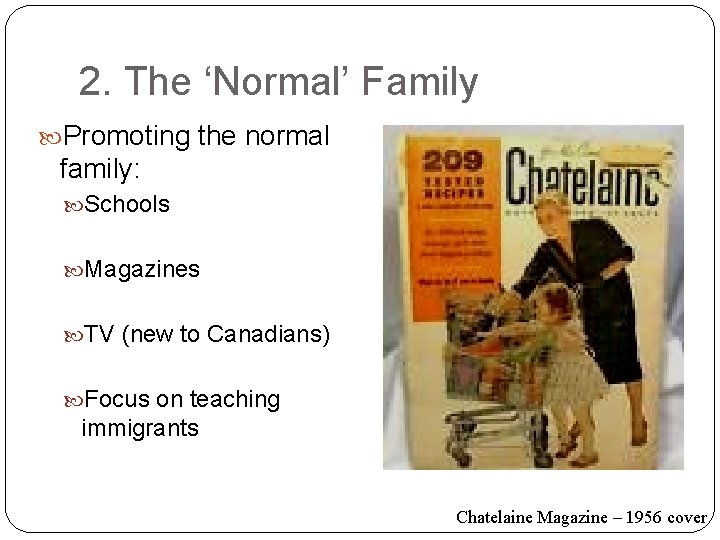
2. The ‘Normal’ Family Promoting the normal family: Schools Magazines TV (new to Canadians) Focus on teaching immigrants Chatelaine Magazine – 1956 cover
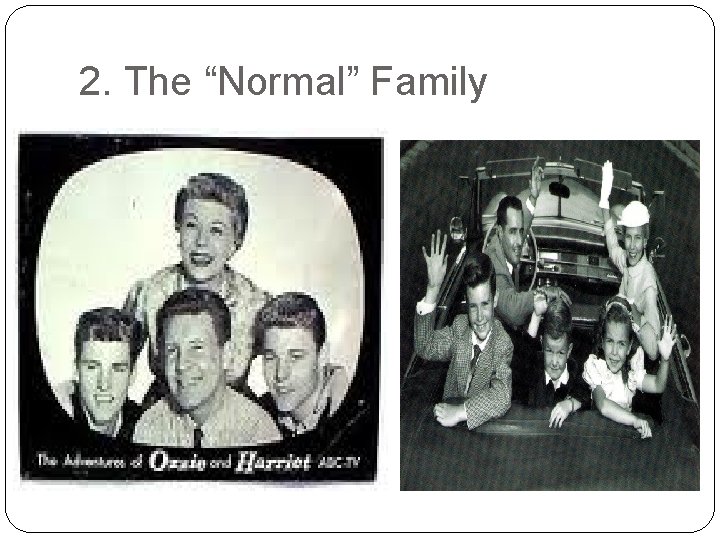
2. The “Normal” Family
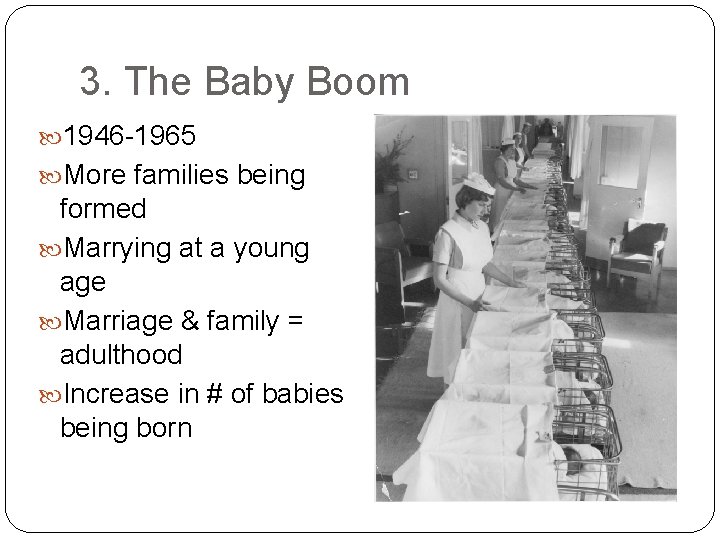
3. The Baby Boom 1946 -1965 More families being formed Marrying at a young age Marriage & family = adulthood Increase in # of babies being born
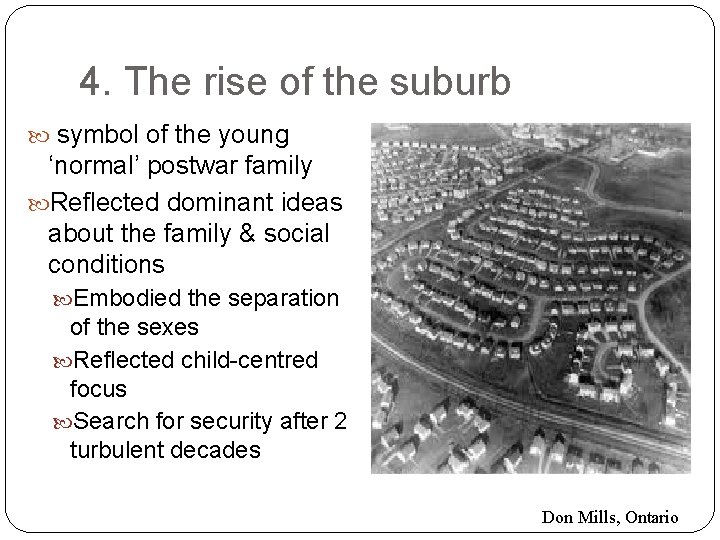
4. The rise of the suburb symbol of the young ‘normal’ postwar family Reflected dominant ideas about the family & social conditions Embodied the separation of the sexes Reflected child-centred focus Search for security after 2 turbulent decades Don Mills, Ontario
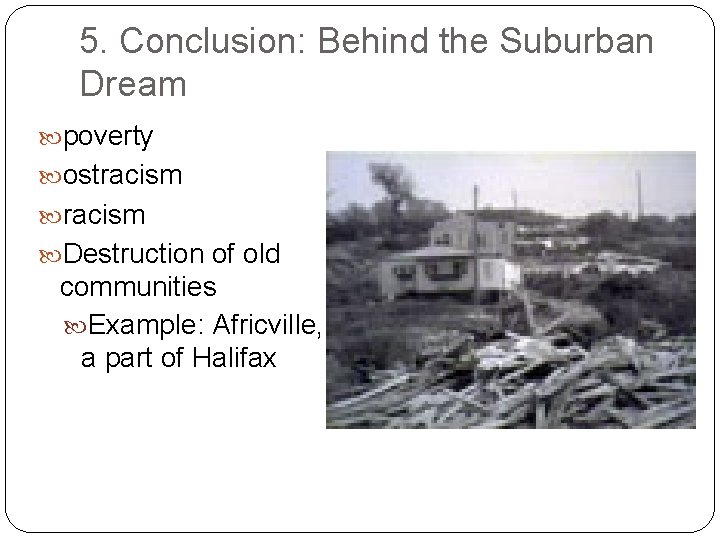
5. Conclusion: Behind the Suburban Dream poverty ostracism Destruction of old communities Example: Africville, a part of Halifax
Franca Iacovetta, Recipes for Democracy? Gender, Family and Making Female Citizens in cold War Canada (p. 264) Questions: 1. What does Iacovetta mean by Canadianization? 2. How was food and nutrition part of the larger project of Canadianization? 3. Did the food and nutrition advice given to immigrant women promote and privilege a middle class ideal? How so?
- Slides: 11