
False Codling Moth Thaumatotibia leucotreta False Codling Moth
False Codling Moth Thaumatotibia leucotreta
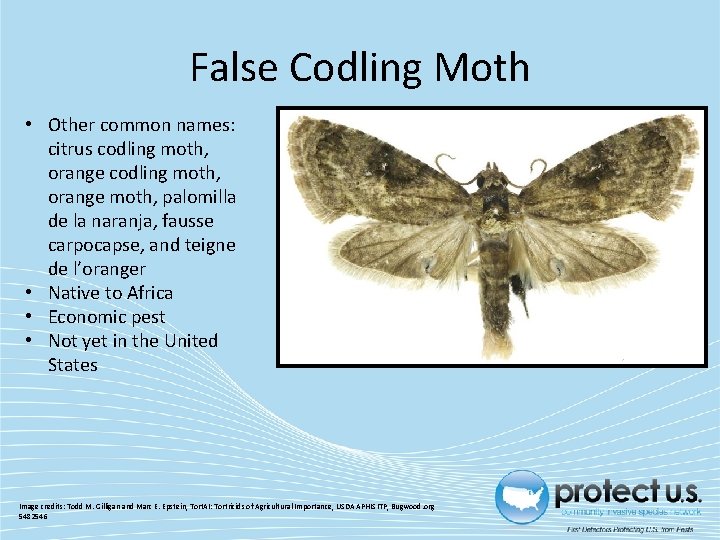
False Codling Moth • Other common names: citrus codling moth, orange moth, palomilla de la naranja, fausse carpocapse, and teigne de l’oranger • Native to Africa • Economic pest • Not yet in the United States Image credits: Todd M. Gilligan and Marc E. Epstein, Tort. AI: Tortricids of Agricultural Importance, USDA APHIS ITP, Bugwood. org 5482546
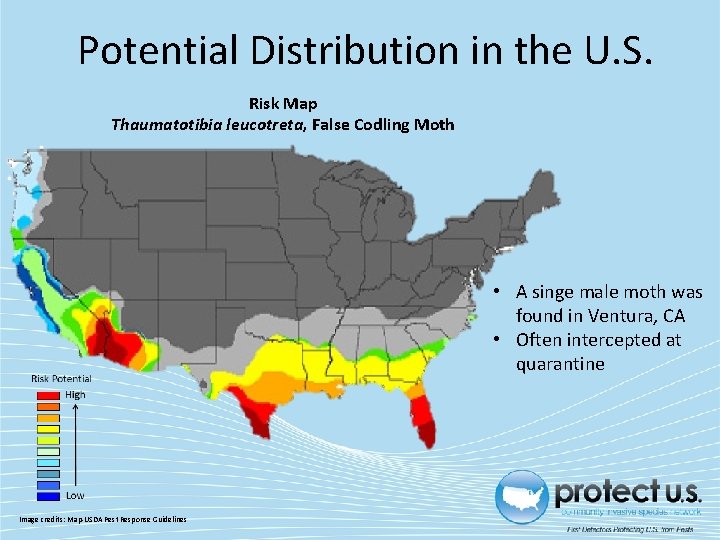
Potential Distribution in the U. S. Risk Map Thaumatotibia leucotreta, False Codling Moth • A singe male moth was found in Ventura, CA • Often intercepted at quarantine Image credits: Map-USDA Pest Response Guidelines
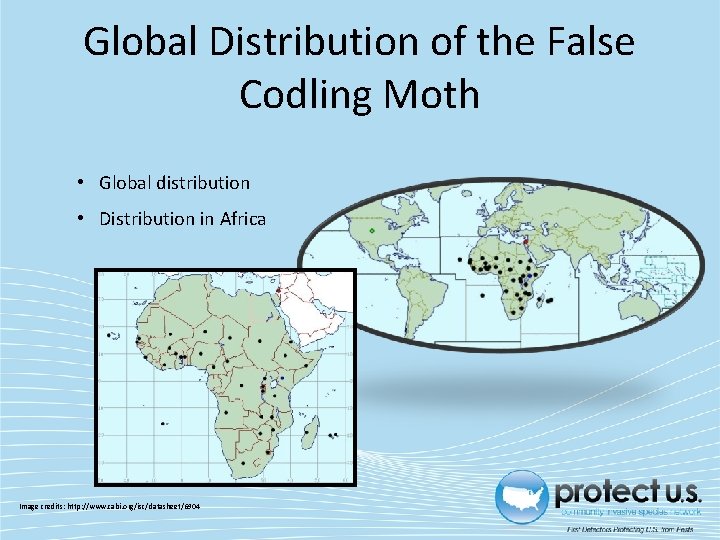
Global Distribution of the False Codling Moth • Global distribution • Distribution in Africa Image credits: http: //www. cabi. org/isc/datasheet/6904
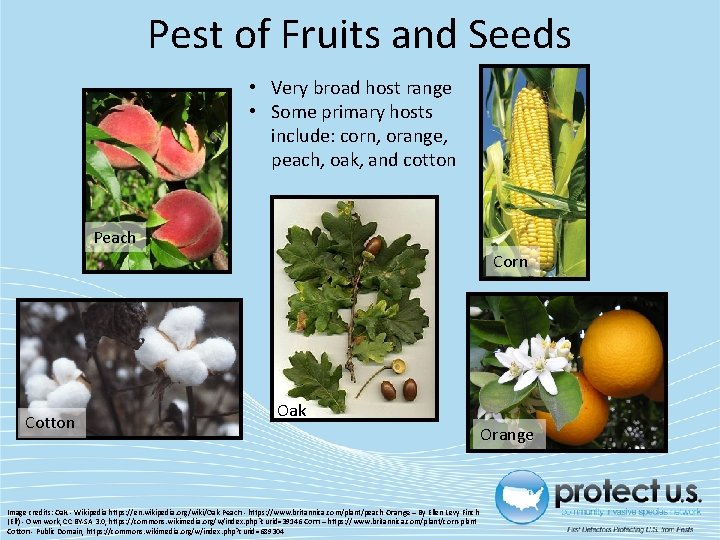
Pest of Fruits and Seeds • Very broad host range • Some primary hosts include: corn, orange, peach, oak, and cotton Peach Corn Cotton Oak Image credits: Oak - Wikipedia https: //en. wikipedia. org/wiki/Oak Peach - https: //www. britannica. com/plant/peach Orange – By Ellen Levy Finch (Elf) - Own work, CC BY-SA 3. 0, https: //commons. wikimedia. org/w/index. php? curid=39146 Corn – https: //www. britannica. com/plant/corn-plant Cotton - Public Domain, https: //commons. wikimedia. org/w/index. php? curid=689304 Orange
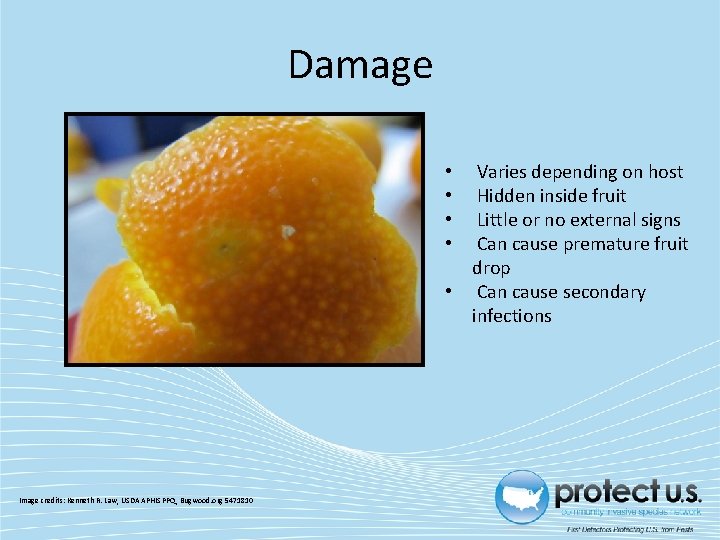
Damage Varies depending on host Hidden inside fruit Little or no external signs Can cause premature fruit drop • Can cause secondary infections • • Image credits: Kenneth R. Law, USDA APHIS PPQ, Bugwood. org 5471810
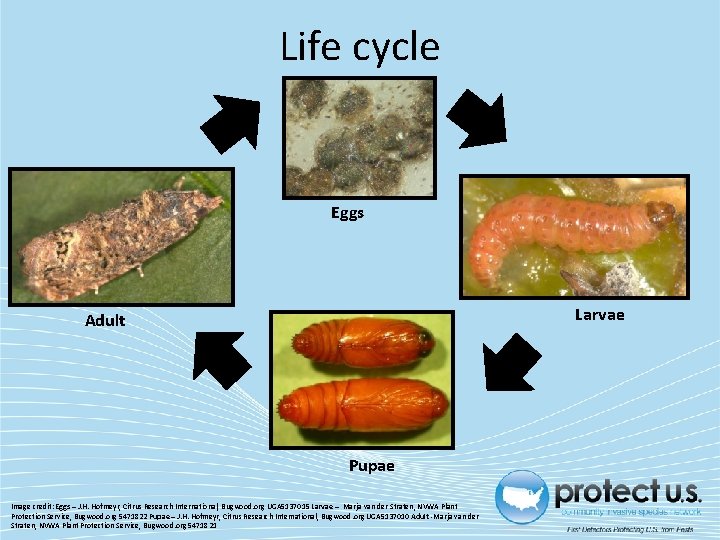
Life cycle Eggs Larvae Adult Pupae Image credit: Eggs – J. H. Hofmeyr, Citrus Research International, Bugwood. org UGA 5137015 Larvae – Marja van der Straten, NVWA Plant Protection Service, Bugwood. org 5471822 Pupae – J. H. Hofmeyr, Citrus Research International, Bugwood. org UGA 5137010 Adult -Marja van der Straten, NVWA Plant Protection Service, Bugwood. org 5471821

• Adults Identification • 6 -9 mm long, 2. 5 mm wide • Female: 19 -20 mm wingspan Male: 15 -16 mm wingspan • Color grayish brown to dark brown or black • Distinctive black triangular marking beneath crescent shaped mark on wing edge Female: Male: Image credits: Female - By Simon Hinkley & Ken Walker, Museum Victoria https: //commons. wikimedia. org/w/index. php? curid=15562337 Male - By Simon Hinkley & Ken Walker, Museum Victoria https: //commons. wikimedia. org/w/index. php? curid=15562343

Lookalikes - Adults Codling moth: Cydia pomonella Eastern pine seedworm: Cydia toreuta Image credits: Codling moth- Pest and Diseases Image Library, Bugwood. org 5488473 Eastern pine seedworm- Todd M. Gilligan and Marc E. Epstein, Tort. AI: Tortricids of Agricultural Importance, USDA APHIS ITP, Bugwood. org 5482438
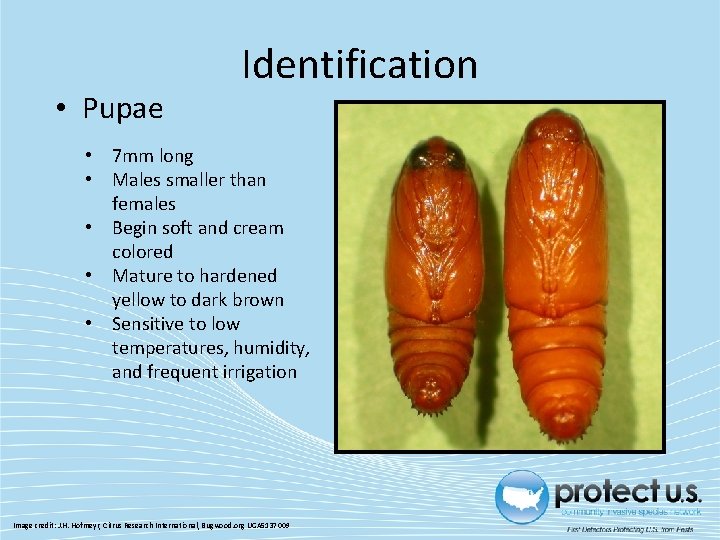
• Pupae Identification • 7 mm long • Males smaller than females • Begin soft and cream colored • Mature to hardened yellow to dark brown • Sensitive to low temperatures, humidity, and frequent irrigation Image credit: J. H. Hofmeyr, Citrus Research International, Bugwood. org UGA 5137009
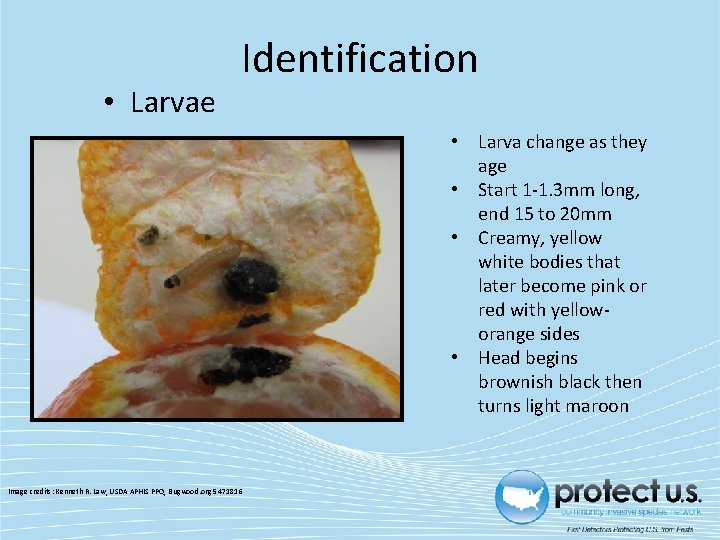
• Larvae Identification • Larva change as they age • Start 1 -1. 3 mm long, end 15 to 20 mm • Creamy, yellow white bodies that later become pink or red with yelloworange sides • Head begins brownish black then turns light maroon Image credits: Kenneth R. Law, USDA APHIS PPQ, Bugwood. org 5471816
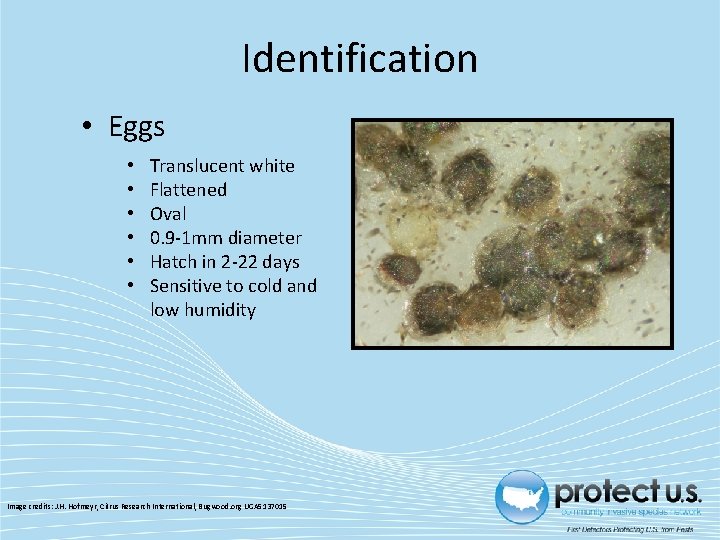
Identification • Eggs • • • Translucent white Flattened Oval 0. 9 -1 mm diameter Hatch in 2 -22 days Sensitive to cold and low humidity Image credits: J. H. Hofmeyr, Citrus Research International, Bugwood. org UGA 5137015
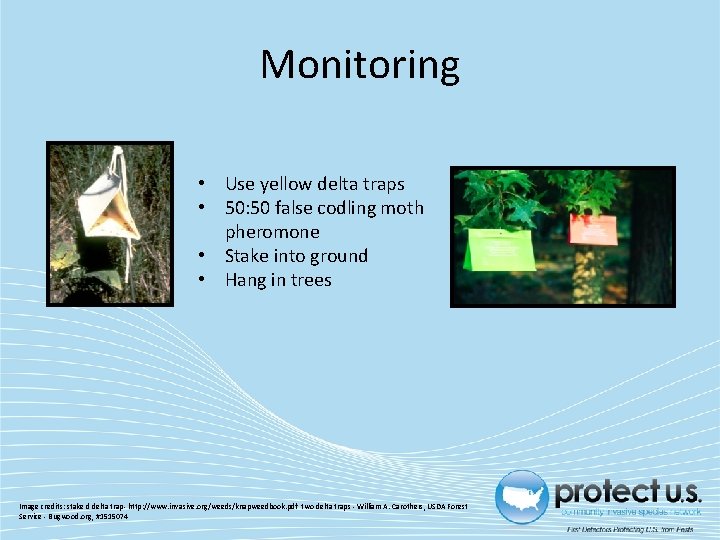
Monitoring • Use yellow delta traps • 50: 50 false codling moth pheromone • Stake into ground • Hang in trees Image credits: stake d delta trap- http: //www. invasive. org/weeds/knapweedbook. pdf two delta traps - William A. Carothers, USDA Forest Service - Bugwood. org, #1515074
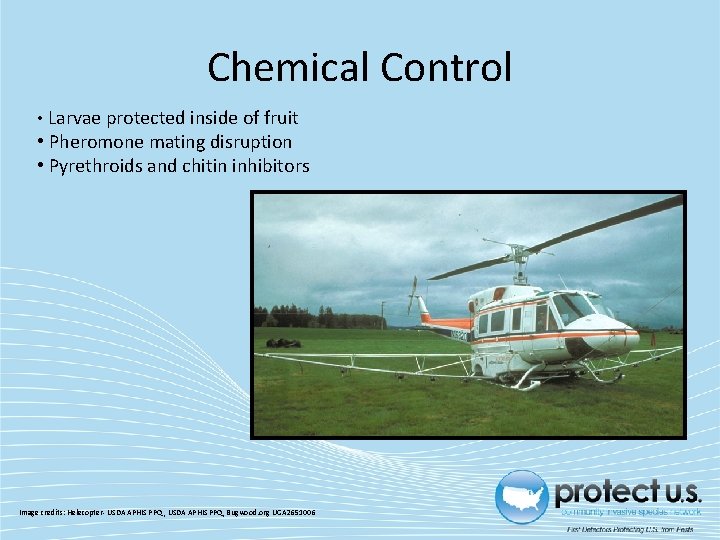
Chemical Control • Larvae protected inside of fruit • Pheromone mating disruption • Pyrethroids and chitin inhibitors Image credits: Helecopter- USDA APHIS PPQ , USDA APHIS PPQ, Bugwood. org UGA 2651006
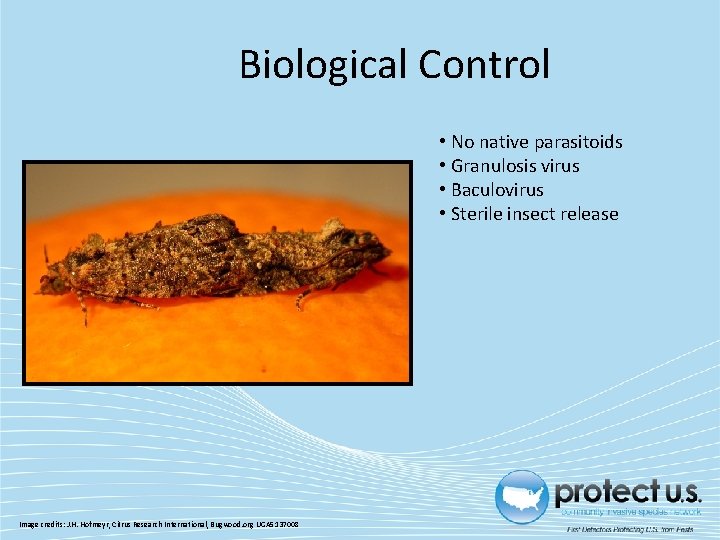
Biological Control • No native parasitoids • Granulosis virus • Baculovirus • Sterile insect release Image credits: J. H. Hofmeyr, Citrus Research International, Bugwood. org UGA 5137008
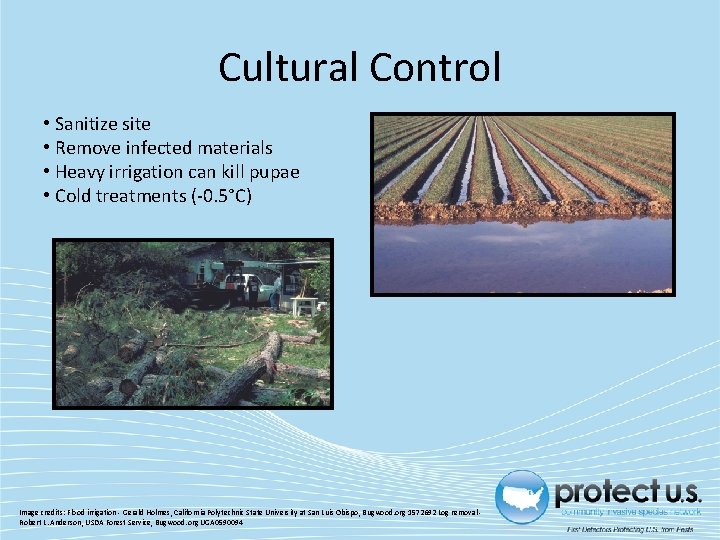
Cultural Control • Sanitize site • Remove infected materials • Heavy irrigation can kill pupae • Cold treatments (-0. 5°C) Image credits: Flood irrigation - Gerald Holmes, California Polytechnic State University at San Luis Obispo, Bugwood. org 1572692 Log removal Robert L. Anderson, USDA Forest Service, Bugwood. org UGA 0590094
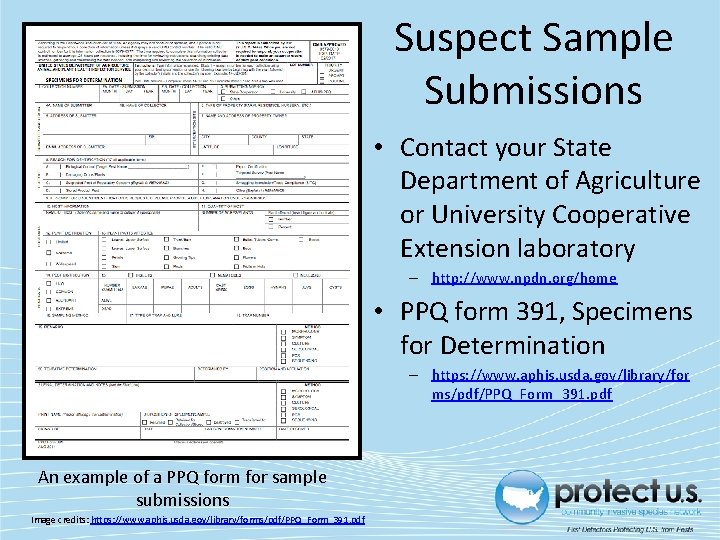
Suspect Sample Submissions • Contact your State Department of Agriculture or University Cooperative Extension laboratory – http: //www. npdn. org/home • PPQ form 391, Specimens for Determination – https: //www. aphis. usda. gov/library/for ms/pdf/PPQ_Form_391. pdf An example of a PPQ form for sample submissions Image credits: https: //www. aphis. usda. gov/library/forms/pdf/PPQ_Form_391. pdf
Communications • Contact your State Plant Health Director – https: //www. aphis. usda. gov/aphis/ ourfocus/planthealth/ppq-program -overview/ct_sphd • Contact your State Plant Regulatory Official – http: //nationalplantboard. org/me mbership/ Image credits: http: //www. usda. gov/wps/portal/usdahome; http: //nationalplantboard. org/
Author and Publication Dates • Brianna Whitman, B. S. ‒ Laboratory Technician, Department of Entomology and Nematology, University of Florida • Amanda Hodges, Ph. D. ‒ Associate Extension Scientist, Department of Entomology and Nematology, University of Florida Publication date: October 2016

Reviewers • Catherine A. Marzolf – Assistant State Plant Health Director, USDA APHIS PPQ
Educational Disclaimer and Citation • This presentation can be used for educational purposes for NON-PROFIT workshops, trainings, etc. • Citation: Whitman, Brianna and Amanda Hodges. 2016. False codling moth – Thaumatotibia leucotreta. Accessed (add the date) – www. protectingusnow. org
Our Partners • United States Department of Agriculture, National Institute of Food and Agriculture (USDA NIFA) • United States Department of Agriculture, Animal and Plant Health Inspection Service, Plant Protection and Quarantine (USDA APHIS PPQ) • Cooperative Agriculture Pest Survey (CAPS) Program • National Plant Board (NPB) • States Department of Agriculture • Extension Disaster Education Network (EDEN) • Center for Invasive Species and Ecosystem Health (Bugwood) • National Plant Diagnostic Network (NPDN) • U. S. Department of Homeland Security (DHS) • U. S. Forest Service (USFS)
References • 1. Andermatt Biocontrol. 2016. Cryptex. Andermat Biocontrol AG. Accessed 6/29/16. ‒ http: //www. export. biocontrol. ch/sites/products/bio-insecticides/baculovirus/cryptex. html • 2. Anonymous. 2015. Thaumetotibia leucotreta (false codling moth). Invasive Species Compendium. Accessed 6/29/16. ‒ http: //www. cabi. org/isc/datasheet/6904 • 3. Carpenter, J. , S. Bloem, and H. Hofmeyr. 2007. Area-wide Control Tactics for the False Codling Moth Thaumatotibia leucortreta in South Africa: a Potential Invasive Species. Area -wide Control of Insect Pests: 351 -359. U. S. Government. • 4. EPPO. 2016. European and Mediterranean Plant Protection Organization: Thaumatotibia leucotreta (Lepidoptera: Tortricidae). OEPP. EPPO. Accessed 6/29/16. ‒ https: //www. eppo. int/QUARANTINE/Alert_List/insects/thaumatotibia_leucotreta. htm • 5. Gendall, Kierryn Leigh. 2007. Agathis bishop (Nixon) (Hymenoptera: Braconidae): its biology and usefulness as a biological control agent for false codling moth (FCM), Thaumatotibia leucotreta (Meyrick) (Lepidoptera: Tortricidae), on citrus. Rhodes University. • 6. Gillian, Todd M. and Marc E. Epstein. 2014. Tort. AI: Tortricids of Agricultural Importance. Colorado State University. Accessed 6/29/16. ‒ http: //idtools. org/id/leps/tortai/Thaumatotibia_leucotreta. htm
References • 7. North American Moth Photographers Group. 2016. Mississippi State University, Mississippi Entomological Museum. Accessed 6/29/16. ‒ http: //mothphotographersgroup. msstate. edu/species. php? hodges=19685 • 8. Plantwise Technical Factsheet: false codling moth (Thaumatotibia leucotreta). 2016. Plantwise Knowledge Bank. Accessed 6/29/16. ‒ http: //www. plantwise. org/Knowledge. Bank/Datasheet. aspx? dsid=6904 • 9. U. S. Department Of Agriculture, Animal Plant Health Inspection Service, Plant Protection and Quarantine, Emergency and Domestic Programs. 2010. New Pest Response Guidelines: False Codling Moth Thaumatotibia leucotreta. Riverdale, Maryland ‒ http: //www. aphis. usda. gov/import_export/plants/manuals/online_manuals. shtml
- Slides: 24