
Falls and dementia Caroline Kilty Ph D MSc
- Slides: 38
Falls and dementia Caroline Kilty, Ph. D, MSc. , BSc. , RMN 19 th November 2015 Royal Marine Hotel, Dublin
Presentation Overview �Overview of dementia �Current context �Subtypes �Risk factors �Assessment tools �Interventions �Dementia models of care �Creating a dementia friendly environment
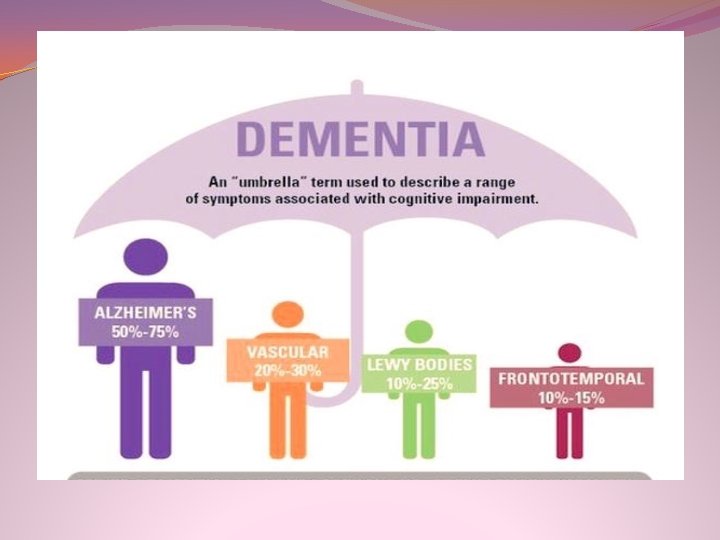
What is dementia? �Dementia is a progressive condition, caused by structural & chemical changes in the brain (Alzheimer Society UK, 2007). �Dementia is characterised by memory impairment, cognitive impairment, progressive decline in functioning & behavioural changes. �The term dementia is used to collectively describe a group of conditions such as Alzheimer’s disease, vascular dementia, Lewy Body and dementia with Down’s syndrome.
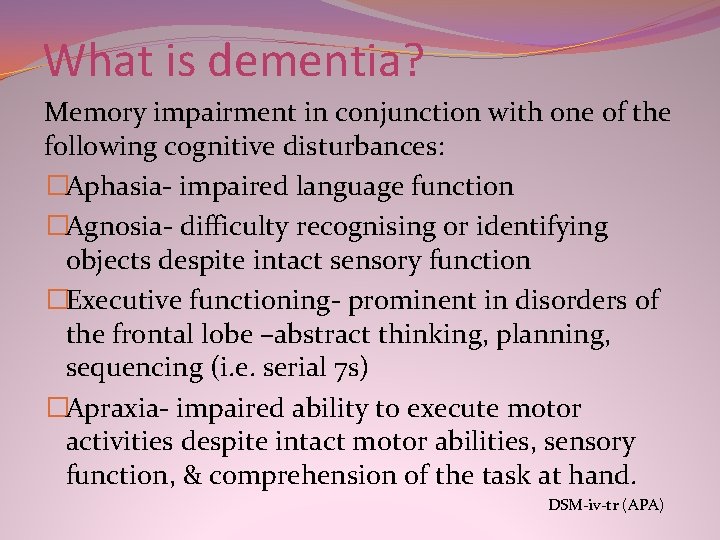
What is dementia? Memory impairment in conjunction with one of the following cognitive disturbances: �Aphasia- impaired language function �Agnosia- difficulty recognising or identifying objects despite intact sensory function �Executive functioning- prominent in disorders of the frontal lobe –abstract thinking, planning, sequencing (i. e. serial 7 s) �Apraxia- impaired ability to execute motor activities despite intact motor abilities, sensory function, & comprehension of the task at hand. DSM-iv-tr (APA)
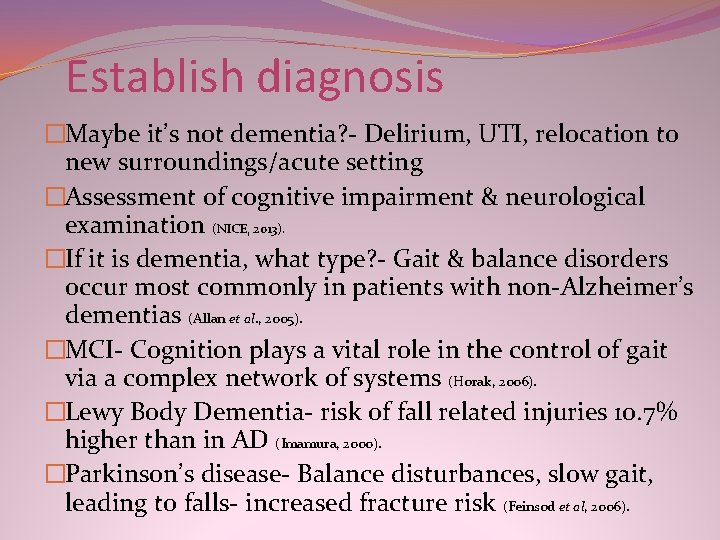
Establish diagnosis �Maybe it’s not dementia? - Delirium, UTI, relocation to new surroundings/acute setting �Assessment of cognitive impairment & neurological examination (NICE, 2013). �If it is dementia, what type? - Gait & balance disorders occur most commonly in patients with non-Alzheimer’s dementias (Allan et al. , 2005). �MCI- Cognition plays a vital role in the control of gait via a complex network of systems (Horak, 2006). �Lewy Body Dementia- risk of fall related injuries 10. 7% higher than in AD (Imamura, 2000). �Parkinson’s disease- Balance disturbances, slow gait, leading to falls- increased fracture risk (Feinsod et al, 2006).
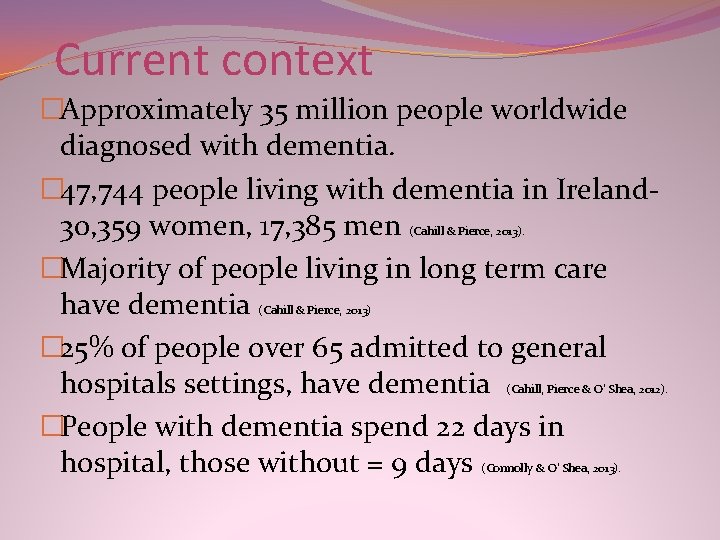
Current context �Approximately 35 million people worldwide diagnosed with dementia. � 47, 744 people living with dementia in Ireland- 30, 359 women, 17, 385 men (Cahill & Pierce, 2013). �Majority of people living in long term care have dementia (Cahill & Pierce, 2013) � 25% of people over 65 admitted to general hospitals settings, have dementia (Cahill, Pierce & O' Shea, 2012). �People with dementia spend 22 days in hospital, those without = 9 days (Connolly & O' Shea, 2013).
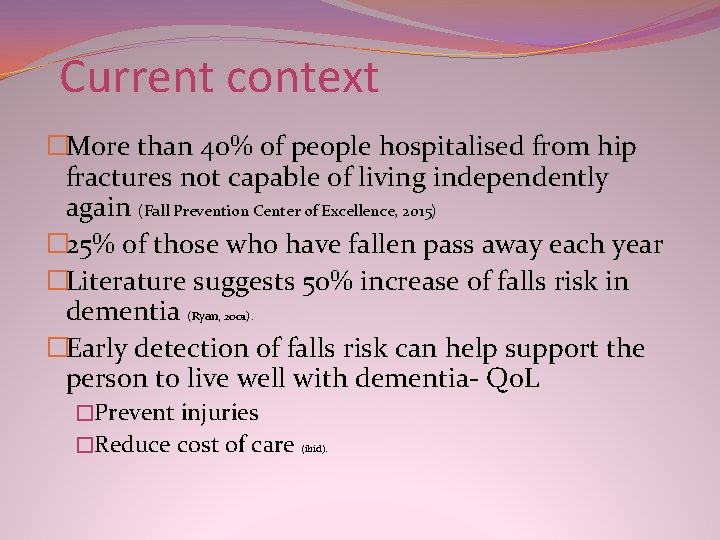
Current context �More than 40% of people hospitalised from hip fractures not capable of living independently again (Fall Prevention Center of Excellence, 2015) � 25% of those who have fallen pass away each year �Literature suggests 50% increase of falls risk in dementia (Ryan, 2001). �Early detection of falls risk can help support the person to live well with dementia- Qo. L �Prevent injuries �Reduce cost of care (ibid).
Intrinsic risk factors Complex mix of risk factors for this population �Memory, insight & reduced communication, �Sensory Impairment , i. e. Visual impairment may contribute to cognitive & functional decline �Poor visual acuity may cause tripping, misstepping, & mis-sitting �Purposeful walking (Härlein et al, 2009). �Responsive behaviours
Intrinsic risk factors �Multiple co-morbid conditions, UTI, pneumonia �Orthostatic hypotension/postural dizziness �Urinary/faecal urgency or incontinence �Fear of falling �Diet, dehydration- malnutrition reduces sustainable strength, reserve strength, and balance �Malnutrition risk high in dementia- related to increased risk of falls and hospitalisation (Bonner, 2006) (Feinsod et al. , 2005) (Yildiz et al. , 2015)
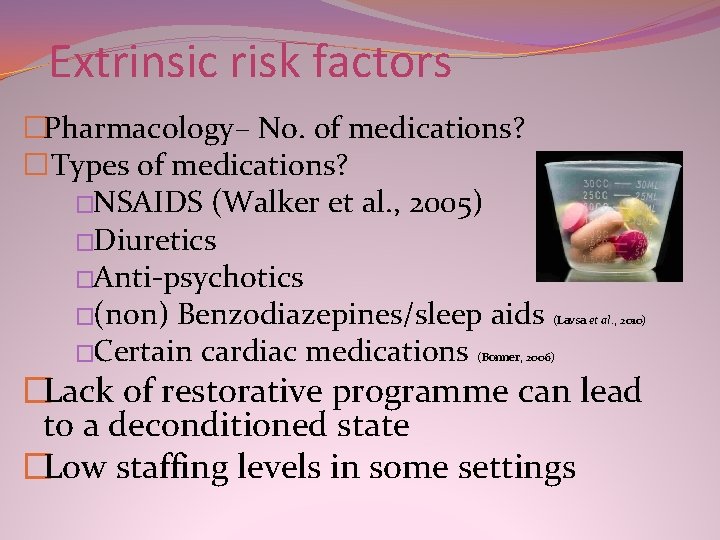
Extrinsic risk factors �Pharmacology– No. of medications? � Types of medications? �NSAIDS (Walker et al. , 2005) �Diuretics �Anti-psychotics �(non) Benzodiazepines/sleep aids (Lavsa et al. , 2010) �Certain cardiac medications (Bonner, 2006) �Lack of restorative programme can lead to a deconditioned state �Low staffing levels in some settings
Extrinsic risk factors- Environment �New surroundings- Move to LTC or admission to acute setting �Inadequate lighting �Lack of safety railings in bathrooms/hallways (Bonner, 2006) �Spatial disorientation -difficulty with visuospatial functioning –may lead to a risk factor in falls. �Excessive environmental demands �Colours & patterns- Mats! �Cluttered interior furnishings �Poor layout of space �Background noise
Extrinsic risk factors �Physical factors �Not using assistive walking devices �Incorrect footwear-sloppy slippers! �Behavioural factors �lack of confidence �previous falls �the need to alter behaviour particularly when in an unfamiliar environment
Delirium �Undiagnosed or diagnosed, it is directly related to falls in general hospital settings �Disturbance of consciousness & cognition �Occurs over a short spell (hours or days, fluctuates) �Causes �Direct physiological consequence of a medical condition �Use or withdrawal of medication �Combination of factors
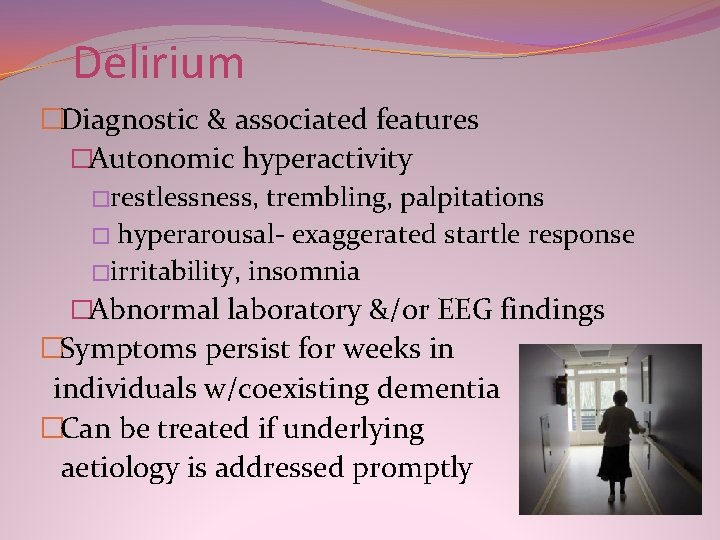
Delirium �Diagnostic & associated features �Autonomic hyperactivity �restlessness, trembling, palpitations � hyperarousal- exaggerated startle response �irritability, insomnia �Abnormal laboratory &/or EEG findings �Symptoms persist for weeks in individuals w/coexisting dementia �Can be treated if underlying aetiology is addressed promptly
How can we reduce the risk of falls in dementia?
Listen to the person �Obtain a comprehensive history, life story, social profile- TALK to the person, �Person centred care-planning �This Is Me �Enriched Model of Dementia �May have reduced judgement, awareness & insight so consult with family, staff �For patients at risk of falling in hospital, NICE guidelines recommend the use of a multifactorial risk assessment.
NICE (2013) �Identify any history of falls �Assess gait, balance mobility, & muscle weakness �Assess the person's perceived functional ability & confidence/fear relating to falling �Assess for visual impairment �Assessment for urinary incontinence �Review medication
Scales & Tools �Falls Risk Assessment Scale for Older People �FRASE may be used in conjunction with a number of other tools. �Functioning scales �Moving & Handling Risk Assessment �The Barthel Index �Pains scales �Abbey Pain Scale �Faces Pain Scale (VAS) suitable for people w/ advanced dementia
Scales & Tools �Dietary Tools- MUST Nutritional Assessment �Food and Fluid Intake Chart �PINCH ME Assessment for Delirium �Pain �Infection/Intoxication �Nutrition (lack of adequate) �Constipation �Hydration/Hypoxia �Medication- Steroids, Antispasmodics, Opiates, L-Dopa, Sedatives �Environmental Improved recognition of delirium directly related to sustainable & successful fall prevention programs
Specific scales �Dewing Wandering Risk Assessment Tool �Cohen-Mansfield Agitation Inventory �Behavioural and Psychological Symptoms of Dementia –Assessment & Plan of Care �Cornell Depression scale �Assessment of Discomfort in Dementia Protocol
Interventions- Intrinsic �Regular medication review- specialist input, discontinue if possible to reduce risk of falls (NICE, 2013). �Sudden changes in gait & mobility, unexplained recurrent falls – request/ conduct a assessment & intervene as clinically indicated (HSE Falls Strategy, 2008). �Monitor for sensory impairment/issues �Use practical & applicable measures �Staff - Multidisciplinary care across the continuum
Interventions- extrinsic �Nurses with falls training, Physiotherapy, O. T. , Pharmacy, Geriatrician consultation �Verbal/written documentation & falls recording �Reallocating staff to periods of high fall occurrence �Higher staff ratios, specifically-trained staff in Dementia-specific settings �Assistive technologies- sensor devices & call buttons detect movement, may increase confidence �Voice “alarm, ”- individualized message addressing the person by name with calm instructions (Feinsod et al. , 2006).
Acute settings Use this time to treat individual risk factors for falling �Cognitive impairment secondary to UTI, etc. �Health problems that may increase risk of falling �Issues with incontinence �Falls history, including causes & consequences (i. e. injury/fear of falling) �Footwear that is unsuitable or missing �Unsuitable walking aids �Discharge package?
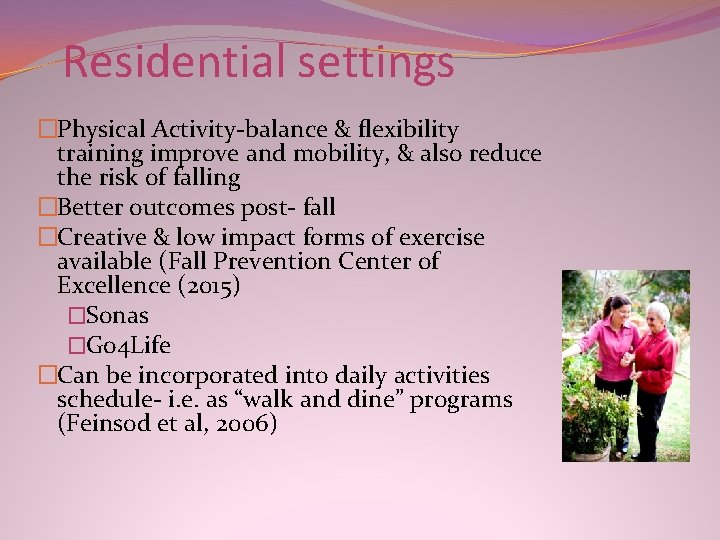
Residential settings �Physical Activity-balance & flexibility training improve and mobility, & also reduce the risk of falling �Better outcomes post- fall �Creative & low impact forms of exercise available (Fall Prevention Center of Excellence (2015) �Sonas �Go 4 Life �Can be incorporated into daily activities schedule- i. e. as “walk and dine” programs (Feinsod et al, 2006)
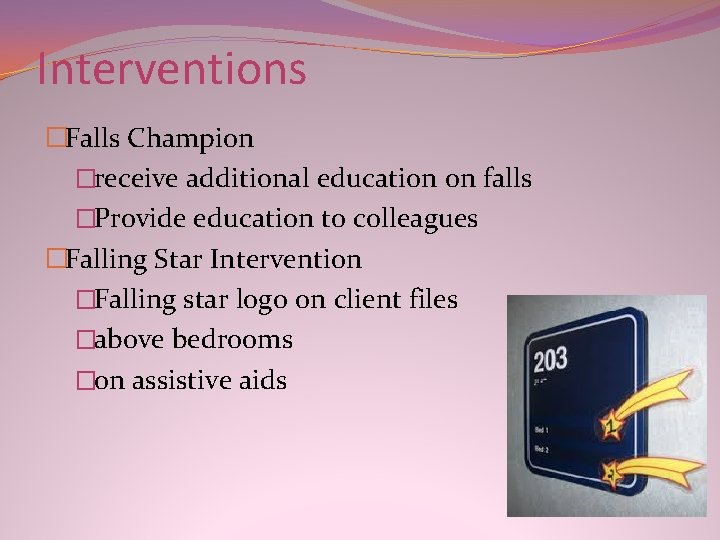
Interventions �Falls Champion �receive additional education on falls �Provide education to colleagues �Falling Star Intervention �Falling star logo on client files �above bedrooms �on assistive aids
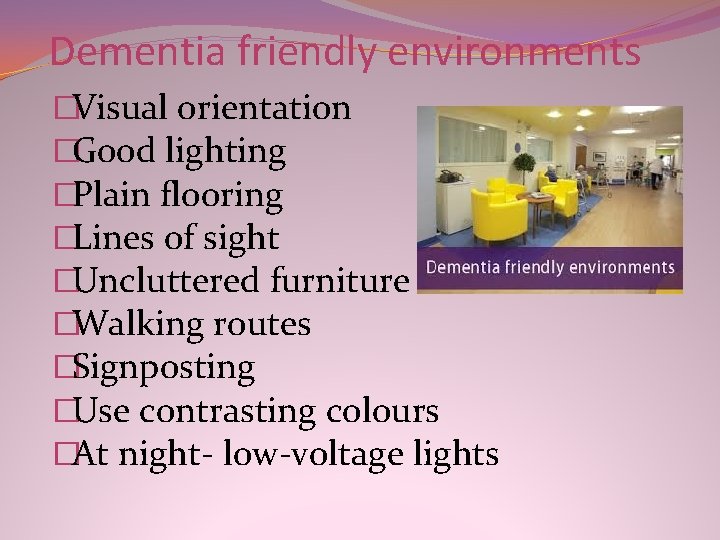
Dementia friendly environments �Visual orientation �Good lighting �Plain flooring �Lines of sight �Uncluttered furniture �Walking routes �Signposting �Use contrasting colours �At night- low-voltage lights
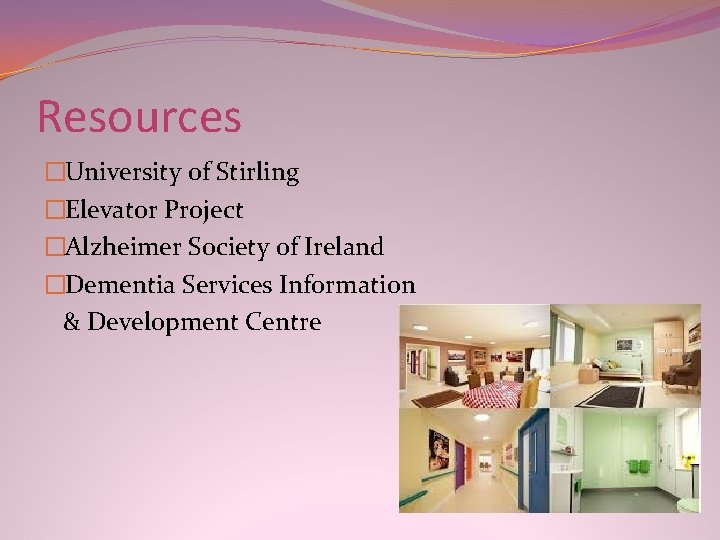
Resources �University of Stirling �Elevator Project �Alzheimer Society of Ireland �Dementia Services Information & Development Centre
Dementia friendly environments �Provide seating opportunities along the way. �Provide points of interest �Neither under nor over stimulating �Watch for and document triggers that lead to walking with purpose �Use an evidence based model � PLST Model
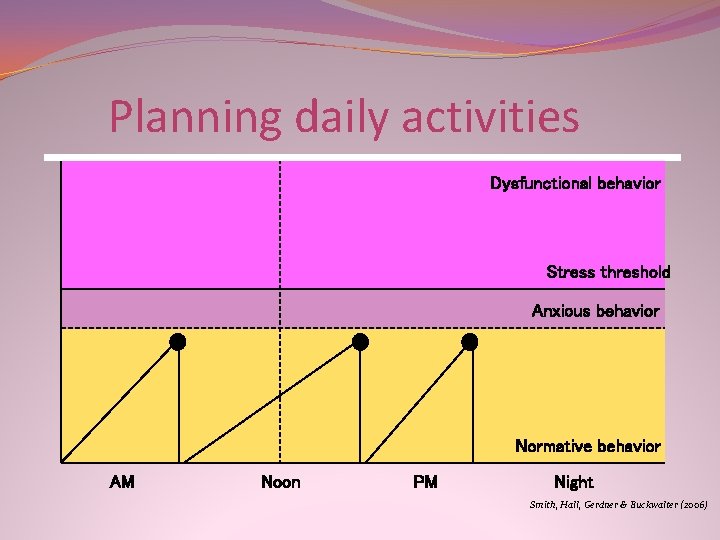
The Progressively Lowered Stress Threshold Model �People with dementia may have a reduced ability to interpret their environment �Less able to process information accurately �As a result, may be less able to tolerate stress �Stress threshold is lower- increased anxiety and walking with purpose may occur Smith, Hall, Gerdner & Buckwalter (2006)
Care planning- PLST model � PLST interventions support the person- enable the person to do their preferred activities �Create an environment that will act like a memory “crutch” that fills in for lost abilities. �Goal is to support the person to be autonomous despite their reduced ability (Smith, Hall, Gerdner & Buckwalter, 2006; Tyrrell , 2012)
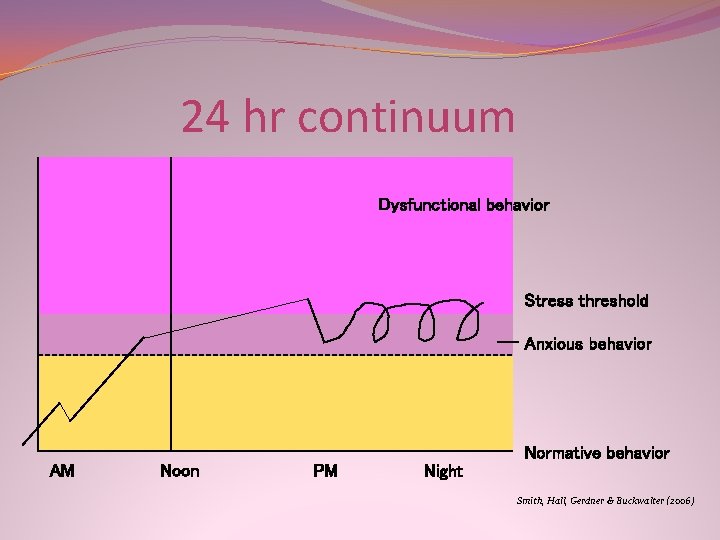
24 hr continuum Dysfunctional behavior Stress threshold Anxious behavior AM Noon PM Normative behavior Night Smith, Hall, Gerdner & Buckwalter (2006)
Care planning & PLST �Monitor changes in the environment �Reduce any stressors where possible: -Competing/misleading stimuli -Unnecessary noise -Too many people �Identify triggers to negative behaviours -Reduce stimuli when such reactions occur �Allow for a lowered stress threshold -Try to minimise changes in routine & location -Plan regular rest periods in the morning & afternoon -Alternate low & high stimulus activities
Planning daily activities Dysfunctional behavior Stress threshold Anxious behavior Normative behavior AM Noon PM Night Smith, Hall, Gerdner & Buckwalter (2006)
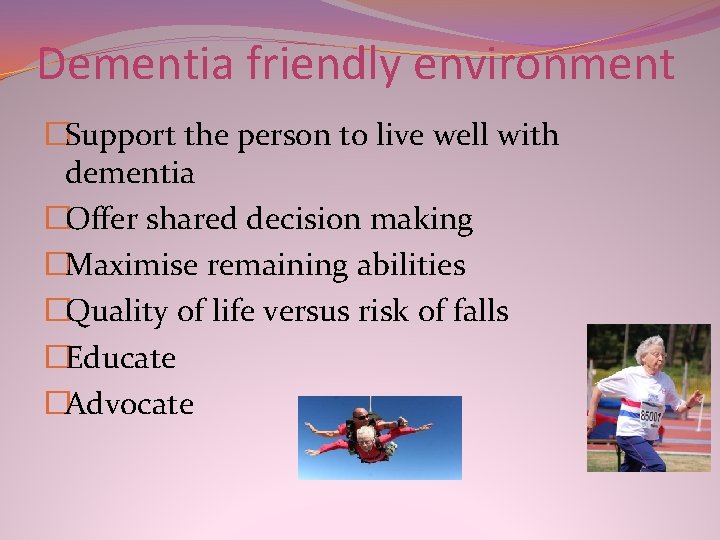
Dementia friendly environment �Support the person to live well with dementia �Offer shared decision making �Maximise remaining abilities �Quality of life versus risk of falls �Educate �Advocate
Thank you
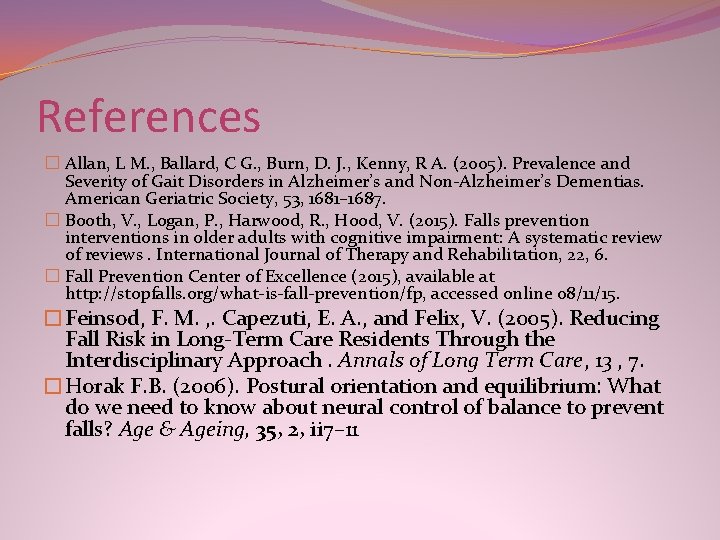
References � Allan, L M. , Ballard, C G. , Burn, D. J. , Kenny, R A. (2005). Prevalence and Severity of Gait Disorders in Alzheimer’s and Non-Alzheimer’s Dementias. American Geriatric Society, 53, 1681– 1687. � Booth, V. , Logan, P. , Harwood, R. , Hood, V. (2015). Falls prevention interventions in older adults with cognitive impairment: A systematic review of reviews. International Journal of Therapy and Rehabilitation, 22, 6. � Fall Prevention Center of Excellence (2015), available at http: //stopfalls. org/what-is-fall-prevention/fp, accessed online 08/11/15. �Feinsod, F. M. , . Capezuti, E. A. , and Felix, V. (2005). Reducing Fall Risk in Long-Term Care Residents Through the Interdisciplinary Approach. Annals of Long Term Care, 13 , 7. �Horak F. B. (2006). Postural orientation and equilibrium: What do we need to know about neural control of balance to prevent falls? Age & Ageing, 35, 2, ii 7– 11
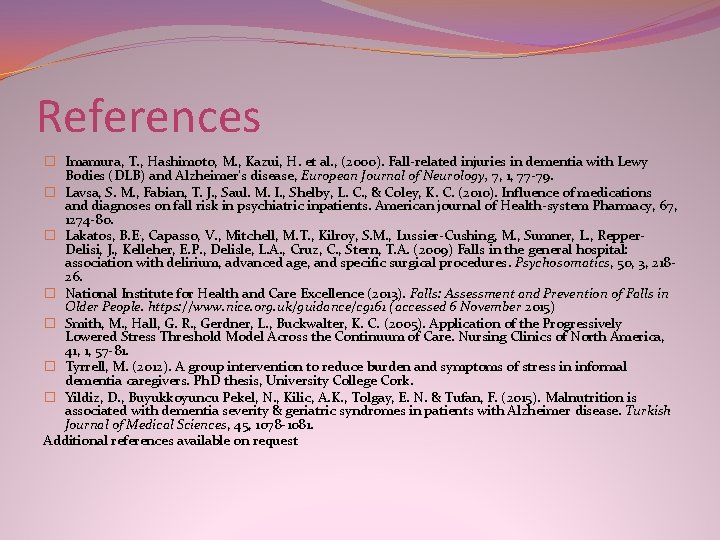
References � Imamura, T. , Hashimoto, M. , Kazui, H. et al. , (2000). Fall-related injuries in dementia with Lewy Bodies (DLB) and Alzheimer’s disease, European Journal of Neurology, 7, 1, 77 -79. � Lavsa, S. M. , Fabian, T. J. , Saul. M. I. , Shelby, L. C. , & Coley, K. C. (2010). Influence of medications and diagnoses on fall risk in psychiatric inpatients. American journal of Health-system Pharmacy, 67, 1274 -80. � Lakatos, B. E. , Capasso, V. , Mitchell, M. T. , Kilroy, S. M. , Lussier-Cushing, M. , Sumner, L. , Repper. Delisi, J. , Kelleher, E. P. , Delisle, L. A. , Cruz, C. , Stern, T. A. (2009) Falls in the general hospital: association with delirium, advanced age, and specific surgical procedures. Psychosomatics, 50, 3, 21826. � National Institute for Health and Care Excellence (2013). Falls: Assessment and Prevention of Falls in Older People. https: //www. nice. org. uk/guidance/cg 161 (accessed 6 November 2015) � Smith, M. , Hall, G. R. , Gerdner, L. , Buckwalter, K. C. (2005). Application of the Progressively Lowered Stress Threshold Model Across the Continuum of Care. Nursing Clinics of North America, 41, 1, 57 -81. � Tyrrell, M. (2012). A group intervention to reduce burden and symptoms of stress in informal dementia caregivers. Ph. D thesis, University College Cork. � Yildiz, D. , Buyukkoyuncu Pekel, N. , Kilic, A. K. , Tolgay, E. N. & Tufan, F. (2015). Malnutrition is associated with dementia severity & geriatric syndromes in patients with Alzheimer disease. Turkish Journal of Medical Sciences, 45, 1078 -1081. Additional references available on request