
Fall Prevention Training Program by Mark C Radomsky
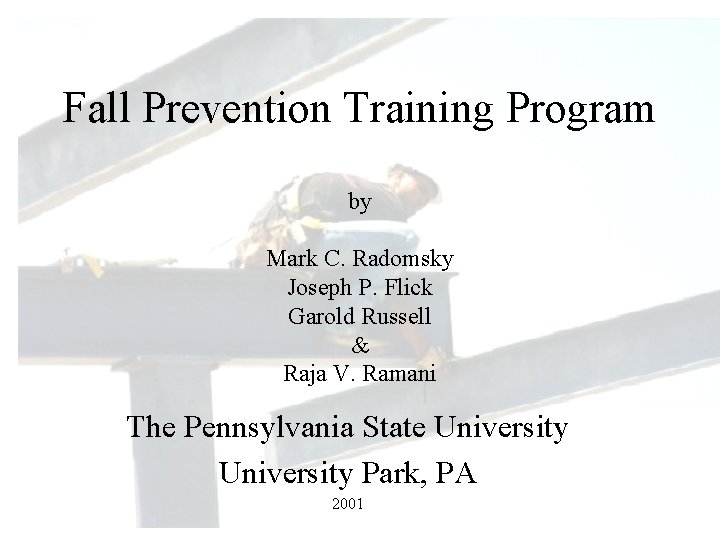
Fall Prevention Training Program by Mark C. Radomsky Joseph P. Flick Garold Russell & Raja V. Ramani The Pennsylvania State University Park, PA 2001
Why a Fall Prevention Training Program? Costs of pain, suffering and personal losses, lost services, production loss, and property damage are astronomical and needless • Each year, about 15, 000 people in the U. S. die from unintentional falls • Falls are the second leading cause of unintentional-injury deaths in the workplace • Over 700 U. S. workers per year were killed by falls at work between 1996 and 1999 • About 300, 000 fall-related lost-time injuries also occur each year
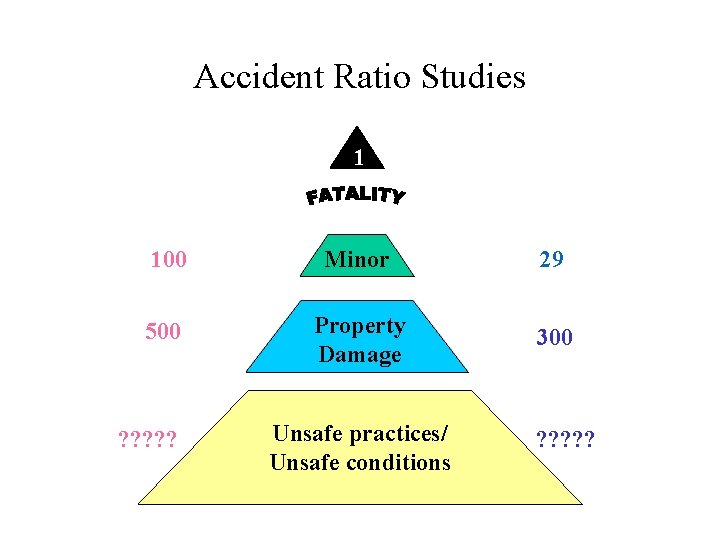
Accident Ratio Studies 1 100 Minor 29 500 Property Damage 300 ? ? ? Unsafe practices/ Unsafe conditions ? ? ?
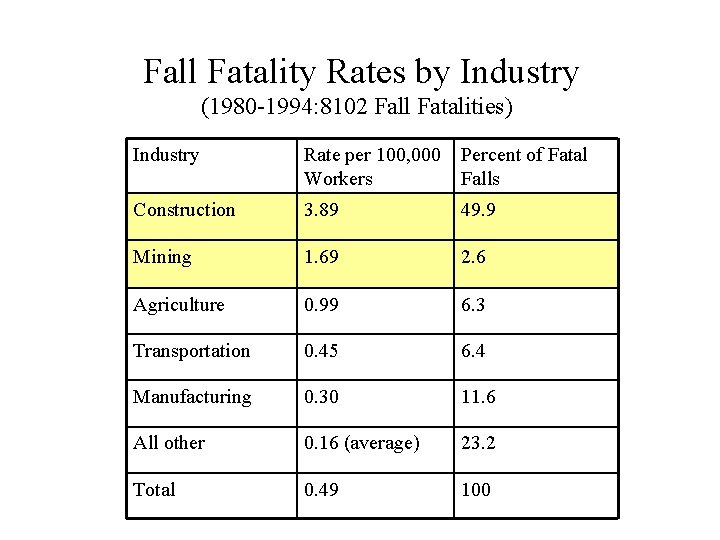
Fall Fatality Rates by Industry (1980 -1994: 8102 Fall Fatalities) Industry Rate per 100, 000 Workers Percent of Fatal Falls Construction 3. 89 49. 9 Mining 1. 69 2. 6 Agriculture 0. 99 6. 3 Transportation 0. 45 6. 4 Manufacturing 0. 30 11. 6 All other 0. 16 (average) 23. 2 Total 0. 49 100

Program Goals • Elimination/reduction of fall hazards • Reduction of fall incidence rates • Reduction of fall injury/severity rates
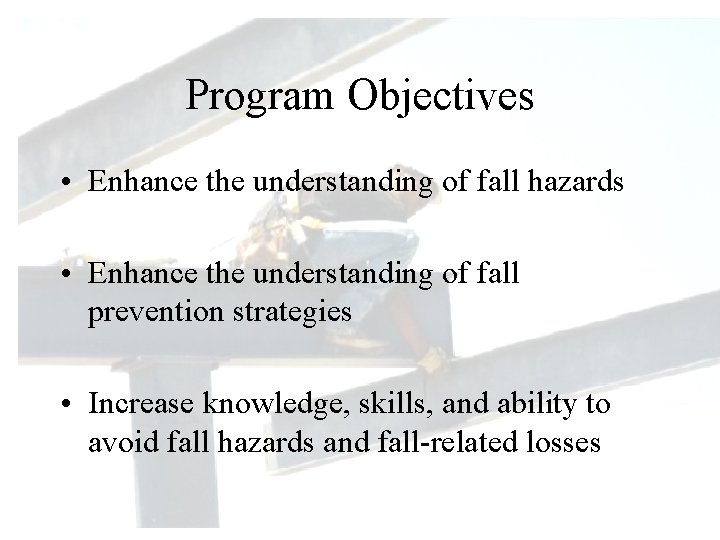
Program Objectives • Enhance the understanding of fall hazards • Enhance the understanding of fall prevention strategies • Increase knowledge, skills, and ability to avoid fall hazards and fall-related losses
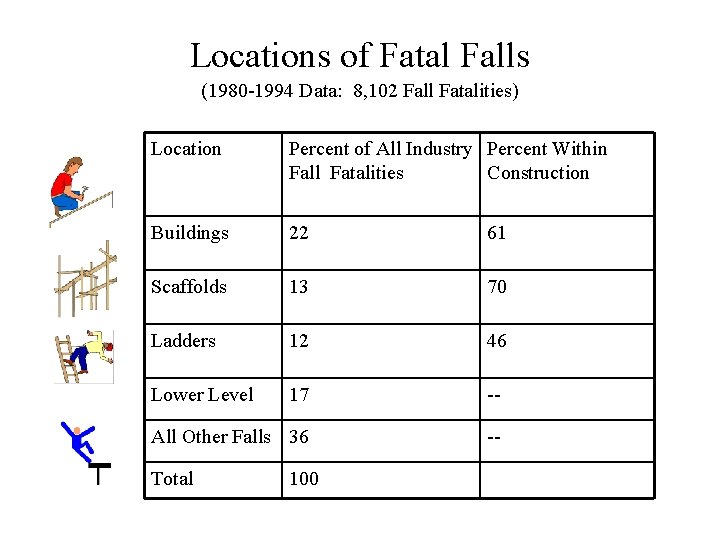
Locations of Fatal Falls (1980 -1994 Data: 8, 102 Fall Fatalities) Location Percent of All Industry Percent Within Fall Fatalities Construction Buildings 22 61 Scaffolds 13 70 Ladders 12 46 Lower Level 17 -- All Other Falls 36 -- Total 100
Perception of Hazards Essential to Recognize, Avoid, and Control Them Perceive—v. t. , to grasp or take in mentally, to become aware of through the senses; perception—the process of perceiving • Training makes a person more proficient in perception—increasing perception by enhancing knowledge and awareness through education and training
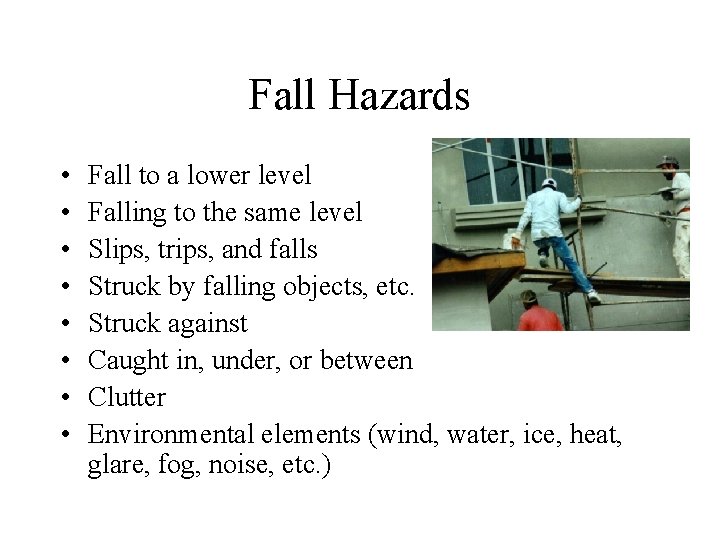
Fall Hazards • • Fall to a lower level Falling to the same level Slips, trips, and falls Struck by falling objects, etc. Struck against Caught in, under, or between Clutter Environmental elements (wind, water, ice, heat, glare, fog, noise, etc. )
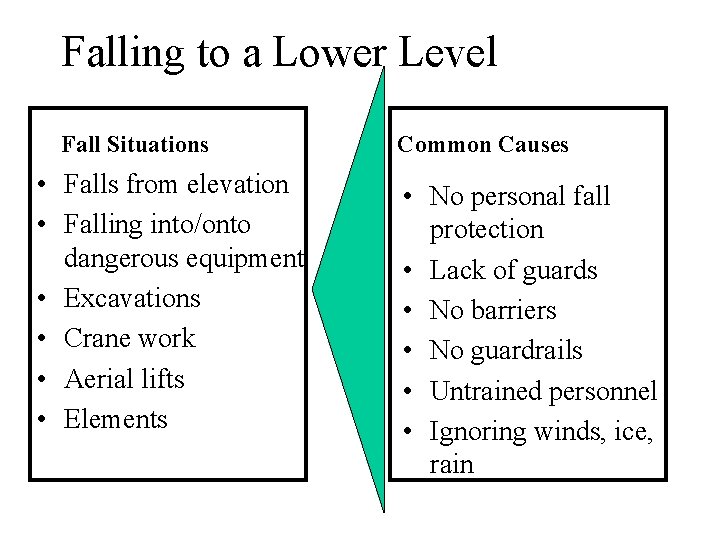
Falling to a Lower Level Fall Situations • Falls from elevation • Falling into/onto dangerous equipment • Excavations • Crane work • Aerial lifts • Elements Common Causes • No personal fall protection • Lack of guards • No barriers • No guardrails • Untrained personnel • Ignoring winds, ice, rain
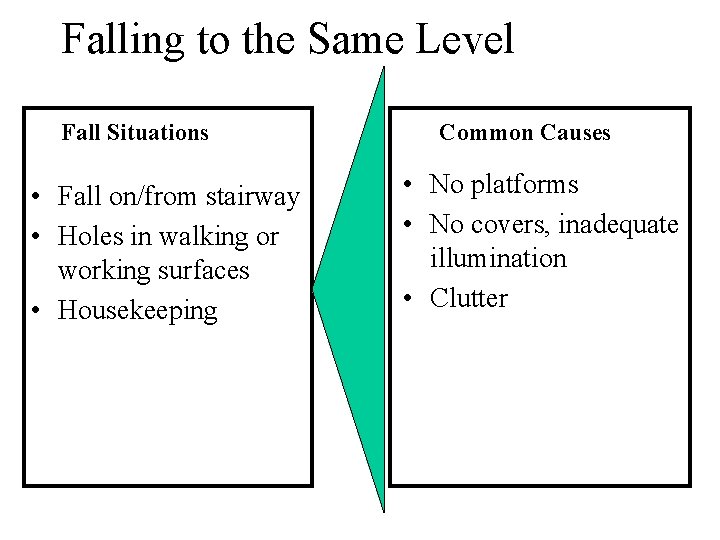
Falling to the Same Level Fall Situations • Fall on/from stairway • Holes in walking or working surfaces • Housekeeping Common Causes • No platforms • No covers, inadequate illumination • Clutter
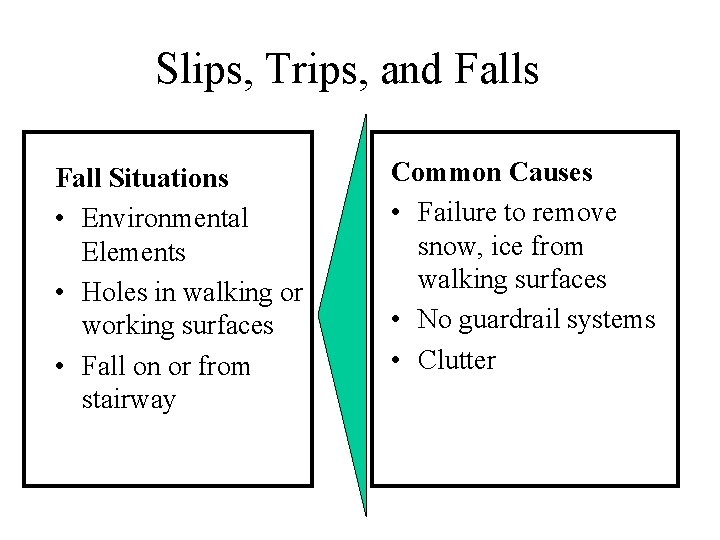
Slips, Trips, and Falls Fall Situations • Environmental Elements • Holes in walking or working surfaces • Fall on or from stairway Common Causes • Failure to remove snow, ice from walking surfaces • No guardrail systems • Clutter
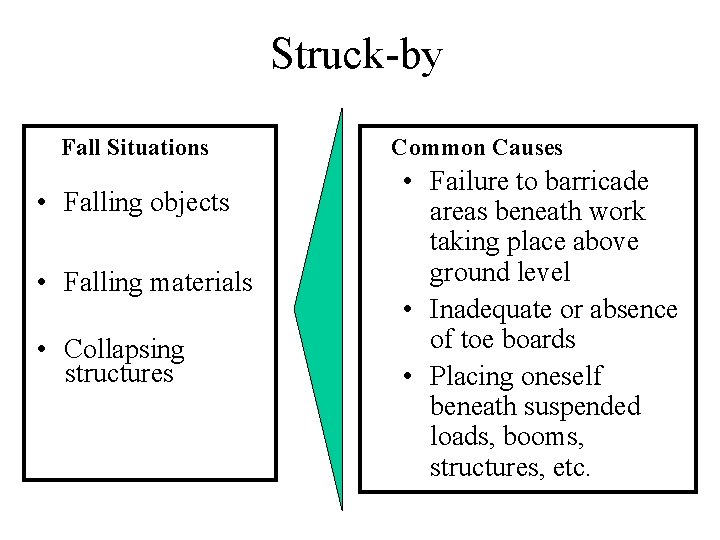
Struck-by Fall Situations • Falling objects • Falling materials • Collapsing structures Common Causes • Failure to barricade areas beneath work taking place above ground level • Inadequate or absence of toe boards • Placing oneself beneath suspended loads, booms, structures, etc.
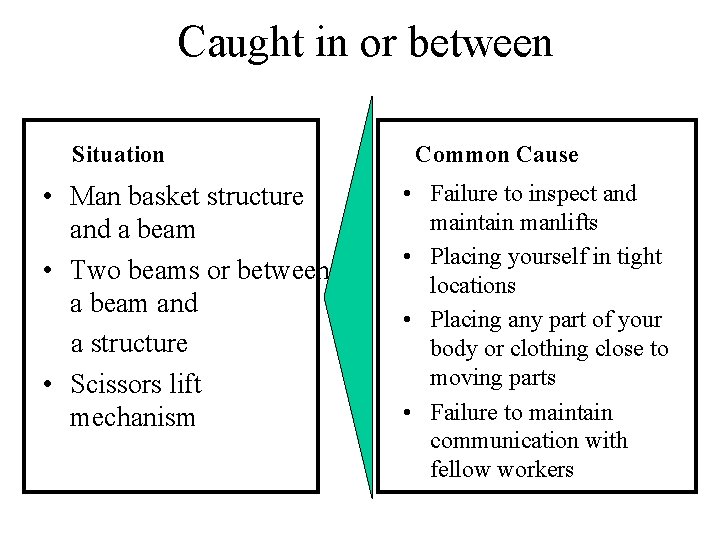
Caught in or between Situation • Man basket structure and a beam • Two beams or between a beam and a structure • Scissors lift mechanism Common Cause • Failure to inspect and maintain manlifts • Placing yourself in tight locations • Placing any part of your body or clothing close to moving parts • Failure to maintain communication with fellow workers
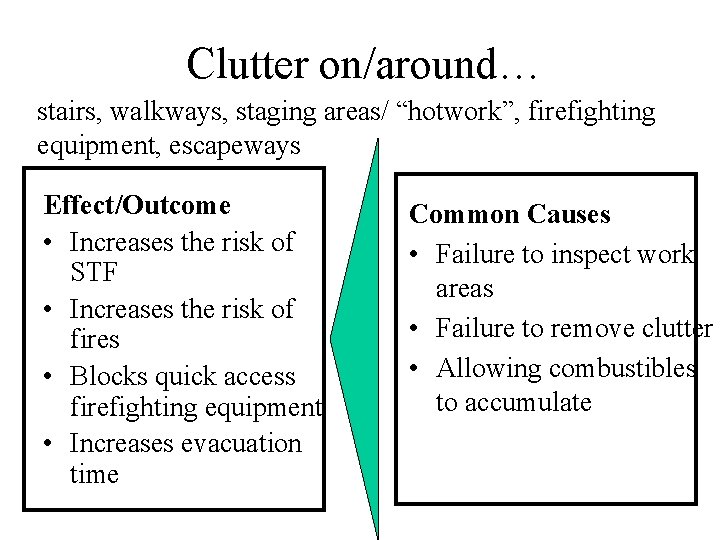
Clutter on/around… stairs, walkways, staging areas/ “hotwork”, firefighting equipment, escapeways Effect/Outcome • Increases the risk of STF • Increases the risk of fires • Blocks quick access firefighting equipment • Increases evacuation time Common Causes • Failure to inspect work areas • Failure to remove clutter • Allowing combustibles to accumulate
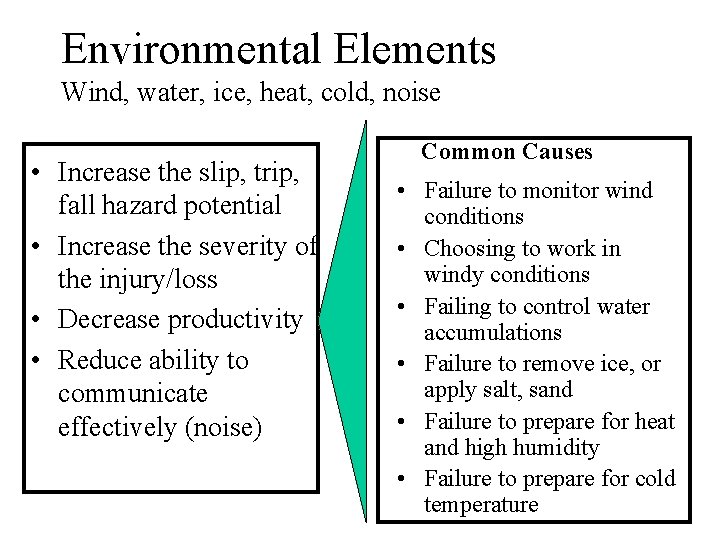
Environmental Elements Wind, water, ice, heat, cold, noise • Increase the slip, trip, fall hazard potential • Increase the severity of the injury/loss • Decrease productivity • Reduce ability to communicate effectively (noise) Common Causes • Failure to monitor wind conditions • Choosing to work in windy conditions • Failing to control water accumulations • Failure to remove ice, or apply salt, sand • Failure to prepare for heat and high humidity • Failure to prepare for cold temperature
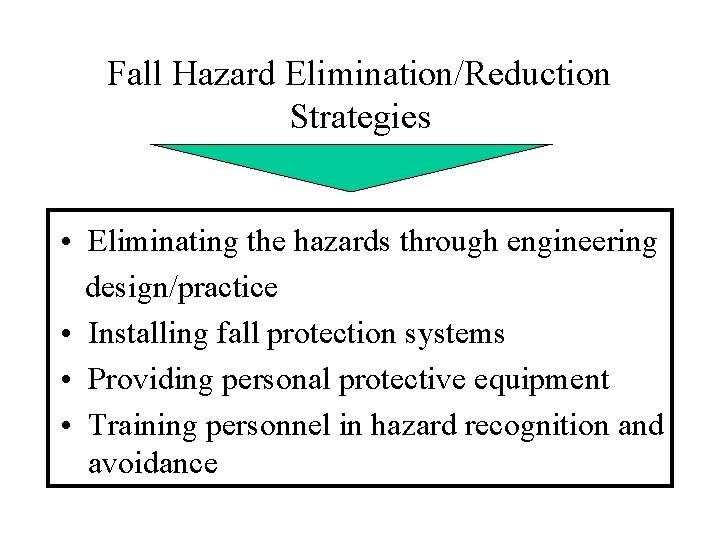
Fall Hazard Elimination/Reduction Strategies • Eliminating the hazards through engineering design/practice • Installing fall protection systems • Providing personal protective equipment • Training personnel in hazard recognition and avoidance
Engineering • • Follow all applicable laws/regulations (CFR 29, 1926) Evaluate alternative equipment, alternative methods Conduct JSA/design jobs to avoid hazards Evaluate maintenance, housekeeping needs, and develop policies, procedures • Develop written procedures (plans, protocols, checklists) for JSA, inspections, maintenance, communication, etc. • Develop and implement training for each job/each equipment procedure
Fall Protection Systems • • Guardrails Safety net Personal fall arrest Warning line system and: – – Guardrail Safety net Personal fall arrest Safety monitoring • Controlled access zone • Choose the appropriate system • Meet design standards • Protected against damage • Comply with personnel access restriction rules • Enforce standards through inspection and maintenance • Have written audit procedures • Train workers for safe use, inspection and reporting
Personal Protective Equipment • • Dee-rings & snap hooks Horizontal lifelines Lanyard or lifeline Anchorage point Connecting devices Hard hat Body belt Body harness • Meet all design requirements • Use according to manufacturers’ directions • Install under supervision, where applicable • Protect against damage • Standards for procurement & distribution • Train personnel for safe use, inspection, reporting
Develop and Implement Training Programs • • Hazard Recognition Training Equipment Inspection/Use Training JSA/Task Training in communication/reporting procedures of the organization • Use Multimedia Enhanced Training
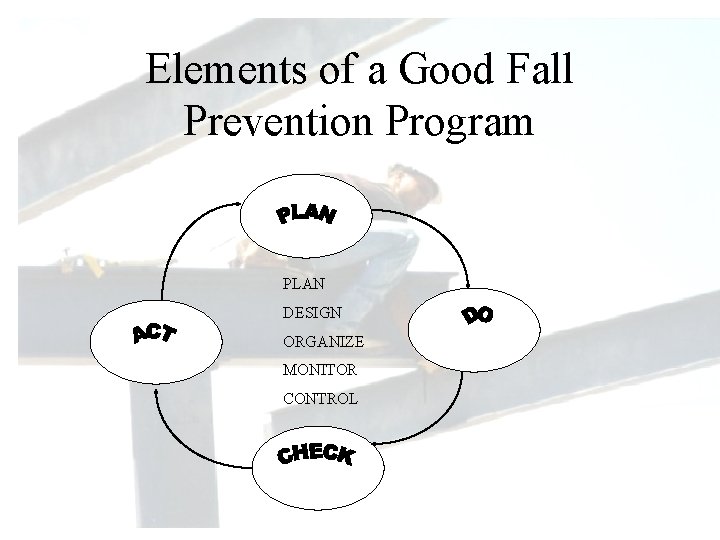
Elements of a Good Fall Prevention Program PLAN DESIGN ORGANIZE MONITOR CONTROL
Two Key Organizational Factors • Management’s Commitment to Outstanding Health and Safety Performance Must be Transparent Through its Actions • Worker’s Unconditional Cooperation Through Continuous Compliance with all Known Hazard Prevention Programs and Practices
- Slides: 23