
Fall of Communism Background The Soviet Union Nikita
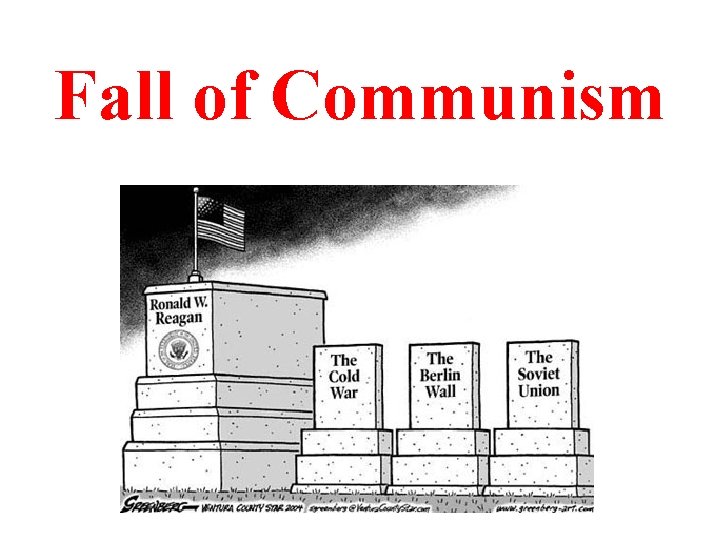
Fall of Communism

Background: The Soviet Union • Nikita Khrushev: Stalin’s successor – De-Stalinization – “Peaceful Co-existence” with West – Intolerant of independence movements • Hungary – Increased Arms Race – Removed and under house arrest from 1964 -1971
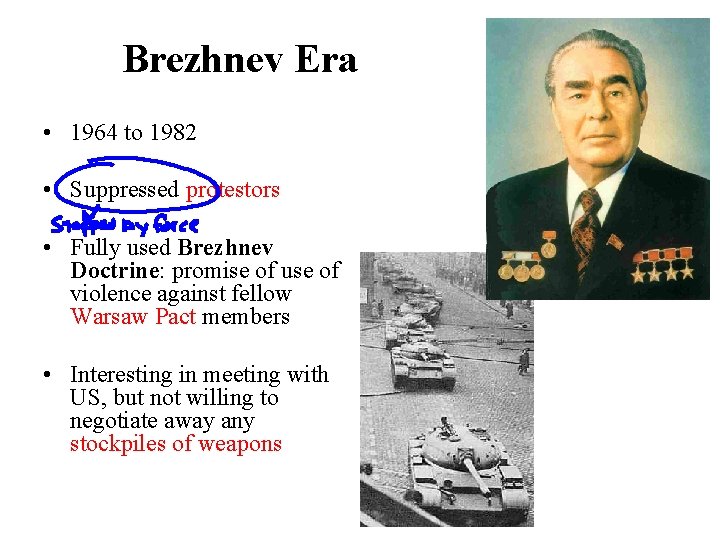
Brezhnev Era • 1964 to 1982 • Suppressed protestors • Fully used Brezhnev Doctrine: promise of use of violence against fellow Warsaw Pact members • Interesting in meeting with US, but not willing to negotiate away any stockpiles of weapons
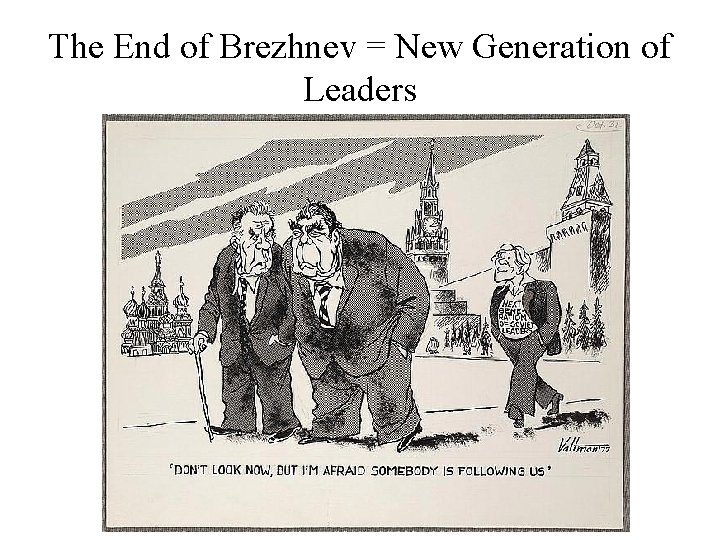
The End of Brezhnev = New Generation of Leaders
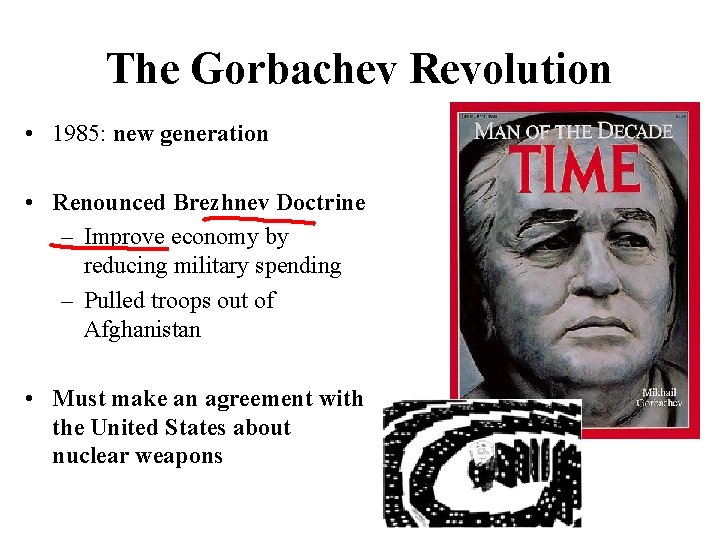
The Gorbachev Revolution • 1985: new generation • Renounced Brezhnev Doctrine – Improve economy by reducing military spending – Pulled troops out of Afghanistan • Must make an agreement with the United States about nuclear weapons
Gorbachev Reform • Glasnost: “openness” – Ended censorship, encouraged discussion of problems • Perestroika – Restructuring of the government and economy – Reduced size of bureaucracy – Backed free marked reform – “essence of communism” • State still owns factories, but managers make decisions • Land is still owned by state, but farmers can have more for personal profit • Eliminates Soviet monopoly on political parties
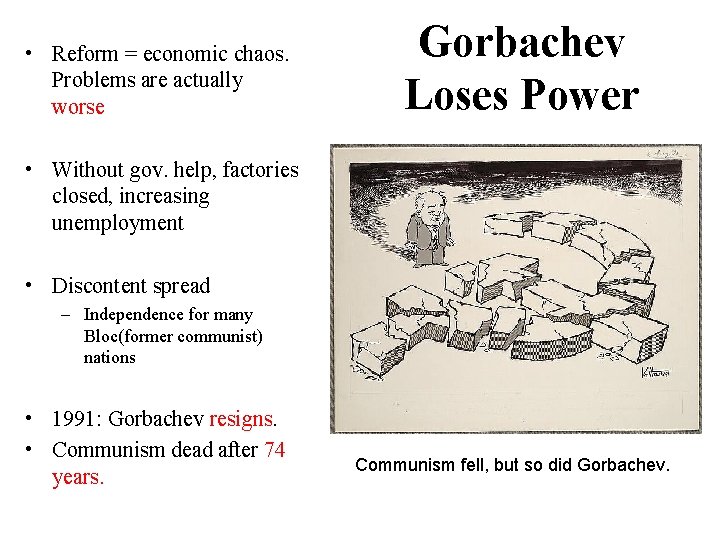
• Reform = economic chaos. Problems are actually worse Gorbachev Loses Power • Without gov. help, factories closed, increasing unemployment • Discontent spread – Independence for many Bloc(former communist) nations • 1991: Gorbachev resigns. • Communism dead after 74 years. Communism fell, but so did Gorbachev.
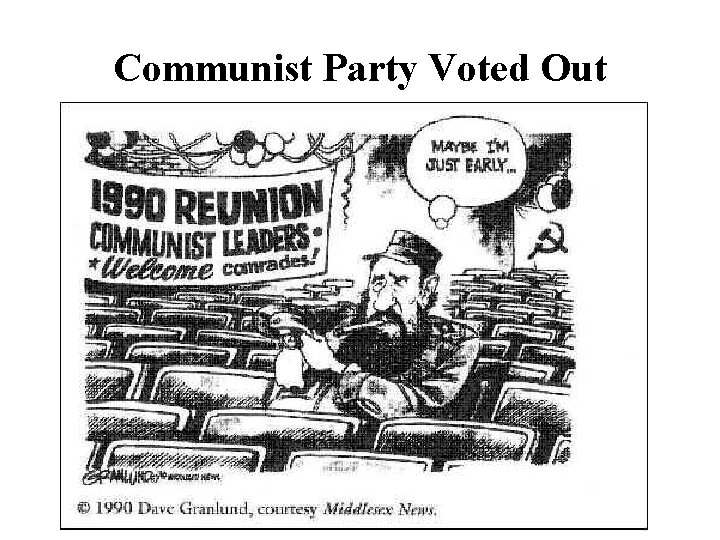
Communist Party Voted Out
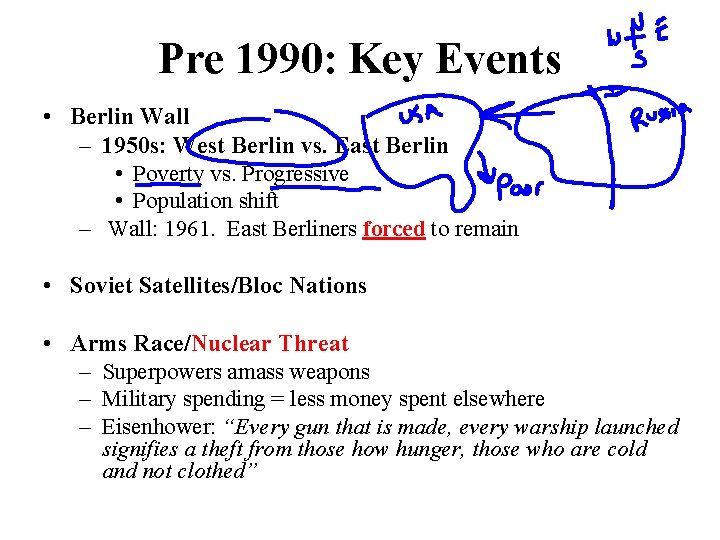
Pre 1990: Key Events • Berlin Wall – 1950 s: West Berlin vs. East Berlin • Poverty vs. Progressive • Population shift – Wall: 1961. East Berliners forced to remain • Soviet Satellites/Bloc Nations • Arms Race/Nuclear Threat – Superpowers amass weapons – Military spending = less money spent elsewhere – Eisenhower: “Every gun that is made, every warship launched signifies a theft from those how hunger, those who are cold and not clothed”
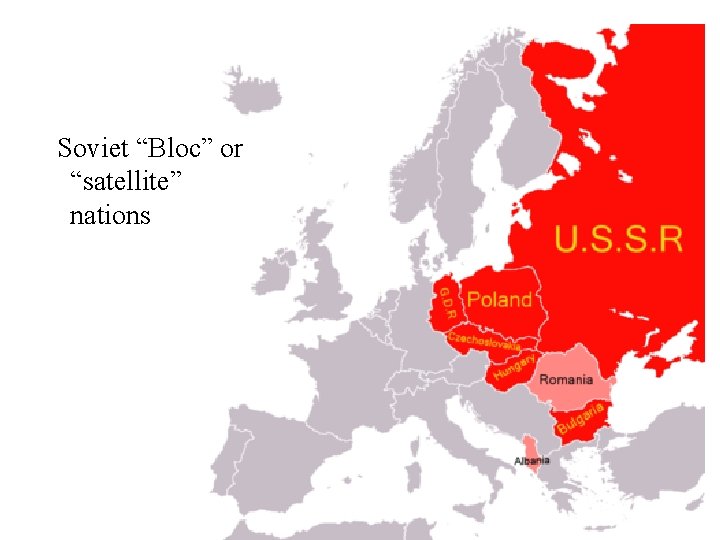
Soviet “Bloc” or “satellite” nations
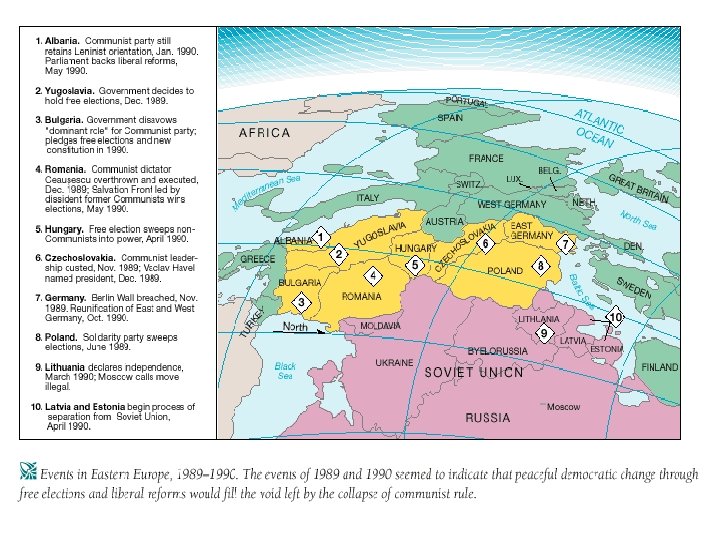
Revolutions of 1989 • From the “Spring of Nations” (1848) to the “Autumn of Nations” (1989) • Peaceful revolutions throughout Eastern Europe – Altered world balance of power – Ended era of communism – “Great Danger and Great Opportunity” co-exist
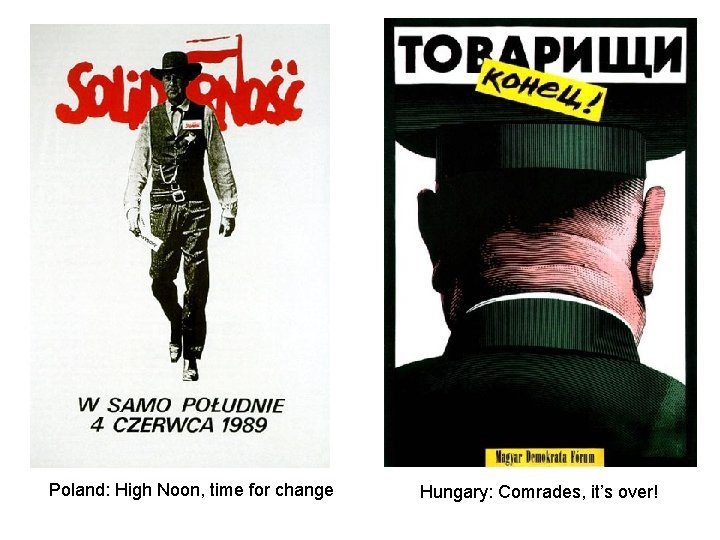
Poland: High Noon, time for change Hungary: Comrades, it’s over!
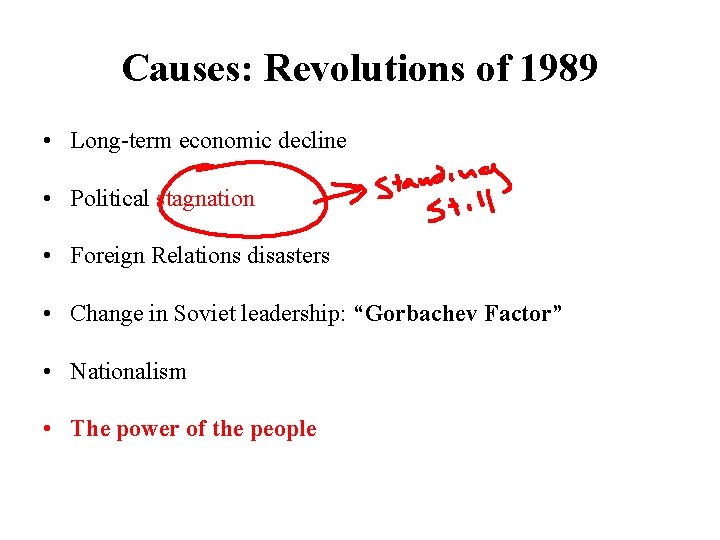
Causes: Revolutions of 1989 • Long-term economic decline • Political stagnation • Foreign Relations disasters • Change in Soviet leadership: “Gorbachev Factor” • Nationalism • The power of the people
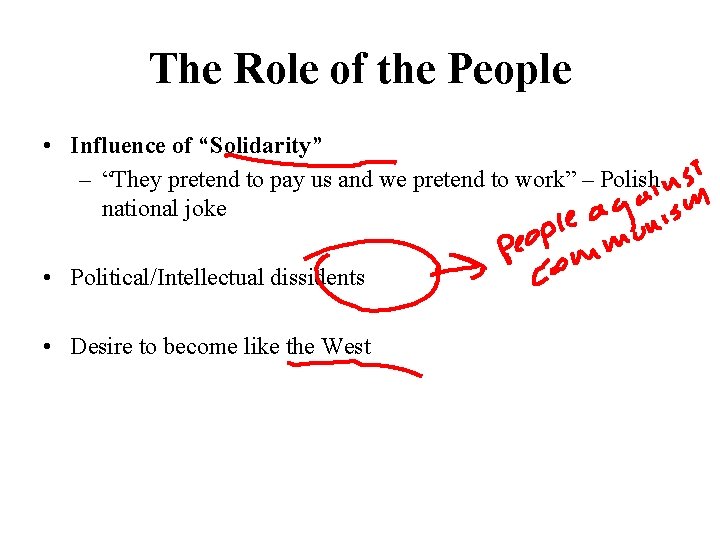
The Role of the People • Influence of “Solidarity” – “They pretend to pay us and we pretend to work” – Polish national joke • Political/Intellectual dissidents • Desire to become like the West
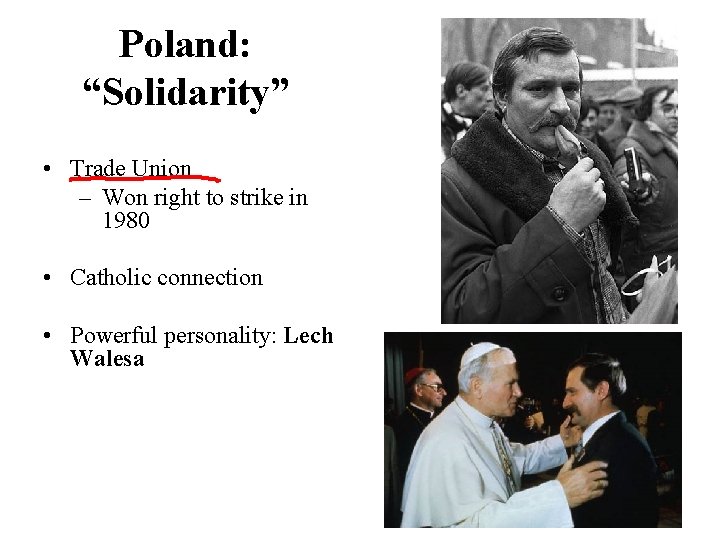
Poland: “Solidarity” • Trade Union – Won right to strike in 1980 • Catholic connection • Powerful personality: Lech Walesa
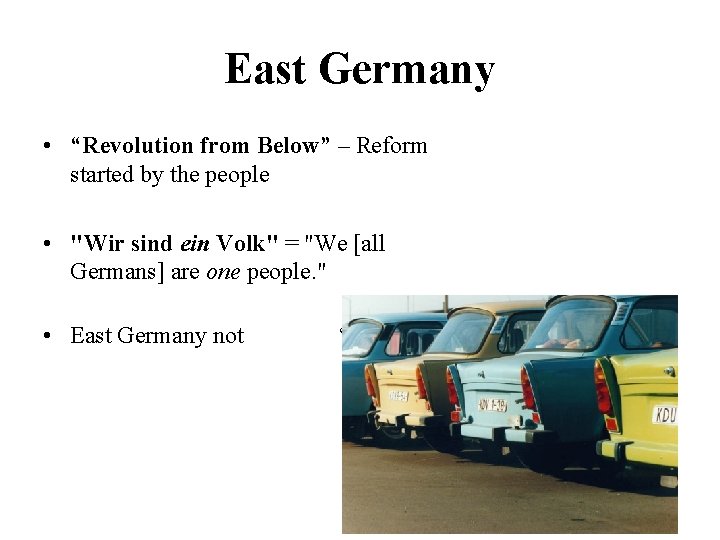
East Germany • “Revolution from Below” – Reform started by the people • "Wir sind ein Volk" = "We [all Germans] are one people. " • East Germany not “modern”
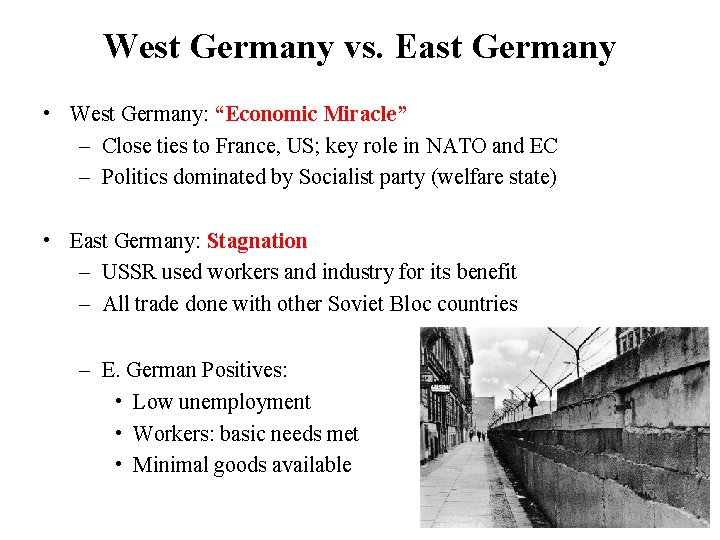
West Germany vs. East Germany • West Germany: “Economic Miracle” – Close ties to France, US; key role in NATO and EC – Politics dominated by Socialist party (welfare state) • East Germany: Stagnation – USSR used workers and industry for its benefit – All trade done with other Soviet Bloc countries – E. German Positives: • Low unemployment • Workers: basic needs met • Minimal goods available
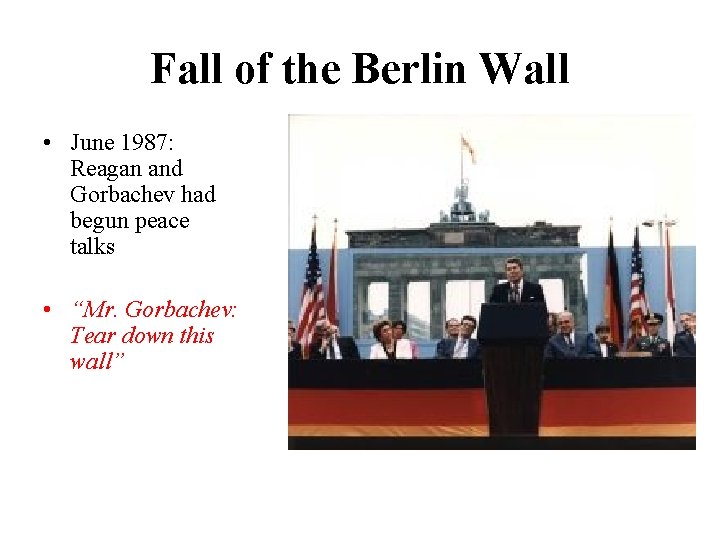
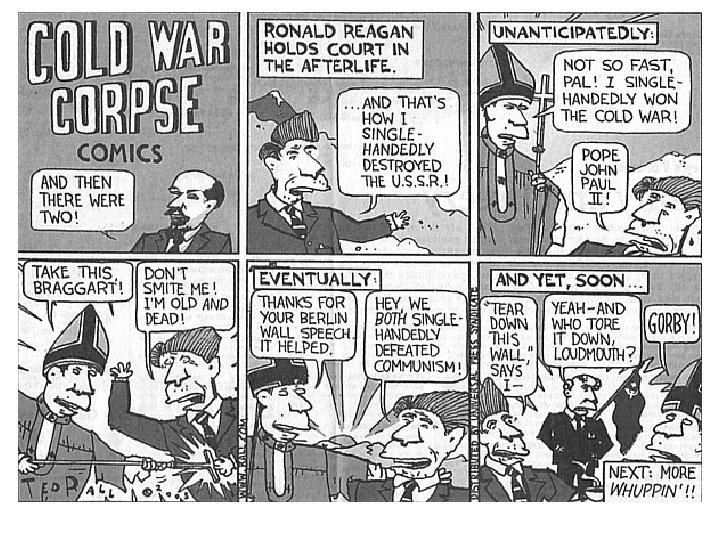
Fall of the Berlin Wall • June 1987: Reagan and Gorbachev had begun peace talks • “Mr. Gorbachev: Tear down this wall”
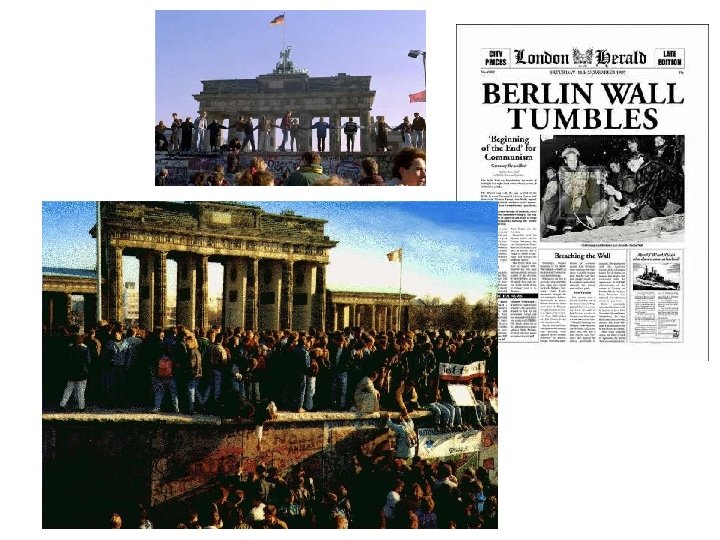
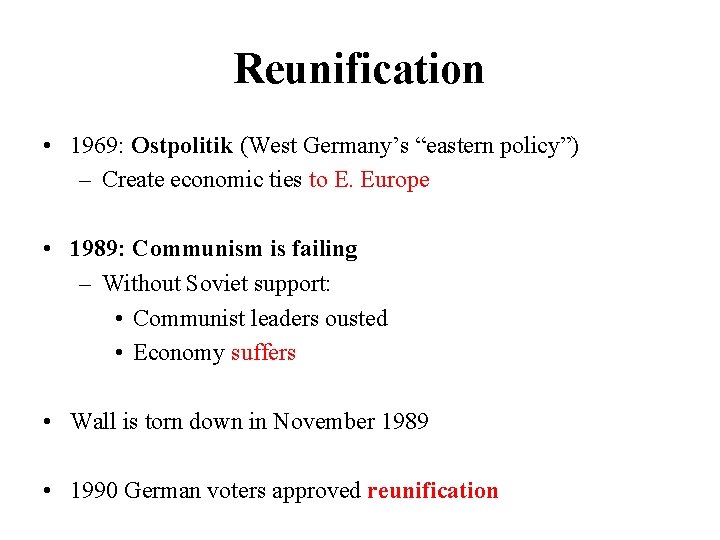
Reunification • 1969: Ostpolitik (West Germany’s “eastern policy”) – Create economic ties to E. Europe • 1989: Communism is failing – Without Soviet support: • Communist leaders ousted • Economy suffers • Wall is torn down in November 1989 • 1990 German voters approved reunification
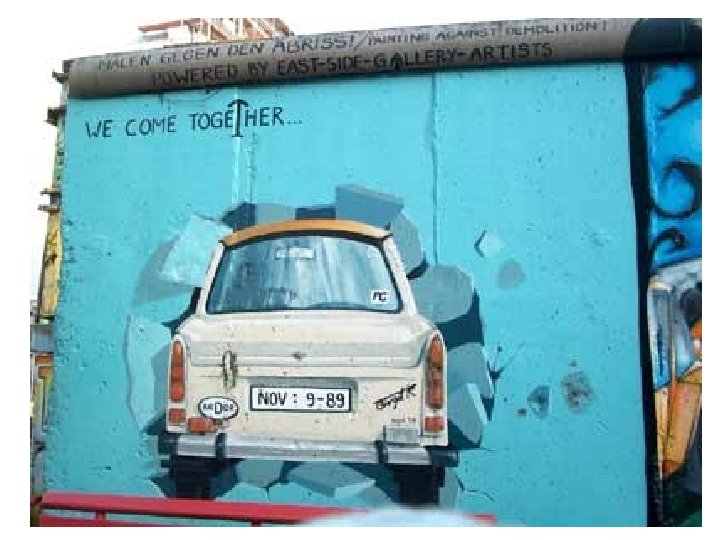
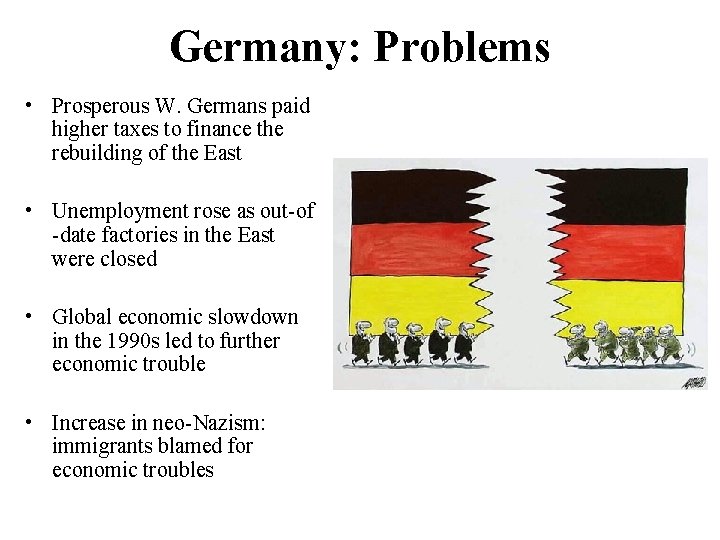
Germany: Problems • Prosperous W. Germans paid higher taxes to finance the rebuilding of the East • Unemployment rose as out-of -date factories in the East were closed • Global economic slowdown in the 1990 s led to further economic trouble • Increase in neo-Nazism: immigrants blamed for economic troubles
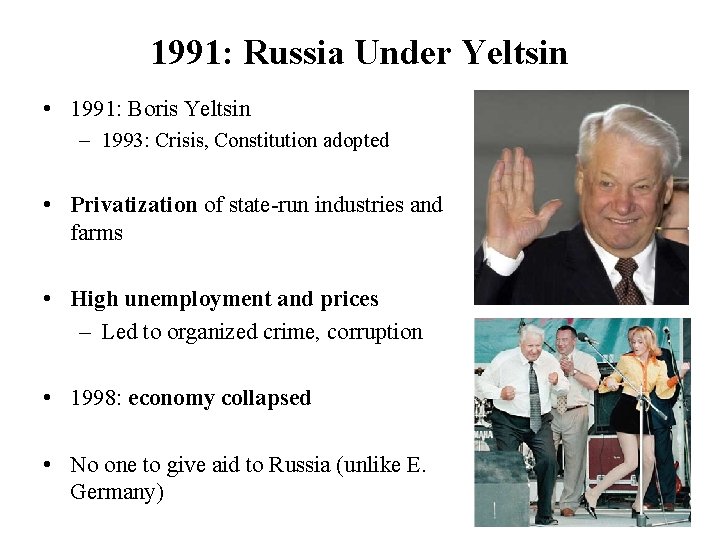
1991: Russia Under Yeltsin • 1991: Boris Yeltsin – 1993: Crisis, Constitution adopted • Privatization of state-run industries and farms • High unemployment and prices – Led to organized crime, corruption • 1998: economy collapsed • No one to give aid to Russia (unlike E. Germany)
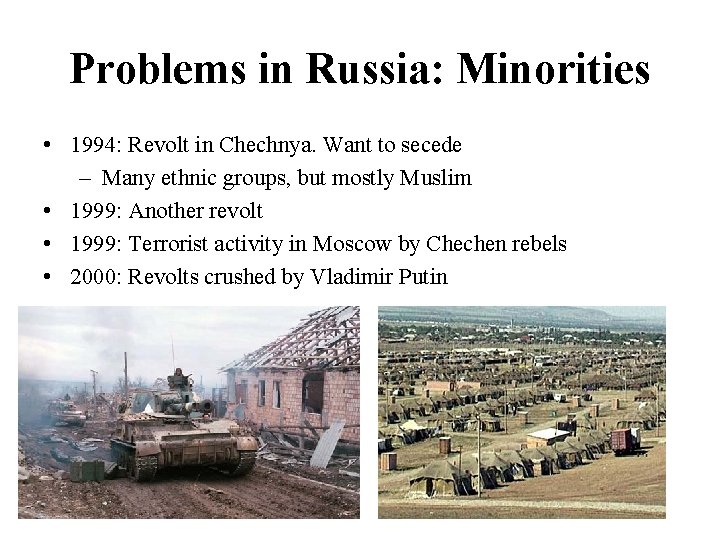
Problems in Russia: Minorities • 1994: Revolt in Chechnya. Want to secede – Many ethnic groups, but mostly Muslim • 1999: Another revolt • 1999: Terrorist activity in Moscow by Chechen rebels • 2000: Revolts crushed by Vladimir Putin

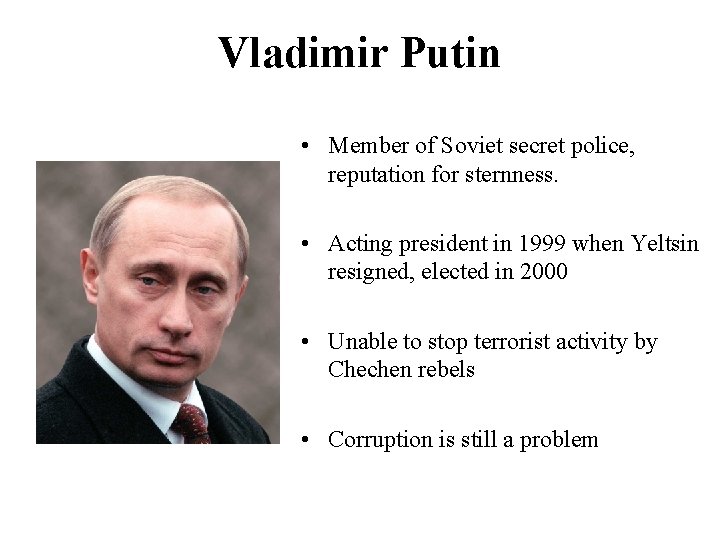
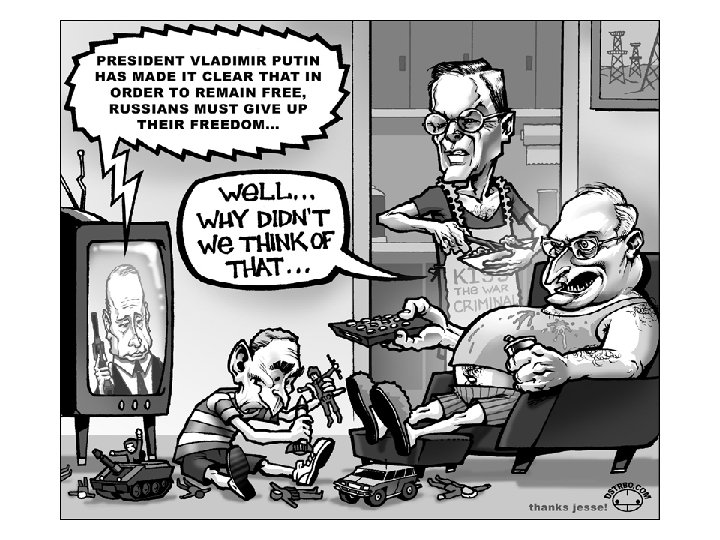
Vladimir Putin • Member of Soviet secret police, reputation for sternness. • Acting president in 1999 when Yeltsin resigned, elected in 2000 • Unable to stop terrorist activity by Chechen rebels • Corruption is still a problem
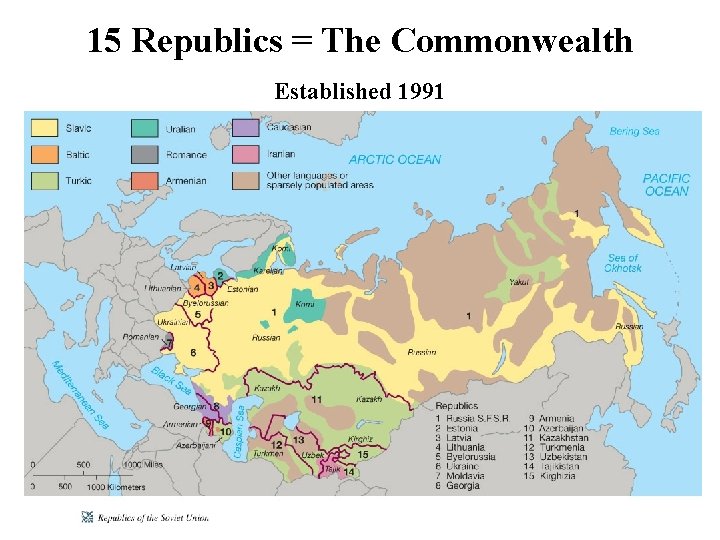
15 Republics = The Commonwealth Established 1991
Yugoslavia • • 1919: Kingdom of South Slavs Serb dominated Post WWII: Controlled by dictator 1991 – Slovenia declared independence, others followed – Bosnia and ethnic cleansing • Bosnia: Muslim dominated, but Bosnian Serbs wanted independence • Supported by Serbian president: Slobodan Milosevic
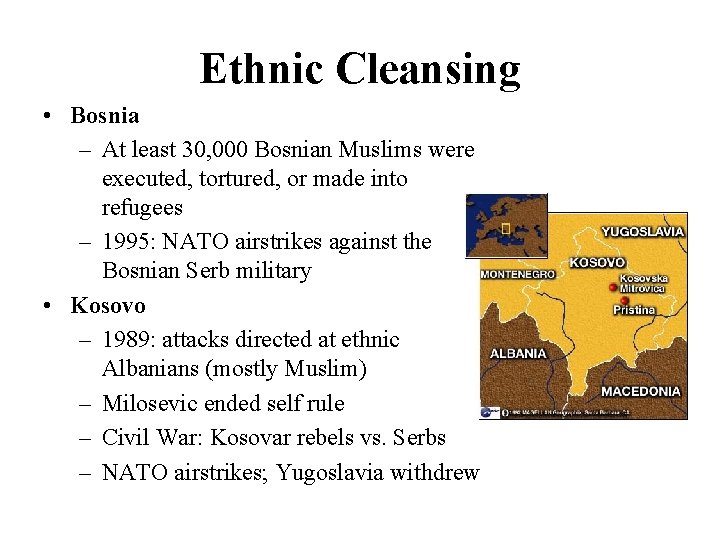
Ethnic Cleansing • Bosnia – At least 30, 000 Bosnian Muslims were executed, tortured, or made into refugees – 1995: NATO airstrikes against the Bosnian Serb military • Kosovo – 1989: attacks directed at ethnic Albanians (mostly Muslim) – Milosevic ended self rule – Civil War: Kosovar rebels vs. Serbs – NATO airstrikes; Yugoslavia withdrew
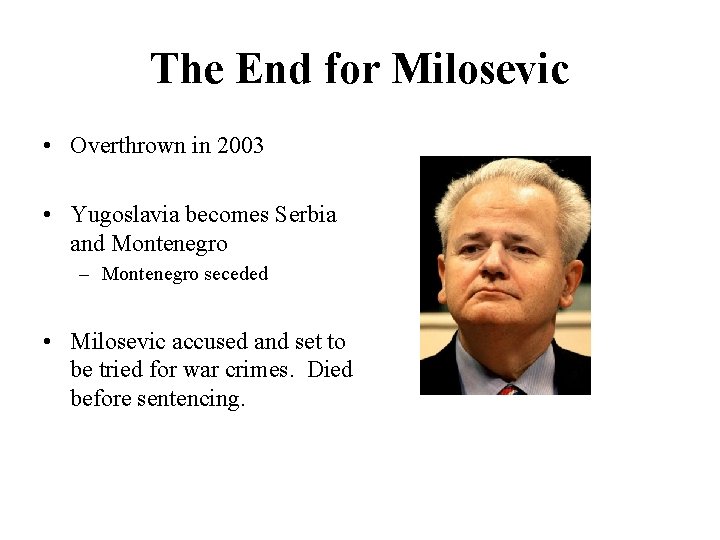
The End for Milosevic • Overthrown in 2003 • Yugoslavia becomes Serbia and Montenegro – Montenegro seceded • Milosevic accused and set to be tried for war crimes. Died before sentencing.
Europe in 2007 • Disillusionment has allowed some communist party members to be elected • Eastern nations have joined NATO and European Union • Ethnic tensions still dividing countries – Czechoslovakia now Czech Republic and Slovak Republic – Former Yugoslavia completely splintered
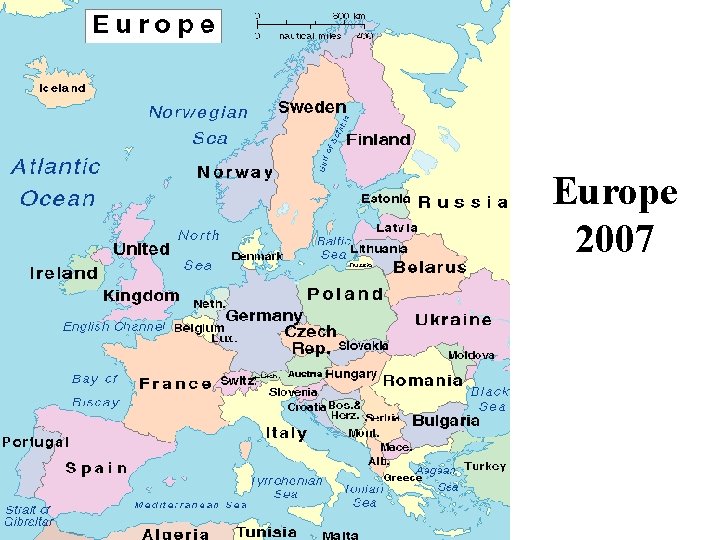
Europe 2007
- Slides: 36