
Fall Hazard Awareness Course for the Construction Industry


- Slides: 42
Fall Hazard Awareness Course for the Construction Industry
Objectives • Identify factors that contribute to common fall hazards • Explain how to analyze work areas for fall hazards • Discuss hierarchy of controls for fall hazards • Describe OSHA regulations and resources that address fall protection
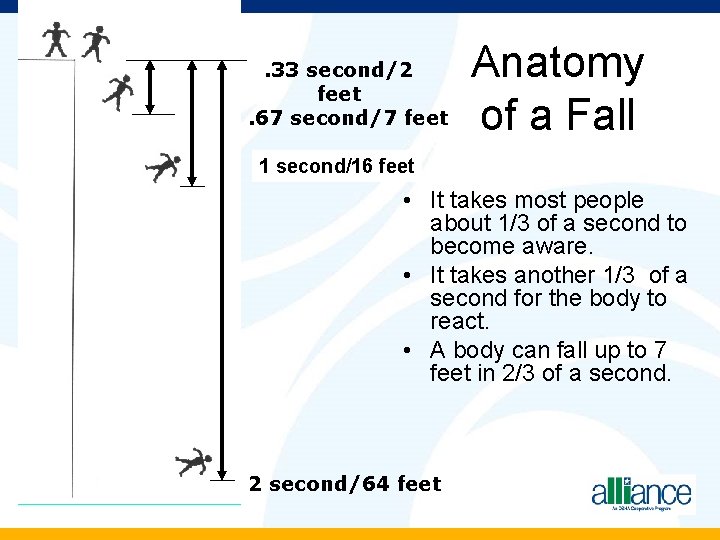
. 33 second/2 feet. 67 second/7 feet Anatomy of a Fall 1 second/16 feet • It takes most people about 1/3 of a second to become aware. • It takes another 1/3 of a second for the body to react. • A body can fall up to 7 feet in 2/3 of a second. 2 second/64 feet
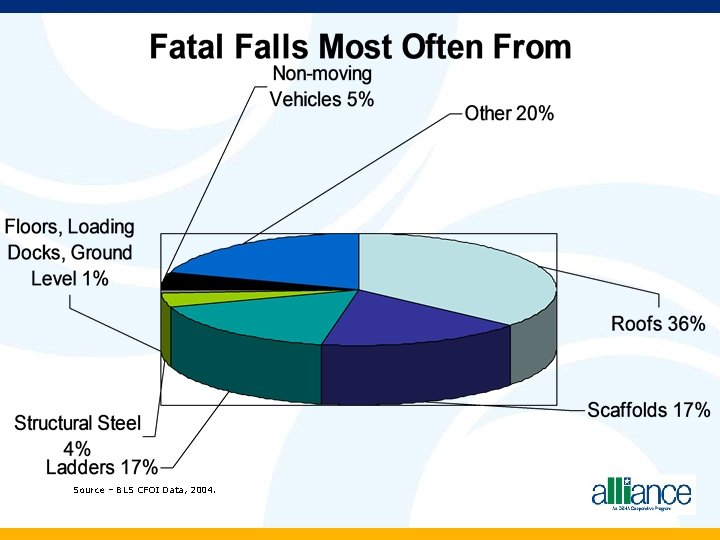
Falls • Falls consistently account for the greatest number of fatalities in the construction industry each year • In 2004, the Bureau of Labor Statistics reported that 1, 224 workplace fatalities resulted from falls • In addition, the hardship and cost of care for injuries related to falls is an emotional and financial burden for workers and the entire construction industry
Source – BLS CFOI Data, 2004.
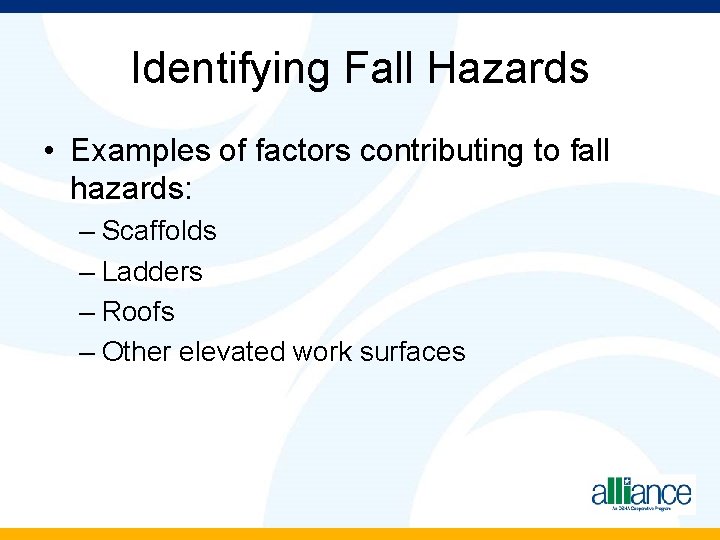
Identifying Fall Hazards • Examples of factors contributing to fall hazards: – Scaffolds – Ladders – Roofs – Other elevated work surfaces
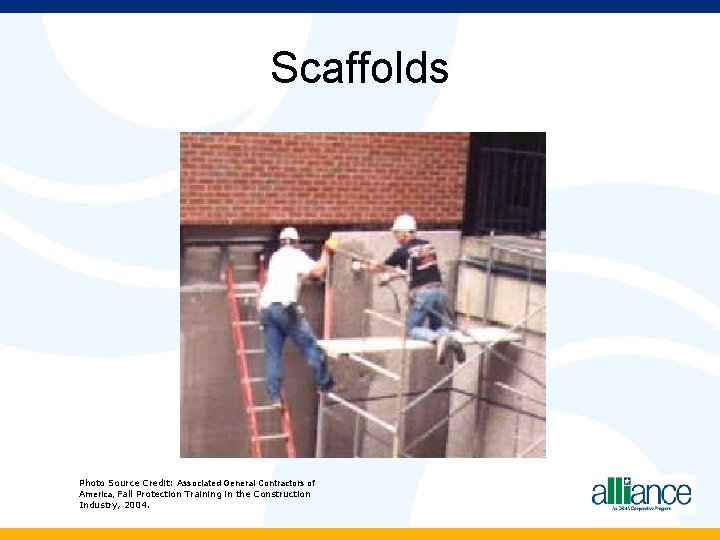
Scaffolds Photo Source Credit: Associated General Contractors of America, Fall Protection Training in the Construction Industry, 2004.
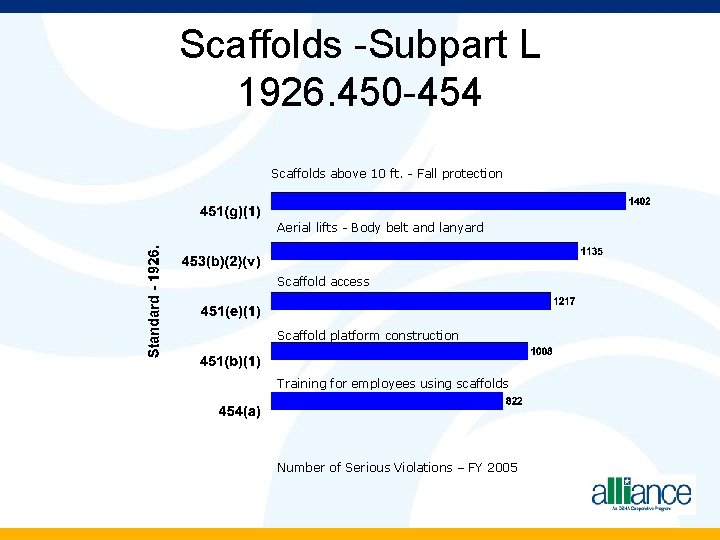
Scaffolds -Subpart L 1926. 450 -454 Scaffolds above 10 ft. - Fall protection Aerial lifts - Body belt and lanyard Scaffold access Scaffold platform construction Training for employees using scaffolds Number of Serious Violations – FY 2005
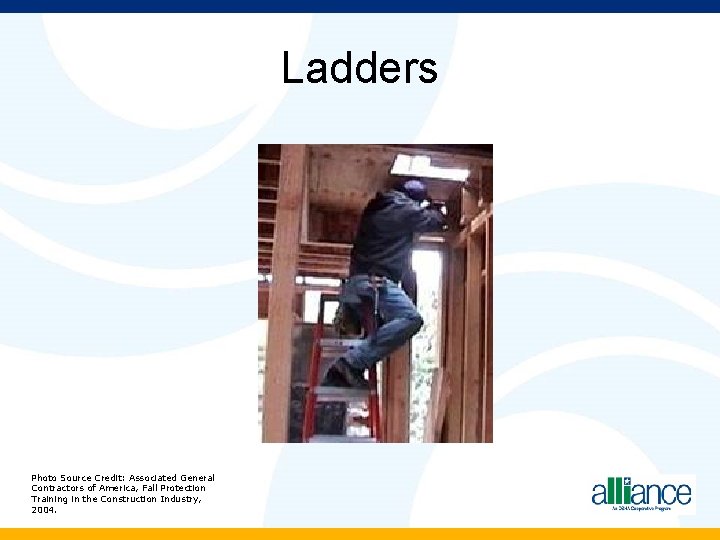
Ladders Photo Source Credit: Associated General Contractors of America, Fall Protection Training in the Construction Industry, 2004.
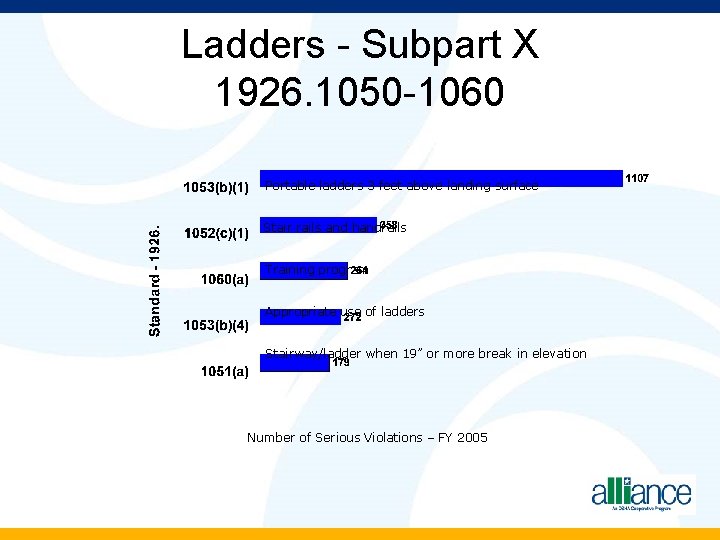
Ladders - Subpart X 1926. 1050 -1060 Portable ladders 3 feet above landing surface Stair rails and handrails Training program Appropriate use of ladders Stairway/ladder when 19” or more break in elevation Number of Serious Violations – FY 2005
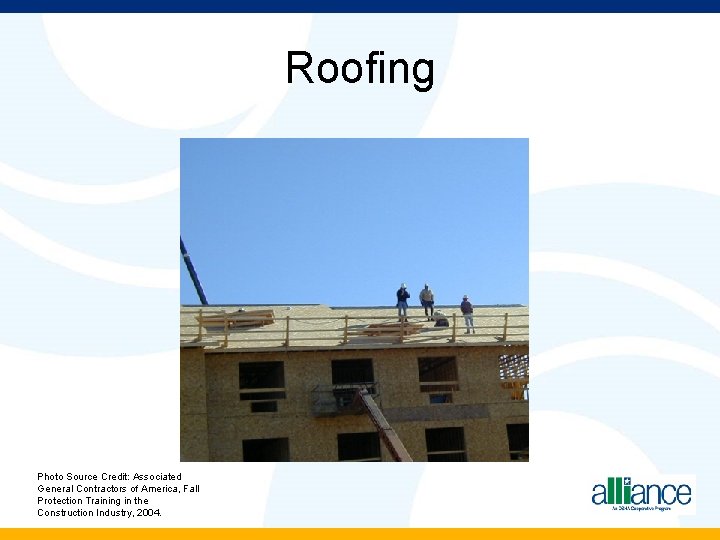
Roofing Photo Source Credit: Associated General Contractors of America, Fall Protection Training in the Construction Industry, 2004.
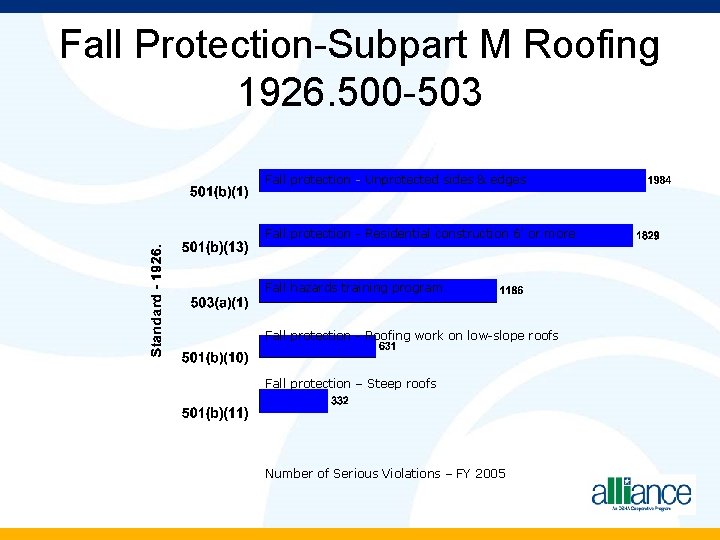
Fall Protection-Subpart M Roofing 1926. 500 -503 Fall protection - Unprotected sides & edges Fall protection - Residential construction 6’ or more Fall hazards training program Fall protection - Roofing work on low-slope roofs Fall protection – Steep roofs Number of Serious Violations – FY 2005
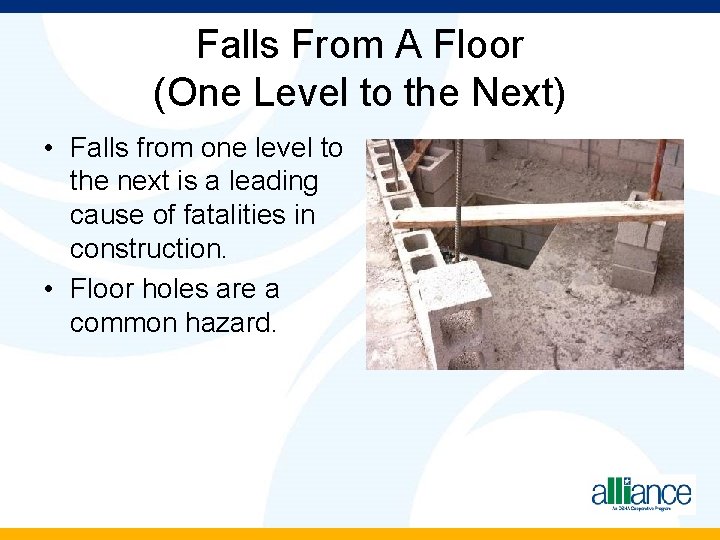
Falls From A Floor (One Level to the Next) • Falls from one level to the next is a leading cause of fatalities in construction. • Floor holes are a common hazard.
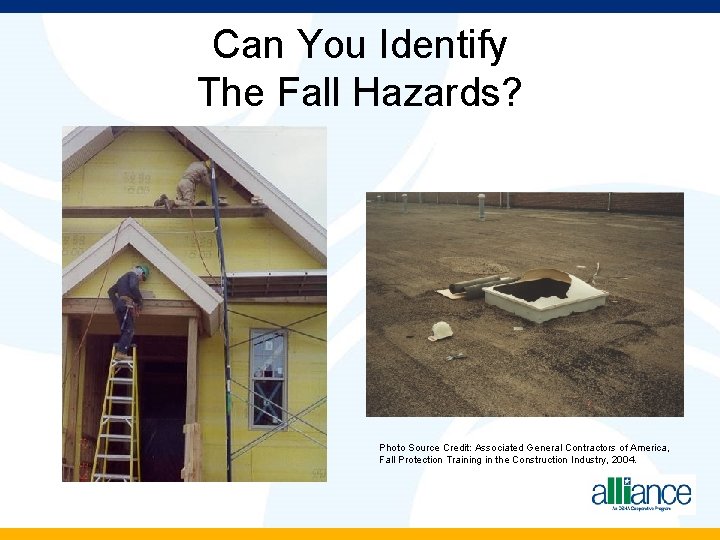
Can You Identify The Fall Hazards? Photo Source Credit: Associated General Contractors of America, Fall Protection Training in the Construction Industry, 2004.
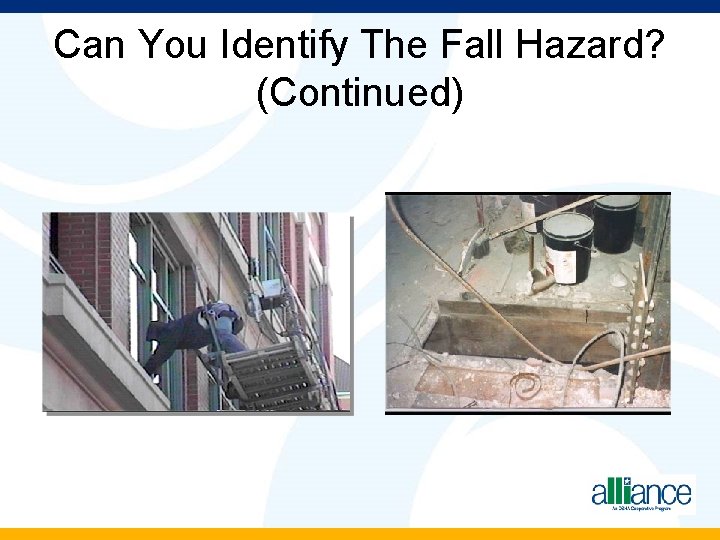
Can You Identify The Fall Hazard? (Continued)
Analyze Work Area • Analyzing work area for fall hazards may include: – Reviewing blueprints before work begins – Anticipating upcoming fall hazards as work progresses – Reviewing for current hazards on site – Pre-planning for fall protection – Walk around and look
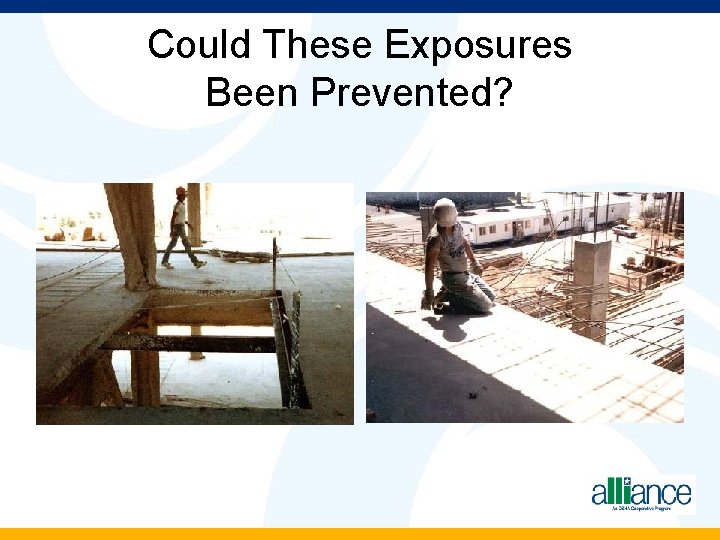
Could These Exposures Been Prevented?
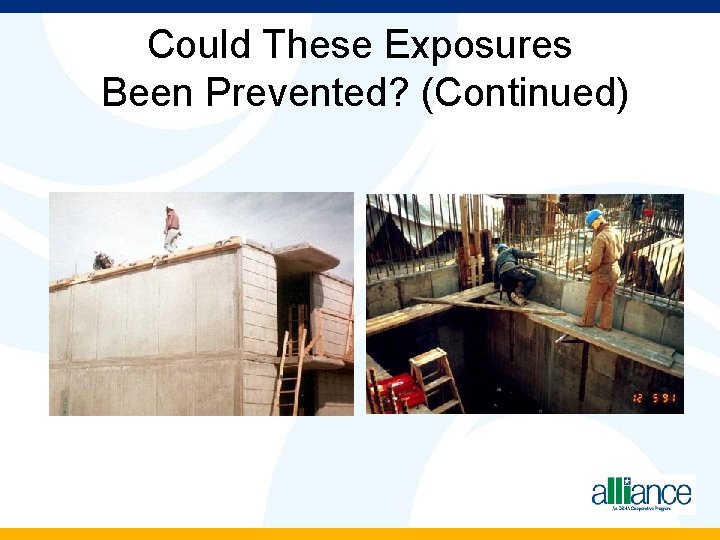
Could These Exposures Been Prevented? (Continued)
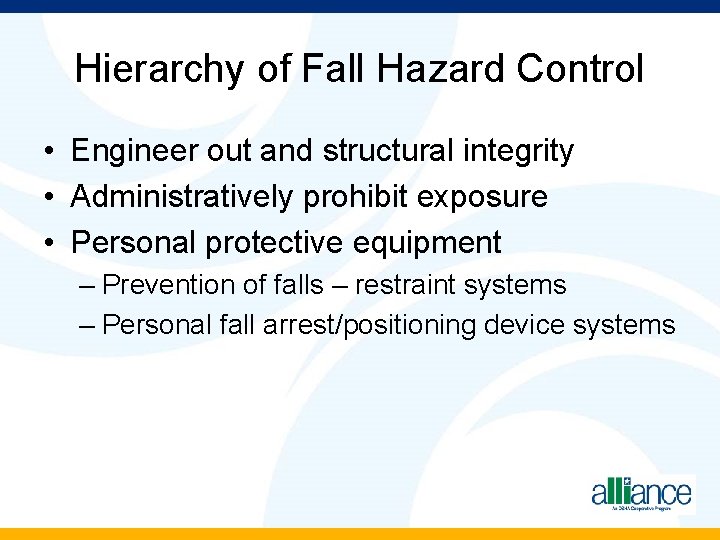
Hierarchy of Fall Hazard Control • Engineer out and structural integrity • Administratively prohibit exposure • Personal protective equipment – Prevention of falls – restraint systems – Personal fall arrest/positioning device systems
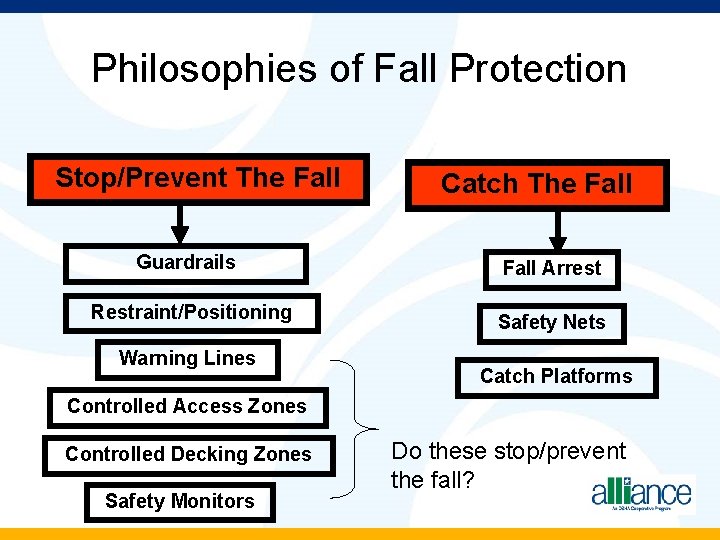
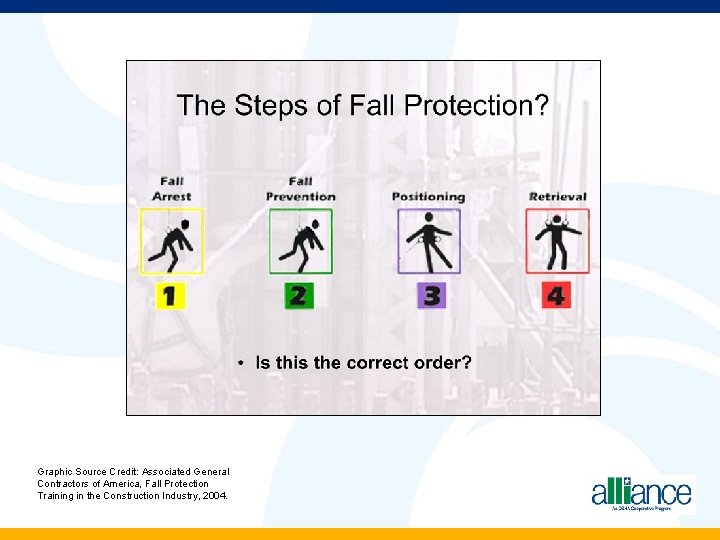
Philosophies of Fall Protection Stop/Prevent The Fall Guardrails Restraint/Positioning Warning Lines Catch The Fall Arrest Safety Nets Catch Platforms Controlled Access Zones Controlled Decking Zones Safety Monitors Do these stop/prevent the fall?
Graphic Source Credit: Associated General Contractors of America, Fall Protection Training in the Construction Industry, 2004.
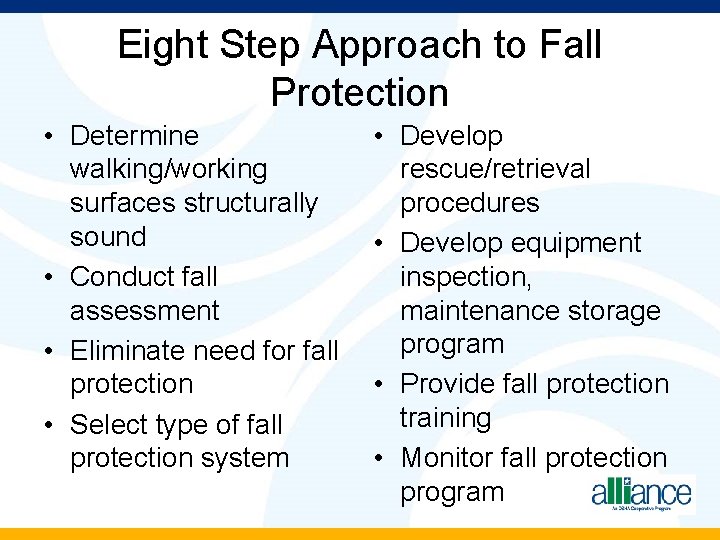
Eight Step Approach to Fall Protection • Determine walking/working surfaces structurally sound • Conduct fall assessment • Eliminate need for fall protection • Select type of fall protection system • Develop rescue/retrieval procedures • Develop equipment inspection, maintenance storage program • Provide fall protection training • Monitor fall protection program
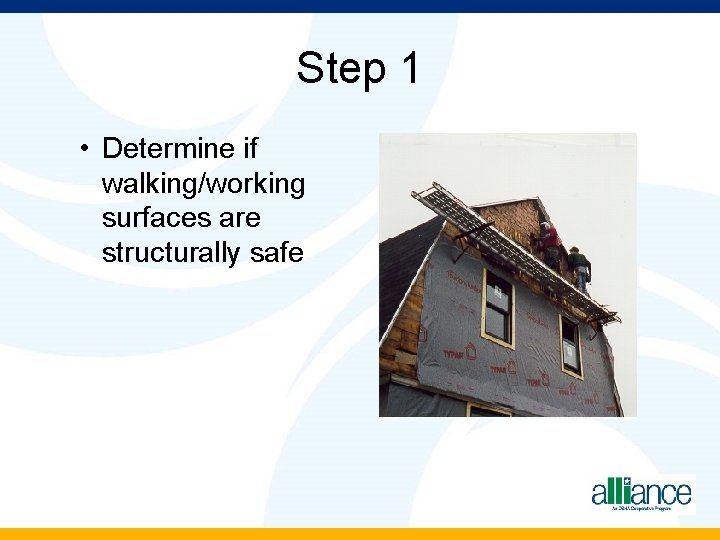
Step 1 • Determine if walking/working surfaces are structurally safe
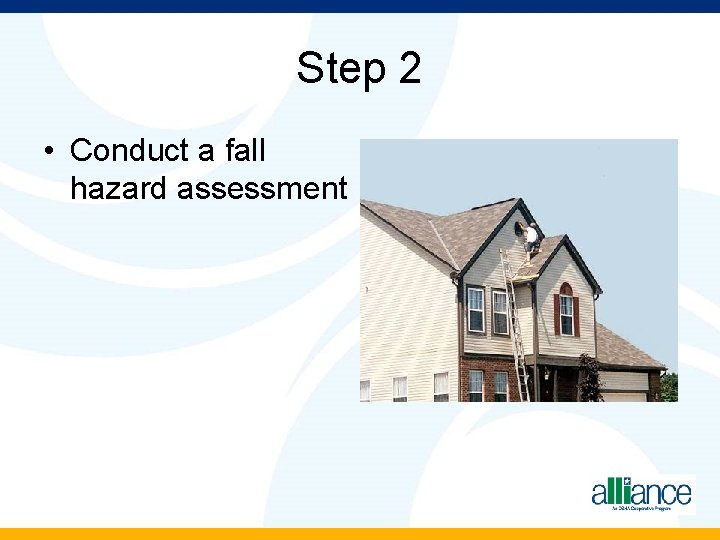
Step 2 • Conduct a fall hazard assessment
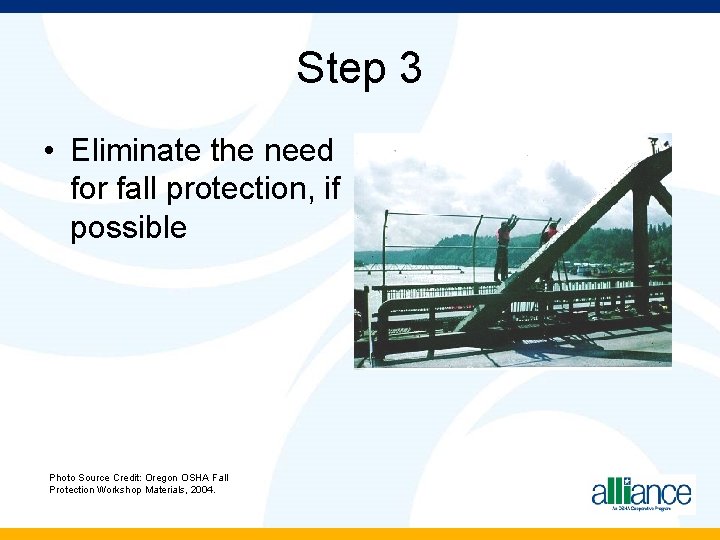
Step 3 • Eliminate the need for fall protection, if possible Photo Source Credit: Oregon OSHA Fall Protection Workshop Materials, 2004.
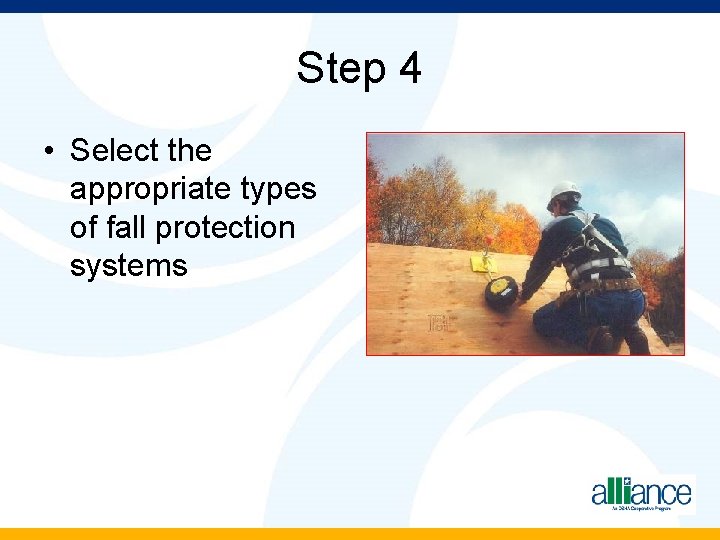
Step 4 • Select the appropriate types of fall protection systems
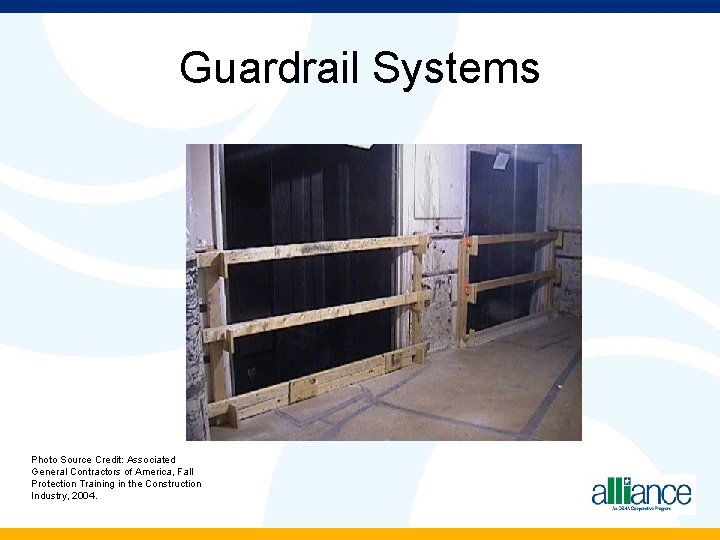
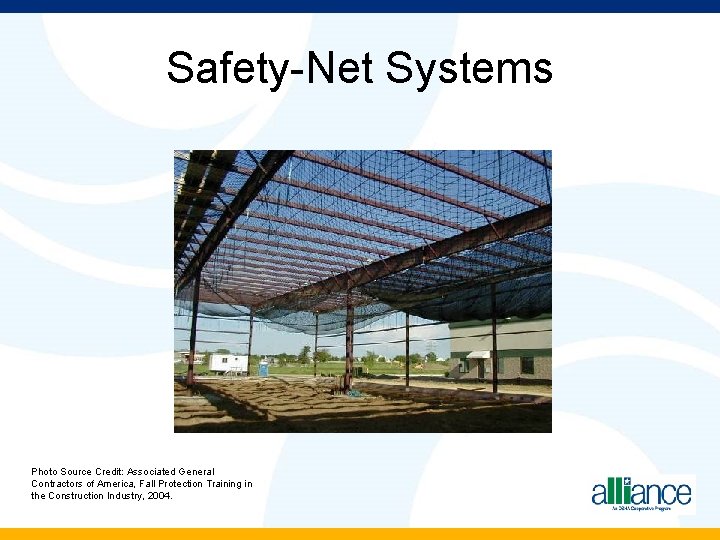
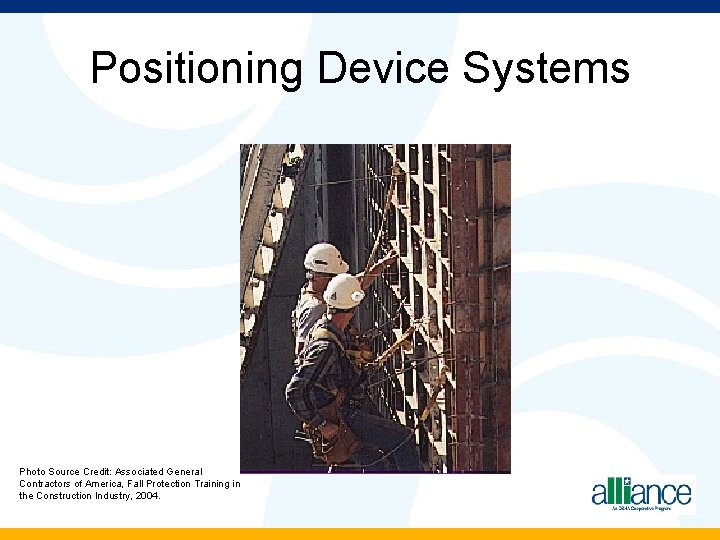
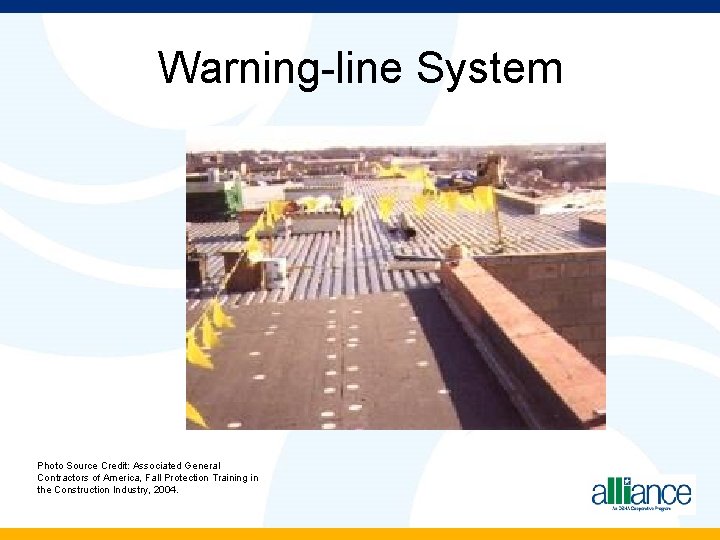
Fall Protection Systems • • Guardrail systems Personal fall-arrest systems Safety-net systems Positioning-device systems Warning-line systems Safety-monitoring systems Controlled-access zones
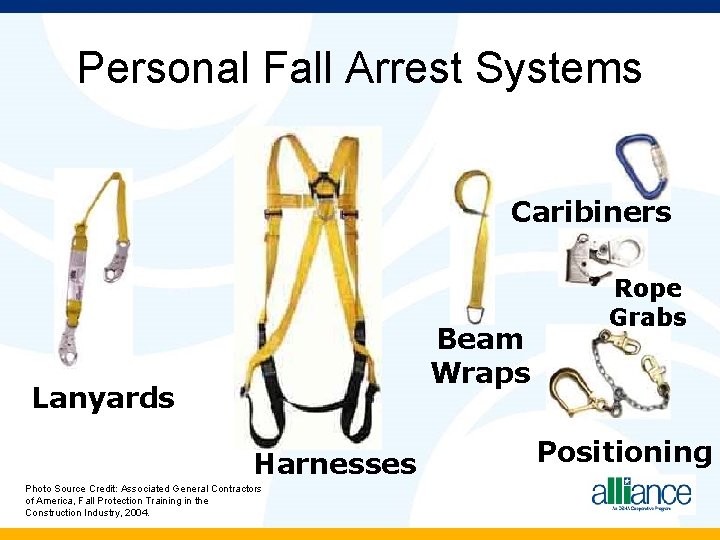
Personal Fall Arrest Systems Caribiners Beam Wraps Lanyards Harnesses Photo Source Credit: Associated General Contractors of America, Fall Protection Training in the Construction Industry, 2004. Rope Grabs Positioning
Guardrail Systems Photo Source Credit: Associated General Contractors of America, Fall Protection Training in the Construction Industry, 2004.
Safety-Net Systems Photo Source Credit: Associated General Contractors of America, Fall Protection Training in the Construction Industry, 2004.
Positioning Device Systems Photo Source Credit: Associated General Contractors of America, Fall Protection Training in the Construction Industry, 2004.
Warning-line System Photo Source Credit: Associated General Contractors of America, Fall Protection Training in the Construction Industry, 2004.
Safety Monitoring Systems • Safety-monitoring system is a set of procedures assigned to a competent person for monitoring or warning workers who may be unaware of fall hazards. [See other additional requirements in 29 CFR 1926. 501 (b)(10)]
Controlled Access Zone Systems • A work area designated and clearly marked in which certain types of work (such as overhand bricklaying ) may take place without the use of conventional fall protection systems – guardrail, personal arrest or safety net – to protect the employees working in the zone
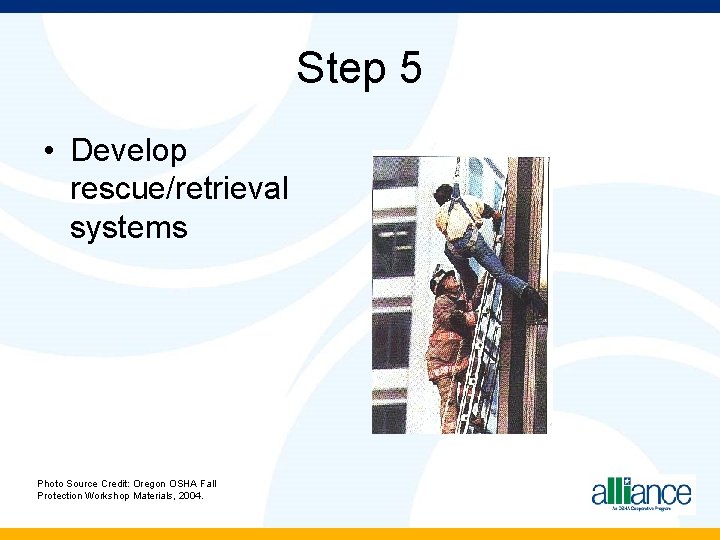
Step 5 • Develop rescue/retrieval systems Photo Source Credit: Oregon OSHA Fall Protection Workshop Materials, 2004.
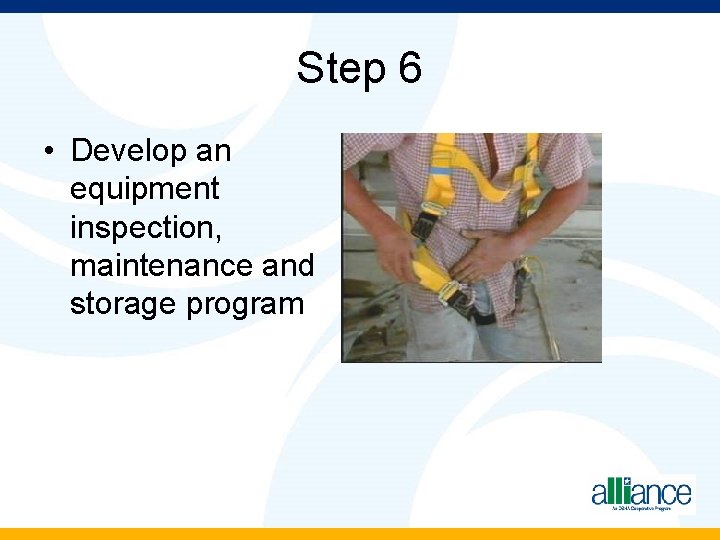
Step 6 • Develop an equipment inspection, maintenance and storage program
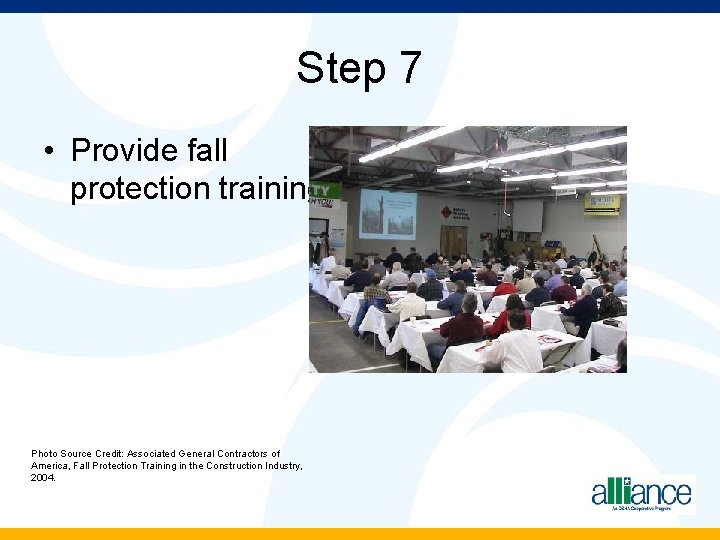
Step 7 • Provide fall protection training Photo Source Credit: Associated General Contractors of America, Fall Protection Training in the Construction Industry, 2004.
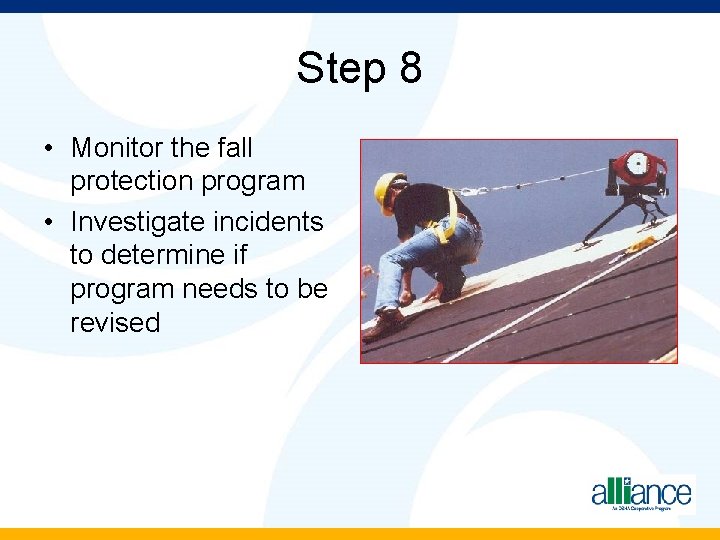
Step 8 • Monitor the fall protection program • Investigate incidents to determine if program needs to be revised
Promote Your Fall Protection Program • Managers, supervisors and other staff need to actively support the use of fall protection systems and equipment and encourage employee involvement and support of program
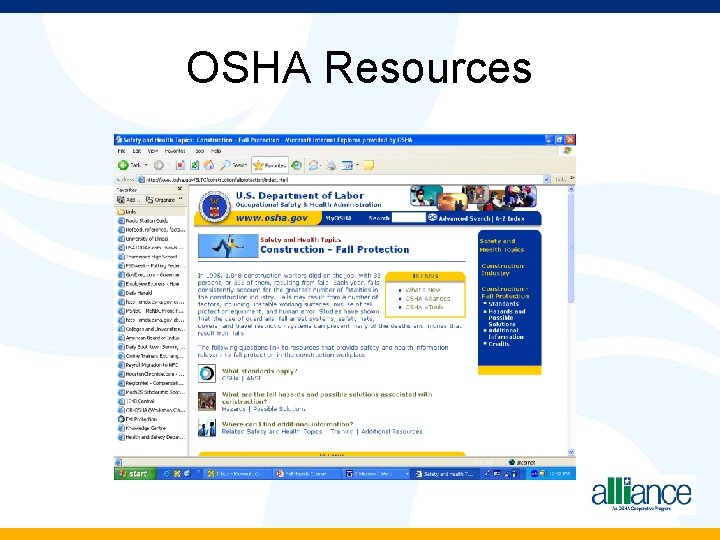
OSHA Resources
Course Summary • During this session, you have been introduced to: – Factors that contribute to fall hazards – Analysis of work areas for fall hazards – The eight-step approach to fall protection – OSHA resources addressing fall protection
Thanks for Your Participation Questions!!!!