
Faith and Safety Summit Jefferson County Sheriffs Office


- Slides: 68
Faith and Safety Summit Jefferson County Sheriffs Office
Thanks to…… Sheriff Jeff Shrader Mark Techmeyer, PIO Jeffco S. O. Staff Rory T. Peachey, Operations Supervisor
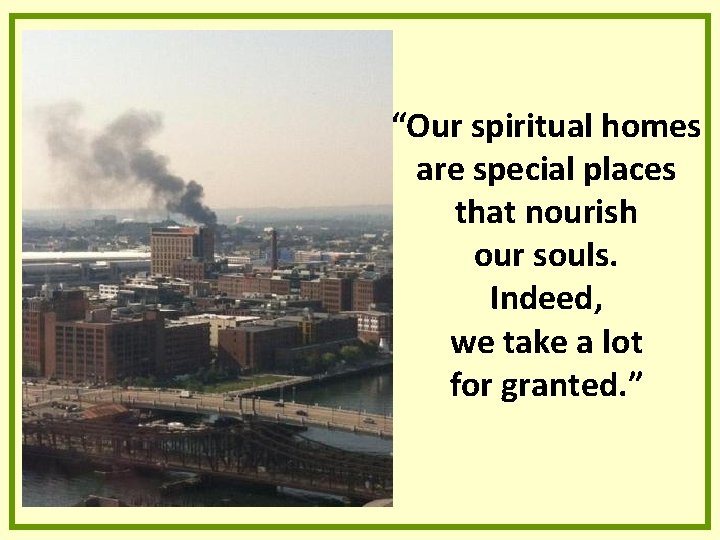
“Our spiritual homes are special places that nourish our souls. Indeed, we take a lot for granted. ”
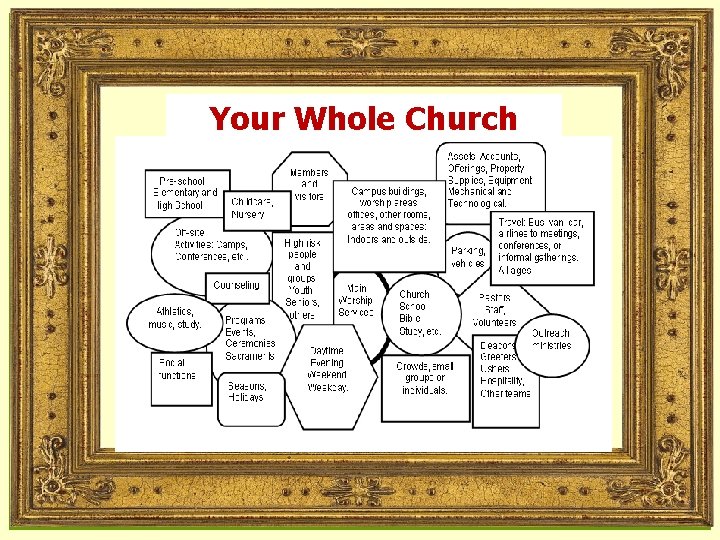
Consider what a whole-church (whole congregation) safety and security program can be---and do!
Your Whole Church
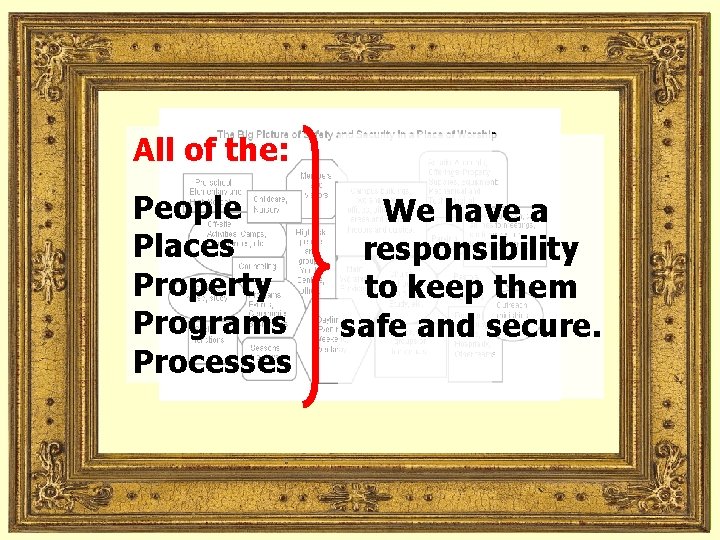
All of the: People Places Property Programs Processes We have a responsibility to keep them safe and secure.
Realities And Reasonableness
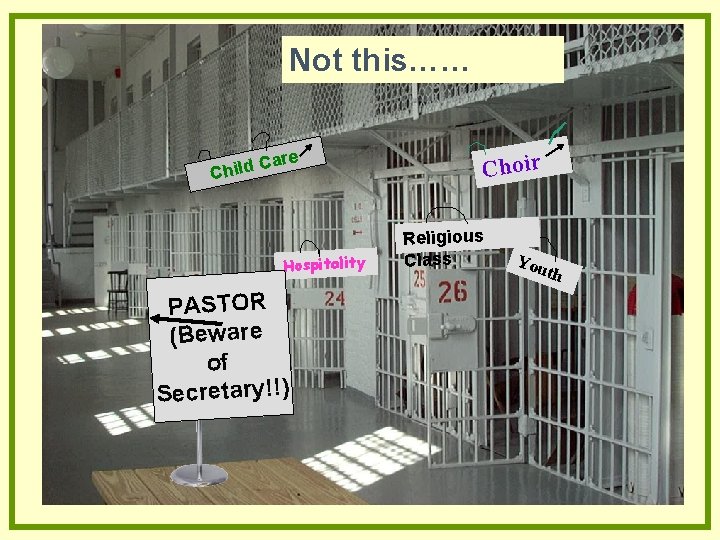
Not this…… are C d l i Ch Hospitality Schumacher PASTOR (Beware of Secretary!!) Choir Religious Class You th
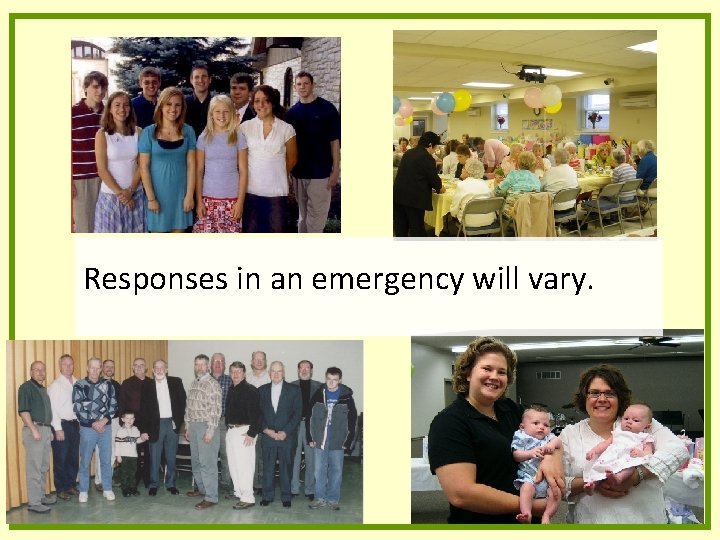
Responses in an emergency will vary.
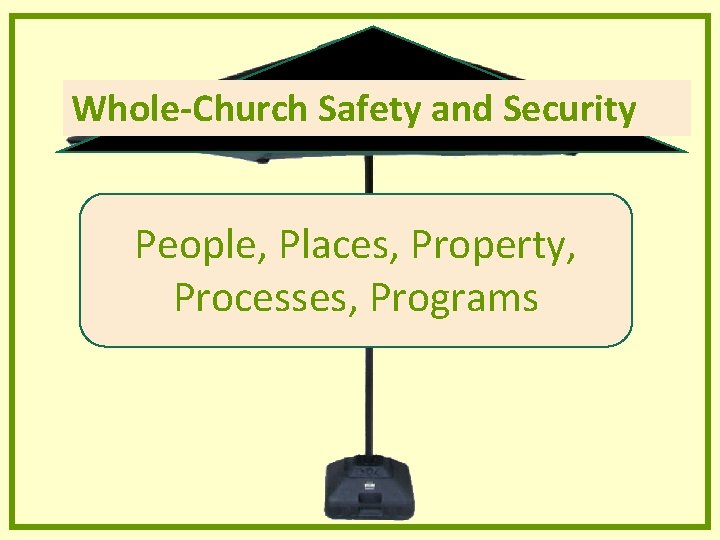
Whole-Church Safety and Security People, Places, Property, Processes, Programs
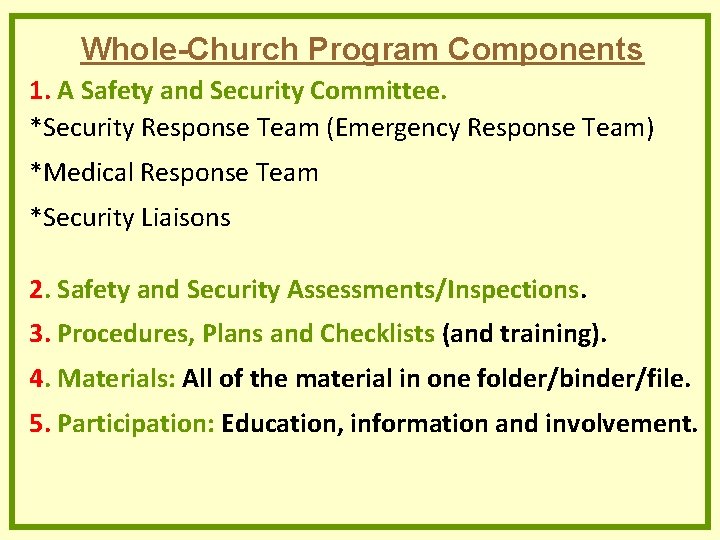
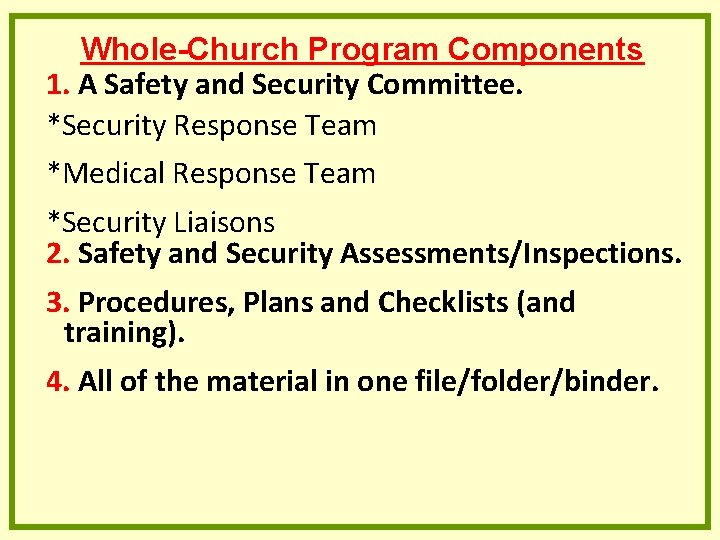
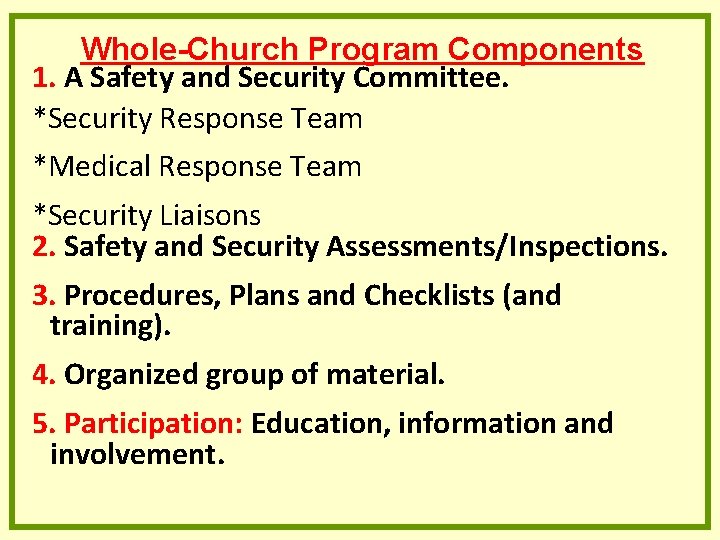
Whole-Church Program Components 1. A Safety and Security Committee. *Security Response Team (Emergency Response Team) *Medical Response Team *Security Liaisons 2. Safety and Security Assessments/Inspections. 3. Procedures, Plans and Checklists (and training). 4. Materials: All of the material in one folder/binder/file. 5. Participation: Education, information and involvement.
Our goals for today: 1. To encourage you to see safety and security as a whole-church opportunity.
2. To provide foundational information and inspiration
3. To strengthen links between the faith community network and public safety services.
Whole-Church Program Components 1. A Safety and Security Committee *Security Response Team *Medical Response Team *Security Liaisons
1. Safety and Security Committee (Team, Council, etc. ) *Allows a wide range of participants. *Can be a training tool for leadership. *Increases the chances of keeping a big picture approach. *Increases the number of people available to do work!
Develop or suggest safety and security policies, procedures, plans, checklists, assessing schedules. (Input by security team, pastoral team, staff, attorneys, insurance company, etc. Produce materials, signs, etc. Be a resource for information.
www. churchlawandtax. com
Talk About and Practice Traditional Crime Prevention Burglary Robbery Theft Embezzlement Vandalism
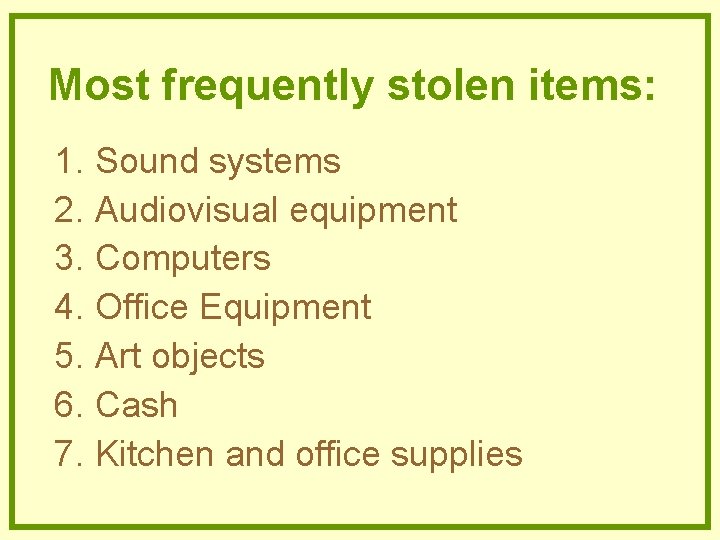
Most frequently stolen items: 1. Sound systems 2. Audiovisual equipment 3. Computers 4. Office Equipment 5. Art objects 6. Cash 7. Kitchen and office supplies
1 A. Security Team Options for a mix of participants. *Police officers, military, firefighters, (current or retired). *May be a team of alert, aware adults who are ready to respond and to get assistance. *Under the guidance of committee or church leadership regarding activities, apparel, equipment, etc.
*Worship leader focus. *Patrol during services and special events. *Lobby presence during services. *Ready to evaluate situations quickly and either call 911 or handle it on-site. *Assistance in any kind of emergency. *Ensure clarity about the role.
Weapons? Legality Pastoral Team Preferences
Training 1. Weapons safety and requirements. 2. Close quarters weapons use. 3. Site-specific tactics. 4. Shoot-Don’t Shoot Scenarios. 5. Less than lethal options.
Scenario Planning and Training by Security Team Members What might happen? What might prevent it? How could we detect it early? What could provide protection and reduce the harm? What will each of us do when it happens?
Stopping a violent person: Confront, Contain, Control 1. Protect others. 2. Overpower. (Remove weapon. )
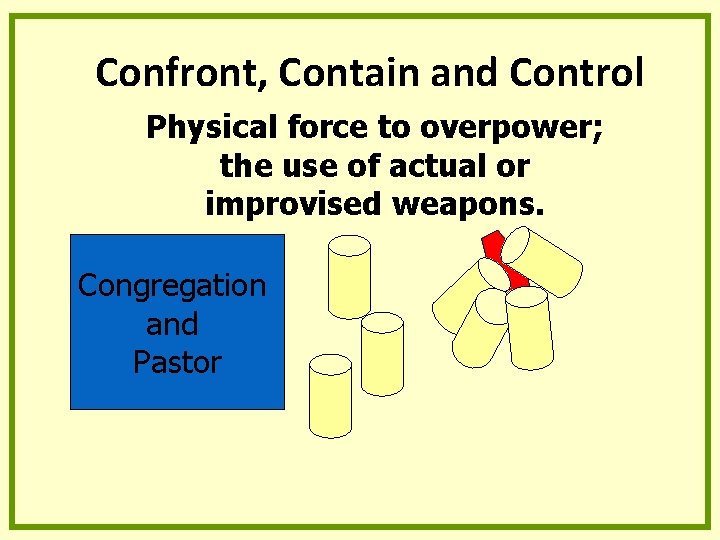
Confront, Contain and Control Physical force to overpower; the use of actual or improvised weapons. Congregation and Pastor
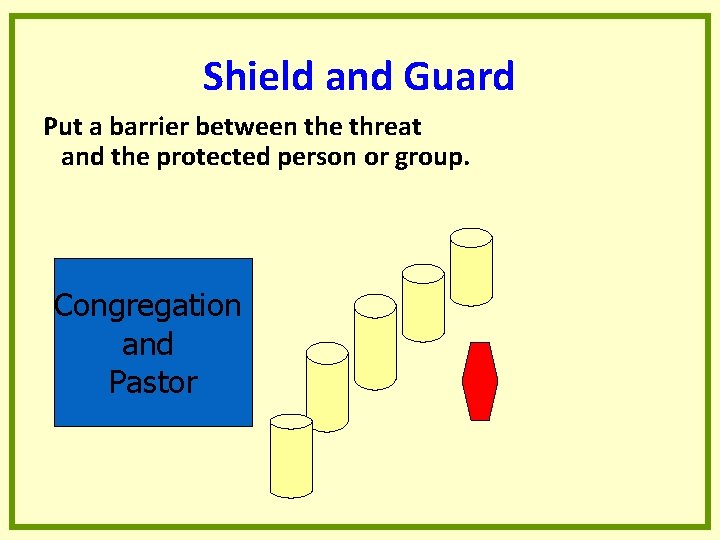
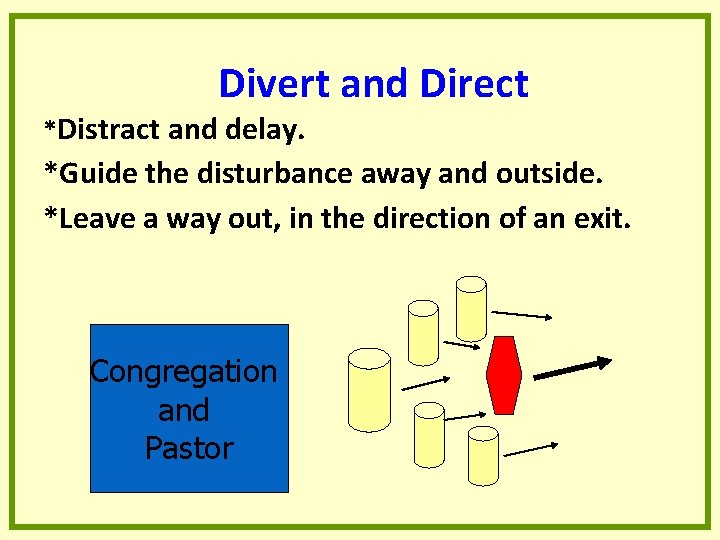
Two approach options for what seems to be non-violent disturbances and disruptions 1. Shield and Guard 2. Divert and Direct
Shield and Guard Put a barrier between the threat and the protected person or group. Congregation and Pastor
Divert and Direct *Distract and delay. *Guide the disturbance away and outside. *Leave a way out, in the direction of an exit. Congregation and Pastor
Security team members should plan general actions each will take. *Who will call 911? *Who will talk to the problem person? *If it gets physical, who will grab legs, feet, arms, body? *Who will shield congregation and/or pastor?
Expand the Role of the Security Team *A leadership role in whole-church efforts: support, encourage and train. *Training, briefings, consulting for pastors, staff and members. Be an active resource for safety. *Research situations and use as scenarios for discussion and training.
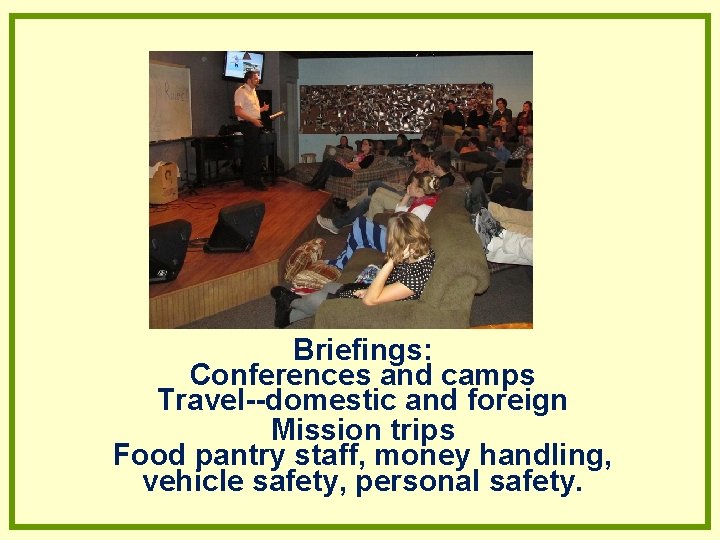
Briefings: Conferences and camps Travel--domestic and foreign Mission trips Food pantry staff, money handling, vehicle safety, personal safety.
Before they leave…………. . Vehicle safety? Driving requirements and restrictions? Behaviors that are not allowed? Safety tips? Advice?
Look out Get out Take out
1 B. Medical Assistance Team (Or some other name. ) *Minor first aid. CPR, AED. *Assistance while waiting for 911 response. *Trained responses if appropriate. *A wide range of other activities can be developed………. .
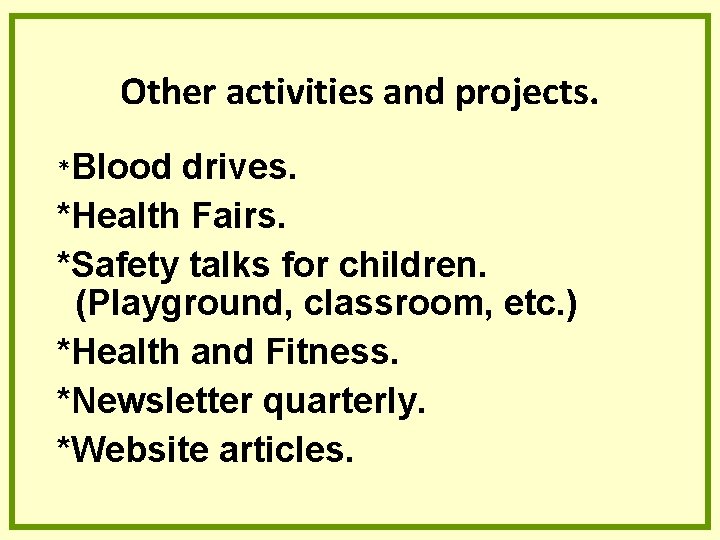
Other activities and projects. *Blood drives. *Health Fairs. *Safety talks for children. (Playground, classroom, etc. ) *Health and Fitness. *Newsletter quarterly. *Website articles.
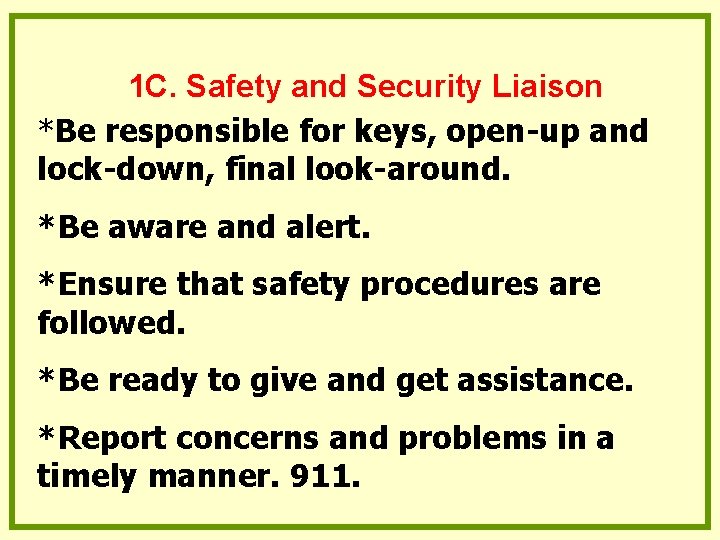
1 C. Safety and Security Liaison *Be responsible for keys, open-up and lock-down, final look-around. *Be aware and alert. *Ensure that safety procedures are followed. *Be ready to give and get assistance. *Report concerns and problems in a timely manner. 911.
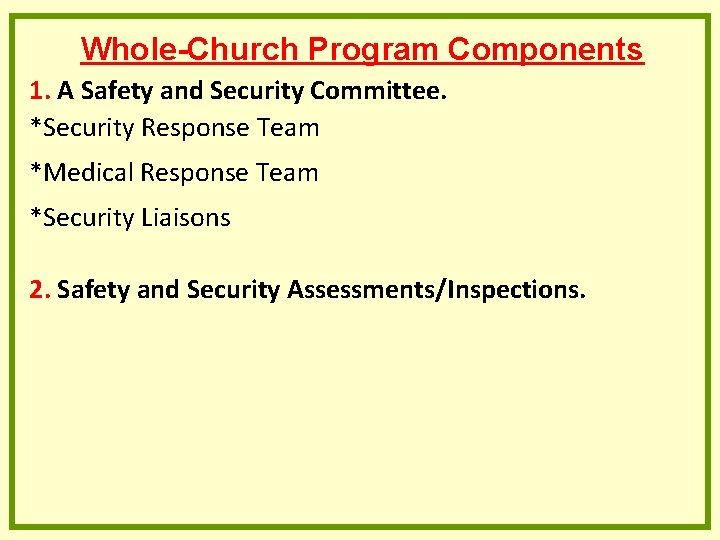
Whole-Church Program Components 1. A Safety and Security Committee. *Security Response Team *Medical Response Team *Security Liaisons 2. Safety and Security Assessments/Inspections.
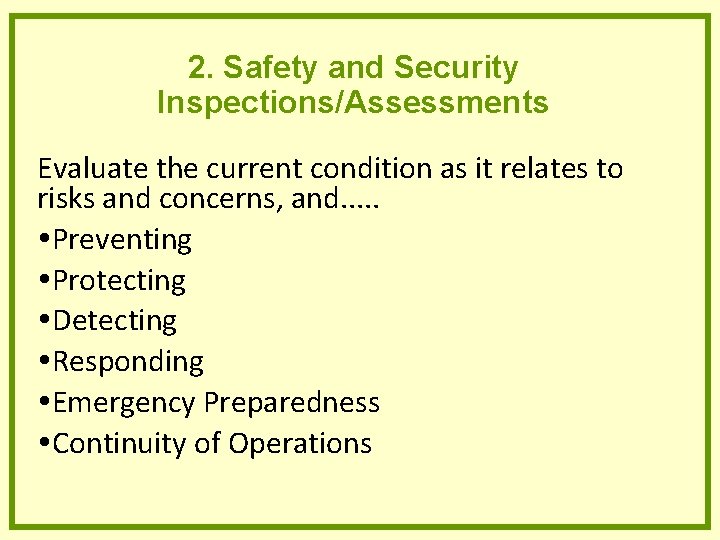
2. Safety and Security Inspections/Assessments Evaluate the current condition as it relates to risks and concerns, and. . . Preventing Protecting Detecting Responding Emergency Preparedness Continuity of Operations
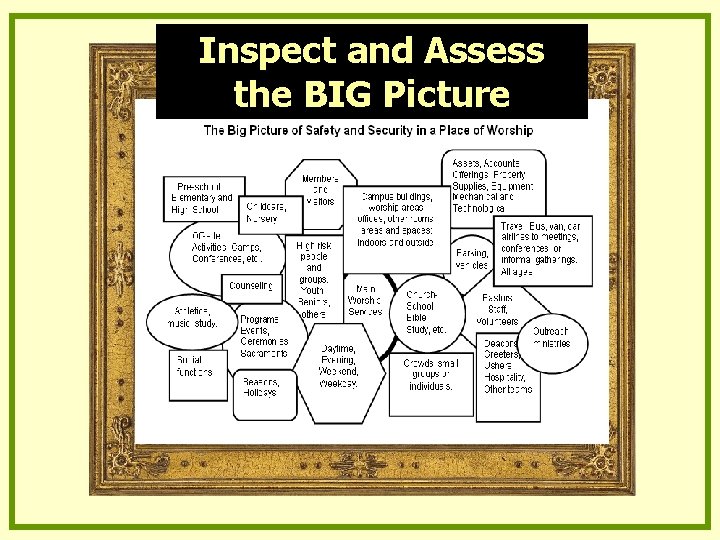
Inspect and Assess the BIG Picture
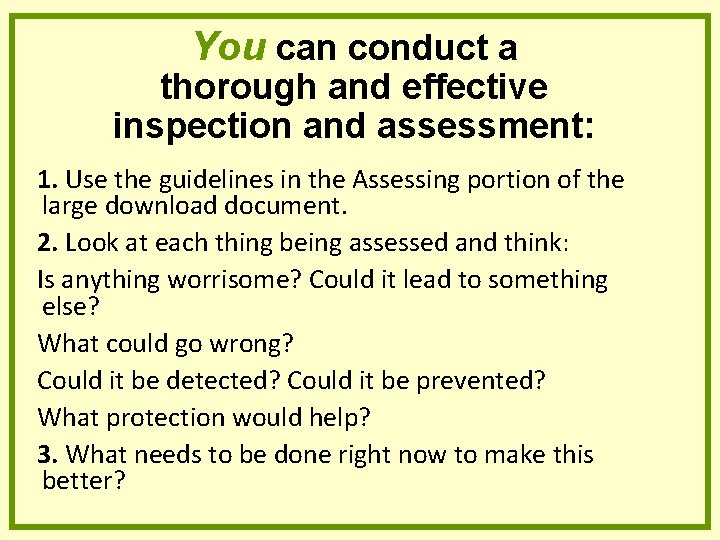
You can conduct a thorough and effective inspection and assessment: 1. Use the guidelines in the Assessing portion of the large download document. 2. Look at each thing being assessed and think: Is anything worrisome? Could it lead to something else? What could go wrong? Could it be detected? Could it be prevented? What protection would help? 3. What needs to be done right now to make this better?
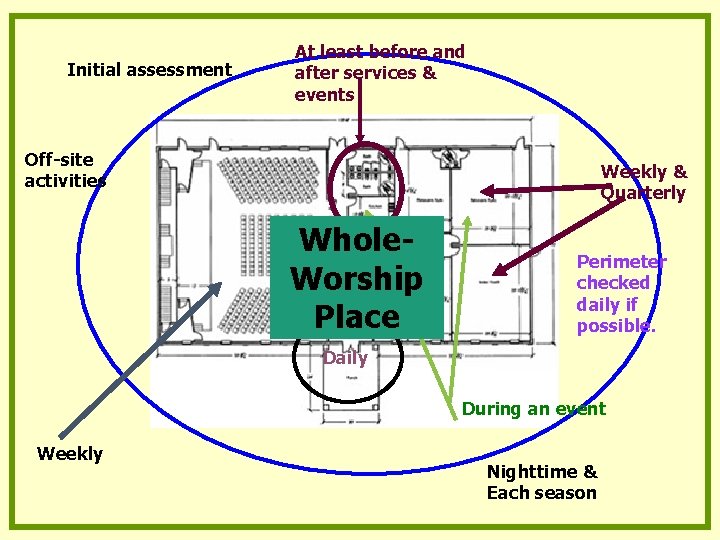
Initial assessment At least before and after services & events Off-site activities Weekly & Quarterly Whole. Worship Place Perimeter checked daily if possible. Daily During an event Weekly Nighttime & Each season
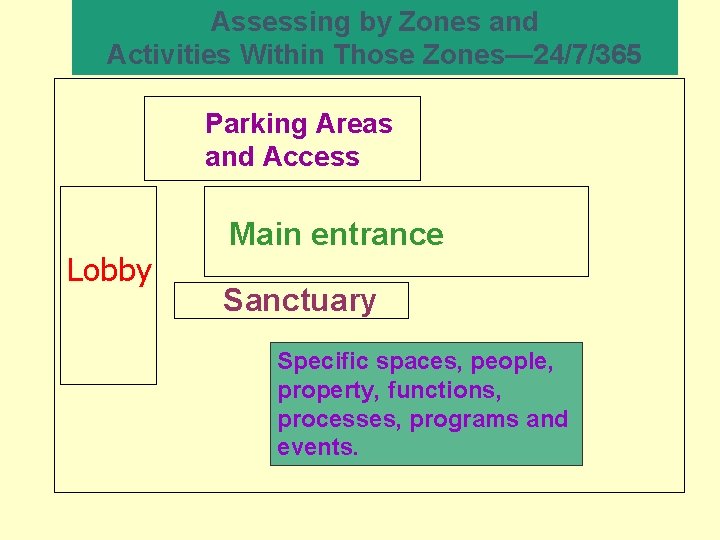
Assessing by Zones and Activities Within Those Zones— 24/7/365 Parking Areas and Access Lobby Main entrance Sanctuary Specific spaces, people, property, functions, processes, programs and events.
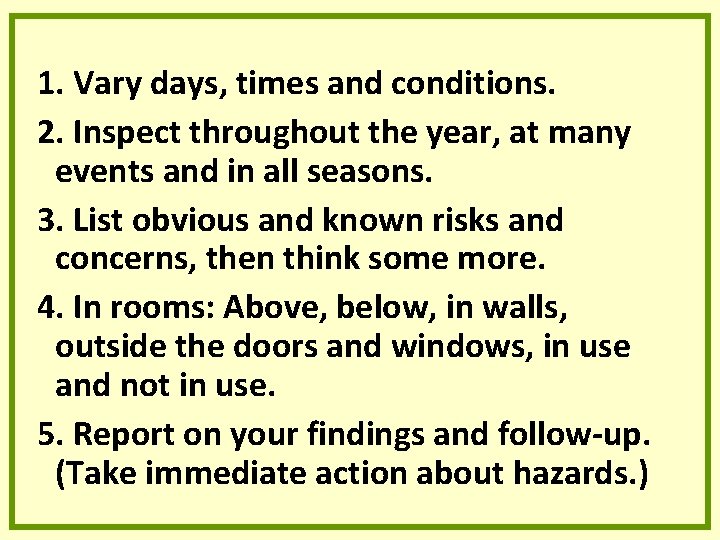
1. Vary days, times and conditions. 2. Inspect throughout the year, at many events and in all seasons. 3. List obvious and known risks and concerns, then think some more. 4. In rooms: Above, below, in walls, outside the doors and windows, in use and not in use. 5. Report on your findings and follow-up. (Take immediate action about hazards. )
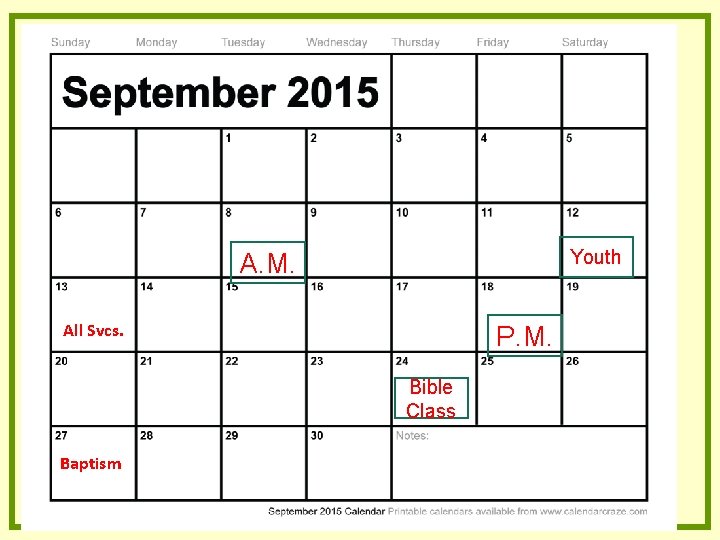
Youth A. M. All Svcs. P. M. Bible Class Baptism
Also inspect mechanical, plumbing, appliances, general maintenance and anything that might cause a problem when no one is around to detect it.
A church that is very, very clean is much more likely to be maintained in other ways as well.
Inspect special programs: Senior lunches, food pantry, thrift store, homeless ministry, youth outreach, etc.
Inspect outside areas, secured buildings, vans, trailers, etc. Lighting, status of parking areas, pedestrian issues, etc.
Money handling procedures, Security of assets, Professional auditing of financial records or close, regular review.
Whole-Church Program Components 1. A Safety and Security Committee. *Security Response Team *Medical Response Team *Security Liaisons 2. Safety and Security Assessments/Inspections. 3. Procedures, Plans and Checklists (and training).
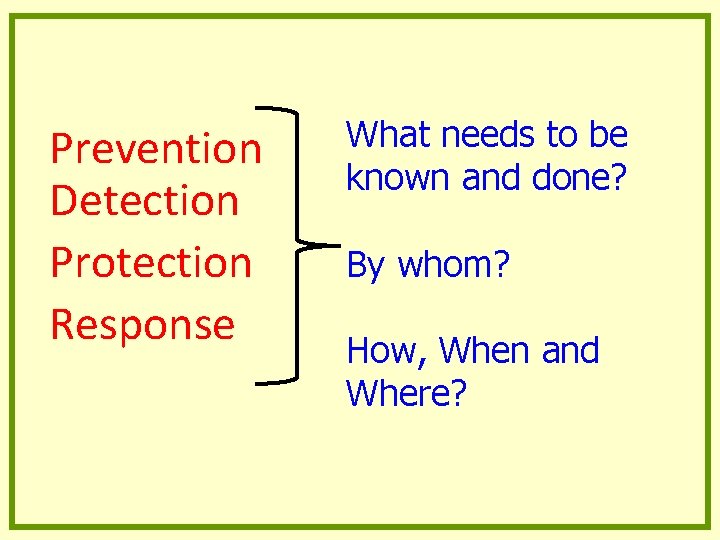
Prevention Detection Protection Response What needs to be known and done? By whom? How, When and Where?
Checklists are procedures made simple to read and follow. They are not made to be remembered, they are made to be followed. (But they help the memory too. )
Checklists for special services and events: Lord’s Supper/Communion Baptisms Candlelight services Youth functions Children’s functions Big events Equipment needed/status Safety issues and risks and how to prevent/respond Set-up/Break down What must be done/can’t be done.
Procedures and checklists for: Opening/Closing the building (s) Securing equipment/ musical instruments. Turning on and off electronics and equipment. Lighting furnaces, using kitchen appliances, Hygiene and food preparation requirements use of supplies, cleaning methods, etc.
Policies, procedures and checklists especially apply to working with youth, from infants to young adult. Best practices: Adults with children? Children in an activity? Counseling?
Format isn’t as important as usefulness. Easiest approach: *A combination of text and numbered lists. Consider including photos or scans. *"Walk through" an activity on paper. *Don’t assume everyone will know the steps, be specific. Say the do’s AND the don’ts. *Have others read it for clarity.
Every teacher, volunteer and coordinator, should help write the procedures for their classroom, program or activities in a variety of settings. Keep adding as you conduct inspections.
Create approved or suggested procedures for things staff are often asked about. *Benevolence requests *Wedding ceremony requirements. *Children without vaccinations? *Volunteer information, requirements and restrictions.
Whole-Church Program Components 1. A Safety and Security Committee. *Security Response Team *Medical Response Team *Security Liaisons 2. Safety and Security Assessments/Inspections. 3. Procedures, Plans and Checklists (and training). 4. All of the material in one file/folder/binder.
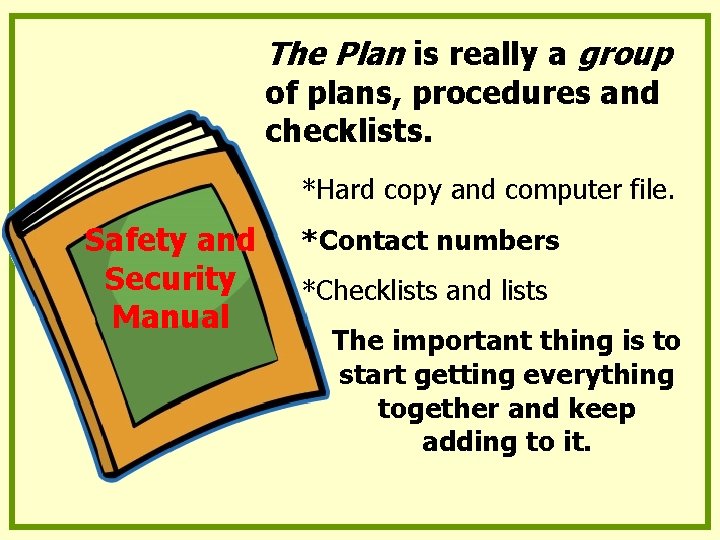
The Plan is really a group of plans, procedures and checklists. *Hard copy and computer file. Safety and Security Manual *Contact numbers *Checklists and lists The important thing is to start getting everything together and keep adding to it.
Whole-Church Program Components 1. A Safety and Security Committee. *Security Response Team *Medical Response Team *Security Liaisons 2. Safety and Security Assessments/Inspections. 3. Procedures, Plans and Checklists (and training). 4. Organized group of material. 5. Participation: Education, information and involvement.
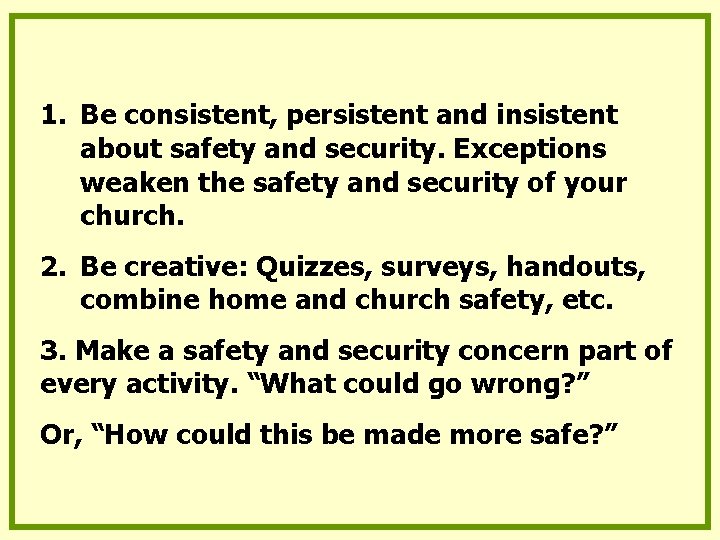
1. Be consistent, persistent and insistent about safety and security. Exceptions weaken the safety and security of your church. 2. Be creative: Quizzes, surveys, handouts, combine home and church safety, etc. 3. Make a safety and security concern part of every activity. “What could go wrong? ” Or, “How could this be made more safe? ”
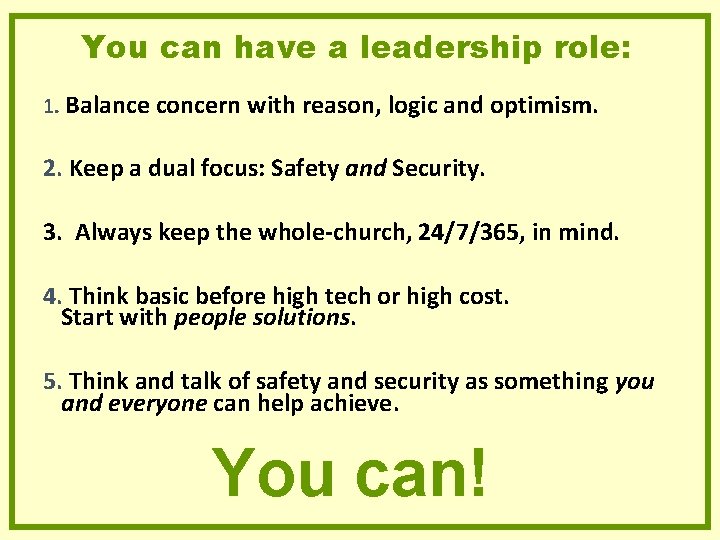
You can have a leadership role: 1. Balance concern with reason, logic and optimism. 2. Keep a dual focus: Safety and Security. 3. Always keep the whole-church, 24/7/365, in mind. 4. Think basic before high tech or high cost. Start with people solutions. 5. Think and talk of safety and security as something you and everyone can help achieve. You can!
Thank you Sheriff Shrader! Jefferson County Sheriffs Office