
Fairness and Equity in Assessment Task Force Guidelines

- Slides: 8
Fairness and Equity in Assessment Task Force: Guidelines Development Group March 11, 2021 2 -3 pm Virtual meeting - Zoom
The Charge The Guideline Development Group Role Agenda Types of Assessments Possible Frameworks Work for Next Two Weeks
The Charge The Task Force is charged with establishing a set of guidelines for UF faculty, instructors, staff, and administrators to help ensure fairness and equity in assessment in all contexts at the university. The guidelines must address fairness and equity in the entire assessment process, including development, opportunity to learn, administration, scoring, score interpretations, and the evaluation of the measurement properties of the assessment.
Guideline Development Groups Work with David Miller and Teresa Mutahi to develop the guidelines and review the recommendations from the model development group, and where mutually agreeable, implement the recommendations to modify the guidelines. Model Development Group Work with Corinne Huggins-Manley to locate and develop models that operationalize the guidelines in various contexts; provide the guideline development group with modifications to increase their utility.
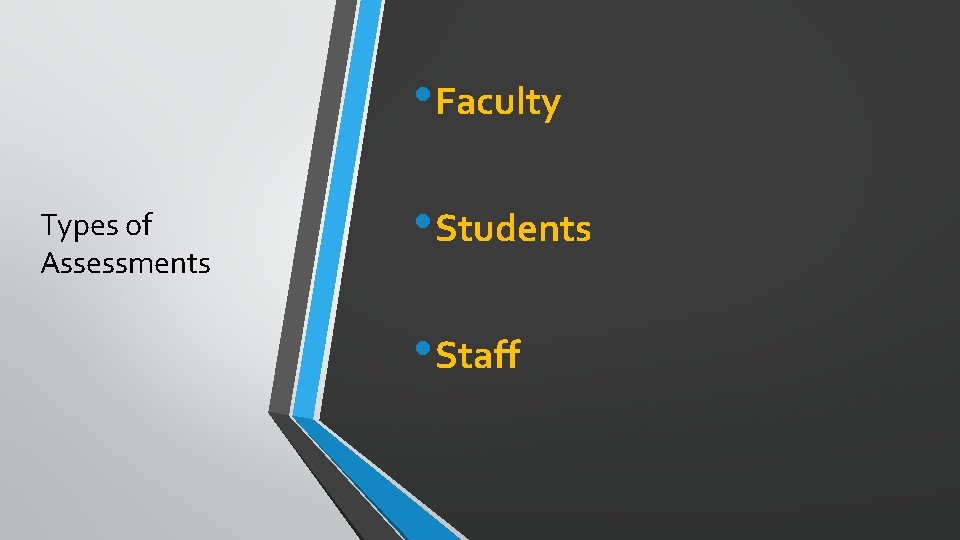
• Faculty Types of Assessments • Students • Staff
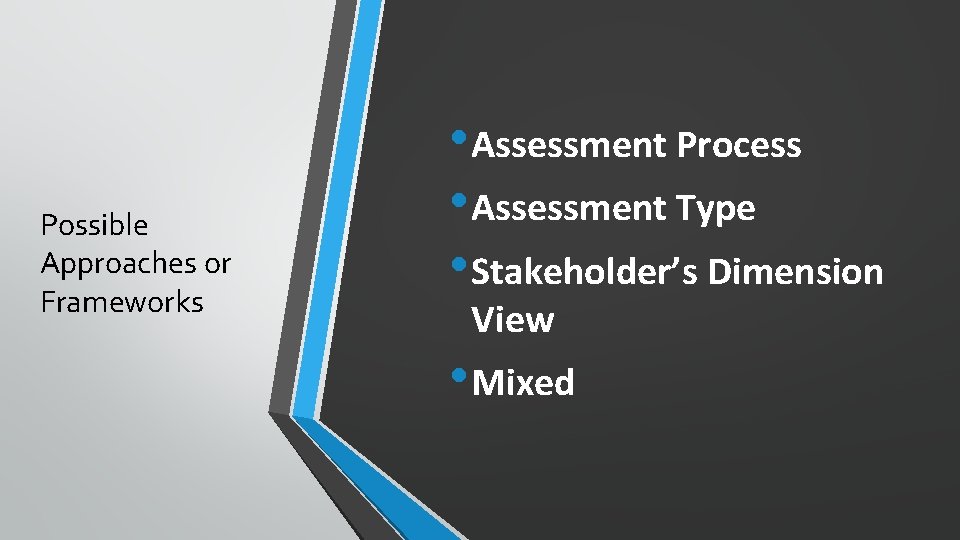
Possible Approaches or Frameworks • Assessment Process • Assessment Type • Stakeholder’s Dimension View • Mixed
INPUTS Learner • Experience • Gender • Self-efficacy Evaluator Content DESIRED OUTCOMES Context • Exam writing • Classroom culture • Gender concordance Environment • Class composition • Class size / member familiarity Institutional Culture EVALUATION PROCESS PROXIMAL OUTCOMES DISTAL OUTCOMES Individual Learner Individual Educator Institution Society Environment Interpretation Institution • Promotion policies • Teaching guidelines • Remediation plans Consequences Feedback Loop
For Next Meeting: Task Force Members Select a Part of the Framework to Begin Writing Guidelines for Fairness and Equity