
FAIR USE IN RESEARCH LIBRARIES Pat Aufderheide Brandon
FAIR USE IN RESEARCH LIBRARIES Pat Aufderheide Brandon Butler Peter Jaszi
OVERVIEW • Why fair use matters to librarians • Imbalance in copyright policy • Research into library practices • Results • Next steps
Why Fair Use Matters to Librarians • Mission to serve knowledge past, present, future • Need to access copyrighted work • Digital innovation/obsolescence
THE PURPOSE OF COPYRIGHT
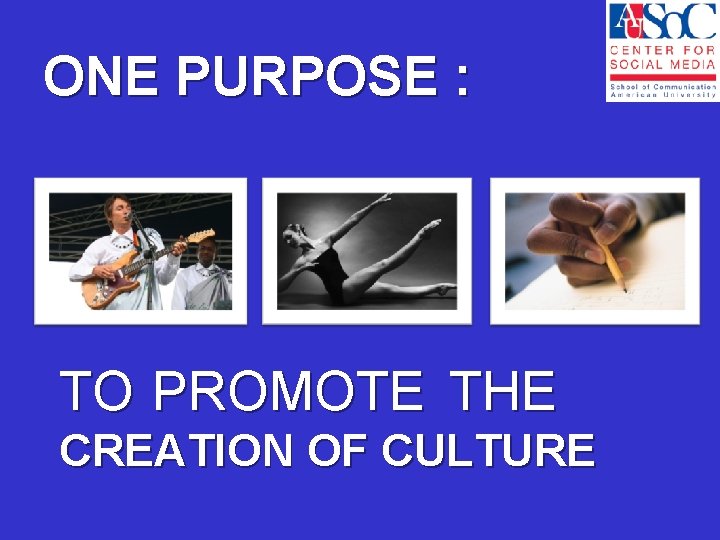
ONE PURPOSE : TO PROMOTE THE CREATION OF CULTURE
By: • Rewarding creators with limited monopoly • Encouraging new makers to use existing culture
WHY BALANCE? • All culture created on existing culture (we used to know that) • The First Amendment (no censorship)
BIGGEST BALANCING FEATURE: FAIR USE legal, unauthorized use of copyrighted material--under some circumstances
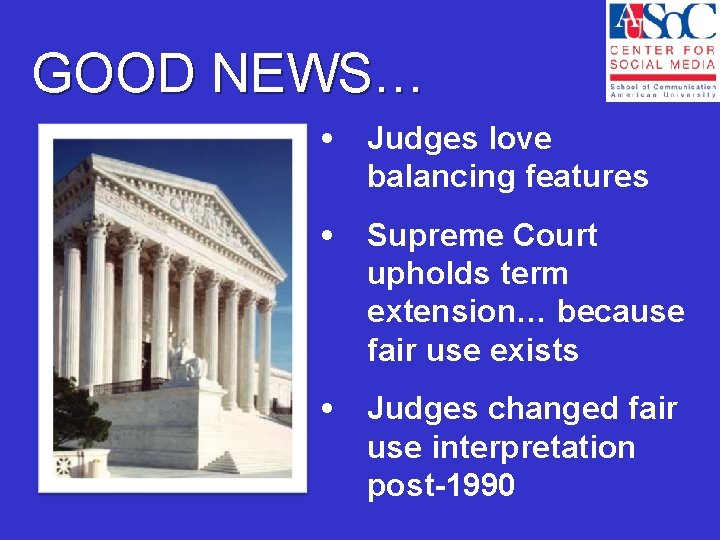
GOOD NEWS… • Judges love balancing features • Supreme Court upholds term extension… because fair use exists • Judges changed fair use interpretation post-1990
JUDGES ASK: • Did you transform the use? • Did you use the appropriate amount to satisfy the transformative use?
INTERPRETING FAIR USE
“FOUR FACTORS” • Reason for the use • Kind of work used • Amount used • Effect on the market
PLUS… Custom and practice of individual creative communities…. . . especially when welldocumented
FEAR… • Will I get it wrong? • Will I get sued? • Will my boss/general counsel client get angry?
What Research Librarians Do When They’re Unsure
CATEGORIES • Teaching and Learning • Research • Preservation • Exhibits • Disability/Access
TEACHING AND LEARNING • “e-reserves” • Video • Copyright education • Digitizing teaching collections (e. g. art slides)
E-reserves • Restricting content • Limit access (e. g. classtime only, no repeats) • Offload responsibility (IT, labs, faculty)
Video • Streaming? ? ? • Limiting access/Restricting content • Favored Vendors
Copyright training • Arbitrary guidelines (e. g. 10%, one chapter) • “maybe, ” “probably”
Teaching collections • Delay and deferral • Partial inclusion • Accept underground use
RESEARCH • Digitizing collections • Managing access • ILL
Digitizing Collections • Prioritize public domain and the obscure • Create partial collections • Stalled projects
Managing access • Defer to licenses that limit legitimate research • Require form for access to collections • Limit access to on-site
ILL • Mysterious “rule of five”
PRESERVATION: Limits of 108 • Format-shifting delayed • Public domain and the obscure prioritized • Deferred decisions
EXHIBITS • Delay and deferral • Limited on-line access • Restricted content (variable by media)
DISABILITY • Limited access • Librarians sidelined in policy making • Delay • Unnecessary duplication of effort
Overall… • Insecurity and hesitation=staff costs, mission deformed • Fair use would help, but is under-used • Risk management substituted for fair use analysis
HOW TO STRENGTHEN ACCESS TO FAIR USE?

BEST PRACTICES CODES
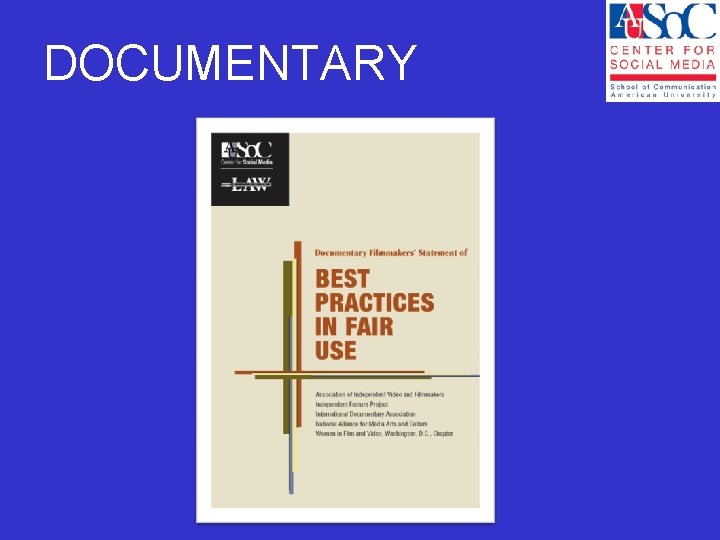
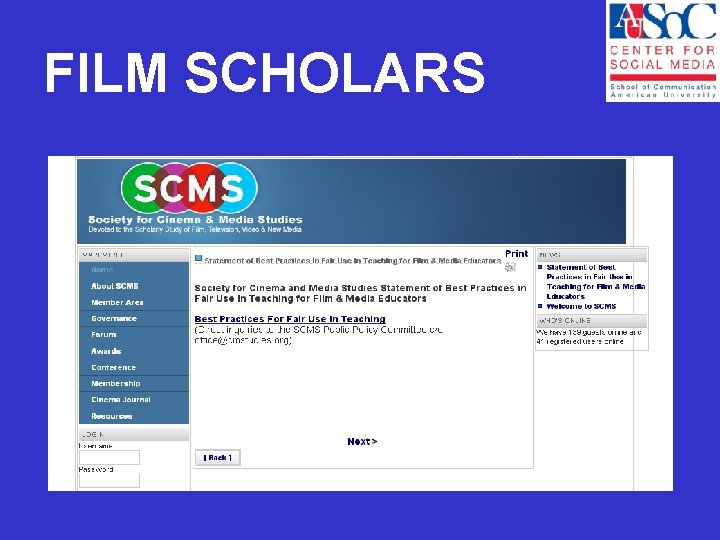
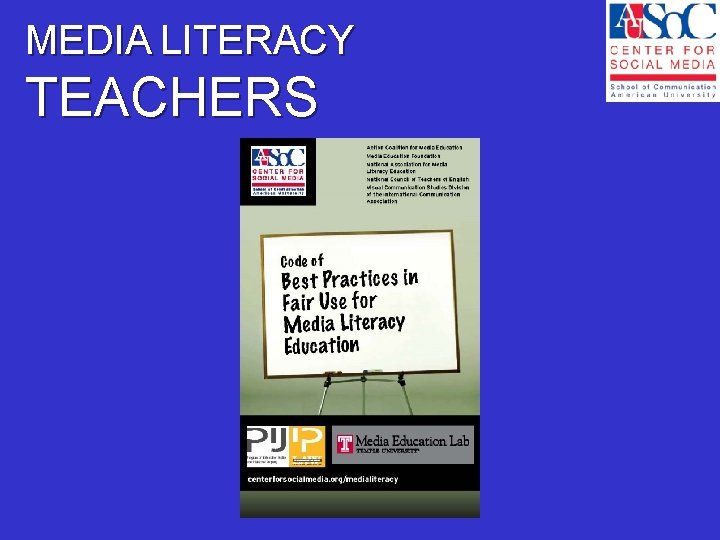
COMMUNITIES INTERPRET FAIR USE: • Documentary filmmakers • Scholars • Media literacy teachers • Online video • Dance collections • Open. Course. Ware
STORIES UNTOLD: Creative consequences of the rights clearance culture for documentary filmmakers
DOCUMENTARY
RESULTS: • TV programmers air films • New kinds of films • All insurers of errors and omissions insurance now accept fair use claims • Lawyers use the Statement to build their practices
FILM SCHOLARS
MEDIA LITERACY TEACHERS
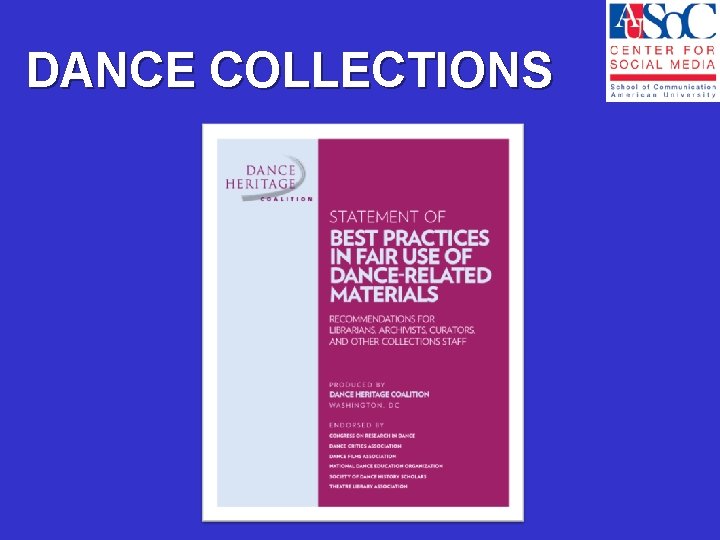
DANCE COLLECTIONS
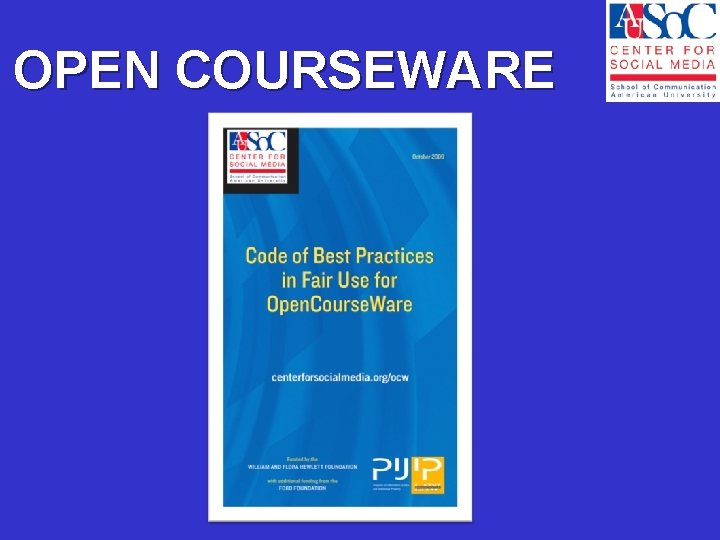
OPEN COURSEWARE
A Research Librarians’ Code …and You
Process: • So far: report released Jan. 11, quiet meetings held, code being drafted • Code released c. Jan 2012 • Implement and educate, 2012 -2013
FAIR USE: Practice Makes Practice
MORE INFORMATION 09/30/09
www. arl. org 09/30/09
Centerforsocialmedia. org/fair-use 09/30/09
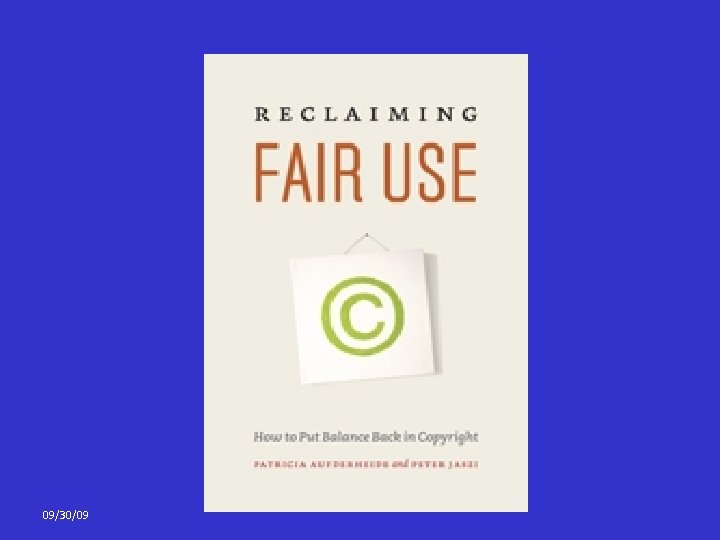
09/30/09
Please feel free to share this presentation in its entirety. For excerpting, kindly employ the principles of fair use.
THANK YOU! Andrew W. Mellon Foundation Research librarians everywhere
CONTACT INFO Pat Aufderheide paufder@american. edu Brandon Butler brandon@arl. org Peter Jaszi pjaszi@wcl. american. edu
- Slides: 49