
Fair Use and Copyright BY TIANA NELSON ET
Fair Use and Copyright BY: TIANA NELSON ET 247
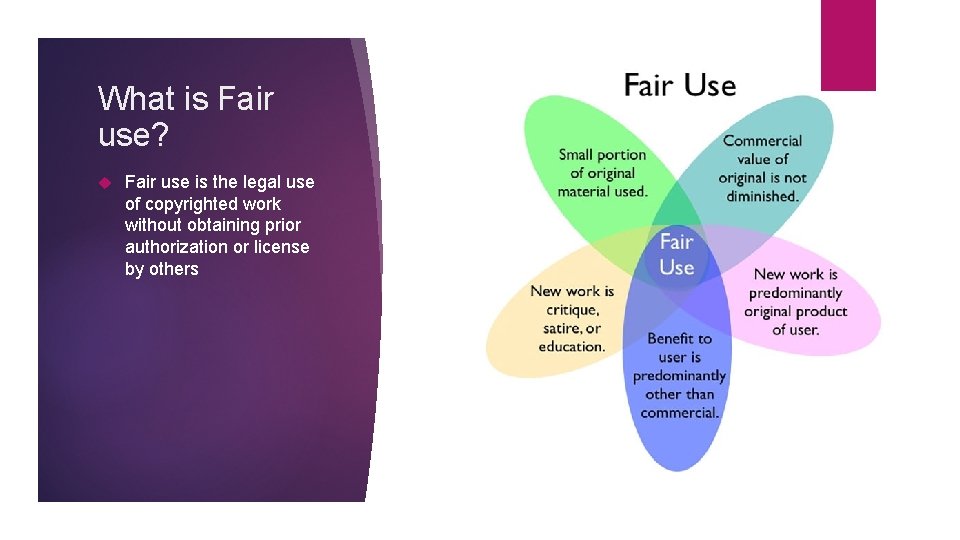
What is Fair use? Fair use is the legal use of copyrighted work without obtaining prior authorization or license by others
How do you determine if the use falls under Fair Use Guidelines Consider these four factors: 1. The nature of the copyrighted work 2. The amount and substantiality of the portion used in relation to the copyrighted work. 3. The purpose and character of the use 4. The effect of the use of the work.
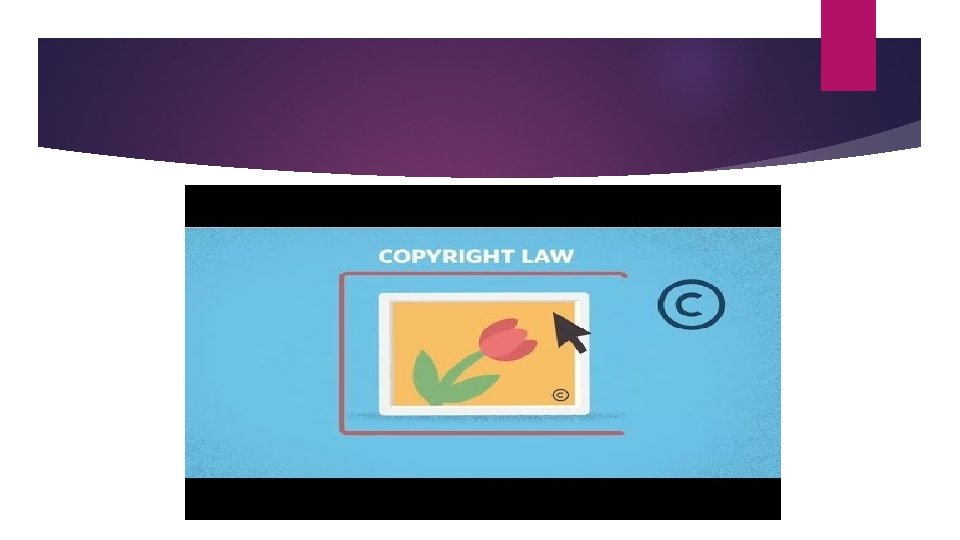
What is copyright? Copyright is a form of protection given to the authors or creator of an “original work”. These include literary, artistic, musical, dramatic, and intellectual work. These things are illegal for anyone to do without permission or with the exceptions and limitation if fair use • Make copies of their work • Distribute copies of their work • Perform the work publicly • Display the work publicly • Make modification to the work
What is a Copyright Infringement? A copy rights infringement is when a person exploits any of the work that is protected by copyright with out the owner’s permission. The penalties of copyright infringement is the infringer will have to pay the copyright owner the amount of money they made from using the work. The infringer may also have to pay the copyright owner statutory damages. ’The infringer may also be found guilty on criminal charges and have to pay criminal penalties

How long does Copyright Protection last? Copyright starts from the moment of creation and continues until 70 years after the death of the owner
What is a creative commons Creative commons is something that can help legally share knowledge and creativity to build a more accessible and innovative world
What is Public Domain? Works that are not copyrighted are public domain. This can be used without permission but you should still give credit to the source.
Examples General Legal Use (legal use by general public) • Rip a song from a CD that you purchased or putting that song on your phone. Fair Use (under fair use guidelines) • Ripping 30 seconds of a CD and putting it on a presentation for class. Illegal use (Violation of copyright law) • Ripping a song from a friends CD, giving that song to another friend. (distribution is bad)
References The Educator’s Guide to Copyright, Fair Use, and Creative Commons. (2015), from http: //www. theedublogger. com/2012/02/09/the-educators-guide-to-copyrightfair-use-and-creative-commons/ @. (n. d. ). When we share, everyone wins - Creative Commons, from https: //creativecommons. org/ Taking the Mystery Out Of Copyright. (n. d. ). , from http: //www. loc. gov/teachers/copyrightmystery/ Office, U. C. (n. d. ). U. S. Copyright Office. , from https: //copyright. gov/ Williams, Mia, Copyright and Fair use
- Slides: 11