
FAIR COURTS JUSTICE Objectives Recognize the role of
FAIR COURTS = JUSTICE
Objectives • Recognize the role of the judicial branch in our governmental structure; • Differentiate between judges and other elected officials; • Identify the processes for selecting judges; and • Recognize present day challenges facing the judicial branch.
Warm Up Exercise When you walk into the courtroom and face the judge… …what qualities or characteristics are most important to you?

Characteristics of Judges What characteristics are most important to you? • • Knowledge of the law Impartial/Unbiased Fair minded Attentive Respectful/Understanding Honesty/Integrity Neutral Professional demeanor What would you add?
The Role of the Courts OUR CONSTITUTIONAL STRUCTURE
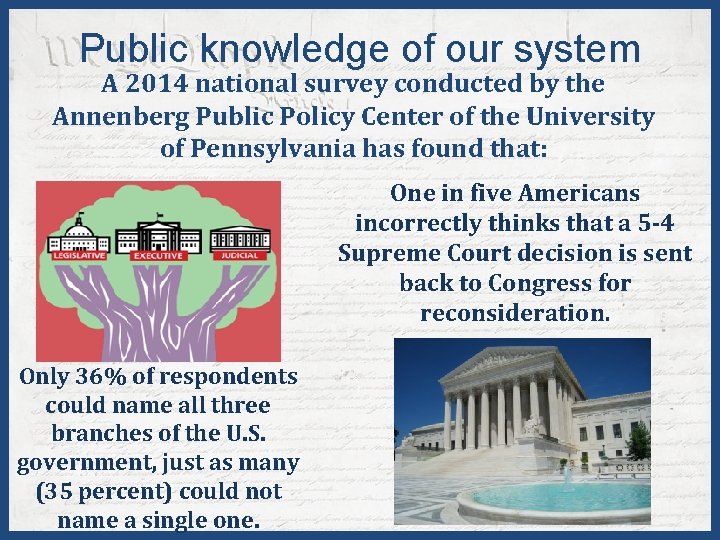
Public knowledge of our system A 2014 national survey conducted by the Annenberg Public Policy Center of the University of Pennsylvania has found that: One in five Americans incorrectly thinks that a 5 -4 Supreme Court decision is sent back to Congress for reconsideration. Only 36% of respondents could name all three branches of the U. S. government, just as many (35 percent) could not name a single one.
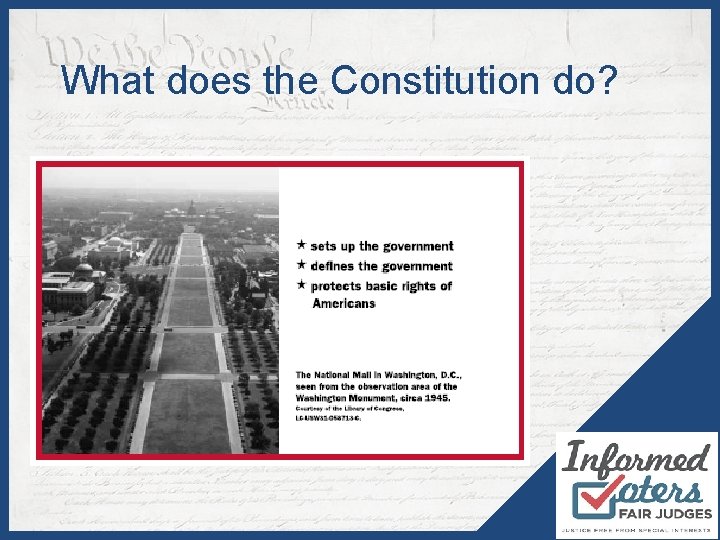
What does the Constitution do?
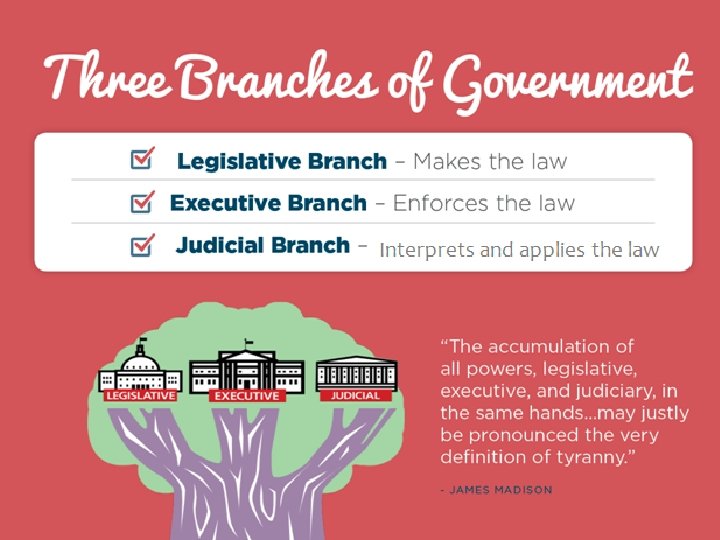
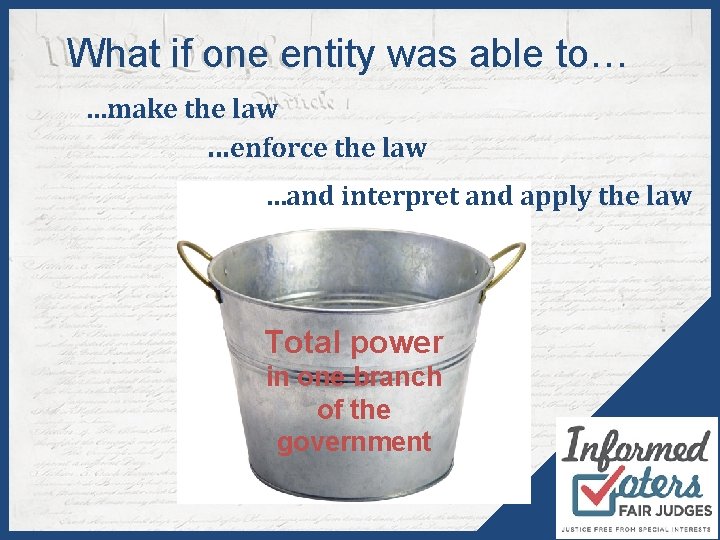
What if one entity was able to… …make the law …enforce the law …and interpret and apply the law Total power in one branch of the government
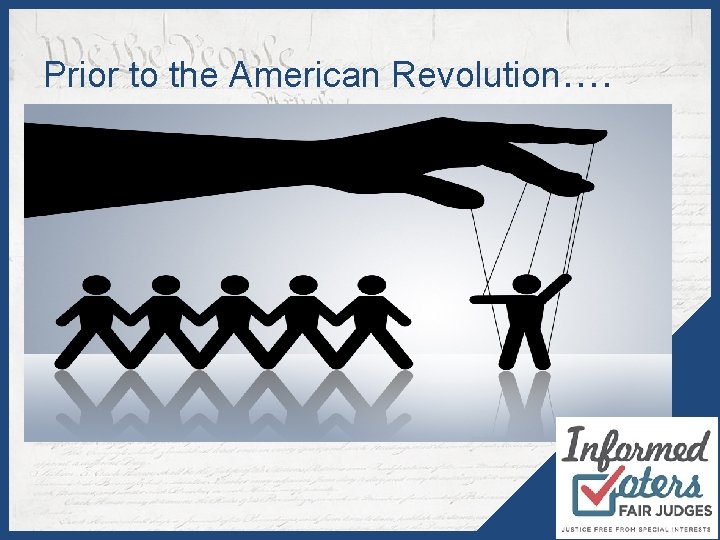
Prior to the American Revolution….
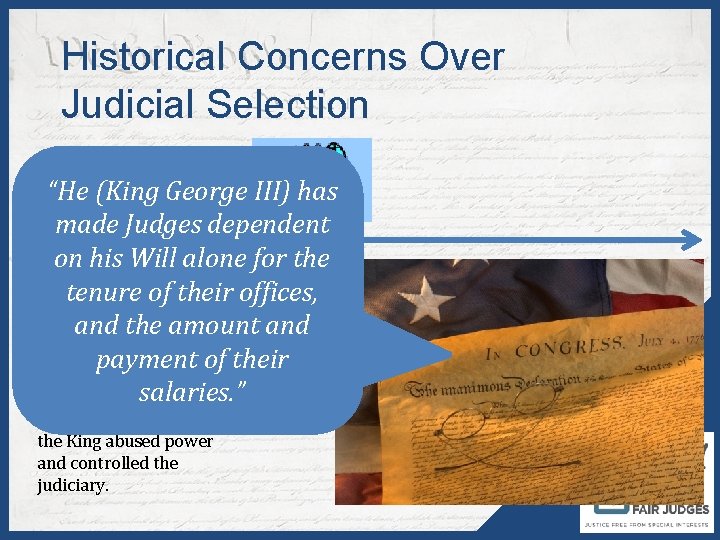
Historical Concerns Over Judicial Selection Colonial “He (King George III) has Era made Judges dependent on his Will alone for the Judges selected tenure of their offices, by the King. and the amount and Colonists outlined payment of their complaints in the Declaration ofsalaries. ” Independence citing how the King abused power and controlled the judiciary.
The Courts The Judicial Branch was not designed to be a political or representative branch.
The role of judges JUDICIAL SELECTION AND ACCOUNTABILITY
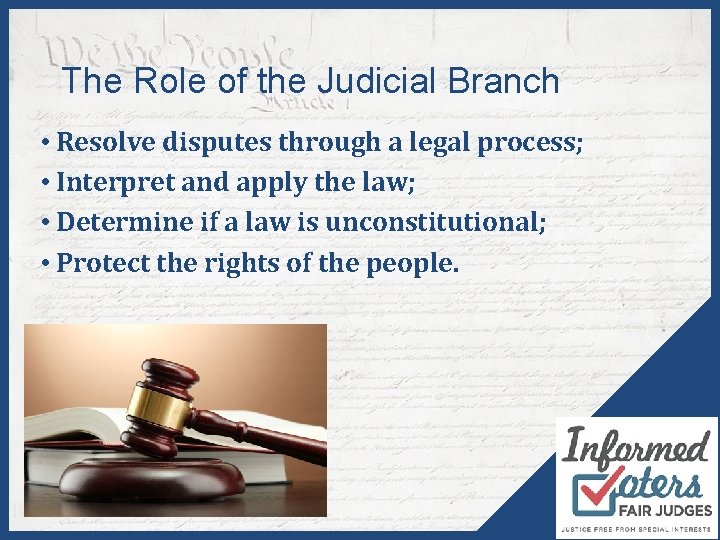
The Role of the Judicial Branch • Resolve disputes through a legal process; • Interpret and apply the law; • Determine if a law is unconstitutional; • Protect the rights of the people.
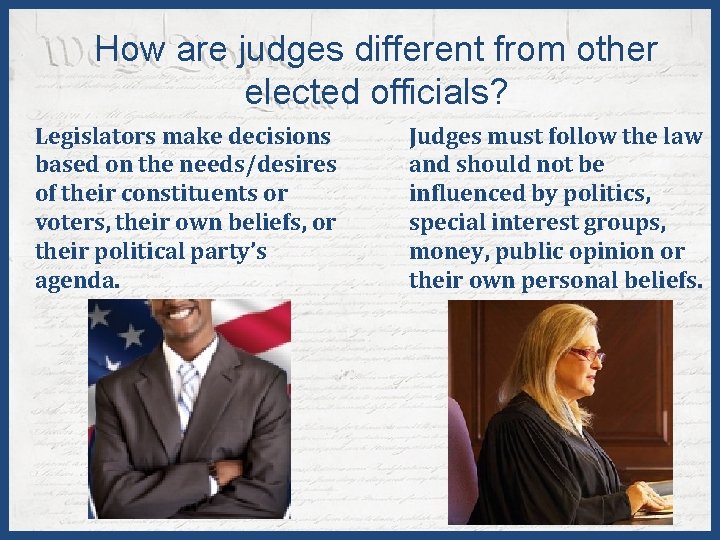
How are judges different from other elected officials? Legislators make decisions based on the needs/desires of their constituents or voters, their own beliefs, or their political party’s agenda. Judges must follow the law and should not be influenced by politics, special interest groups, money, public opinion or their own personal beliefs.
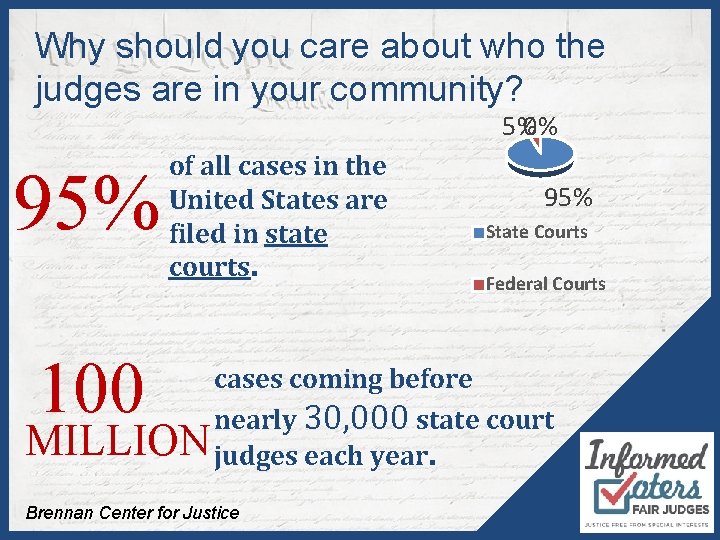
Why should you care about who the judges are in your community? 5%0% 95% of all cases in the United States are filed in state courts. 100 95% State Courts Federal Courts cases coming before nearly 30, 000 state court MILLION judges each year. Brennan Center for Justice
What kinds of issues do judges decide? Judges make important decisions which may directly impact your life including: Decisions that impact your FAMILY like: • Child custody • Divorce • Inheritance disputes Decisions that impact your RIGHTS, your PRIVACY, or your SECURITY. As well as decisions which impact your PROPERTY such as: • Your home • Your business • …and much, much more!
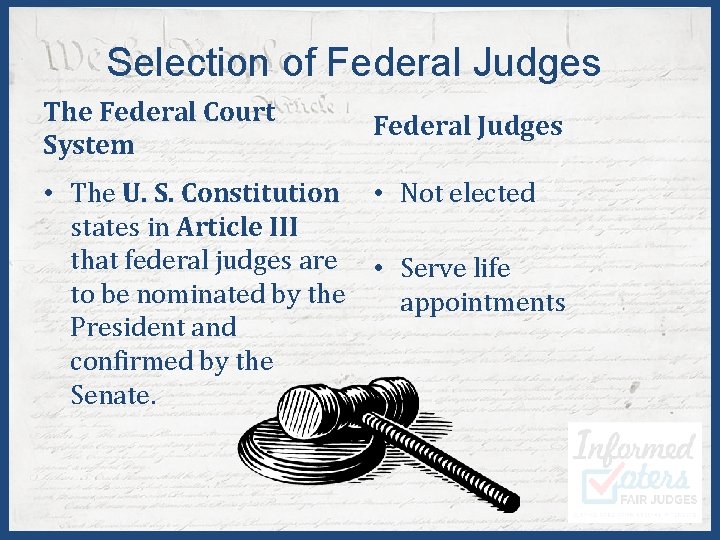
Selection of Federal Judges The Federal Court System Federal Judges • The U. S. Constitution • Not elected states in Article III that federal judges are • Serve life to be nominated by the appointments President and confirmed by the Senate.
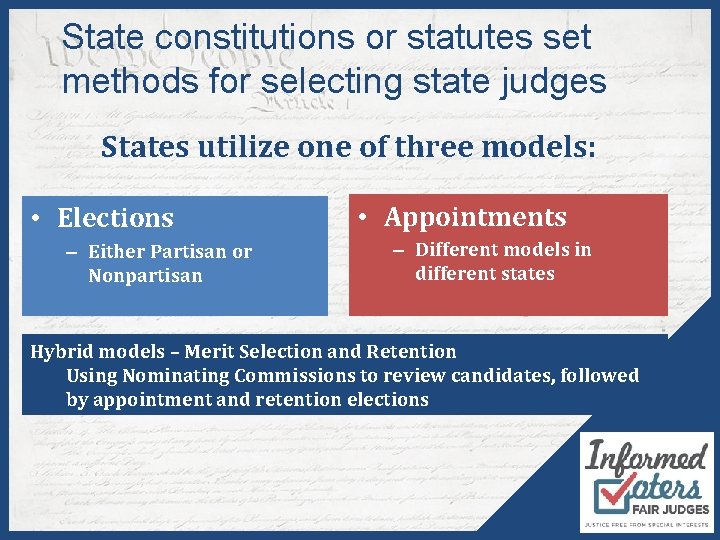
State constitutions or statutes set methods for selecting state judges States utilize one of three models: • Elections – Either Partisan or Nonpartisan • Appointments – Different models in different states Hybrid models – Merit Selection and Retention Using Nominating Commissions to review candidates, followed by appointment and retention elections
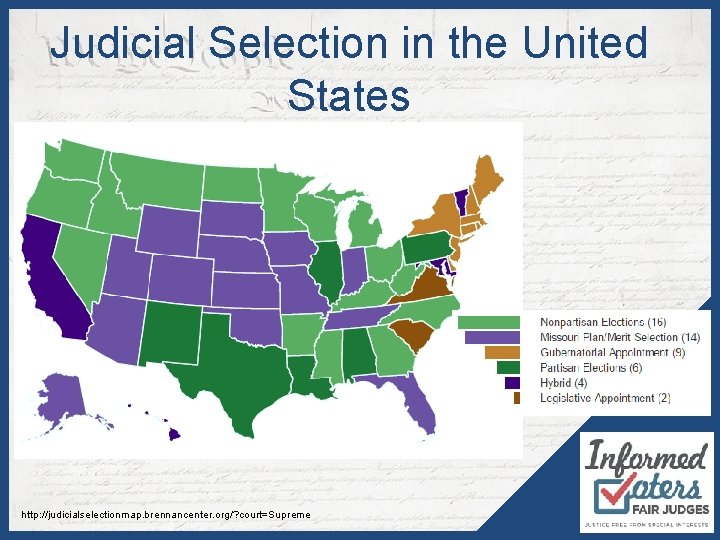
Judicial Selection in the United States http: //judicialselectionmap. brennancenter. org/? court=Supreme
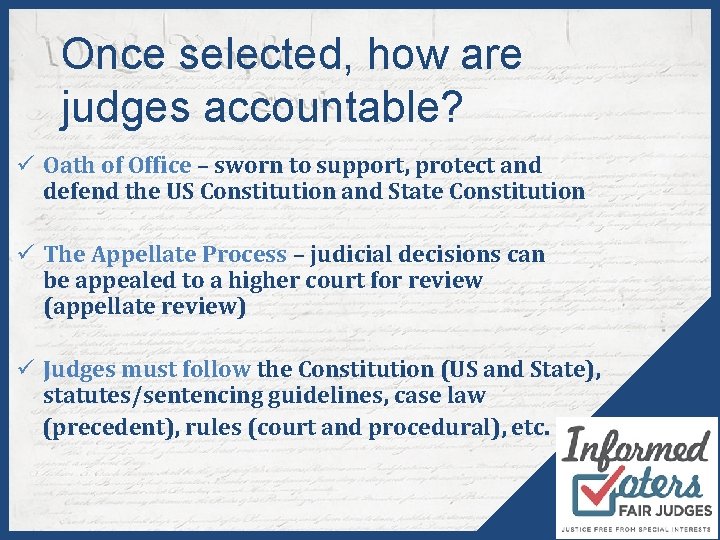
Once selected, how are judges accountable? ü Oath of Office – sworn to support, protect and defend the US Constitution and State Constitution ü The Appellate Process – judicial decisions can be appealed to a higher court for review (appellate review) ü Judges must follow the Constitution (US and State), statutes/sentencing guidelines, case law (precedent), rules (court and procedural), etc.
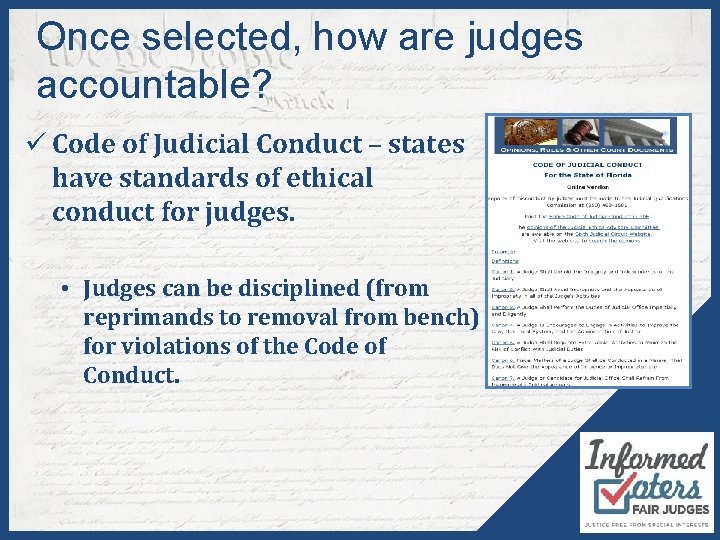
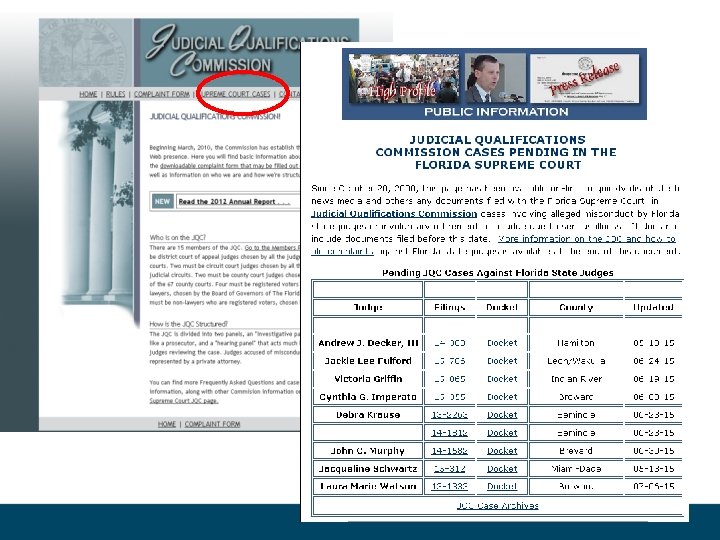
Once selected, how are judges accountable? ü Code of Judicial Conduct – states have standards of ethical conduct for judges. • Judges can be disciplined (from reprimands to removal from bench) for violations of the Code of Conduct.
What issues may impact fair and impartial courts today? • Political attempts to influence judicial selection processes • Infusion of special interest money into judicial elections • Pressure on judicial candidates to take positions on issues or promise specific rulings • Threats of removal from office or impeachment for decisions in controversial cases • Reduction of state court funding • Labeling of judges
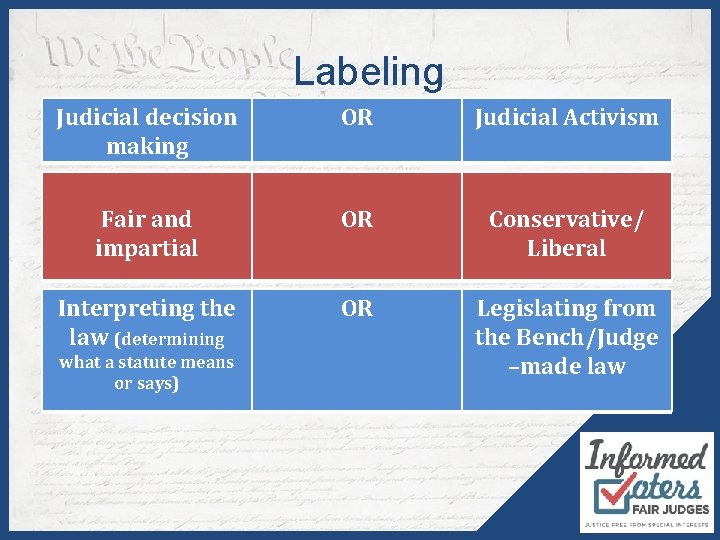
Labeling Judicial decision making OR Judicial Activism Fair and impartial OR Conservative/ Liberal Interpreting the law (determining OR Legislating from the Bench/Judge –made law what a statute means or says)
What do you think? When you walk into the courtroom and face the judge… …what factors should NOT influence the judge’s decision in your case? �Public opinion about the issue �Political demands �Your political party affiliation �The position of special interest groups on the issue �Media reports �Personal perspectives or affiliations of the judge �Money or special interests
Visit the Informed Voters Project website at ivp. nawj. org Like us on Facebook at Informed Voters, Fair Judges – National Association of Women Judges

What can you do? For additional information contact staff@flrea. org
- Slides: 29