
Faecal Sludge Management for Indian Towns By CDD
Faecal Sludge Management for Indian Towns By CDD Society 21 st September, 2016
1. Introduction to CDD 2. FSM in India : The Challenge 3. Faecal Sludge Treatment 4. Other Thoughts for FSM
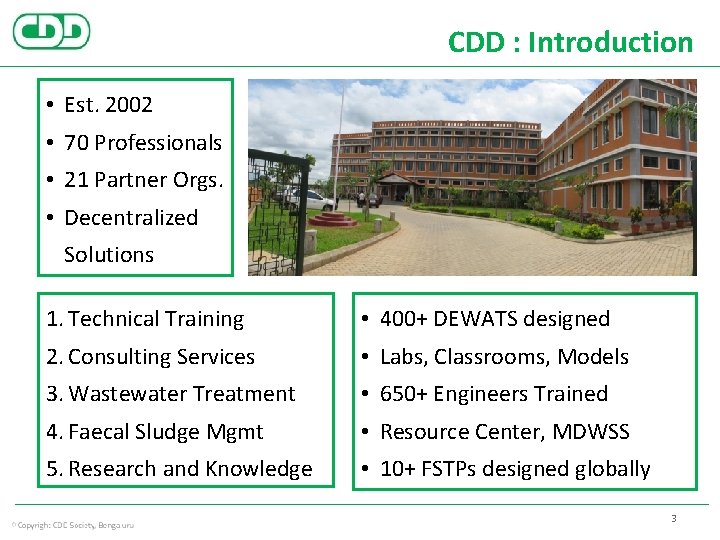
CDD : Introduction • Est. 2002 • 70 Professionals • 21 Partner Orgs. • Decentralized Solutions 1. Technical Training • 400+ DEWATS designed 2. Consulting Services • Labs, Classrooms, Models 3. Wastewater Treatment • 650+ Engineers Trained 4. Faecal Sludge Mgmt • Resource Center, MDWSS 5. Research and Knowledge • 10+ FSTPs designed globally 3
1. Introduction to CDD 2. FSM in India : The Challenge 3. Faecal Sludge Treatment 4. Other Thoughts for FSM
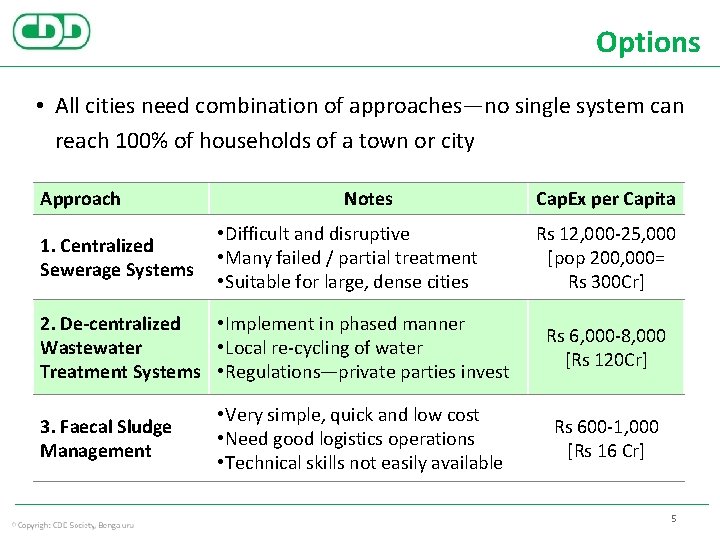
Options • All cities need combination of approaches—no single system can reach 100% of households of a town or city Approach 1. Centralized Sewerage Systems Notes • Difficult and disruptive • Many failed / partial treatment • Suitable for large, dense cities 2. De-centralized • Implement in phased manner Wastewater • Local re-cycling of water Treatment Systems • Regulations—private parties invest 3. Faecal Sludge Management • Very simple, quick and low cost • Need good logistics operations • Technical skills not easily available Cap. Ex per Capita Rs 12, 000 -25, 000 [pop 200, 000= Rs 300 Cr] Rs 6, 000 -8, 000 [Rs 120 Cr] Rs 600 -1, 000 [Rs 16 Cr] 5
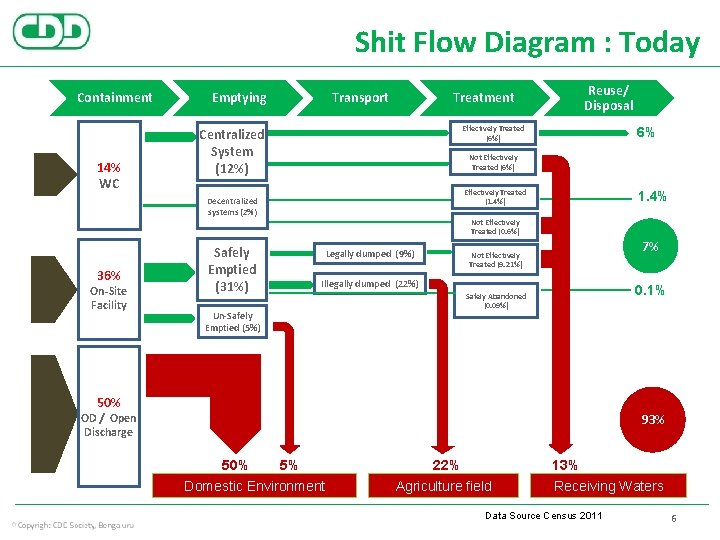
Shit Flow Diagram : Today Containment 14% WC Emptying Transport Treatment Effectively Treated (6%) Centralized System (12%) 36% On-Site Facility 6% Not Effectively Treated (6%) Effectively Treated (1. 4%) Decentralized systems (2%) Safely Emptied (31%) Reuse/ Disposal 1. 4% Not Effectively Treated (0. 6%) Legally dumped (9%) 7% Not Effectively Treated (9. 21%) Illegally dumped (22%) Un-Safely Emptied (5%) 0. 1% Safely Abandoned (0. 09%) 50% OD / Open Discharge 93% 5% 50% Domestic Environment 22% Agriculture field 13% Receiving Waters Data Source Census 2011 6
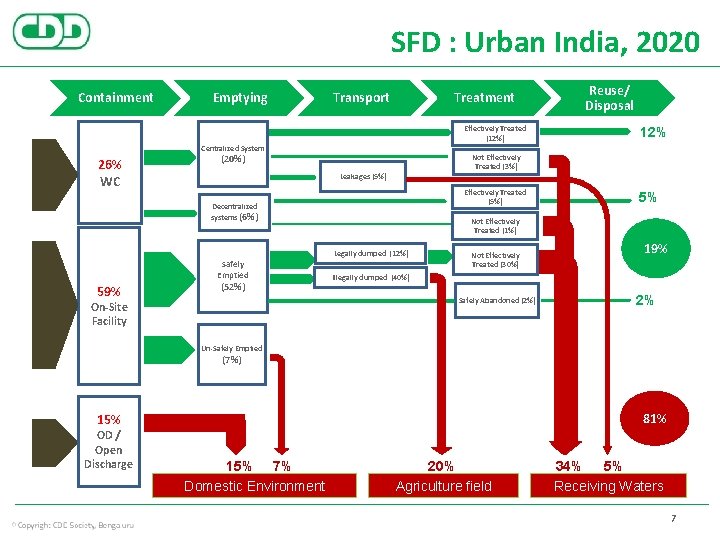
SFD : Urban India, 2020 Containment Emptying Transport Treatment Effectively Treated (12%) Centralized System 26% WC 12% Not Effectively Treated (3%) (20%) Leakages (5%) Effectively Treated (5%) Decentralized systems (6%) Legally dumped (12%) Emptied (52%) Not Effectively Treated (30%) 19% Illegally dumped (40%) Safely Abandoned (2%) On-Site Facility 5% Not Effectively Treated (1%) Safely 59% Reuse/ Disposal 2% Un-Safely Emptied (7%) 81% 15% OD / Open Discharge 15% 7% Domestic Environment 20% Agriculture field 34% 5% Receiving Waters 7
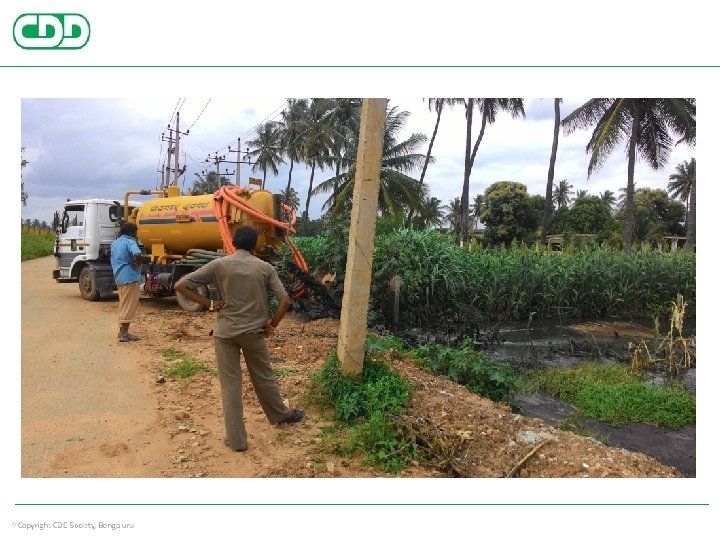
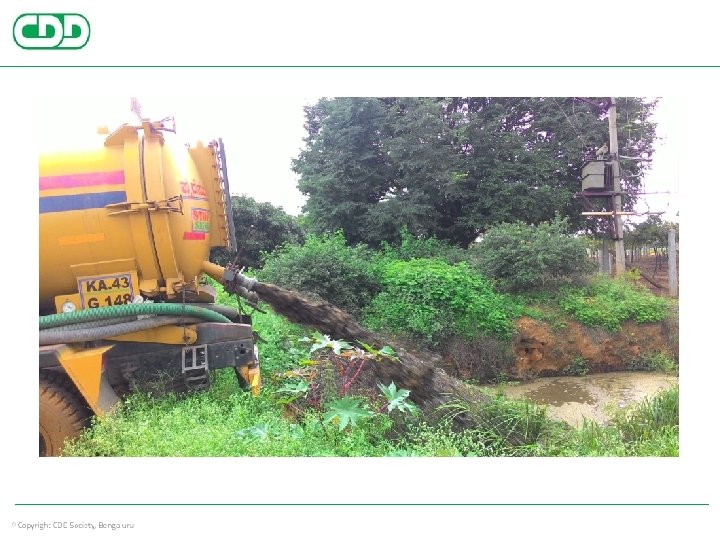
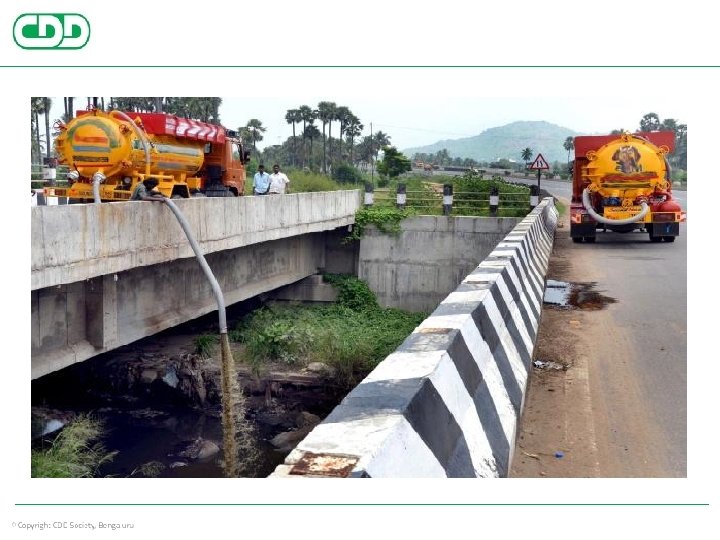
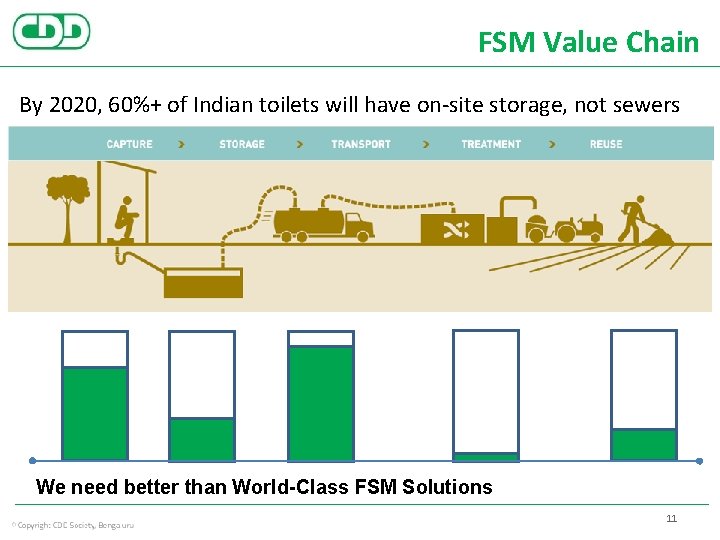
FSM Value Chain By 2020, 60%+ of Indian toilets will have on-site storage, not sewers We need better than World-Class FSM Solutions 11
1. Introduction to CDD 2. FSM in India : The Challenge 3. Faecal Sludge Treatment 4. Other Thoughts for FSM
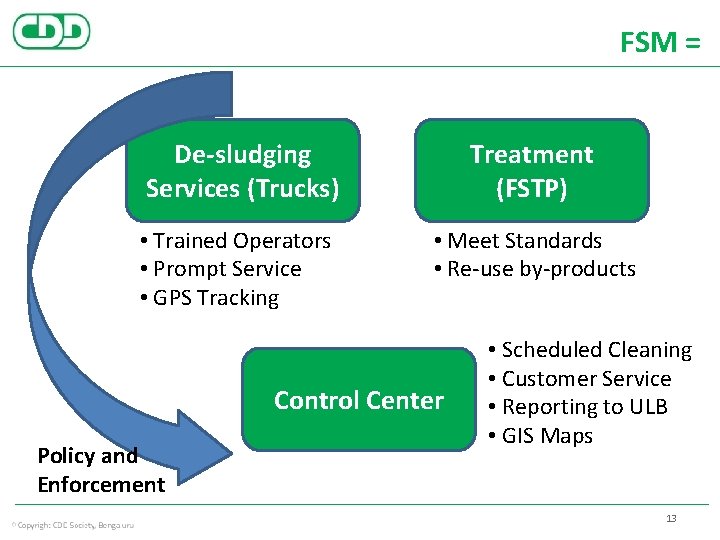
FSM = De-sludging Services (Trucks) Treatment (FSTP) • Trained Operators • Prompt Service • GPS Tracking • Meet Standards • Re-use by-products Control Center Policy and Enforcement • Scheduled Cleaning • Customer Service • Reporting to ULB • GIS Maps 13
Treatment Plant : Key Considerations 1. Close to de-sludging areas (area required) 2. Easily accessible location 3. Deal with variable daily quantity / characteristics 4. Low cost (and simple) to operate 5. Clean and Odourless (NIMBY) 6. Scalable and Modular 14
Devanahalli, Karnataka Location Devanahalli, 39 km NE of Bangalore Population ~32, 000 Area 16 Sq. Km. (5 x Central Park, NY) Toilets Wat-San Status 6, 400 (90% with Tanks/Pits) Little water and No sewer system Very supporting TMC! 15
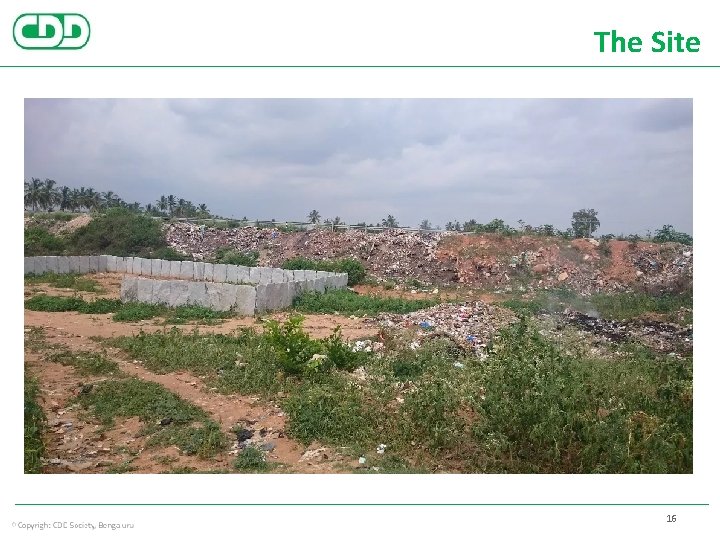
The Site 16
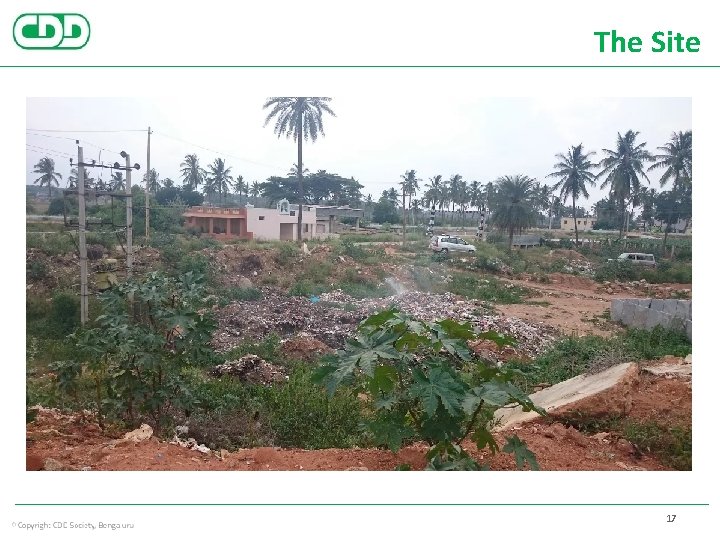
The Site 17
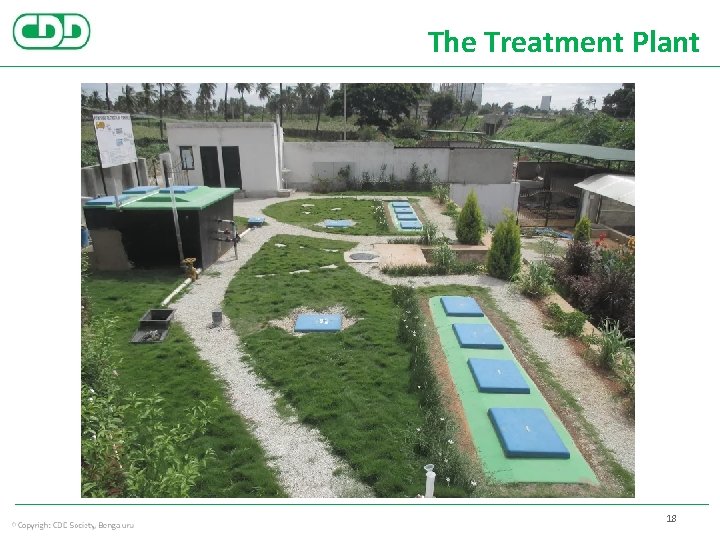
The Treatment Plant 18
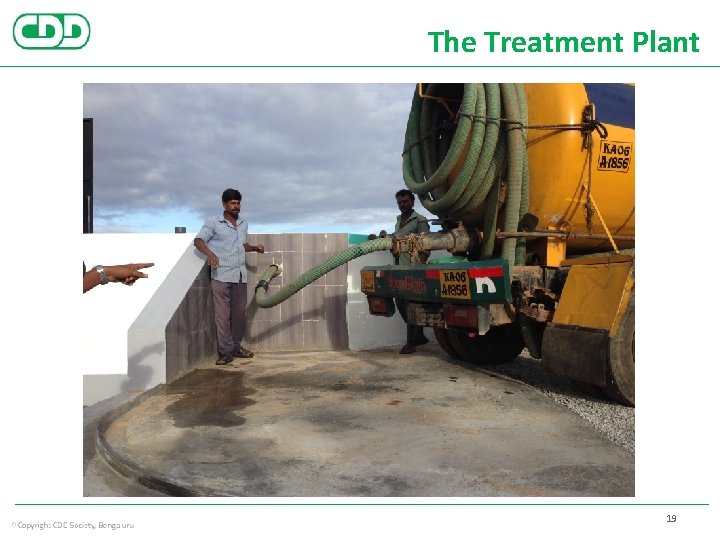
The Treatment Plant 19
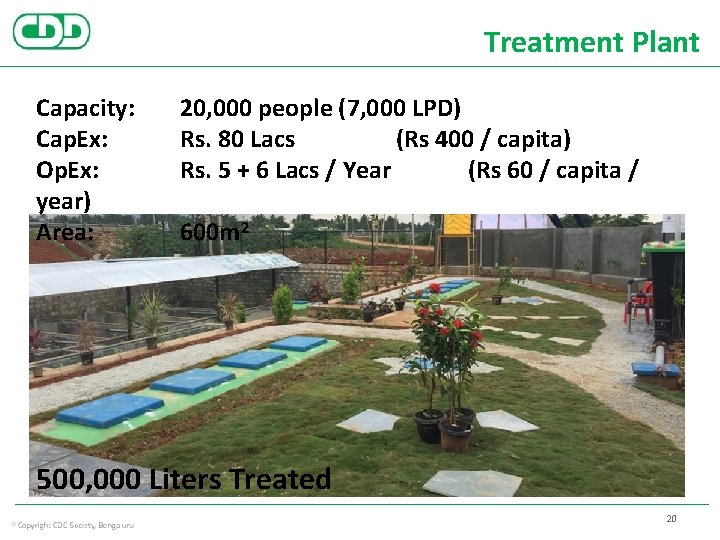
Treatment Plant Capacity: Cap. Ex: Op. Ex: year) Area: 20, 000 people (7, 000 LPD) Rs. 80 Lacs (Rs 400 / capita) Rs. 5 + 6 Lacs / Year (Rs 60 / capita / 600 m 2 500, 000 Liters Treated 20
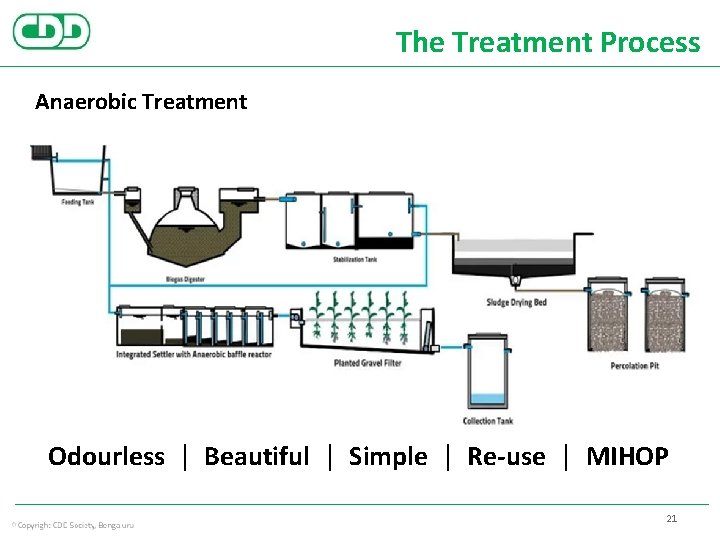
The Treatment Process Anaerobic Treatment Odourless │ Beautiful │ Simple │ Re-use │ MIHOP 21
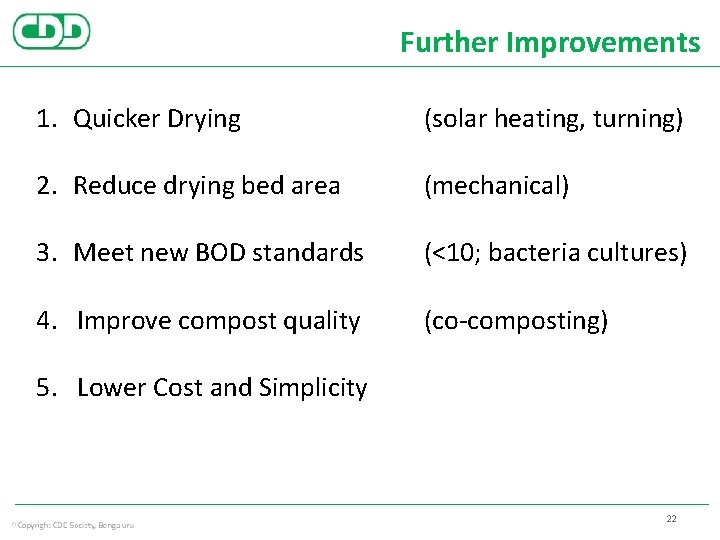
Further Improvements 1. Quicker Drying (solar heating, turning) 2. Reduce drying bed area (mechanical) 3. Meet new BOD standards (<10; bacteria cultures) 4. Improve compost quality (co-composting) 5. Lower Cost and Simplicity 22

Planted Drying Bed • Sludge directly dumped into drying bed • Percolate may need post-treatment • Bio-solids also should be treated • Suitable in low water table, no-flooding areas 23

Other Options • Deep Row Entrenchment • Unplanted Drying Beds • Vermi-Composting • Black Soldier Flies • Planted Drying Beds • Anaerobic Digestion • Mechanised De-Watering • Omni-Processors (Pyrolysis etc) 24
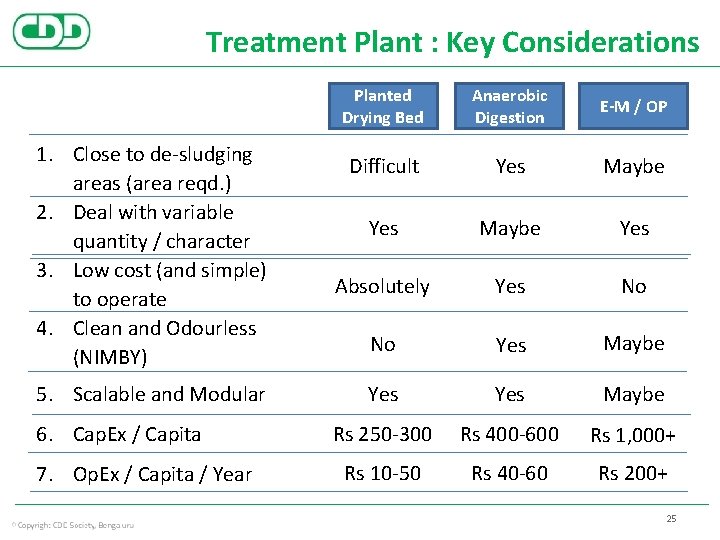
Treatment Plant : Key Considerations 1. Close to de-sludging areas (area reqd. ) 2. Deal with variable quantity / character 3. Low cost (and simple) to operate 4. Clean and Odourless (NIMBY) 5. Scalable and Modular 6. Cap. Ex / Capita 7. Op. Ex / Capita / Year Planted Drying Bed Anaerobic Digestion E-M / OP Difficult Yes Maybe Yes Absolutely Yes No No Yes Maybe Rs 250 -300 Rs 400 -600 Rs 1, 000+ Rs 10 -50 Rs 40 -60 Rs 200+ 25
1. Introduction to CDD 2. FSM in India : The Challenge 3. Faecal Sludge Treatment 4. Other Thoughts for FSM
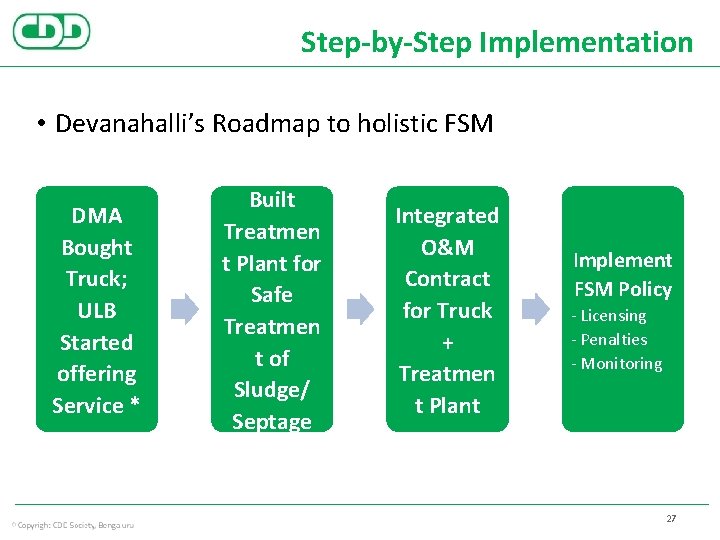
Step-by-Step Implementation • Devanahalli’s Roadmap to holistic FSM DMA Bought Truck; ULB Started offering Service * Built Treatmen t Plant for Safe Treatmen t of Sludge/ Septage Integrated O&M Contract for Truck + Treatmen t Plant Implement FSM Policy - Licensing - Penalties - Monitoring 27
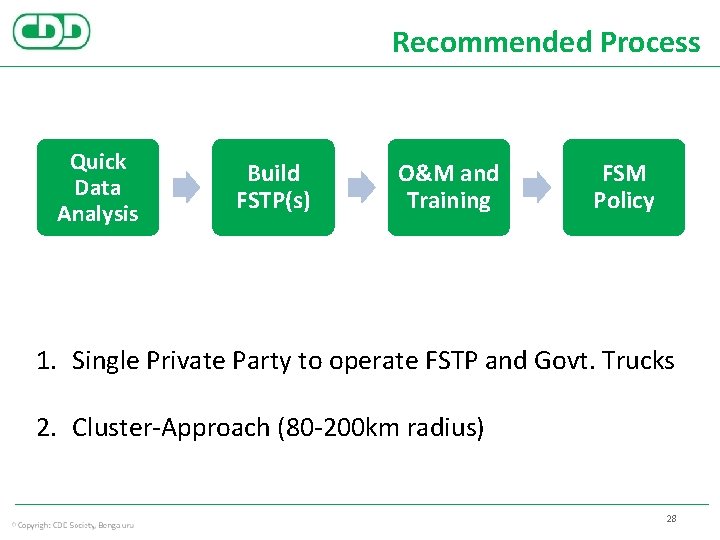
Recommended Process Quick Data Analysis Build FSTP(s) O&M and Training FSM Policy 1. Single Private Party to operate FSTP and Govt. Trucks 2. Cluster-Approach (80 -200 km radius) 28
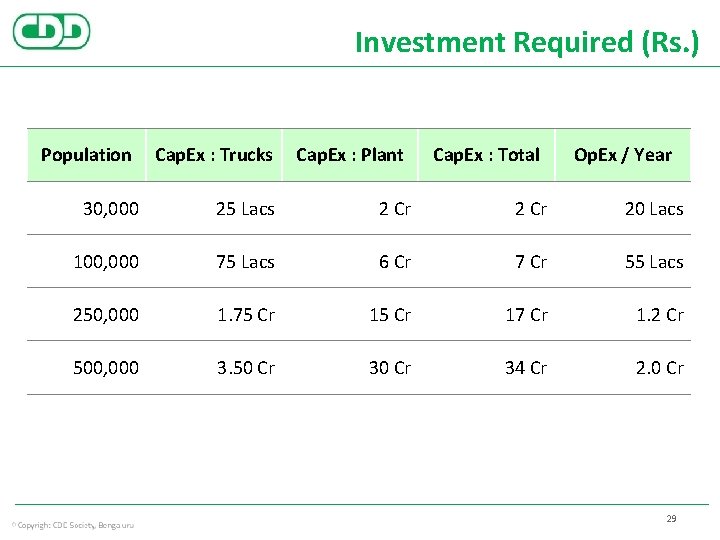
Investment Required (Rs. ) Population Cap. Ex : Trucks Cap. Ex : Plant Cap. Ex : Total Op. Ex / Year 30, 000 25 Lacs 2 Cr 20 Lacs 100, 000 75 Lacs 6 Cr 7 Cr 55 Lacs 250, 000 1. 75 Cr 17 Cr 1. 2 Cr 500, 000 3. 50 Cr 34 Cr 2. 0 Cr 29
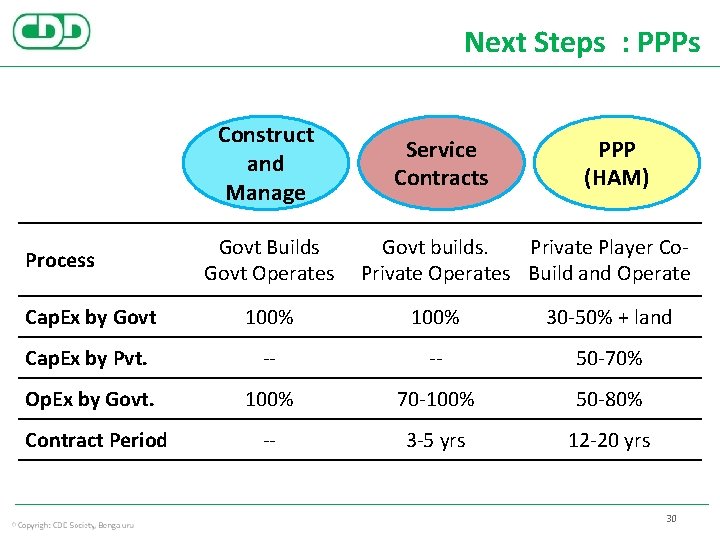
Next Steps : PPPs Construct and Manage Process Govt Builds Govt Operates Service Contracts PPP (HAM) Govt builds. Private Player Co. Private Operates Build and Operate Cap. Ex by Govt 100% 30 -50% + land Cap. Ex by Pvt. -- -- 50 -70% Op. Ex by Govt. 100% 70 -100% 50 -80% -- 3 -5 yrs 12 -20 yrs Contract Period 30
Thank You
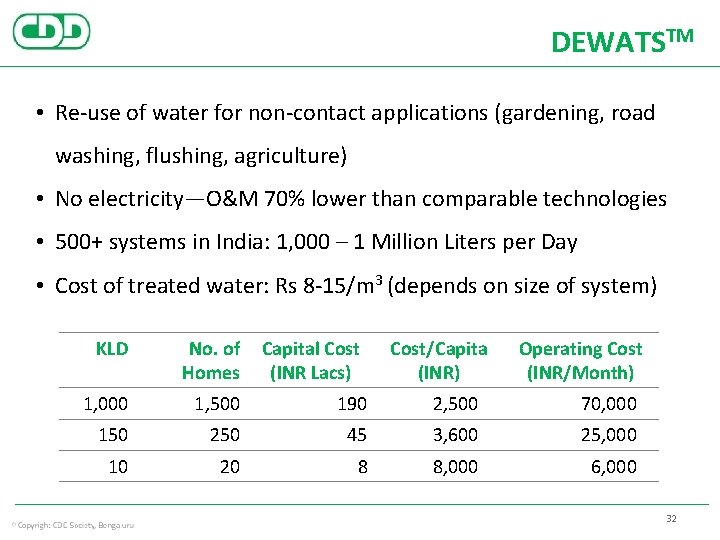
DEWATSTM • Re-use of water for non-contact applications (gardening, road washing, flushing, agriculture) • No electricity—O&M 70% lower than comparable technologies • 500+ systems in India: 1, 000 – 1 Million Liters per Day • Cost of treated water: Rs 8 -15/m 3 (depends on size of system) KLD No. of Homes Capital Cost (INR Lacs) Cost/Capita (INR) Operating Cost (INR/Month) 1, 000 1, 500 190 2, 500 70, 000 150 250 45 3, 600 25, 000 10 20 8 8, 000 6, 000 32
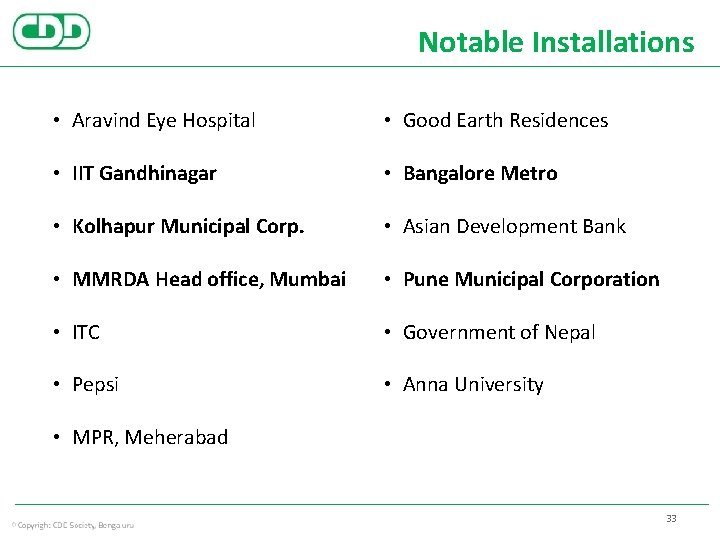
Notable Installations • Aravind Eye Hospital • Good Earth Residences • IIT Gandhinagar • Bangalore Metro • Kolhapur Municipal Corp. • Asian Development Bank • MMRDA Head office, Mumbai • Pune Municipal Corporation • ITC • Government of Nepal • Pepsi • Anna University • MPR, Meherabad 33

A Large DEWATS Under Construction 34
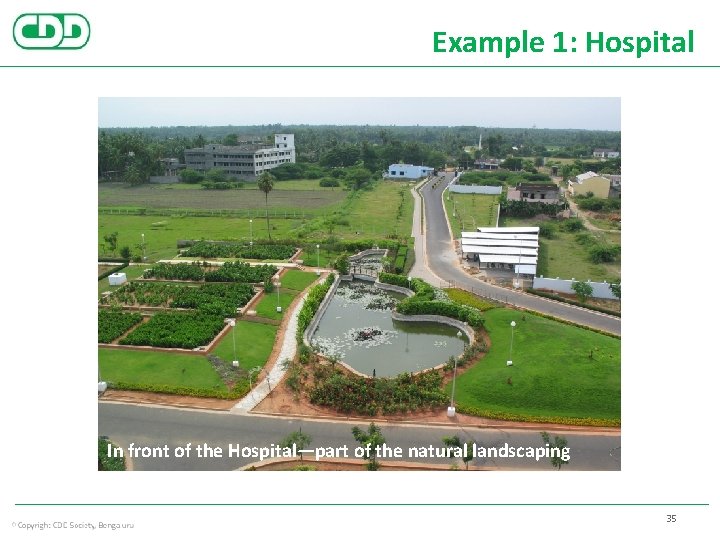
Example 1: Hospital In front of the Hospital—part of the natural landscaping 35
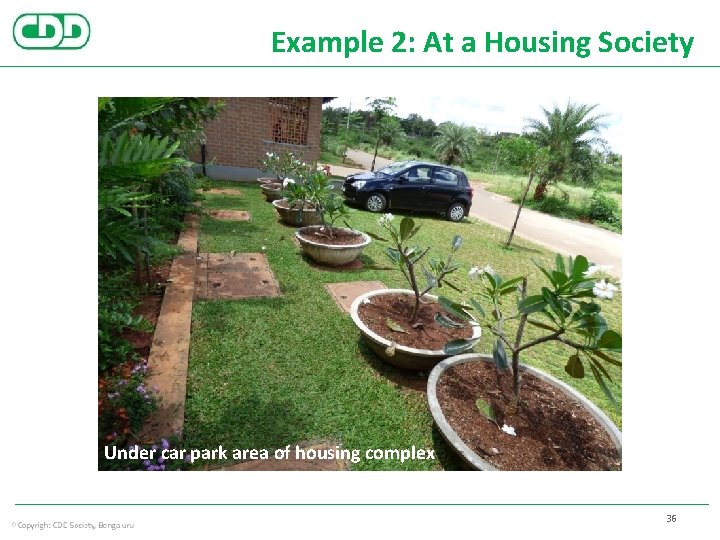
Example 2: At a Housing Society Under car park area of housing complex 36
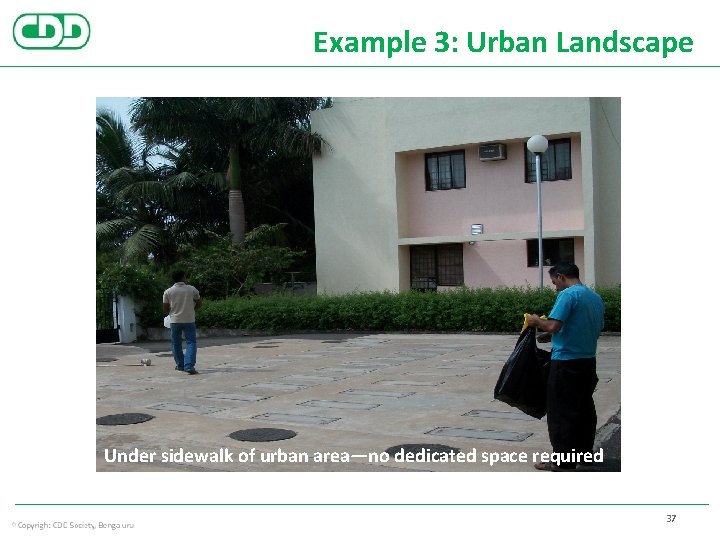
Example 3: Urban Landscape Under sidewalk of urban area—no dedicated space required 37
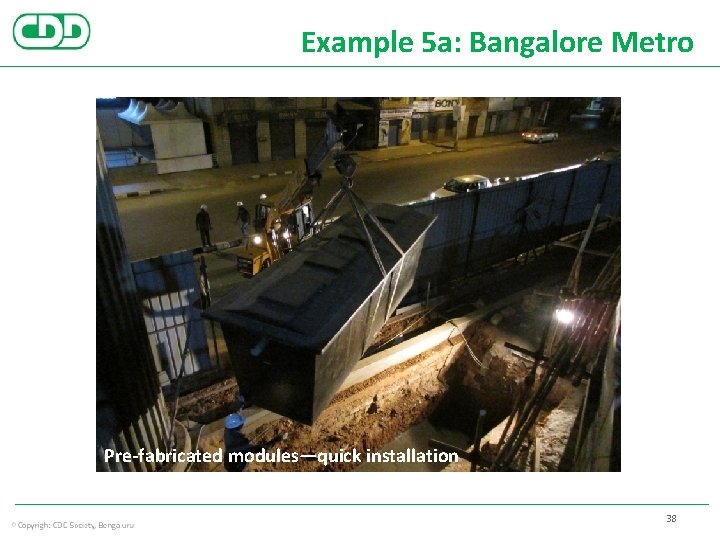
Example 5 a: Bangalore Metro Pre-fabricated modules—quick installation 38
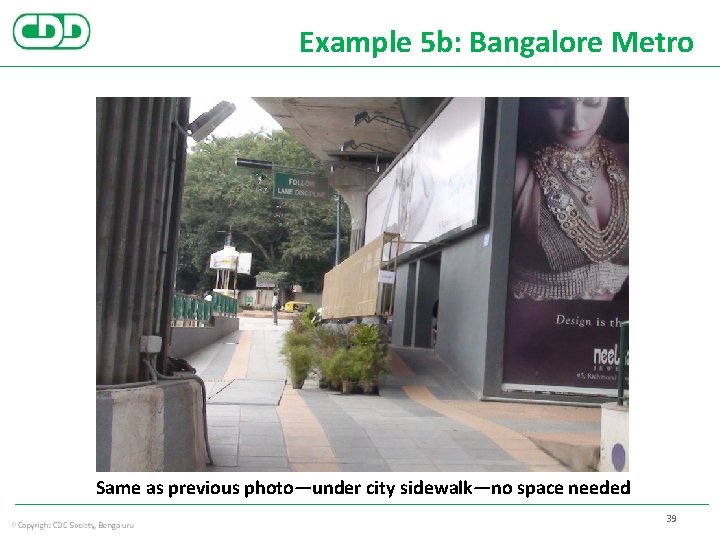
Example 5 b: Bangalore Metro Same as previous photo—under city sidewalk—no space needed 39
- Slides: 39