
Faecal Immunochemical Testing FIT in primary care May

- Slides: 12
Faecal Immunochemical Testing (FIT) in primary care May 2019 Hertfordshire and West Essex STP 11 -04 -19
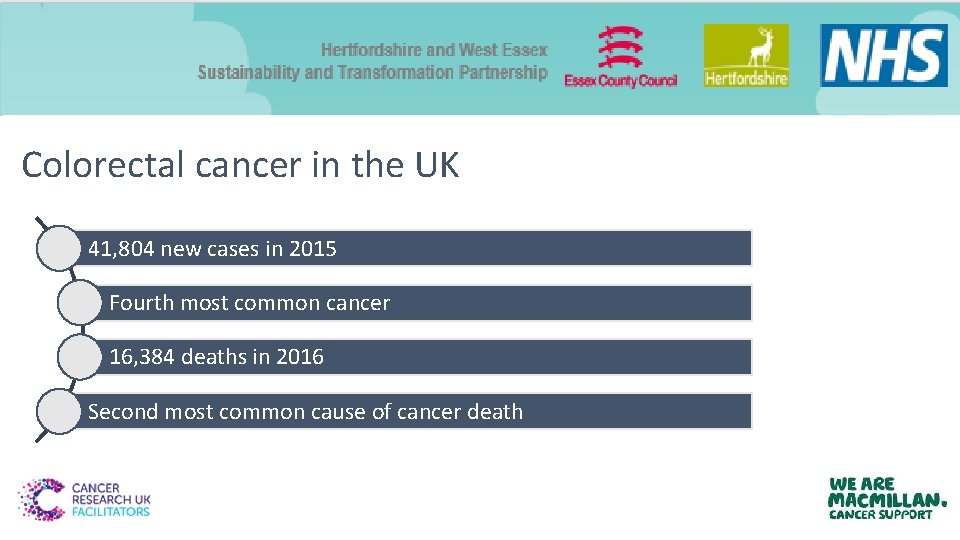
Colorectal cancer in the UK 41, 804 new cases in 2015 Fourth most common cancer 16, 384 deaths in 2016 Second most common cause of cancer death
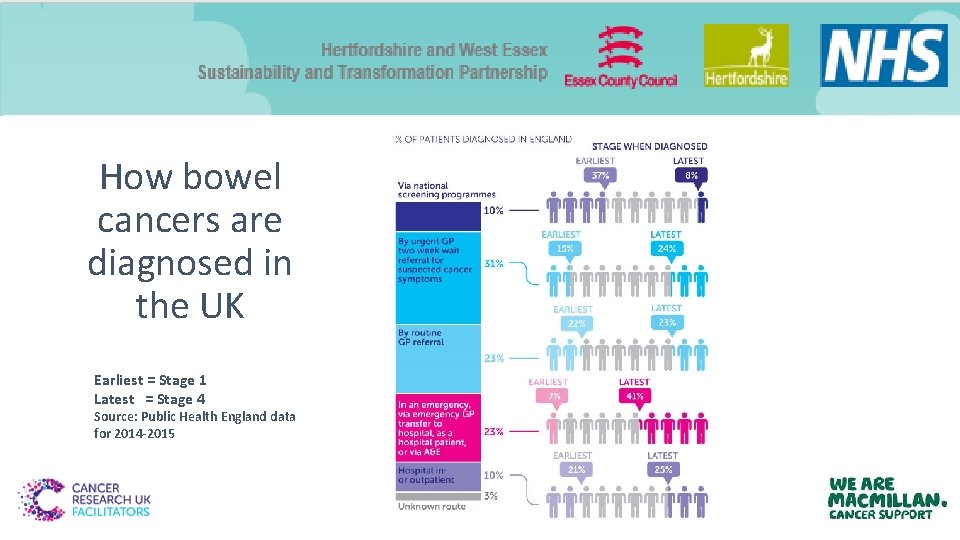
How bowel cancers are diagnosed in the UK Earliest = Stage 1 Latest = Stage 4 Source: Public Health England data for 2014 -2015
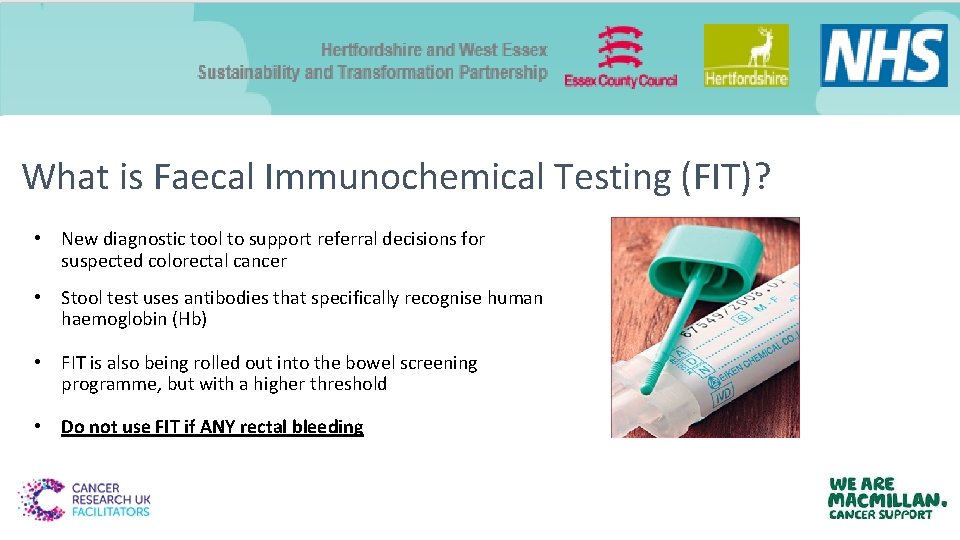
What is Faecal Immunochemical Testing (FIT)? • New diagnostic tool to support referral decisions for suspected colorectal cancer • Stool test uses antibodies that specifically recognise human haemoglobin (Hb) • FIT is also being rolled out into the bowel screening programme, but with a higher threshold • Do not use FIT if ANY rectal bleeding
FIT: the evidence • FIT has a very strong predictive value, i. e. if undetected there is > 99% chance of no colorectal cancer • Mowat et al (2015) 3 missed cases, all had IDA • No large scale primary care study of FIT in symptomatic patients
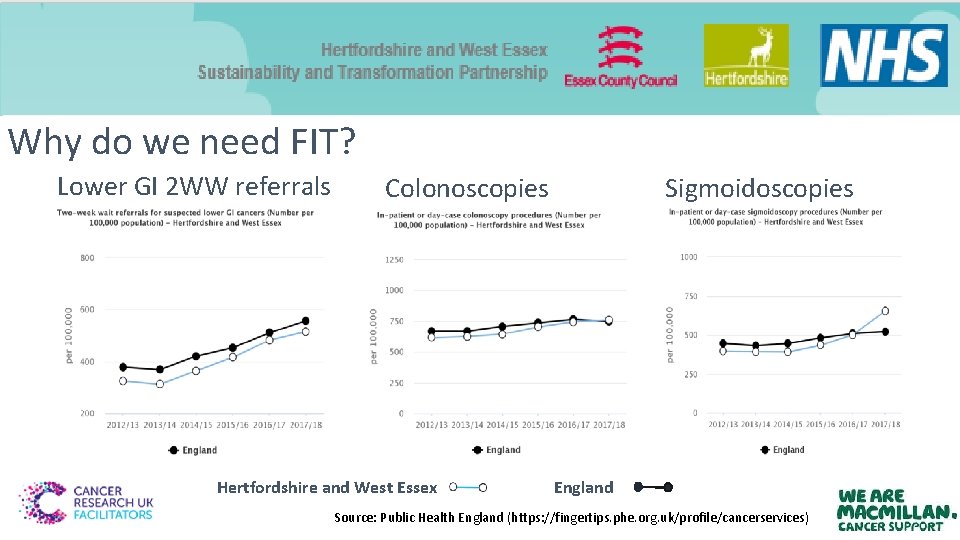
Why do we need FIT? Lower GI 2 WW referrals Colonoscopies Hertfordshire and West Essex Sigmoidoscopies England Source: Public Health England (https: //fingertips. phe. org. uk/profile/cancerservices)
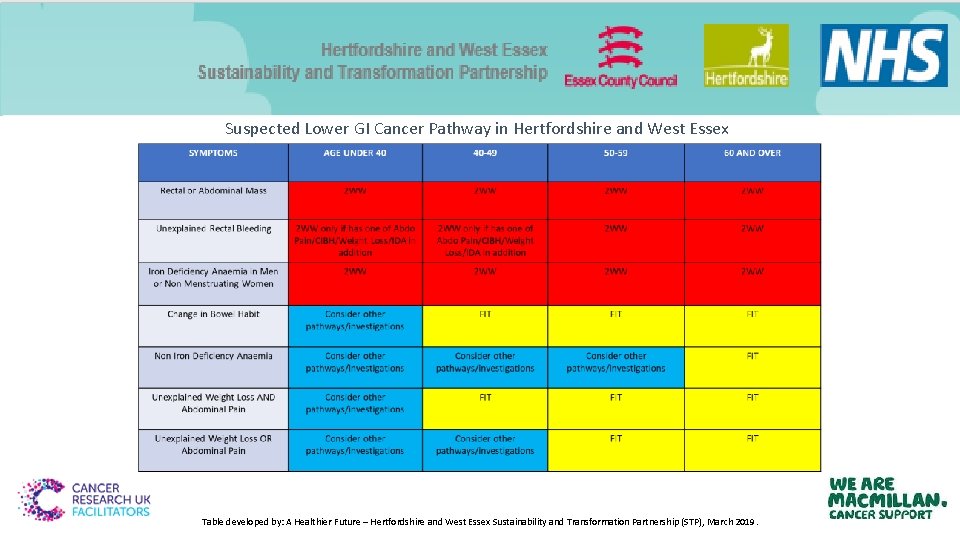
Suspected Lower GI Cancer Pathway in Hertfordshire and West Essex Table developed by: A Healthier Future – Hertfordshire and West Essex Sustainability and Transformation Partnership (STP), March 2019.
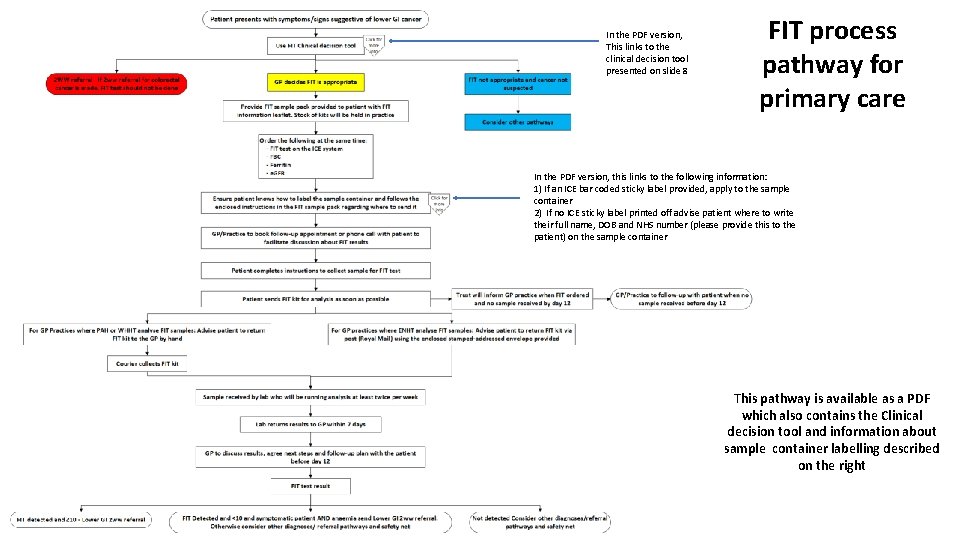
In the PDF version, This links to the clinical decision tool presented on slide 8 FIT process pathway for primary care In the PDF version, this links to the following information: 1) If an ICE bar coded sticky label provided, apply to the sample container 2) If no ICE sticky label printed off advise patient where to write their full name, DOB and NHS number (please provide this to the patient) on the sample container This pathway is available as a PDF which also contains the Clinical decision tool and information about sample container labelling described on the right
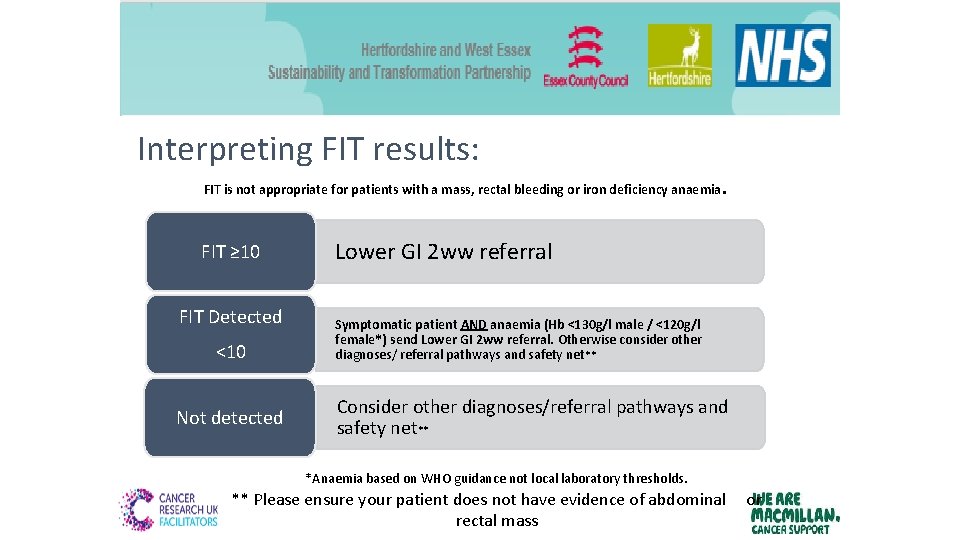
Interpreting FIT results: FIT is not appropriate for patients with a mass, rectal bleeding or iron deficiency anaemia. FIT ≥ 10 FIT Detected <10 Not detected Lower GI 2 ww referral Symptomatic patient AND anaemia (Hb <130 g/l male / <120 g/l female*) send Lower GI 2 ww referral. Otherwise consider other diagnoses/ referral pathways and safety net** Consider other diagnoses/referral pathways and safety net** *Anaemia based on WHO guidance not local laboratory thresholds. ** Please ensure your patient does not have evidence of abdominal rectal mass or
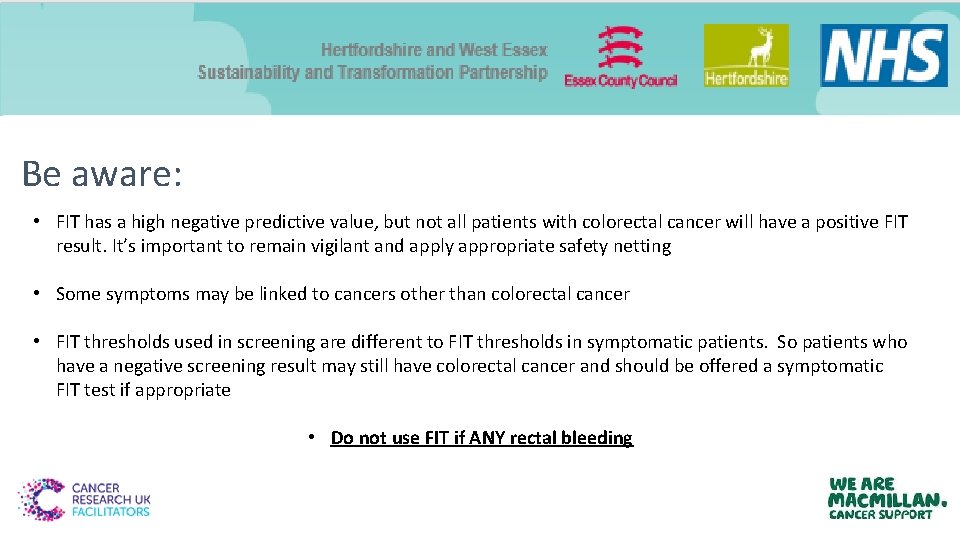
Be aware: • FIT has a high negative predictive value, but not all patients with colorectal cancer will have a positive FIT result. It’s important to remain vigilant and apply appropriate safety netting • Some symptoms may be linked to cancers other than colorectal cancer • FIT thresholds used in screening are different to FIT thresholds in symptomatic patients. So patients who have a negative screening result may still have colorectal cancer and should be offered a symptomatic FIT test if appropriate • Do not use FIT if ANY rectal bleeding
For more information • Laboratory: • Project Lead: • More FIT tests from: