
Facts for life Carbon Monoxide Poisoning Properties of
Facts for life Carbon Monoxide Poisoning
Properties of Carbon Monoxide • Carbon monoxide is an odourless, tasteless and colourless gas. • It is toxic to most forms of life. • It is about 3% lighter than air.

Production of Carbon Monoxide • When carbon compounds are burned in limited oxygen CO instead of CO 2 is formed. 2 C + O 2 (limited) = 2 CO
Carbon Monoxide Formation • This can happen in your home – especially if the gas fires or heating boilers are not serviced regularly • Car exhausts produce CO – especially if the engine is not efficient (never switch on the engine just to keep warm, especially if the car is in an enclosed space). • Cigarettes produce CO
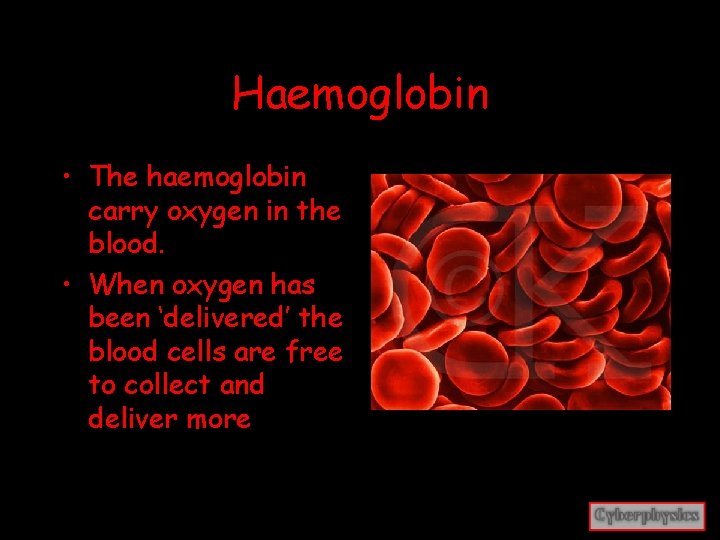
Haemoglobin • The haemoglobin carry oxygen in the blood. • When oxygen has been ‘delivered’ the blood cells are free to collect and deliver more

Carboxy-haemoglobin • If CO is absorbed by the haemoglobin they become carboxyhaemoglobin. • Carboxy-haemoglobin cannot release the CO molecule, and the haemoglobin that has absorbed the carbon monoxide cannot therefore carry oxygen around the body any more.
Bright pink blood! • Carboxy-haemoglobin are bright pink. • They reduce the oxygen that gets carried around the body and make the person suffocate. • A person dying of CO poisoning is very flushed – has a bright pink complexion!
Smokers • Smokers can have up to 10% carboxy-haemoglobin in their blood from cigarette CO inhalation alone – giving them a headstart on getting a lethal dose from faulty appliances. • It reduces the oxygen getting to major organs - including the brain…
Smokers • Carbon Monoxide is just as dangerous in cigarettes as it is an individual gas. • In fact, it has basically the same effects, only over a long period of time.
Smokers • When smoking, Carbon Monoxide is inhaled with tar, nicotine, and many other small bits of toxins. • When it enters through the mouth, it spreads quickly throughout your body and skin. • There, it combines with haemoglobin in the blood, preventing absorption of oxygen.
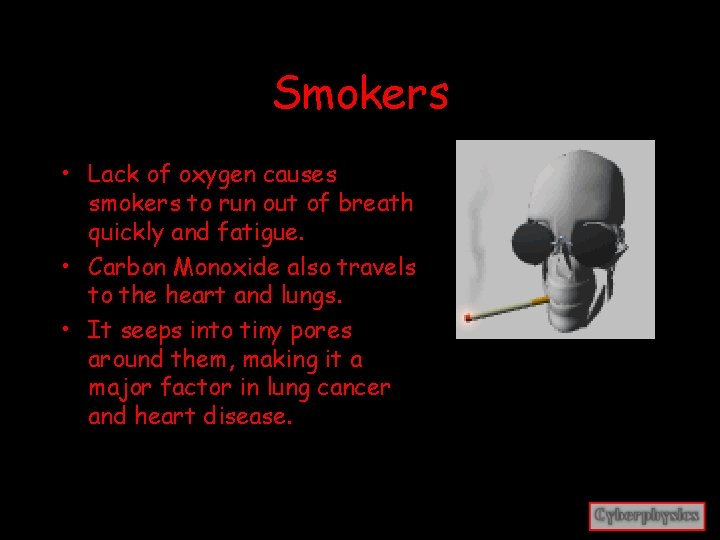
Smokers • Lack of oxygen causes smokers to run out of breath quickly and fatigue. • Carbon Monoxide also travels to the heart and lungs. • It seeps into tiny pores around them, making it a major factor in lung cancer and heart disease.
Symptoms of CO poisoning • Low levels of carbon monoxide poisoning can be confused with flu symptoms, food poisoning or other illnesses and can have a long term health risk if left unattended. Some of the symptoms are the following. – Shortness of breath – Mild nausea – Mild headaches
Symptoms of CO poisoning • Moderate levels of CO exposure can cause death if the following symptoms persist for a long measure of time. – – Headaches Dizziness Nausea Light-headedness • High levels of CO can be fatal causing death within minutes.
Treatment of CO poisoning • Get the victim into fresh air immediately. • If you can not get the people out of the house, then open all windows and doors. • Any combustion appliances should be turned off. • Take those who were subjected to carbon monoxide to a hospital emergency room as quickly as possible. A simple blood test will be able to determine if carbon monoxide poisoning has occurred. They will require a transfusion.

Detection of CO in the home • Install a carbon monoxide detector in your house, and plan to check its battery every time you check your smoke detector batteries. • Or use a chemical detector – take care to replace it regularly.
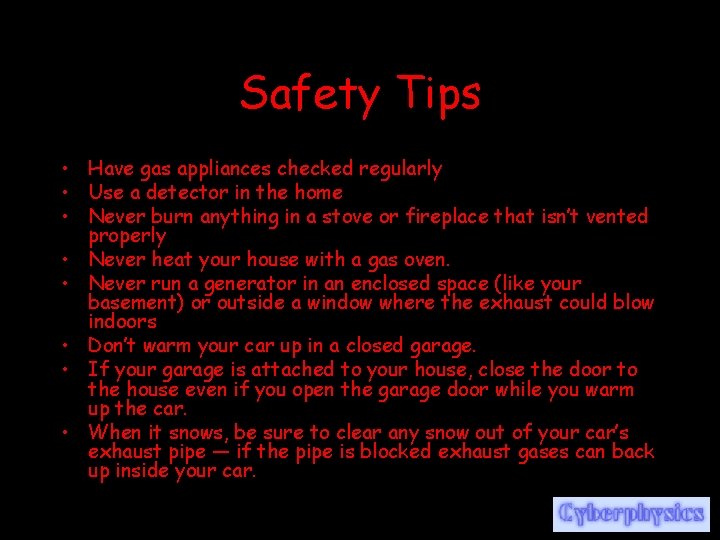
Safety Tips • Have gas appliances checked regularly • Use a detector in the home • Never burn anything in a stove or fireplace that isn’t vented properly • Never heat your house with a gas oven. • Never run a generator in an enclosed space (like your basement) or outside a window where the exhaust could blow indoors • Don’t warm your car up in a closed garage. • If your garage is attached to your house, close the door to the house even if you open the garage door while you warm up the car. • When it snows, be sure to clear any snow out of your car’s exhaust pipe — if the pipe is blocked exhaust gases can back up inside your car.
- Slides: 16