
Factors that Shape an Ecosystem I Climate O
- Slides: 16
Factors that Shape an Ecosystem
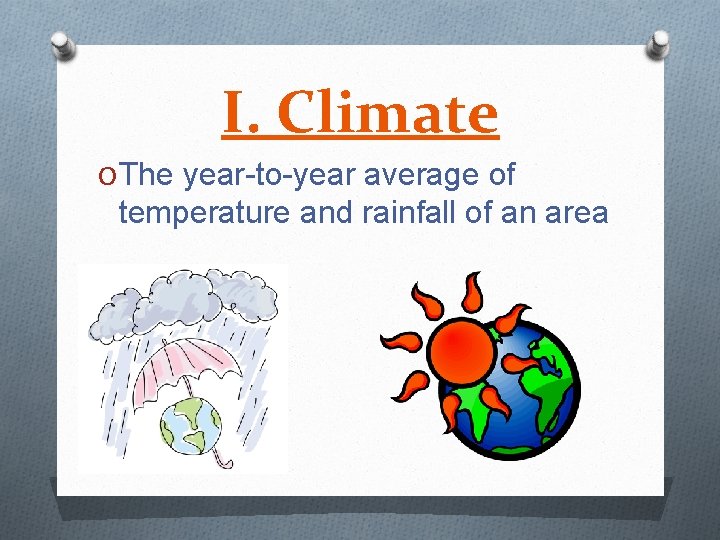
I. Climate O The year-to-year average of temperature and rainfall of an area
What are abiotic and biotic factors?
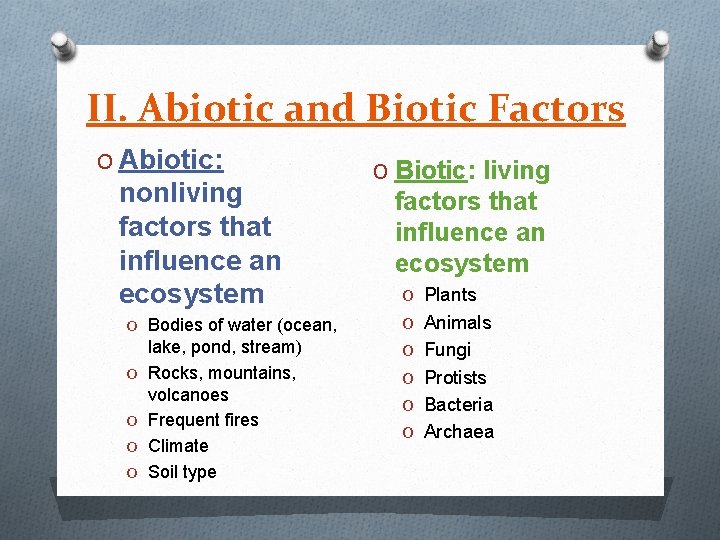
II. Abiotic and Biotic Factors O Abiotic: nonliving factors that influence an ecosystem O Bodies of water (ocean, O O lake, pond, stream) Rocks, mountains, volcanoes Frequent fires Climate Soil type O Biotic: living factors that influence an ecosystem O Plants O Animals O Fungi O Protists O Bacteria O Archaea
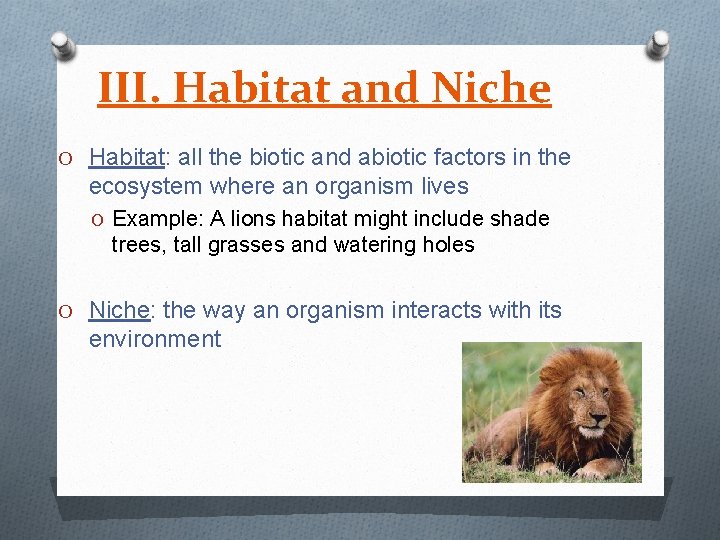
III. Habitat and Niche O Habitat: all the biotic and abiotic factors in the ecosystem where an organism lives O Example: A lions habitat might include shade trees, tall grasses and watering holes O Niche: the way an organism interacts with its environment
Habitat and Niche O Think of a habitat as where as a species lives and a niche as how it lives within the habitat. O A niche includes: � Food: the type it eats, how it competes with others, where it fits in the food web � Abiotic Conditions: range of conditions such as temperature and amount of water available � Behavior: time of day the species is active and where and when it reproduces
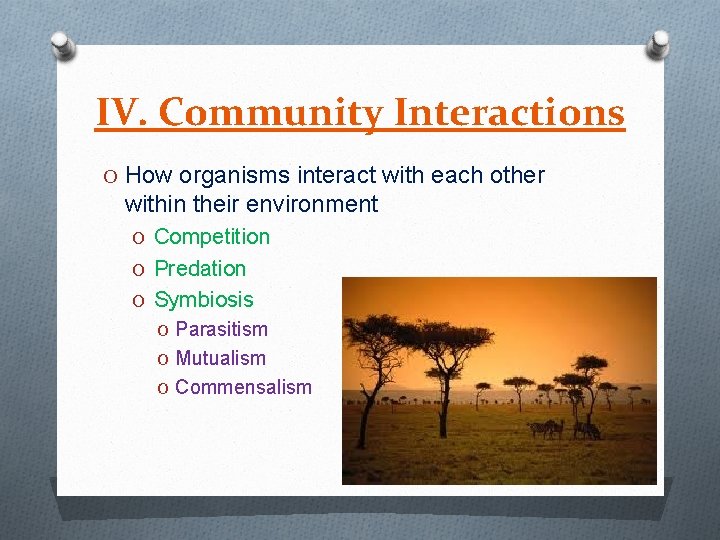
IV. Community Interactions O How organisms interact with each other within their environment O Competition O Predation O Symbiosis O Parasitism O Mutualism O Commensalism
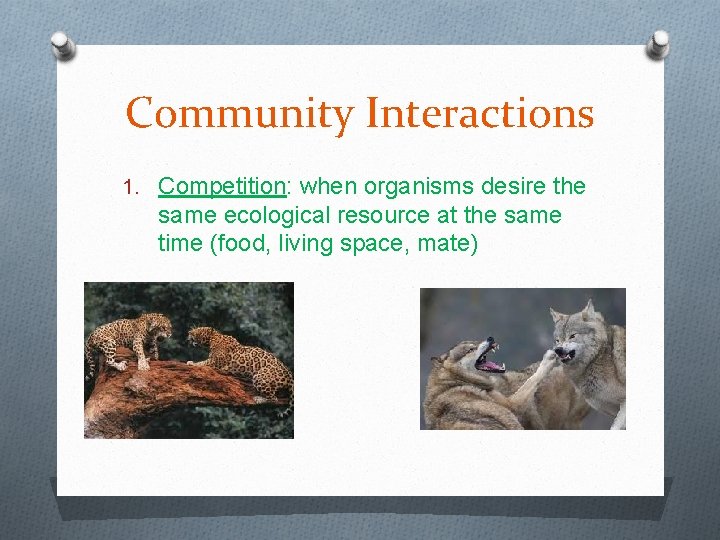
Community Interactions 1. Competition: when organisms desire the same ecological resource at the same time (food, living space, mate)
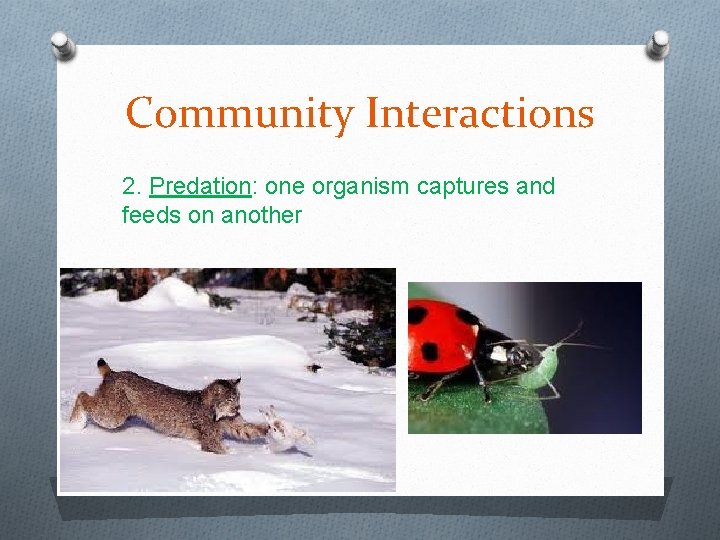
Community Interactions 2. Predation: one organism captures and feeds on another
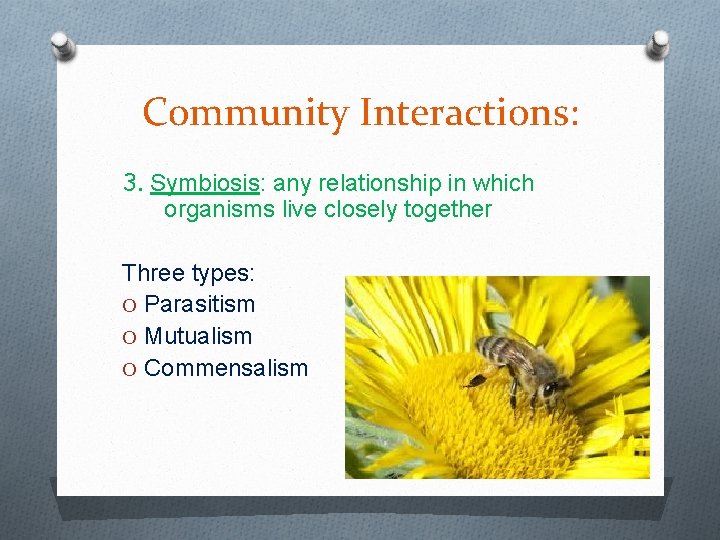
Community Interactions: 3. Symbiosis: any relationship in which organisms live closely together Three types: O Parasitism O Mutualism O Commensalism
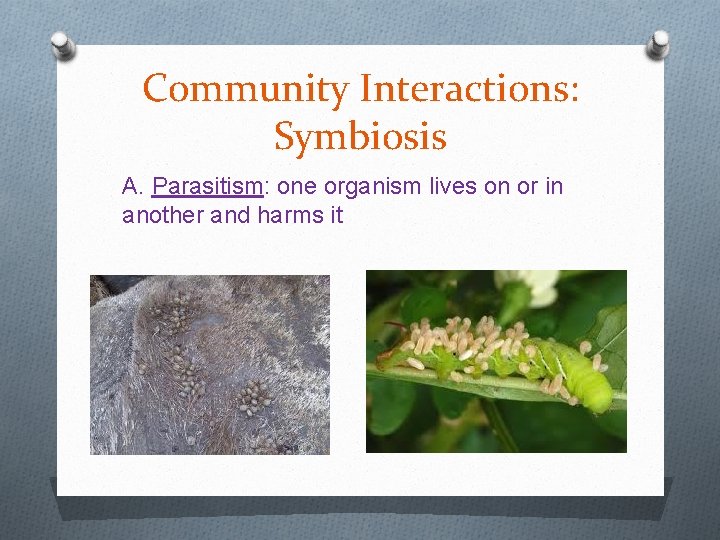
Community Interactions: Symbiosis A. Parasitism: one organism lives on or in another and harms it
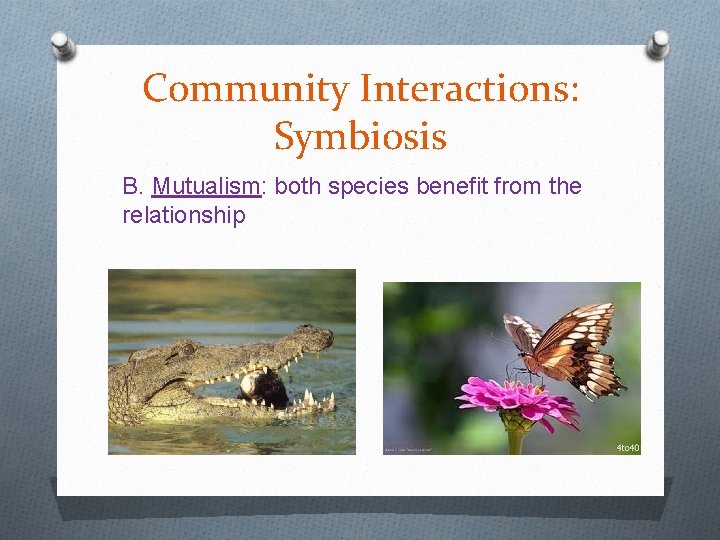
Community Interactions: Symbiosis B. Mutualism: both species benefit from the relationship
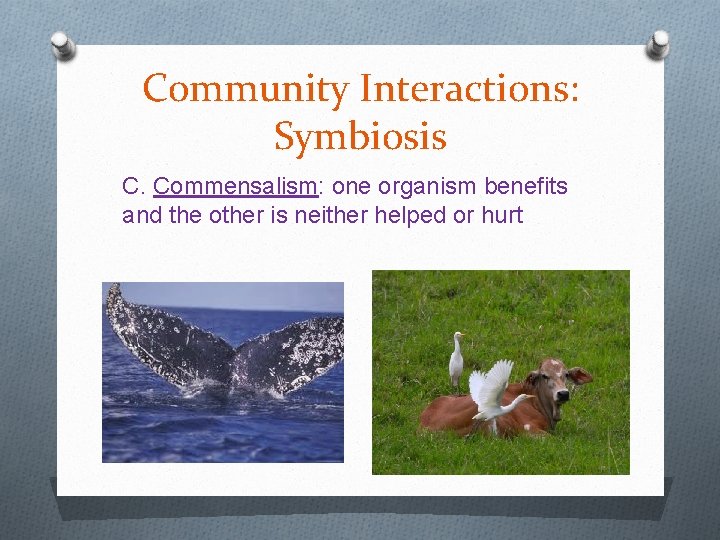
Community Interactions: Symbiosis C. Commensalism: one organism benefits and the other is neither helped or hurt
V. Ecological Succession O Ecosystems are constantly changing O Natural and human disturbances O Older inhabitants die out, new organisms move in O Ecological Succession: series of predictable changes that occurs in a community over time O Primary succession O Secondary succession
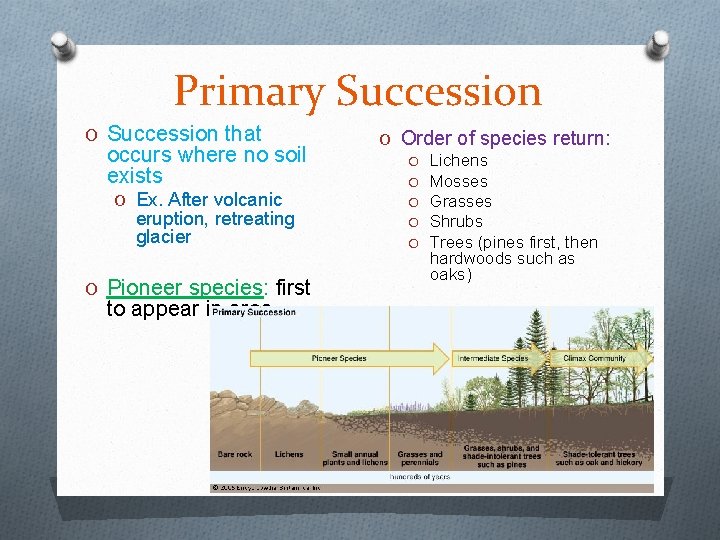
Primary Succession O Succession that occurs where no soil exists O Ex. After volcanic eruption, retreating glacier O Pioneer species: first to appear in area O Order of species return: O Lichens O Mosses O Grasses O Shrubs O Trees (pines first, then hardwoods such as oaks)
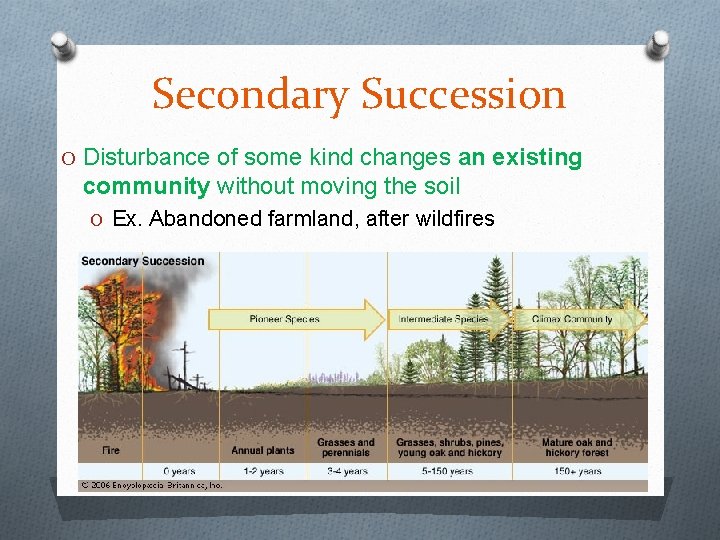
Secondary Succession O Disturbance of some kind changes an existing community without moving the soil O Ex. Abandoned farmland, after wildfires