
Factors that Impact Interior Design Objective 1 02
Factors that Impact Interior Design Objective 1. 02
Factors that impact interior design: 1. Human Factors 2. Social Factors 3. Global Impact Factors 4. Environmental Factors
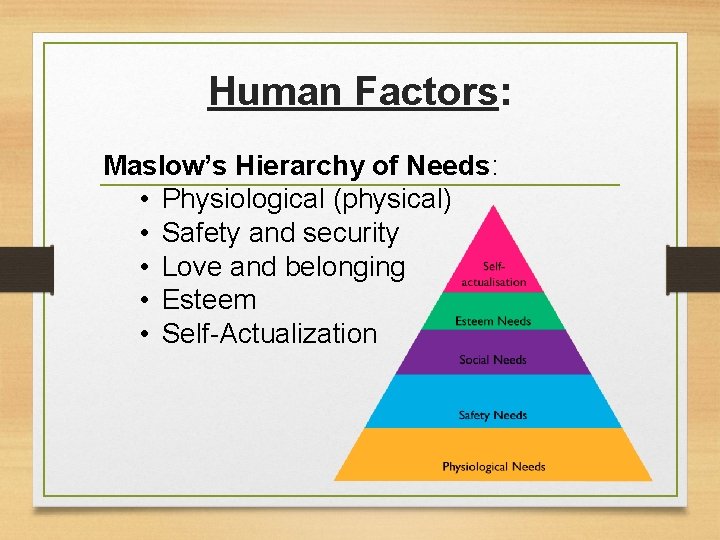
Human Factors: Maslow’s Hierarchy of Needs: • Physiological (physical) • Safety and security • Love and belonging • Esteem • Self-Actualization
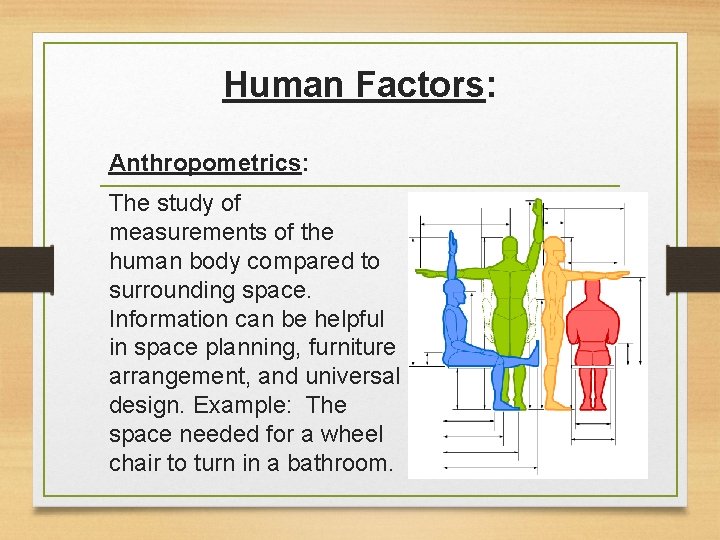
Human Factors: Anthropometrics: The study of measurements of the human body compared to surrounding space. Information can be helpful in space planning, furniture arrangement, and universal design. Example: The space needed for a wheel chair to turn in a bathroom.
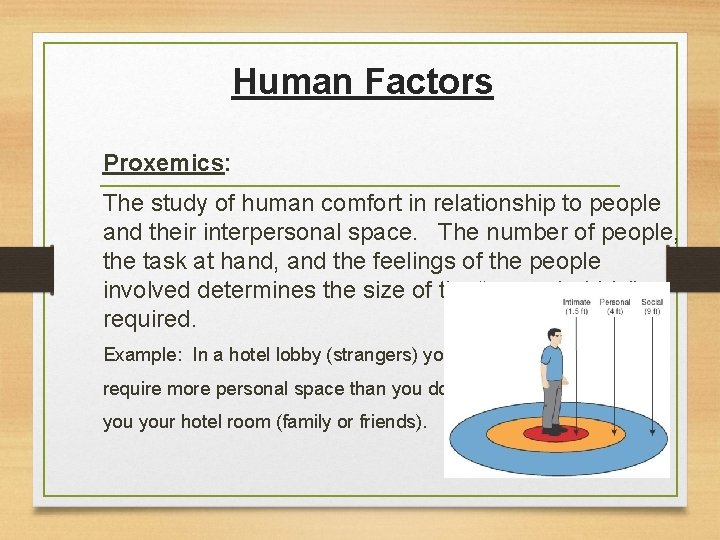
Human Factors Proxemics: The study of human comfort in relationship to people and their interpersonal space. The number of people, the task at hand, and the feelings of the people involved determines the size of the “space bubble” required. Example: In a hotel lobby (strangers) you require more personal space than you do your hotel room (family or friends).
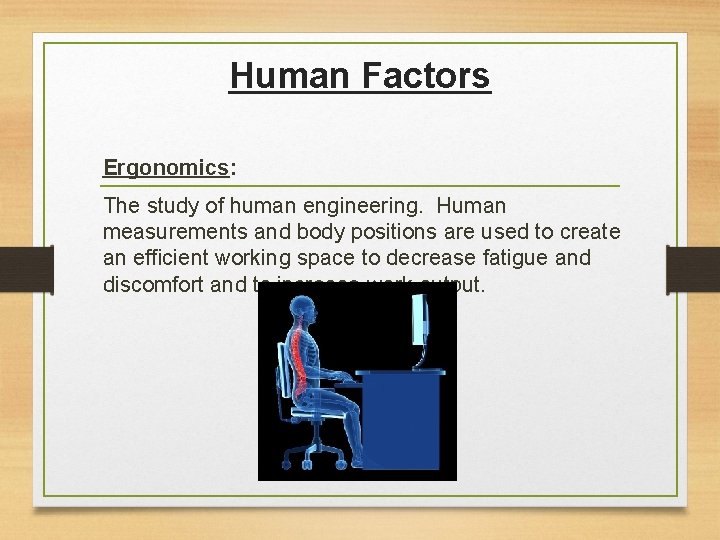
Human Factors Ergonomics: The study of human engineering. Human measurements and body positions are used to create an efficient working space to decrease fatigue and discomfort and to increase work output.
Social Factors: • Culture • Traditions of the individuals using the space. • Religious considerations for the individual using the spaces. • Government • Laws that apply to building and design. • Building codes for the safety of the people using and living in the spaces.
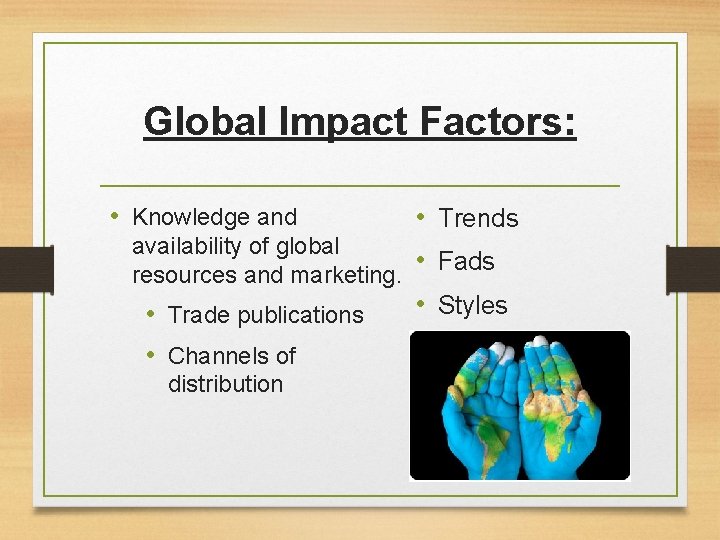
Global Impact Factors: • Knowledge and availability of global resources and marketing. • Trade publications • Channels of distribution • Trends • Fads • Styles
Environmental Factors: Designers must be respectful of the environment and the products used. • LEED-Leadership in Energy and Environmental Design • Sustainability • Ethics with design and environment • Aspects of Green Design
- Slides: 9