
Factors that Impact Ecosystems AP Biology Unit 1
Factors that Impact Ecosystems AP Biology Unit 1
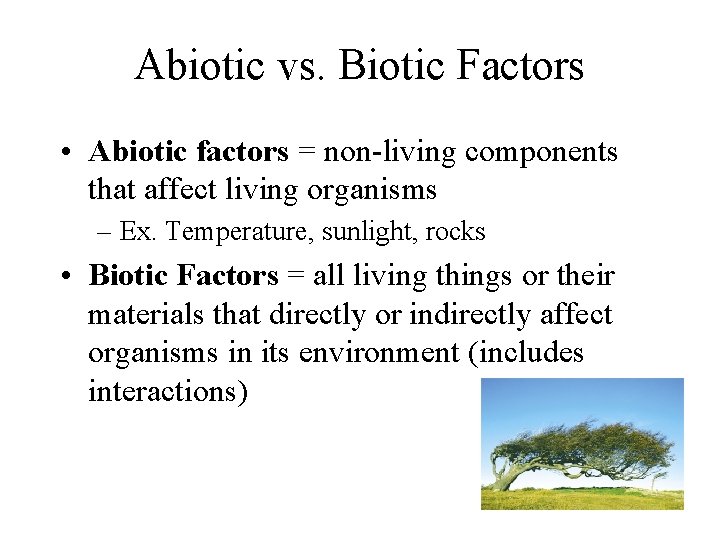
Abiotic vs. Biotic Factors • Abiotic factors = non-living components that affect living organisms – Ex. Temperature, sunlight, rocks • Biotic Factors = all living things or their materials that directly or indirectly affect organisms in its environment (includes interactions)
Affect of Biotic and Abiotic Factors • Interactions with biotic and abiotic factors can have an effect on several different levels: cellular, organismal, population, ecosystem • Cellular Level: ex. temperature, water availability can affect a cell’s function. • Organismal level: ex. interactions (such as mutualism, predation) as well as abiotic factors (water, temperature)
Affect of Biotic and Abiotic Factors • Population, Ecosystem, Community Level: – ex. Water availability, availability of nesting materials and sites, species diversity, can all contribute to the stability of these groups.
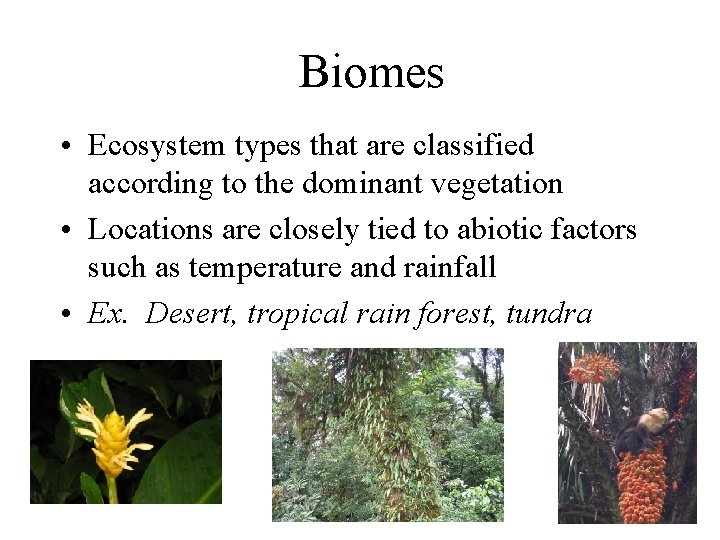
Biomes • Ecosystem types that are classified according to the dominant vegetation • Locations are closely tied to abiotic factors such as temperature and rainfall • Ex. Desert, tropical rain forest, tundra
Geological & Meteorological Events • Impact ecosystem distribution • Biogeographical studies – Studies that determine the distribution of species • Ex. Continental drift – Marsupials fill ecological roles in Australia similar to those filled by placental mammals on other continent
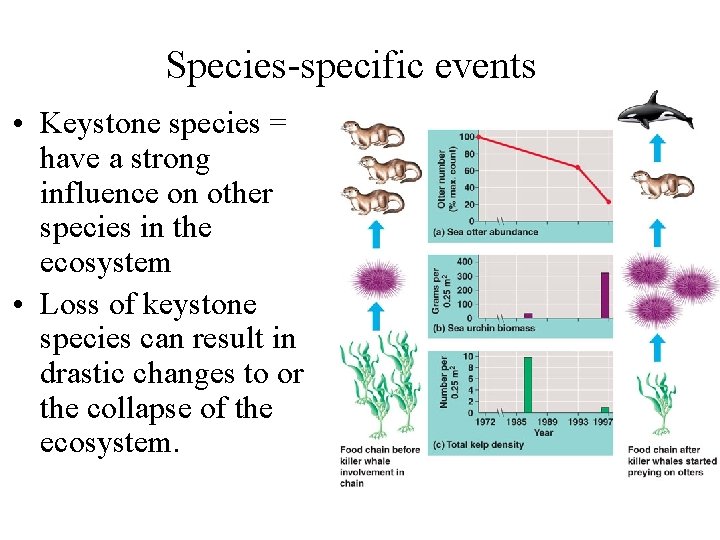
Species-specific events • Keystone species = have a strong influence on other species in the ecosystem • Loss of keystone species can result in drastic changes to or the collapse of the ecosystem.
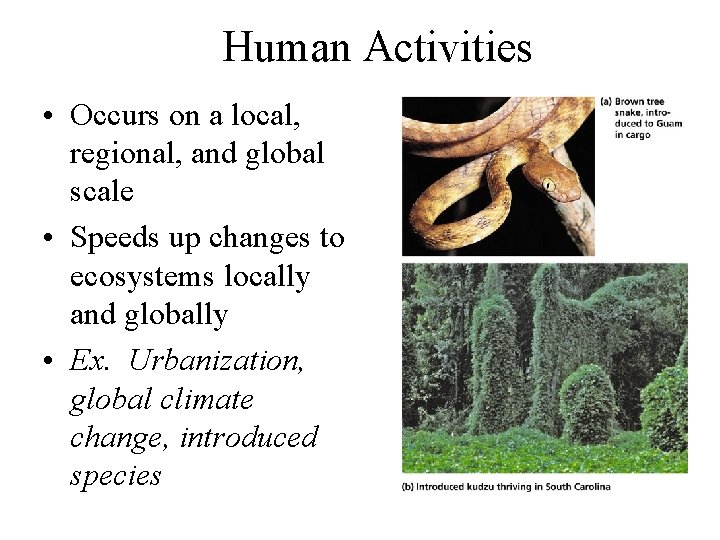
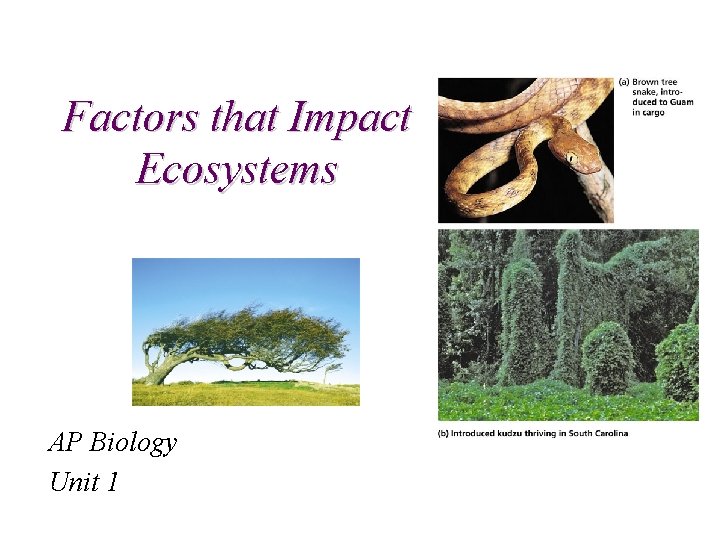
Human Activities • Occurs on a local, regional, and global scale • Speeds up changes to ecosystems locally and globally • Ex. Urbanization, global climate change, introduced species
- Slides: 8