
Factors that affect Protein Activity and Protein Mechanism
- Slides: 53
Factors that affect Protein Activity and Protein Mechanism Chapter 6 (Page 212 -218, 225 -231) 1
1. Factors that affect Enzyme Activity § Inhibitors § Proteolytic activation § Protein modifications § Subunit cooperativity and modulators § p. H 2
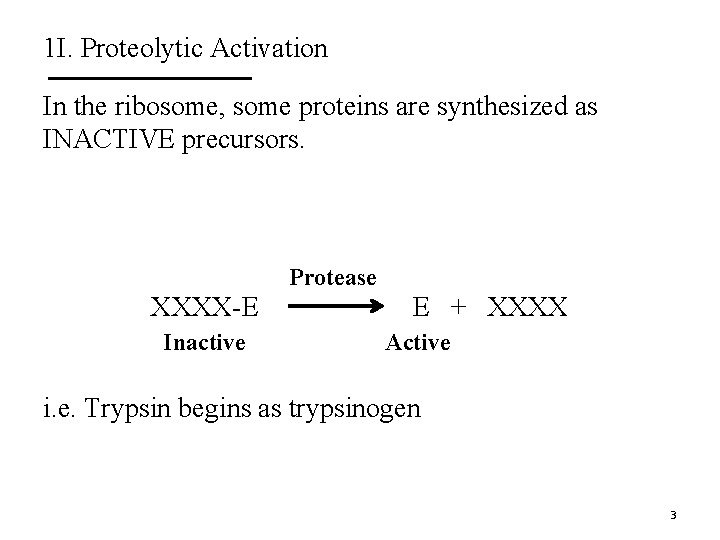
1 I. Proteolytic Activation In the ribosome, some proteins are synthesized as INACTIVE precursors. Protease XXXX-E Inactive E + XXXX Active i. e. Trypsin begins as trypsinogen 3
1 I. Proteolytic Activation Nomenclature: Proprotein- For a protein precursor Proenzyme- Precursor for an enzyme Zymogen- Precursor for a protease 4
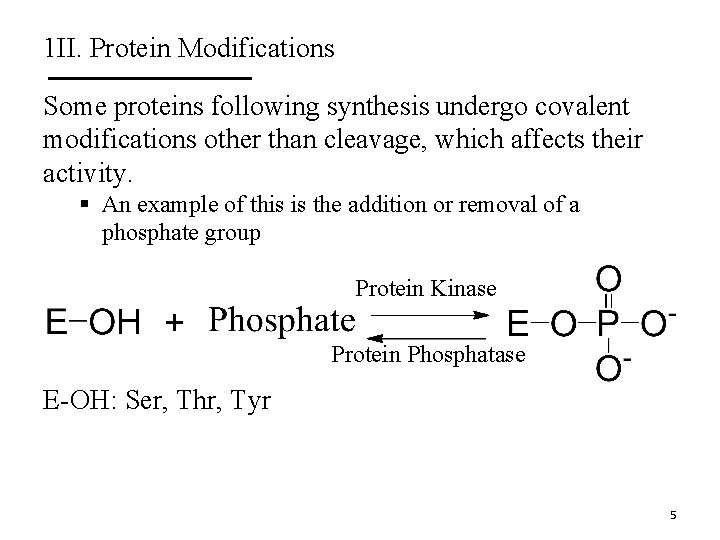
1 II. Protein Modifications Some proteins following synthesis undergo covalent modifications other than cleavage, which affects their activity. § An example of this is the addition or removal of a phosphate group Protein Kinase Protein Phosphatase E-OH: Ser, Thr, Tyr 5
1 II. Protein Modifications The covalent modification may affect catalysis. A. By allowing the protein to adopt a conformation that may make it more or less active B. By altering substrate-binding affinity § The binding of phosphate, a negatively charged molecule, could create electrostatic repulsion for a negatively charge substrate 6
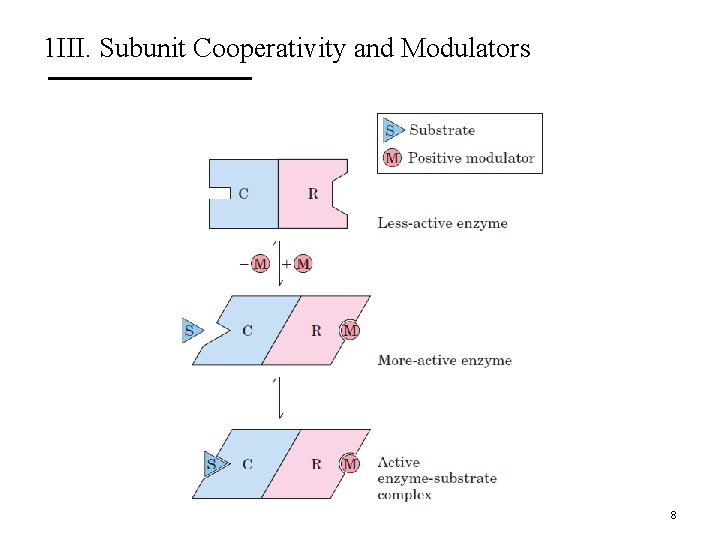
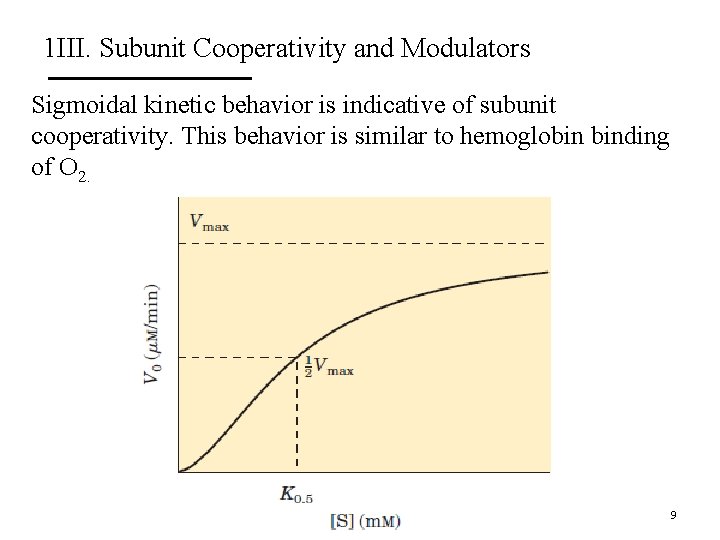
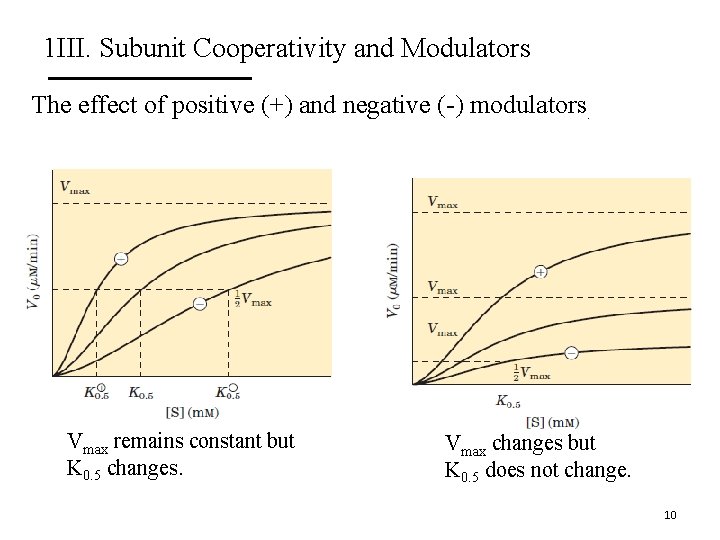
1 III. Subunit Cooperativity and Modulators Several enzymes are multimeric and their subunits engage in cooperativity (similar to hemoglobin binding of O 2) in terms of their catalytic function. § These enzymes are generally called allosteric enzymes because they function through reversible, noncovalent binding of regulatory compounds called allosteric modulators. 7
1 III. Subunit Cooperativity and Modulators 8
1 III. Subunit Cooperativity and Modulators Sigmoidal kinetic behavior is indicative of subunit cooperativity. This behavior is similar to hemoglobin binding of O 2. 9
1 III. Subunit Cooperativity and Modulators The effect of positive (+) and negative (-) modulators. Vmax remains constant but K 0. 5 changes. Vmax changes but K 0. 5 does not change. 10
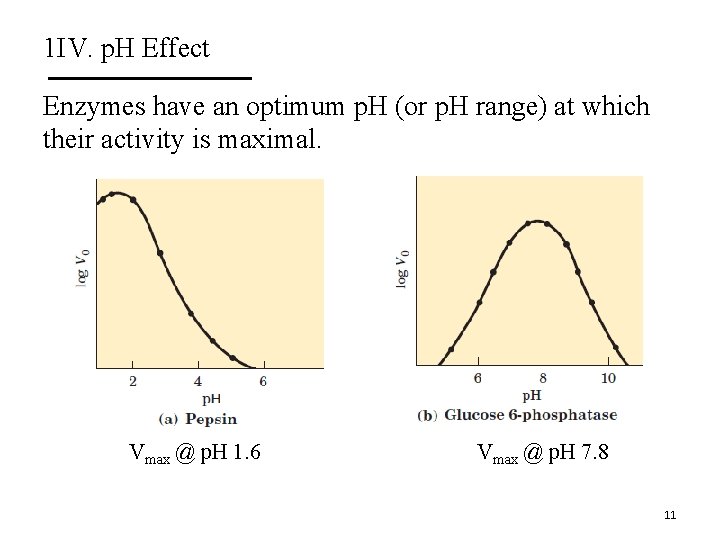
1 IV. p. H Effect Enzymes have an optimum p. H (or p. H range) at which their activity is maximal. Vmax @ p. H 1. 6 Vmax @ p. H 7. 8 11
1 IV. p. H Effect A. AA side chains in the active site may act as weak acids and bases with critical functions that depend on a specific ionization state. B. AA ionization state is important for protein structural integrity. C. The p. H range over which an enzyme undergoes (greatest) changes in activity can provide a clue to the type of AA residue involved. § A change in activity near p. H 7. 0 could indicate the presence of an important His. 12
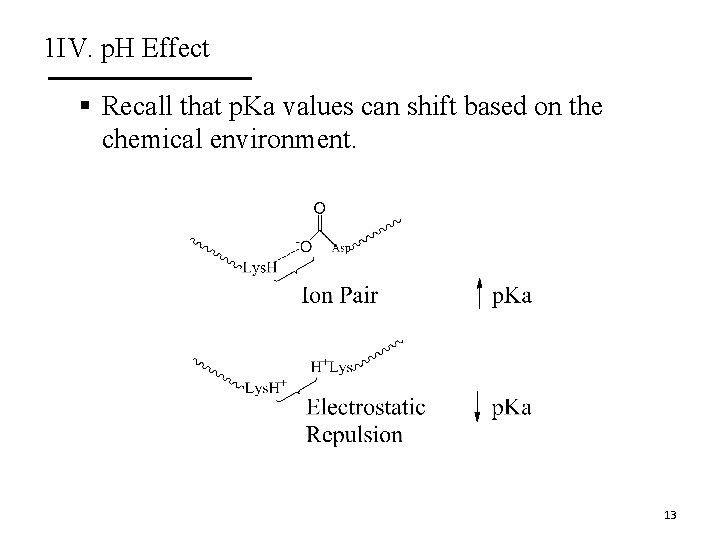
1 IV. p. H Effect § Recall that p. Ka values can shift based on the chemical environment. 13
2. Understanding Enzyme Mechanism Requires A. Identification of all § Substrates § Cofactors § Products § Regulators (Inhibitors and activators) 14
2. Understanding Enzyme Mechanism B. Knowledge of § The temporal sequence of enzyme intermediate formations § The structure of each transition state § The structure of the enzyme intermediates § The rates of intermedate interconversions § The energy contributed by all reacting and interacting groups, intermediate complexes, and transition states As of yet, the entirety of parameters involved in the mechanism of action is not known for any enzyme or protein 15 in general.
The Mechanism of Action of Chymotrypsin 16
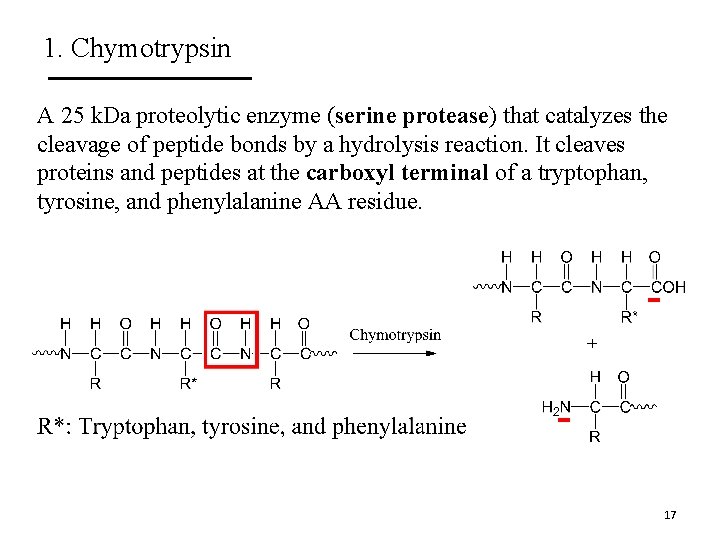
1. Chymotrypsin A 25 k. Da proteolytic enzyme (serine protease) that catalyzes the cleavage of peptide bonds by a hydrolysis reaction. It cleaves proteins and peptides at the carboxyl terminal of a tryptophan, tyrosine, and phenylalanine AA residue. 17
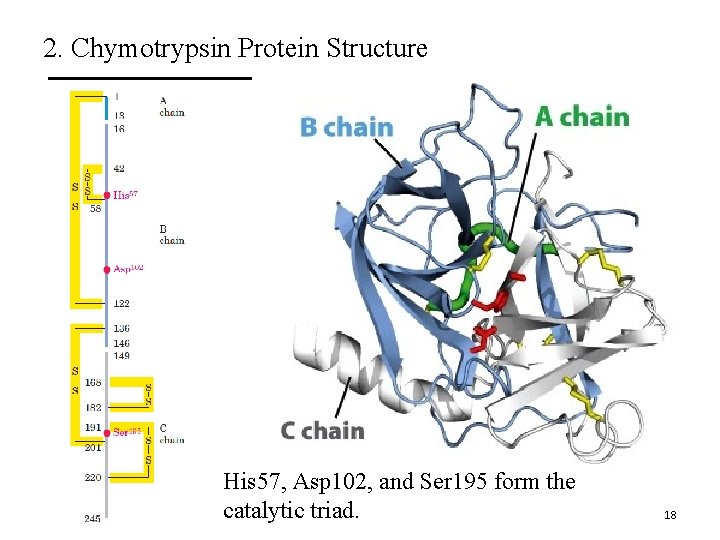
2. Chymotrypsin Protein Structure His 57, Asp 102, and Ser 195 form the catalytic triad. 18
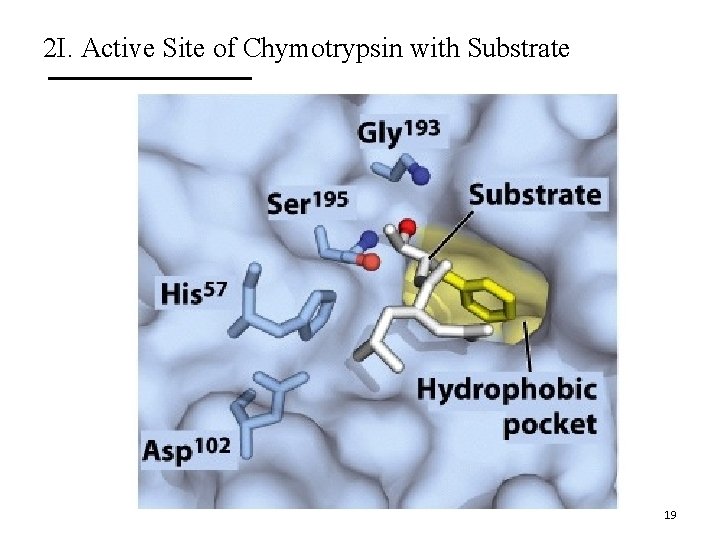
2 I. Active Site of Chymotrypsin with Substrate 19
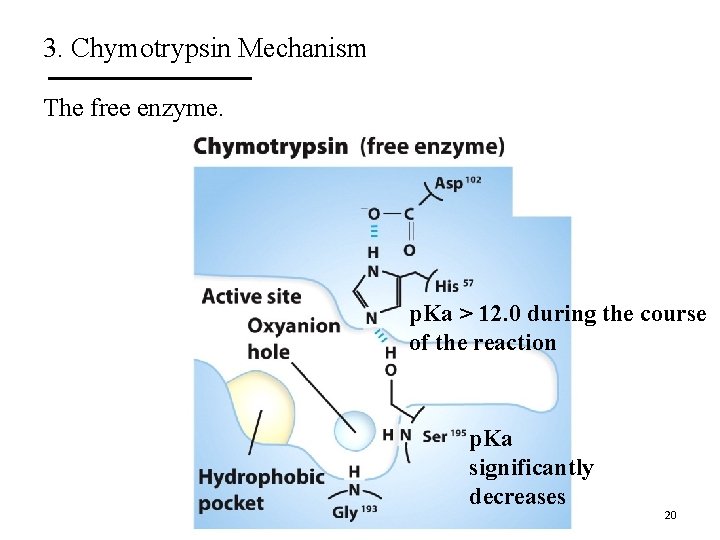
3. Chymotrypsin Mechanism The free enzyme. p. Ka > 12. 0 during the course of the reaction p. Ka significantly decreases 20
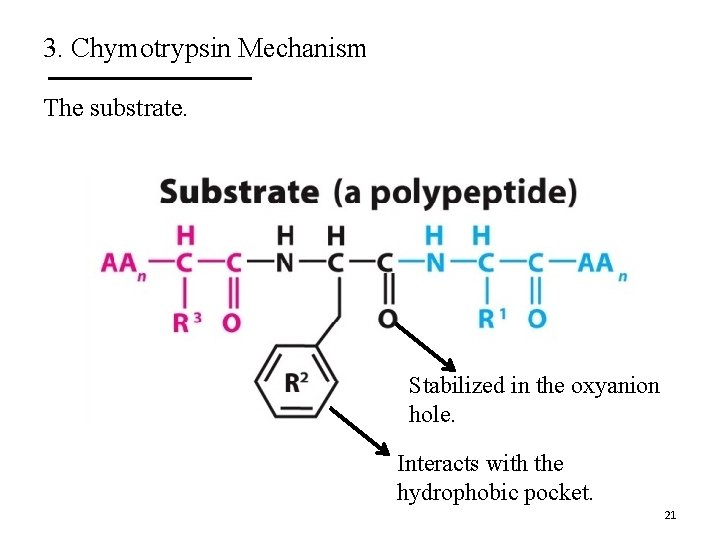
3. Chymotrypsin Mechanism The substrate. Stabilized in the oxyanion hole. Interacts with the hydrophobic pocket. 21
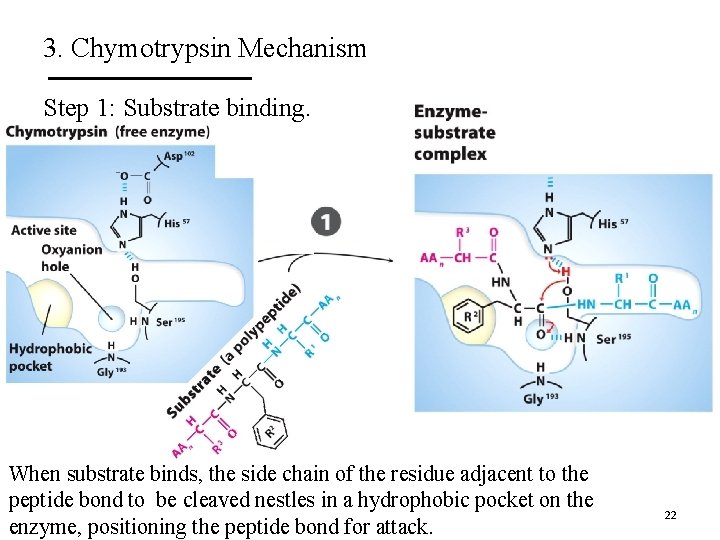
3. Chymotrypsin Mechanism Step 1: Substrate binding. When substrate binds, the side chain of the residue adjacent to the peptide bond to be cleaved nestles in a hydrophobic pocket on the enzyme, positioning the peptide bond for attack. 22
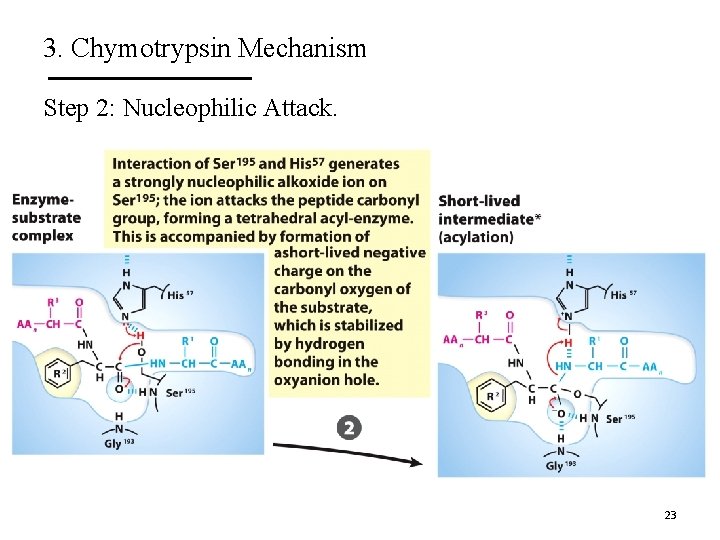
3. Chymotrypsin Mechanism Step 2: Nucleophilic Attack. 23
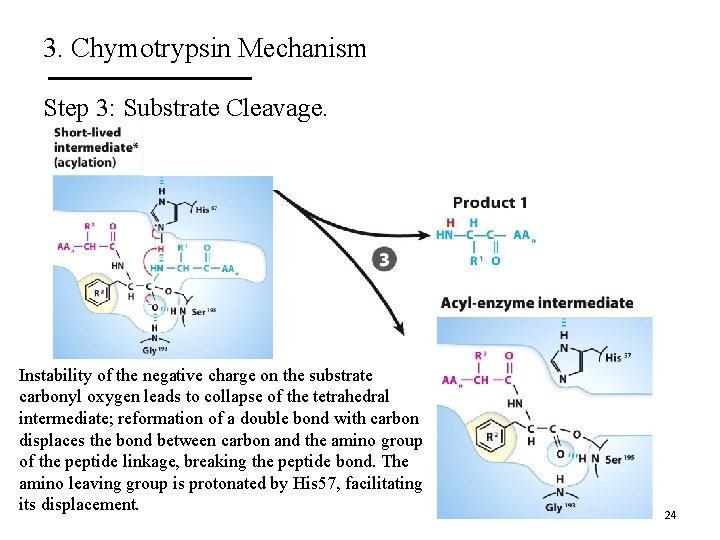
3. Chymotrypsin Mechanism Step 3: Substrate Cleavage. Instability of the negative charge on the substrate carbonyl oxygen leads to collapse of the tetrahedral intermediate; reformation of a double bond with carbon displaces the bond between carbon and the amino group of the peptide linkage, breaking the peptide bond. The amino leaving group is protonated by His 57, facilitating its displacement. 24
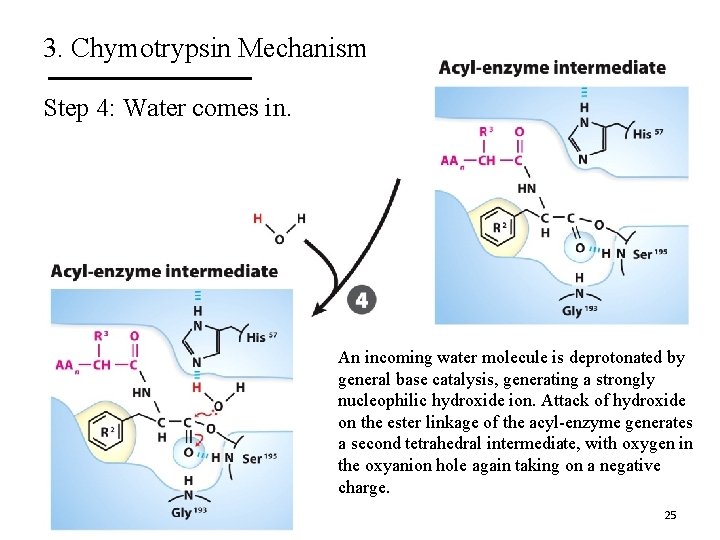
3. Chymotrypsin Mechanism Step 4: Water comes in. An incoming water molecule is deprotonated by general base catalysis, generating a strongly nucleophilic hydroxide ion. Attack of hydroxide on the ester linkage of the acyl-enzyme generates a second tetrahedral intermediate, with oxygen in the oxyanion hole again taking on a negative charge. 25
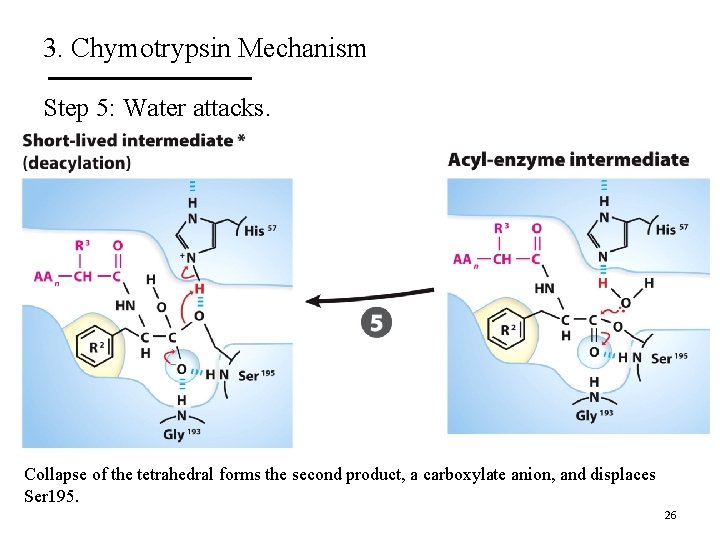
3. Chymotrypsin Mechanism Step 5: Water attacks. Collapse of the tetrahedral forms the second product, a carboxylate anion, and displaces Ser 195. 26
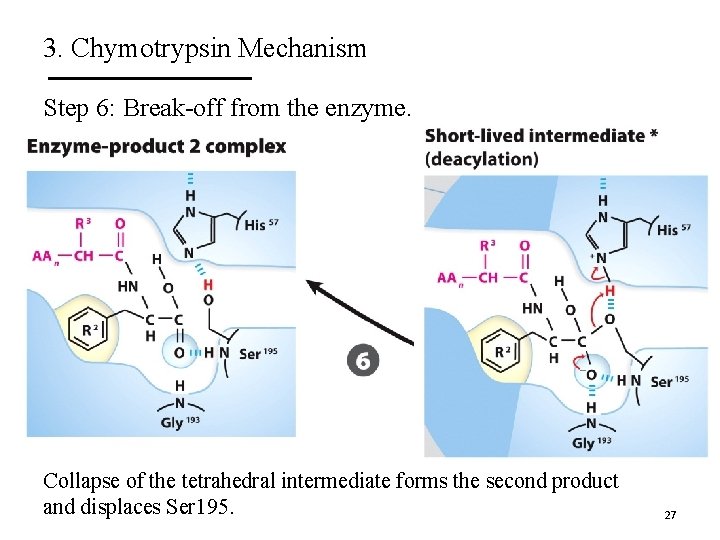
3. Chymotrypsin Mechanism Step 6: Break-off from the enzyme. Collapse of the tetrahedral intermediate forms the second product and displaces Ser 195. 27
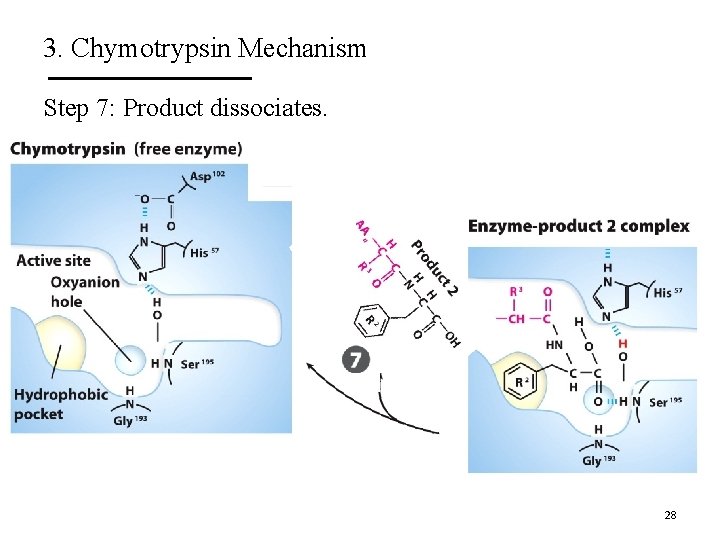
3. Chymotrypsin Mechanism Step 7: Product dissociates. 28
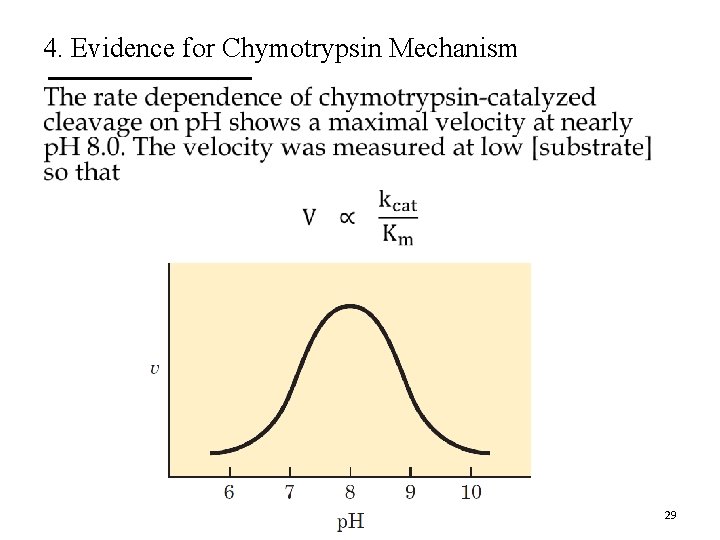
4. Evidence for Chymotrypsin Mechanism 29
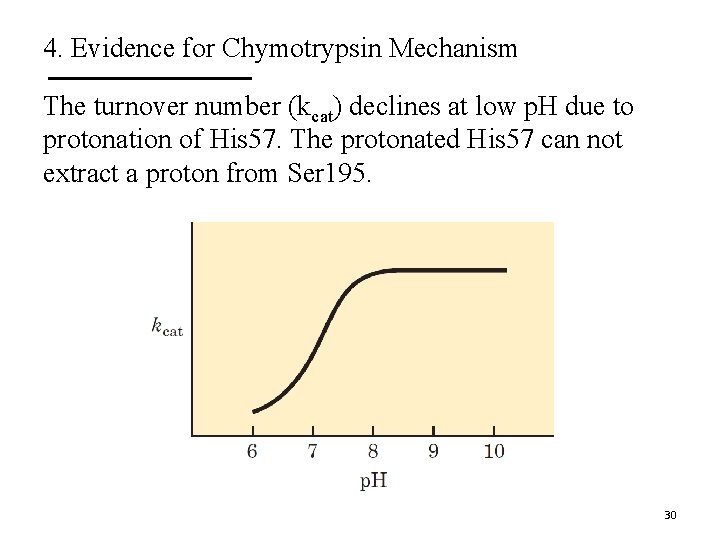
4. Evidence for Chymotrypsin Mechanism The turnover number (kcat) declines at low p. H due to protonation of His 57. The protonated His 57 can not extract a proton from Ser 195. 30
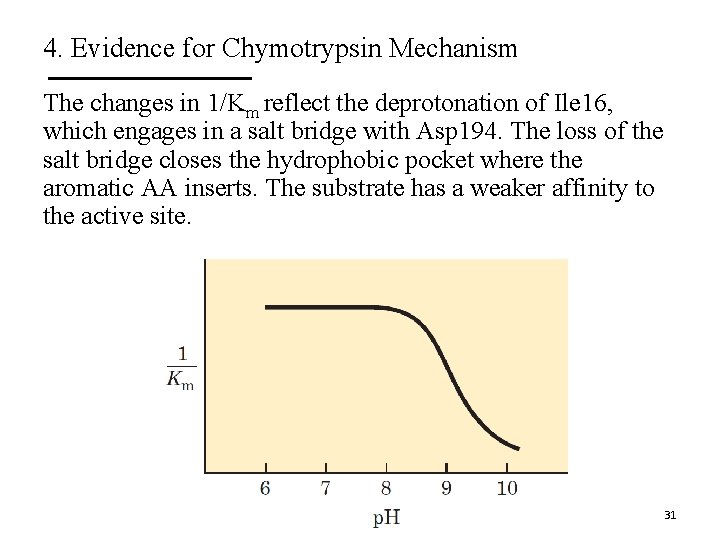
4. Evidence for Chymotrypsin Mechanism The changes in 1/Km reflect the deprotonation of Ile 16, which engages in a salt bridge with Asp 194. The loss of the salt bridge closes the hydrophobic pocket where the aromatic AA inserts. The substrate has a weaker affinity to the active site. 31
The Mechanism of Transferrin Mediated Iron Delivery to Cells Courtesy of Anne B. Mason, Ph. D. University of Vermont Department of Biochemistry
Iron Facts • Iron comprises 90% of the mass of the earth’s core • Iron is the second most common metal in the earth’s crust • Iron in its ferric form (Fe 3+) is insoluble in water (10 -18 M) – Most iron exists as ferric oxide hydrate=rust • Iron in its ferrous form (Fe 2+) is extremely reactive via Fenton reactions
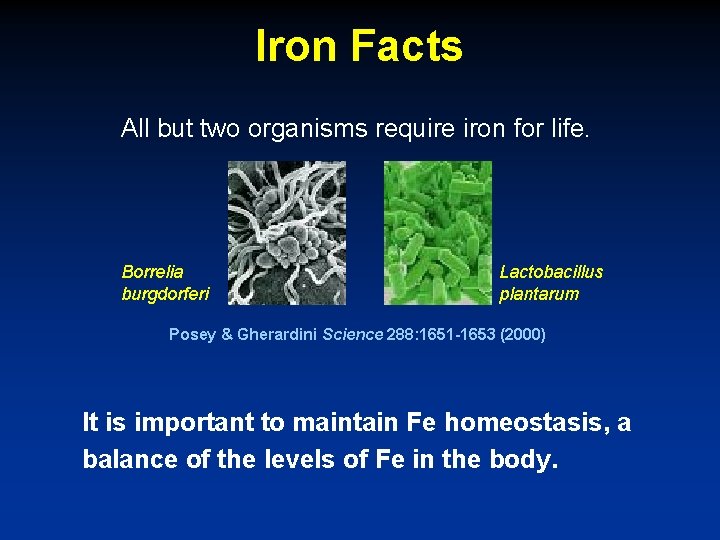
Iron Facts All but two organisms require iron for life. Borrelia burgdorferi Lactobacillus plantarum Posey & Gherardini Science 288: 1651 -1653 (2000) It is important to maintain Fe homeostasis, a balance of the levels of Fe in the body.
The Problem with Free Fe in the Body Free Fe refers to Fe not bound by a biomolecule. Fe 3+ is the dominant form of Fe in our environment and though it is fairly harmless and mostly insoluble, it can be oxidized to Fe 2+. § Fe 2+ can generate reactive oxygen species. Uncontrolled levels of these species cause great harm to the body.
Iron-Bound Biomolecules are Important to the Body Metal binding by biomolecules maintains Fe in a bioavailable form. Many of these Febound biomolecules play important roles. A. Transport of small molecules § O 2 and CO 2 (as in hemoglobin) B. Cofactor in important enzymes § Facilitates redox reactions
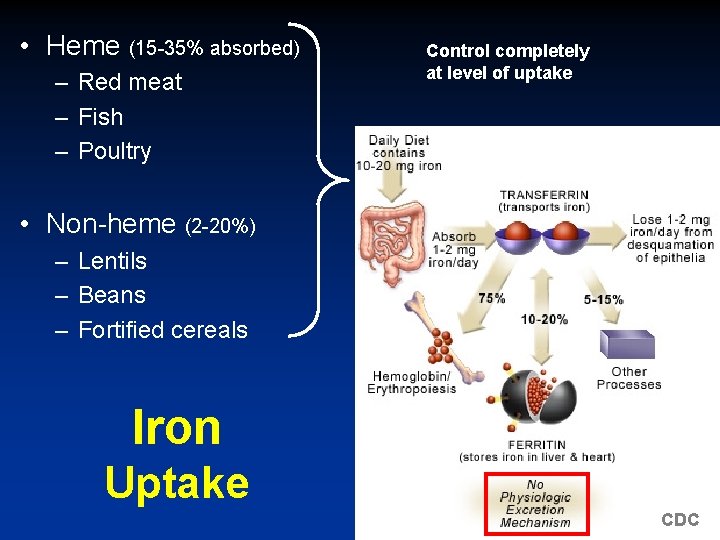
• Heme (15 -35% absorbed) – Red meat – Fish – Poultry Control completely at level of uptake • Non-heme (2 -20%) – Lentils – Beans – Fortified cereals Iron Uptake CDC
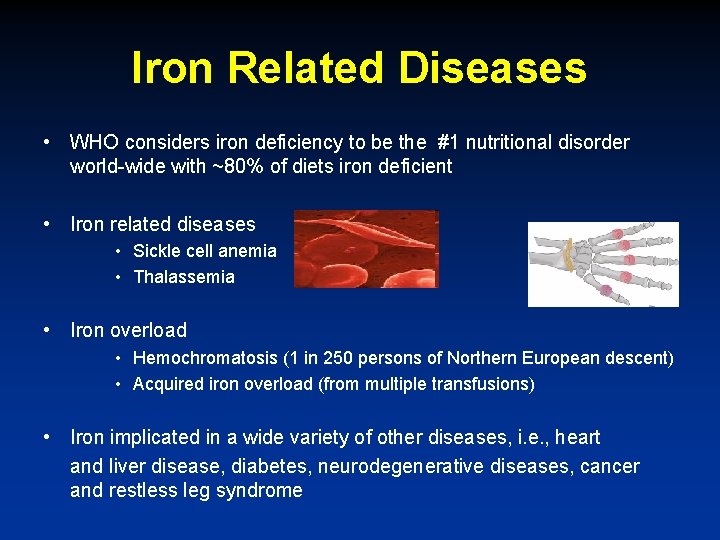
Iron Related Diseases • WHO considers iron deficiency to be the #1 nutritional disorder world-wide with ~80% of diets iron deficient • Iron related diseases • Sickle cell anemia • Thalassemia • Iron overload • Hemochromatosis (1 in 250 persons of Northern European descent) • Acquired iron overload (from multiple transfusions) • Iron implicated in a wide variety of other diseases, i. e. , heart and liver disease, diabetes, neurodegenerative diseases, cancer and restless leg syndrome
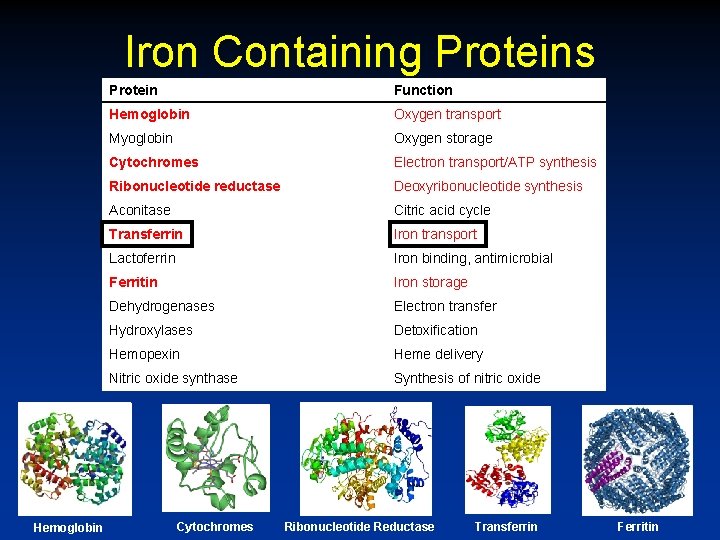
Iron Containing Proteins Hemoglobin Protein Function Hemoglobin Oxygen transport Myoglobin Oxygen storage Cytochromes Electron transport/ATP synthesis Ribonucleotide reductase Deoxyribonucleotide synthesis Aconitase Citric acid cycle Transferrin Iron transport Lactoferrin Iron binding, antimicrobial Ferritin Iron storage Dehydrogenases Electron transfer Hydroxylases Detoxification Hemopexin Heme delivery Nitric oxide synthase Synthesis of nitric oxide Cytochromes Ribonucleotide Reductase Transferrin Ferritin
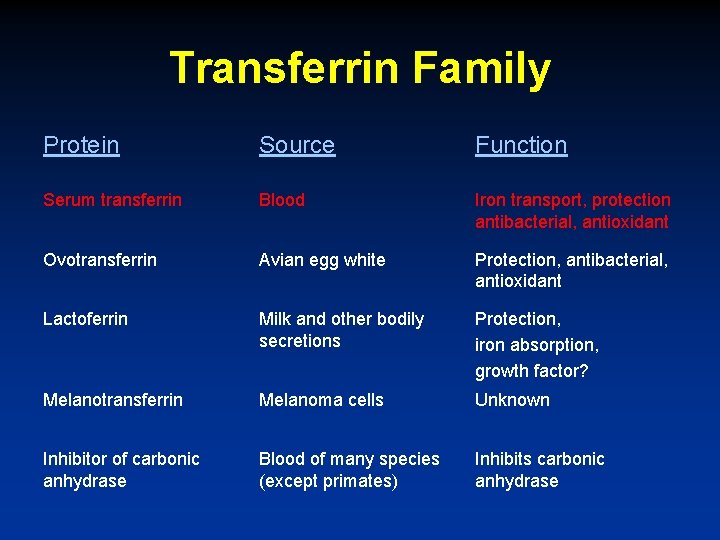
Transferrin Family Protein Source Function Serum transferrin Blood Iron transport, protection antibacterial, antioxidant Ovotransferrin Avian egg white Protection, antibacterial, antioxidant Lactoferrin Milk and other bodily secretions Protection, iron absorption, growth factor? Melanotransferrin Melanoma cells Unknown Inhibitor of carbonic anhydrase Blood of many species (except primates) Inhibits carbonic anhydrase
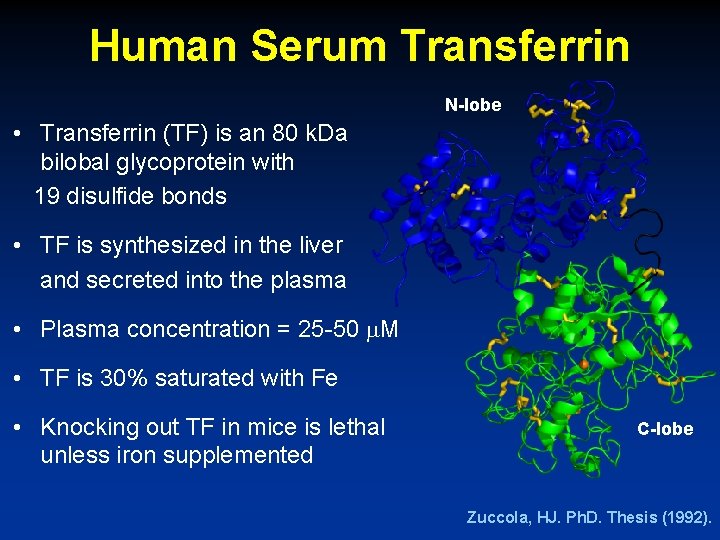
Human Serum Transferrin N-lobe • Transferrin (TF) is an 80 k. Da bilobal glycoprotein with 19 disulfide bonds • TF is synthesized in the liver and secreted into the plasma • Plasma concentration = 25 -50 M • TF is 30% saturated with Fe • Knocking out TF in mice is lethal unless iron supplemented C-lobe Zuccola, HJ. Ph. D. Thesis (1992).
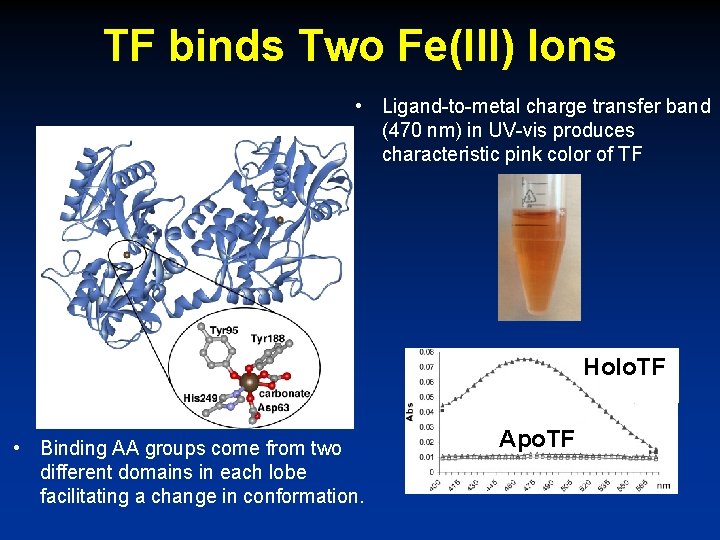
TF binds Two Fe(III) Ions • Ligand-to-metal charge transfer band (470 nm) in UV-vis produces characteristic pink color of TF Holo. TF • Binding AA groups come from two different domains in each lobe facilitating a change in conformation. Apo. TF
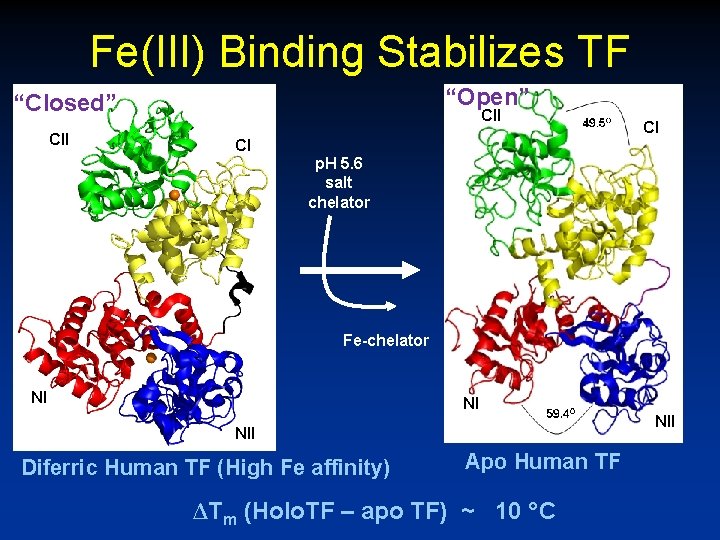
Fe(III) Binding Stabilizes TF “Open” “Closed” CII CI CI p. H 5. 6 salt chelator Fe-chelator NI NI NII Diferric Human TF (High Fe affinity) Apo Human TF ΔTm (Holo. TF – apo TF) ~ 10 ° C
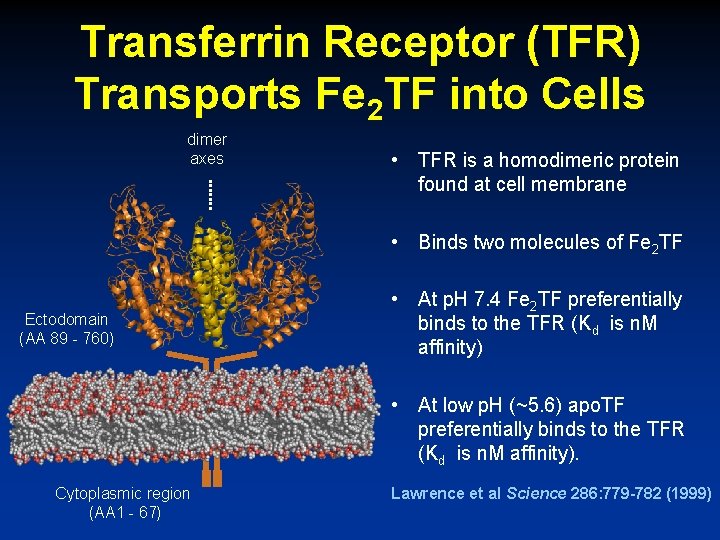
Transferrin Receptor (TFR) Transports Fe 2 TF into Cells dimer axes • TFR is a homodimeric protein found at cell membrane • Binds two molecules of Fe 2 TF Ectodomain (AA 89 - 760) • At p. H 7. 4 Fe 2 TF preferentially binds to the TFR (Kd is n. M affinity) • At low p. H (~5. 6) apo. TF preferentially binds to the TFR (Kd is n. M affinity). Cytoplasmic region (AA 1 - 67) Lawrence et al Science 286: 779 -782 (1999)
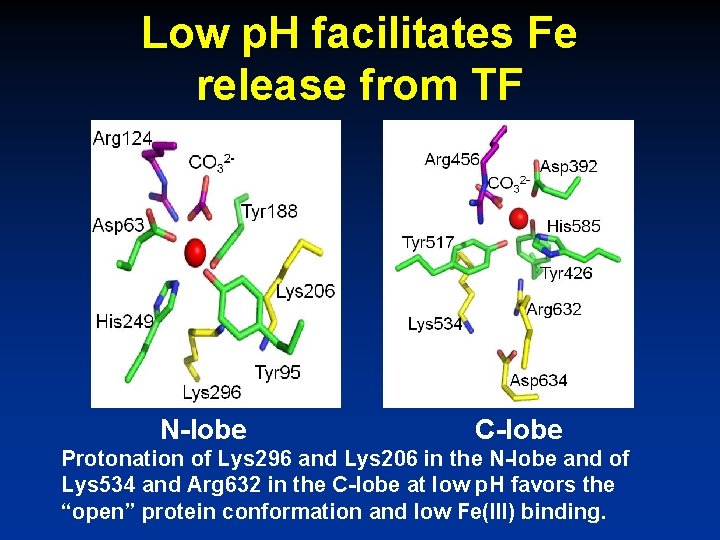
Low p. H facilitates Fe release from TF N-lobe C-lobe Protonation of Lys 296 and Lys 206 in the N-lobe and of Lys 534 and Arg 632 in the C-lobe at low p. H favors the “open” protein conformation and low Fe(III) binding.
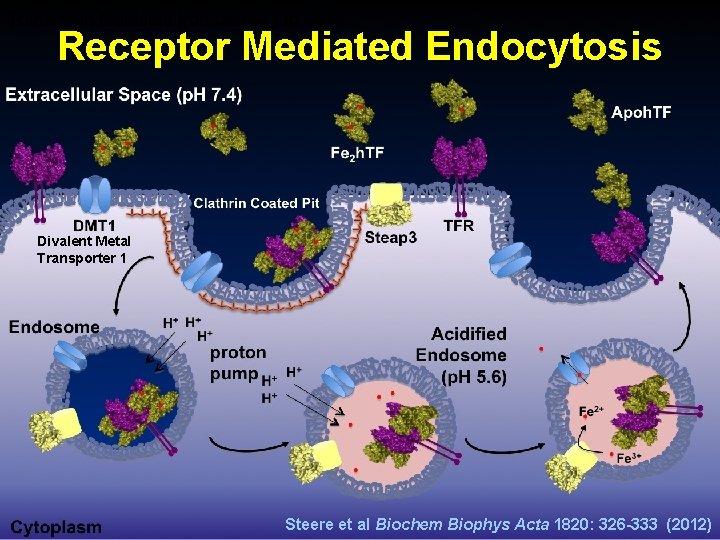
Transferrin Mediated Iron Delivery to Cells Receptor Mediated Endocytosis Divalent Metal Transporter 1 Steere et al Biochem Biophys Acta 1820: 326 -333 (2012)
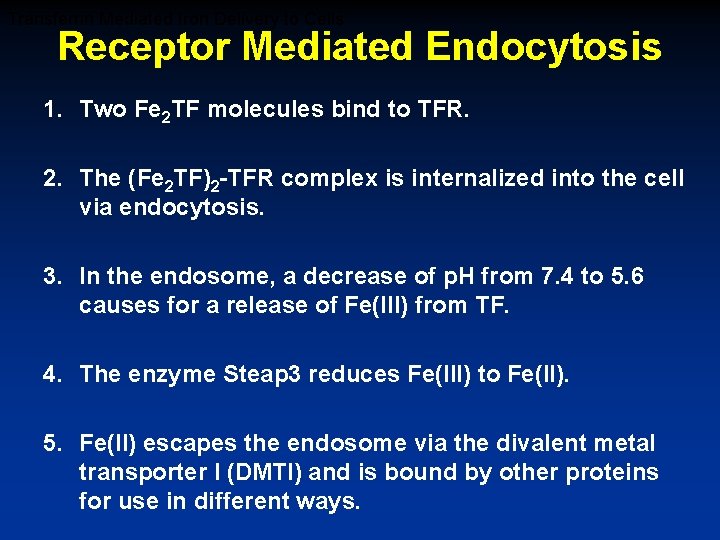
Transferrin Mediated Iron Delivery to Cells Receptor Mediated Endocytosis 1. Two Fe 2 TF molecules bind to TFR. 2. The (Fe 2 TF)2 -TFR complex is internalized into the cell via endocytosis. 3. In the endosome, a decrease of p. H from 7. 4 to 5. 6 causes for a release of Fe(III) from TF. 4. The enzyme Steap 3 reduces Fe(III) to Fe(II). 5. Fe(II) escapes the endosome via the divalent metal transporter I (DMTI) and is bound by other proteins for use in different ways.
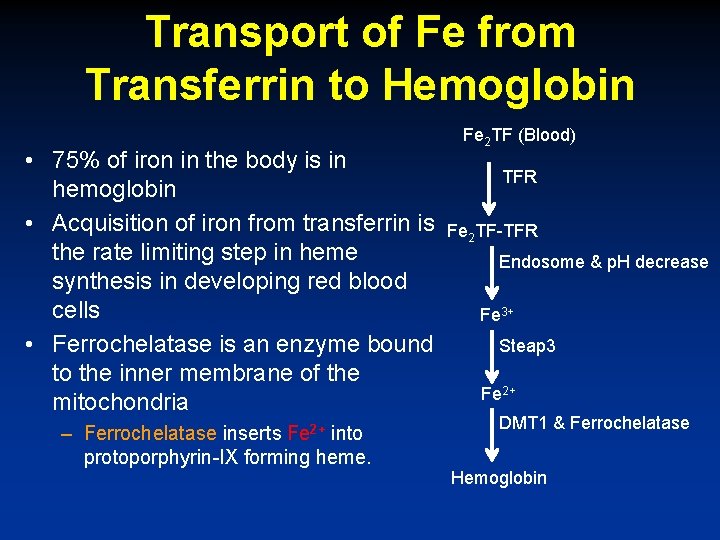
Transport of Fe from Transferrin to Hemoglobin • 75% of iron in the body is in hemoglobin • Acquisition of iron from transferrin is the rate limiting step in heme synthesis in developing red blood cells • Ferrochelatase is an enzyme bound to the inner membrane of the mitochondria – Ferrochelatase inserts Fe 2+ into protoporphyrin-IX forming heme. Fe 2 TF (Blood) TFR Fe 2 TF-TFR Endosome & p. H decrease Fe 3+ Steap 3 Fe 2+ DMT 1 & Ferrochelatase Hemoglobin
Paper Assignment on Enzymes 49
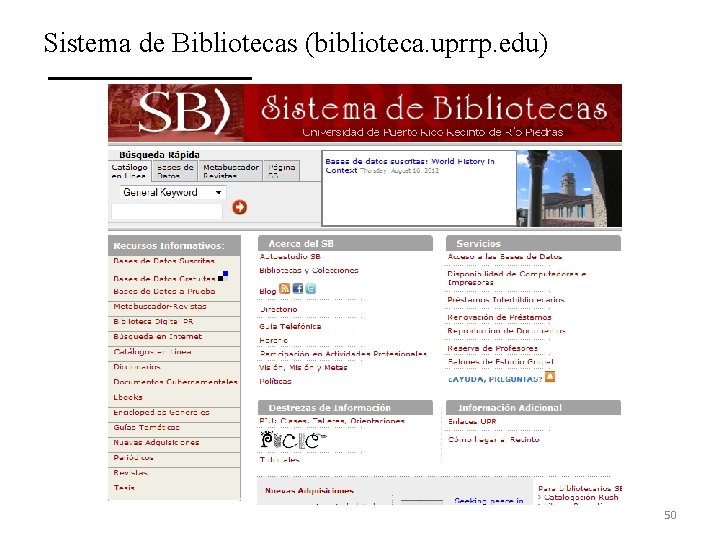
Sistema de Bibliotecas (biblioteca. uprrp. edu) 50
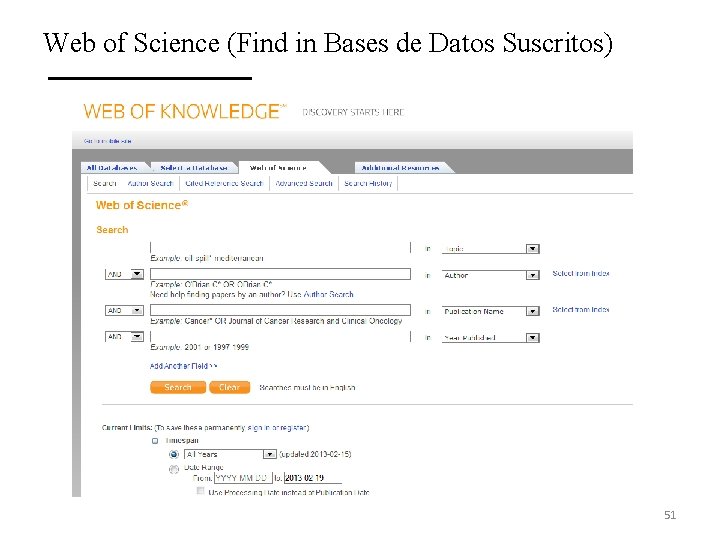
Web of Science (Find in Bases de Datos Suscritos) 51
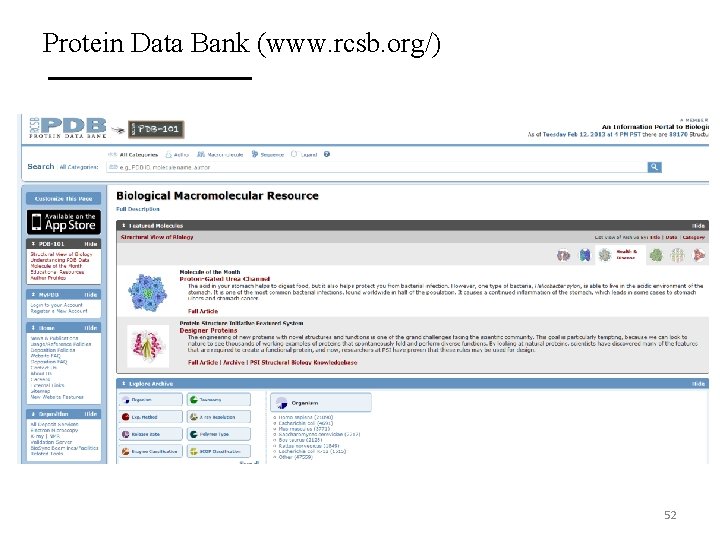
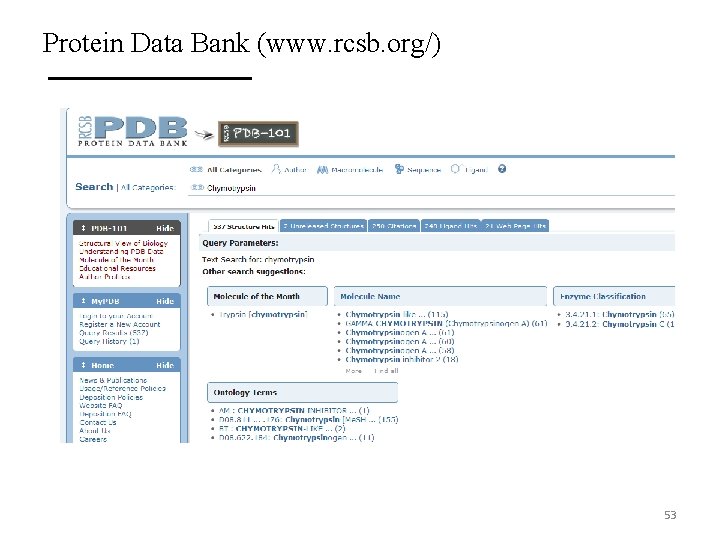
Protein Data Bank (www. rcsb. org/) 52
Protein Data Bank (www. rcsb. org/) 53