
Factors of Economic Growth GDP Factors of Production




- Slides: 22
Factors of Economic Growth & GDP
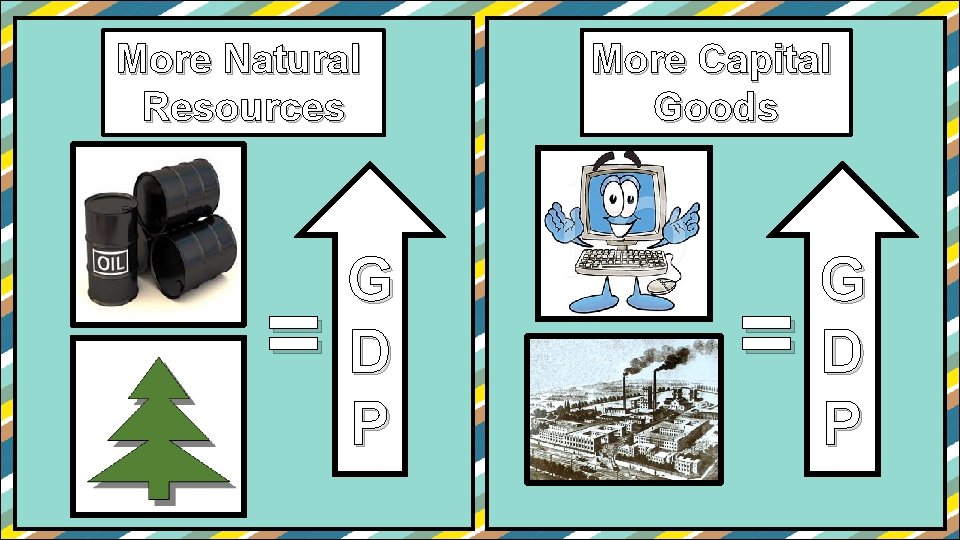
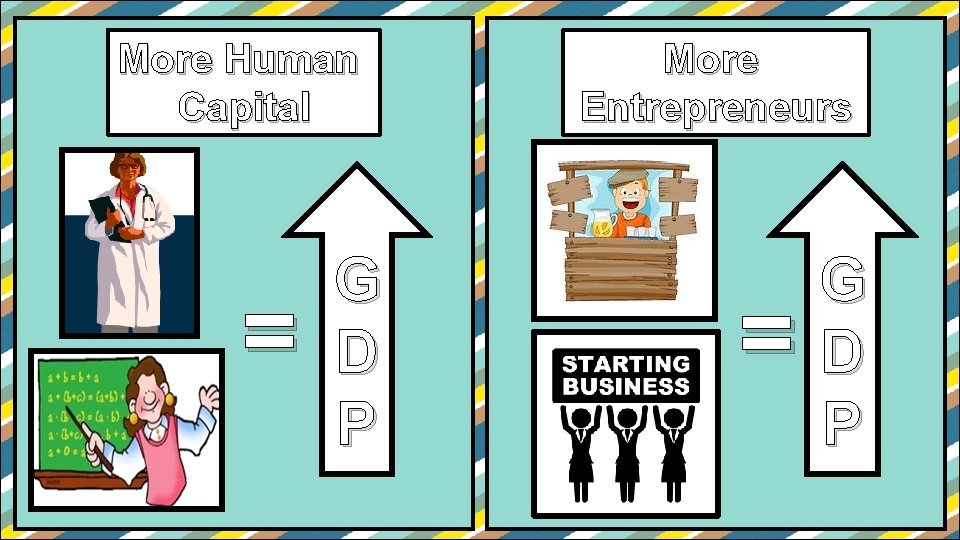
Factors of Production • There are 4 factors of production that influence economic growth within a country: 1. Natural Resources available 2. Investment in Human Capital 3. Investment in Capital Goods 4. Entrepreneurship • The presence or absence of these 4 factors determine the country’s Gross Domestic Product (GDP) for the year.
GDP • GDP is the total value of all the goods and services produced in that country in one year. • It measures how rich or poor a country is. • It shows if the country’s economy is getting better or worse. • Raising the GDP of a country can improve the country’s standard of living.
Standard of Living • The higher a country’s GDP, the better standard of living for the people within the country. • In order for a country to have an increasing GDP, it must invest in human capital through education & training, and it must produce goods that have value to be sold within the country or exported.
More Natural Resources = G D P More Capital Goods = G D P
More Human Capital = G D P More Entrepreneurs = G D P
Natural Resources
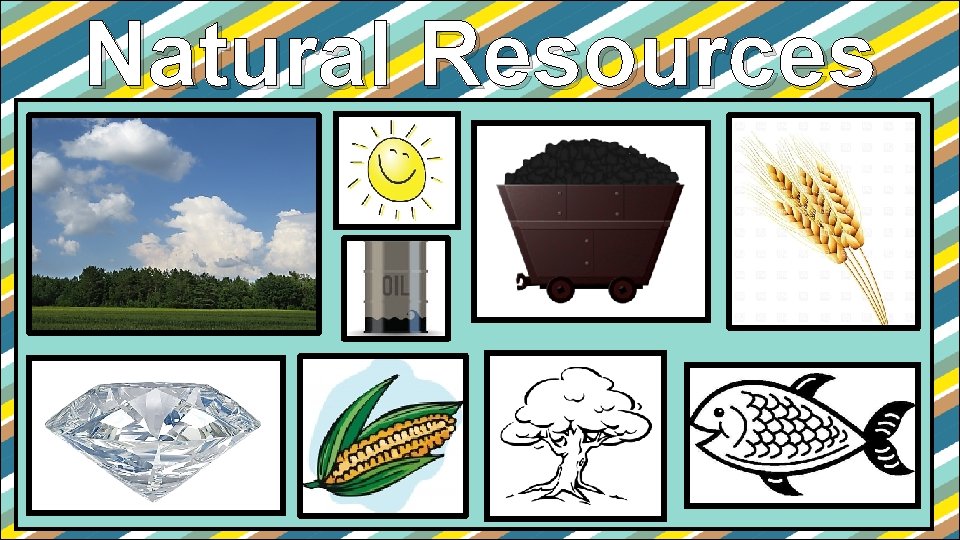
Natural Resources • All of the things found in or on the earth; “gifts of nature”. • All resources are limited. • Examples: land, water, sun, plants, time, air, minerals, oil, etc.
Natural Resources • Important to countries: without them, countries must import the resources they need (costly) • A country is better off if it can use its own resources to supply the needs of its people. • If a country has many natural resources, it can trade or sell them to other countries.
Natural Resources
Human Capital
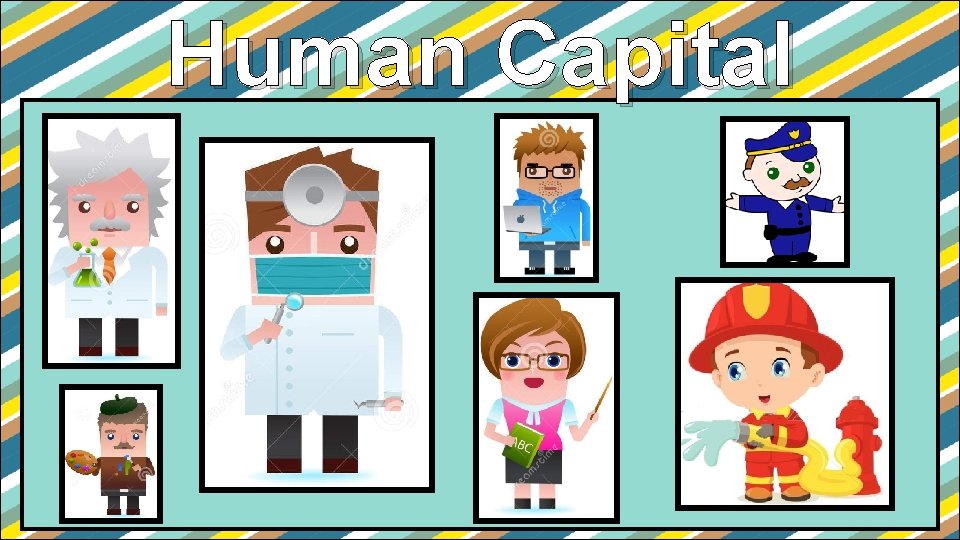
Human Capital • This is all of the skills, talents, education, and abilities that human workers possess---and the value that they bring to the marketplace. • Examples: computer/reading/writing/math skills, talents in music/sports/acting, ability to follow directions, ability to serve as group leader & cooperate with group members • A country’s Literacy Rate impacts Human Capital (the percent of the population over 15 that can read/write).
Human Capital • Nations that invest in the health, education, & training of their people will have a more valuable workforce that produces more goods & services. • People that have training are more likely to contribute to technological advances, which leads to finding better uses of natural resources & producing more goods.
Human Capital
Capital Goods
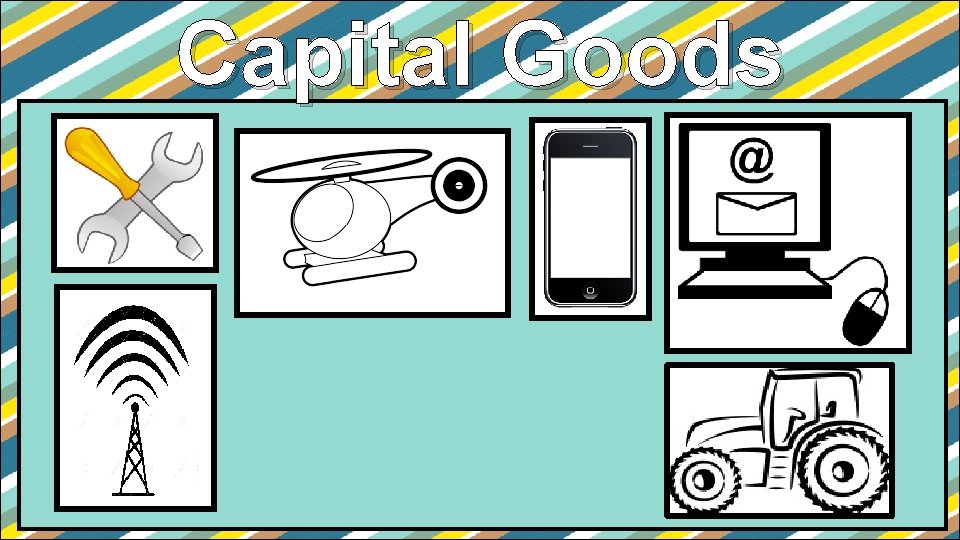
Capital Goods • This is all of the goods that are produced in the country and then used to make other goods & services. • Examples: tools, equipment, factories, technology, computers, lumber, machinery, etc. • What are some capital goods used in our classroom?
Capital Goods • • • The more capital goods a country has, the more goods & services they are able to produce. If a business is to be successful, it cannot let its equipment break down or have its buildings fall apart. New technology can help a business produce more goods for a cheaper price. • Money is NOT a capital good, but rather a medium of exchange!
Capital Goods
Entrepreneurship
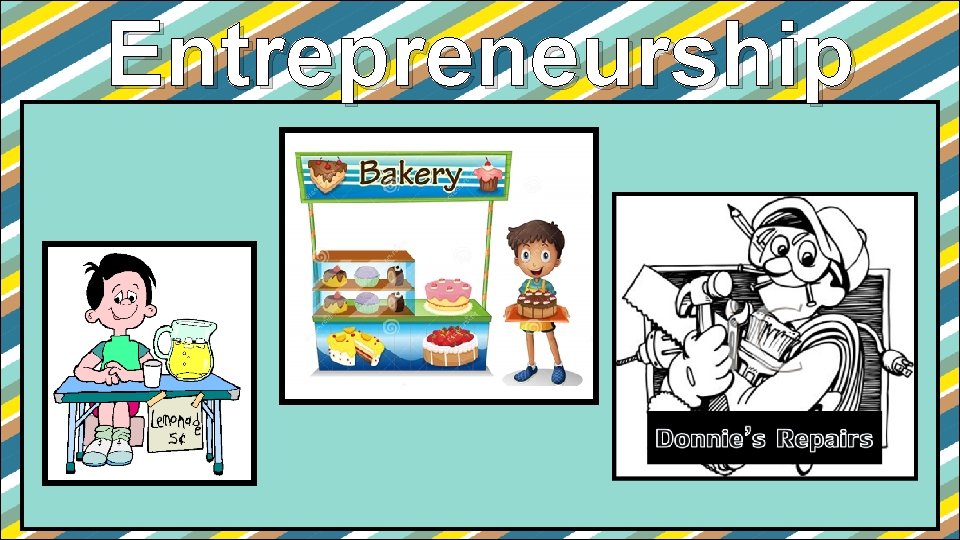
Entrepreneurship • People who provide the money to start and operate a business are called entrepreneurs. • These people risk their own money and time because they believe their business ideas will make a profit. • They bring together natural, human, and capital resources to produce foods or services to be provided by their businesses.
Entrepreneurship • Entrepreneurship creates jobs and lessens unemployment. • It encourages people to take risks, and in doing so, they’ve created better healthcare, education, & welfare programs. • The more entrepreneurs a country has, the higher the country’s GDP will be.
Entrepreneurship