
FACTORS LEADING TO REVOLUTION How did the Enlightenment
- Slides: 21
FACTORS LEADING TO REVOLUTION
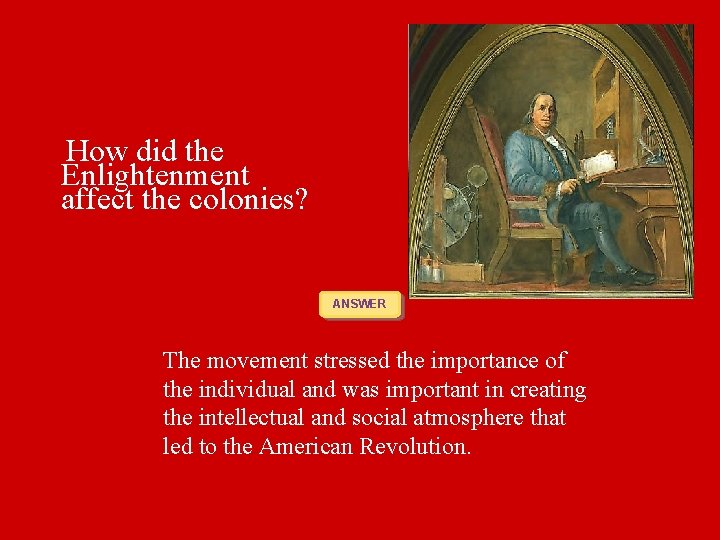
How did the Enlightenment affect the colonies? ANSWER The movement stressed the importance of the individual and was important in creating the intellectual and social atmosphere that led to the American Revolution.
New Political Ideas • Republicanism – – Political power resides in the hands of the people who elect a representative government. Depends on its citizens working and submitting toward a common good. Government must answer to the people it represents.
New Political Ideas • Radical Whig – – Questioned the growing cost of the British Empire and felt that government should routinely be questioned in order to limit the arbitrary power of the monarchy – corruption. People should be on guard to protect their liberties
Another Key Idea: • The breakdown of the mercantile system. Colonists felt restricted and used
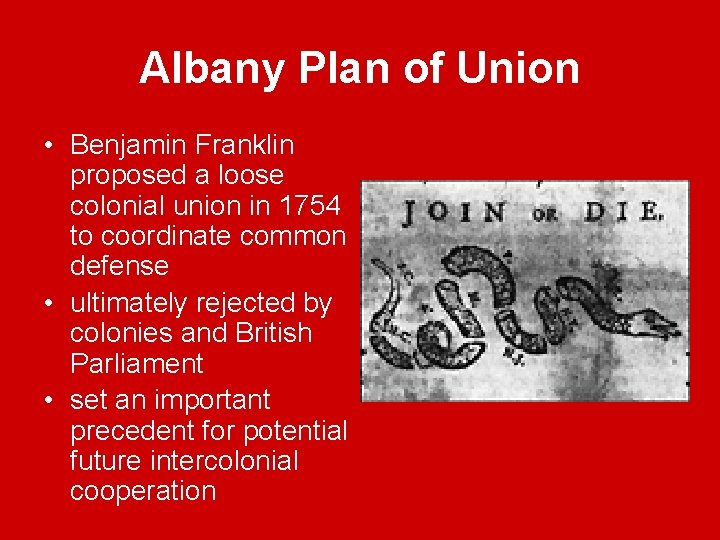
Albany Plan of Union • Benjamin Franklin proposed a loose colonial union in 1754 to coordinate common defense • ultimately rejected by colonies and British Parliament • set an important precedent for potential future intercolonial cooperation
From 1689 through 1763, the British had fought a series of costly wars. The French and Indian War (1756 -1763) was very successful for the British, but it left them heavily in debt and saddled with the expense of maintaining and protecting a vast empire.
Parliament began to look for ways to generate revenues from the colonies. Prior to 1763, the British policy toward its North American colonies had been one of salutary or benign neglect. Under this system, each colony’s legislature had developed a sense of independence and autonomy. Charge was led by Prime Ministers Grenville, Townsend, and North
British Parliament Sugar Act (1764) • Lowered tax on molasses but increased efforts to stop smuggling and collect tax. • Met with complaints that the law violated colonists right to assess own tax.
Stamp Act (1765) • Tax on written documents (newspapers, deeds, wills, licenses, playing cards, etc. ) • Affected everyone • Stamp Act Congress met in October, 1765 • Drafted protest to King • First time colonial leaders had met since 1754
Declaratory Act (1766) • Declared Parliament’s right to tax colonies Townshend Acts (1767) • Duties on glass, lead, paper, paints and tea • Led to further protest
American Colonists Key Colonial Leaders Samuel Adams Patrick Henry John Adams Ben Franklin John Hancock George Washington John Hancock Abagail Adams Thomas Paine
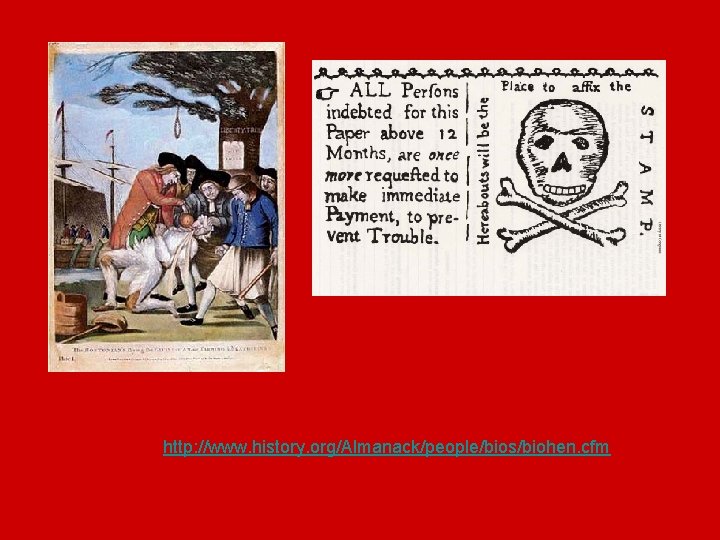
American Colonists Organized Protest Groups: Sons of Liberty Daughters of Liberty Committees of Correspondence "nonimportation“ movement • Vowed to boycott British goods until taxes were lifted • All taxes were ultimately repealed, except for tax on tea
http: //www. history. org/Almanack/people/bios/biohen. cfm
Tea Act • 1773 • Required colonists to buy tea from British East India Company • Actually lowered legal price of tea • Colonists saw Tea Act as way of sneaking in tax without representation • Many New England merchants stood to lose if British cracked down on smuggling of Dutch tea
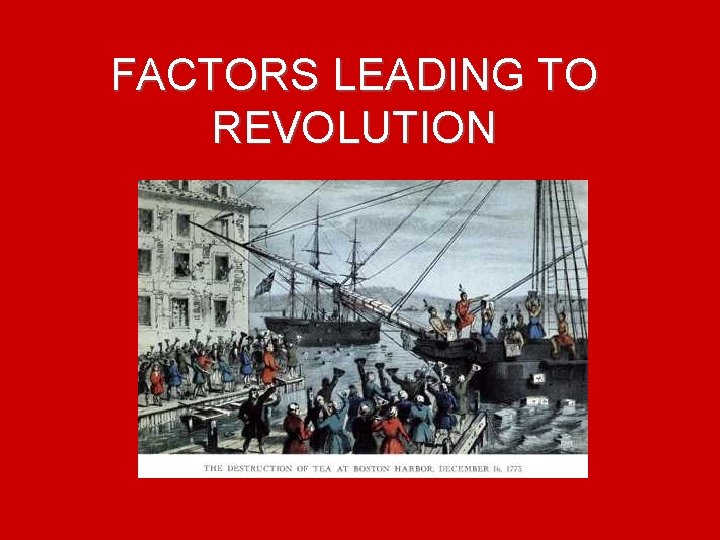
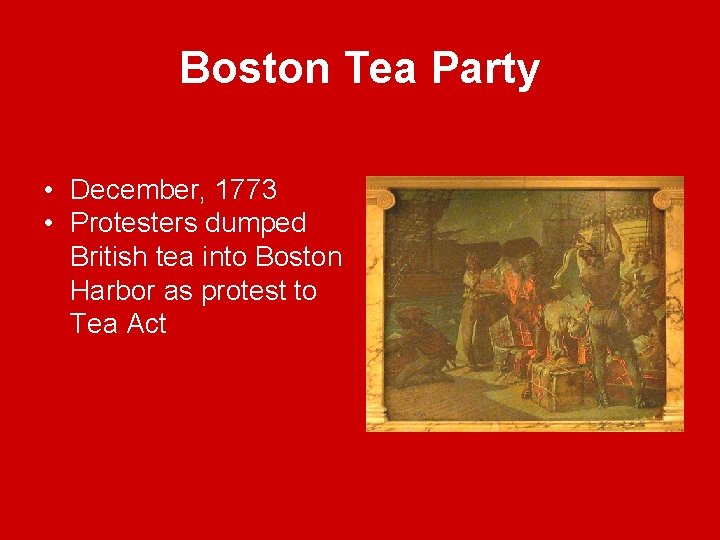
Boston Tea Party • December, 1773 • Protesters dumped British tea into Boston Harbor as protest to Tea Act
British Retaliation for the Tea Party • • Closed port of Boston Restructured Massachusetts Legislature Restricted meetings Sent in British troops These are known as the Coercive or Intolerable Acts.
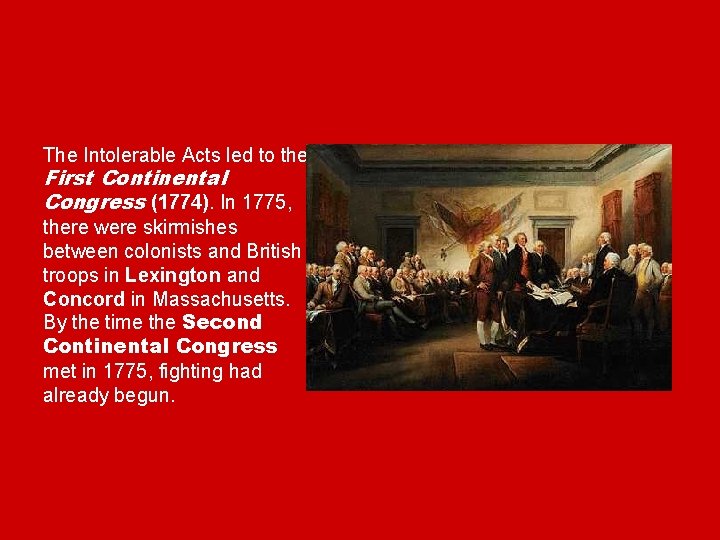
The Intolerable Acts led to the First Continental Congress (1774). In 1775, there were skirmishes between colonists and British troops in Lexington and Concord in Massachusetts. By the time the Second Continental Congress met in 1775, fighting had already begun.
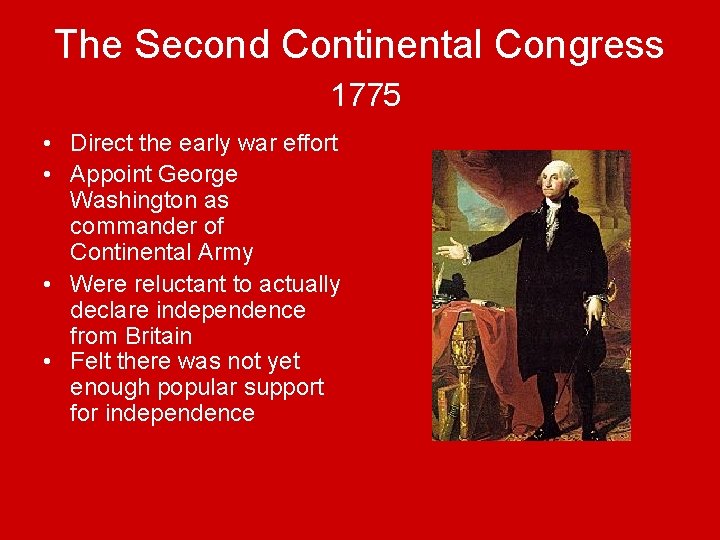
The Second Continental Congress 1775 • Direct the early war effort • Appoint George Washington as commander of Continental Army • Were reluctant to actually declare independence from Britain • Felt there was not yet enough popular support for independence
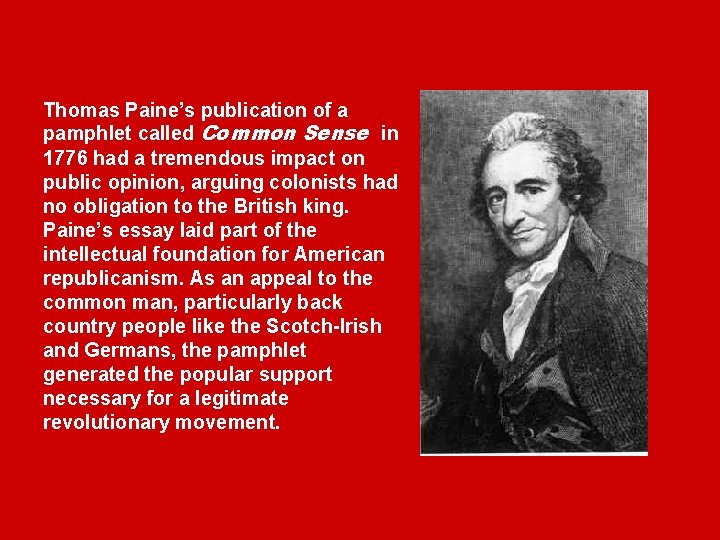
Thomas Paine’s publication of a pamphlet called Common Sense in 1776 had a tremendous impact on public opinion, arguing colonists had no obligation to the British king. Paine’s essay laid part of the intellectual foundation for American republicanism. As an appeal to the common man, particularly back country people like the Scotch-Irish and Germans, the pamphlet generated the popular support necessary for a legitimate revolutionary movement.
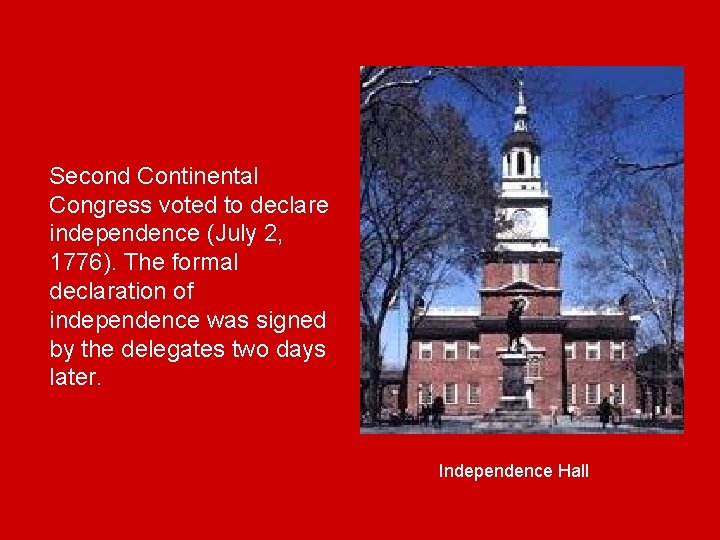
Second Continental Congress voted to declare independence (July 2, 1776). The formal declaration of independence was signed by the delegates two days later. Independence Hall