
FACTORS AFFECTING MUSCLE FORCE PRODUCTION Module 1 Anatomy

- Slides: 17
FACTORS AFFECTING MUSCLE FORCE PRODUCTION Module 1: Anatomy and Physiology
Motor Unit Recruitment Factors 1. recruit more motor units, 2. increase the firing rate of motor units, or 3. synchronize the firing of motor units.
Motor Unit Recruitment The more motor units that are recruited, the more force is produced (remember all or none principle) Trainable? Yes Biggest increases in strength come from neural factors Increased motor unit recruitment is the #1 factor in increased force production (especially in previously untrained individuals)
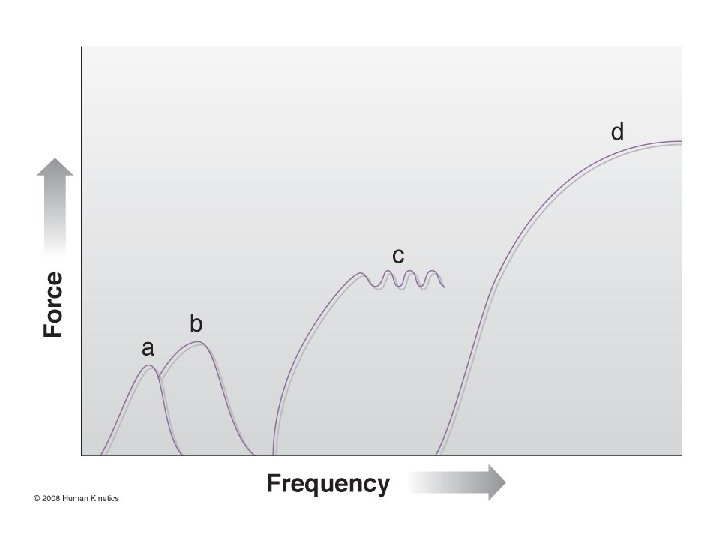
Rate of Motor Unit Firing Single twitch- small amount of force generated If muscle is stimulated again before relaxation occurs, the second twitch builds on the first twitch If this continues to occurs, twitches will continue to build on each other until they fuse (tetanus) Trainable? Another neural adaptation Learn to fire at higher rate early in contraction (increase rate of force production)
Figure 1. 6
Synchronous Firing Proper sequence of firing between agonist, antagonist and synergist muscles to provide smooth movement and correct direction of force (thereby providing large amount of force in correct direction) Trainable? Neural adaptation to strength training, especially early on in training
Other Factors in Force Production Agonist, antagonist, and synergist activation Reflex involvement Length of the muscle Size of the muscle Application of a pre-stretch Type of fiber recruited Speed of contraction Angle of pennation of the activated muscle
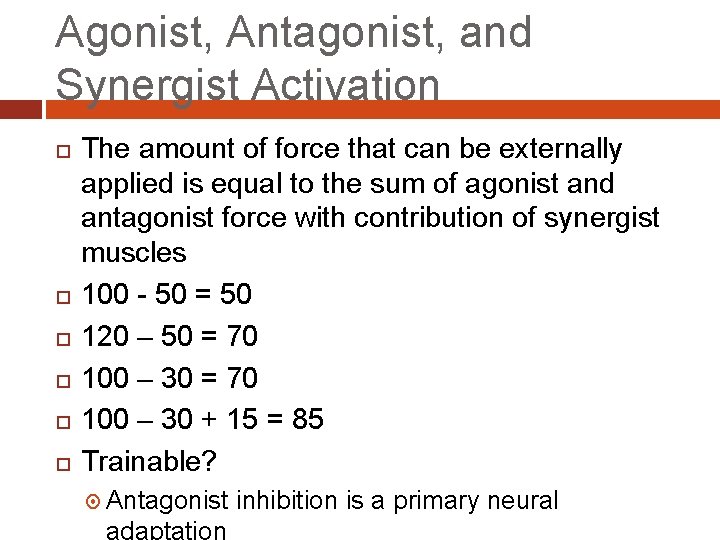
Agonist, Antagonist, and Synergist Activation The amount of force that can be externally applied is equal to the sum of agonist and antagonist force with contribution of synergist muscles 100 - 50 = 50 120 – 50 = 70 100 – 30 + 15 = 85 Trainable? Antagonist adaptation inhibition is a primary neural
Reflex Involvement CNS can also work unconsciously Muscle Spindle Detects muscle length and changes in length Causes a excitatory response Trainable? Stretch-Shortening Cycle Plyometrics Golgi Tendon Organ Stimulated when tension in organ is very high Causes an inhibition response Traininable? Inhibition of GTO is primary neural adaptation
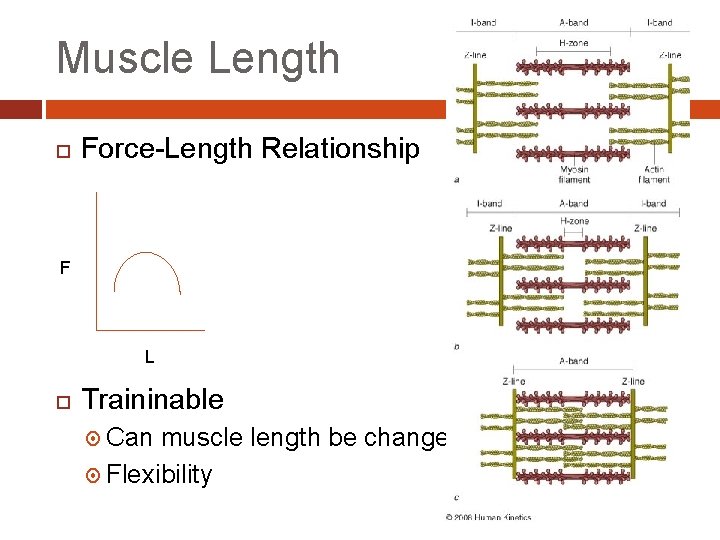
Muscle Length Force-Length Relationship F L Traininable Can muscle length be changed? Flexibility
Muscle Size Increases in muscle size increase the POTENTIAL for increased muscle force production Increased number of contractile proteins equals more possible actin and myosin bonds Trainable? Hypertrophy Hyperplasia
Application of A Pre-Stretch By pre-stretching a muscle actin-myosin bonds are already created elastic energy is created use stretch-shortening cycle Trainable? SSC- yes, others- no
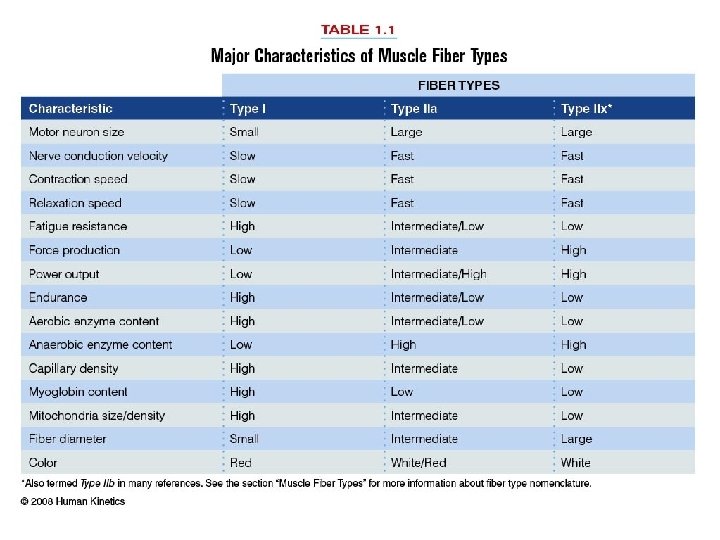
Table 1. 1
Type of Muscle Fiber Recruited Type II Muscle Fibers produce more force larger Size principle Motor Units are recruited smallest to largest Trainable A later neural adaptation is a “bypass” of the size principle
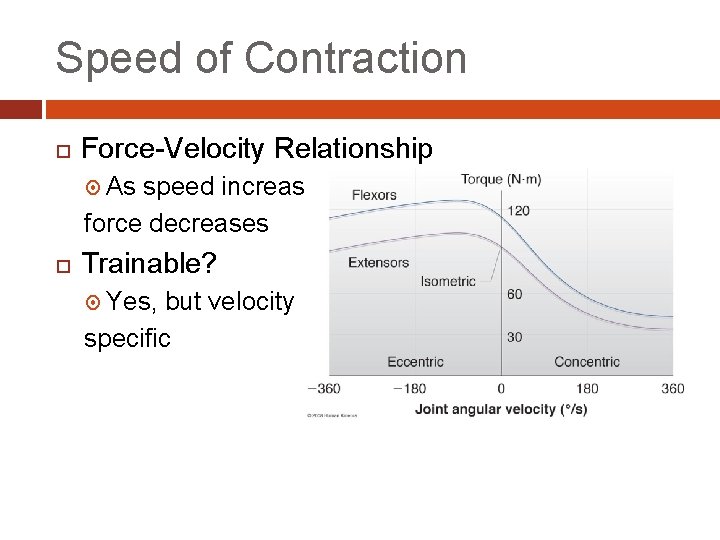
Speed of Contraction Force-Velocity Relationship As speed increases, force decreases Trainable? Yes, but velocity specific
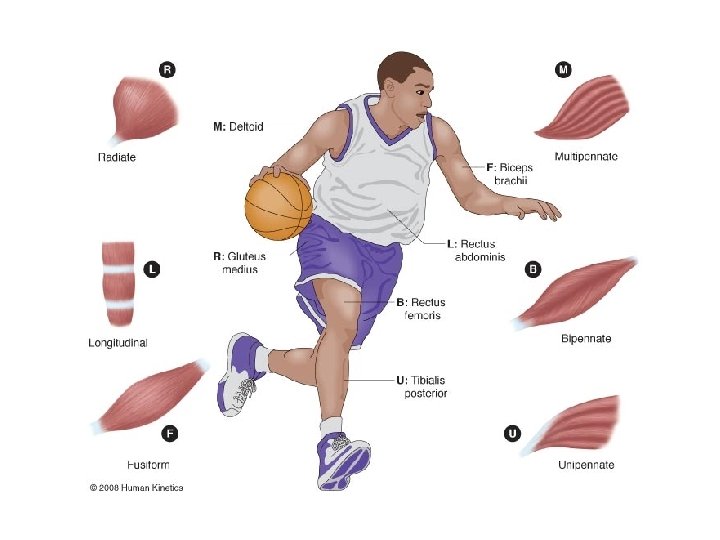
Amount of Pennation The more sarcomeres that are in parallel, the more actin/myosin bonds per area Greater angle of pennation = more sarcomeres in parallel Trainable? Hypertrophy can lead to greater angles of pennation (but only in muscles that are already pennated)
Figure 4. 11