
Factors affecting erosion and deposition Velocity Gradient rise










- Slides: 22
Factors affecting erosion and deposition � � � Velocity Gradient – rise over run Channel shape Channel roughness Discharge – amount of water flow per unit time, as discharge increases, load increases. 3
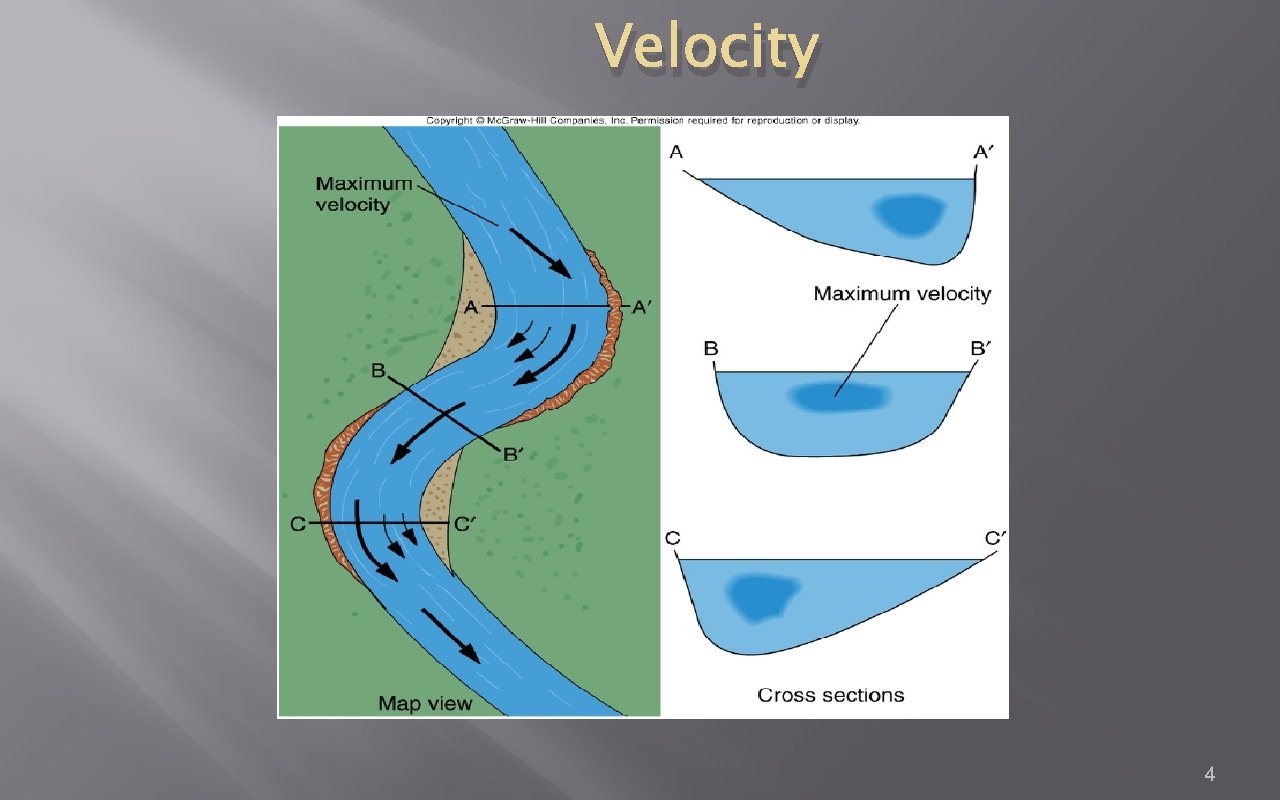
Velocity 4
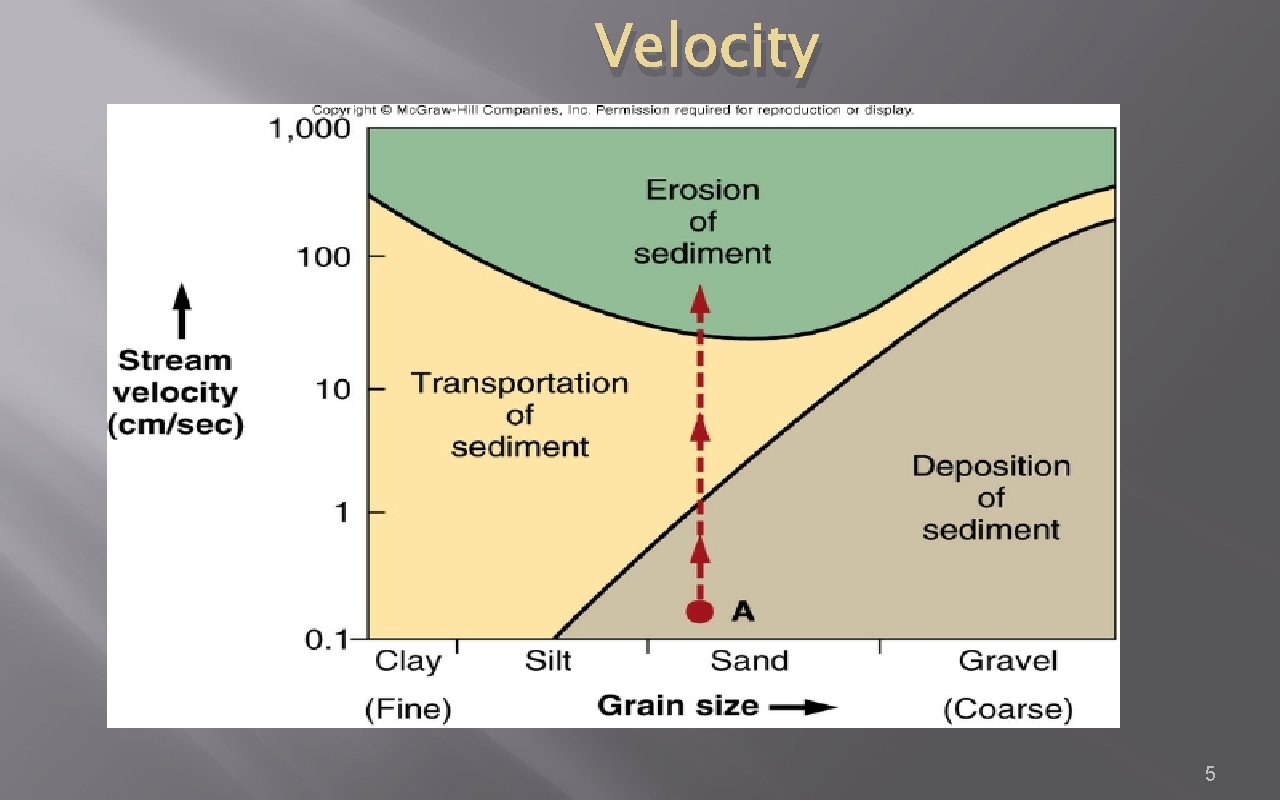
Velocity 5
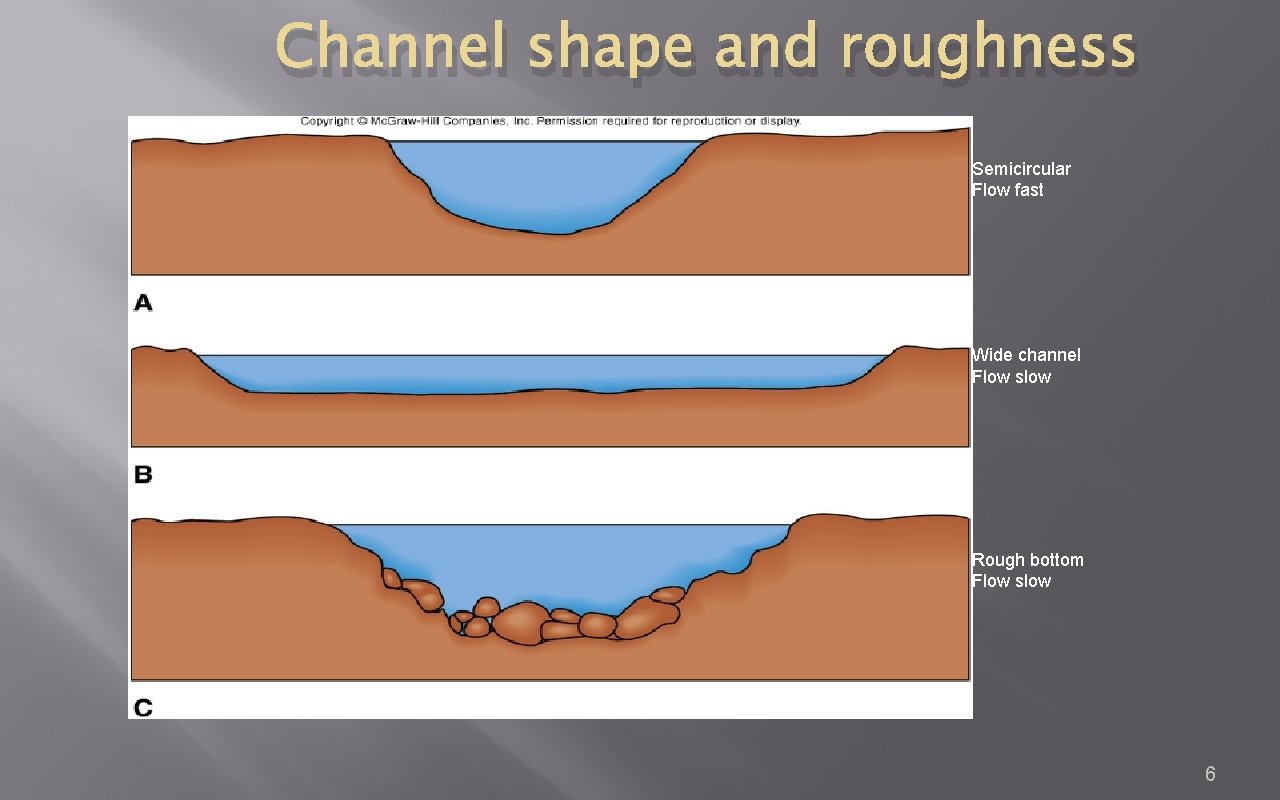
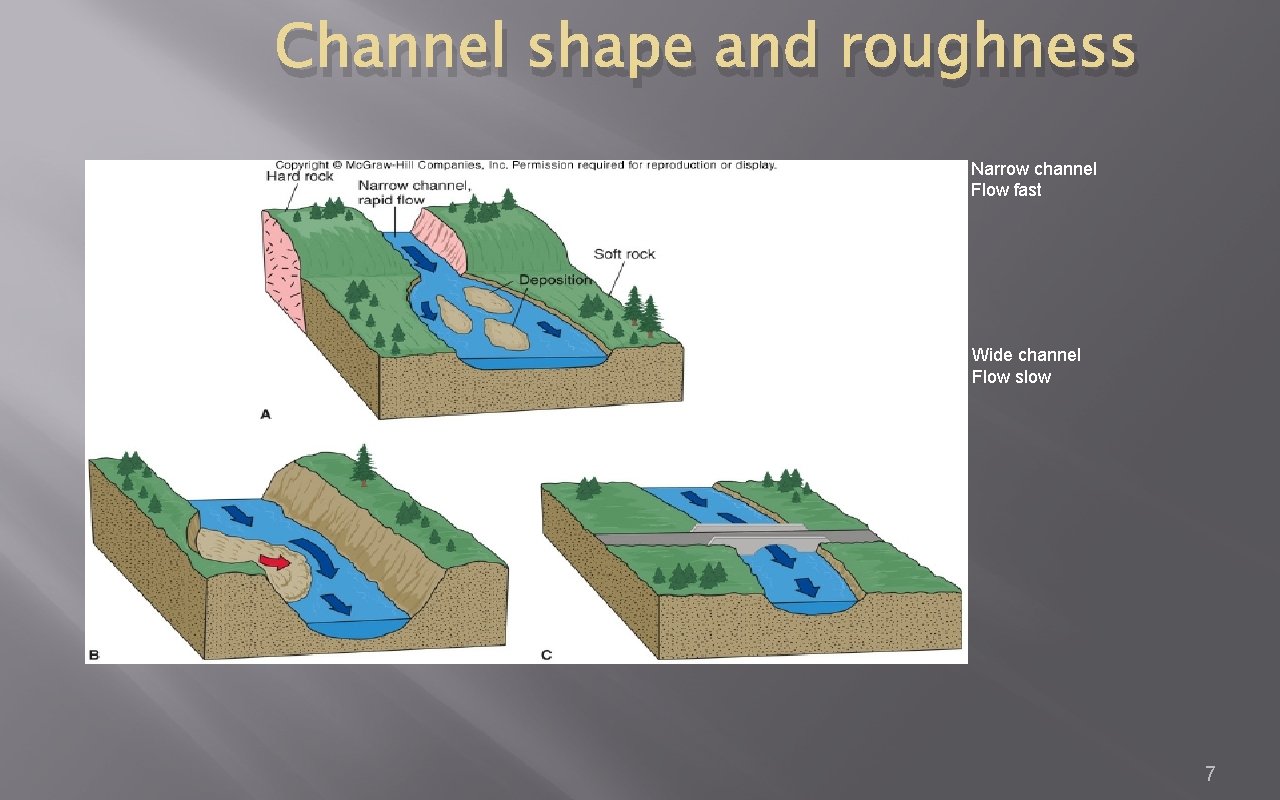
Channel shape and roughness Semicircular Flow fast Wide channel Flow slow Rough bottom Flow slow 6
Channel shape and roughness Narrow channel Flow fast Wide channel Flow slow 7
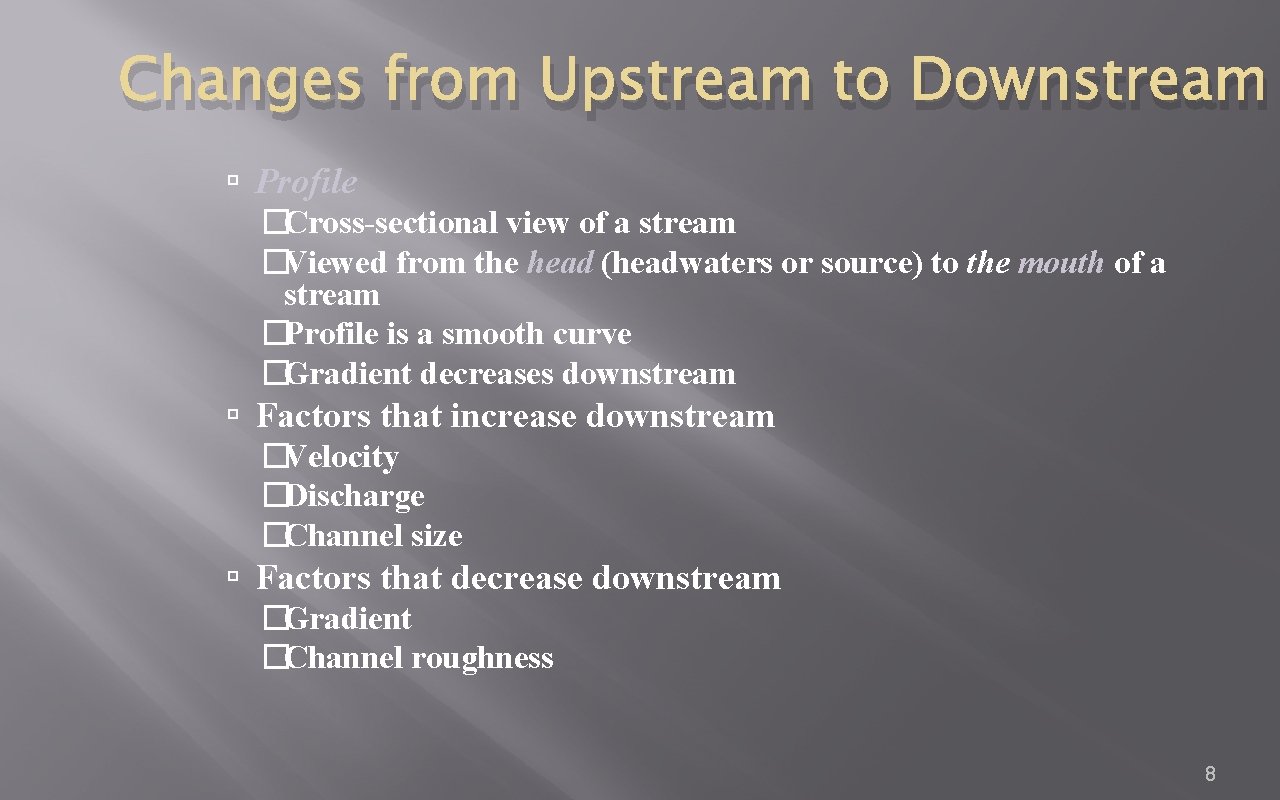
Changes from Upstream to Downstream Profile �Cross-sectional view of a stream �Viewed from the head (headwaters or source) to the mouth of a stream �Profile is a smooth curve �Gradient decreases downstream Factors that increase downstream �Velocity �Discharge �Channel size Factors that decrease downstream �Gradient �Channel roughness 8
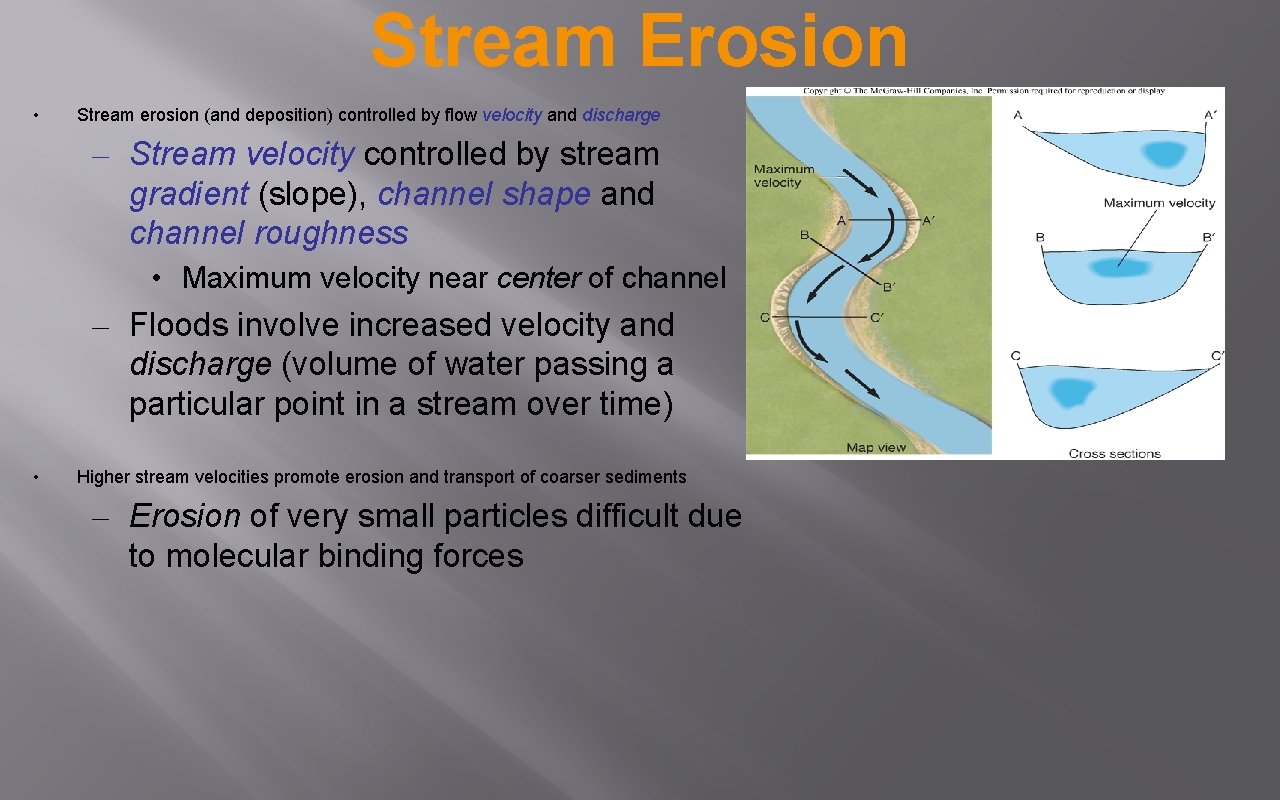
Stream Erosion • Stream erosion (and deposition) controlled by flow velocity and discharge – Stream velocity controlled by stream gradient (slope), channel shape and channel roughness • Maximum velocity near center of channel – Floods involve increased velocity and discharge (volume of water passing a particular point in a stream over time) • Higher stream velocities promote erosion and transport of coarser sediments – Erosion of very small particles difficult due to molecular binding forces
Do Now � � Do ES 1301 -How Does Stream Flow Change over Time? This activity can be found on my website under “Files From Class. ”
Monday, April 29, 2013 � Objective #2 � You are going to learn the similarities and differences between deltas and alluvial fans
DEPOSITION
Definition � Deposition- the process in which sediment is laid down in new locations � The end result of erosion
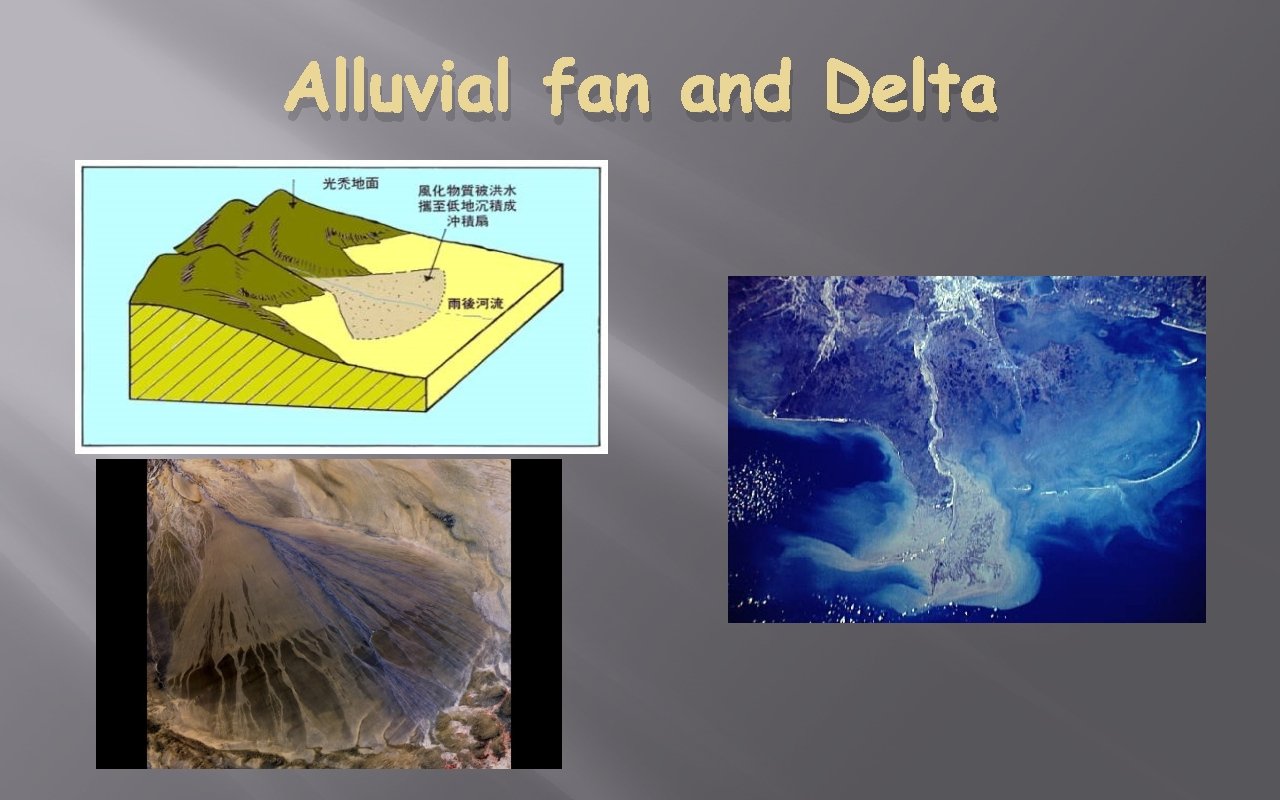
Water Deposition � Alluvial fan- fan shaped deposit of sediment on land � Usually form when a stream slows down and enters a flat plain � Delta- sediment from a stream deposited where a river enters a large body of water � Triangular shape
Alluvial fan and Delta
Sediment Deposition • Delta - body of sediment deposited at the mouth of a river when flow velocity decreases – Surface marked by shifting distributary channels – Shape of a delta depends on whether its wavedominated, tide-dominated, or stream-dominated
Sediment Deposition • Alluvial fan - large, fan- or cone-shaped pile of sediment that forms where stream velocity decreases as it emerges from a narrow mountain canyon onto a flat plain – Well-developed in desert regions, such as the southwestern U. S. – Larger fans show grading from large sediments nearest the mountains to finer sediments farther away
DO NOW Now you should access ES 104 from the “Files From Class” section of my website. This investigation will focus more on deltas.