
Factors Affecting Ecosystems Chapter 4 3 Pgs 101
- Slides: 18
Factors Affecting Ecosystems Chapter 4. 3 Pgs. 101 -107
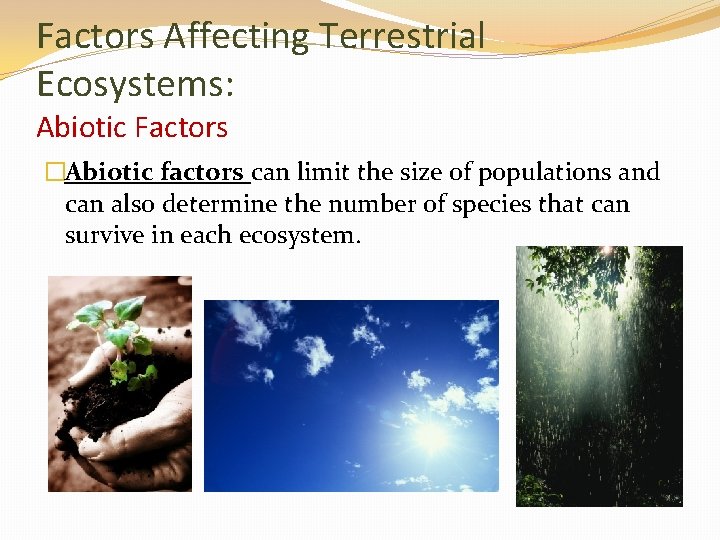
Factors Affecting Terrestrial Ecosystems: Abiotic Factors �Abiotic factors can limit the size of populations and can also determine the number of species that can survive in each ecosystem.
Soil �The thin layer of soil, rarely more than 2 meters thick, provides nutrients for all plants that grow on land. �The quality and amount of soil available are crucial factors in determining the size and health of the plant community and in turn, the biodiversity of an ecosystem.
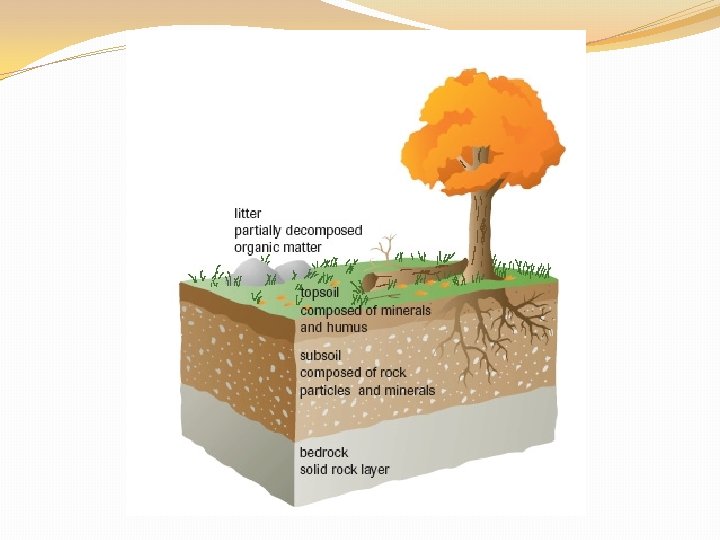
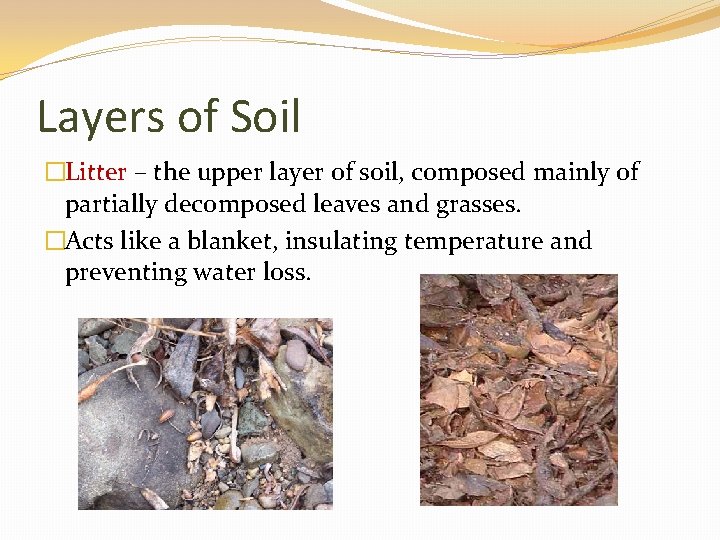
Layers of Soil �Litter – the upper layer of soil, composed mainly of partially decomposed leaves and grasses. �Acts like a blanket, insulating temperature and preventing water loss.
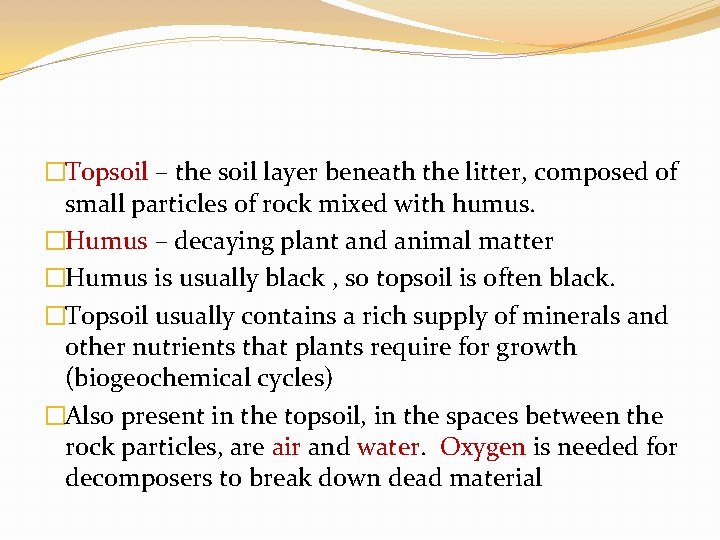
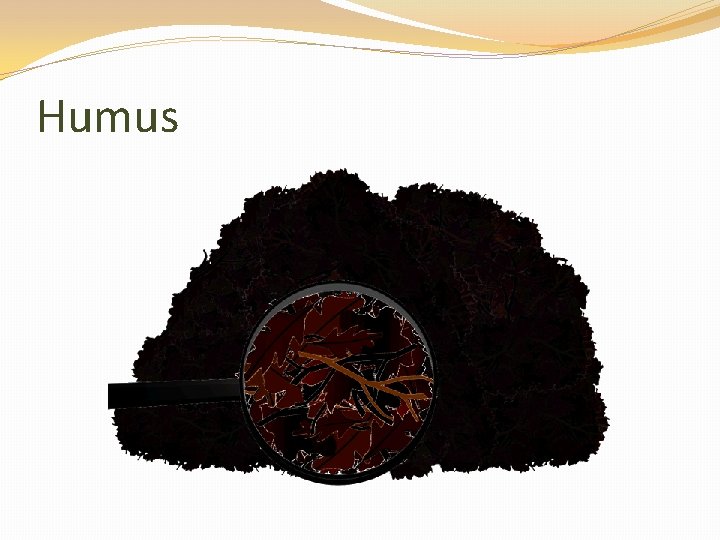
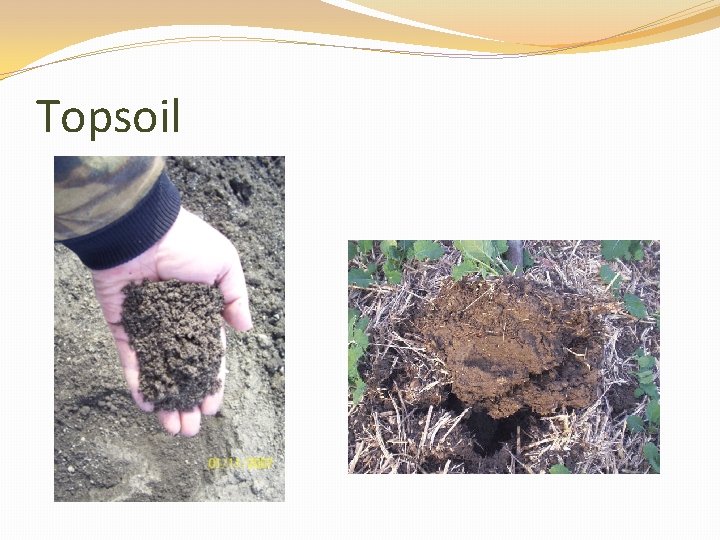
�Topsoil – the soil layer beneath the litter, composed of small particles of rock mixed with humus. �Humus – decaying plant and animal matter �Humus is usually black , so topsoil is often black. �Topsoil usually contains a rich supply of minerals and other nutrients that plants require for growth (biogeochemical cycles) �Also present in the topsoil, in the spaces between the rock particles, are air and water. Oxygen is needed for decomposers to break down dead material
Humus
Topsoil
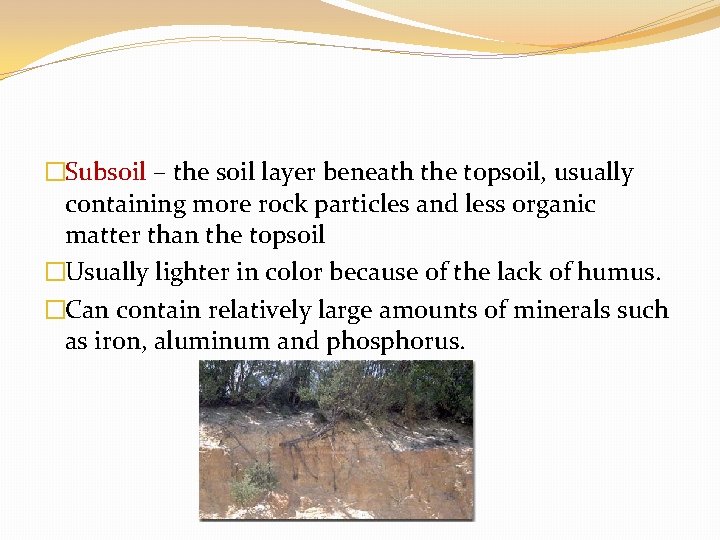
�Subsoil – the soil layer beneath the topsoil, usually containing more rock particles and less organic matter than the topsoil �Usually lighter in color because of the lack of humus. �Can contain relatively large amounts of minerals such as iron, aluminum and phosphorus.
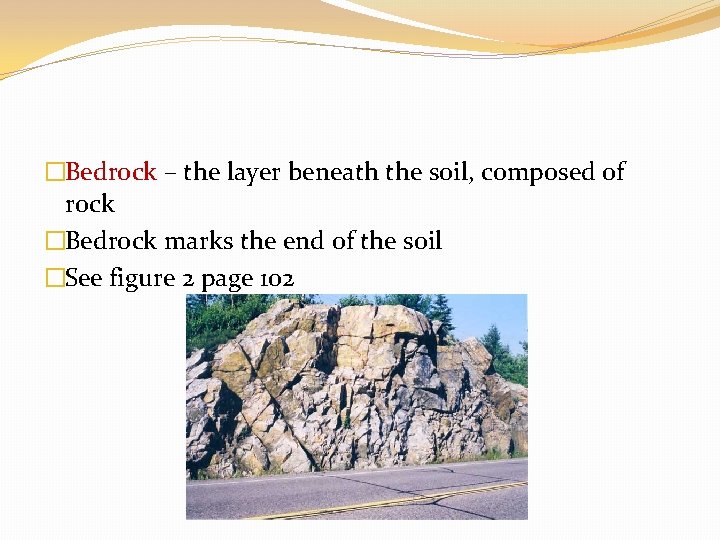
�Bedrock – the layer beneath the soil, composed of rock �Bedrock marks the end of the soil �See figure 2 page 102
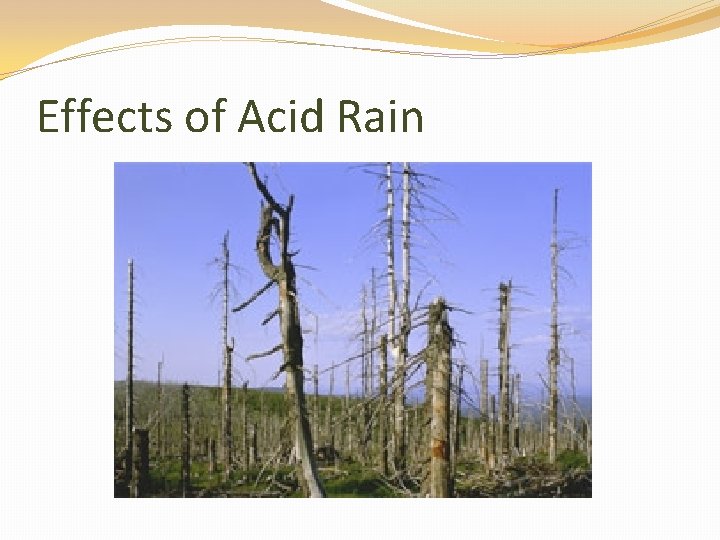
Soil: Acidic, Neutral or Basic �The p. H of soil is determined by the nature of the rock from which it was formed, and by the nature of the plants that grow in it. �Humans contribute to higher levels of acidity in many soils by burning fossil fuels such as coal, oil and gasoline which release sulfur dioxide and nitrogen oxides into the air. These chemicals result in acidic rain and snow. �Basic soils are often referred to as alkaline soils. �The p. H of the soil determines which plants will grow best.
Effects of Acid Rain
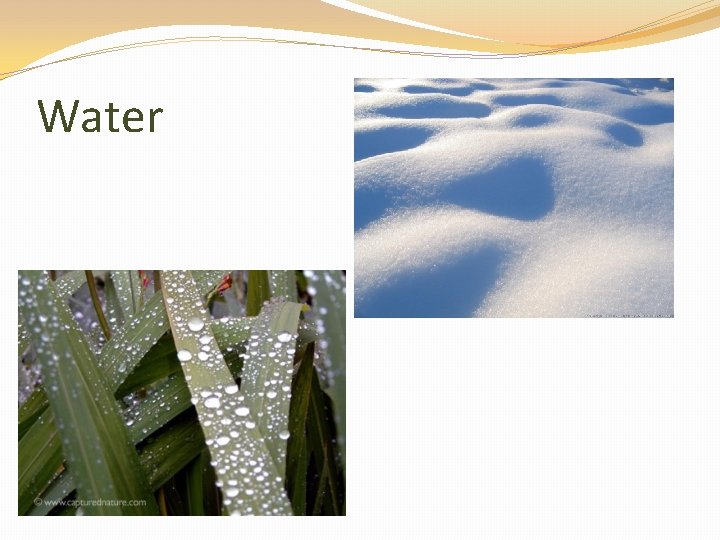
Water �The amount of available water in an ecosystem is another important abiotic factor. �This factor is part of the overall climate of the region. �All organisms depend on water to survive. �The amount of available water is determined by the amount and type of precipitation (rain, snow etc. ) �The amount of available water is also affected by how long it stays in the upper layers of soil, and how much collects beneath the soil.
Water
�Groundwater – water in the soil or rock below Earth’s surface �Water table – the boundary between the saturated layer and the unsaturated soil above where the water pools underground �The depth of the water table in an area affects the organisms that grow there. �Plants with long roots can draw water from the water table even though there is not a lot of precipitation
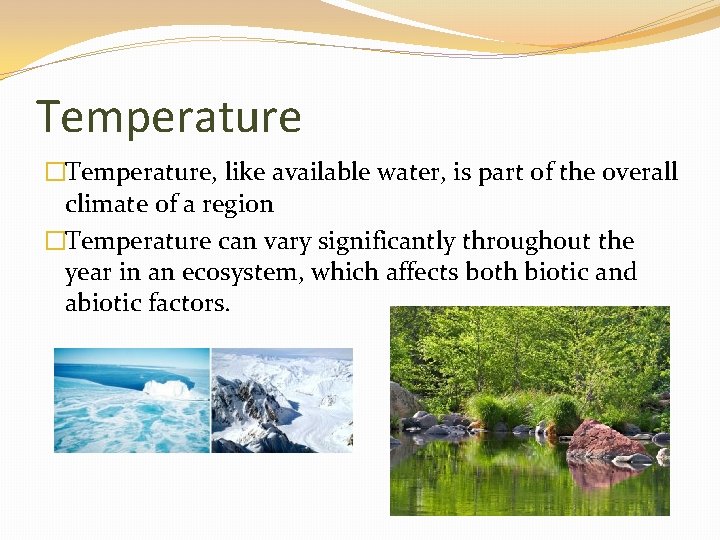
Temperature �Temperature, like available water, is part of the overall climate of a region �Temperature can vary significantly throughout the year in an ecosystem, which affects both biotic and abiotic factors.
Temperature: Adaptations �Conifers – keep their leaves (needles) throughout the winter, which allows them to survive short growing seasons �Grassland populations – grasses above the ground freezes off in the winter, the roots survive to regrow in the spring �Loons, ducks and some hawks – migrate to warmer climates �Black bears and some other mammals – hibernate (become inactive) during the winter
Sunlight �All terrestrial ecosystems are affected by the amount of sunlight they receive. �Ecosystems at the equator – sunlight is fairly constant �Ecosystems more north or south – experience changes in the amount of sunlight depending on the time of year �Ecosystems may also experience less sunlight if they are in shaded areas (forest floors, north sides of mountains)