
FACTORS AFFECTING CLIMATE OF INDIA v Location Latitudinal



- Slides: 17
FACTORS AFFECTING CLIMATE OF INDIA. v Location. Latitudinal And Peninsular v Relief features. Eg: Himalayas/Western Ghats/Aravallies v Surface winds. Land And Sea Breeze v Air currents. Jet Streams v Southern oscillation. Sea Saw Map ; distribution of pressure. courtesy www. utsyste m. edu.
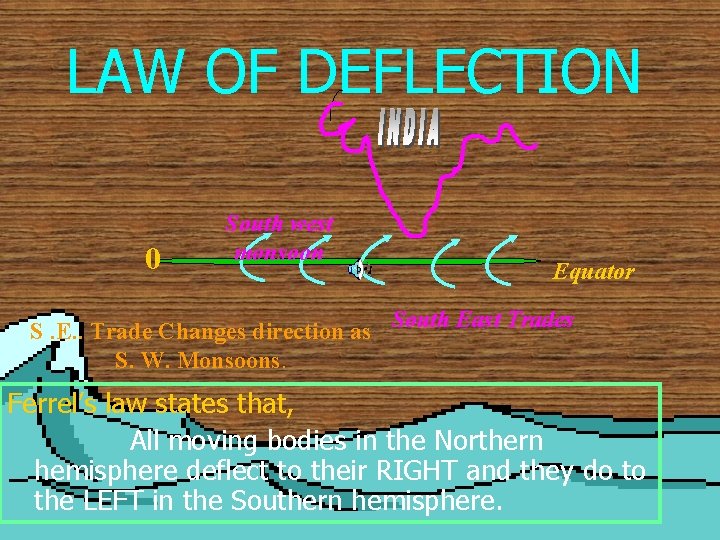
LAW OF DEFLECTION 0 South west monsoon Equator S. E. . Trade Changes direction as South East Trades S. W. Monsoons. Ferrel’s law states that, All moving bodies in the Northern hemisphere deflect to their RIGHT and they do to the LEFT in the Southern hemisphere.
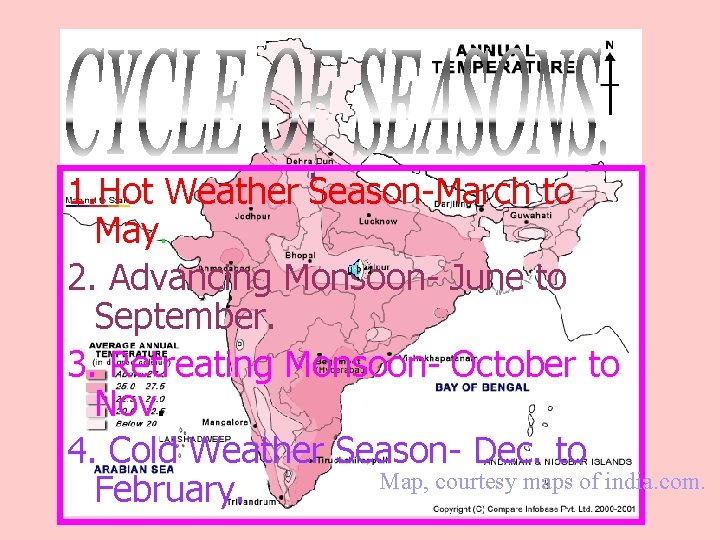
1. Hot Weather Season-March to May. 2. Advancing Monsoon- June to September. 3. Retreating Monsoon- October to Nov. 4. Cold Weather Season- Dec. to Map, courtesy maps of india. com. February.
FEATURES OF HOT WEATHER 1. Sun migrates to India 2. Creation of low pressure Trough in. North Indian Plains. 3. Loo in North West India 4. Kalbaisakhi in North East India. 5. Mango Showers in Kerala and Karnataka.
FEATURES OF ADVANCING MONSOON 1. Outbreak of South West Monsoon. 2. Branching of Monsoon in to Arabian sea branch and Bay of Bengal. 3. Advancement of rain from South to North. 4. Mawsynram receives 1080 c. m. rainfall. 5. Occurrence of dry spell.
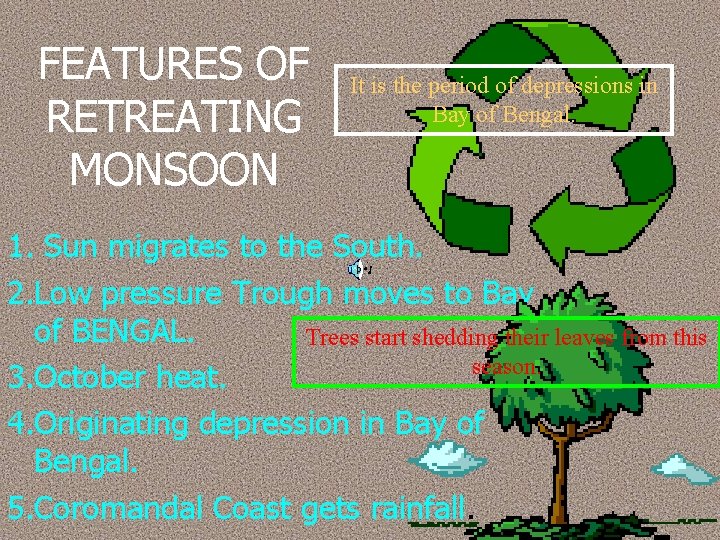
FEATURES OF RETREATING MONSOON It is the period of depressions in Bay of Bengal. 1. Sun migrates to the South. 2. Low pressure Trough moves to Bay of BENGAL. Trees start shedding their leaves from this season. 3. October heat. 4. Originating depression in Bay of Bengal. 5. Coromandal Coast gets rainfall.
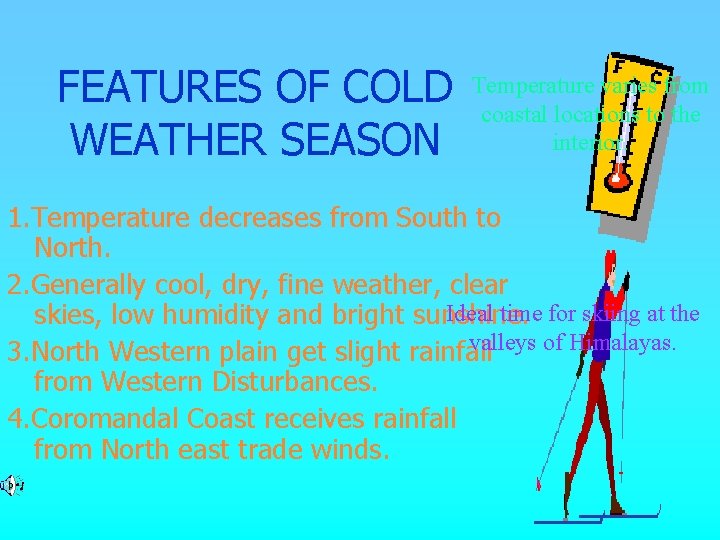
FEATURES OF COLD WEATHER SEASON Temperature varies from coastal locations to the interior. 1. Temperature decreases from South to North. 2. Generally cool, dry, fine weather, clear Ideal time for skiing at the skies, low humidity and bright sunshine. valleys of Himalayas. 3. North Western plain get slight rainfall from Western Disturbances. 4. Coromandal Coast receives rainfall from North east trade winds.
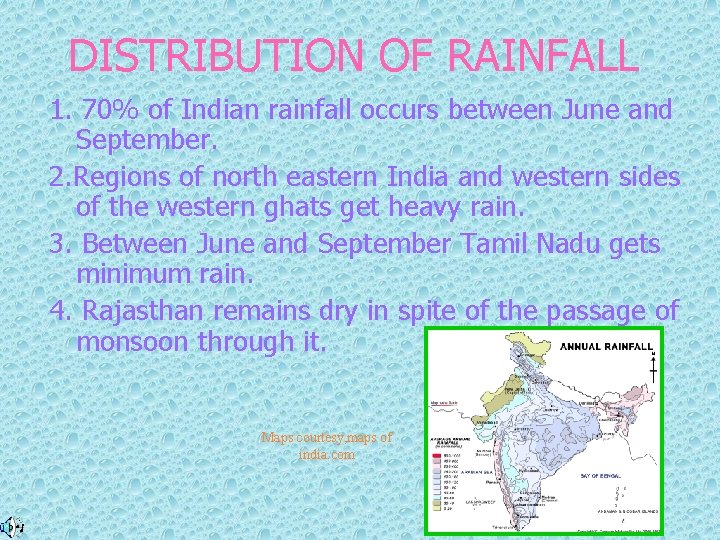
DISTRIBUTION OF RAINFALL 1. 70% of Indian rainfall occurs between June and September. 2. Regions of north eastern India and western sides of the western ghats get heavy rain. 3. Between June and September Tamil Nadu gets minimum rain. 4. Rajasthan remains dry in spite of the passage of monsoon through it. Maps courtesy, maps of india. com
CLIMATIC VARIATIONS IN INDIA 1. In hot season the interior locations have high temperature. 2. Coastal locations have modified weather. 3. In winter season temperature of interior locations decrease sharply. Eg: Delhi. 4. Coastal locations still enjoy pleasant weather. Eg: Kochi. 5. Depressions/cyclones develop above Bay of Bengal in the retreating monsoon season.
VARIATIONS ON PRECIPITATION 1. Generally speaking, India as a whole gets precipitation in the form of rain. 2. At higher altitudes of Himalayas it is in the form of snow fall especially in winter.
3. The amount of precipitation received is based on various factors like Relief, availability of of rain clouds, direction of wind etc.
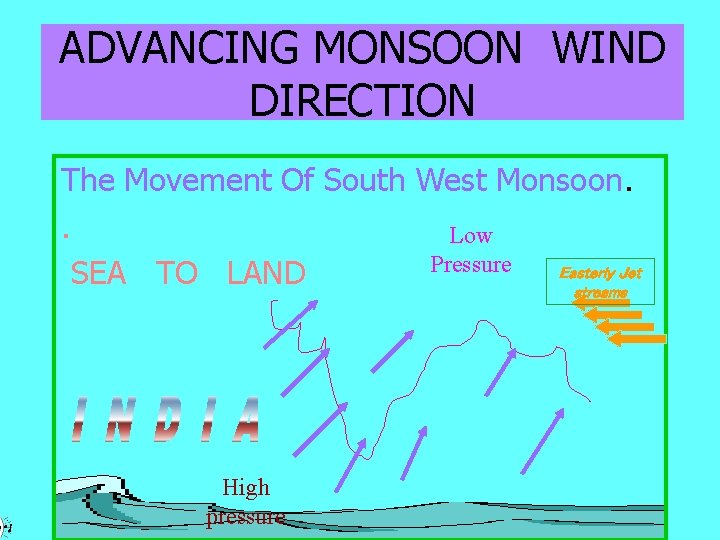
ADVANCING MONSOON WIND DIRECTION The Movement Of South West Monsoon. . Low Pressure Easterly Jet SEA TO LAND streams High pressure
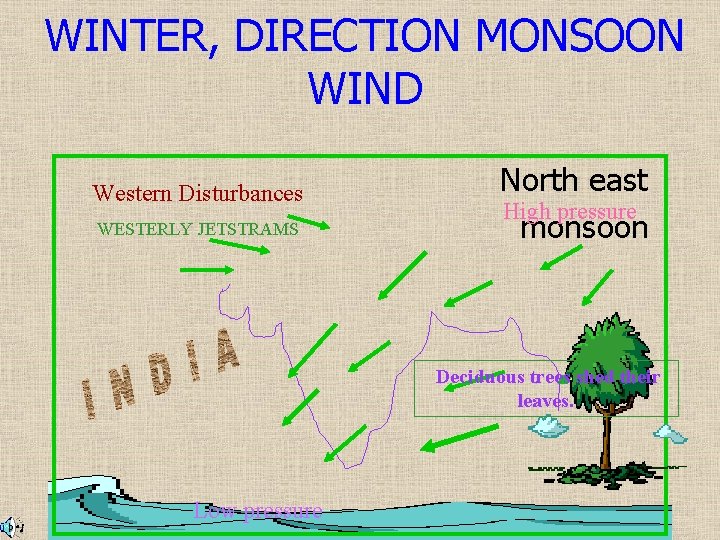
WINTER, DIRECTION MONSOON WIND Western Disturbances WESTERLY JETSTRAMS North east High pressure monsoon Deciduous trees shed their leaves. Low pressure
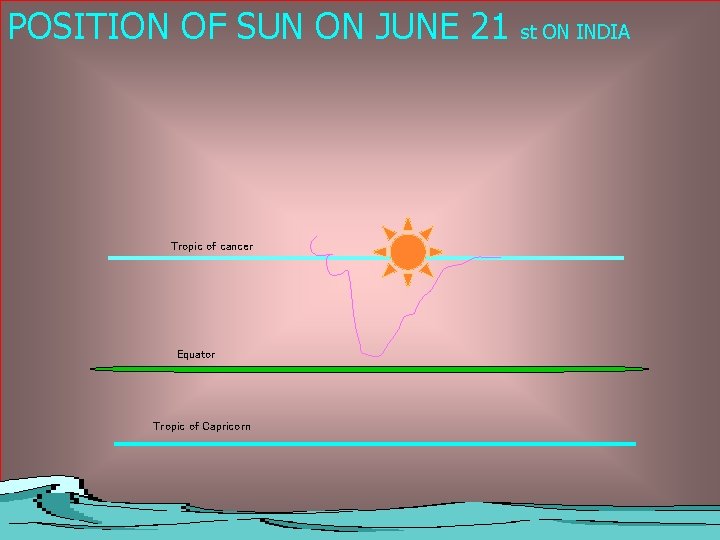
POSITION OF SUN ON JUNE 21 Tropic of cancer Equator Tropic of Capricorn st ON INDIA
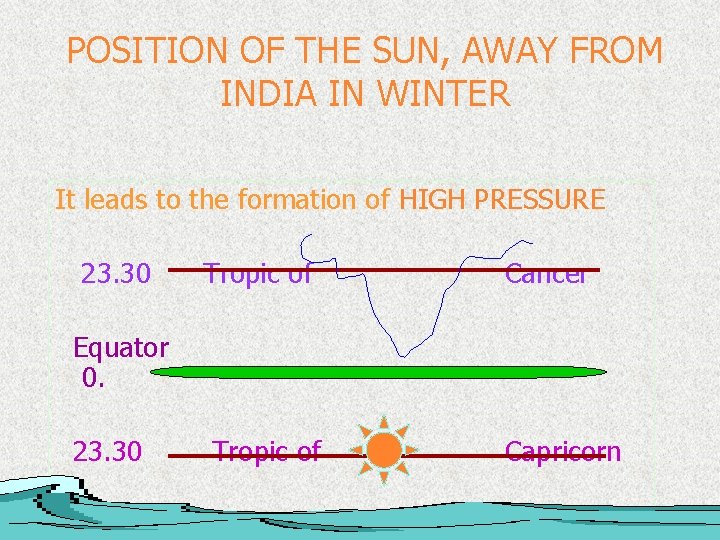
POSITION OF THE SUN, AWAY FROM INDIA IN WINTER It leads to the formation of HIGH PRESSURE 23. 30 Tropic of Cancer Equator 0. 23. 30 Tropic of Capricorn
1. Collect weather reports of various seasons from the dailies. 2. Animate the reports through computer slides. 3. Interpret them effectively. 4. Show the movements of south west and north east monsoon through computer slides also procure effective clip arts from the website.