
Facilities at the Nuclear Physics Institute Academy of
- Slides: 13
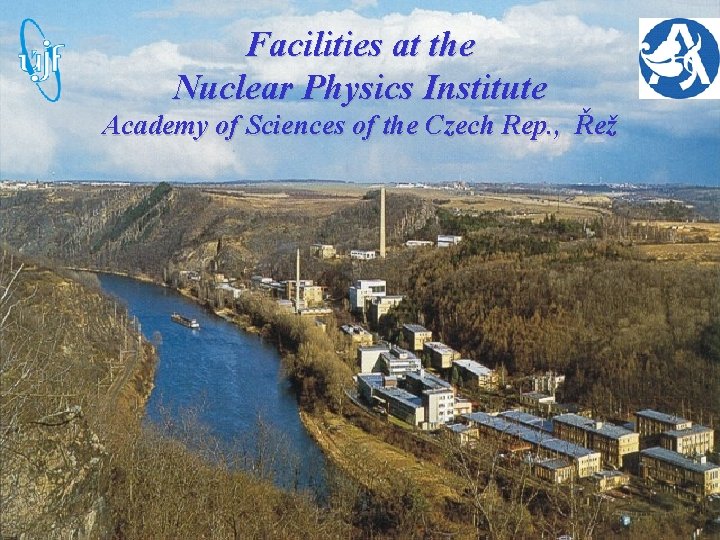
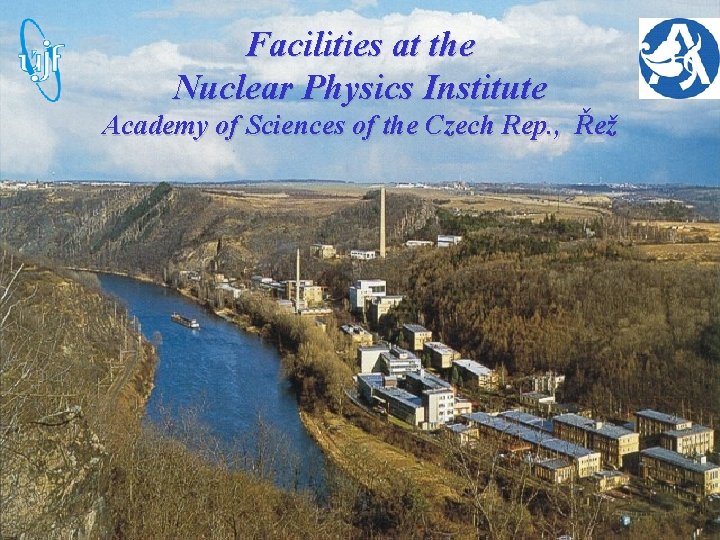
Facilities at the Nuclear Physics Institute Academy of Sciences of the Czech Rep. , Řež
Nuclear Physics Institute ASCR major Czech institution in nuclear physics field ~ 200 employees mission ~ 80 scientists Ø basis research in nuclear physics and related disciplines Øuse of nuclear physics methods in interdisciplinary scientific and research areas
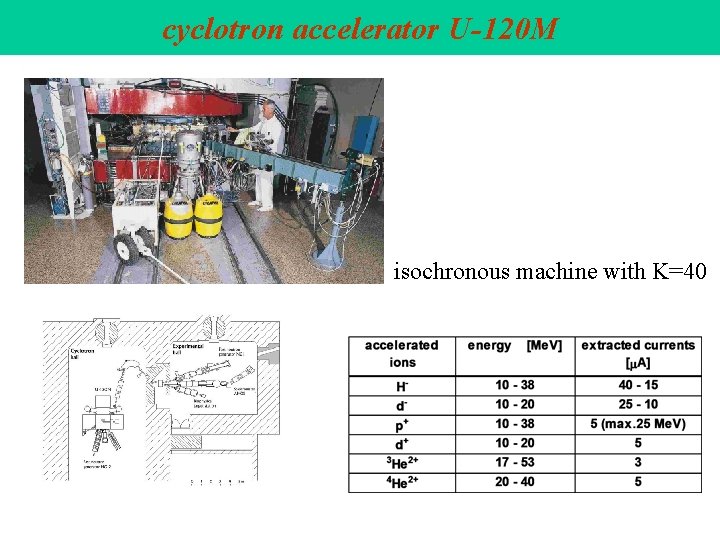
cyclotron accelerator U-120 M isochronous machine with K=40
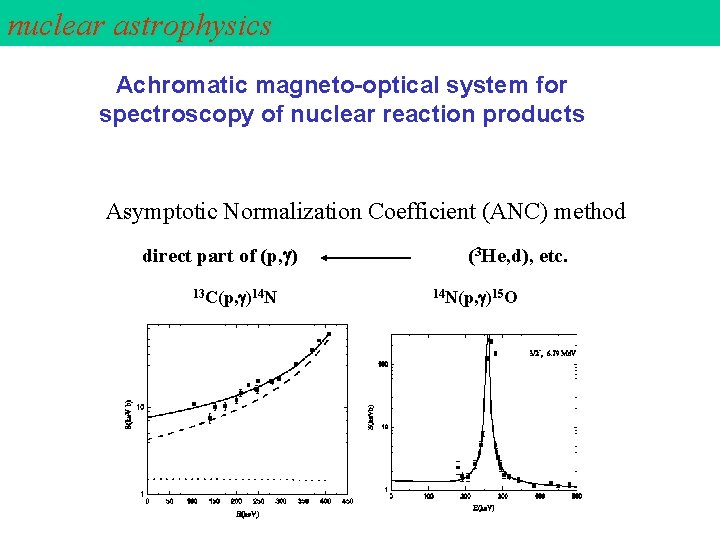
nuclear astrophysics Achromatic magneto-optical system for spectroscopy of nuclear reaction products Asymptotic Normalization Coefficient (ANC) method direct part of (p, ) 13 C(p, )14 N (3 He, d), etc. 14 N(p, )15 O
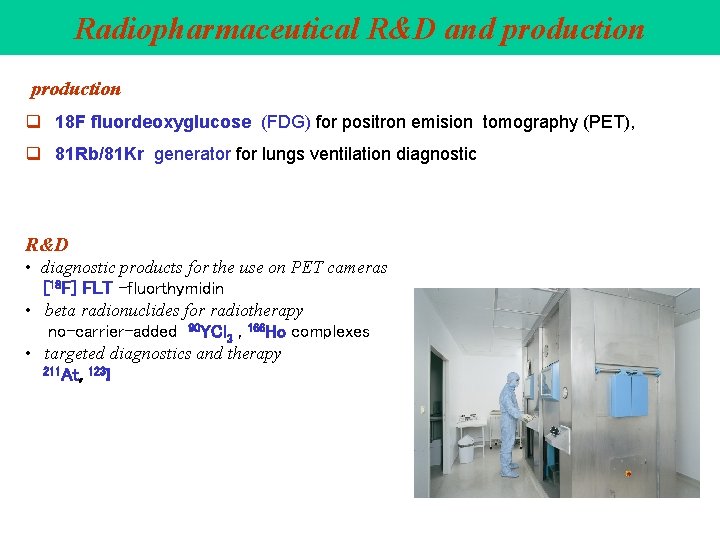
Radiopharmaceutical R&D and production q 18 F fluordeoxyglucose (FDG) for positron emision tomography (PET), q 81 Rb/81 Kr generator for lungs ventilation diagnostic R&D • diagnostic products for the use on PET cameras [18 F] FLT –fluorthymidin • beta radionuclides for radiotherapy no-carrier-added 90 YCl 3 , 166 Ho complexes • targeted diagnostics and therapy 211 At, 123 I
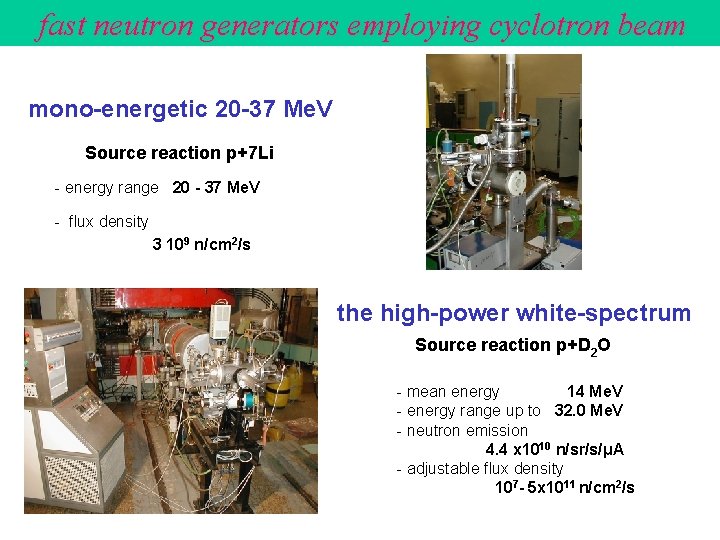
fast neutron generators employing cyclotron beam mono-energetic 20 -37 Me. V Source reaction p+7 Li - energy range 20 - 37 Me. V - flux density 3 109 n/cm 2/s the high-power white-spectrum Source reaction p+D 2 O - mean energy 14 Me. V - energy range up to 32. 0 Me. V - neutron emission 4. 4 x 10¹⁰ n/sr/s/μA - adjustable flux density 107 - 5 x 10¹¹ n/cm 2/s
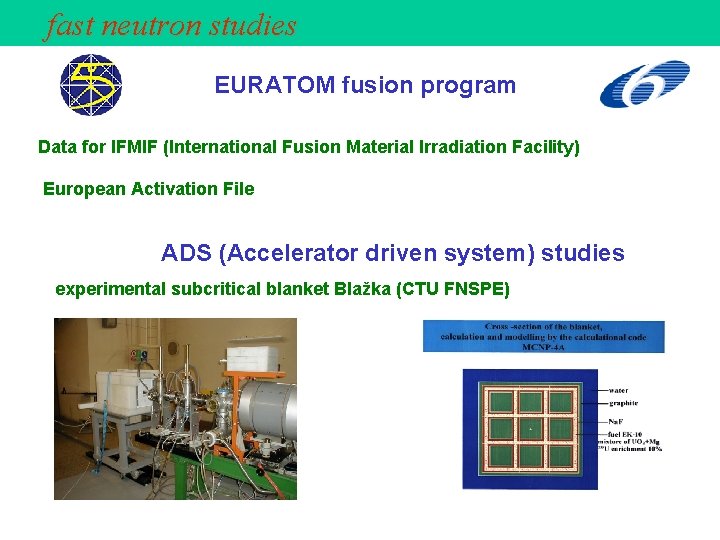
fast neutron studies EURATOM fusion program Data for IFMIF (International Fusion Material Irradiation Facility) European Activation File ADS (Accelerator driven system) studies experimental subcritical blanket Blažka (CTU FNSPE)
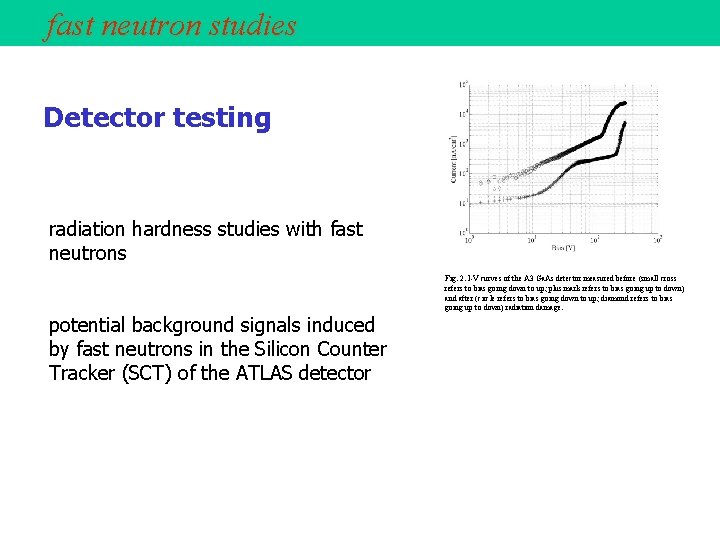
fast neutron studies Detector testing radiation hardness studies with fast neutrons Fig. 2. I-V curves of the A 3 Ga. As detector measured before (small cross refers to bias going down to up; plus mark refers to bias going up to down) and after (circle refers to bias going down to up; diamond refers to bias going up to down) radiation damage. potential background signals induced by fast neutrons in the Silicon Counter Tracker (SCT) of the ATLAS detector
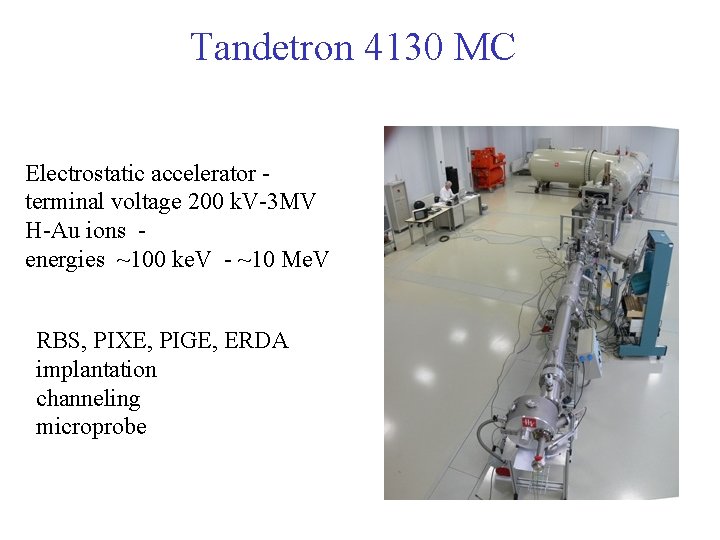
Tandetron 4130 MC Electrostatic accelerator terminal voltage 200 k. V-3 MV H-Au ions energies ~100 ke. V - ~10 Me. V RBS, PIXE, PIGE, ERDA implantation channeling microprobe
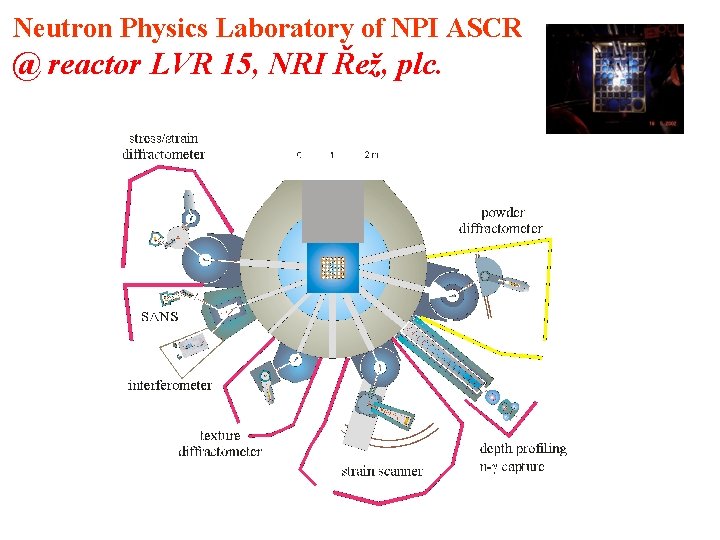
Neutron Physics Laboratory of NPI ASCR @ reactor LVR 15, NRI Řež, plc.
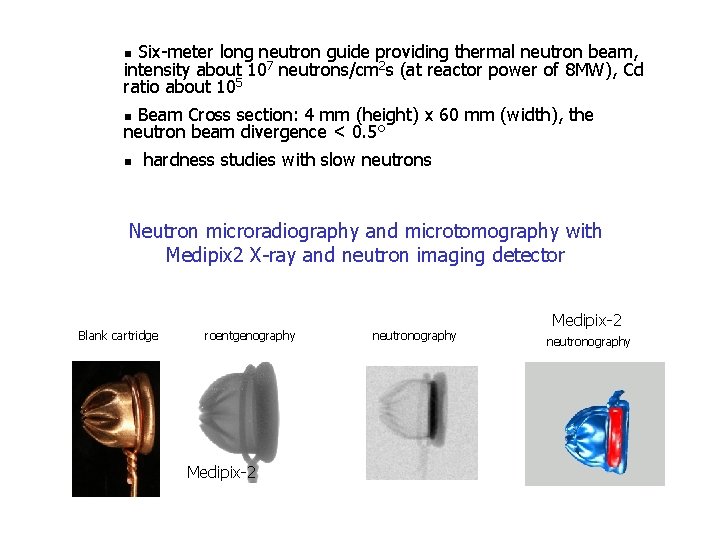
Six-meter long neutron guide providing thermal neutron beam, intensity about 107 neutrons/cm 2 s (at reactor power of 8 MW), Cd ratio about 105 n Beam Cross section: 4 mm (height) x 60 mm (width), the neutron beam divergence < 0. 5° n n hardness studies with slow neutrons Neutron microradiography and microtomography with Medipix 2 X-ray and neutron imaging detector Blank cartridge roentgenography Medipix-2 neutronography
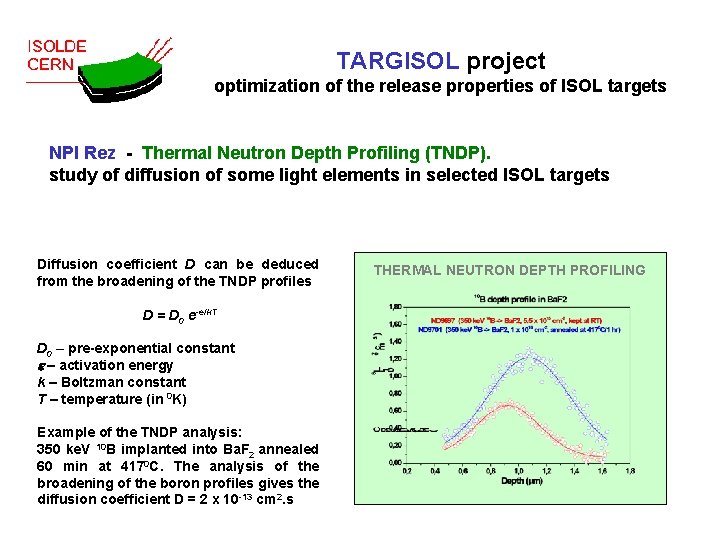
TARGISOL project optimization of the release properties of ISOL targets NPI Rez - Thermal Neutron Depth Profiling (TNDP). study of diffusion of some light elements in selected ISOL targets Diffusion coefficient D can be deduced from the broadening of the TNDP profiles D = D 0 e-e/k. T D 0 – pre-exponential constant e – activation energy k – Boltzman constant T – temperature (in 0 K) Example of the TNDP analysis: 350 ke. V 10 B implanted into Ba. F 2 annealed 60 min at 4170 C. The analysis of the broadening of the boron profiles gives the diffusion coefficient D = 2 x 10 -13 cm 2. s THERMAL NEUTRON DEPTH PROFILING
Facilities at the Nuclear Physics Institute Academy of Sciences of the Czech Rep. , Řež